
8 Artists, 8 Vulnerable Truths About Being an Artist

Arts to Hearts Project has always been about one thing: real conversations with real artists. Not the highlight reels. Not the perfectly curated success stories. But the actual human experiences behind creativity the messy parts, the vulnerable parts, the moments that don’t make it to portfolios but matter just as much.
We believe in creating space where artists can talk openly about their doubts, their pauses, their healing journeys, the childhood memories that shaped them, and those quiet turning points that changed everything. Because art isn’t just about what you make. It’s about who you become while making it.
So this time, we came to our community and asked them two simple questions: How many years have they been an artist? And what was their very first year like?
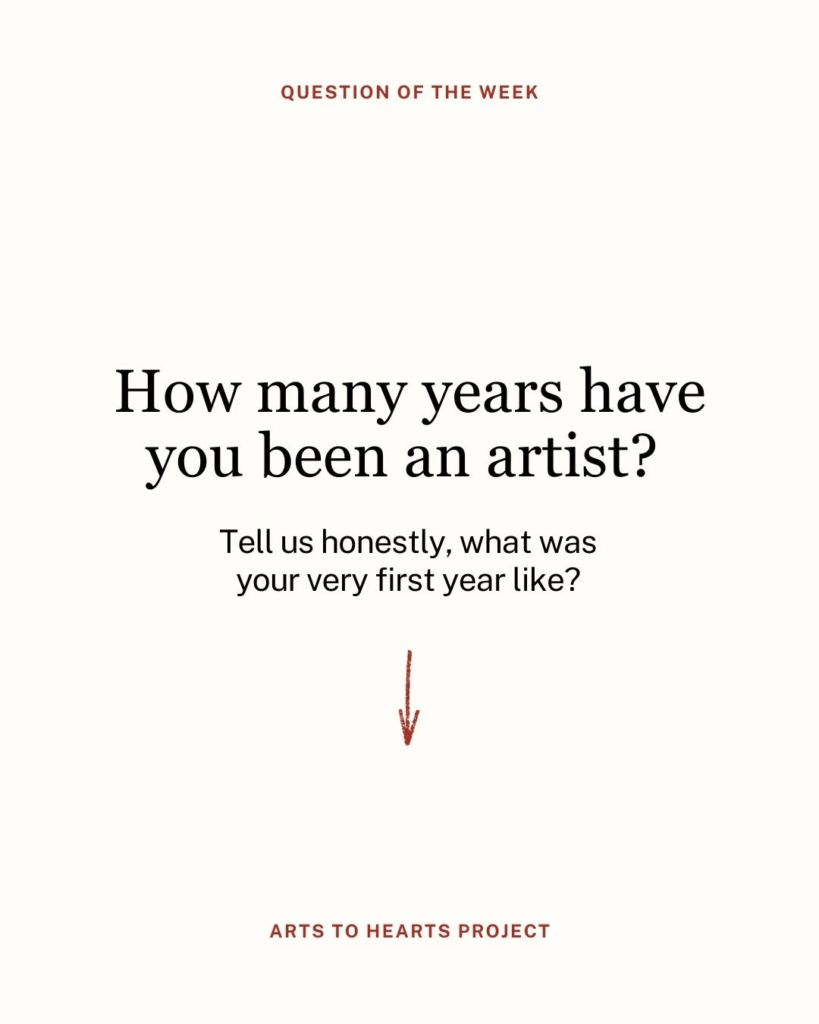
The answers we got back were incredibly honest. Some people’s first year was pure joy. Some was full of guilt and confusion. Some started so young they barely remember it. Some started in crisis and found healing. But what connected every single response was this: the first year is never what you expect it to be. It’s always harder, messier, & more transformative than you imagine.
That’s what made these conversations so powerful to read. And that’s what we want to share with you here.
First year working as an artist was hard, full of guilt…
There’s a massive difference between being an artist and working as an artist. One is about making things because something in you needs to. The other is about making things while also trying to survive on them, price them, sell them, explain them. And that transition? Nobody warns you how hard it is.
The guilt is real. Am I allowed to charge for this? Am I allowed to call this a real job? What if I’m not good enough? What if nobody wants what I make? And underneath all of that: How do I turn the thing I love into the thing that pays my rent without losing what makes it mine? That first year of going professional isn’t just about learning business skills. It’s about learning who you are as a working artist. And that’s a completely different identity to figure out.
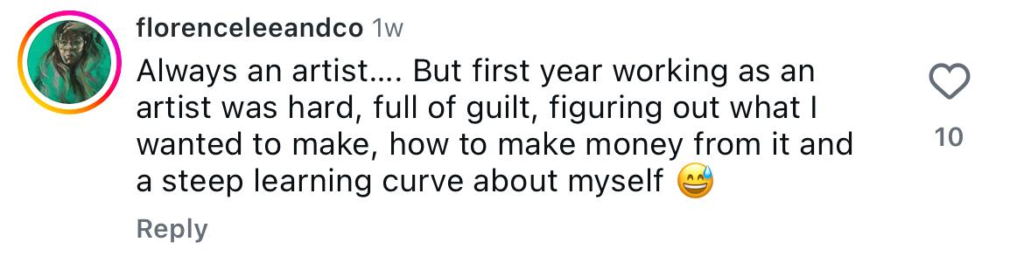
Flo Lee @florenceleeandco has always been an artist. But her first year working as one professionally? Hard. Full of guilt. Figuring out what she actually wanted to make, how to monetize it, and going through a steep learning curve about herself. That’s the part people don’t talk about enough the emotional weight of making your art your living. It’s not just logistics. It’s an identity shift that forces you to answer questions you’ve never had to ask before.
“Curiosity and play was the first real year of being an artist.
Honestly, this answer says something really important about creativity that people often forget. A lot of artists spend years learning, studying, improving, and trying to become technically “good,” but somewhere in that process they lose the freedom that made them love art in the first place.
I really believe real creativity needs curiosity. The moment art starts feeling only like pressure, productivity, or performance, people slowly disconnect from that playful instinct they had as children. And sometimes becoming an artist is actually about finding that feeling again.
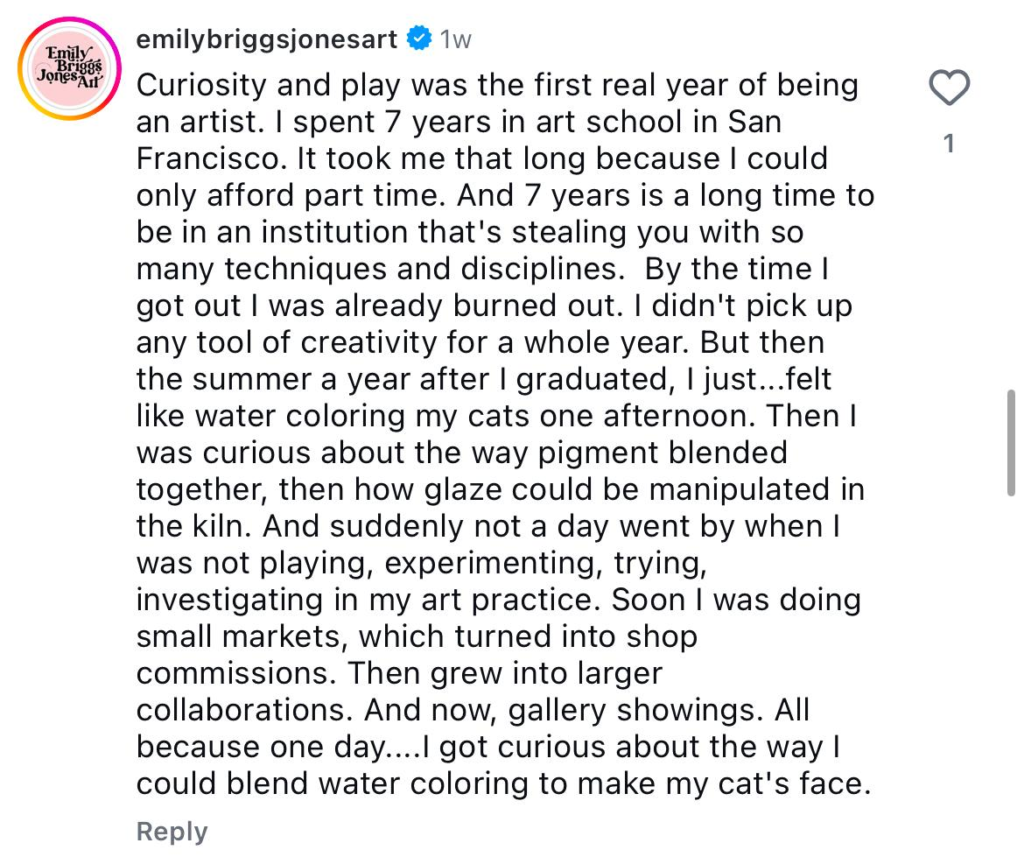
Briggs Jones @emilybriggsjonesart shared that after years of studying art and eventually burning out, everything changed because of one small moment, watercoloring her cats and becoming curious again about pigments, blending, and experimentation.
And honestly, it’s beautiful how something so simple brought her back to herself creatively. Not ambition. Not perfection. Just curiosity.
Maybe that’s why her answer feels so relatable. Because so many artists a
“My first year of being an artist was honestly a life saver”
I think people really underestimate how deeply art can change someone’s relationship with themselves. Sometimes the first year isn’t just about building a creative career it’s about finally allowing yourself to take your own dreams seriously.
There’s something very emotional about artists who spend years creating quietly for themselves or for loved ones, and then suddenly decide to share that part of themselves publicly. That shift takes courage.
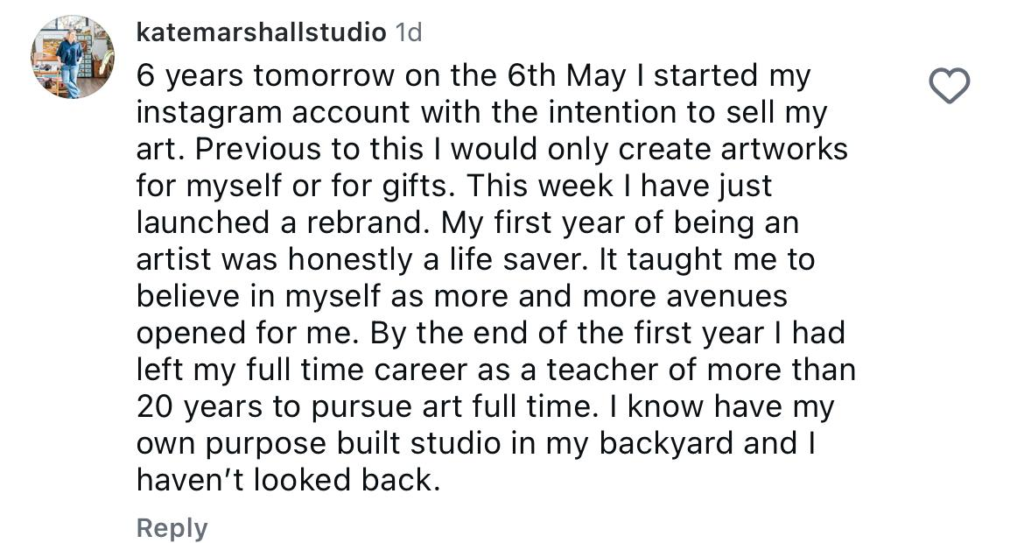
Kate Marshall @katemarshallstudio shared that she started her Instagram six years ago with the intention of finally selling her art after previously only making work for herself or as gifts. What really stood out was how she described that first year as a “life saver” — because through art, she slowly started believing in herself more and more.
By the end of that first year, she had even left a teaching career of over twenty years to pursue art full-time. And honestly, stories like this feel so inspiring because they remind people that it’s never “too late” to fully step into your creative life.
I became lost in peaceful happiness, never wanting to be found“
There’s something so beautiful about describing art this way. Not as achievement or success, but as a place of peace. A place where the world becomes quieter for a moment.
I think a lot of artists understand this feeling immediately that creating can sometimes feel like disappearing into yourself in the most healing way possible.
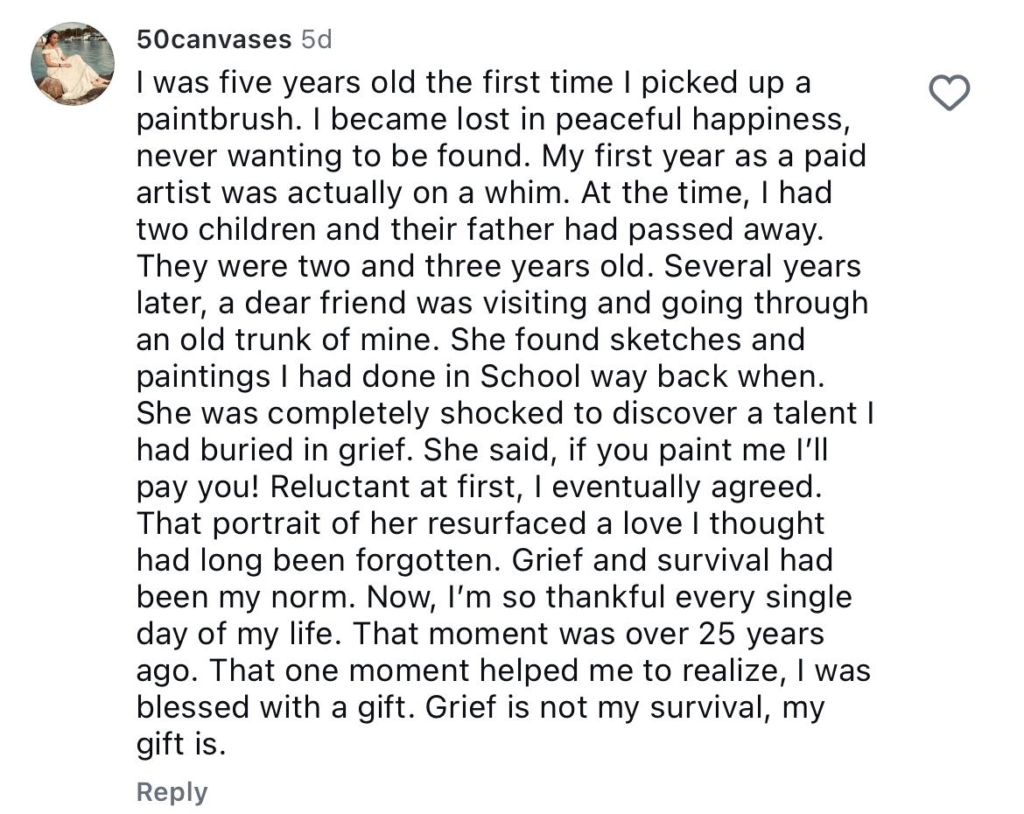
Sonya Brooks @50canvases shared that she first picked up a paintbrush when she was five years old and instantly felt connected to that peaceful happiness. But after losing her children’s father, grief slowly buried that part of her life for years.
What makes her story so moving is how unexpectedly art returned to her. A friend discovered old paintings and sketches she had forgotten about and encouraged her to paint again. That one portrait reopened something she thought she had lost forever.
And maybe that’s what makes creativity so powerful. Even after years of pain, exhaustion, or survival mode, it can still quietly lead people back to themselves.
I had to go through the flames of addiction first before I could discover my true nature
Some people spend forty years preparing to become the artist they always knew they were. Not because they weren’t ready. But because life had other lessons to teach first. Hard lessons. Painful lessons. The kind that break you open before they remake you.
That first year after coming through the fire? It’s not easy. Highs and lows. Tests everywhere. But when you’ve survived what you’ve survived, there’s a different kind of faith that carries you. The kind that says: I’ve been through too much to not get where I’m supposed to be.
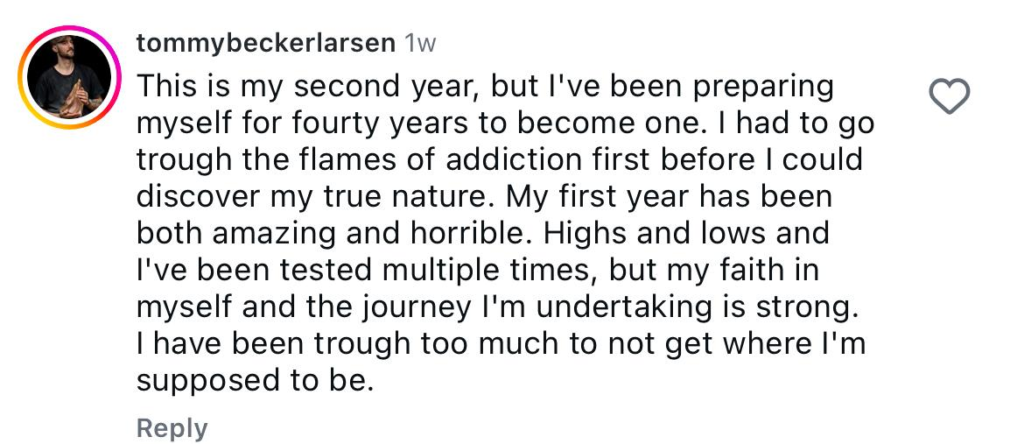
Tommy Becker Larsen @tommybeckerlarsen shared that this is only his second year as an artist, but emotionally it feels like a forty-year journey to get there. His first year has been filled with highs, lows, and difficult personal battles, yet underneath everything there’s still this strong belief that he’s finally moving toward the life he was meant to live.
And maybe that’s one of the most human parts of art the way people sometimes discover themselves through it after losing themselves for so long.
I couldn’t think about anything else but painting, completely absorbed in the process
Here’s what people don’t tell you about that first year when art finally clicks: it consumes you. In the best way. You can’t think about anything else. Time disappears. You’re completely absorbed. Not because you’re forcing it. Because you’ve finally found the thing that connects you to something bigger than yourself.
That’s not obsession. That’s flow. That’s divinity. That’s what it feels like when you’ve found your thing.
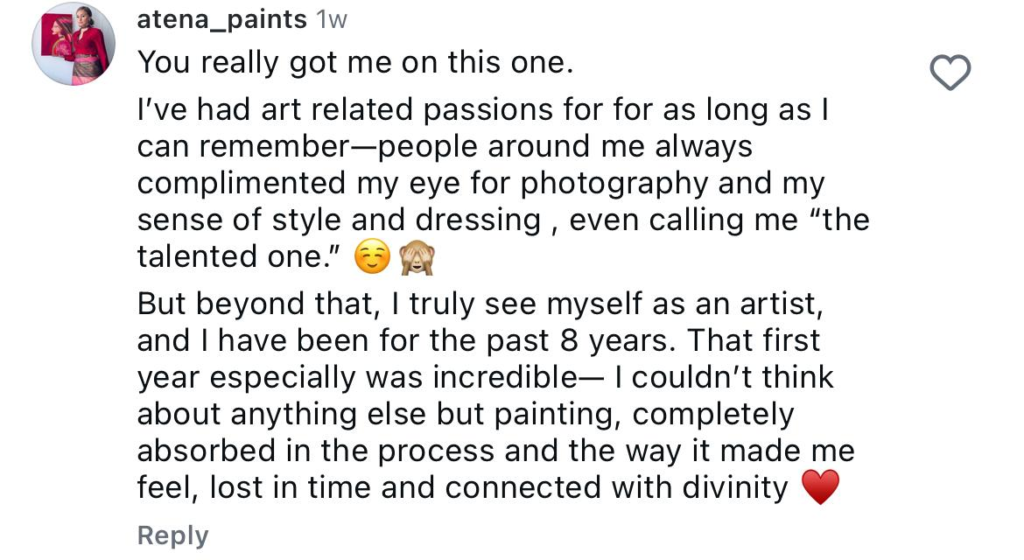
Atena Diac @atena_paints had art-related passions her whole life photography, style, dressing. People always called her “the talented one.” But for the past 8 years, she truly sees herself as an artist. That first year was incredible couldn’t think about anything but painting, completely absorbed in the process, lost in time, connected with divinity. When it hits like that, you know it’s real.
It was as if I was experiencing art for the first time again
There’s something really emotional about artists reconnecting with creativity after years away from it. Sometimes people don’t realise how much of themselves they’ve lost until they finally return to the thing that once made them feel alive.
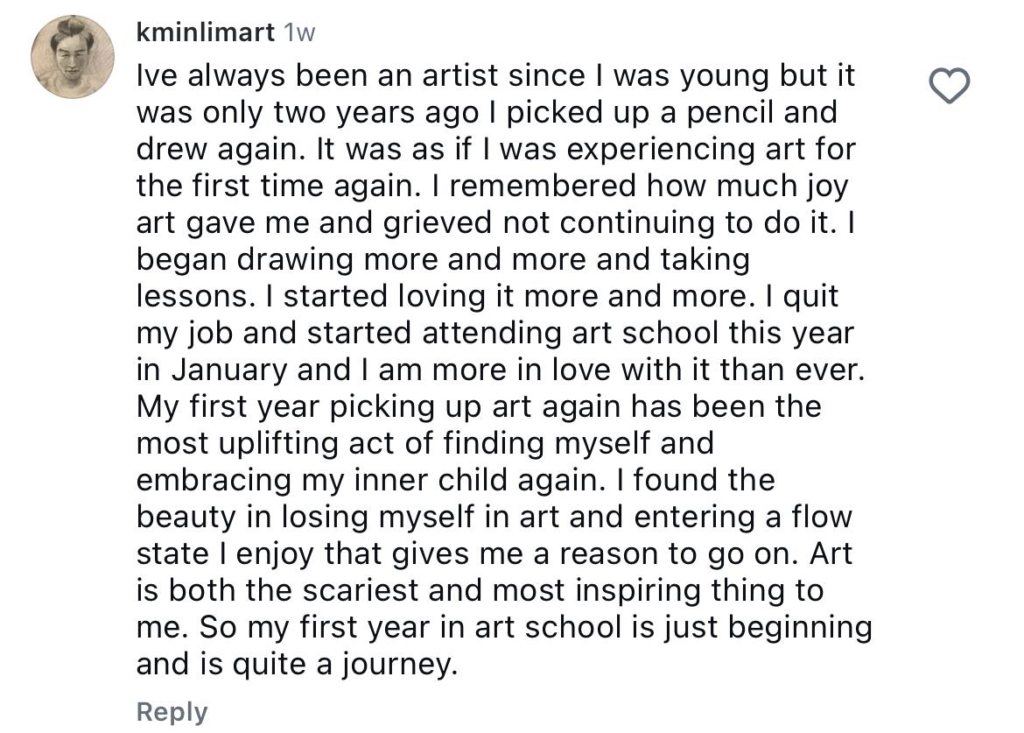
K-Min Lim @kminlimart shared that although he had always been creative, picking up a pencil again two years ago completely changed his life. What started as rediscovering joy slowly became lessons, art school, and eventually leaving his job to pursue creativity more seriously.
And I think what makes his answer so beautiful is the way he describes art not just as a skill, but as reconnecting with his inner child and finding himself again through the process.
My first year was like rebirth in colourful self-expression.
I think that’s such a beautiful way to describe what creativity can feel like after years of living for responsibilities, routines, or other versions of yourself. Sometimes art enters people’s lives not as a small hobby, but as a complete emotional awakening.
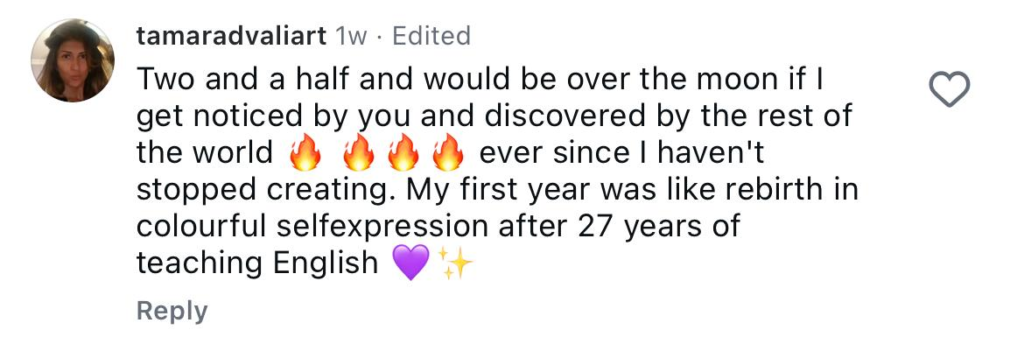
Tamara Dvali @tamaradvaliart shared that after 27 years of teaching English, stepping into art felt like rebirth. And I think a lot of people will relate to that feeling of finally giving themselves permission to express parts of themselves that had been quiet for years.
There’s also something really touching about her excitement to be seen and discovered. Because at the heart of it, so many artists are simply hoping their work connects with someone somewhere in the world.
And maybe that’s what makes the first year feel so intense, it’s not only about creating art, it’s about rediscovering yourself through it too.
Reading through every single response, one thing became very clear: nobody’s first year as an artist looks the same.
For some people, it felt exciting. For others, terrifying. Some found art through grief, some through curiosity, some through burnout, healing, reinvention, or finally allowing themselves to begin again after years away from creativity.
But what connected all of these stories was how personal that first year really is.
It’s rarely just about learning techniques or building a career. More often, it becomes a year of understanding yourself differently. A year of vulnerability, risk, self-discovery, doubt, hope, and slowly learning how to trust your own voice.
And maybe that’s why these answers stayed with us for so long.
Because behind every artist is not just talent, but a moment where they chose to keep creating despite uncertainty. A moment where art stopped being “just something they liked” and became something much deeper.
Thank you to every artist who shared their story with us so openly and honestly. This community never shows up halfway. Every time we ask something, you come back with stories that are thoughtful, emotional, vulnerable, and incredibly human.
And maybe that’s the most beautiful part of these conversations — realizing how many artists are quietly carrying the same fears, hopes, doubts, and excitement at the exact same time.
We frequently ask our community questions about their artistic journey, creative process, inspirations, routines, creative blocks, and everything happening behind the scenes of making art. And almost every single time, we all end up hearing something we really needed to hear.
So make sure to drop your thoughts in the comments the next time you see one of our questions.
Who knows. Maybe next time, it’ll be you we’re featuring.