
This Korean artist paints black cats in the flattest, strangest colors you’ll ever see︱Minyoung Kim
At Arts to Hearts project, we have always been moved by artists who turn inward who reach into the parts of themselves that are difficult to name and come back with something the rest of us can feel too. The memories we never quite processed. The anxieties we carry quietly. The strange, small moments of everyday life that feel significant in a way we cannot fully articulate.
Our Best of the Art World editorial was built for exactly those artists the ones who make you feel seen without ever having met you. And today we are so honoured to introduce you to one of them.
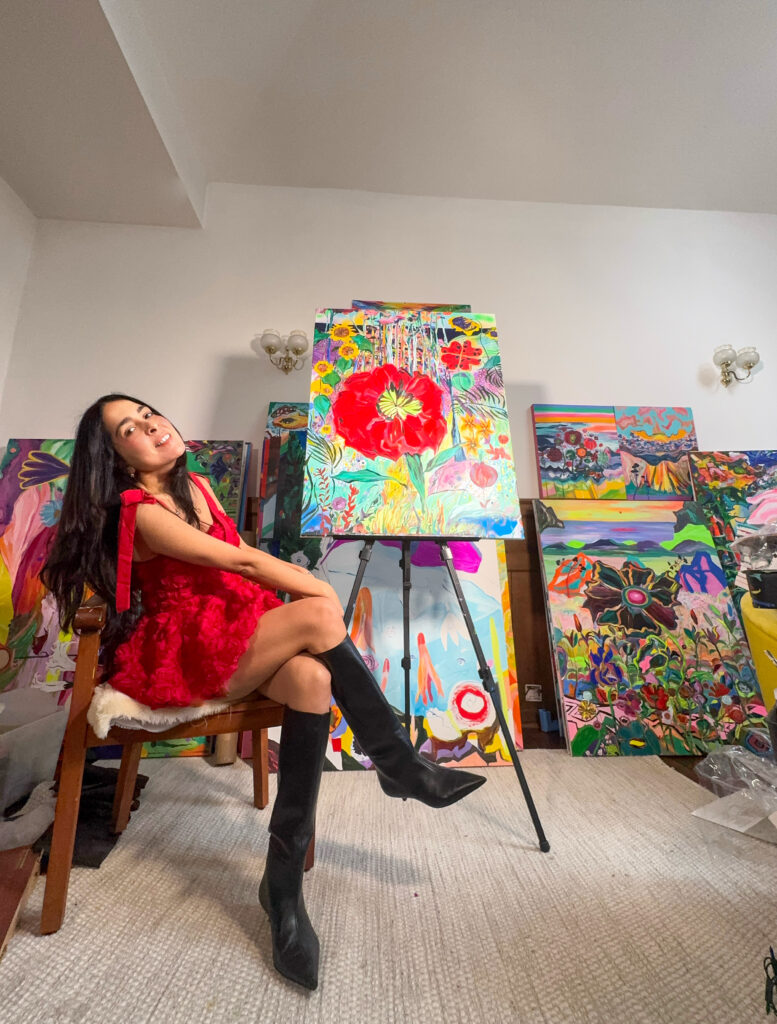
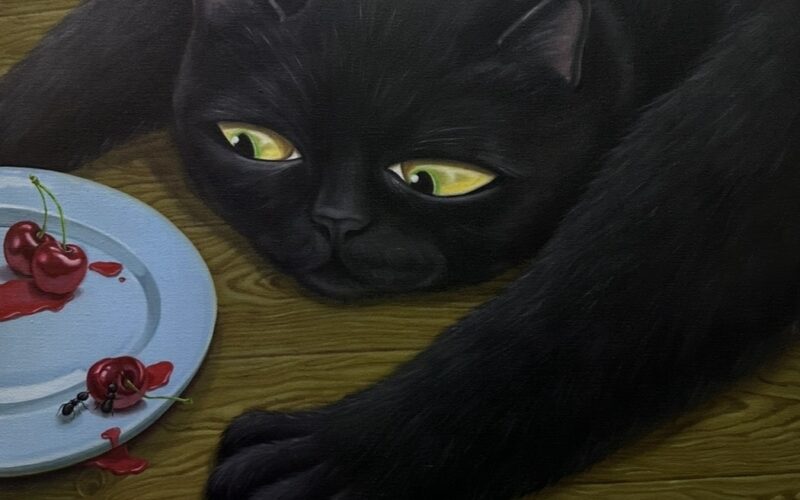
Minyoung Kim is a Seoul born, London based painter whose work does something that is genuinely hard to do it is strange and warm at the same time. Uncomfortable and charming. Familiar and slightly secret. She describes it herself as strange but cute, which sounds simple until you spend time with her paintings and realise how precise and intentional that duality actually is.
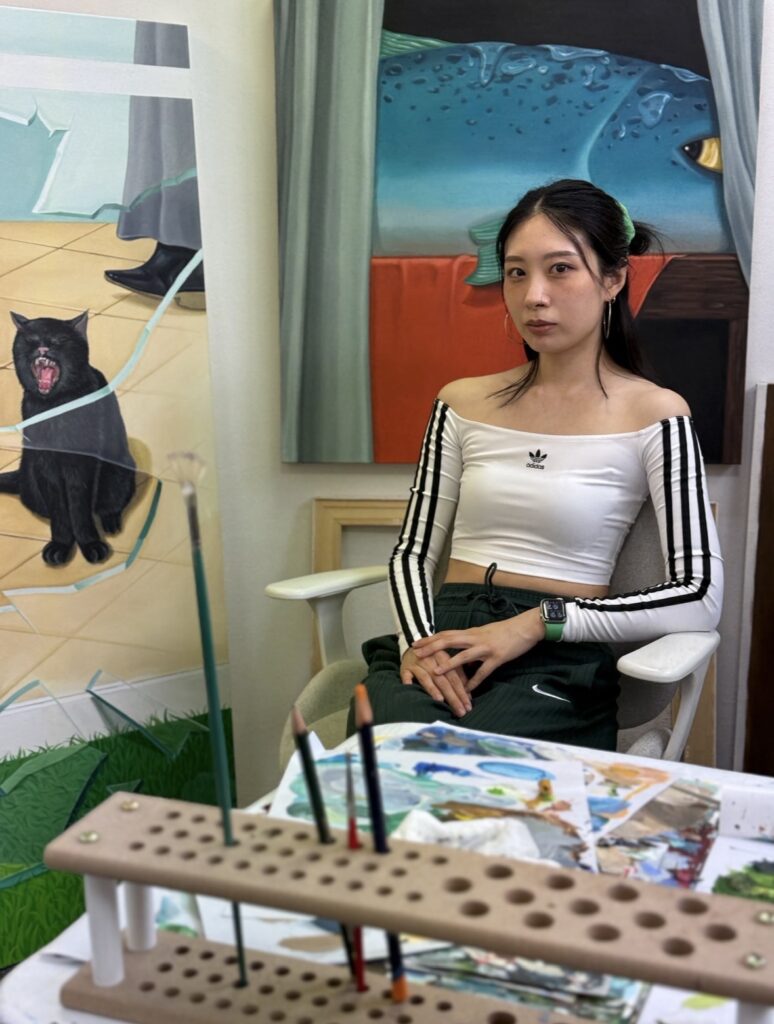
Because Minyoung is not reaching for strangeness as an aesthetic. She is painting the world exactly as she experiences it full of small ironic moments, subtle shifts in reality, things that look one way at first glance and reveal something entirely different the longer you look.
She studied Western Painting and printmaking in Seoul before making the move she had dreamed about for years to London, to the Slade School of Fine Art, to a city that she had visited once on a backpacking trip and never entirely left in her mind.
Something about the mix of old tradition and contemporary energy stayed with her. And London, when she finally arrived, did what she had hoped it would it opened her up. It encouraged her to experiment more freely, to approach her work with a wider, more generous curiosity.
Her canvases carry all of it. The memories and the anxiety and the desire and the dreams that she has always found easier to put into paint than into words. Recurring motifs drift through her work fish, snakes, flowers, eggs, mirrors, the moon arriving first unconsciously and over time becoming a fully formed visual language that is completely and unmistakably hers.
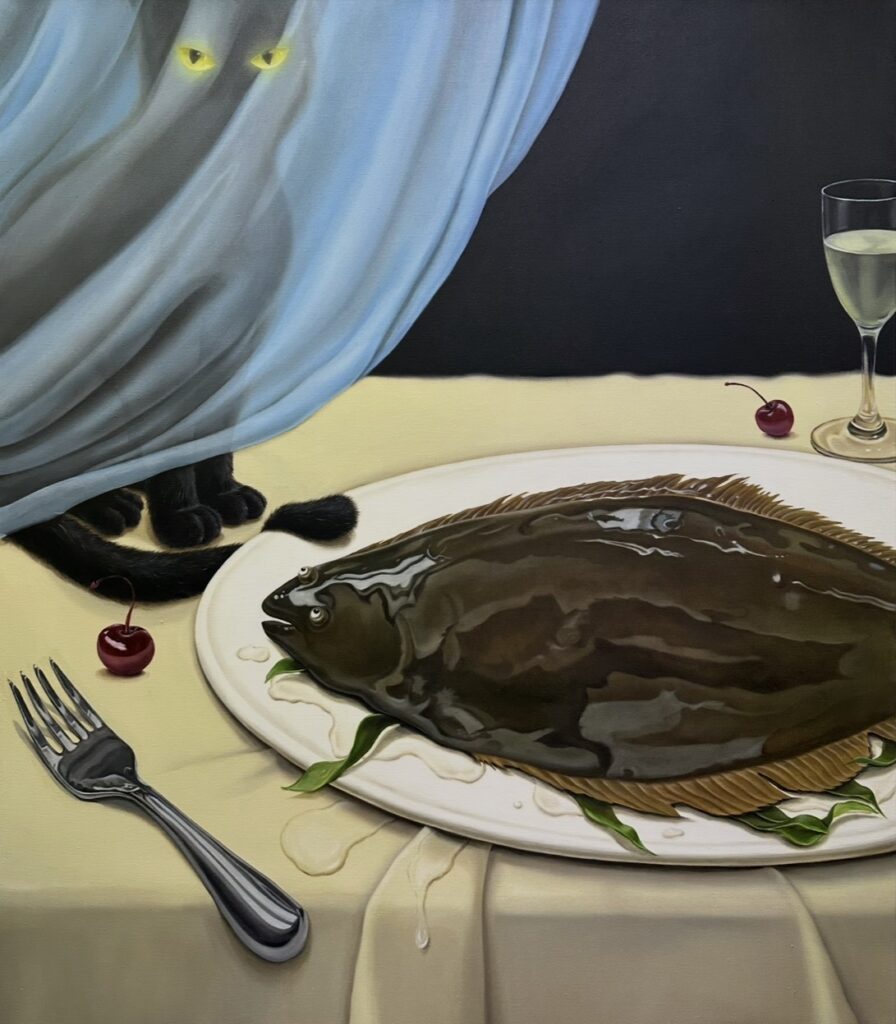
She works in oil now, drawn to the depth and atmosphere it creates, the richness of colour that took patience to learn but rewards that patience completely. And she paints across surfaces and mediums ceramics, video, collage, drawing following wherever the work needs to go, staying open to wherever it leads next.
What moves us most about Minyoung is not just the beauty of what she makes but the quiet courage behind it. She is an artist building her own world carefully, persistently, without giving up and trusting that continued effort will eventually lead somewhere meaningful. We think it already has.
Let’s get to know Minyoung through our conversation with her, where she shares the memories, the symbols, and the small strange moments that have shaped one of the most quietly captivating practices we have encountered.
Q1. Minyoung! You were born in Seoul, studied Western Painting and printmaking there, then moved to London and earned an MFA from the Slade. What made you leave Korea, and what did London unlock in you as an artist?
Studying in the UK had been a long-time dream of mine. Many of the artists I admired were from the UK, and when I visited during a backpacking trip in university, I was really drawn to the mix of old traditions and contemporary culture. There was something about that atmosphere that stayed with me. I didn’t want to wait too long, so I decided to come to London and pursue that dream. Living in London exposed me to many different perspectives, and it encouraged me to experiment more freely. I think being here helped me become more open in the way I approach my work.
Q2. You’ve said your canvas contains memories, anxiety, regret, desire, and dreams. When did art become the place where you put all the things you couldn’t say out loud?
I think it started during university. In Korea, preparing for art school usually involves a lot of entrance exam training throughout high school. After I entered university, I finally had the freedom to explore what I actually wanted to express. That’s when I began to put my own emotions, memories, and thoughts into my work. Gradually, art became a place where I could express things I couldn’t easily say out loud.
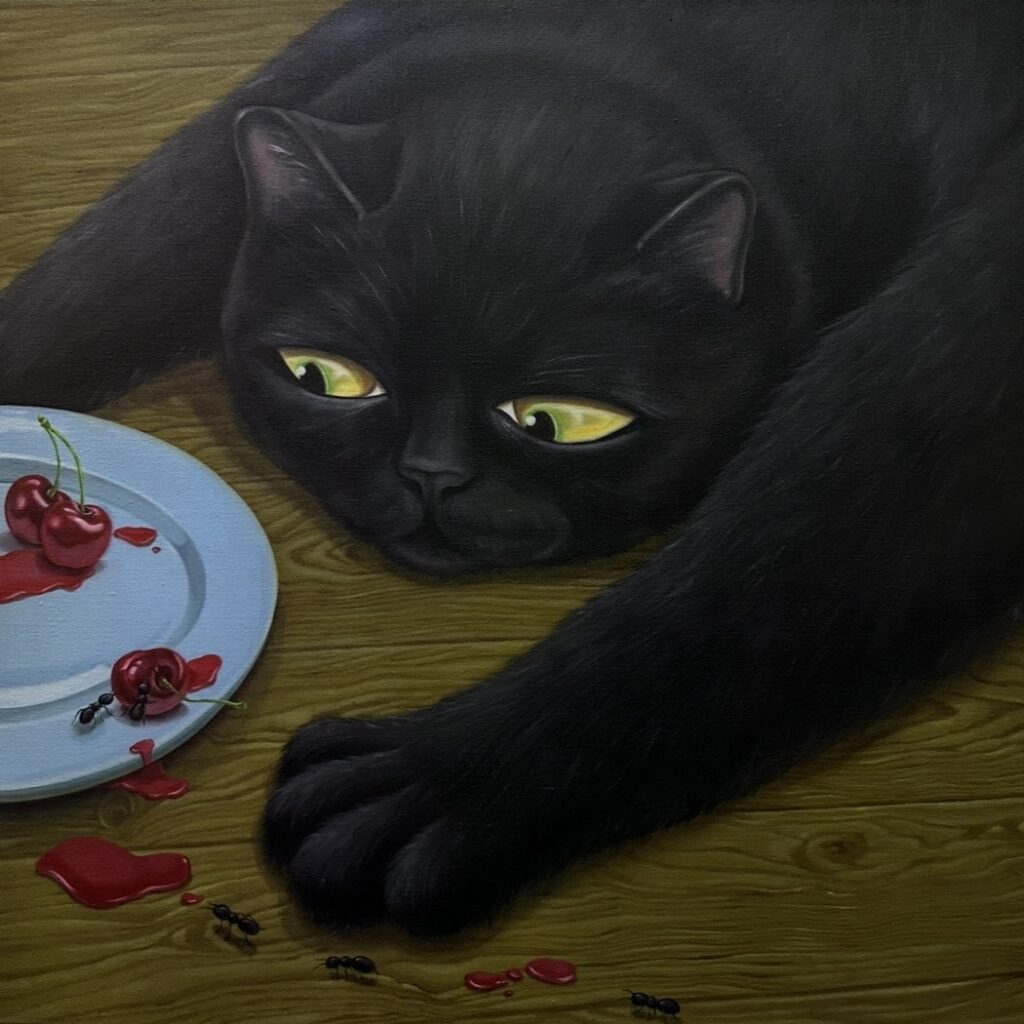
Q3.Certain symbols keep returning fish, snakes, flowers, eggs, mirrors, the moon. Do you choose them consciously, or do they choose you?
At first, I was drawn to these elements quite unconsciously. I found myself repeatedly interested in things like cats, the moon, fish, and flowers. These were things I naturally liked and felt inspired by. Over time, they became recurring motifs in my work, and now I feel they help me build my own visual language.
Q4. You describe your work as “strange but cute.” Where does that duality come from is it how you actually experience the world, or is it a deliberate choice?
It comes from small, ironic moments I notice in everyday life. Sometimes something looks strange at first, but the more you look at it, the cuter it becomes. I also like the feeling of glimpsing a slightly secret or unfamiliar world – something that feels a little uncomfortable but still charming. These subtle shifts in reality bring a sense of humour to my work.
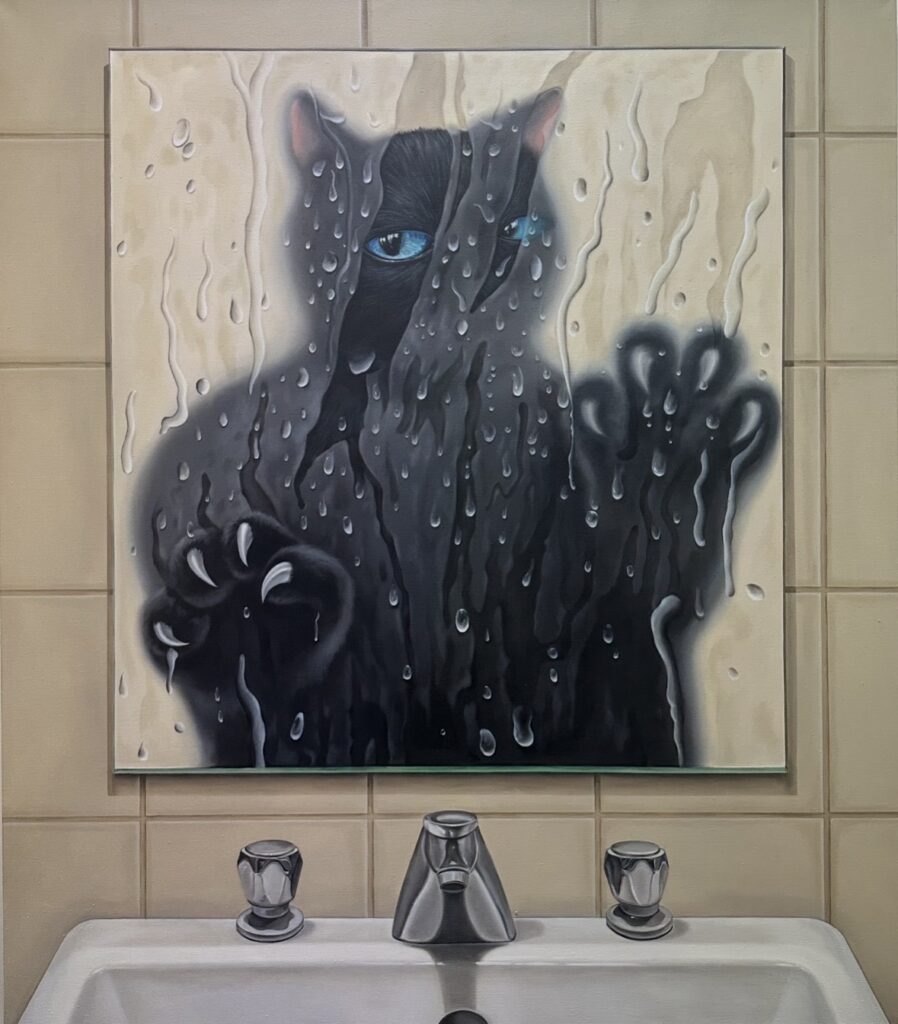
Q5. You use un-stretched raw canvas. Why does that material matter, what does it give you that a traditional stretched canvas wouldn’t?
I used to paint with acrylic on unstretched raw canvas because I liked the freedom and raw feeling of the material. But as I made more work, I started to notice some practical limitations, especially when displaying the paintings without frames. Recently, I’ve been working more with oil paint. Acrylic on raw canvas was easier to handle, but I sometimes found it difficult to achieve the depth and richness of colour I wanted. Oil painting takes more time and patience, but I enjoy the depth and atmosphere it creates. For now, I’m focusing more on oil painting and exploring it further.
Q6. You work across painting, drawing, collage, video, and ceramics. Do you move between them based on what the idea needs, or based on what you need emotionally?
I was studying at the Slade during the COVID lockdown, and I had to stay at home without access to the studios. During that time, I experimented with different mediums like painting, drawing, collage, and video. I still make drawings sometimes, but I don’t work with other mediums as often anymore. In a way, I’m grateful for that period because it pushed me to try things I might not have otherwise. I’m currently focusing on painting, but I’m open to expanding into ceramics or video again in the future.
Q7. Your work resists obvious narratives how do you personally define “success” as an artist?
I feel that obvious narratives can be easily forgotten. That’s why I try to shift my perspective and approach things differently whenever I can. Finding a new point of view is something I value in my work. For me, a successful artist is someone who keeps developing their own world without giving up. I believe that persistence matters, and that continued effort will eventually lead somewhere meaningful.
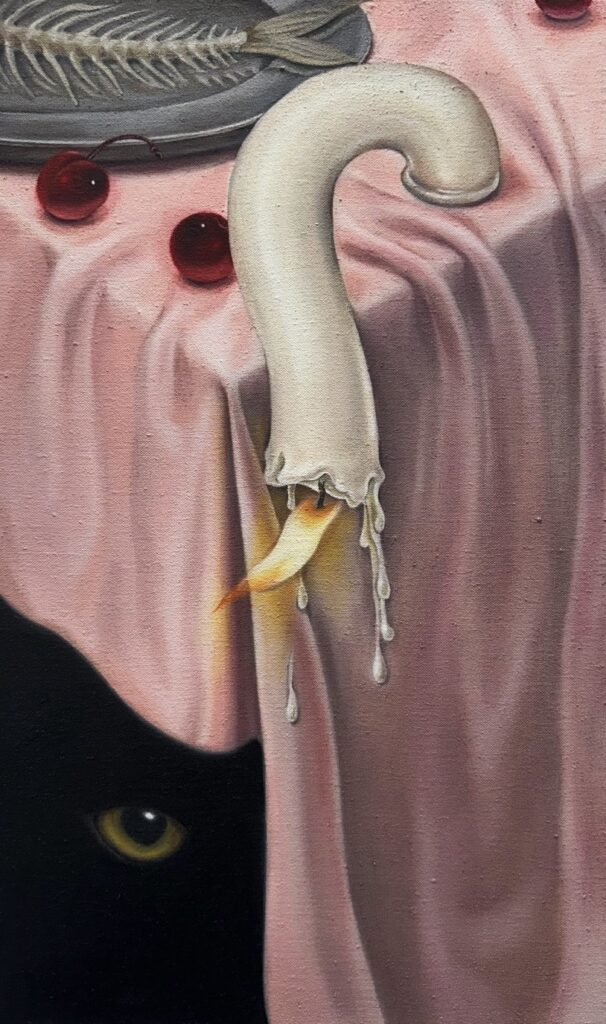
As our conversation with Minyoung drew to a close, we found ourselves thinking about what it would mean to live with her work. To have one of those quietly strange, warmly unsettling canvases as part of your daily environment.
Because there is a particular kind of art that changes depending on what you bring to it that gives you something different on a hard day than it does on an easy one, that reveals new details the longer it is in your life.
Minyoung’s work is exactly that kind. Built from the interior life from memory and anxiety and desire and the small ironic moments of everyday experience it carries enough emotional depth to meet you wherever you are. That is not a quality you find often. And it is precisely what makes her practice worth following so closely.
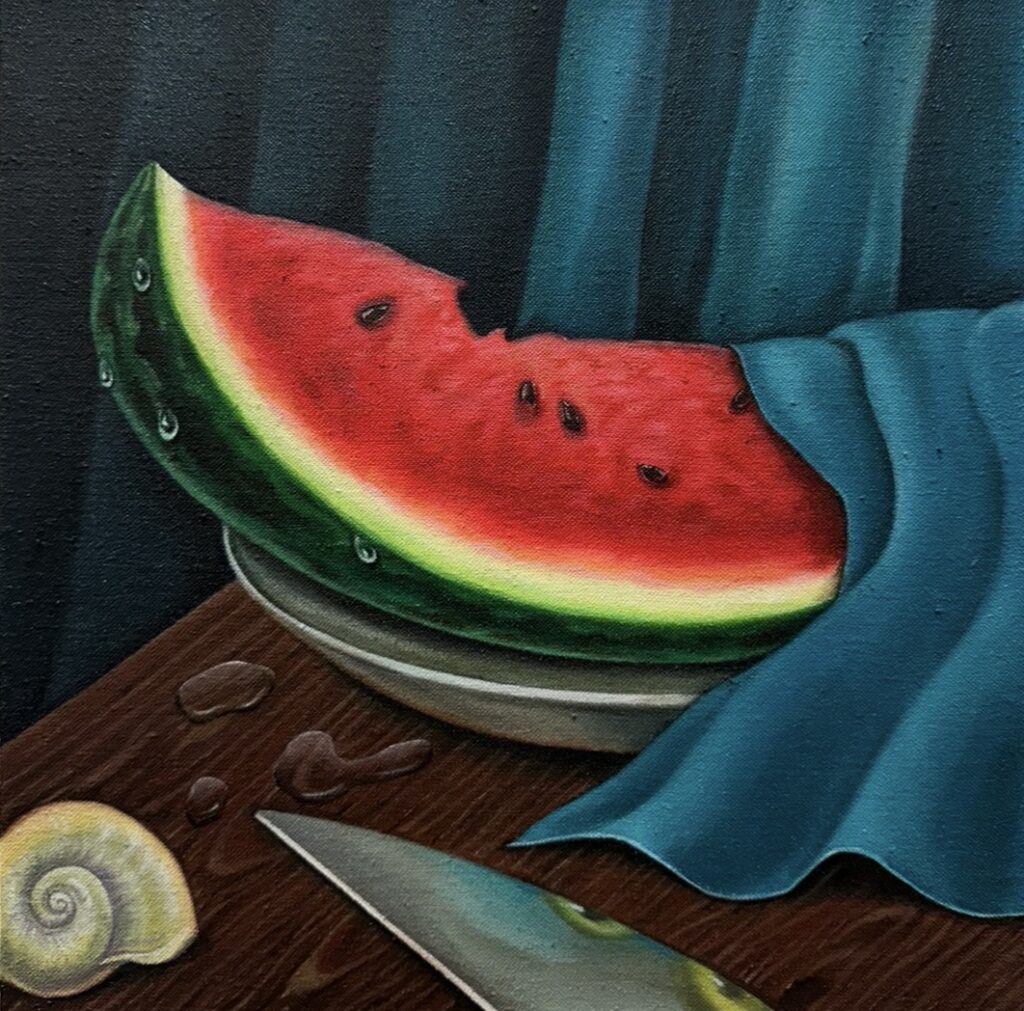
What also strikes us, sitting with everything she shared, is how much clarity she has about what she is building even when the work itself resists obvious meaning. She is not chasing a trend or a moment. She is constructing a visual world, symbol by symbol, painting by painting, with the kind of quiet persistence that the best long-term practices are made of.
The fish and the moon and the flowers are not decorative. They are a language. And the longer you spend with that language the more fluent you become in it and the more it begins to feel like something you always carried but could never quite find the words for.
There is a particular kind of artist who makes you feel less alone in the strange private experience of being human. Minyoung Kim is that kind of artist. And her work is only getting richer.
Follow Minyoung Kim through the links below and let her world find you.