
If Famous Artworks Could Talk, What Would They Say?
What if famous artworks could talk? Not in long, academic explanations. Not in complicated theory.
Just… talk. The way people do, honest, a little opinionated, maybe even slightly tired of being misunderstood.
Of course, we’re not saying this is what these artworks actually mean. This isn’t art history, and it’s definitely not the “correct” interpretation. Think of it more as a thought experiment, a playful way of imagining what some of the most well-known artworks might say if they had a voice of their own.
Because let’s be honest, if they’ve survived centuries of being analysed, photographed, turned into memes, printed on tote bags, and stared at for approximately 12 seconds in museums… they’d probably have something to say.
Maybe they’d correct us.
Maybe they’d call us out.
Maybe they’d just quietly observe us right back.
So this is our take, not too serious, not entirely unserious either, on what art might sound like if it could speak.
And fair warning:
some of them might have opinions.
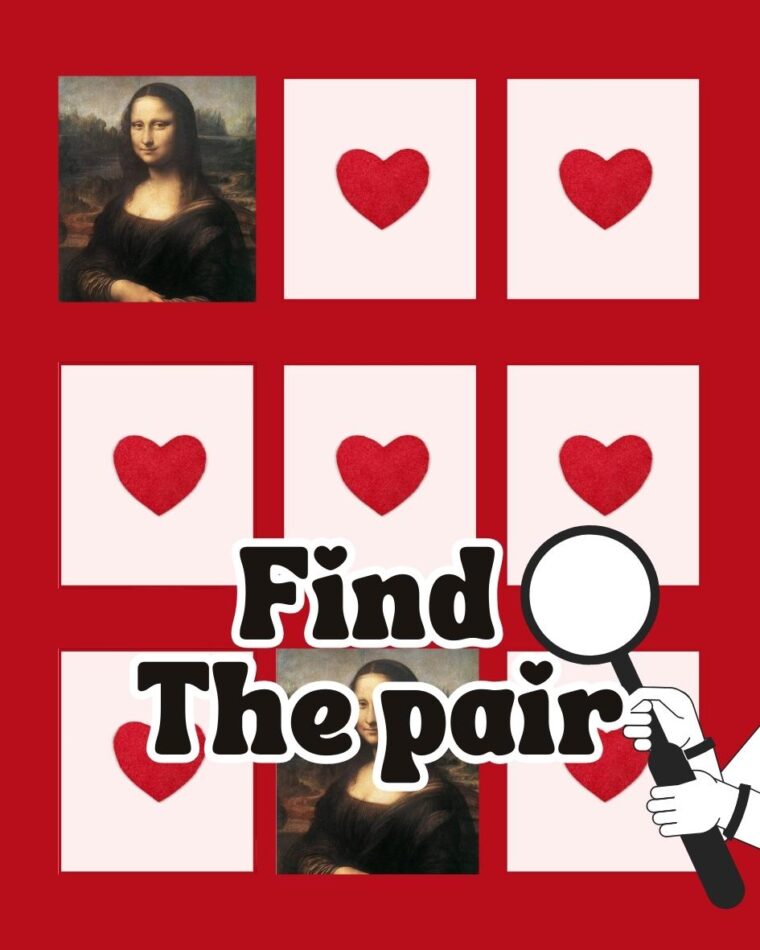
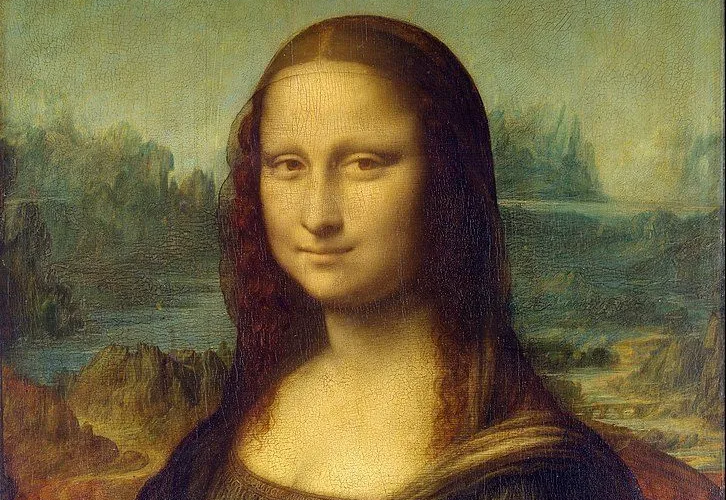
1. Mona Lisa – Leonardo da Vinci
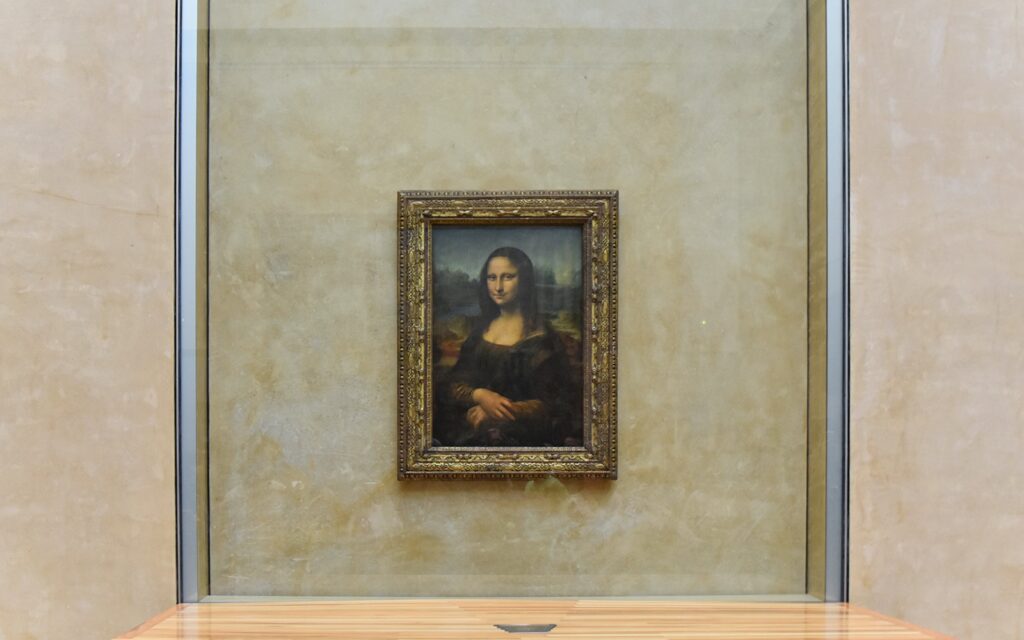
If she could talk, she probably wouldn’t start with her smile.
She’s heard enough about that.
Instead, she might look at the crowd inside the Louvre Museum and say:
“You waited hours to see me… and then stayed for ten seconds.”
For a painting that has been studied for over 500 years, the modern experience of seeing the Mona Lisa is strangely rushed. Phones come out before eyes adjust. People look, but rarely observe.
And maybe that’s what she would notice first.
Not the admiration, but the impatience.
She might add:
“You’ve turned me into something to capture, not something to sit with.”
Because somewhere between reproductions, postcards, memes, and social media, she stopped being just a painting and became an image everyone already feels they’ve seen.
But the original still sits there. Quiet. Unbothered. Unchanging.
Leonardo didn’t paint her to go viral.
He painted her to be looked at, slowly, carefully, without distraction.
And maybe, if she could speak, she wouldn’t explain her mystery at all.
She’d simply say:
“You’re still asking what I mean.
But you haven’t really looked yet.”
2. The Starry Night – Vincent van Gogh
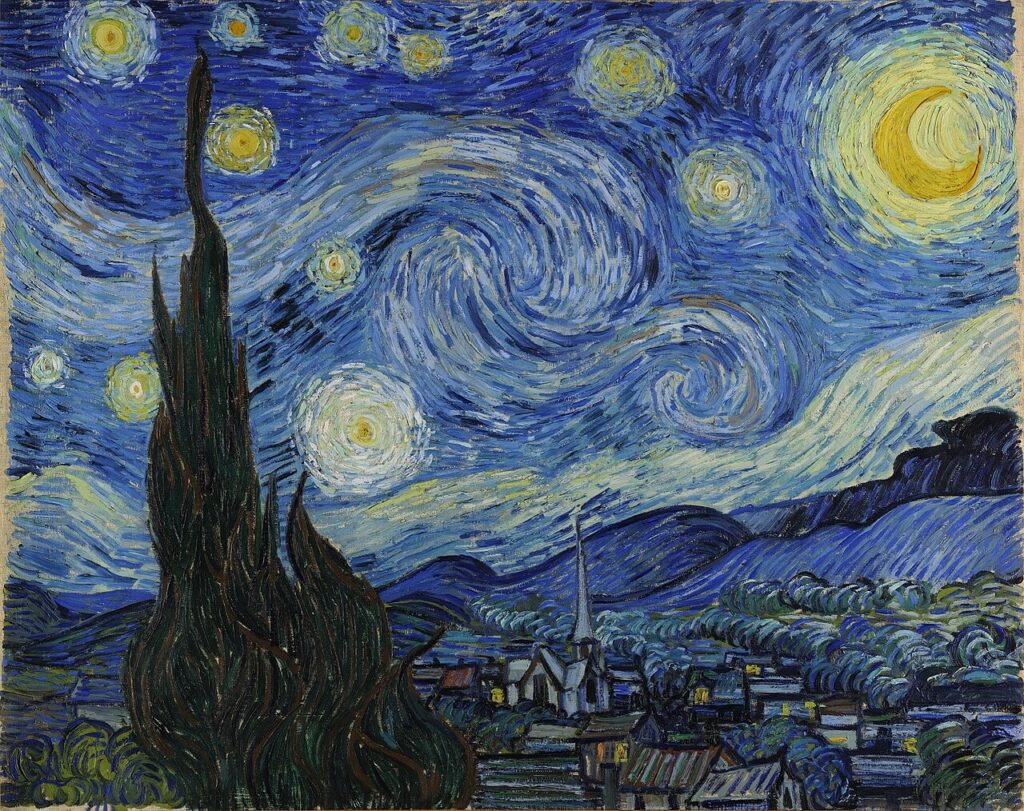
If it could speak, The Starry Night wouldn’t call itself beautiful.
That’s something we decided later.
Instead, it might say, “You keep calling me calm. I wasn’t made that way.” Because today, it lives everywhere, on phone cases, notebooks, tote bags, bedroom walls. It’s become an aesthetic. Soft. Dreamy. Almost comforting.
But that’s not how it began.
Painted while Van Gogh was in an asylum in Saint-Rémy, this wasn’t a peaceful night sky. It was restless. The swirling lines, the intense blues, the movement that never quite settles, it all carries a kind of urgency. A mind trying to make sense of itself.
It might look at how we use it now and say, “You’ve turned my chaos into decoration.”
And maybe that’s the strange shift art goes through over time. What was once deeply personal becomes widely consumable. What was once an expression of instability becomes something we label as “beautiful.”
But the painting hasn’t changed. Only the way we look at it has.
And if it could speak, it wouldn’t reject the admiration. It might just gently correct it:
“I’m not here to calm you down.
I’m here to show you what it felt like.”
Because beneath the beauty people see today, there’s still something unsettled, still moving, still searching, still unresolved.
3. The Persistence of Memory – Salvador Dalí
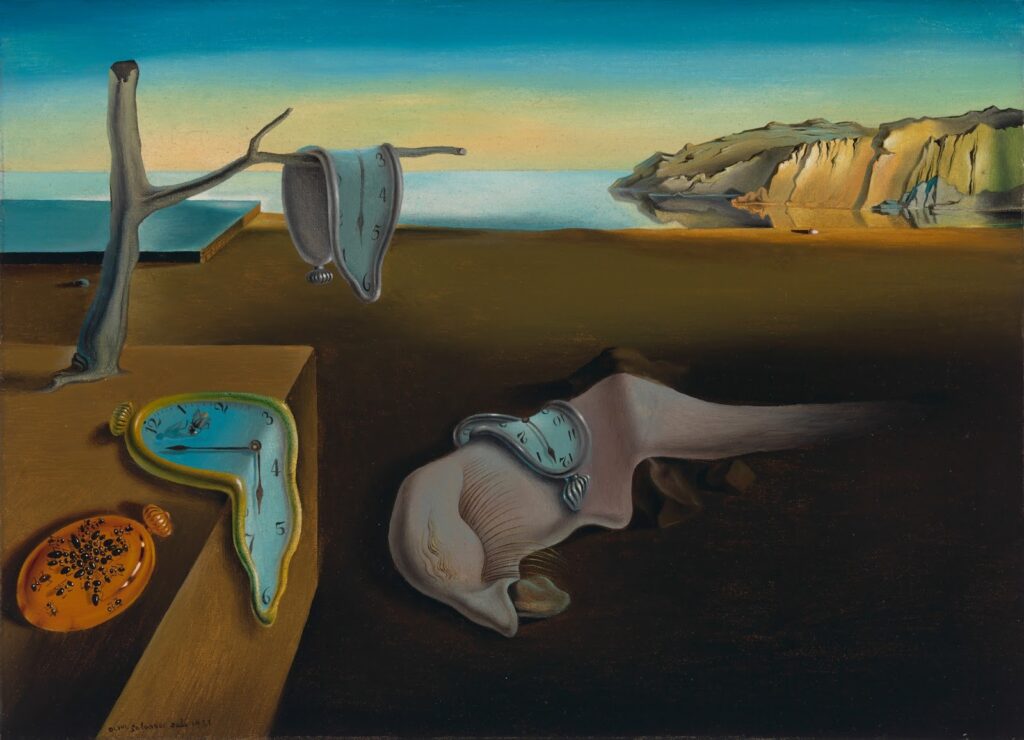
If it could speak, it probably wouldn’t try to explain itself.
It would simply say, “You’re trying too hard to make sense of me.”
Because that’s usually the first instinct, to decode it. The melting clocks, the strange landscape, the stillness that feels slightly off. It looks like a puzzle waiting to be solved.
But Dalí wasn’t offering answers. He was disrupting certainty.
Painted in 1931, The Persistence of Memory plays with something we assume is fixed: time. The clocks don’t tick. They collapse. They stretch, soften, lose their authority. What once felt rigid suddenly feels unstable.
And maybe that’s what it would point out:
“You believe time is structured. But you experience it differently every day.”
A moment can feel endless. A year can disappear. Memory itself bends, distorts, reshapes what actually happened.
The painting doesn’t behave the way reality should. But neither does the mind.
And if it could speak, it wouldn’t clarify the symbols or define the meaning. It wouldn’t tell you what each element represents.
Instead, it might leave you with something far less comfortable:
“Not everything needs to be understood to be true.”
Because some artworks aren’t meant to be solved.
They’re meant to unsettle the way you think things are supposed to work.
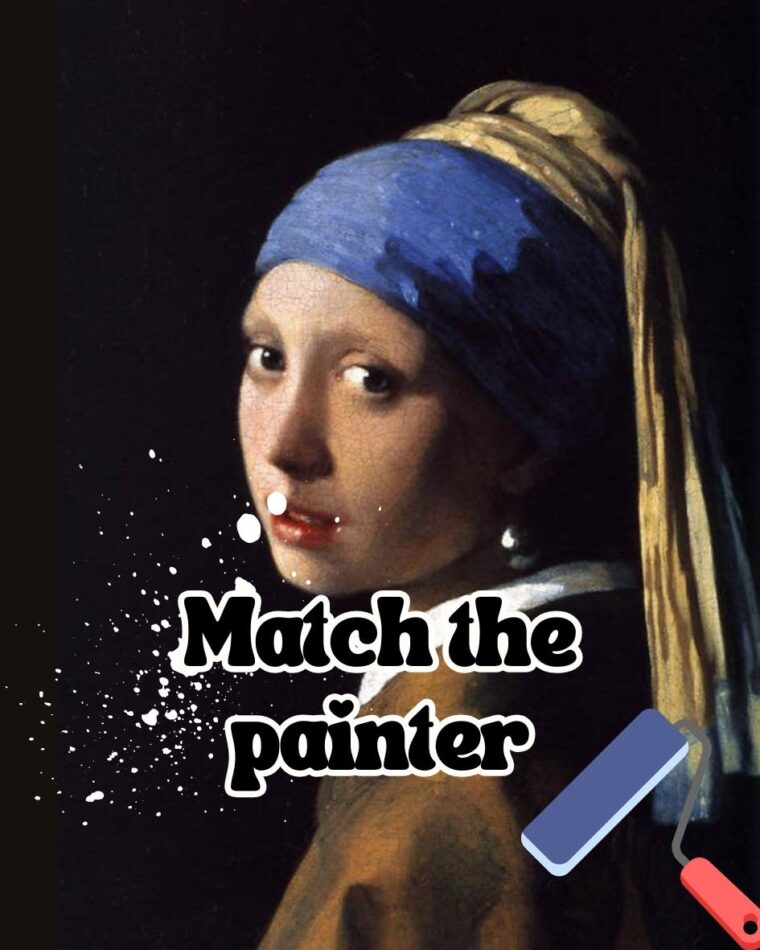
4. Girl with a Pearl Earring – Johannes Vermeer
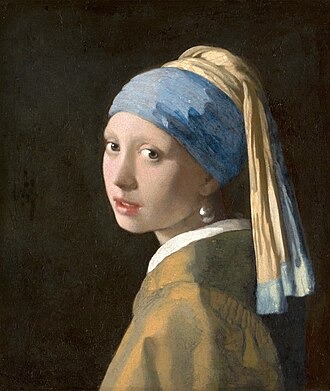
If she could speak, she probably wouldn’t tell you who she is.
She’d say, “Why do you need to know?”
There’s no confirmed identity. No backstory. No clear narrative. And yet, she holds your attention longer than most portraits ever do.
That’s what makes her different.
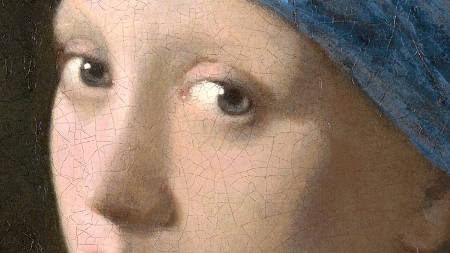
Unlike traditional portraits of the time, Girl with a Pearl Earring isn’t about status or documentation. It’s something quieter. More intimate. A moment suspended between turning away and looking back.
And maybe that’s what she would point out:
“I was never meant to explain myself.”
The softness of the light, the subtle turn of her head, the almost unfinished background, everything removes distraction. There’s nothing to decode. Nothing to solve.
And still, people keep searching for meaning. Who she was. What she was thinking. Why she looks the way she does.
But the painting doesn’t answer.
It simply holds its position, calm, direct, and slightly out of reach.
And if she could speak, she might leave you with something simple:
“You’re not here to know me.
You’re here to look.”
Because sometimes, the power of an artwork isn’t in what it reveals,
but in what it chooses to leave unsaid.
5. The Scream – Edvard Munch
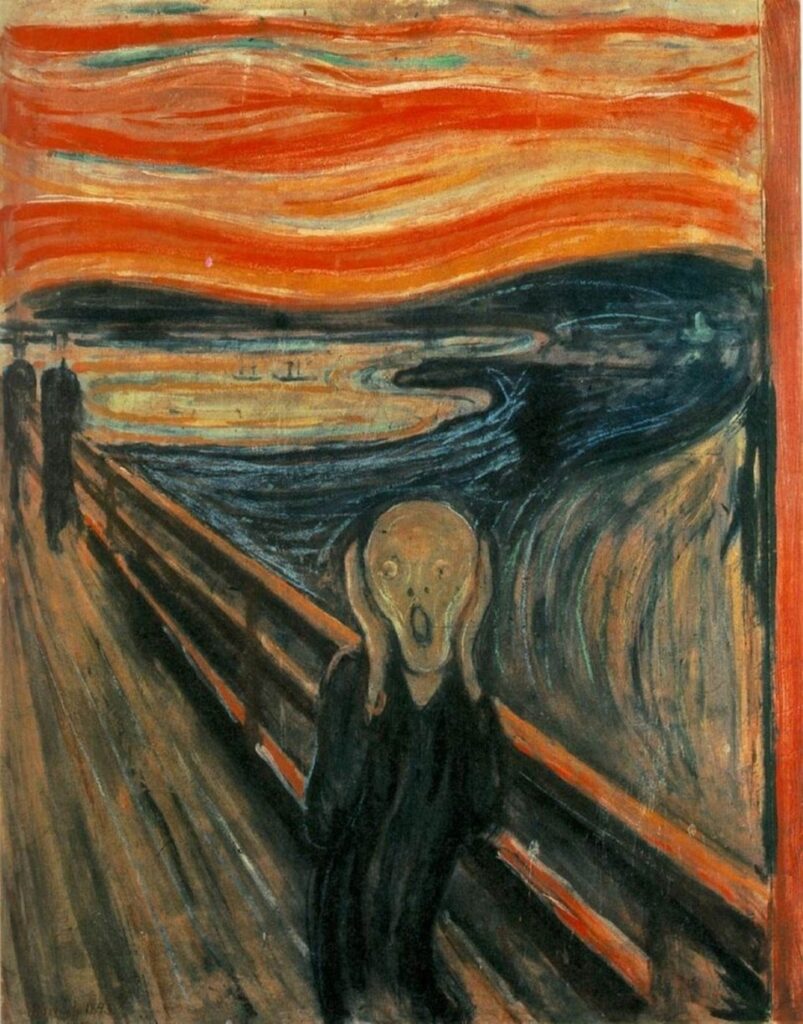
If it could speak, it probably wouldn’t apologize for being dramatic.
It would say, “You think I’m overreacting? Have you seen your own life?”
Because somehow, The Scream has become the universal symbol for panic, stress, deadlines, notifications, everything all at once. It’s basically the original “I can’t deal with this right now.”
But Munch wasn’t exaggerating for effect.
He described a moment where the sky turned red, the world felt like it was closing in, and he heard what he called “an infinite scream passing through nature.”
And honestly, it might look at modern life and say:
“You turned me into a meme… but you also proved me right.”
The traffic, the noise, the constant scrolling, the pressure to keep up, it’s not that far from what this painting captures. If anything, it feels more relevant now.
And maybe that’s why it still works.
Because beneath the exaggeration, there’s recognition.
And if it could speak, it might add one last thing:
“I wasn’t trying to be iconic.
You just keep feeling this.”
6. Guernica – Pablo Picasso
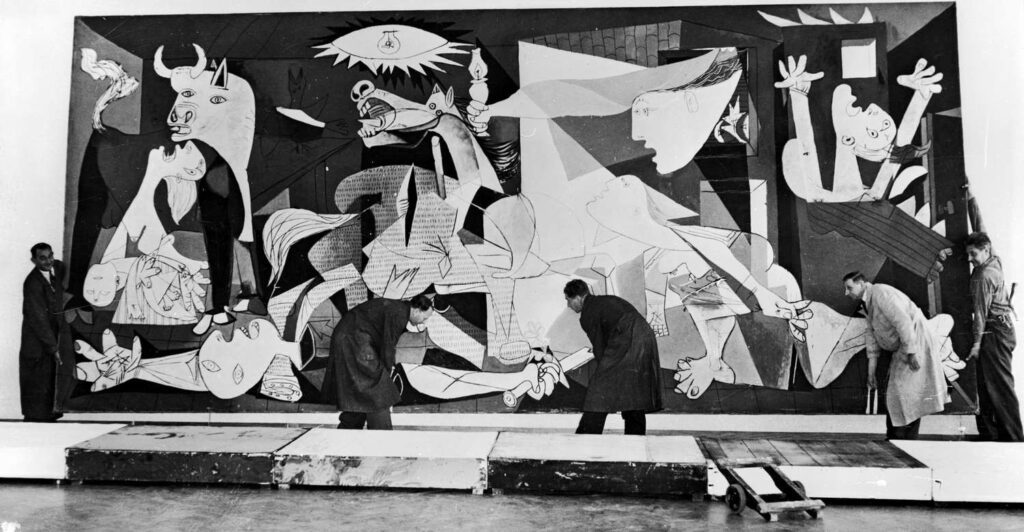
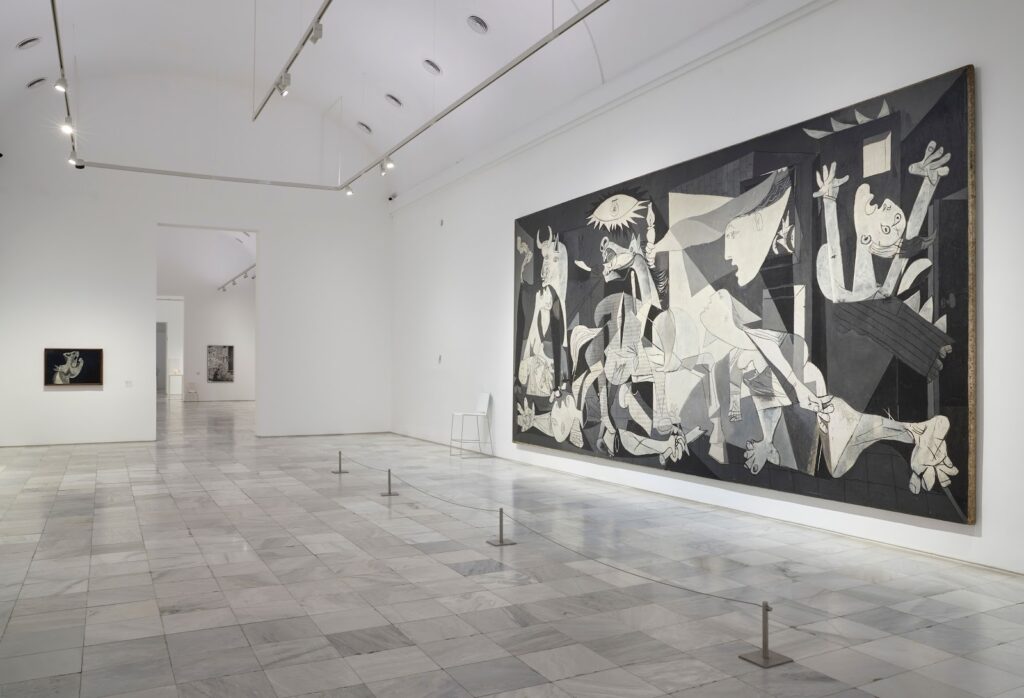
If it could speak, it wouldn’t lower its voice.
It would say, “Don’t look at me and then move on like nothing happened.”
Because Guernica doesn’t ease you in. It doesn’t try to be visually pleasing or easy to understand. It throws everything at you, fragmented bodies, screaming figures, chaos that refuses to settle.
And that’s exactly the point.
Painted in response to the bombing of the town of Guernica during the Spanish Civil War, this wasn’t meant to be admired. It was meant to confront.
It might even look at the way people walk past it and say:
“You don’t need to understand every symbol.
You just need to feel that something is wrong.”
There’s no colour to soften it. No clear narrative to follow. Just intensity, stretched across a massive canvas, demanding your attention whether you’re ready or not.
And maybe that’s what makes it uncomfortable.
Because it doesn’t let you stay neutral.
And if it could speak, it wouldn’t explain itself or make it easier for you.
It would simply insist:
“This happened.
Don’t turn me into just another painting.”
7. Campbell’s Soup Cans – Andy Warhol
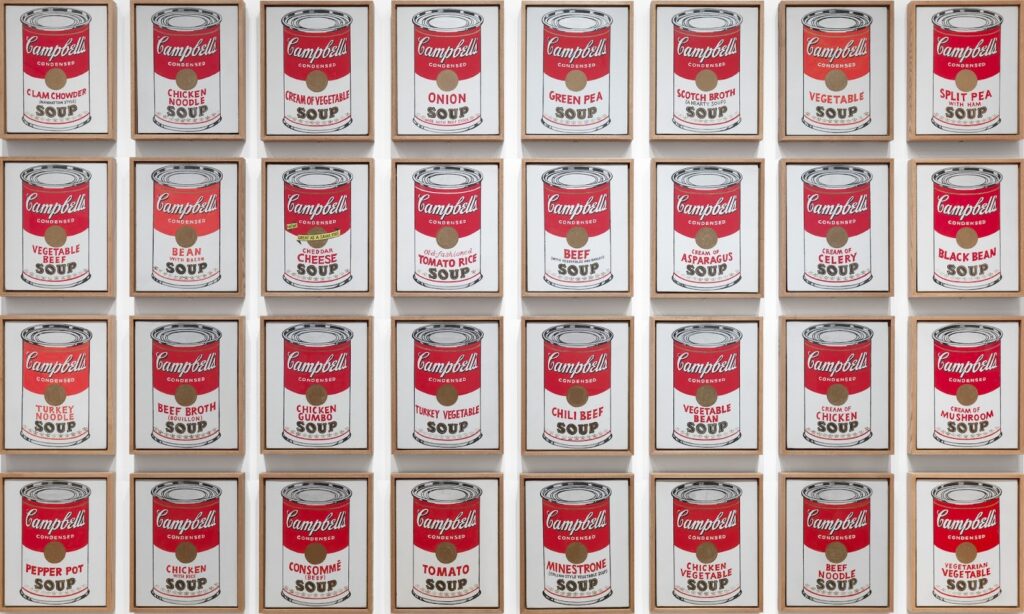
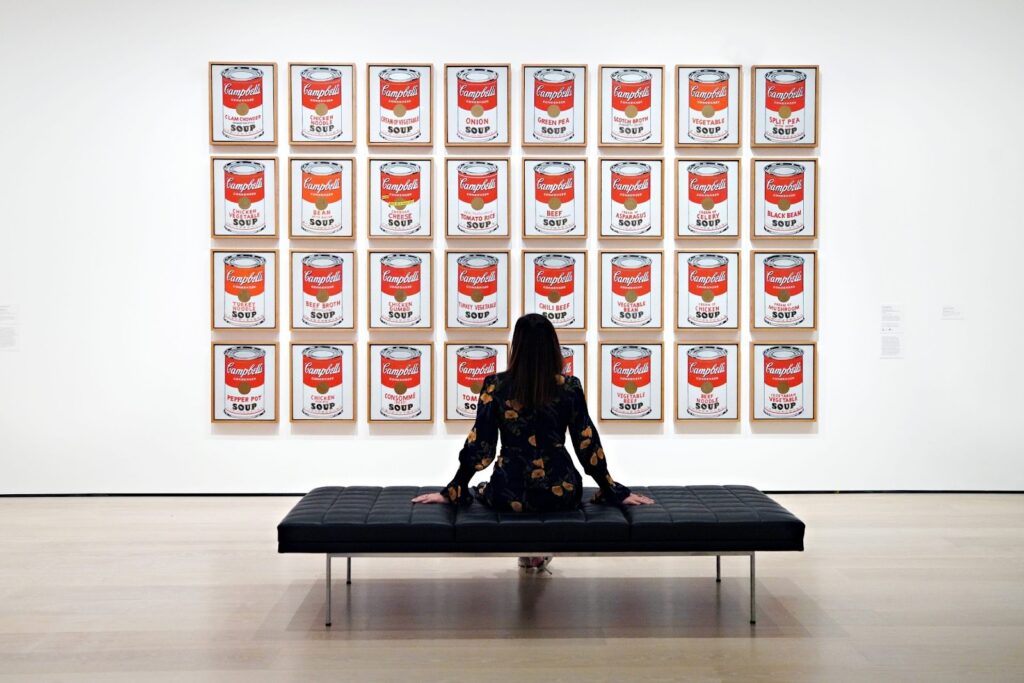
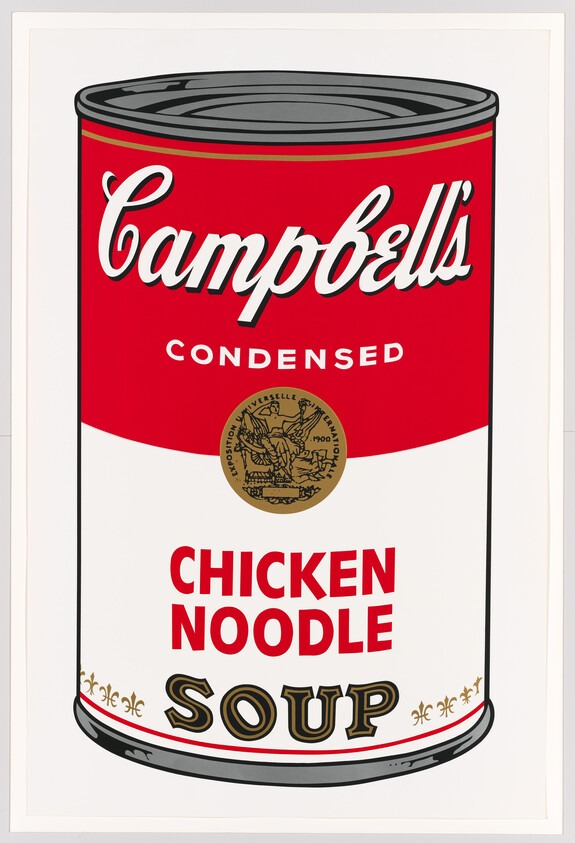
If it could speak, it would probably raise an eyebrow.
And say, “You’re questioning this… but not everything else you consume?”
Because at first glance, it feels almost too simple. Just soup cans. Repeated. Familiar. Ordinary.
And that’s exactly why it works.
Warhol didn’t pick something rare or profound. He picked something everyone already knew. Something people saw every day and never really thought about.
And maybe that’s what it would point out:
“You walk past things like this all the time.
I just made you stop.”
It might even find it funny that people still ask, “But is this really art?”
Because that question is part of the work itself.
The repetition, the branding, the sameness, it reflects a world already built on mass production and constant consumption.
And if it could speak, it might add, just a little dryly:
“You’re surrounded by this.
I just framed it.”
Not to elevate it.
Not to mock it.
Just to show it, exactly as it is.
And somehow, that was enough to change everything.
8. Untitled Film Still #21 – Cindy Sherman
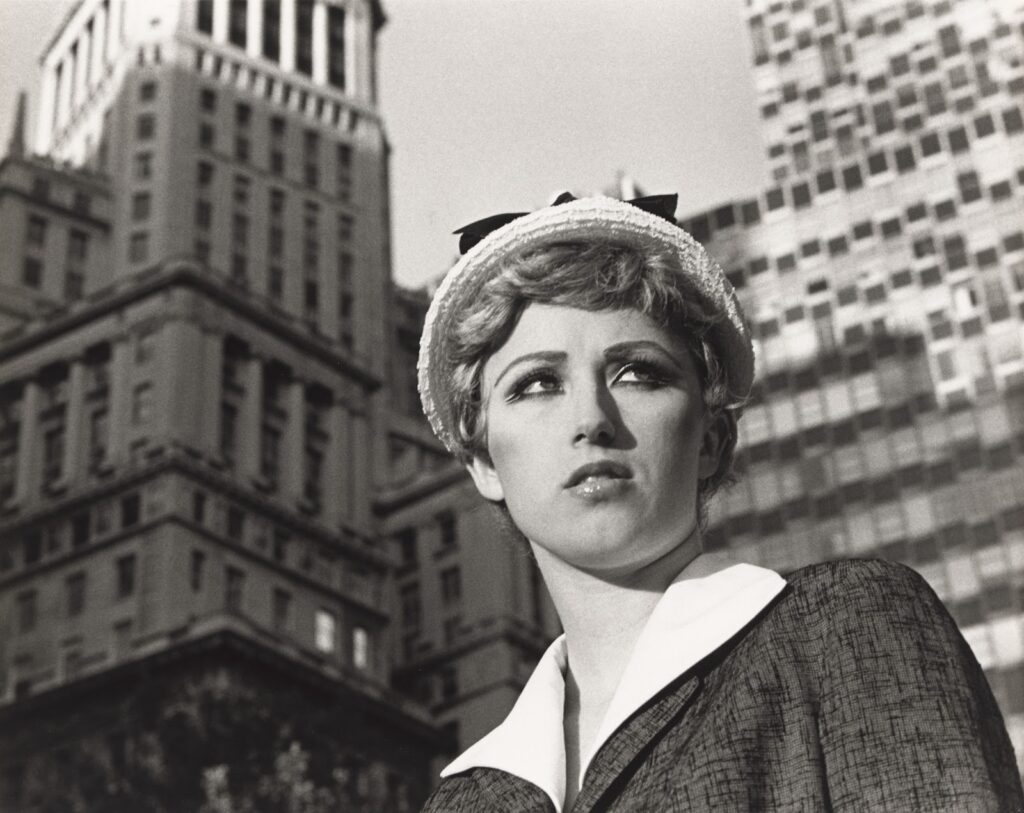
If it could speak, it might pause for a second, then say,
“This isn’t me. But you’ll still try to figure me out.”
At first glance, it feels like a still from an old film. A woman, mid-moment, caught between leaving and staying. There’s tension, but no clear story. No resolution.
And that’s intentional.
Cindy Sherman isn’t documenting a real character, she’s constructing one. Playing with identity, performance, and the roles women are expected to occupy on screen and in society.
And maybe that’s what it would point out:
“You’ve seen this before.
Not me but this version of me.”
Because the image feels familiar, even if you can’t place it. It draws from something collective, cinema, memory, expectation.
And if it could speak, it might push a little further:
“You’re trying to decide who I am.
But I was never just one thing.”
There’s no fixed identity here. No single narrative to land on.
Just a moment that feels real enough to believe,
and constructed enough to question.
And maybe that’s where it stays,
right between what you see,
and what you assume.
After all this, if these artworks could sit in the same room, they probably wouldn’t agree on everything.
Some would demand your attention.
Some would avoid it.
Some would question you more than you question them.
But they might all agree on one thing:
“You keep trying to understand us…
but you rarely spend time with us.”
Because somewhere between museum visits, social media posts, and quick glances, the act of looking has become shorter, faster, more distracted.
Art hasn’t changed.
We have.
We want meaning immediately. We want clarity, context, something we can explain and move on from. But most of these works were never made for that kind of speed.
They were made to be sat with. Questioned. Misunderstood. Returned to.
And maybe that’s what they’ve been saying all along.
Not in words, but in the way they hold your attention just a little longer than expected.
Which artwork do you think would have the most to say and what would it say?
Reading recommendation – 10 Most Controversial Artworks of All Time