
This Realism Artist Paints Fur So Real You Want to Touch It ┃ Lisa Smith
At Arts to Hearts Project, we see a lot of art. Thousands of submissions, hundreds of portfolios, work from every corner of the world. And most of it is good. Some of it is really good. But every now and then something comes through that makes us physically stop what we are doing. Not because it is trying to impress us. Because something in it feels alive in a way we were not expecting.
That is what happened when Lisa Smith’s paintings landed in front of us for Arts to Hearts Magazine Issue 11.
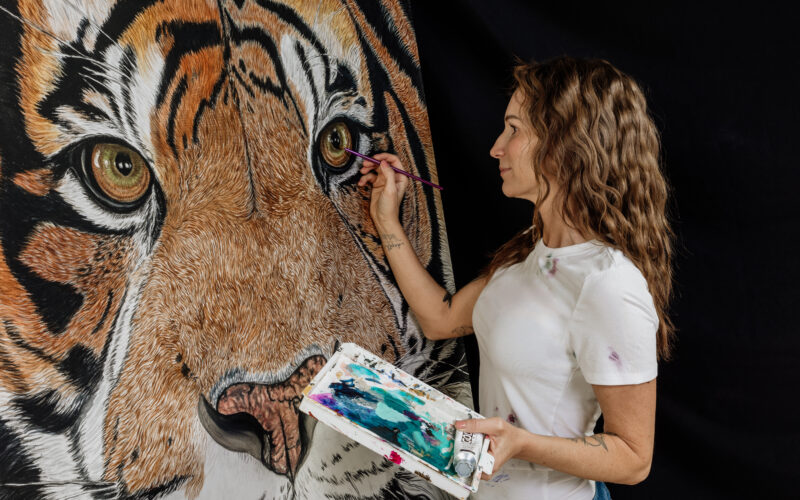
We stared at an animal and the animal stared back and for a second we forgot we were looking at paint. The fur had weight. The eyes had warmth. There was a presence in the painting that had nothing to do with photographic accuracy and everything to do with the fact that whoever made this genuinely cares about the creature on the canvas. Not as a subject to paint. As a being to honour.
That is Lisa. And we are so glad to have her in this issue.
She is a wildlife and animal portrait artist working in realism. She has been drawing animals since she was a kid and it never became a phase she grew out of. It became the centre of everything. And the more time we spent with her work the more we understood why. Because Lisa does not paint species.
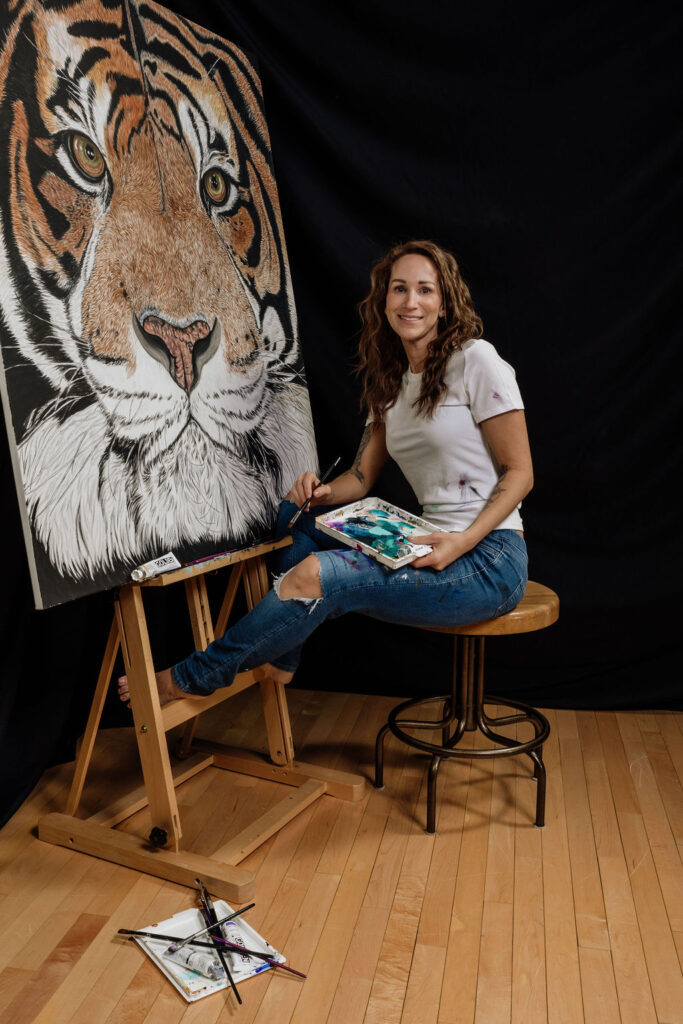
She paints individuals. One animal at a time. One gaze at a time. Every painting is built with this quiet insistence that the creature in it matters. Not as a category. As itself.
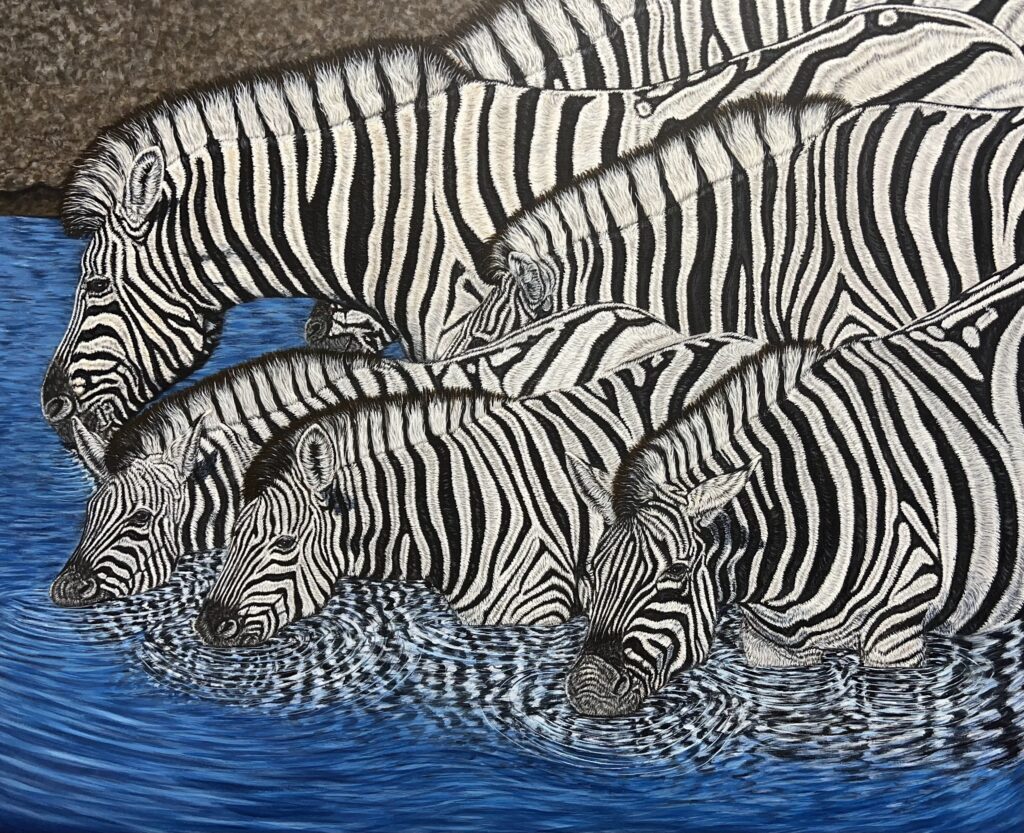
The way she handles surface is part of what makes the work so striking. There is a physicality to her paintings that goes beyond realism. You look at fur and your brain tells your hand it would be soft.
You look at feathers and you can almost feel how light they would be between your fingers. She is building texture that speaks to the body, not just the eye. And that takes a kind of attention that you cannot rush or fake.
And then there are the eyes. Always the eyes. That is where the whole painting lives for her. When the animal meets your gaze something happens. Everything slows down. The background goes quiet. The details stop mattering.
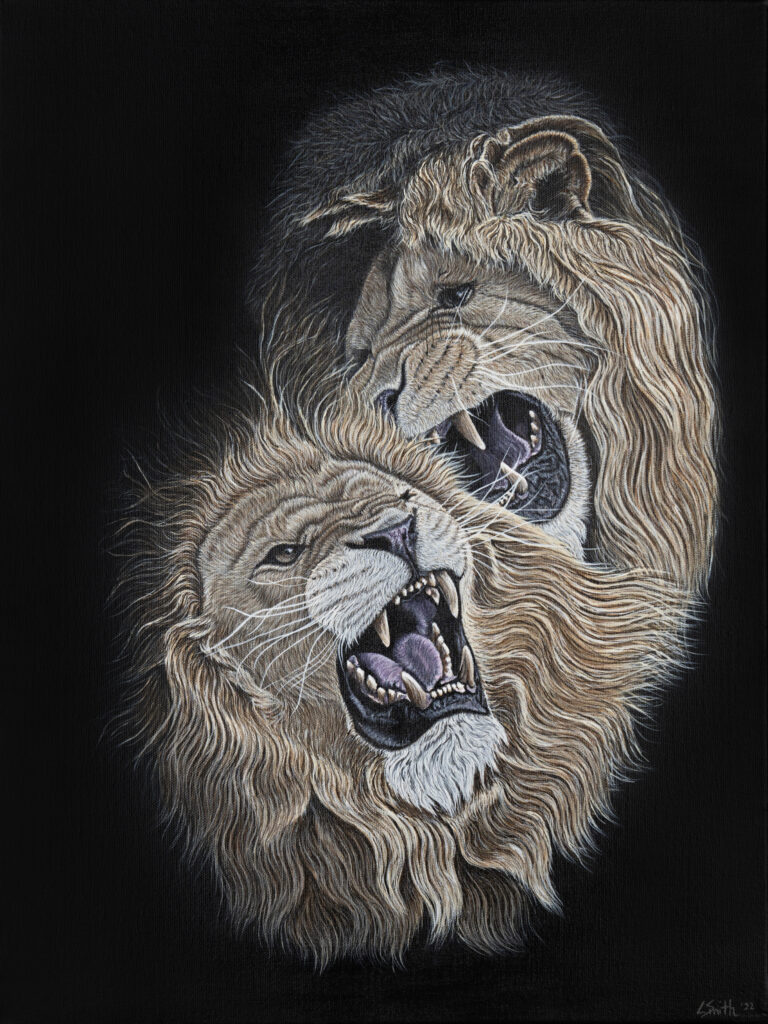
It is just you and this creature in a moment of recognition. She is not trying to make you think about conservation or endangered species or habitat loss. She is trying to make you feel something for one animal. And from that feeling, the caring follows on its own.
She had a turning point last year that pushed everything forward. Her collection was accepted for exhibition at an international airport, and she had to step out from behind the canvas for the first time. Public speaking. A wider audience. Her face attached to her work. It scared her. She did it anyway. And it opened doors she did not know were there. That is usually how it works with artists who are ready. The scary thing turns out to be the necessary thing.
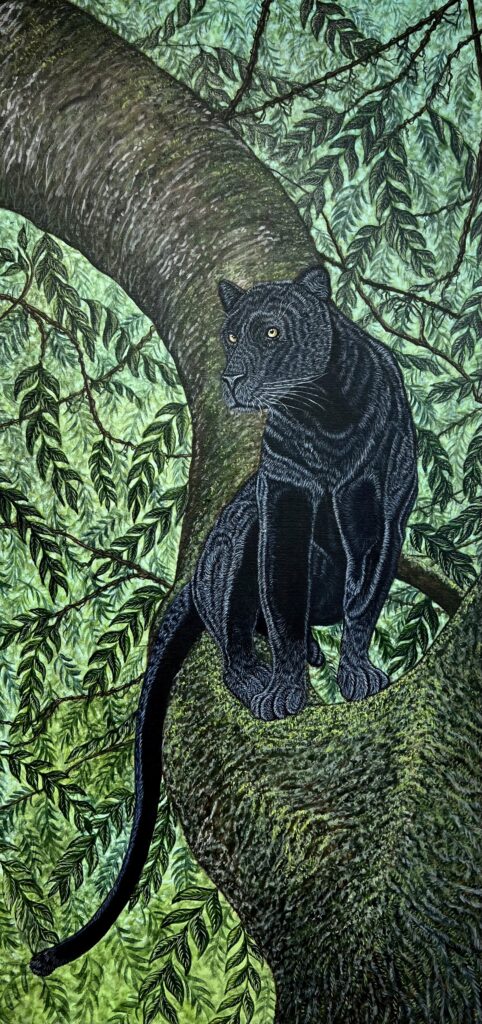
She keeps her compositions deliberate. Quiet backgrounds that support without competing. Restraint where other painters might overwork. Every animal painted with the same care regardless of whether it is a lion or someone’s pet cat. That consistency is not a style. It is a value. And you can feel it in every painting she makes.
Let’s hear from Lisa about what the eyes of an animal can teach us, how she builds surfaces that feel alive, and what happened when she finally stepped out from behind the canvas.
Q1. Could you share your background and the journey that led you to focus on wildlife and animal portraiture at what point did this subject become central to your practice?
I’ve always been deeply curious about the animal world, it’s honestly all I ever wanted to draw. From a young age I was drawn to animals not just for how they look but for their presence, their behaviour and the quiet intelligence they carry. Not to mention the abundance of different species! I found them endlessly fascinating, and that curiosity never really faded. As my creative work developed, I realized that wildlife and animal portraiture was one that felt the most natural and meaningful to me. The more I painted animals the more I understood that this is where my strongest connection and passion lived. At that point it naturally became my central focus, using realism to capture not just animal itself but the emotion and sense of wonder that first drew me to them, and wanting to share that with others.
Q2. Your paintings pay close attention to individual animals rather than generalised species. How do you approach capturing presence without relying on photographic precision alone?
I establish realism because it is the style I love. This is because I can’t help but see the all the small details in a photograph and even in everyday life, it’s just the way my brain is wired. I pay close attention to individual animals instead of a generalized species because I’m in genuine awe of all the different kinds of animals that live amongst us. However, my work isn’t about being picture perfect, it’s about the feeling I want to convey in my painting. I observe posture, movement, and energy which all help breathe life into my paintings. The balance between realism and expression is what helps each animal read as an individual.
Q3. Light and surface play a significant role in your work. How do you think about texture and touch when building fur, feathers, or skin?
Light and surface are central to how I build the textures of an animals. I approach texture as something that is felt as much as seen, using layered paint, shifts in values and directional strokes. I want the depth of the fur, or feathers or skin to feel real enough that the viewer can imagine what it would be like to touch it.
Q4. In paintings like Eyes of the Serengeti, the gaze of the animal carries a strong presence. How do you think about eye contact and gaze in your compositions, what do you hope it communicates?
Eye contact is really intentional in my work, and honestly, the eyes are my favourite part of any painting I do. They’re also the first thing I look for when I’m viewing other art. That moment of connection is what pulls me in. In Eyes of the Serengeti, I wanted the gaze to feel more like a quiet exchange rather than something confrontational. When the animal meets the viewer’s eye, I want to slow everything down and make you really notice them as an individual.
The eyes carry so much emotion and intelligence, and I hope that connection sparks a deeper care for the natural world and its conservation.
Q5. You accept commissions and custom portraits of pets. How does the experience of working directly from reference photos change the way you interpret personality and emotion in a subject?
When I work on commissions and pet portraits, I often use multiple reference photos. I actually love asking for silly or less than perfect ones, because those really show the pet’s true personality. Those moments of uniqueness are what make them feel real. The photos give me structure and likeness but the emotion comes from interpreting expression, posture and those small familiar details that owners recognize instantly. By building from several references, I can build a portrait that feels personal and alive, and full of character.
Q6. Backgrounds in your paintings support the subject without overpowering it. How do you decide how much environment a painting needs?
I use the background more as a supporting role, it’s there to give atmosphere and context but not to compete with the animal. By keeping my backgrounds quieter, the animal holds the focus while still feeling connected to its environment. It’s really about balance and restraint and knowing when less will say more.
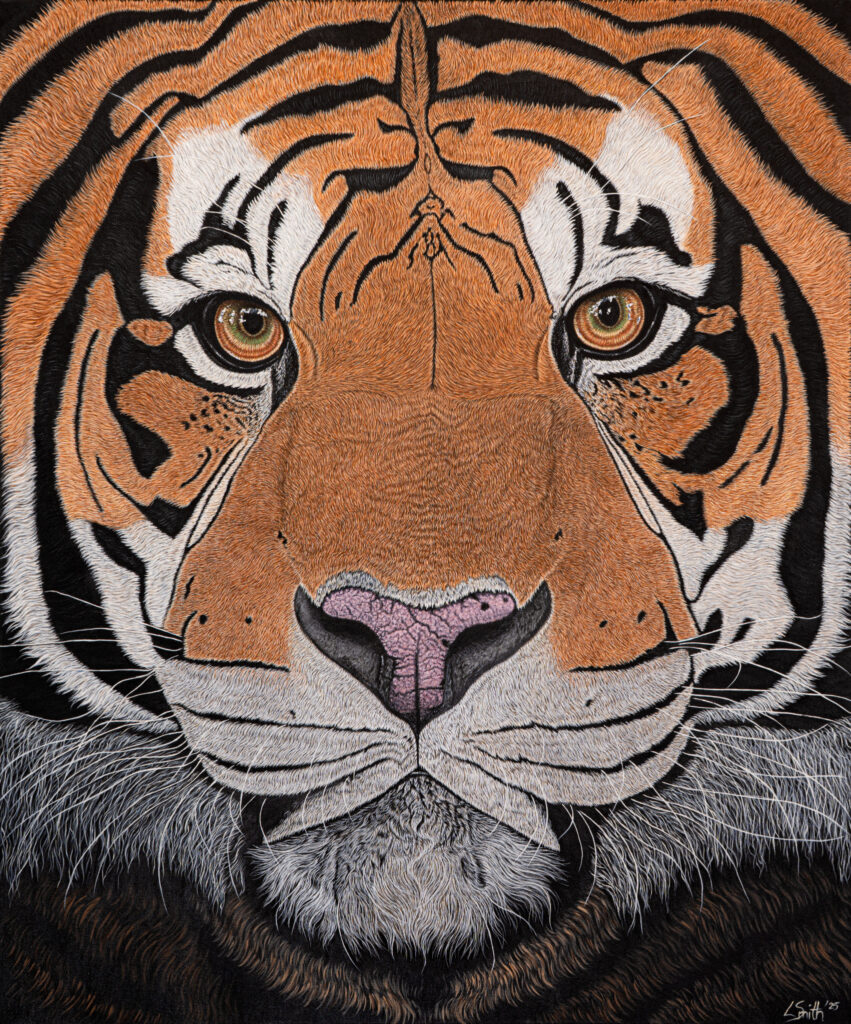
Q7. Across different species, your animals carry a sense of dignity. Is that something you intentionally aim for, or something that emerged over time?
It’s definitely intentional. With every painting I do, I want the animal to be dignified. I have a lot of respect for animals, and I try to let that guide how I portray them. I’m not really interested in dramatizing or exaggerating them, but more focused on honouring who they are in that moment. That calm presence is what is what gives them strength and it’s important to me that every species is shown with that same sense of dignity and respect.
Q8. What do you hope viewers feel in the first moment they encounter one of your paintings?
I hope that the first thing viewers feel is a pause, I want the painting to make them stop and really look. I want them to see the animal and feel a connection right away. Whether it’s curiosity, awe or just a quiet moment of wonder. If they feel that before noticing all those little details first then I feel my painting has done its job.
Q9. In your creative life so far, has there been a moment or project that felt like a turning point where your work took on new confidence, risk or clarity?
Yes, definitely! I’d say my biggest turning point was when I submitted my Into Africa collection and was accepted as a feature artist to have the collection shown at the YMM International Airport last year. That totally pushed me out of my comfort zone having to put my face out there for a wider audience and even giving my first speech, which I might add was terrifying. That experience helped build my confidence, although I don’t think public speaking will ever get easier. It did, however, make it easier to continue putting myself and my work out there and showed me that taking risks can open doors that I never imagined!
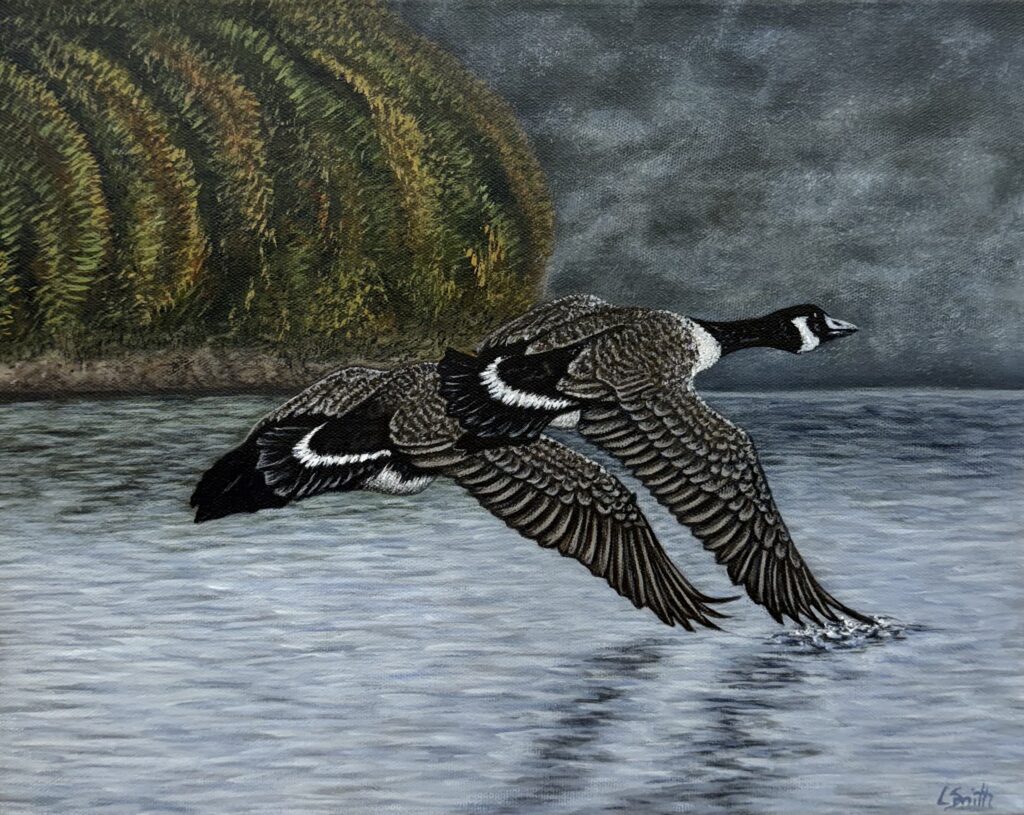
Q10. Looking back at earlier work compared to what you’re making now, what feels most different in how you handle detail and restraint?
Looking back at my earlier work, the biggest difference is how I handle details. These days I find I don’t check my reference photos as much and just go with the flow and only check back to make sure I’m staying on the right track. By laying down the right layers and colors and remembering I don’t need to capture every single hair or feather for the work to look and feel alive. That said, it’s still very much a work in progress and I’m always learning and refining as I go.
Q11. What advice would you give to emerging artists who want to build work that combines technical skill with emotional depth and meaning?
I’d say don’t get caught up in comparing yourself to others and making everything perfect that you forget why you started creating in the first place. Technical skill is just a piece of the puzzle, the feeling that viewers get when looking at your artwork is what’s really important. Keep taking risks and practicing your craft, and don’t be afraid to put your own flare into your work!
As our conversation with Lisa came to a close, we sat with a question that felt bigger than art. When was the last time we actually looked at an animal? Not glanced at one. Not scrolled past a photo of one. Actually looked. Into the eyes. Long enough to feel something.
Most of us do not do that. We live alongside animals every day and we barely see them. They are background. They are wallpaper. They are something we notice for half a second and then move on. Lisa’s paintings do not let you do that.
They put an animal right in front of you and they hold you there. Not with drama. With stillness. With a gaze that is so quiet and so present that walking away feels wrong.
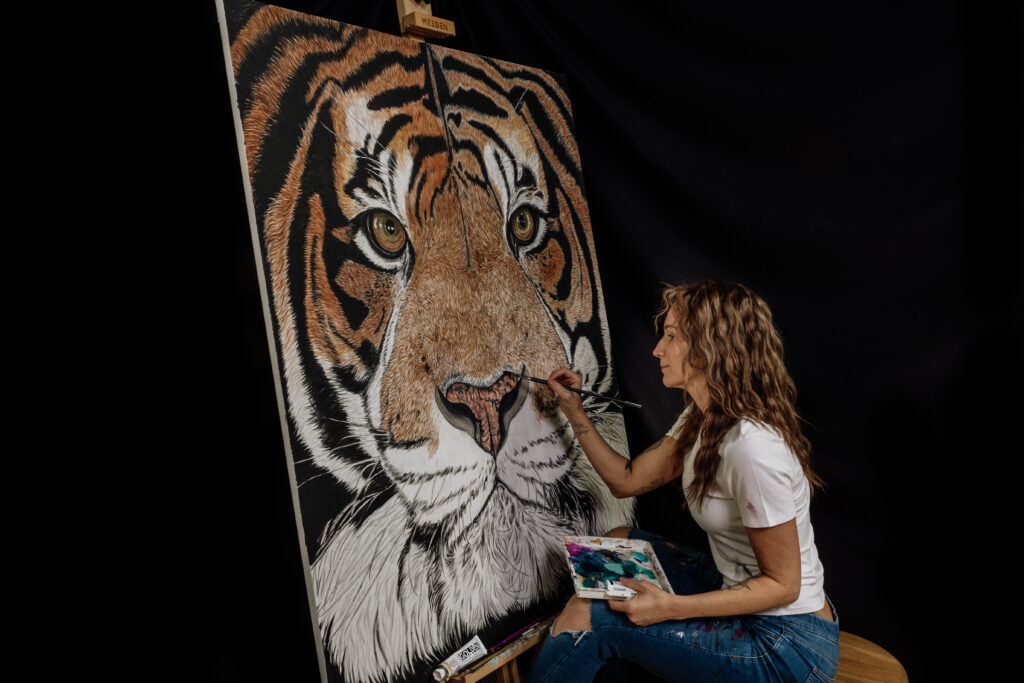
We think the world needs that right now. Not more statistics about how many species we are losing. Not more headlines about extinction. Those are important but they do not change hearts. A painting that makes you look into one animal’s eyes and feel that this is a real individual being, that changes hearts. And that is what Lisa is doing one painting at a time.
She also taught us something about restraint that we think applies to every kind of art. She keeps her backgrounds quiet because she knows the animal does not need competition. She does not add more when less is working.
She trusts the subject to carry the painting. That confidence, knowing when to stop, knowing when the work is doing enough on its own, that is one of the hardest skills any artist can develop. And Lisa has it.
So look at an animal today. A real one or one in a painting. Look at its eyes. Stay there. Do not rush past it. Let yourself feel whatever comes up. That pause is where everything starts.
Follow Lisa Smith through the links below and see what happens when an artist paints with so much care that you forget you are looking at a canvas.