





The World’s Most Famous Missing Paintings
There is something uniquely compelling about a painting that cannot be seen. Unlike works lost to time or destruction, missing paintings occupy a more elusive space, they exist, somewhere, just out of reach. Hidden in private collections, locked away in vaults, or lost within the shadows of history, these artworks continue to circulate not through galleries, but through speculation, investigation, and myth.
Art theft has long blurred the line between crime and legend. From wartime looting to calculated museum heists, the disappearance of major works has often revealed as much about power, politics, and desire as it has about the art itself. In many cases, the absence of these paintings has only intensified their significance, transforming them into cultural ghosts, objects defined as much by where they are not as by what they once were.
The following works span centuries, movements, and geographies, yet they share a common fate: each has vanished under circumstances that remain unresolved. Together, they form a fragmented history of loss, one that continues to shape how we understand value, ownership, and the fragile permanence of art.
The Ghent Altarpiece (The Just Judges Panel)
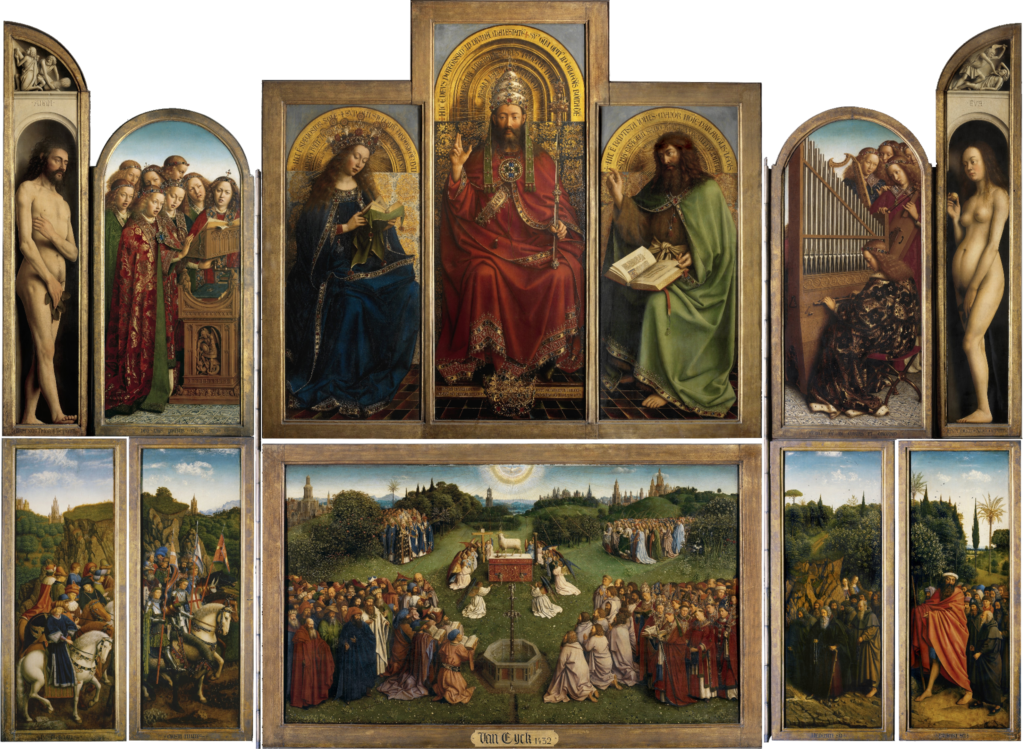
Few artworks carry a history as turbulent as the Ghent Altarpiece by Jan van Eyck and Hubert van Eyck. Completed in 1432, this monumental polyptych has survived iconoclasm, Napoleonic looting, and wartime displacement, repeatedly moving across borders as empires rose and fell.
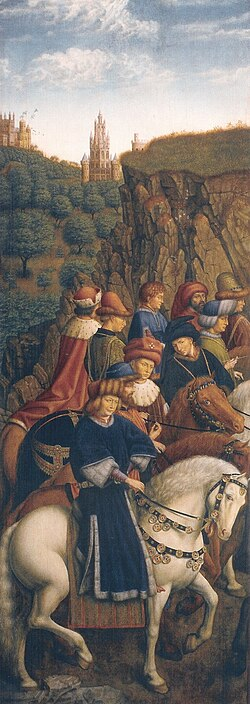
Yet its most enduring mystery lies in a single panel: The Just Judges. Stolen in April 1934 from St. Bavo’s Cathedral in Ghent, the panel vanished after a ransom demand was refused. The alleged thief, Arsène Goedertier, a Belgian stockbroker, left behind cryptic letters and, on his deathbed, reportedly claimed he alone knew the panel’s location. Despite extensive investigations, no trace of the original has ever been found.
The altarpiece itself is considered a cornerstone of Northern Renaissance art, pioneering the use of oil paint with an unprecedented level of detail, symbolism, and luminosity. The missing panel, which depicted a group of mounted judges riding toward a sacred gathering, was integral to the altarpiece’s complex theological narrative.
Today, a meticulous replica by Jef Van der Veken occupies its place, convincing at a glance, yet unable to replace the original’s historical and material presence. Nearly a century later, The Just Judges remains one of the most sought-after missing artworks in the world, its absence continuing to provoke speculation, obsession, and ongoing searches.
Poppy Flowers
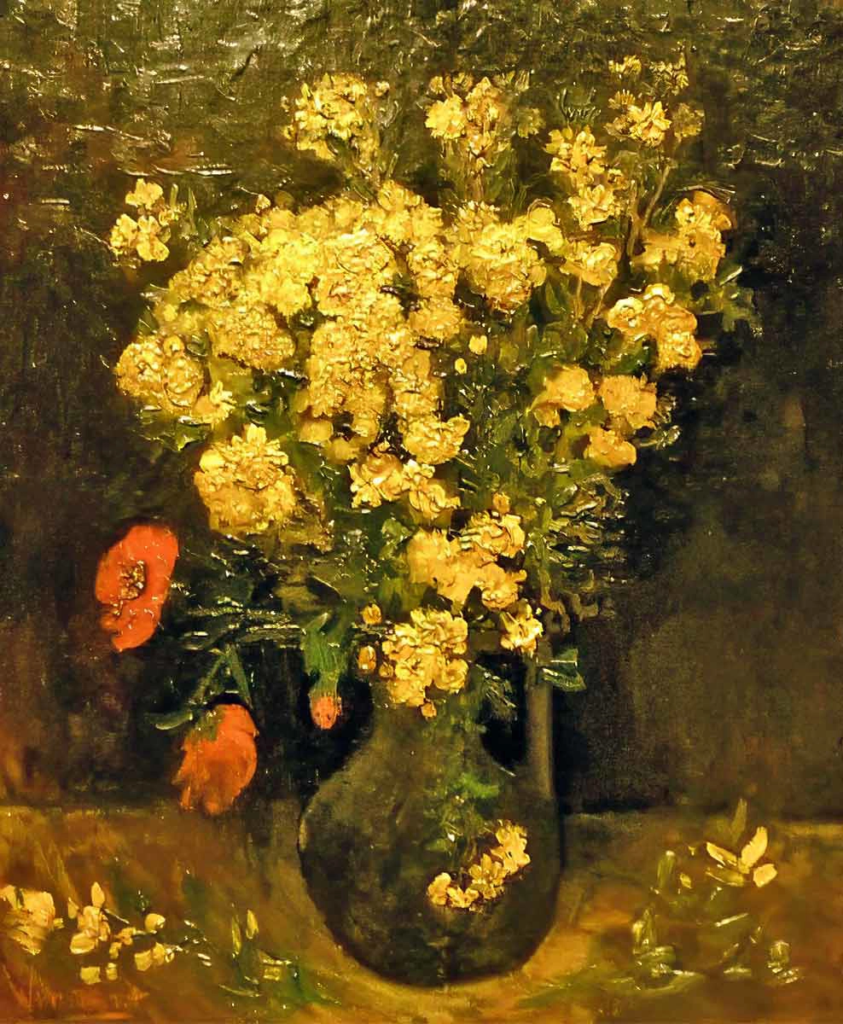
At first glance, Poppy Flowers appears deceptively simple, a vase of red blooms set against a muted background. Yet in the hands of Vincent van Gogh, even a still life becomes charged with movement, color, and emotional intensity. Painted in 1887 during his Paris period, the work marks a shift in his artistic language, as he moved toward brighter tones and more expressive brushwork.
Its history, however, is defined less by its creation and more by its disappearance.
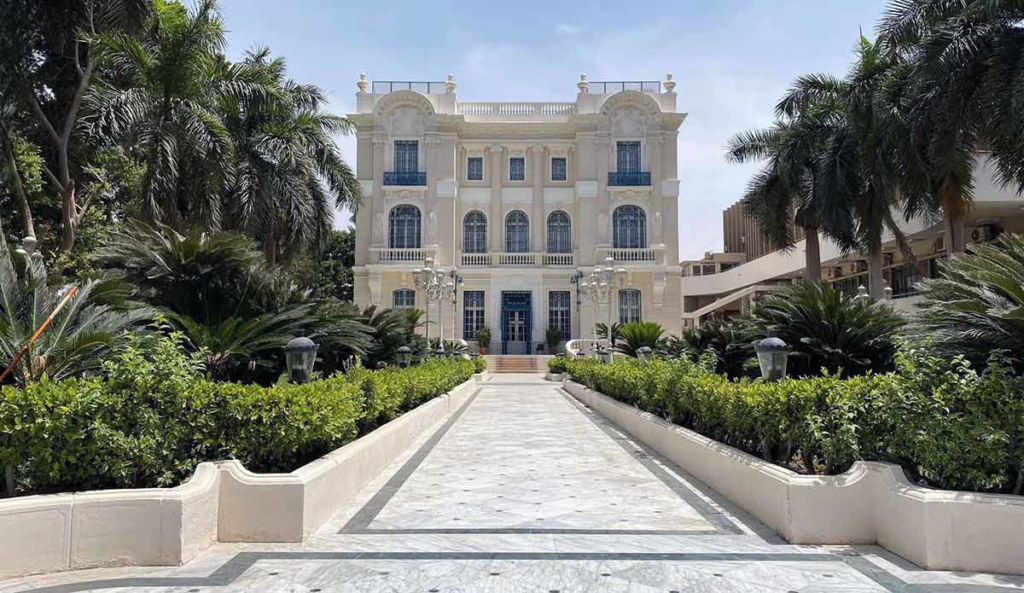
Housed in Cairo’s Mohamed Khalil Museum, Poppy Flowers was stolen not once, but twice. The first theft in 1977 ended in recovery two years later under undisclosed circumstances. But in August 2010, the painting vanished again, this time in a brazen daylight theft that exposed significant security failures within the museum. Reports revealed that only a handful of surveillance cameras were operational, and the painting was cut directly from its frame using a sharp tool.
Despite early claims of arrests, authorities later withdrew their statements, and the investigation lost momentum. No confirmed leads have emerged since.
Estimated to be worth tens of millions of dollars, Poppy Flowers remains one of the most high-profile missing works by Van Gogh, its absence made all the more striking by the artist’s enduring global presence.
Great, keeping the tone varied and consistent. Let’s move to the next:
Reading Girl in White and Yellow
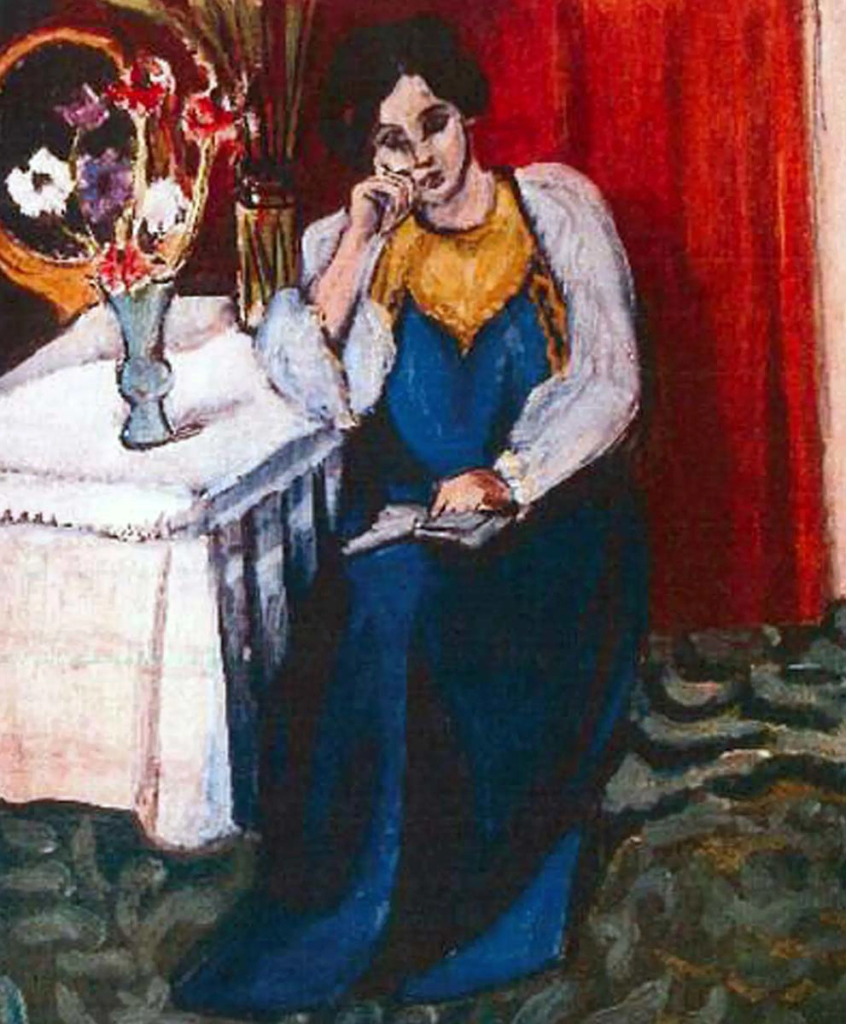
In Reading Girl in White and Yellow, Henri Matisse distills a quiet, intimate moment into a study of color, balance, and stillness. Painted in 1919, the work reflects a more measured phase of his practice, where bold Fauvist experimentation gives way to refined compositions and controlled harmony. The figure, absorbed in her book, becomes less a subject and more a vessel for light and color.
That stillness was abruptly interrupted nearly a century later.
In October 2012, the painting was stolen from the Kunsthal Museum in Rotterdam in a swift, carefully executed heist. Thieves entered the museum in the early hours of the morning and removed multiple works within minutes, including paintings by Claude Monet and other major artists. The operation was notable for its speed and precision, suggesting prior planning and familiarity with the museum’s layout.
What followed remains one of the most unsettling twists in recent art crime. After several arrests, the mother of one of the suspects claimed she had burned the stolen artworks in an attempt to destroy evidence. Forensic analysis of ashes revealed traces consistent with paintings, pigments, canvas, and wood, though no definitive confirmation could be made.
As a result, Reading Girl in White and Yellow exists in a state of uncertainty: possibly destroyed, yet never conclusively accounted for. Until proven otherwise, it remains one of the most hauntingly unresolved losses in modern art.
On it, keeping the tone sharp and distinct.
The Storm on the Sea of Galilee
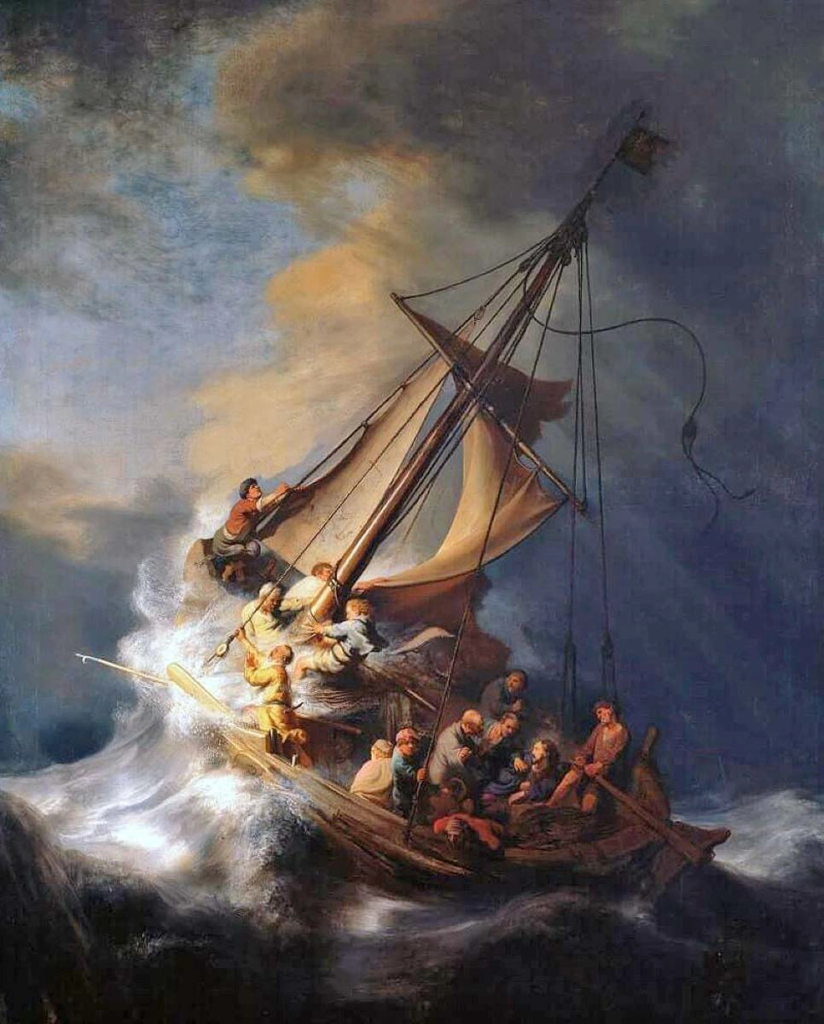
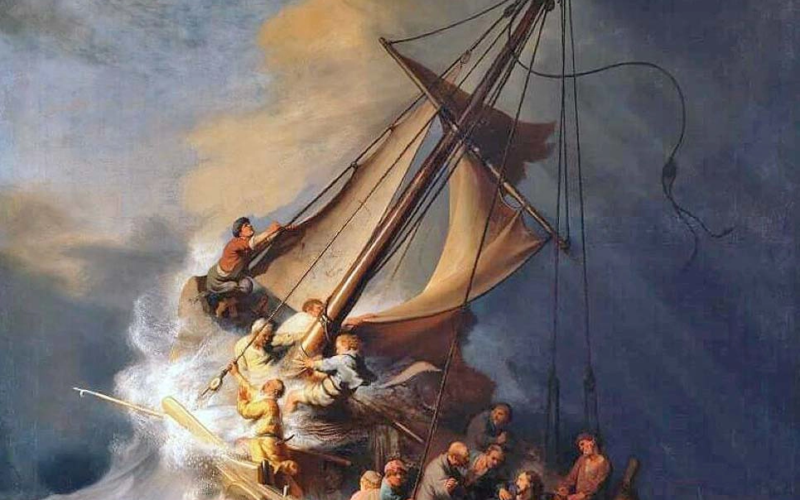
Violence, movement, and divine intervention collide in The Storm on the Sea of Galilee, a work that stands apart within Rembrandt van Rijn’s oeuvre. Painted in 1633, it is the artist’s only known seascape, depicting the biblical moment in which Christ calms a storm as his disciples struggle against the waves. The composition is charged with tension, tilted diagonals, crashing water, and figures caught between fear and faith.
Its disappearance is equally dramatic.
In March 1990, the painting was stolen from the Isabella Stewart Gardner Museum in what remains the largest art heist in modern history. Two men, disguised as police officers, gained entry to the museum in the early hours of the morning. Once inside, they restrained the guards and proceeded to remove 13 artworks from the walls, including works by Johannes Vermeer and Edgar Degas.
Unlike many thefts driven by opportunism, this operation appeared deliberate and highly organized. Yet despite decades of investigation, including FBI involvement and substantial reward offers, no arrests have been made and none of the works have been recovered.
Today, the empty frame of The Storm on the Sea of Galilee still hangs in the museum, a deliberate decision that transforms absence into a lasting presence, and a reminder of one of art history’s most enduring mysteries.
Let’s continue, keeping the rhythm and variation intact.
The Poor Poet
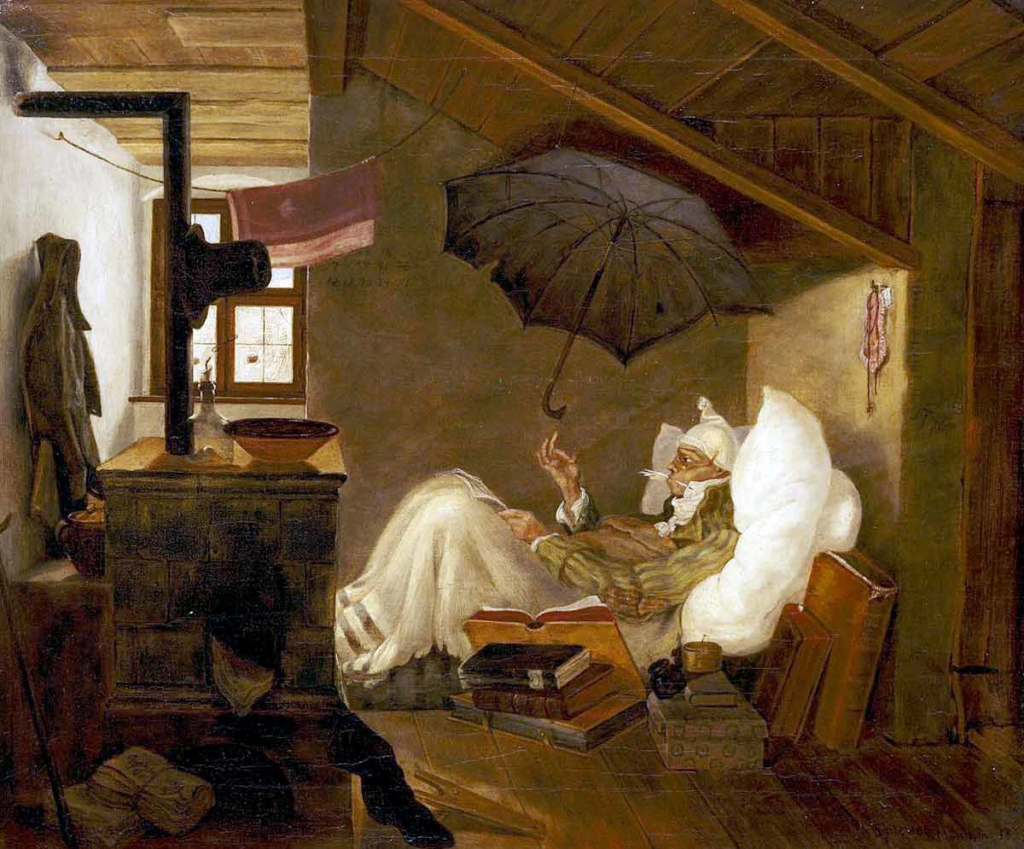
At once humorous and quietly melancholic, The Poor Poet by Carl Spitzweg has long been read as an image of artistic devotion under precarious conditions. Painted around 1839, the work depicts a solitary writer lying in a cramped attic, shielded from a leaking roof by a suspended umbrella, an absurd yet tender symbol of creative survival.
Its own history, however, mirrors that instability.
The painting was first stolen in 1976 by performance artist Ulay, who removed it from Berlin’s Neue Nationalgalerie in broad daylight as part of a conceptual act. He later returned the work, framing the gesture as a critique of cultural ownership and accessibility. While unconventional, the painting was safely recovered.
A second theft proved far less poetic. In 1989, The Poor Poet was stolen again, this time from Schloss Charlottenburg’s Galerie der Romantik in Berlin. Unlike the earlier incident, this disappearance was not accompanied by explanation or return. The painting was taken by unknown individuals and has not been seen since.
Despite investigations, no confirmed leads have emerged regarding its whereabouts. Today, The Poor Poet remains one of Germany’s most recognizable missing artworks, its image widely reproduced, yet its original surface lost. In an unexpected way, the painting’s subject and fate have become intertwined: a work about fragility and obscurity, itself slipping quietly out of reach.
Great, now we move into the Gardner heist’s most famous piece.
The Concert
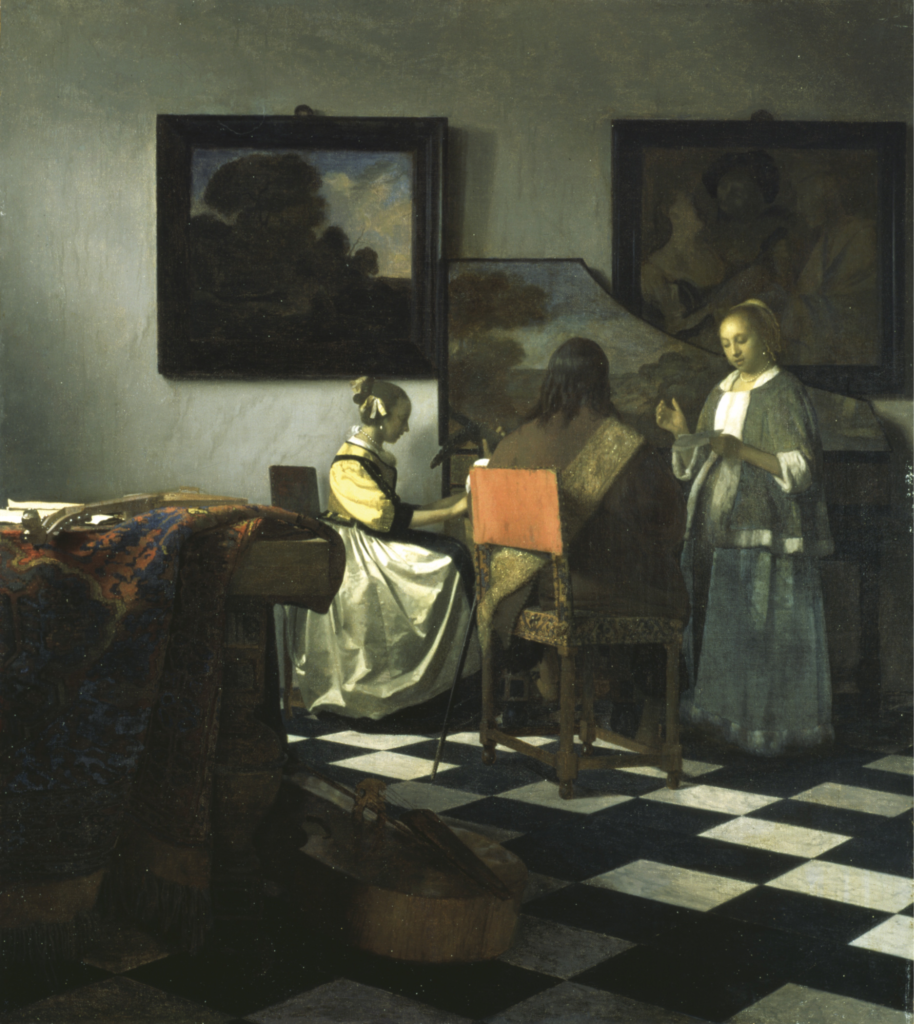
There is a quiet intimacy to The Concert that makes its absence feel particularly profound. Painted around 1664 by Johannes Vermeer, the work depicts three figures gathered around music, an interior scene defined by balance, light, and an almost meditative stillness. Like much of Vermeer’s work, it transforms an ordinary moment into something deeply contemplative.
That stillness was violently disrupted in March 1990.
The Concert was among the 13 works stolen from the Isabella Stewart Gardner Museum during a meticulously executed heist. Two men posing as police officers entered the museum in the early hours, subdued the guards, and removed several masterpieces from their frames. In total, the theft included works by Rembrandt van Rijn and Edgar Degas, but Vermeer’s painting quickly became the most valuable of the group.
With fewer than 40 known paintings attributed to Vermeer, each work carries exceptional weight. Today, The Concert is widely considered the most valuable missing painting in the world, with estimates placing its worth well into the hundreds of millions.
Despite decades of investigation, credible leads, and a substantial reward offered by the museum, the painting has never been recovered. Its empty frame still hangs in the gallery, an intentional absence that continues to draw attention to what is no longer there.
And now the final one, ending on a historically weighty note.
Portrait of a Young Man
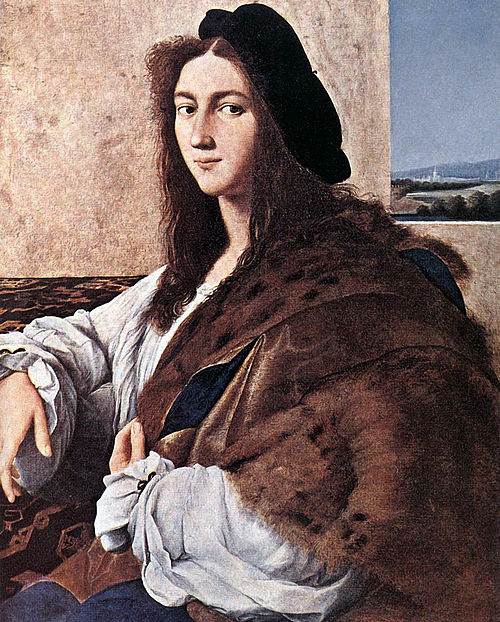
Often described as one of the most important missing paintings of the Renaissance, Portrait of a Young Man by Raphael carries a legacy shaped as much by war as by art. Painted around 1513–1514, the work is believed by many scholars to be a self-portrait, though its subject has never been definitively confirmed. What is certain, however, is its significance both as a refined example of Raphael’s portraiture and as a cultural artifact of immense historical value.
Its disappearance is tied to one of the most devastating periods of cultural loss in modern history.
The painting was part of the Czartoryski Collection in Poland when it was seized by Nazi forces during World War II. Like thousands of other artworks looted during the occupation, it was taken under orders tied to systematic cultural plunder. The work was last documented in the possession of Nazi officials, after which its trail goes cold toward the end of the war.
Despite ongoing efforts by the Polish government and international agencies to trace looted art, Portrait of a Young Man has never been recovered. Its estimated value today is considered immeasurable, not only financially, but historically.
More than a missing artwork, it stands as a symbol of wartime displacement, and of the countless cultural objects that vanished in the wake of conflict, still waiting to resurface.

What remains most striking about these missing works is not only their value, but their persistence. Decades and in some cases centuries, after their disappearance, they continue to surface in conversations, investigations, and collective imagination. Their stories are retold not simply because they are unsolved, but because they resist closure.
In museums, empty frames hang in quiet acknowledgment. Elsewhere, replicas attempt to restore what is no longer there. Yet neither fully replaces the original presence of the work, the texture, the surface, the history embedded within it. These absences are not neutral; they alter the meaning of the spaces they once occupied.
And still, the possibility remains. A rediscovery, a lead, an unexpected return, art history has seen such moments before. Until then, these paintings exist in a state of suspension: neither entirely lost nor truly found.
Because in the end, a missing masterpiece is never just gone. It is waiting, somewhere, for its story to be completed. Which missing painting would you bring back if you could?