
The farm girl who turned fence painting into fine art I Stacy Kron
At Arts to Hearts Project, we have always been fascinated by studios that do not look like studios. The ones with paint on the ceiling. Supplies everywhere. Hundreds of unfinished works stacked against walls and turned backward so they stop talking to you. The spaces that would make most people anxious but for the artist who works there, it is the only setup that makes sense.
That is exactly why we created Studio Visit Book 7. To get inside the real spaces. Not the curated ones. Not the ones cleaned up for a photograph. The messy, honest, lived-in rooms where art actually happens. Where the floor tells you more about the artist than their bio ever could.
Stacy Kron’s studio is one of those spaces. And we are so glad to have her as a selected artist in this edition.
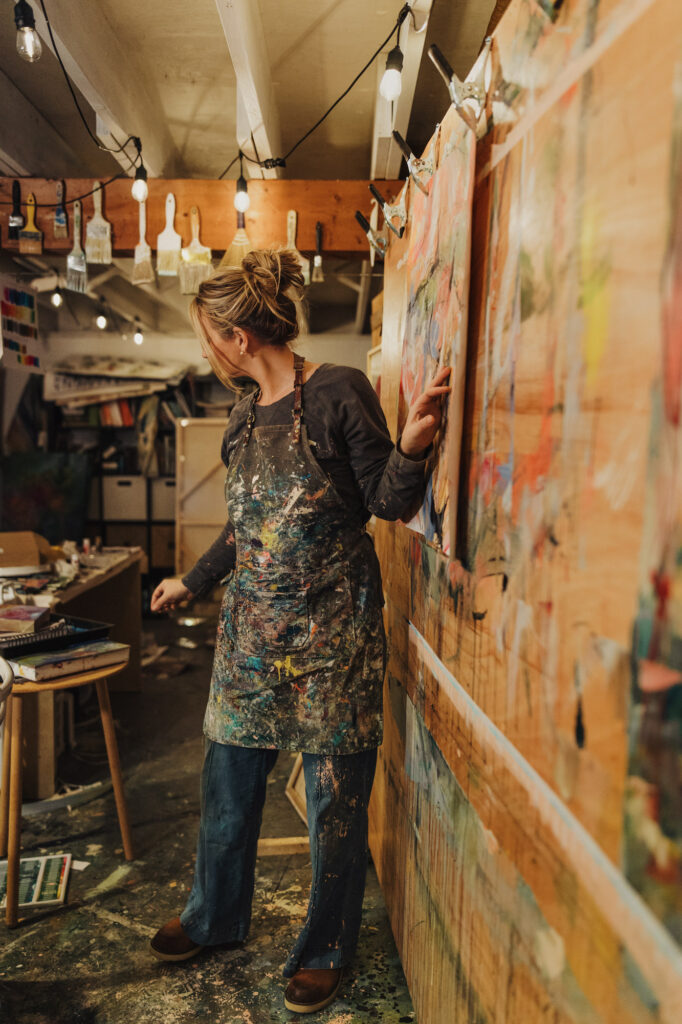
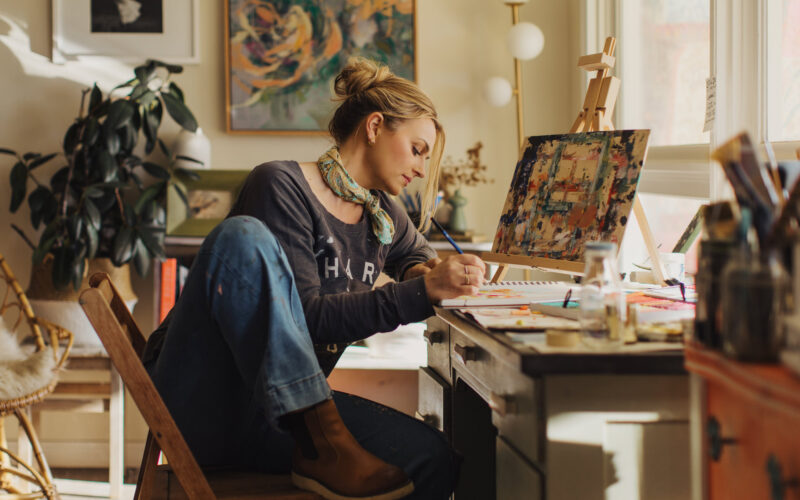
Stacy is based in Minnesota and she works from two spaces in her home. One is at an old desk by south-facing windows where she warms up every morning with her sketchbooks before she even opens her computer. The other is a basement room that used to be storage. The concrete floor is covered in colourful splatters and drips. The walls are splattered. The ceiling is splattered. Her husband built her a movable wall on wheels so she can clip unstretched canvases to it. It is the kind of room where freedom lives because nothing in it is precious.
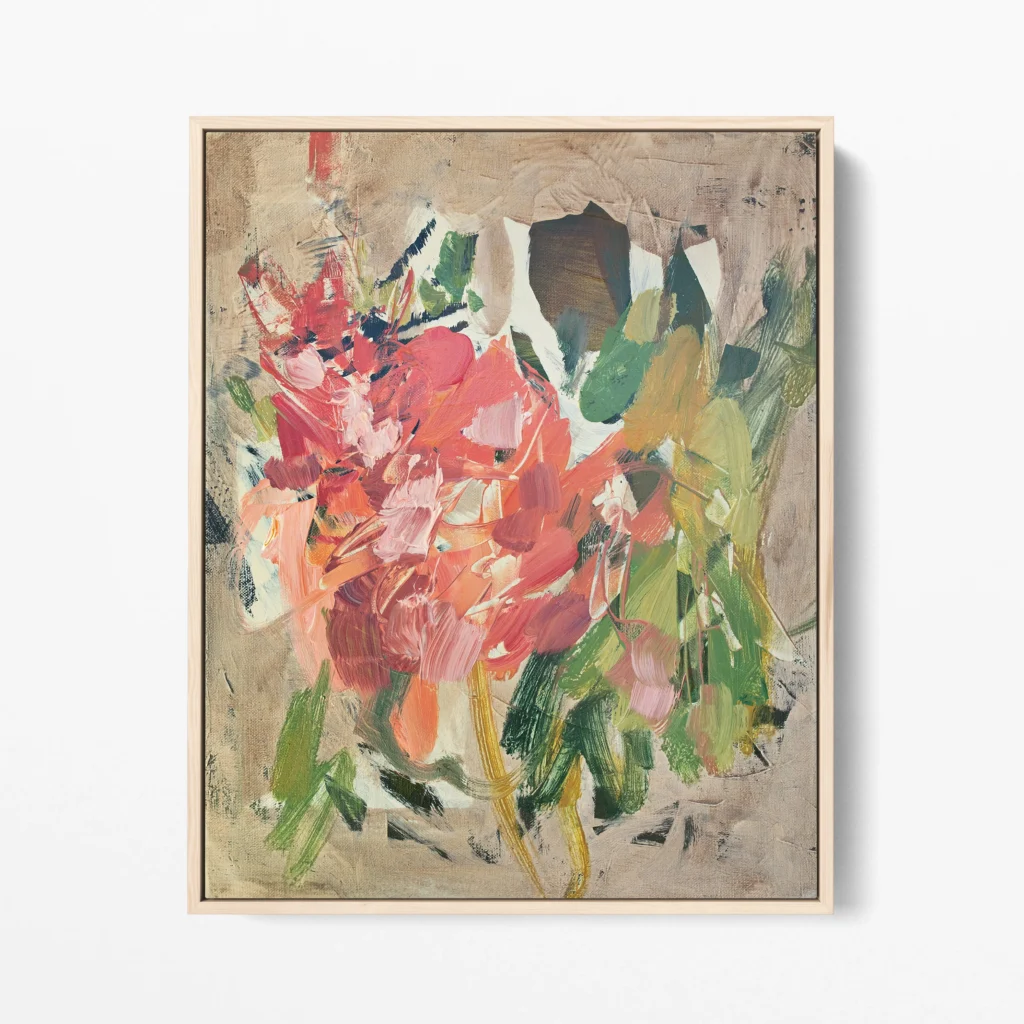
And that freedom is everything to how she works. Stacy makes abstract paintings that are physical, emotional, layered, and alive. She moves her body while she paints. She closes her eyes and imagines her brush as the bow of a cello. She jokes that painting is her cardio but she means it. The more she moves the more expressive the marks become and the more freedom she feels. It is somatic. It is healing. Sometimes there are tears. That is part of it.
She came to this through a life full of different skills. Graphic design. Photography. Years of learning the rules so she could break them on purpose. Her design background shows up in how she composes.
Photography taught her to see light in a way most painters do not. And growing up on a farm, her favourite chore was painting fences and barns with buckets of white paint and big sweeping strokes. She was never neat about it. Some things start early and never leave you.
There are maybe hundreds of works in progress in her studio at any given time. She works based on mood, on energy, on what calls her that day.
She was recently diagnosed with ADHD and instead of seeing it as something to manage she sees it as an asset. It is why she tries so many things. It is why happy accidents keep happening. It is why her process looks like chaos from the outside but makes perfect sense from the inside.
And underneath all of it is her faith. Creating for Stacy is an act of worship. She starts her days asking God what they should create together. That is not a metaphor. That is literally how she begins.
And that conversation runs through everything she makes, every layer she builds, every ugly base coat that gets redeemed and transformed into something beautiful. She believes we are made to create. And she paints like she means it.
Now, let’s hear from Stacy about what her paint-splattered basement has taught her about freedom, why she paints with her eyes closed, how music and memory move through her hands, and what it means to create as an act of faith.
Q1. Before we talk about anything else, let’s begin with the studio. What meets you when you enter, and how does that guide what you do next?
I’m thankful to have a couple of main areas in my home set aside as creative workspaces. One is at an old desk that sits in front of a row of south-facing windows, looking out onto our backyard. I usually start my workday there (especially if the sun is shining) before I even look at my computer. As a warm-up, I add something – anything – to one of my sketchbooks. I don’t overthink it. I also love painting swatches of limited color palettes there; it’s very meditative for me. If I’m working with watercolors or gouache, or painting on small canvases, that’s the spot where it happens. When I need to stretch out and work bigger—or when things are bound to get messy—I head to my home studio in the basement, which used to be a storage room. When you open the door, it’s kind of like an obstacle course to move around. The concrete floor is layered with colorful splatters and drips of paint, and the walls—and even the ceiling—are splattered too. My dear handyman husband built me a movable wall on caster wheels so I can clip unstretched canvas and large papers to it. Having the freedom to make a mess is essential to my process. I usually do a little organizing before I start painting, since I tend to leave my supplies out from the previous session. Sometimes I’ll pick up where I left off, and other times I’ll start something completely new. I ask God what we should create together and let His prompting lead the way.
Q2. How do you organize your workspace so that multiple stages of a painting from loose beginnings to nearly complete pieces can coexist without pulling your focus in too many directions?
Organization is a very loose term in my studio! To most people, it probably looks pretty chaotic—maybe even like an episode of Hoarders. I like to have things out where I can see them, or I forget they exist. I’ve only recently realized that about myself. Even though I love the idea of a perfectly tidy, organized space, it just doesn’t work with my brain. This past year I was diagnosed with ADHD and the more I learn about it, the more it makes sense why I naturally do what I do. If anything, I think ADHD is an asset to my creativity because I try lots of things that yield happy accidents. I lean into what I’m pulled towards at the moment when it comes to creating. My studio contains LOTS of works in progress … maybe hundreds? There isn’t much rhyme or reason to what I work on; it’s mostly based on my mood and how much time I have. Sometimes I like having unfinished pieces in view so they can sit on my mental back burner, quietly telling me what they need next. Other times, I turn them backward so I’m not nagged by their voice.
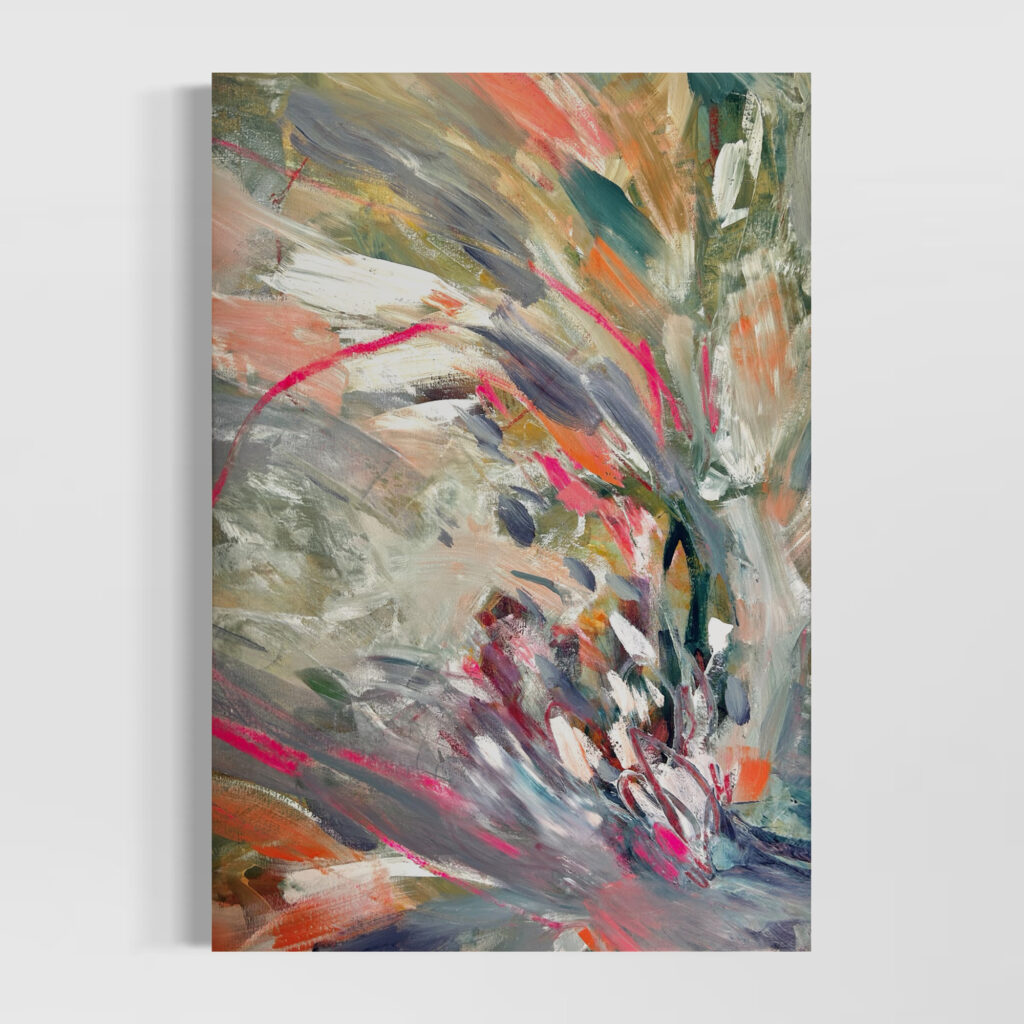
Q3. Your works often contain both opaque and translucent layers. How do you balance revealing earlier layers with introducing new ones and what conversations do those layers have with one another?
The depth and mystery that layers create is something I just adore. Some of my favorite paintings are the ones that started with a really ugly base layer—at least ugly to me at the time. Watching that ugliness be redeemed and transformed through covering, scratching into, scraping away, and refining feels like a metaphor for life. When I cover up marks I really loved because they’re no longer working with the rest of the piece, I just have to trust that something even better can come from it. That trust is a big part of my process.
Q4. With a background in graphic design and photography, how does that training show up in your studio, perhaps before the first brushstroke even happens?
Sometimes it’s helpful to know the “rules” so you can break them effectively. My graphic design background definitely influences my sense of composition and what feels visually balanced. Photography has taught me to notice light in a deeper way—how it shifts and colors a space, creating a different mood, depending on the time of day or season. I’m very solar-powered and always chasing that dreamy, golden sunlight.
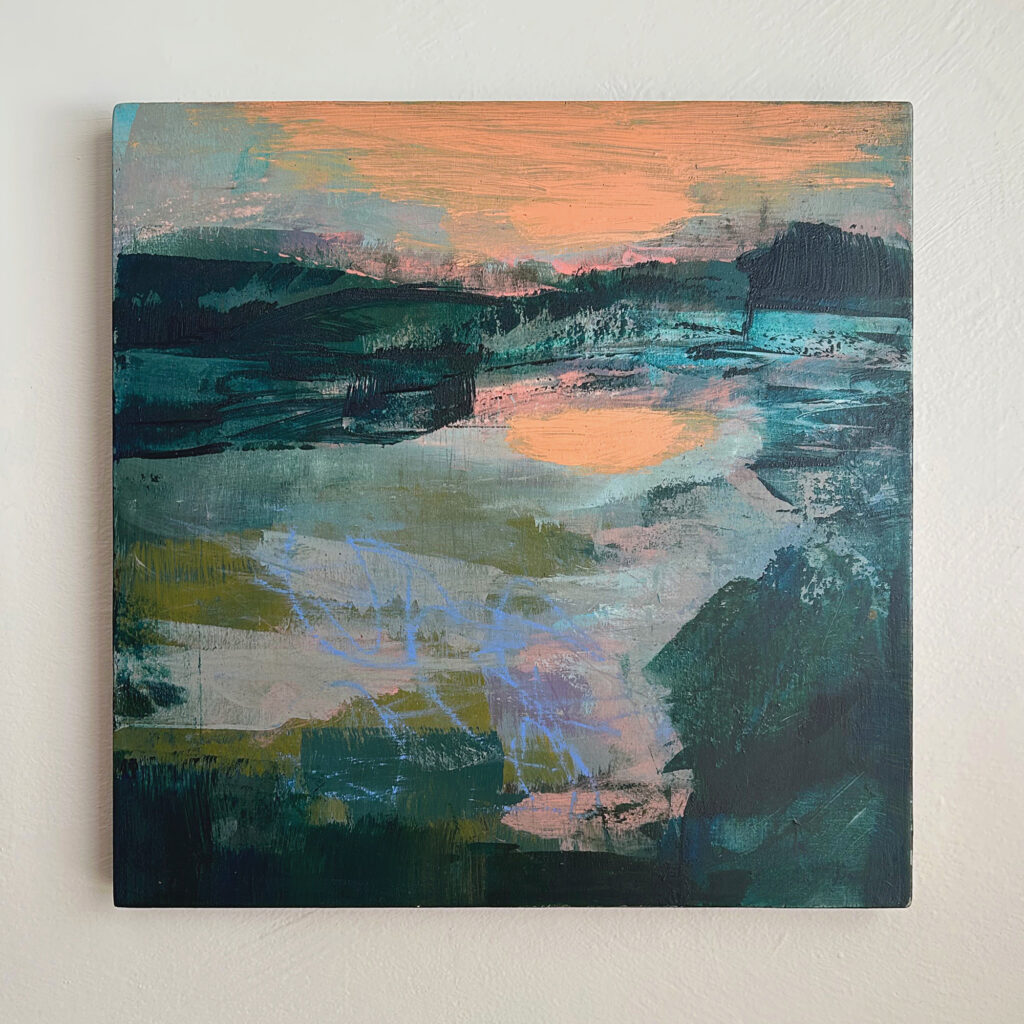
Q5. You’ve shared that memories and music influence your work. Can you recall when you first noticed sound or memory actively guiding your hand while painting?
I can’t pinpoint when I first noticed how strongly music affects me emotionally. It’s just always been that way. Stringed instruments and drums have a deep connection to my soul. Sometimes I’ll close my eyes and imagine my paintbrush as the bow of a cello or violin, or let my mark-making tool act like a drumstick. It’s always a surprise to see what it looks like when I open my eyes again. I joke that painting is my cardio, but the more I move my body while I’m creating, the more expressive my marks become, and the more freedom I feel. It’s a very somatic experience. As for memories, sometimes I paint what a place felt like, for example, my grandparents’ kitchen when I was little. The colors of their dishes and the layout of the room show up very abstractly. Creating lets me revisit favorite memories, and also work through harder ones. Tears are often involved, but that’s part of the process. There’s healing in our tears.
Q6. Living and working in Minnesota, with its strong seasonal shifts, how does that environment influence your pacing, color choices, or energy in the studio?
I used to think I wanted to live somewhere warm and sunny all year, but the older I get, the more I realize how much I need the shift of seasons. Winter naturally slows me down—physically and mentally. I force myself to take walks in ten-degrees-below-zero temperatures because it builds resilience, and I almost always end up noticing something beautiful, even in the dead of winter. Being aware and present to the nuances of the changing seasons helps me to be a better artist. Spring is my favorite, especially that magical week when the trees start popping with new green buds. It feels like a fresh start, and I love fresh starts and blank canvases. I’m planning to do more plein air creating because it feels like the best of both worlds: making art while fully enjoying nature.
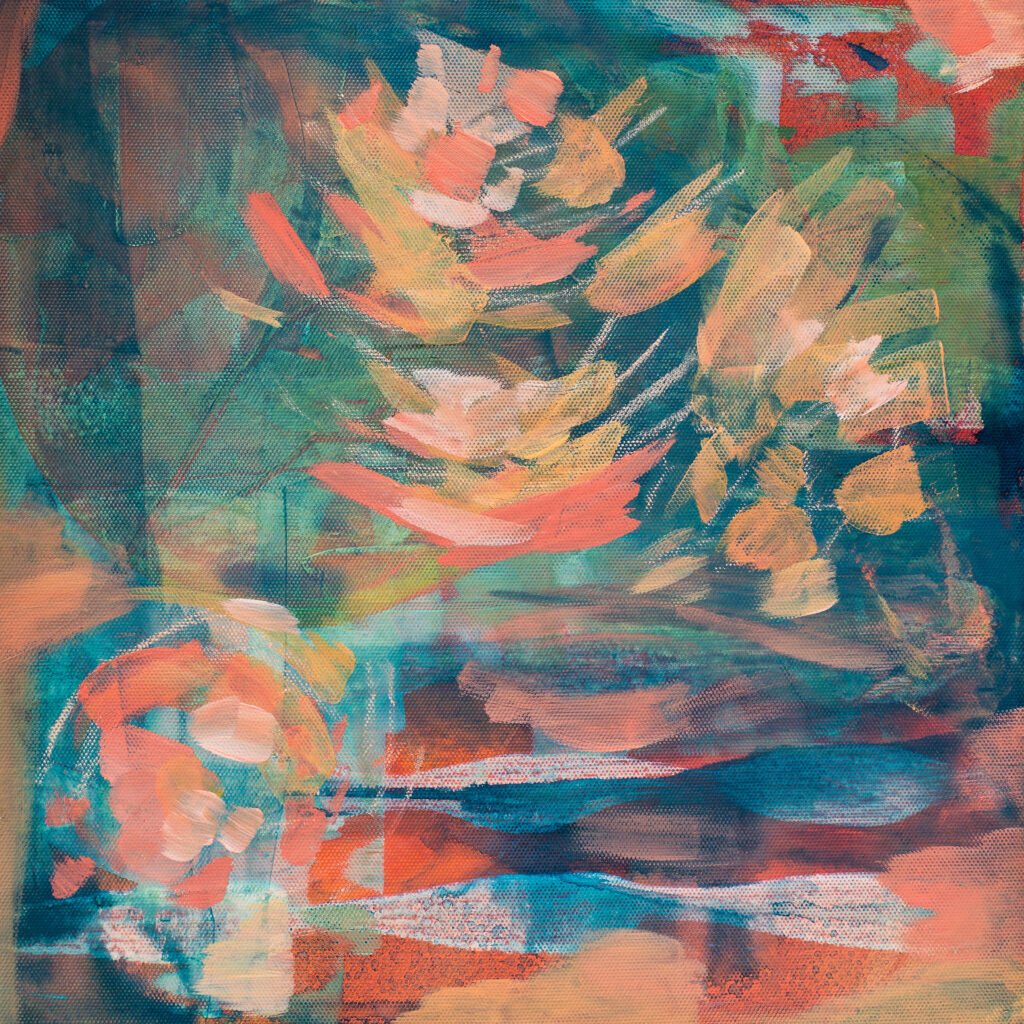
Q7. Many of your paintings leave room for personal interpretation. When you make a bold or uncertain mark, how long do you let it stay before deciding whether it belongs?
It could be seconds … or it could be months! Sometimes I know instantly that I want to remove it or layer over it. Other times I’m on the fence, so I’ll keep the painting somewhere visible in my home and live with it for a while. And of course, there have been plenty of times when I wish I had left a piece as-is because the new marks don’t have the same energy as the original ones. It’s all part of the learning process.
Q8. Expressiveness and spontaneity are hallmarks of your paintings. Looking back, was there a pivotal moment when you realized this direction felt truest to how you see and feel the world?
In college, my painting instructor couldn’t understand why I wanted to paint abstractly when I had the skills to paint representationally. It was because the abstract work had more emotion. I’m a very emotional person, so that connection made sense to me. If I want something to be perfectly accurate, I’d rather photograph it. That training still mattered, though. It taught me how to really observe how things really look, instead of defaulting to how I think they look. Growing up on a farm, my favorite chore was painting our fences and barns with buckets of white paint. That’s probably where my love of using broad, sweeping brushstrokes began. I definitely wasn’t neat about it! The times I feel most alive are when I’m fully immersed in painting— which usually means getting it on my hands, shoes, floor, and walls. It’s cathartic. For years, I felt a pull to create a place where others could experience that too. That dream is now a reality. Teaming up with my mentor and friend Melody, we’ve recently launched a creative wellness art studio in our town called Creating Space. We offer experiential art sessions, unstructured studio time, and classes where there’s room to stretch out, make a mess, and leave both splatters and emotional junk behind … no art experience required.
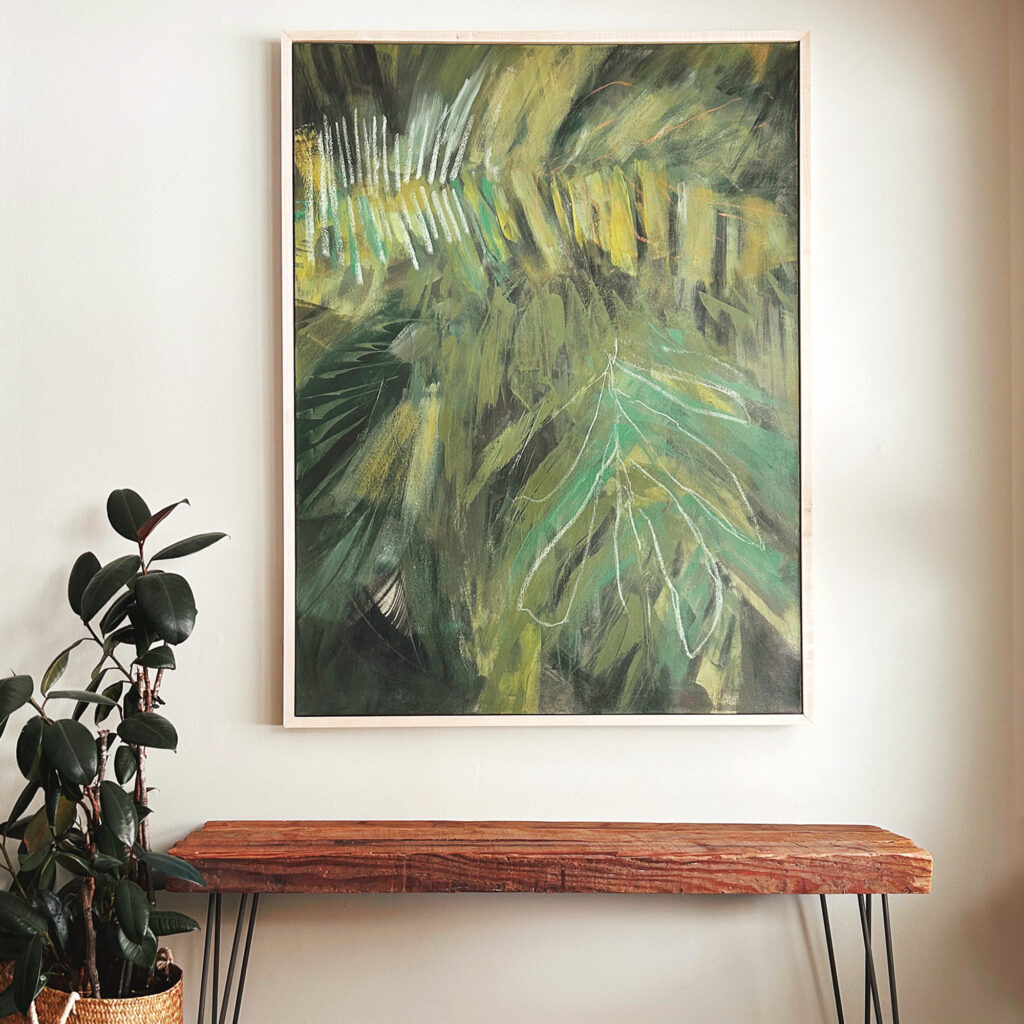
Q9. When you’re unsure how a work should evolve, what kind of physical or mental shift helps you break away from one painting and return with fresh eyes?
Throughout the day, I stay in conversation with God, sharing what’s on my mind and listening for His promptings. Snuggling my cats, walking my dog, and spending time in nature help me reset and return to gratitude. Sometimes I’ll jump on the trampoline — the rhythm of movement helps my body reset. I also do a lot of brain-dumping onto paper to clear mental clutter and make space for new ideas.
Q10. How do your roles outside the studio as a parent, partner, or person of faith shape the way you show up to your materials and space?
Creating art is both a healing and spiritual practice for me. It’s an act of worship and praise to my Creator, and also a way of pushing back against darkness. I believe we’re made in God’s image – and that means we’re created to create. Art helps me release emotion, reflect honestly, and invite light, joy, and hope back into my soul. I love Leonard Cohen’s line, “There’s a crack in everything—that’s how the light gets in.” That idea shows up in my work all the time. Beauty exists even in brokenness, and I’ve seen again and again how God can redeem what feels fractured or unfinished.
As our conversation with Stacy came to a close, we sat with something that we think every artist needs to sit with too. The idea that your mess is not a problem. It is your process.
We live in a world that keeps showing us perfect studios. Clean tables, organised shelves, soft light, everything in its place. And those spaces are beautiful. But they can also make you feel like something is wrong with you if your creative life does not look like that. If your floor is covered in paint. If your supplies are everywhere. If you have hundreds of unfinished things staring at you from every corner of the room. If your brain works in a way that jumps between ideas and moods and impulses and you have spent your whole life thinking that was a flaw.
Stacy reminded us that it is not a flaw. It is how some of the most honest work gets made. In the mess. In the jumping between things. In the ugly base layer that you hate until three paintings later it becomes the most beautiful thing on the canvas. That transformation, the thing that looks ruined becoming the thing that glows, she called it a metaphor for life. And we have not stopped thinking about that.
There is also something in how she talks about her body that we think matters. Painting for Stacy is not a still, quiet, careful thing. It is physical. It is movement and rhythm and sweat and sometimes tears. She lets her body lead. She lets music lead. She closes her eyes and paints blind and then opens them to see what happened. That takes a kind of trust that most of us are afraid of. The trust that something good can come from letting go of control entirely.
So if your studio is messy, leave it. If your brain wants to work on six things at once, let it. If the painting you are making right now looks ugly and hopeless, keep going. It is not ruined. It is in the middle. And the middle is where the best things happen. You just have to trust the process long enough to see it through.
Follow Stacy Kron through the links below and step inside a studio where the paint is on the ceiling, the mess is the method, and every mark is made in conversation with something bigger than the canvas.