






The Million-Dollar Mistakes of the Art World

From a forgotten Leonardo to overlooked masterpieces, some of the most expensive moments in art history began with decisions that seemed ordinary at the time.
In 1958, a small, damaged painting was sold at auction in London for just £45. It was catalogued simply as a copy after Leonardo da Vinci, an interesting object perhaps, but hardly a masterpiece. Nearly sixty years later, that same painting would sell for $450.3 million, becoming the most expensive artwork ever sold at auction.The million-dollar mistakes of the art world often begin with decisions that seem ordinary at the time.
Stories like this appear again and again throughout the history of art. Paintings dismissed as insignificant later prove to be masterpieces. Artists ignored during their lifetimes eventually become central figures in art history. Collectors sell works too early, museums pass on acquisitions, and scholars misidentify artworks that later turn out to be invaluable.
These moments reveal something fundamental about the art market. Unlike most commodities, art’s value is rarely fixed. It evolves through scholarship, cultural context, institutional recognition, and time. What seems ordinary today can become extraordinary tomorrow. And sometimes, a single decision quietly becomes one of the most expensive mistakes in art history.
When a Forgotten Painting Became a $450 Million Masterpiece
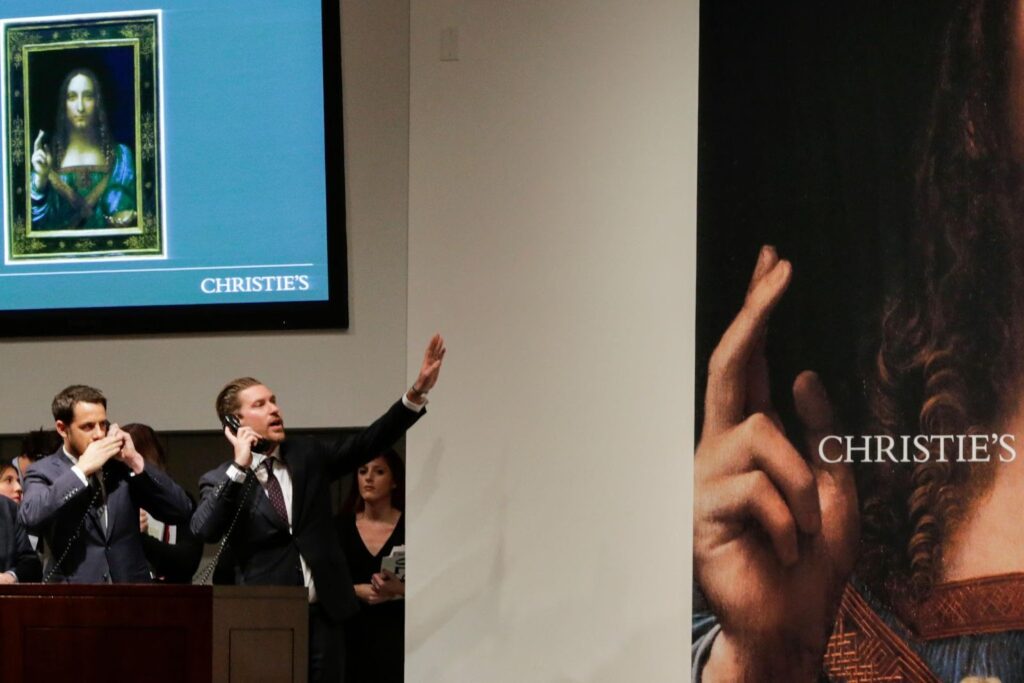
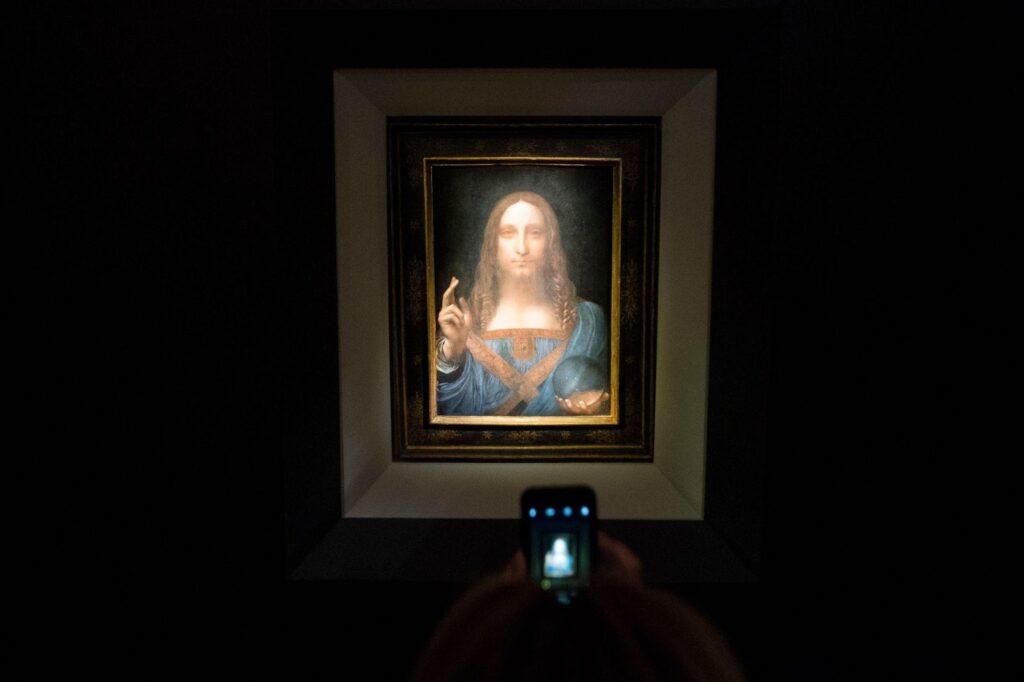
Few artworks illustrate the unpredictability of art valuation more dramatically than Salvator Mundi, widely attributed to Leonardo da Vinci. The painting depicts Christ holding a crystal orb, rendered with the delicate blending technique known as sfumato. Yet for much of the twentieth century the work was believed to be a copy produced by one of Leonardo’s followers.
In 1958, the painting was sold at auction in London for just £45. At the time it attracted little scholarly attention and was considered of limited historical significance. For decades the work remained largely forgotten until 2005, when a group of art dealers purchased the damaged panel for under $10,000. After years of restoration and scholarly debate, several experts began arguing that the painting might in fact be an original Leonardo.
When the work appeared at Christie’s in New York in 2017, the art world witnessed one of the most dramatic sales in auction history. After an intense bidding war, the painting sold for $450.3 million, shattering every previous record. What had once been dismissed as a minor copy had suddenly become the most expensive painting ever sold.
Sources: Christie’s Auction Records; The New York Times; The Art Newspaper.
What had once seemed insignificant became the most expensive painting ever sold, proof that the art world does not always recognize value in its own time.
Yet misattribution is only one way the art world misjudges value. Sometimes the market fails to recognize artistic brilliance altogether, especially when artists challenge the conventions of their time.
The Artist the World Failed to Buy
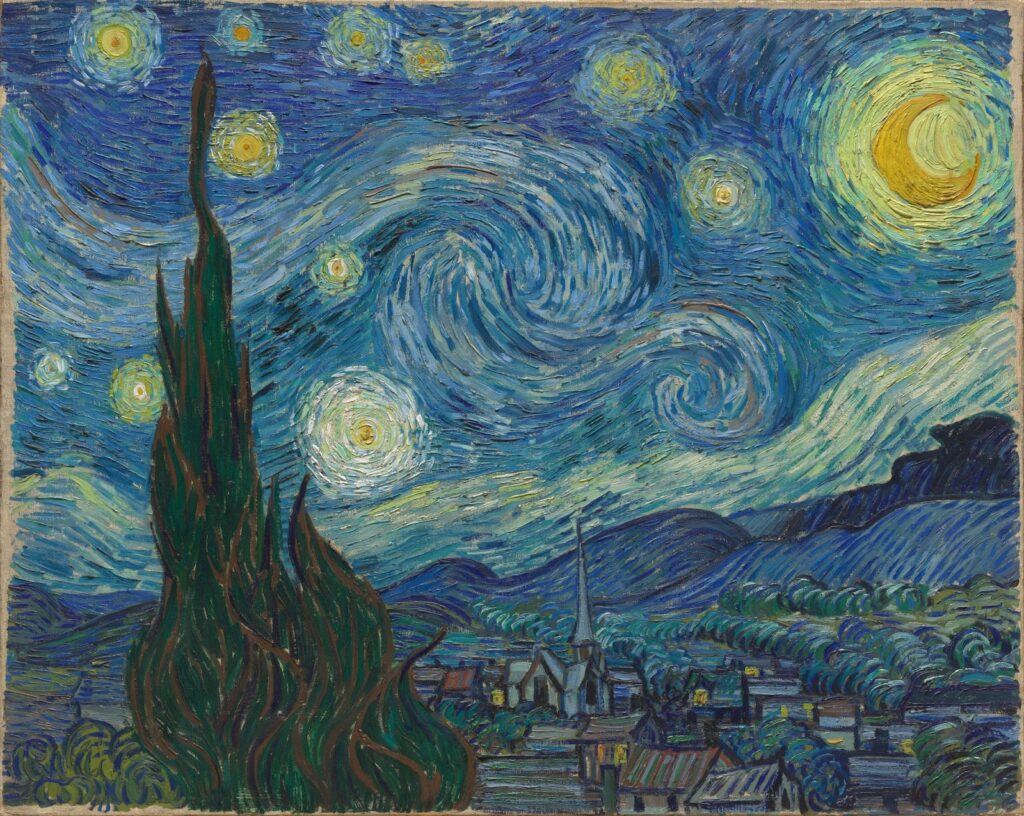
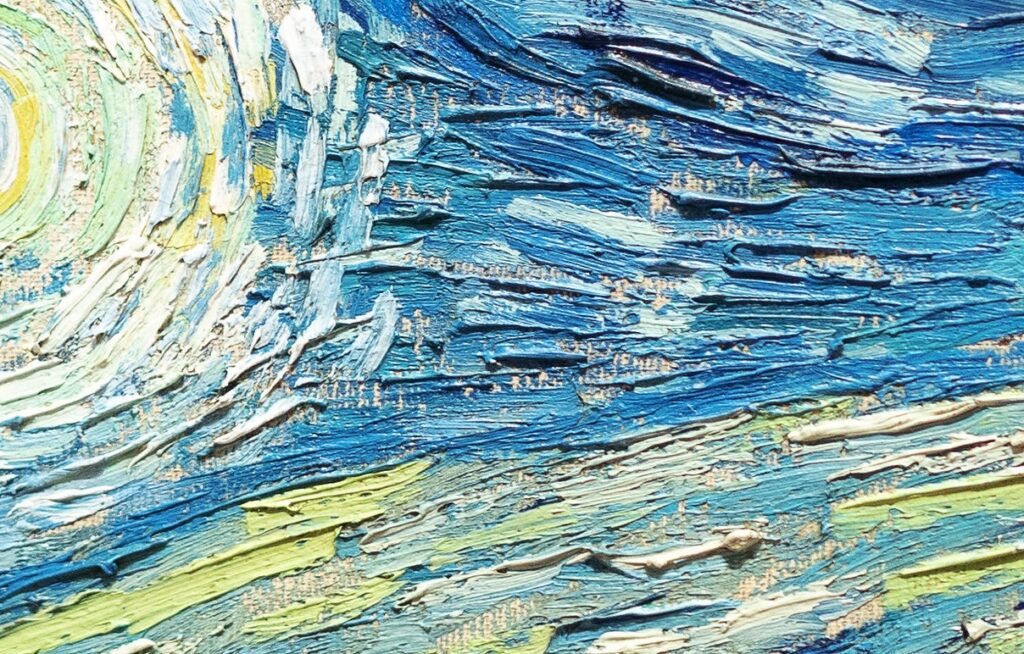
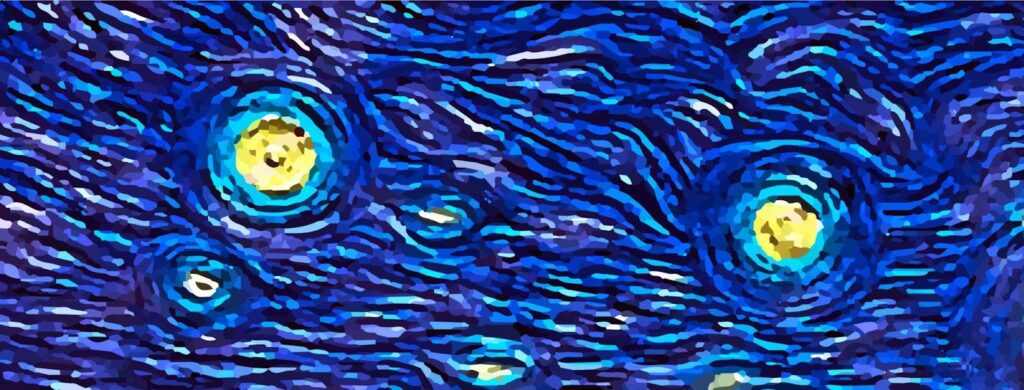
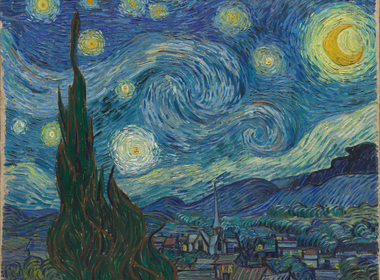
Today, Vincent van Gogh is widely regarded as one of the most influential painters in modern art. His paintings are among the most recognizable images in the world, admired for their emotional intensity and vivid color. During his lifetime, however, Van Gogh struggled profoundly to sell his work.
Historical research from the Van Gogh Museum and the artist’s surviving letters suggests that he sold only a handful of paintings before his death in 1890. Many collectors and critics considered his expressive brushwork and unconventional style too radical for the tastes of the time.
Paintings such as The Starry Night, now housed at the Museum of Modern Art, would have been available for relatively modest sums during the artist’s lifetime. Today, Van Gogh’s paintings regularly sell for tens of millions of dollars, making the early indifference toward his work one of the most striking misjudgments in art history.
Sources: Van Gogh Museum Archives; MoMA Collection; The Letters of Vincent van Gogh.
Delayed recognition is not limited to painters. Even some of the most iconic sculptures of the twentieth century were once misunderstood.
When Innovation Was Recognized Too Late
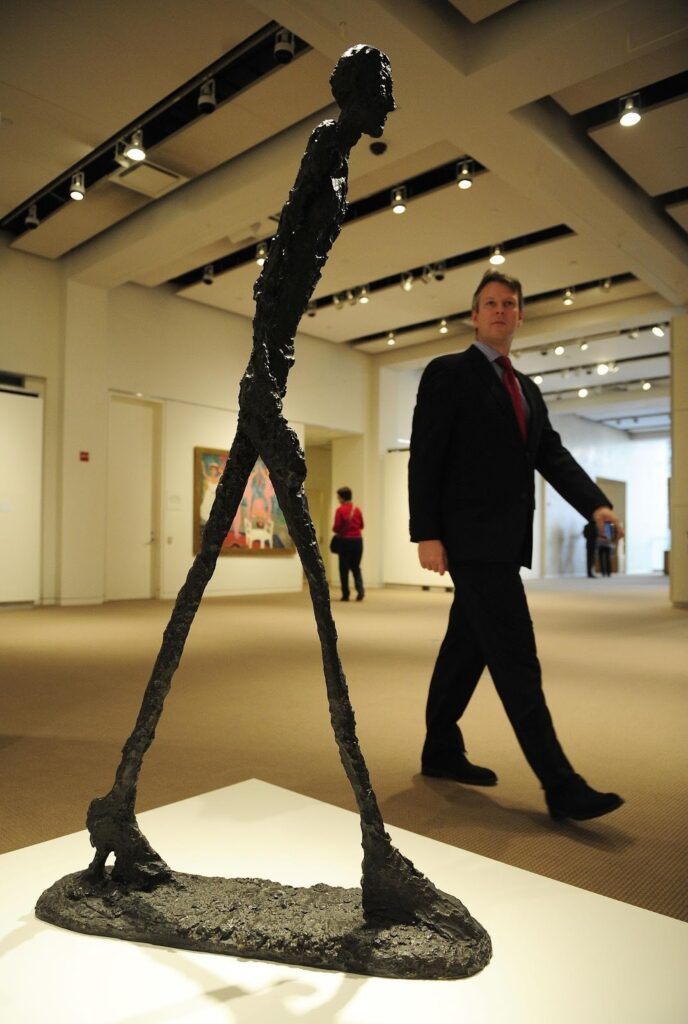
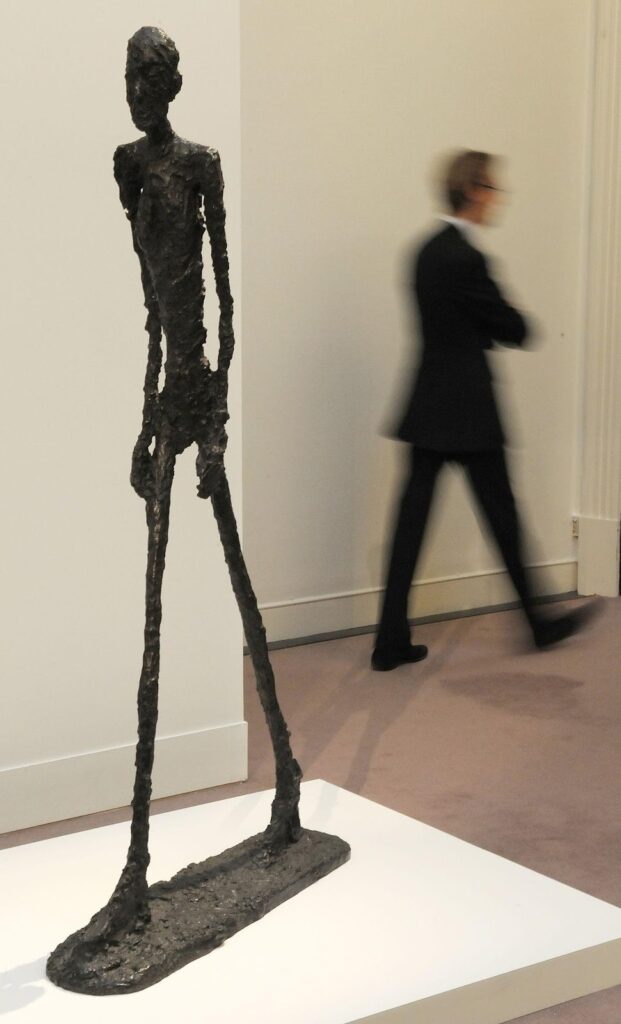
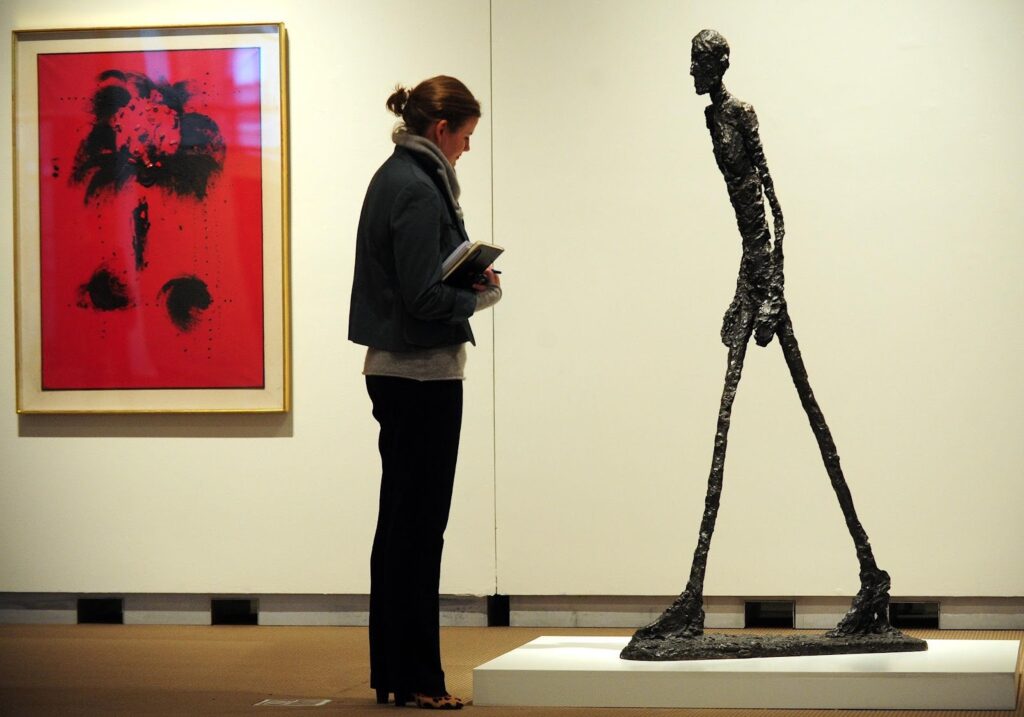
The sculptures of Alberto Giacometti once puzzled critics and collectors alike. His elongated figures appeared fragile and solitary, standing in stark contrast to the monumental sculptures that had traditionally defined the medium. Rather than celebrating heroic bodies or classical balance, Giacometti’s figures seemed reduced to their most essential forms, thin, almost skeletal presences standing quietly in space.
For many early viewers, the sculptures felt unsettling. Their exaggerated proportions and rough surfaces defied conventional expectations of beauty and craftsmanship. Yet Giacometti was not attempting to create traditional sculpture. Instead, he was exploring questions about human existence, perception, and isolation, ideas deeply connected to the existential philosophy that shaped postwar Europe.
Over time critics and historians began to recognize the emotional power of his work. Today, interest in Giacometti continues to grow globally, with Paris even preparing to open the first-ever Giacometti museum in 2028, highlighting the lasting impact of his sculptures on modern art. Giacometti’s figures, often standing alone on narrow bases, came to symbolize the vulnerability and uncertainty of the modern human condition. What once appeared strange and unfamiliar gradually became one of the most recognizable visual languages of twentieth-century art.
The market eventually caught up with this shift in perception. In 2010, Giacometti’s Walking Man I sold at Sotheby’s for $104.3 million, setting a record for sculpture at the time. The sale confirmed what art historians had already begun to acknowledge: Giacometti’s work had fundamentally changed the language of modern sculpture.
Sources: Sotheby’s Auction Records; Fondation Giacometti; The Art Newspaper.
Yet misjudging value does not always come from misunderstanding an artwork. Sometimes the art world itself becomes the stage for events that dramatically reshape how a work is perceived.
When Destruction Created Even Greater Value
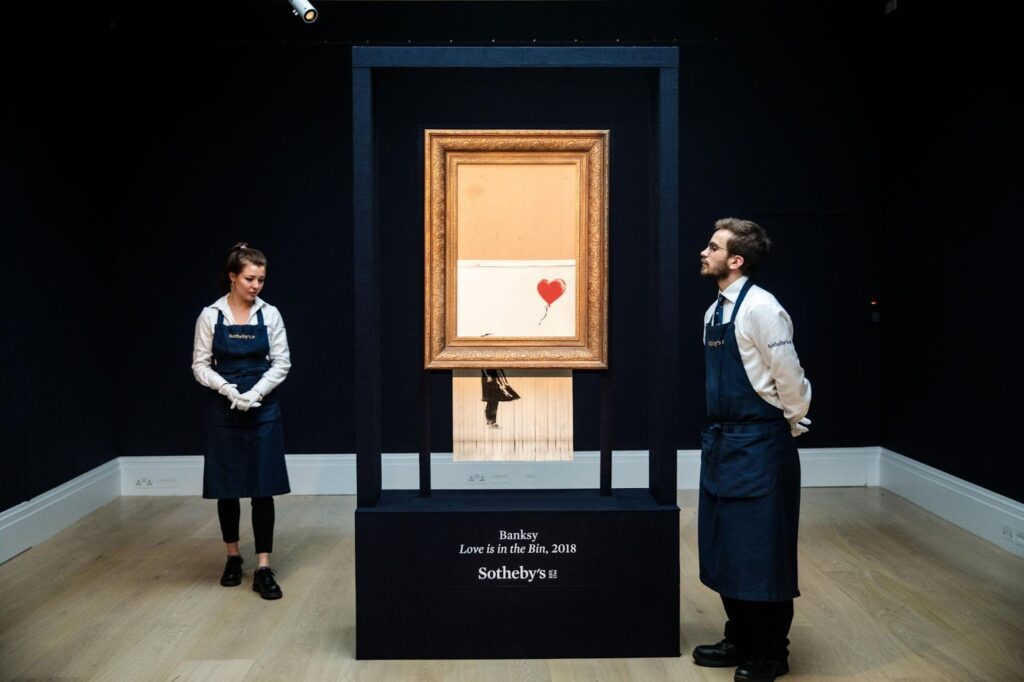
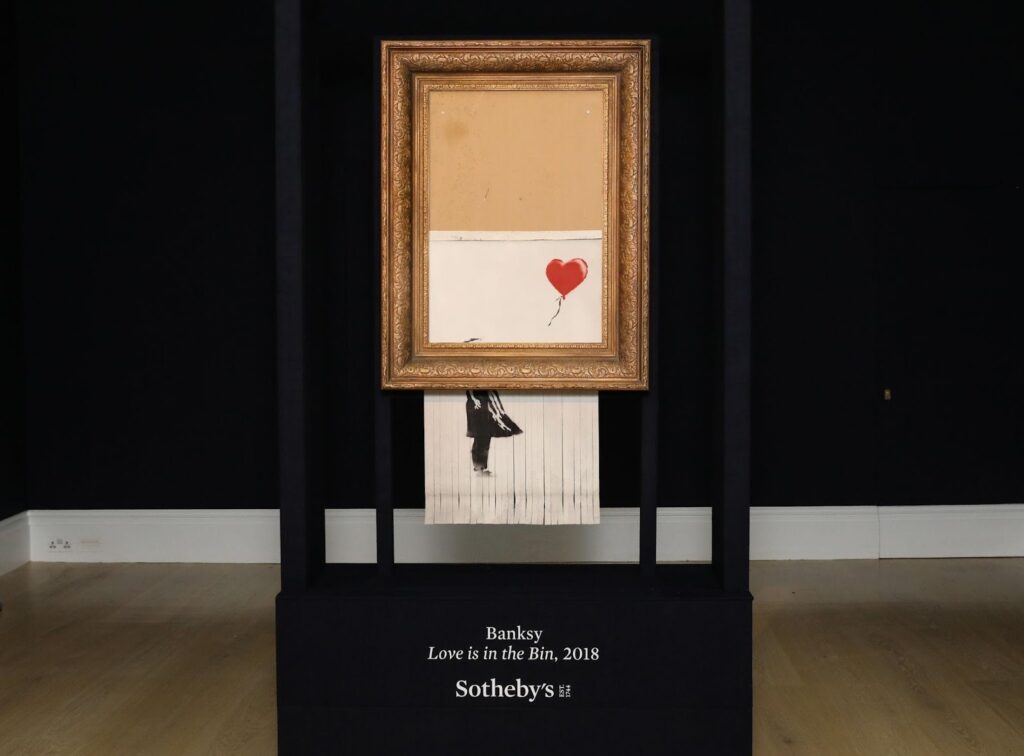
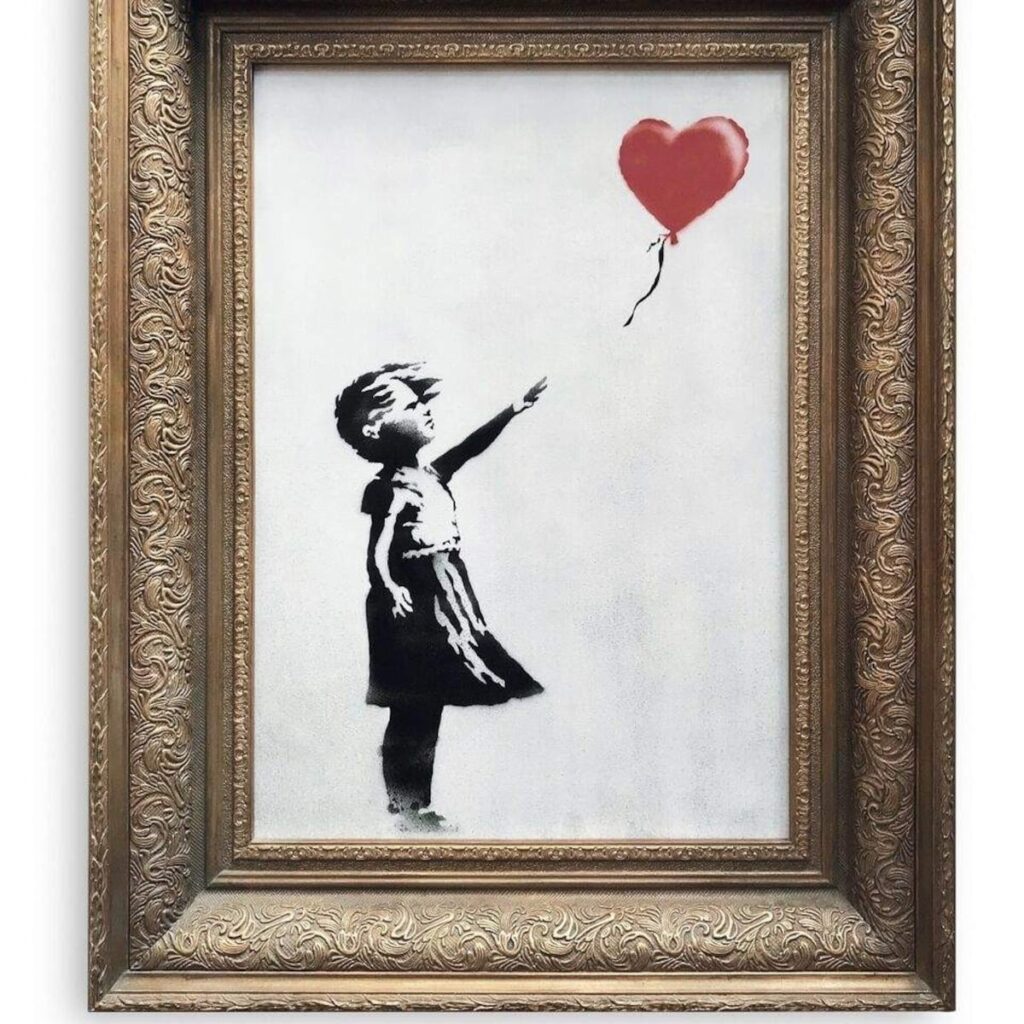
Few auction moments have captured global attention like the dramatic transformation of Girl with Balloon by Banksy. Known for his anonymous identity and provocative street art, Banksy has long challenged the structures of the traditional art market. In 2018, however, he staged one of the most unforgettable moments in contemporary art history.
In October of that year, a framed version of Girl with Balloon was auctioned at Sotheby’s in London. The work sold for £1.04 million after a tense bidding battle. But moments after the hammer fell, something extraordinary happened: the painting began sliding through a hidden shredder concealed inside its frame, slicing the canvas into vertical strips before the stunned audience.
The event appeared to be a deliberate act of artistic sabotage. Many observers initially believed the artwork had been destroyed, raising questions about the value of the piece and the integrity of the auction process. Yet within hours the spectacle had become a global media phenomenon.
Banksy later confirmed the stunt and authenticated the altered work through his organization Pest Control Office, renaming it Love is in the Bin. Rather than diminishing the artwork’s value, the event transformed it into one of the most famous artworks of the twenty-first century.
When the piece returned to Sotheby’s in 2021, it sold for £18.6 million, demonstrating how narrative, performance, and cultural attention can dramatically reshape the meaning and value of contemporary art.
Sources: Sotheby’s Auction Records; BBC News; Artnet News.
The Dangerous Temptation to Sell Too Soon
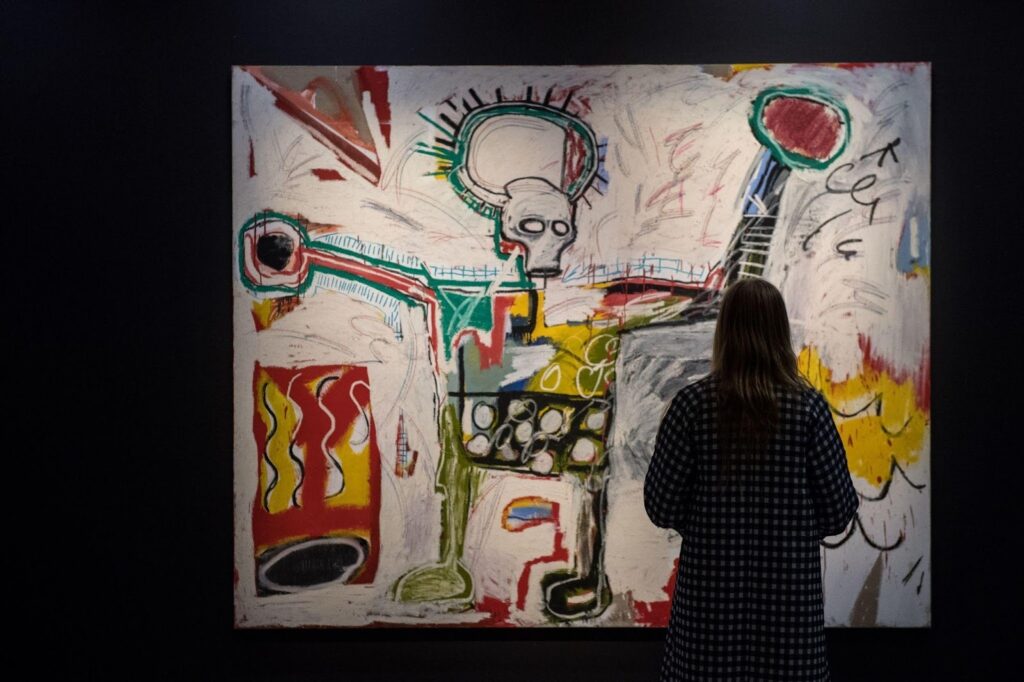
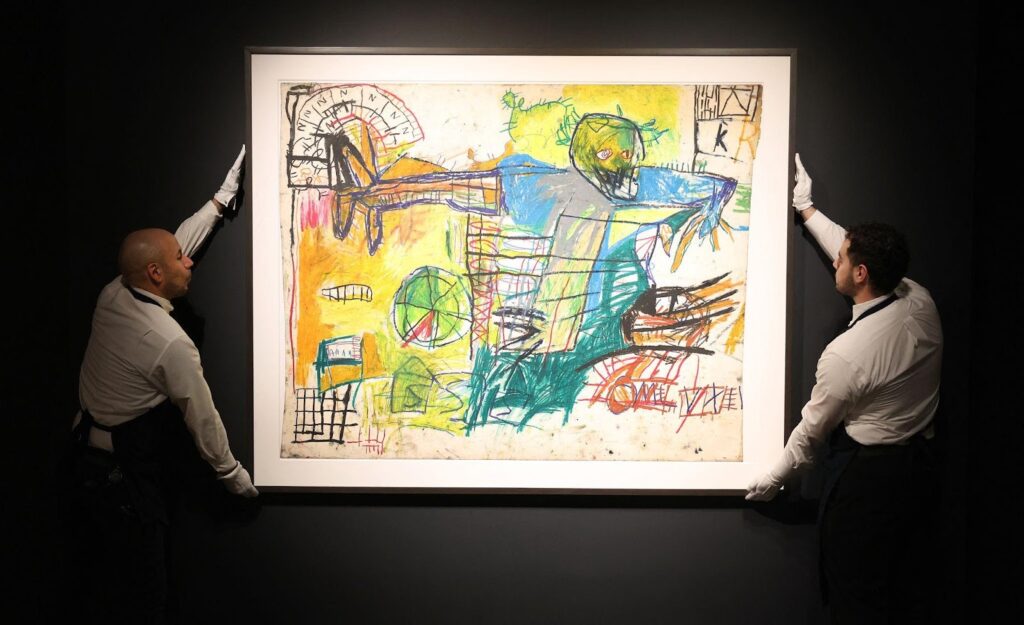
Few artists illustrate the explosive growth of the contemporary art market more dramatically than Jean-Michel Basquiat. Emerging from New York’s vibrant downtown art scene in the late 1970s and early 1980s, Basquiat first gained attention through graffiti and street art before quickly becoming one of the most talked-about young painters of his generation.
During the early years of his career, Basquiat’s paintings were sold through small galleries for only a few thousand dollars. Collectors who purchased works directly from the artist often did so simply because they were drawn to the raw energy and symbolism in his paintings rather than any expectation of future financial value.
Basquiat’s work combined elements of street culture, historical references, and expressive mark-making. His paintings were filled with fragmented text, anatomical imagery, and references to race, identity, and power. While critics recognized his talent, few could have predicted how dramatically his reputation would grow after his death in 1988 at the age of just twenty-seven.
Over the following decades, Basquiat’s influence on contemporary art became increasingly clear. Museums around the world began exhibiting his work, and collectors sought out his paintings with growing intensity. This shift reached a dramatic moment in 2017 when Untitled (1982) sold at Sotheby’s for $110.5 million, purchased by Japanese collector Yusaku Maezawa.
For early collectors who sold their Basquiat works decades earlier, the difference between those early prices and later auction results represents one of the most striking examples of how dramatically the art market can change over time.
Sources: Sotheby’s Auction Records; Artnet Price Database; The New York Times.
These stories remind us that the million-dollar mistakes of the art world often reveal how unpredictable artistic value can be. Taken together, these stories reveal something essential about the art world. Unlike many markets, art does not reveal its value immediately. Recognition evolves slowly through scholarship, exhibitions, cultural shifts, and the narratives that develop around artists and their work over time. What appears insignificant in one era can become invaluable in another.
History shows that the art market is filled with moments when value was misunderstood or overlooked. A painting dismissed as a minor copy can later become a masterpiece. An artist ignored during their lifetime can eventually reshape the course of art history. Even collectors and experts, people deeply immersed in the art world, are not immune to misjudging what will matter in the future.
Part of what makes art so fascinating is precisely this uncertainty. Unlike commodities whose value can be measured through clear metrics, the value of art is shaped by shifting cultural perspectives and evolving historical understanding. What one generation overlooks, another may celebrate as revolutionary.
Somewhere right now, in a gallery, a studio, or an overlooked auction lot, another artwork may be waiting for its moment of recognition. It may be dismissed as unimportant, misunderstood by critics, or quietly sold for far less than it will one day be worth.
The art world has always been full of expensive mistakes. Yet these moments of misjudgment also remind us of something deeper: the future of art is never fully predictable. And perhaps the most fascinating question is not which mistakes were made in the past but which ones are quietly happening today.