

How a face overgrown with flowers became this artist’s first real painting I Hannah Bömer
👁 14 Views
At Arts to Hearts Project, we have always been curious about artists whose studio is not just where they work. It is where they live. Where the painting is right there in the room with them all the time. On the wall when they wake up. In the corner when they make dinner. Staring at them when they walk past it on the way to the kitchen.
There is something about that kind of closeness between an artist and their work that changes everything. The painting becomes part of daily life before it is even finished. And honestly, we think that is where some of the most honest work comes from.
That is exactly what drew us to Hannah Bömer when we were putting together Studio Visit Book 7.
This book has always been about showing people what a creative life actually looks like behind closed doors. Not the exhibition version. Not the Instagram version. The real one. The unfinished canvases, the quiet mornings, the doubt, the light changing across a surface throughout the day.
We wanted artists who could open that door and let you in. No performance. Just the truth of what it looks like to make something day after day in a room that is entirely yours.
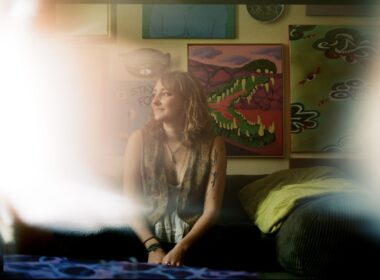
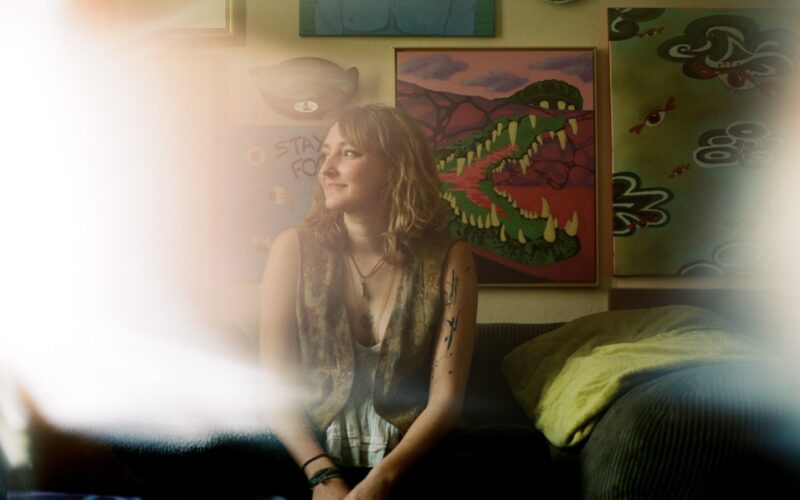
Hannah is one of our selected artists for this edition and the thing that got us right away is that her studio is her home. She paints in her apartment. Right there where she sleeps and eats and lives her life. The work is always around her. She walks past whatever she is making on her way to the kitchen, she sees it when she wakes up, and she loves that. Most artists would find that overwhelming.
For Hannah it is the opposite. It keeps the conversation going between her and the painting even on the days she is not actively working. The piece just sits there, quietly becoming, and she sits with it.
And you can feel that in what she makes. Her paintings are not the kind that shout at you from across a room. They are quiet. Textured. Layered in a way that tells you someone took their time with this. She builds her surfaces carefully, adding and removing, scraping back, leaving traces of the process right there on the canvas for you to see. Nothing is polished away. Nothing is cleaned up to look perfect.
You can see where she paused. Where she came back. Where something shifted between one day and the next. The paintings carry the rhythm of how they were made and we think that is what makes them feel so alive.
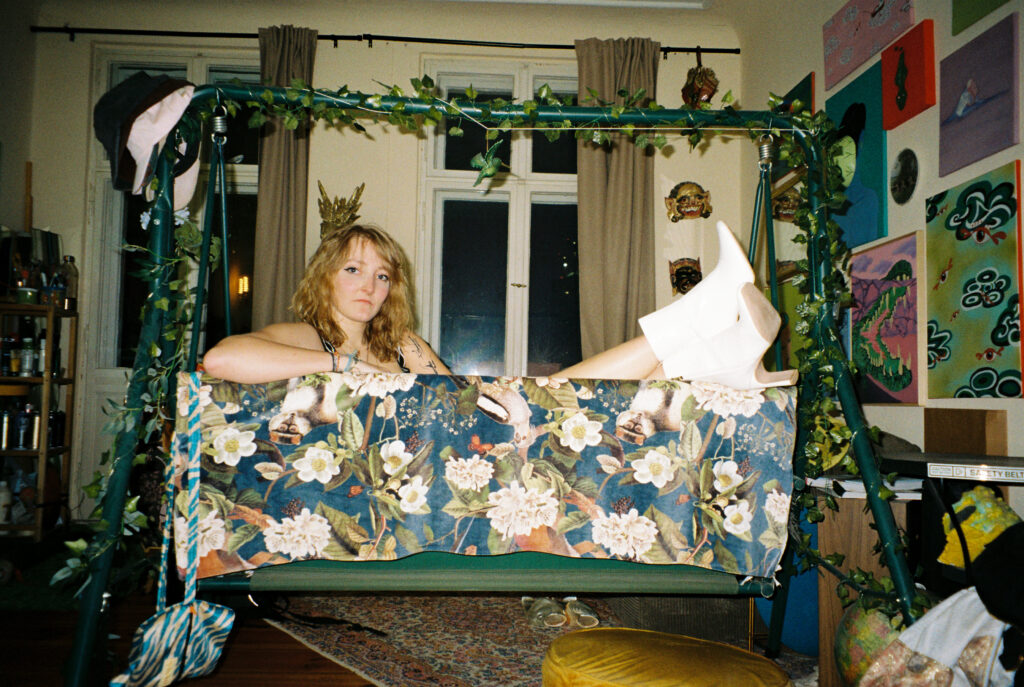
Her space is full of things she has collected over time. Little objects, unusual finds, details that keep the room feeling stimulating and personal. And she told us something we have not stopped thinking about.
That her art grew together with her studio. That as the space became more truly hers, filled with the things she loves, the work grew alongside it. The bolder she got with her surroundings the bolder she got on canvas. We love that. The idea that your room shapes your art as much as your art shapes your room.
Let’s get to know Hannah from our conversation with her where she shares what it is like to live where you paint, how her studio shaped her art as much as her art shaped her studio, and what showing up to the same room every day has taught her that no exhibition or education ever could.
Q1. When you enter your studio, what immediately tells you where you are in your work right now, a surface drying, a colour left open, a piece waiting for attention?
When I come back to the studio corner in my apartment, the first thing I usually see is a half-painted canvas staring at me. I actually adore living where I paint, because I have to pass by the current project all the time, which inspires and motivates me.
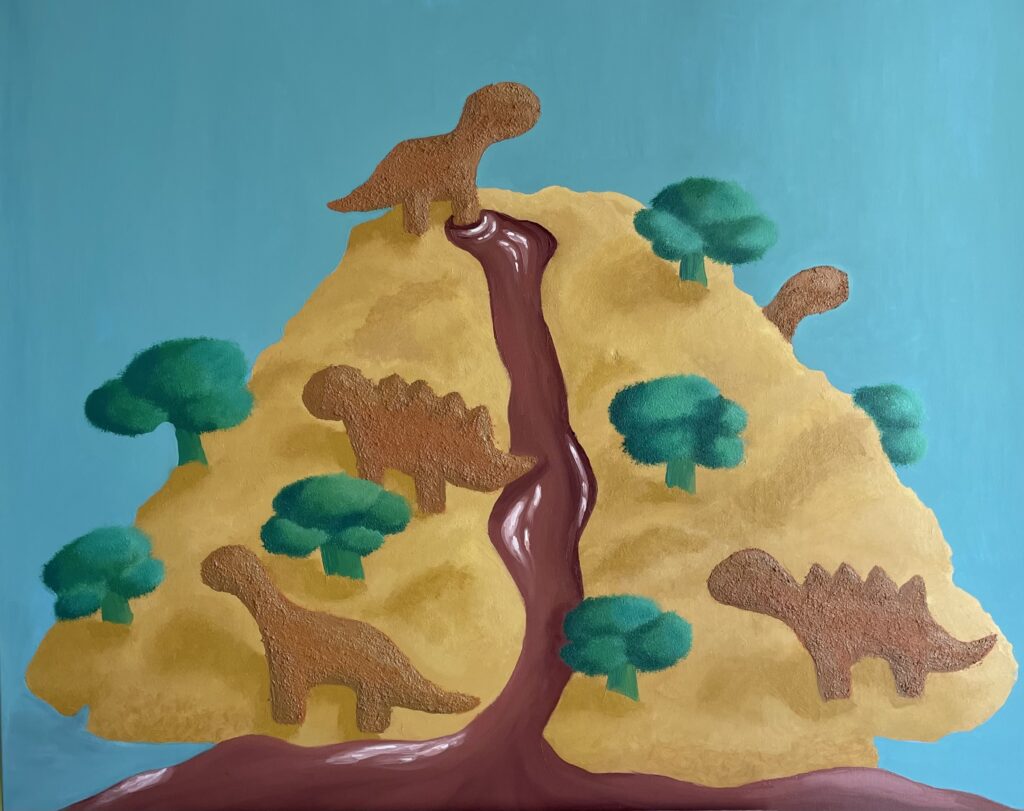
Q2. Your practice seems deeply attentive to material presence and gesture. Thinking back, what early experiences or moments led you toward working in this way rather than toward more representational forms?
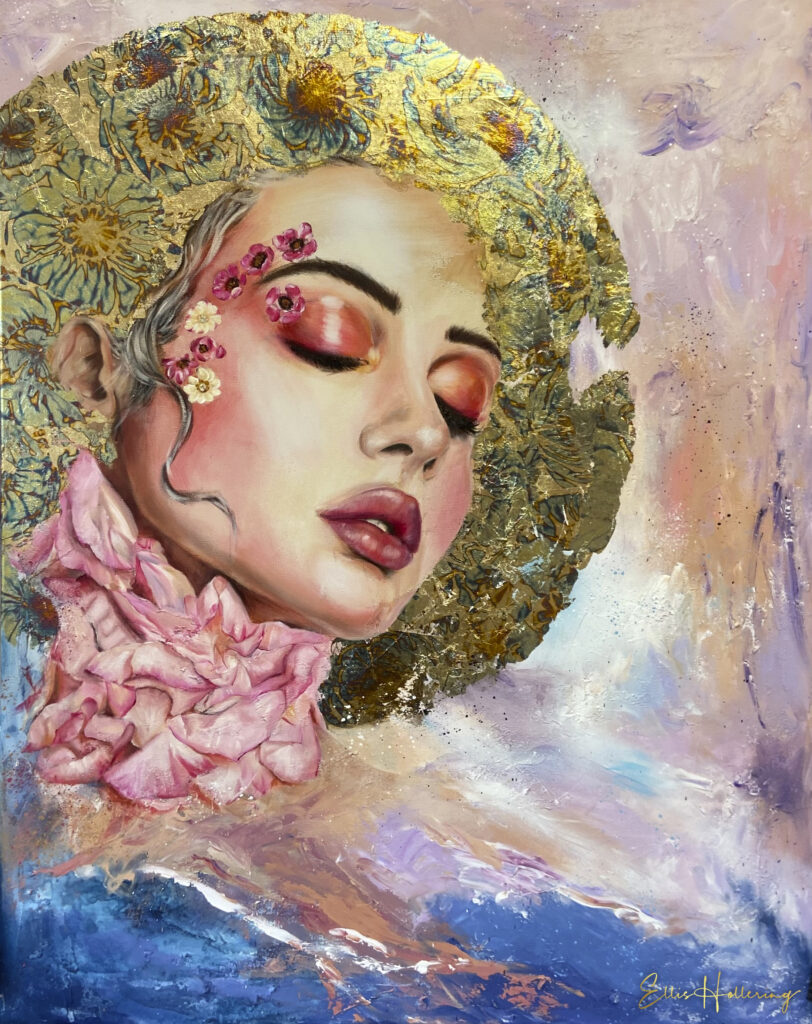
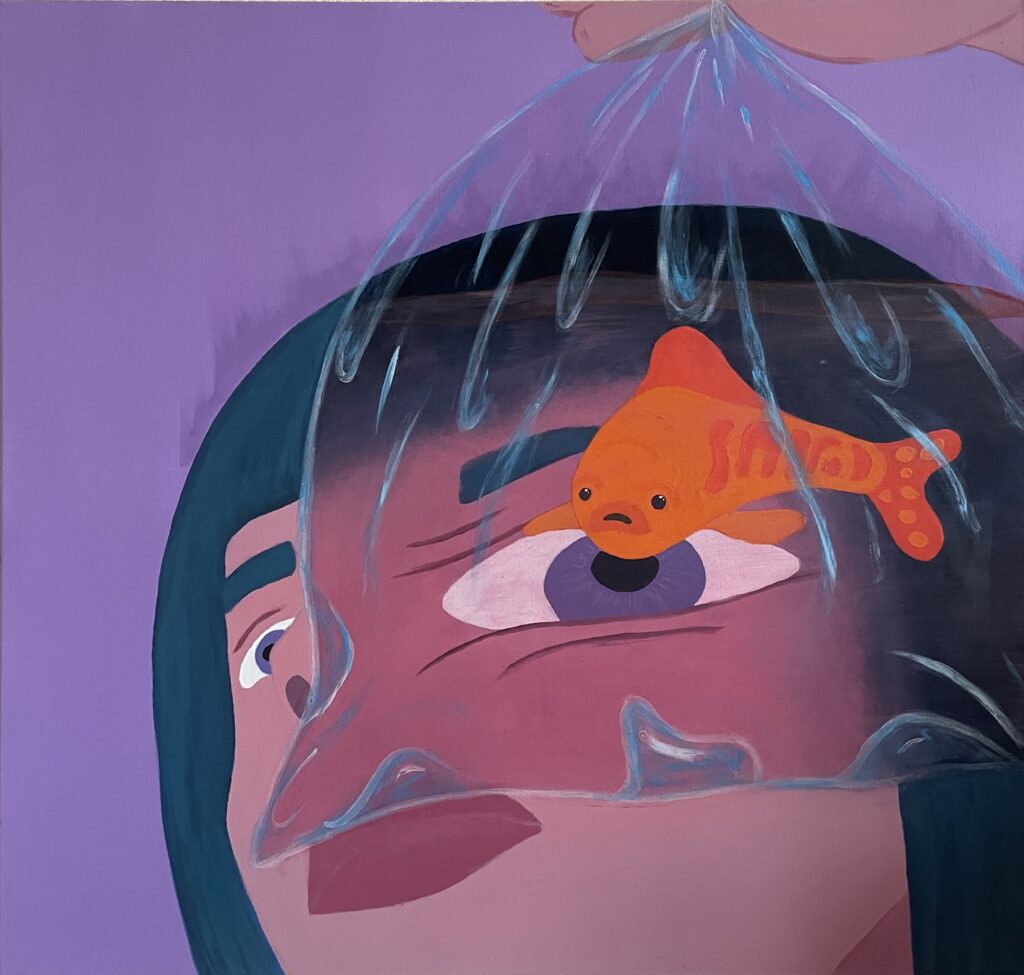
I have always experienced my thoughts and emotions in a highly visual way within my imagination. One of my earliest paintings, Becoming, emerged from an inner image that formed during a train journey, while I was deeply moved by the reunion with old friends and listening to Divenire by Ludovico Einaudi. I envisioned a face, almost unrecognizable, overgrown with flowers that feed on the person’s own tears. From that moment on, I became eager to translate these inner visions into color and material, allowing what existed in my mind to take on a tangible reality. This impulse has shaped my artistic process ever since.
Q3. Many of your works appear to be built through subtle decisions rather than dramatic gestures. How do you stay attentive to small shifts while working for long periods of time?
Working over long periods requires a certain patience and trust. I try to stay attentive by repeatedly stepping back, taking breaks, and returning with fresh eyes. Small shifts in the work often become visible only after time has passed. I don’t experience the process as a continuous flow of action, but rather as a rhythm of engagement and pause. This allows me to notice subtle changes and respond to them intuitively, without forcing the work into a predetermined direction.
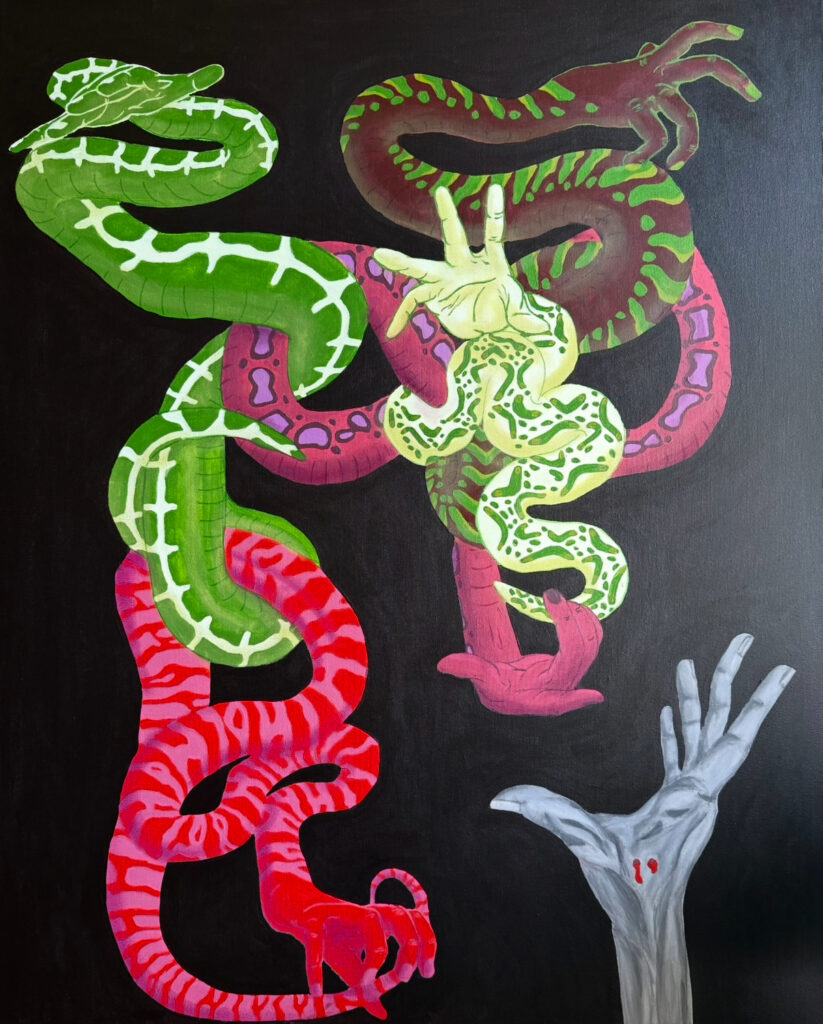
Q4. There are areas in your paintings where the surface feels scraped, rubbed, or reworked. At what point does reworking become part of the visual logic rather than an attempt to fix something?
The surfaces may suggest correction or reworking, yet for me these interventions are not reactions to mistakes. My process is clearly structured in advance, often through sketches and inner images. Rubbing, scraping, or reducing are therefore not attempts to fix something, but consciously employed means to create tension and depth. They are technical approaches I use to shape the final refinement of the process and to capture a sense of liveliness. These traces anchor the painting in the material and allow the process to remain visible, without framing it as correction.
Q5. How does light in your studio affect the way you read a surface? Do you ever postpone decisions simply to see how a work changes across the day?
I have to say that I tend to do the most inspired and creative parts of my paintings in daylight. This is strongly influenced by the weather and the season I am working in, as the amount of sunlight I receive varies significantly. When the day comes to an end and I need artificial light to continue, I usually shift to the more technical aspects of the work—tasks that need to be done but require less intuitive or creative decision-making.
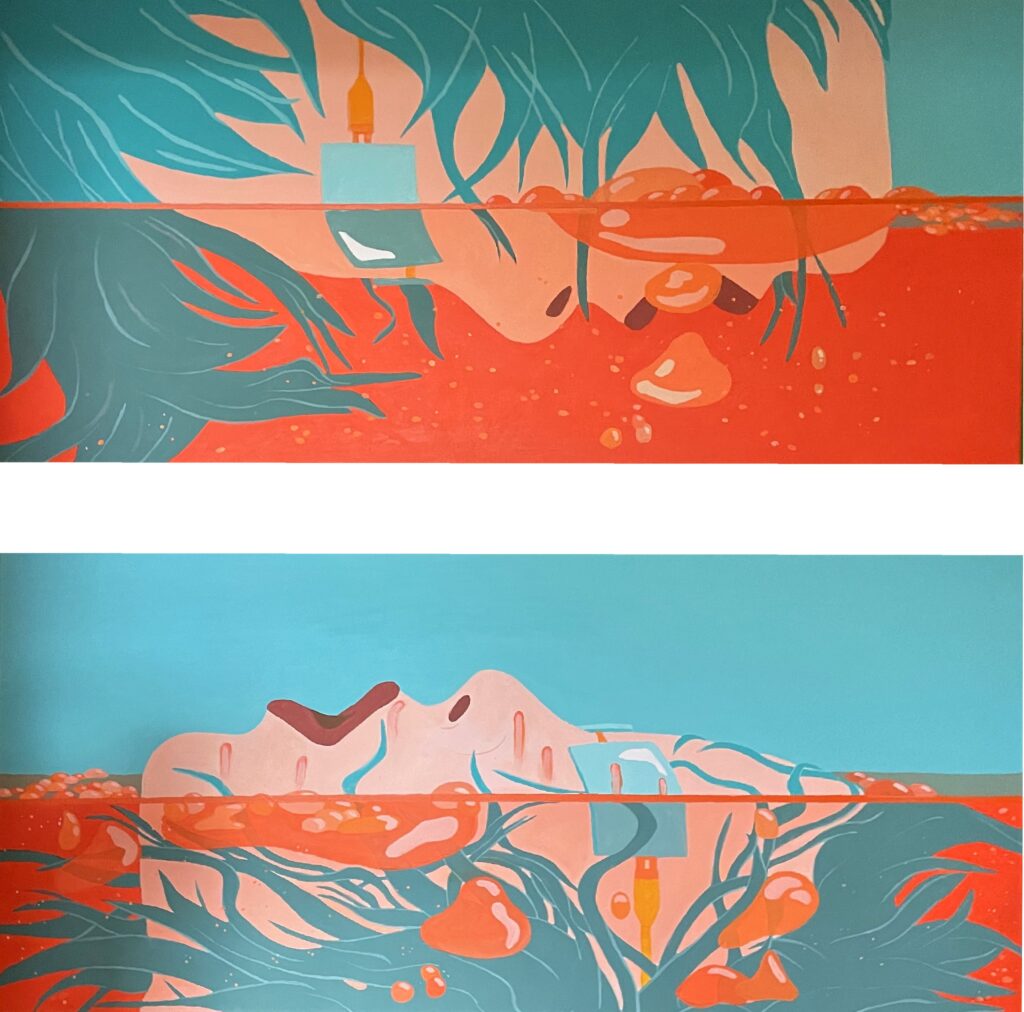
Q6. When you look at older works now, what do they reveal about how you were thinking in the studio at that time?
When I look at my older works now, I see that they are bold, yet still somewhat shy and exploratory. I notice that I felt the need to leave space in the work, to allow room for the art itself. It’s as if my art grew together with my studio. I am inspired by all the little details in my surroundings; I collect new and sometimes unusual objects, keeping my personal space full and stimulating. The more my studio became truly mine, the more my artwork developed alongside it.
Q7. What is something the studio has taught you that could only be learned through daily presence, not through exhibitions, education, or external validation?
The studio has taught me to trust my own intuition. I have often felt insecure about much of myself, and most of the time the art world outside the studio doesn’t offer the support or trust in your work that you need. In my studio, where I sometimes invite friends who always encourage me and let my ideas and creative sparks remain free, I don’t hear my inner critic—or any external one. I can explore my ideas freely and fully.
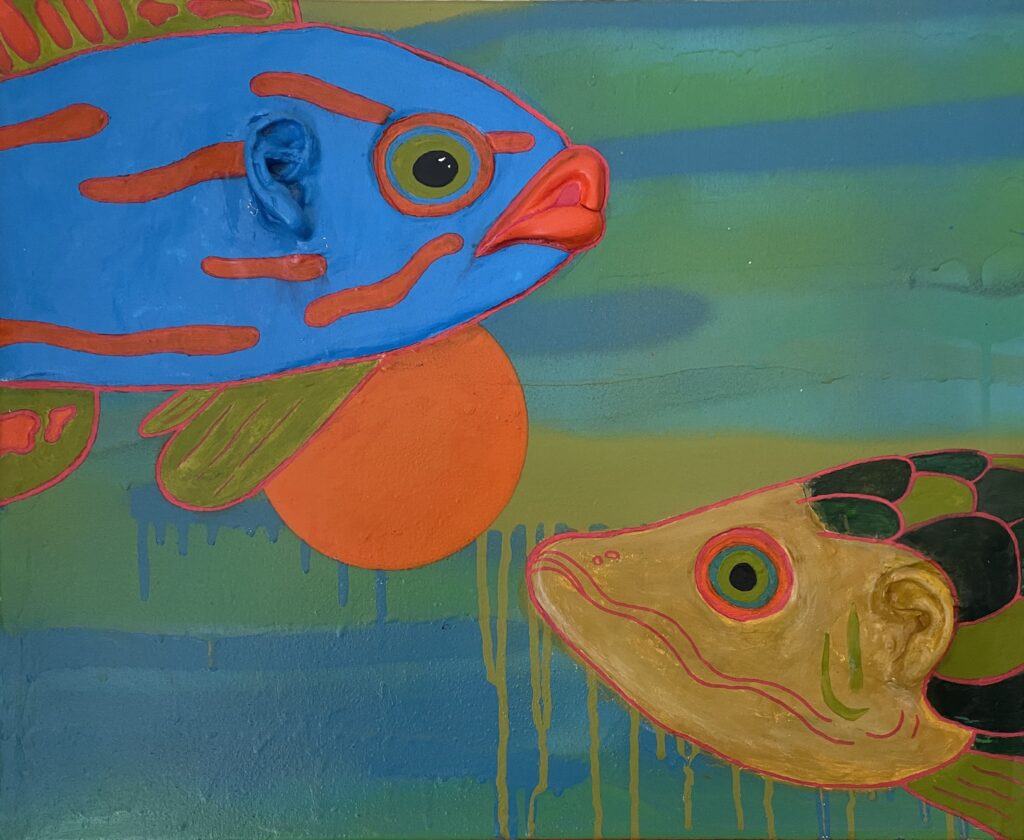
As our conversation with Hannah came to a close, we found ourselves thinking about something we do not talk about enough in the art world. The room.
We talk a lot about technique. About concepts. About exhibitions and careers and visibility. But we rarely talk about the space where the work actually gets made. And after talking to Hannah we think maybe that is where everything begins. Not with a brilliant idea or a perfect skill set. But with a room that feels safe enough to try.
Hannah paints where she lives. That is not a limitation for her. It is the whole point. And something about that shifted how we think about what a studio needs to be. Because we think a lot of artists are waiting for the perfect space. The big bright room with tall ceilings and north facing light. And they believe once they get that, the real work will start. Hannah is making real work right now. In her apartment. With the painting staring at her from the corner while she makes coffee. And that closeness, that dailiness, is not getting in the way of the practice. It is the practice.
There is also something we kept sitting with long after the conversation ended. This idea that an artist and their space grow together. That the room is not just a container for the work. It is part of the work. Hannah filled her space with things she collected, little objects and details that made the room feel alive, and her paintings responded. They got braver. Fuller. More her. The confidence on canvas followed the confidence in the room. We think that is one of the truest things we have heard an artist describe.
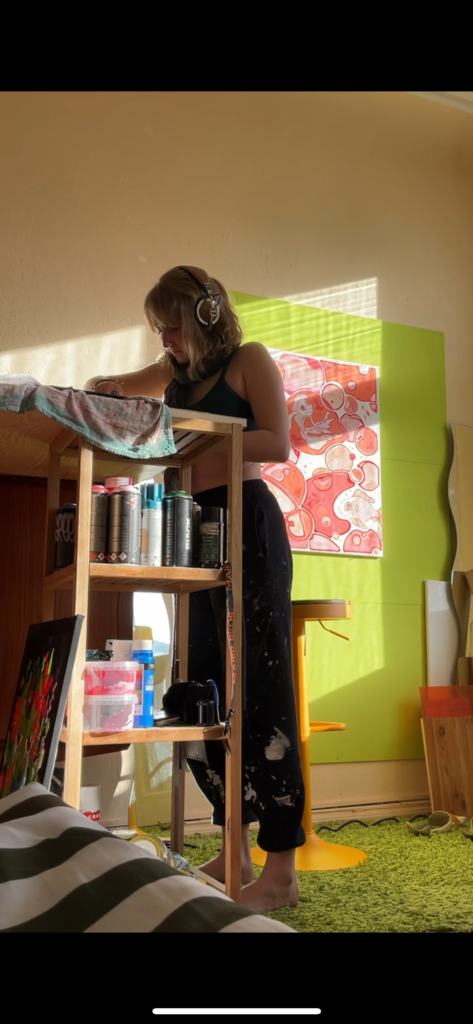
And in a time when everything moves fast, when artists are told to produce constantly and post constantly and be visible constantly, Hannah is choosing patience. She waits for the right light. She steps back. She lets the painting sit unfinished for as long as it needs. She does not force what is not ready. That is not slowness. That is respect for the work. And we think the work gives that respect right back.
So if you are making art in a small space right now and wondering whether it counts, it does. If your practice is quiet and slow and no one is watching, keep going. The room is watching. The work is watching. And one day you will look back and realise that everything you needed was already there. In the space you made yours. In the light that moved across the day. In the painting that sat with you every morning until you both figured out what it wanted to become.
Follow Hannah Bömer through the links below and step inside a practice where the studio is not just a workspace. It is home.