
Being brave and being yourself are same thing in creative work I Alli Katri Forsstedt
👁 292 Views
The best studios aren’t always the ones that look right or follow conventional wisdom about how creative spaces should be set up and protected. Sometimes they’re the ones that make you question everything you thought you knew about where work happens and how it survives, and Alli is one of the artists we selected for Studio Visit Book Volume 7 whose practice completely embodies what we’ve been learning through all these volumes: a studio doesn’t need to be perfect or even look like what we expect it just needs to be a place where you can work honestly and feel like yourself.
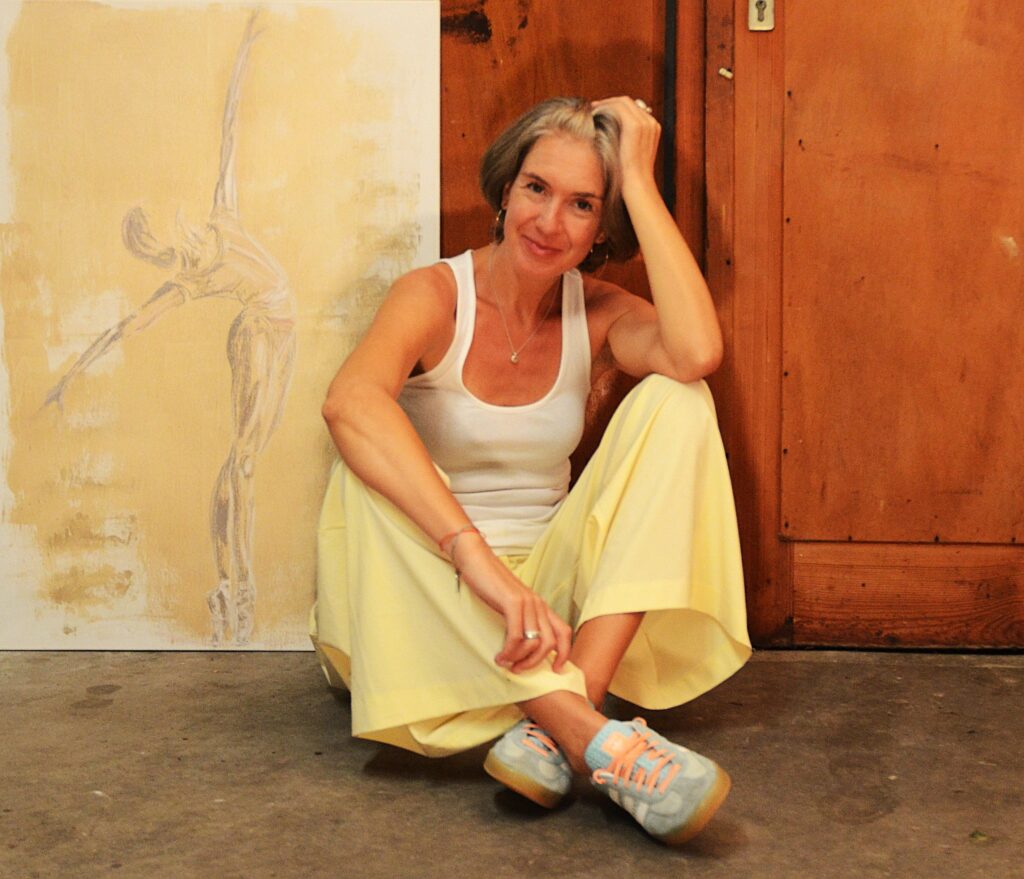
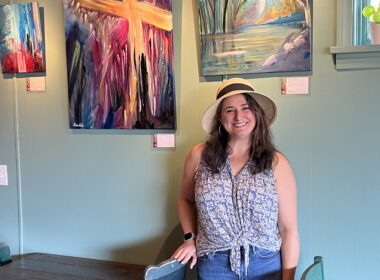
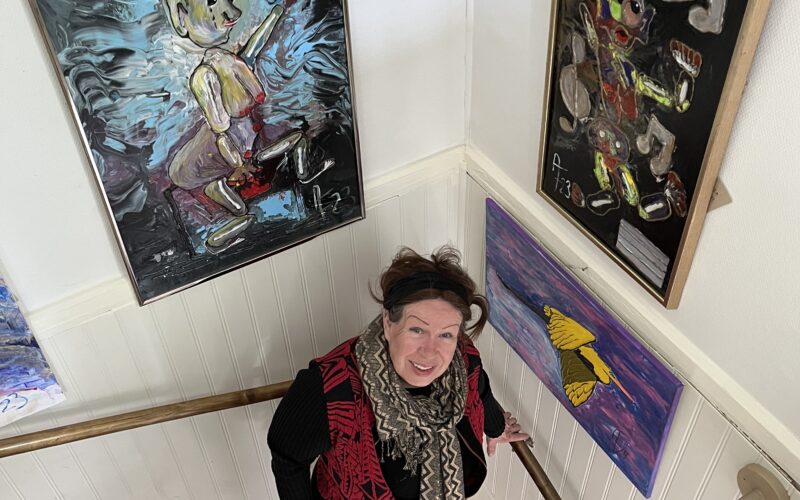
That’s exactly what Alli Katri Forsstedt has built, except her studio challenges every assumption we carry about protecting creative work because it’s not inside a building at all it’s the exterior wall of her house in northern Finland, where paintings hang on stainless steel facing wind, rain, frost, and snow.
Most artists spend their careers trying to shield their work from the elements, building climate controlled spaces and archival storage. Alli does the opposite. She puts her paintings outside on purpose, not out of recklessness or lack of care, but because weather becomes her collaborator and her judge.
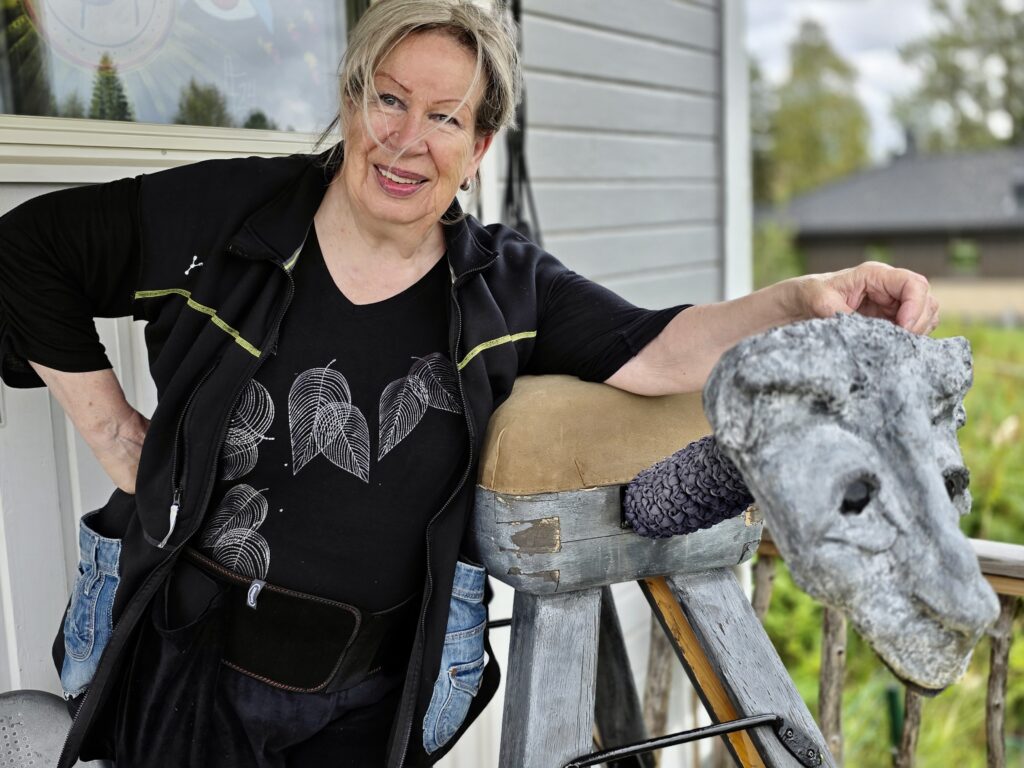
We selected Alli for this volume because her story stops us from making easy assumptions about what artists need to do their best work. At 50, when most people are settling into established patterns, she left Helsinki for Pajala, a tiny town in the far north that most Finns have never even visited.
Her brothers helped her adjust to a landscape that feels vast and unforgiving, where winters stretch long and dark.
She went there for ice sculpture training, an art form that seems completely disconnected from painting on the surface, but underneath it’s about the same fundamental question: how do you find what’s essential? How do you strip away everything unnecessary and see the core? That training transformed not just how she carves ice, but how she sees objects, how she approaches a blank surface, how she understands what deserves to stay and what needs to be removed.
She’s completely self-taught, which means she learned through mistakes, through doing what felt right even when it looked wrong to everyone else, through building a practice based on instinct rather than instruction.
She operates by a principle she calls “give all flowers flowers,” which seems to mean let things be what they are, don’t force them into shapes they were never meant to hold.
Now let’s hear from Alli about why she works outside, what ice sculpture taught her, how subjects arrive, and what that supernatural state actually feels like.
Q1. Can you share how you usually ease into a day in your studio, whether by looking at previous pieces, setting up materials, or simply trusting your intuition?
My day with my paintings varies in hours or minutes, mostly early nights are my best creative season. I use my aha moments to start a new work, I am an innovator in my lectures, I always try to find a new perspective for my new painting.
Q2. Your journey into painting seems wonderfully personal and free what was the moment you first realized painting was something you wanted to do every day?
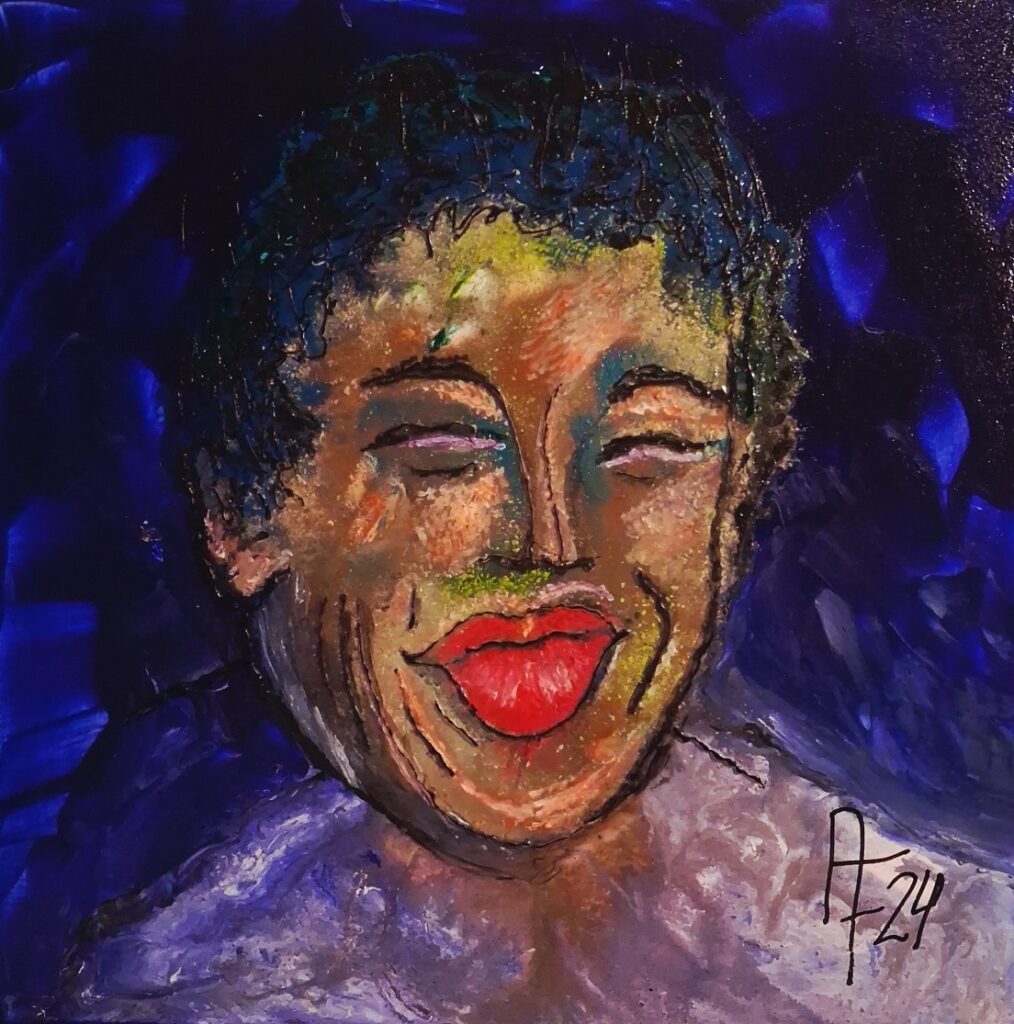
My idea this time is to paint paintings on the outside wall of my house using stainless steel as a painting base and exterior paints as paints. I started implementing this idea already in the summer of 2025 when I painted over 20 paintings on stone tiles on the outside wall of my house, which I hung on the wall in the hope that they will last all year round in wind, rain and frost. The theme of next summer 2026 exhibition is animals.
Q3.Moving from Helsinki to Pajala and creating art in a quieter northern landscape must shape your work in subtle ways. How has this environment influenced the way you paint, your rhythms, or what you choose to focus on?
It was strange to move from Helsinki to small Pajala at the age of 50, my two brothers and their families helped me adjust. I was attracted to Pajala by the ice and snow sculpture training, I am forever grateful for this ice sculpture training, this opened up a new world for me to find the core of objects, I found the innermost in both art and music.
Q4. You work in a style often described as naïve or expressive. How do you experience this way of working in the studio does it feel instinctive, playful, courageous, or something else entirely?
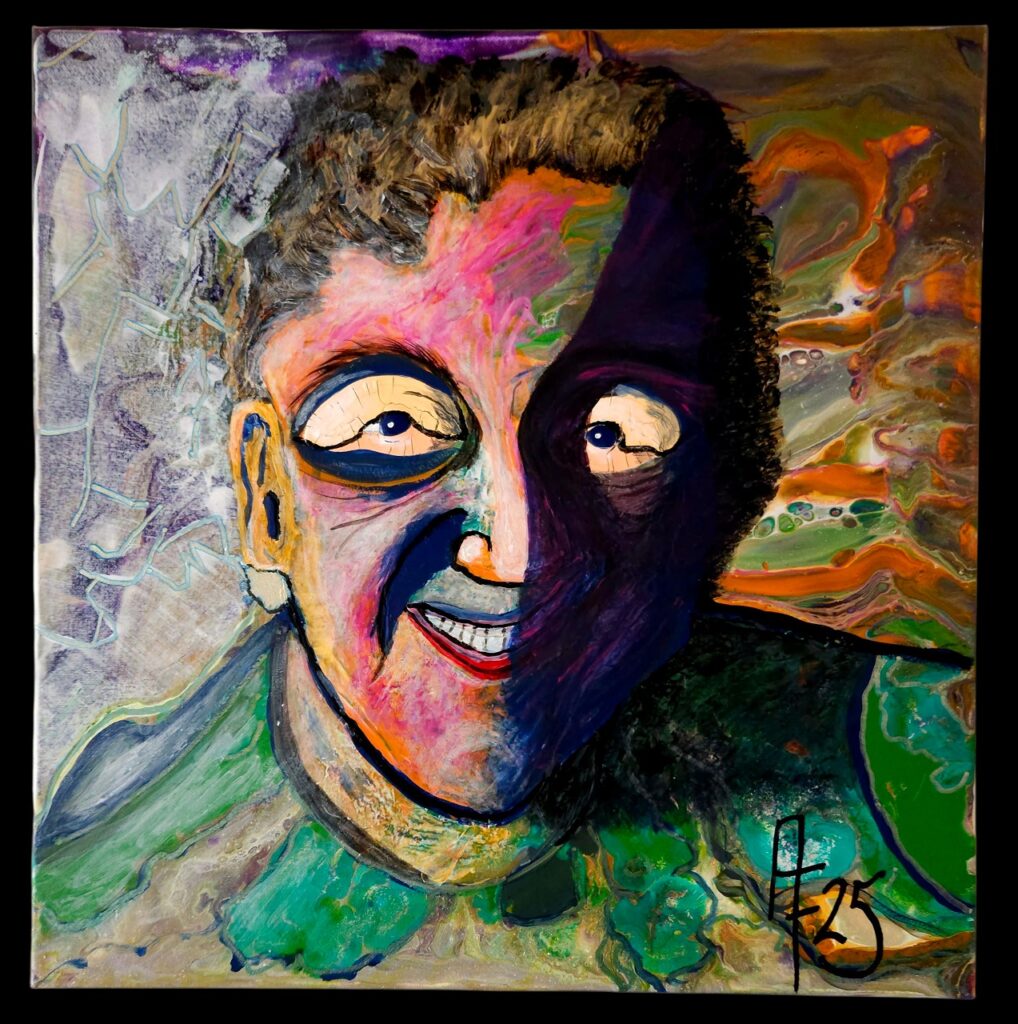
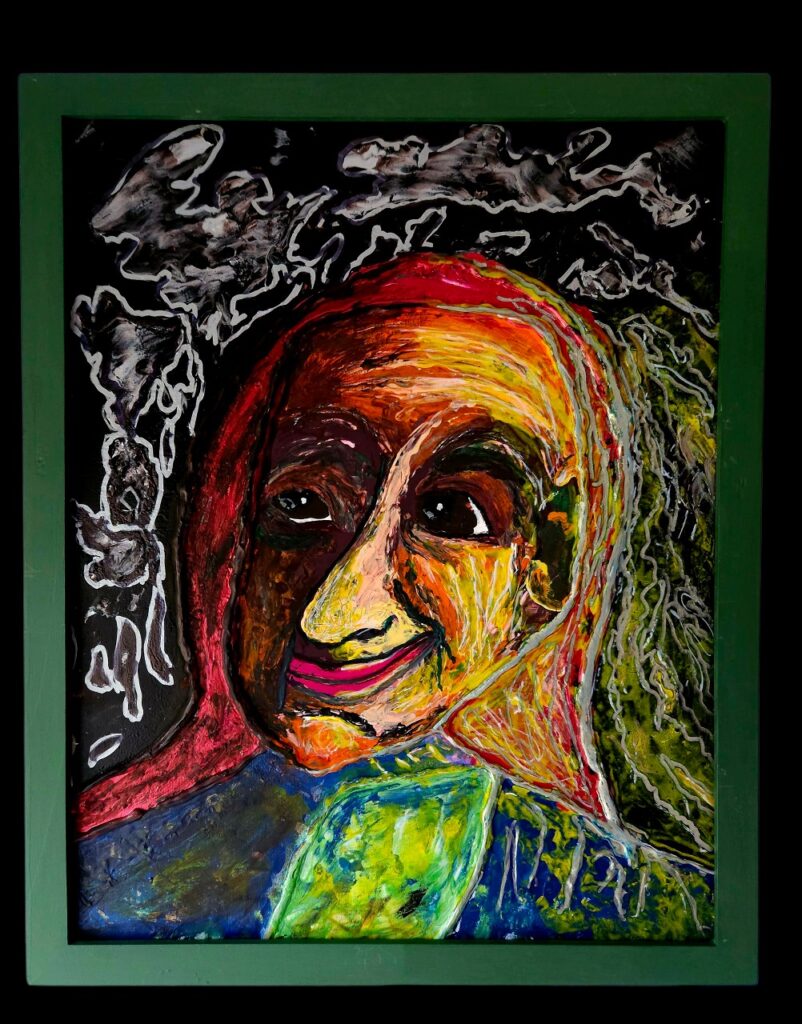
The new subject chooses me, not me. I am intuitive. I have realized that I unintentionally use a lot of color in my paintings. It is my way of expressing my emotions.
Q5. Some of your work has been exhibited abroad, like in Athens. How does preparing paintings for a show change your relationship to the studio space?
I am currently working on an exhibition for summer 2026 and need more space for it. I am arranging the upstairs of my house to be more suitable for my paintings and where my paintings can dry in peace.
Q6. How does your studio bear witness to unfinished moments? When a painting isn’t yet resolved, do you step back, touch it again later, or let it wait until the next day?
An exciting question, because in the fall I found a new way of looking at the painting on display, I take pictures with my camera, and through that I see what needs to be changed or what needs to be corrected in my work.
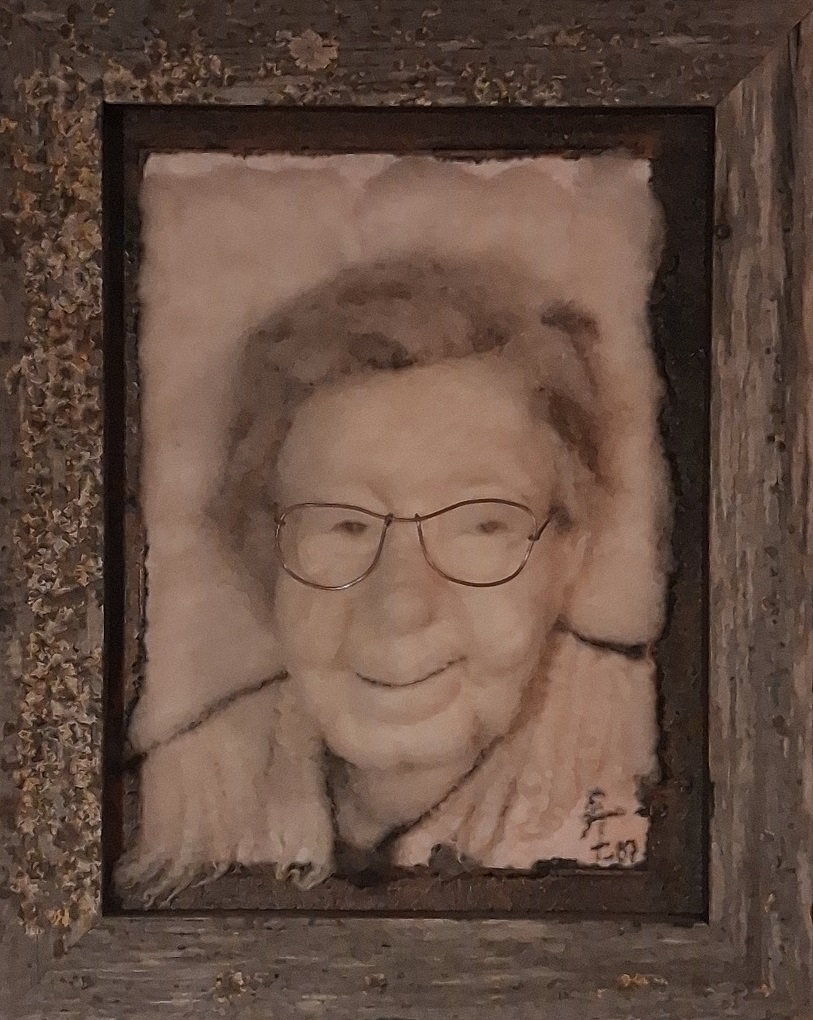
Q7. What do you find most alive about working in your studio, is it the freedom to experiment, the connection to your inner world, or the feeling of movement from one painting to the next?
Making art, whether it’s painting, scrap art or music, takes me to a state of being that frees me from the sorrows of everyday life for a while, I forget everything else and sink into a relaxing state, I don’t see or hear anything but what I’m making at that moment. I free myself to another, happier state, I experience something supernatural and calming in those moments.
Q8. When you look at your older paintings beside your most recent work, what shifts or continuities do you notice in how you approach color, form, or expression?
I am self-taught after all the mistakes, I would have to study a lot about shapes, color theory, but on the other hand, I have always been a follower of my own path and did what I feel like, this is my life and I do exactly what and how I feel like, on the principle of “give all flowers flowers”.
Q9. What advice would you share with artists who are learning to build a patient, attentive studio practice?
I hope you find at least a small space for yourself where you can leave your work and painting tools and your work to wait for your next moment of inspiration. Listen to yourself, you will find the best answer within yourself when you are unsure, be brave and be yourself.
As our conversation with Alli came to a close, I kept thinking about numbers we defend without questioning why.
There’s a kind of artist who waits for conditions to be right before they start. Who needs the perfect studio, the right credentials, the appropriate age before taking their work seriously. And then there’s someone like Alli, who moved to a tiny northern town when most people are settling into patterns, learned to carve ice, and started hanging paintings outside where weather destroys most of them.
Most of us are nowhere near that. And sitting with her practice after this conversation made me realize how much energy we waste defending arbitrary limits. How often we use age or timing as reasons to stay safe. How rarely we just follow what feels true and stop apologizing for it.
Every painting she hangs outside, every night she works while others sleep, every time she lets subjects choose her instead of planning ahead, none of that is carelessness. That’s precision. Knowing exactly what your practice needs, genuinely knowing, is one of the hardest things to trust whether you’re painting or building anything real.
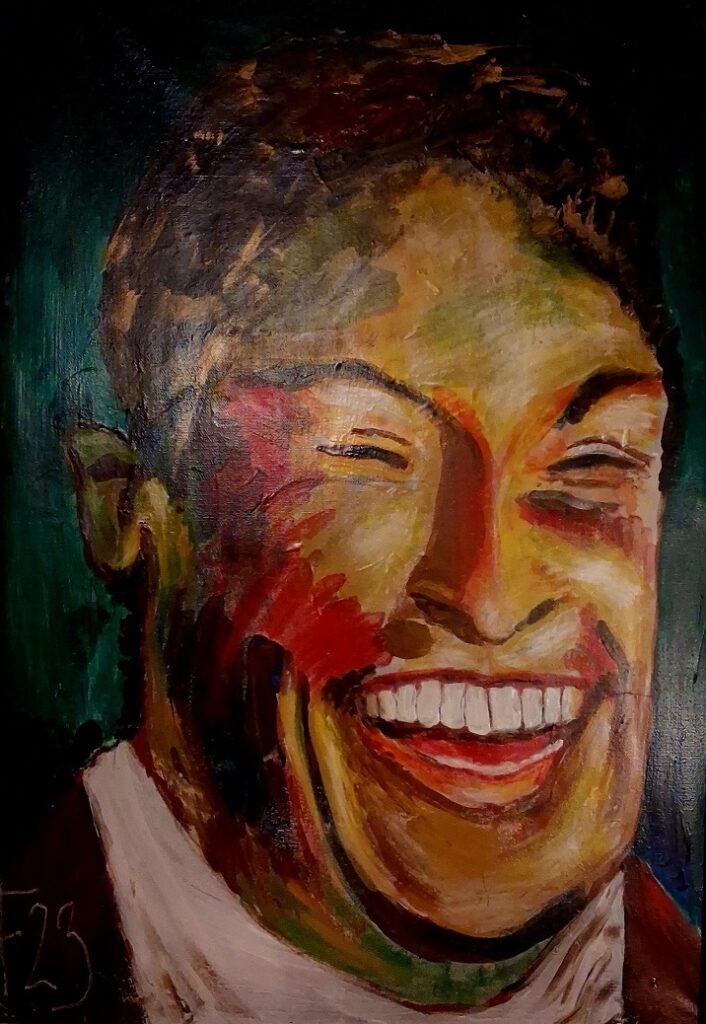
Because most of us don’t trust ourselves that far. We keep adding justifications. More reasons. More explanations for why we work the way we do. We’re so afraid of looking foolish that we stay stuck in what feels safe even when it stopped working years ago. Alli doesn’t explain. She just does what’s true. And there’s something in that worth sitting with long after you’ve closed this page.
What her practice really asks is whether you trust yourself enough to ignore rules that don’t serve you. Whether the numbers you believe about age and timing are real or just convenient excuses. Whether you’re brave enough to follow what feels true even when nobody else gets it.
Most of us aren’t there yet. Alli already is. And you can feel it in every choice she makes about where and how and when she works.
She’s worth following closely. Not just for what she’s making now but for what someone with that kind of honesty shows is possible at any age.
Follow Alli Katri Forsstedt through the links below and give her work some real time.