
5 Ceramic Artists That Make IKEA Look Boring
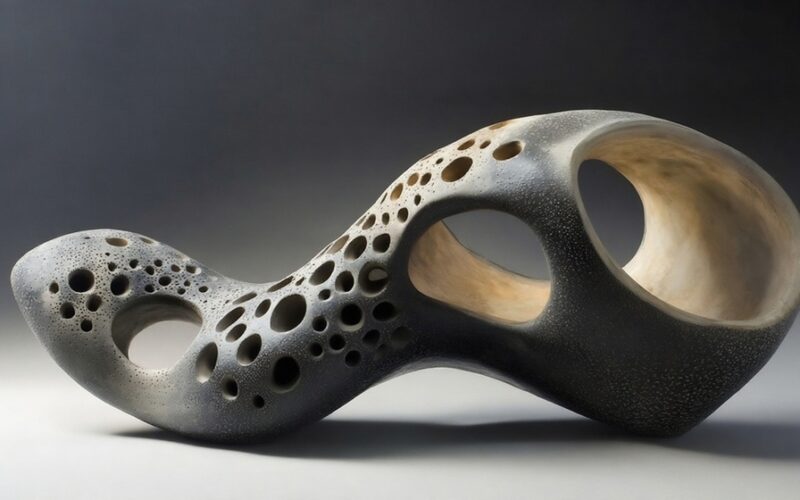
Ceramics have been around longer than most art forms we think of as “contemporary.” Long before galleries, studios, or even the idea of art as we know it today, clay was already part of daily life. It held water, food, grain, rituals, and stories. It was shaped by hands for survival, for use, for continuity. Expression came later, quietly, almost incidentally, folded into function.
For a long time, that usefulness worked against it. Ceramics became easy to overlook precisely because it was everywhere. Plates, cups, bowls, vessels, objects we touch without thinking, use without questioning. Over time, the medium was boxed into tradition and routine. It was labelled as craft, domestic, decorative. Reliable, yes but rarely given the same space or seriousness as painting or sculpture. Somewhere along the way, ceramics picked up the unfair reputation of being old-fashioned, repetitive, or even boring.
But that perception no longer holds. What’s happening in ceramics now feels like a shift rather than a trend. Artists are returning to clay not to repeat what’s been done before, but to reexamine it. The familiar forms are still there plates, cups, vessels but they’re being approached differently. A plate becomes a surface for narrative. A cup becomes a sculptural gesture. A vessel becomes a question rather than an answer.
What makes contemporary ceramics so compelling is this tension between function and expression. Clay still remembers the hand. It still records pressure, movement, hesitation. It still requires patience, timing, and a willingness to accept that not everything will go as planned. Firing introduces risk. Glaze introduces uncertainty. Cracks, warping, and surprises become part of the conversation rather than mistakes to hide.
Many ceramic artists are embracing that unpredictability. Instead of aiming for perfection, they allow marks, textures, and irregularities to remain visible. The result is work that feels alive objects that carry the evidence of how they were made. Some pieces are meant to be used. Others are meant to be looked at. Many exist somewhere in between, refusing to choose just one role.
There’s also something deeply human about working with clay. It resists total control. It responds to touch, time, and environment. It asks the maker to slow down, to adapt, to listen. In a world that values speed, efficiency, and polished results, ceramics insist on process, repetition, failure, and return.
At the Arts to Hearts Project, this is exactly why ceramics continue to draw us in. It’s a medium rooted in everyday life, yet capable of holding real depth. When treated thoughtfully, ceramics bring beauty into ordinary moments without losing meaning. It doesn’t need to shout to be powerful. Its strength lives in quiet decisions, careful handling, and respect for material.
In this article, we’ll be sharing ceramic artists who are working with clay in meaningful and considered ways. Artists who understand its history but aren’t limited by it. Artists who show how even the most familiar objects, a plate, a cup, a vessel can be reimagined with intention, sensitivity, and quiet confidence.
Philip M. Soucy @philipmsoucy
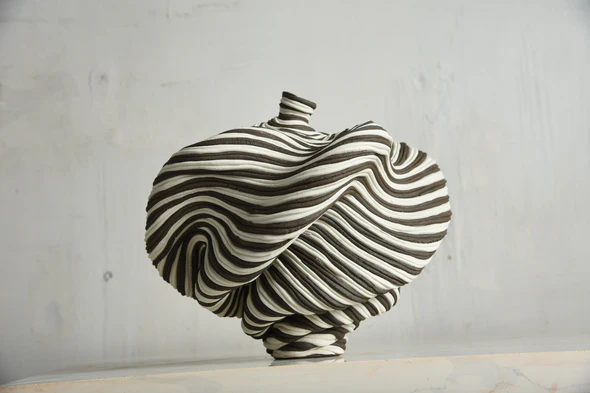
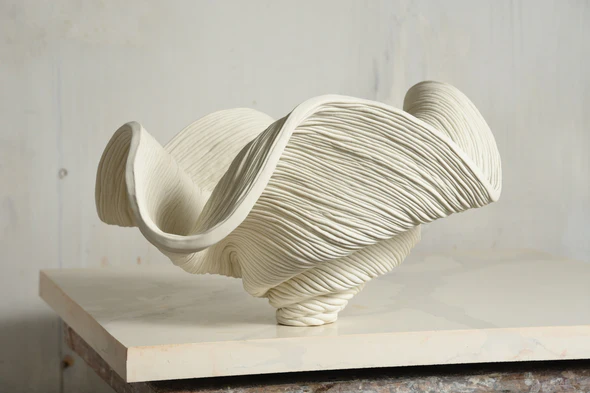
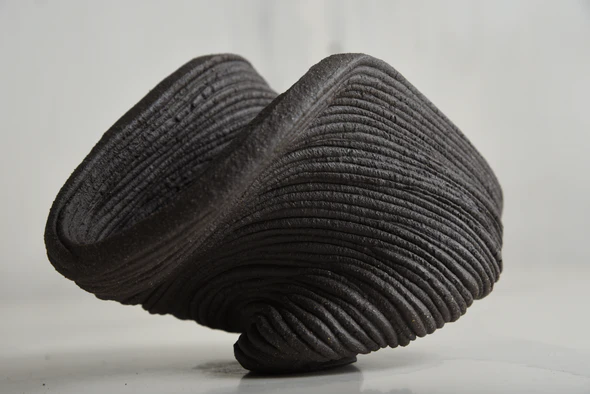
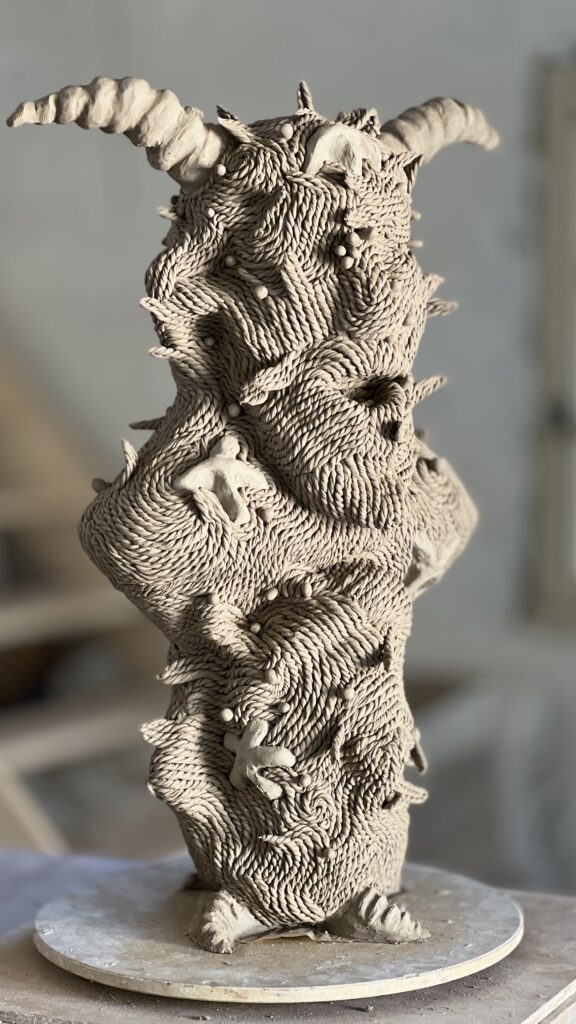
Philip M. Soucy’s work has a quiet confidence, pieces that hold space without needing to demand it. He builds his pieces by hand with layered coils of clay, letting each row stack on the next until something solid and singular begin to take shape. That process, slow, physical, repeated, becomes part of the work itself rather than something hidden behind a finished surface. What you notice first is how the coils give his pieces a rhythm of their own. These aren’t smooth, anonymous vessels where you can’t tell how they were made. Instead, you can see the fingerprints of the maker, the movement of hands, and how each layer snugly presses into the one before it. That surface layered, uneven, tactile doesn’t feel like a mistake. It feels chosen. Philip’s forms range from taller vases to stout bowls and unique sculptural objects, but they all share a sense of presence. They don’t disappear into their environment. They stand as objects meant to be noticed, touched, and lived with, not just looked at from a distance. The way light travels around them, how shadows form in the folds and ridges, these things matter because the pieces weren’t made to be neutral.
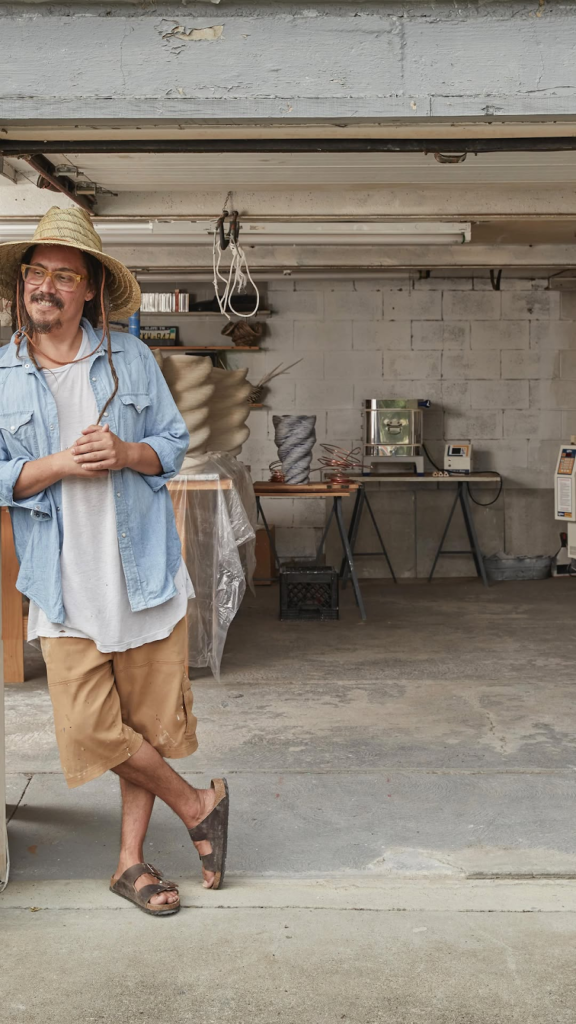
In his approach, repetition isn’t a rut, it’s a tool. Building up coils layer by layer isn’t just a technique; it’s a way of working that lets intention and material speak together. When Philip adds another coil, he’s shaping not only clay but the pace of making itself. There’s weight in that rhythm. There’s meaning in the way each layer leans on the next.Looking at his work over time, you get a sense of variation without abandonment of fundamentals. Some pieces feel more open, others denser. Some demand attention with size, others with subtle shifts of tone and surface. But all of them feel connected to the same understanding of material: clay that has been worked with hands, not hidden behind polish. Philip doesn’t seem interested in smoothing everything into a predictable shape. He lets the inherent texture of clay remain visible, and in doing so he honours the material itself. That honesty about how the work was made, what it took to make it, how it occupies space gives his ceramics a directness that resonates beyond mere form. In a medium that’s often assumed to be about function or craft, Philip M. Soucy’s ceramics remind us that clay can be expressive without losing its physical reality. His pieces are about presence, patience, and the humanity embedded in hand-made work things you can feel even before you know his name.
Jane Yang-D’Haene @janeyangdhaene
Jane Yang makes ceramic pieces that feel considered from the very beginning. Her work doesn’t rely on bold gestures or decorative excess. Instead, it’s built through attention to form, proportion, and surface, the kind of attention that comes from spending a lot of time with the material and letting it respond. Many of her pieces begin with sculptural forms that feel self-contained and intentional rather than referential. What sets them apart is the care taken in refining those forms. Curves are adjusted subtly. Edges are softened or held firm with intention. Nothing feels added for effect. Each choice seems to come from asking what the piece actually needs, rather than what it could be made to do. Her surfaces are quiet but far from flat. Glazes are layered gently, allowing small shifts in tone and texture to show. Light changes how the surface reads, and that variability feels intentional rather than accidental. The finishes don’t try to impress from a distance. They reward closer looking.
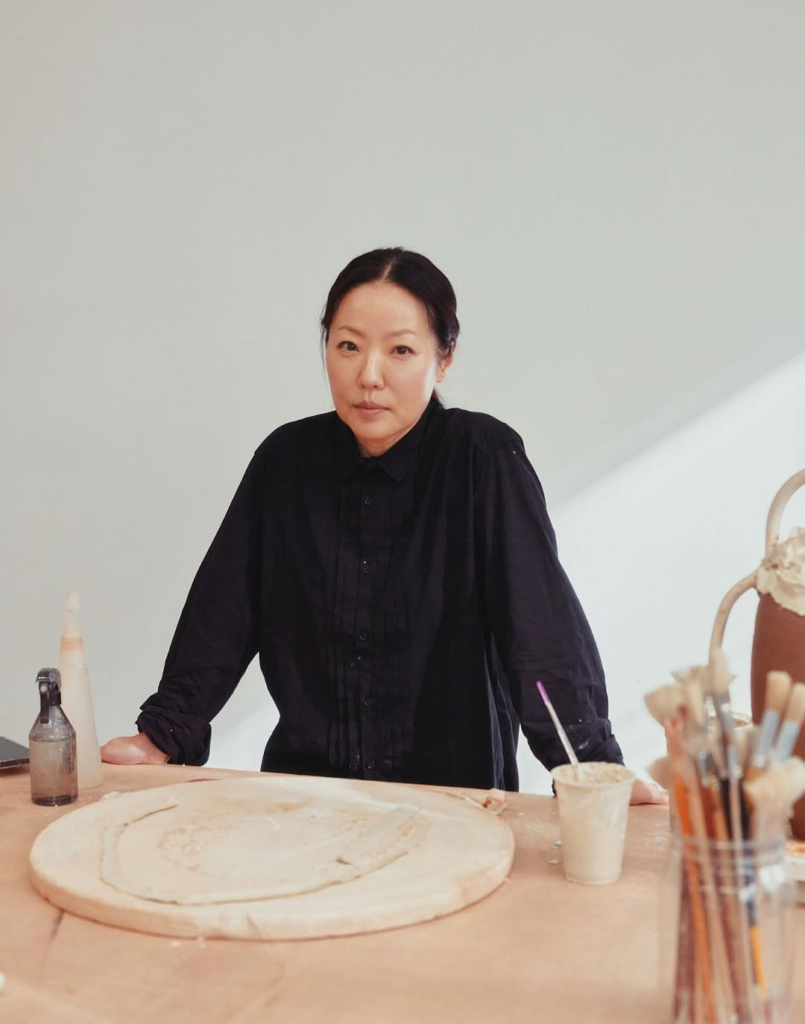
There’s a strong sense of material understanding in her work. You can tell she’s used to responding to how clay behaves, when to push it, when to leave it alone. The pieces don’t feel forced into shape. They feel worked with. That relationship shows in the final objects, which carry a sense of balance and ease. Looking through her work overtime, you notice a consistency in approach rather than repetition. Forms return, but they’re never exactly the same. Small variations appear in size, proportion, or surface, suggesting a practice that values refinement over constant reinvention. These are objects that hold presence without demanding it. When spent time with, they make you aware of their weight, their surface, their quiet authority in space. They ask for a moment of attention without insisting on it. Jane Yang ceramics show how much strength there can be in restraint. Her work doesn’t rely on spectacle. It relies on good judgment, patience, and a clear relationship with the material, qualities that make the pieces feel honest, thoughtful, and quietly lasting.
Matthieu Faury @faurymatthieustudio
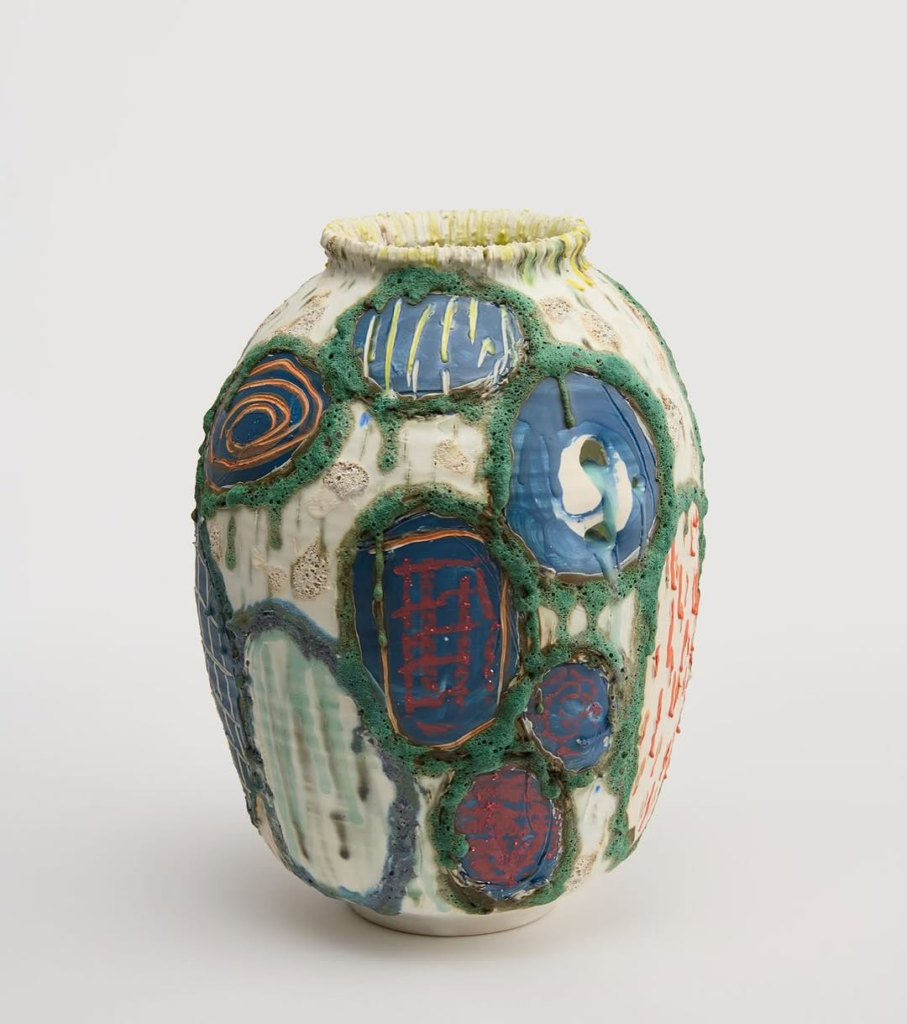
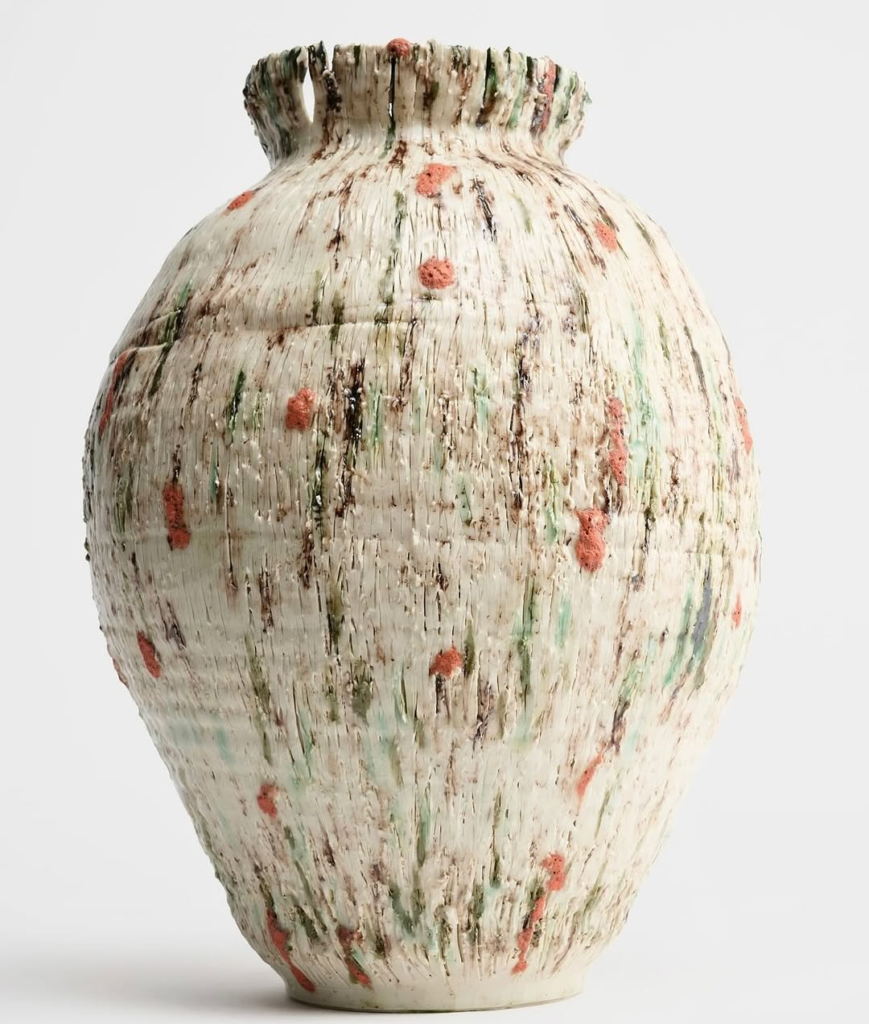
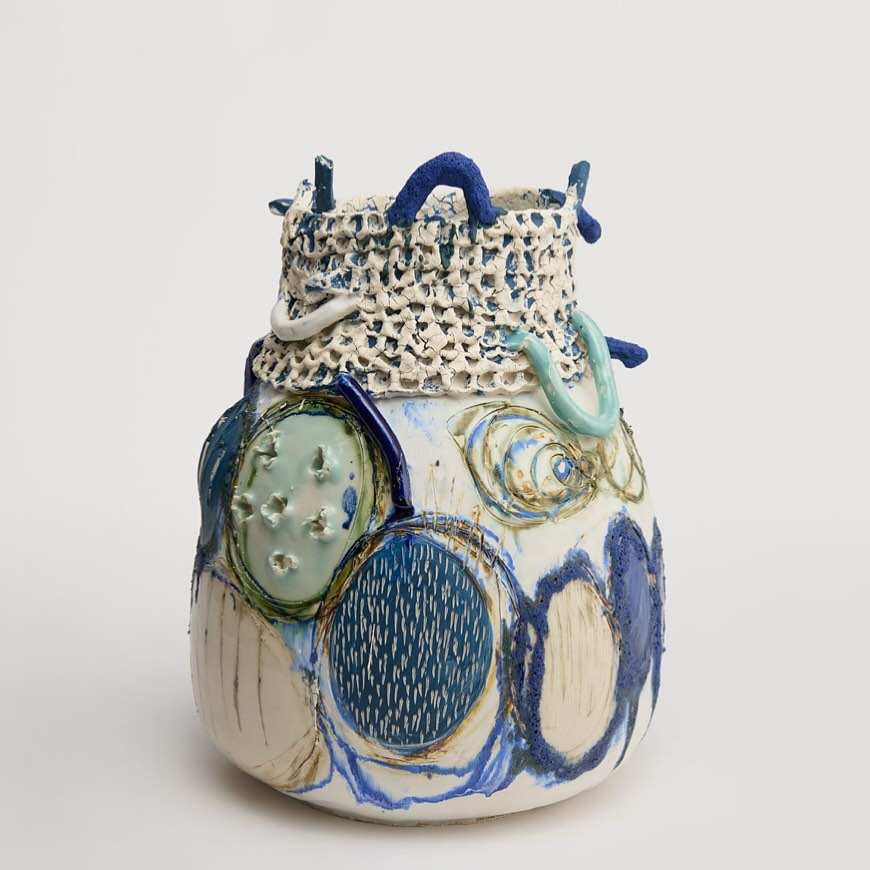
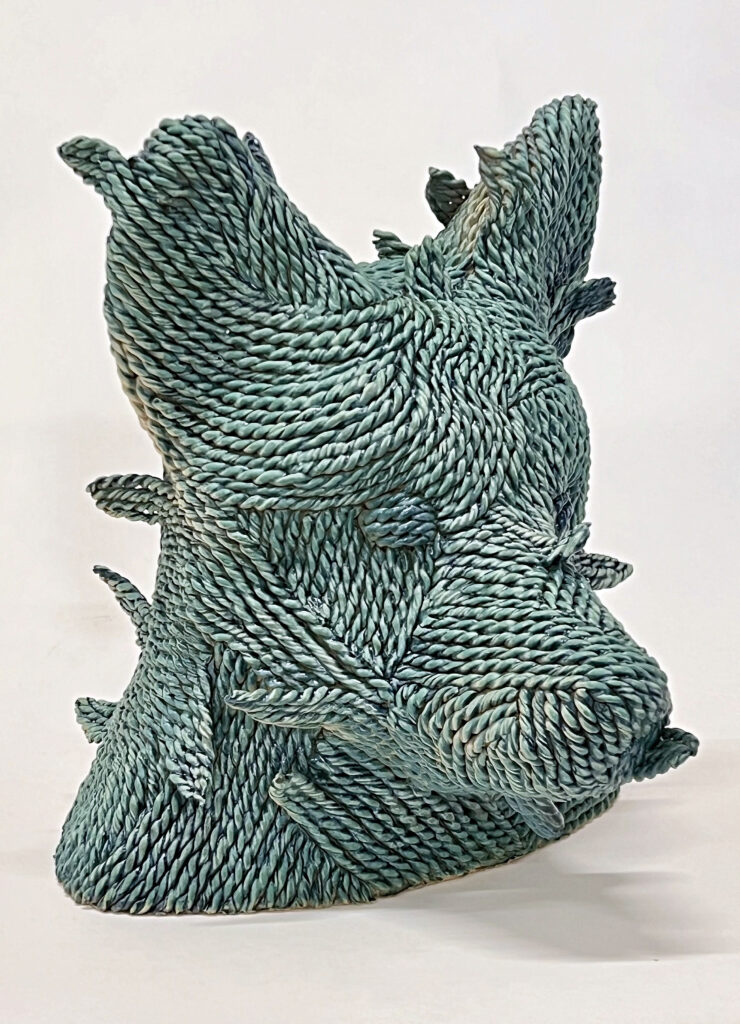
Matthieu Faury’s ceramic work sits far from the narrow idea of clay as something limited to functional objects. His pieces feel considered and physical, shaped through an ongoing exchange between material and maker. Forms build gradually, sometimes overlapping or pressing into one another, and surfaces carry a sense of weight and touch. You get the feeling that these objects arrived where they are through time and attention, not expectation. What runs through Matthieu’s work is a steady interest in how forms exist in relation to life. His sculptures don’t try to imitate nature directly, but they often hint at it. Animal-like presences, plant forms, and mineral structures appear and merge, especially in works such as his gorilla figures and hybrid sculptures. The connections feel intuitive, as if the shapes were allowed to grow into one another rather than being forced into place. His approach to making doesn’t feel rigid or overly planned. The clay is worked through response, with decisions shaped by what happens as the piece develops. You can see this in the edges, the shifts in form, and the way surfaces hold irregularity without feeling unfinished. The work carries signs of adjustment and revision, suggesting a process that stays open rather than fixed from the start.
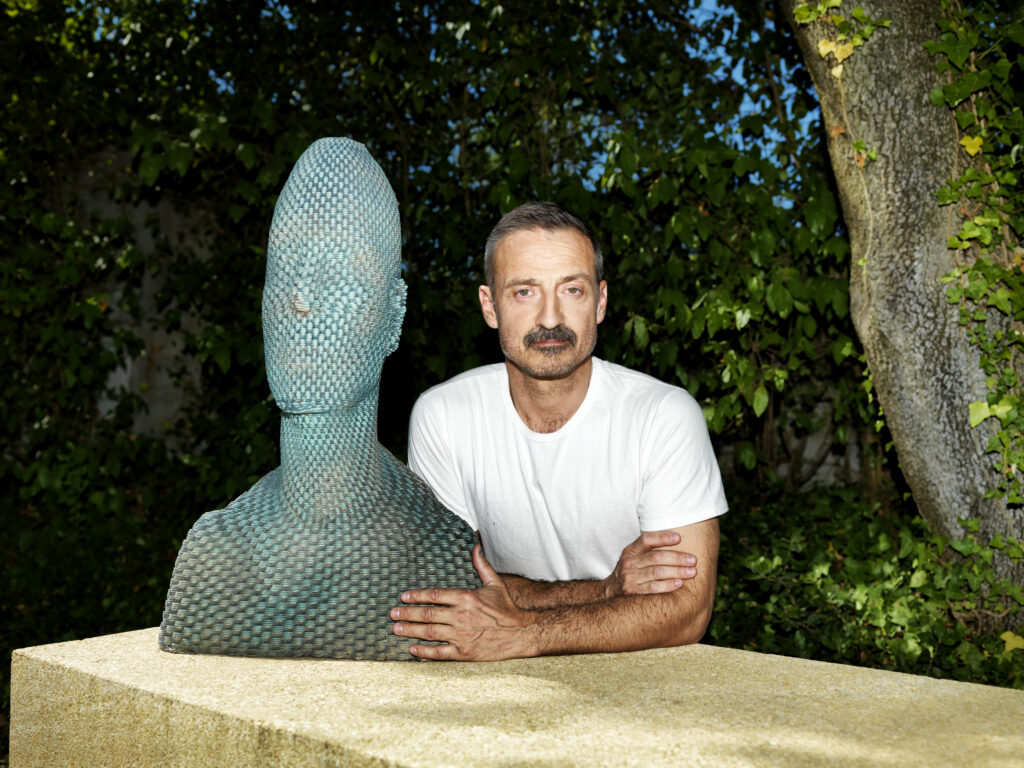
Following his work over time shows a range of moods and scales. Some pieces feel bold and assertive, others quieter and more inward. What connects them is a consistent understanding of material. Matthieu isn’t trying to show everything at once. He allows each piece to hold its own space, shaped by what he’s exploring at that moment. There’s also a comfort with complexity in his practice. Ideas around evolution, identity, and hybrid forms appear across his work, but they’re never heavy-handed. These themes sit beneath the surface, supporting the object rather than overwhelming it. The result is work that feels solid and present, even before you begin to think about what it might represent. Rather than aiming for polish or spectacle, Matthieu trusts what clay can do on its own terms. Texture is left visible. Surfaces remain worked and active. The pieces don’t chase perfection; they hold onto the marks of making. That presence gives the work a sense of honesty and physicality that’s hard to miss. Matthieu Faury’s ceramics feel shaped by attention and time. They bring together material knowledge, patient making, and a willingness to let form evolve naturally, resulting in work that feels grounded, thoughtful, and firmly connected to the act of making itself.
Clara Holt @clara.holt.ceramics
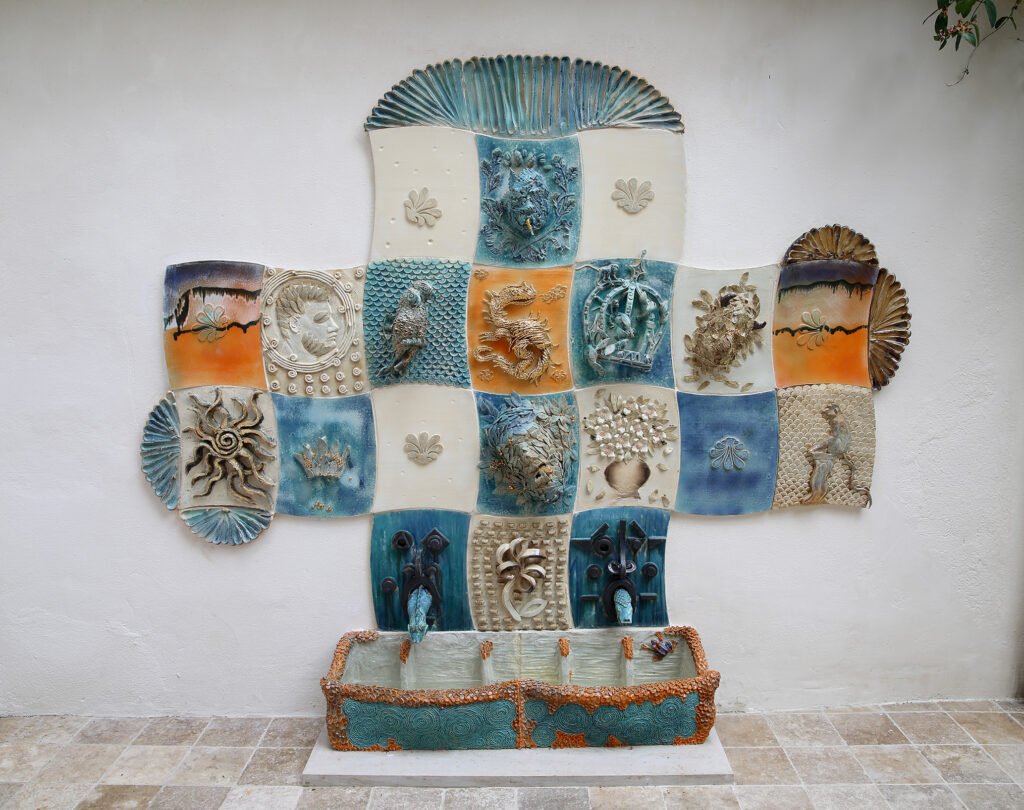
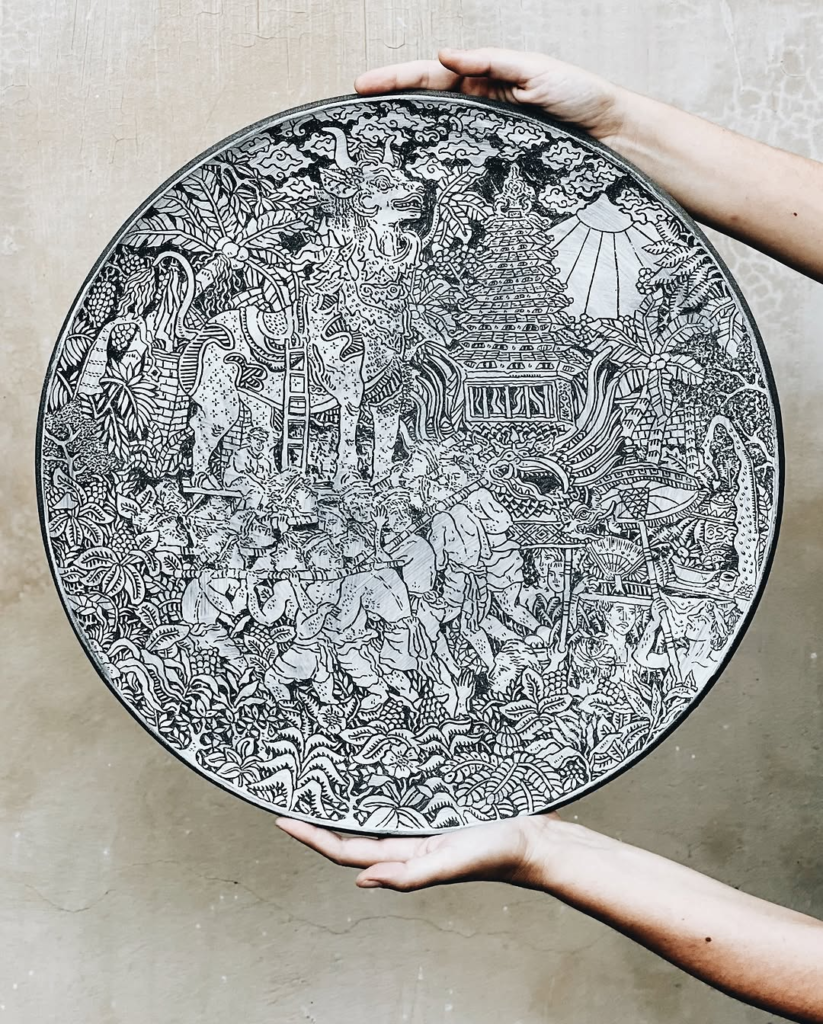
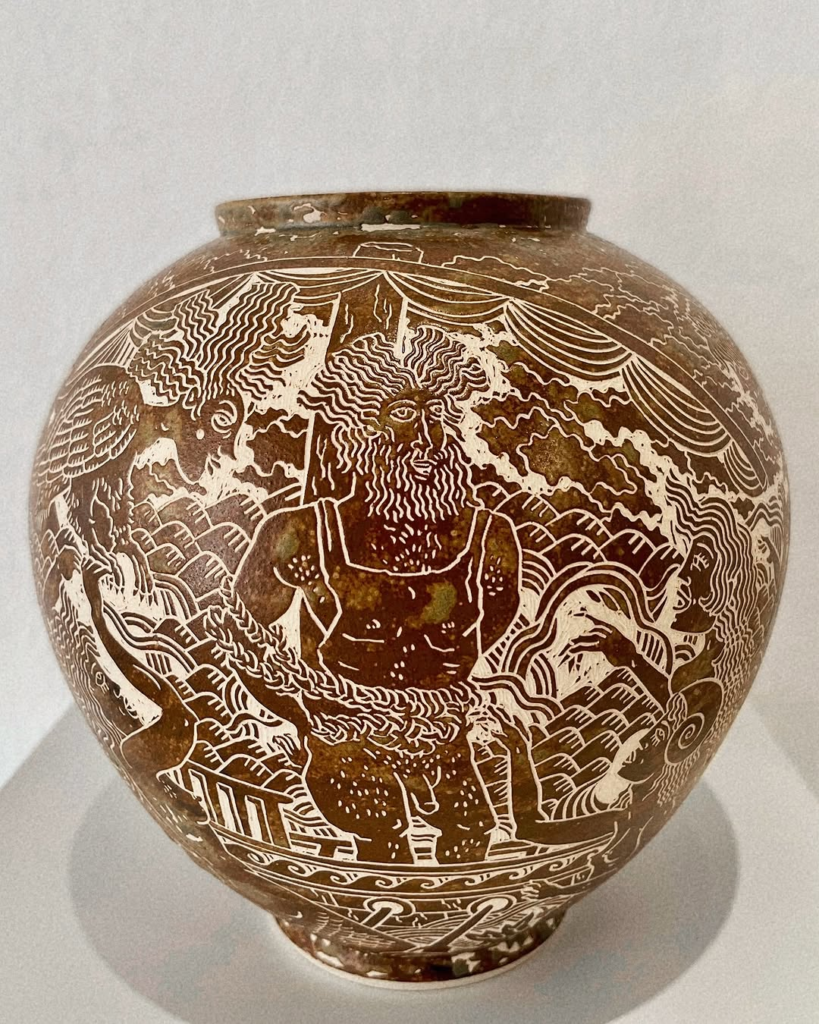
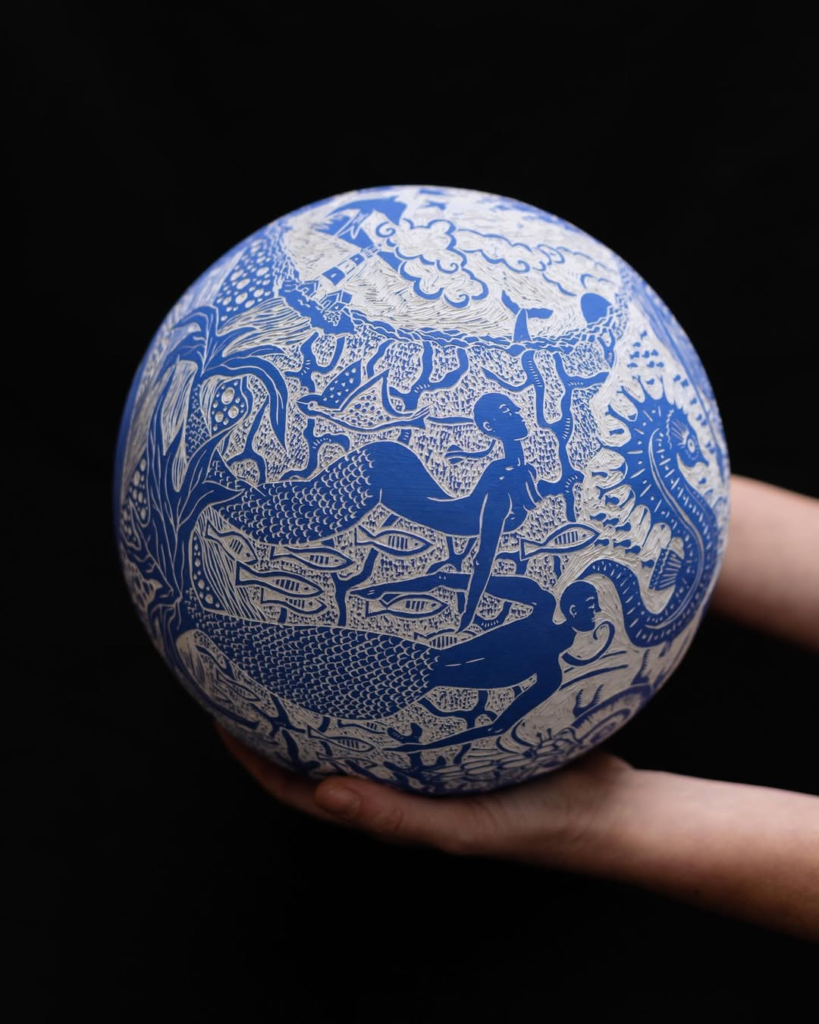
Clara Holt is an Italian artist based in Milan whose work moves fluidly between printmaking and ceramics, creating objects that feel both lived-in and imaginative. Her practice encompasses everything from hand-thrown pots to indoor and outdoor tile murals, yet each piece is approached with the same careful attention to material, texture, and narrative. For Clara, ceramics are never just functional. Each pot, tile, or mural is a space for exploration and storytelling. Some of her pieces are decorated with the sgraffito technique, where a layer of colored slip is applied to leather-hard clay and then carefully scratched away to reveal patterns, imagery, or textures underneath. Others are bisque-fired and painted with oxides and pigments before glazing, creating pieces that are both water- and food-safe while carrying a subtle, tactile expressiveness. Across her practice, every mark, line, and layer is deliberate, reflecting a patient dialogue between the artist’s hand and the clay itself. Her work is deeply guided by a love of classical literature, Greek epics, and the surrealist tradition. This curiosity for narrative and myth informs the motifs she carves and paints, often drawing from childhood memories, places she has visited, or stories that have lingered with her.
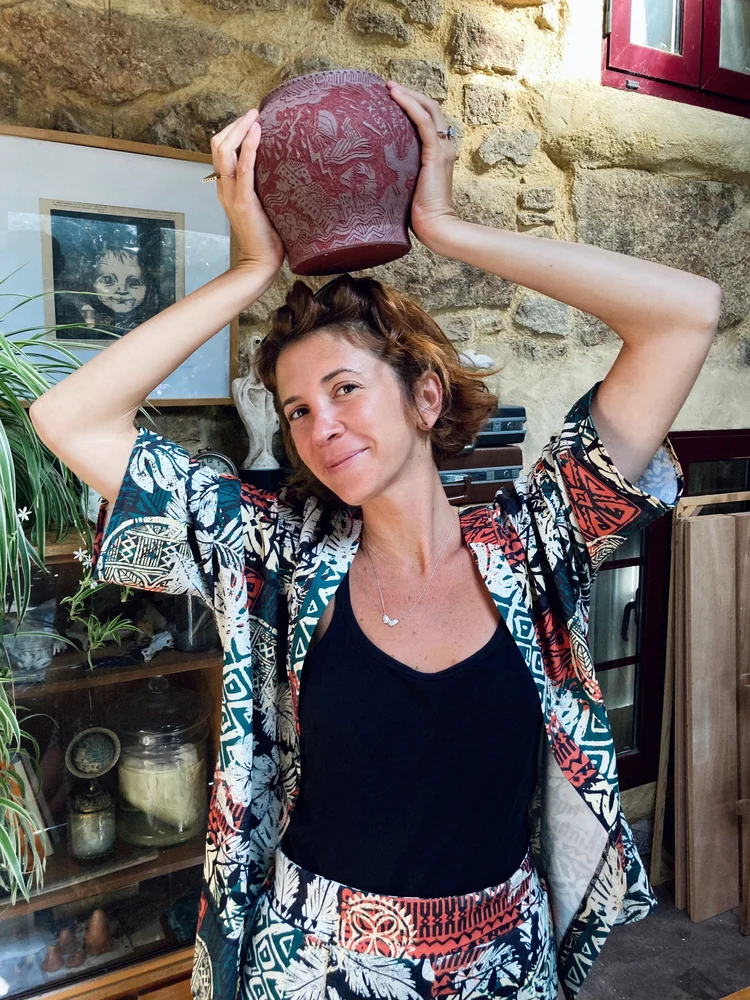
Even in functional forms, there is a strong sense of personal interpretation: the clay becomes a surface for reflection, imagination, and emotion, rather than just a vessel. Clara’s approach to ceramics emphasizes process as much as result. She listens to the material, allowing it to respond to her gestures and her tools. The interplay between slip, pigment, and clay creates moments of surprise, where texture and form emerge organically from the work rather than from a rigid plan. There’s a rhythm to her practice, a sense that each piece evolves over time and through attentive making, grounded in both intuition and skill. What makes her ceramics compelling is the way she combines craftsmanship with storytelling. The graffiti scratches, the pigments, and the hand-thrown forms all communicate a quiet thoughtfulness. They remind us that even objects we encounter daily, a cup, a plate, or a tiled surface, can carry care, imagination, and artistry. Through her work, Clara Holt demonstrates that ceramics can be more than functional or decorative. It can be a medium for personal expression, narrative, and reflection. Each one-off piece becomes a small universe, balancing material, technique, and story. Her ceramics are invitations to slow down, notice detail, and appreciate the beauty that emerges when thoughtfulness and handwork meet.
Kirsten Stingle @kjstingle
Kirsten Stingle’s work occupies a space between storytelling and sculpture, where porcelain becomes both medium and character. Each figure she builds is hand-formed, without molds, and shaped with a quiet attentiveness that comes from long experience and careful observation. Her focus isn’t on grand gestures or spectacle, it’s on the gestures, expressions, and subtle interactions that make the figures feel alive, present, and relatable. What sets her work apart is the way she layers narrative through material. Vintage objects, fibers, metals, wood, and other media are woven into each sculpture, creating depth and context. The process is meticulous: every hand-built form is refined with pins and scalpels, decorated with underglazes, slips, stains, and glazes, and then combined with mixed media elements like sewing, felting, and woodworking. Each step is an opportunity to respond to the material, allowing intuition and curiosity to guide the outcome. There’s a sense of dialogue in her pieces. The porcelain figures feel as though they are in conversation with the viewer, inviting reflection on human experience, imagination, and interconnectedness. Her work encourages us to linger, notice the small details, and consider how stories, memory, and emotion can inhabit form.
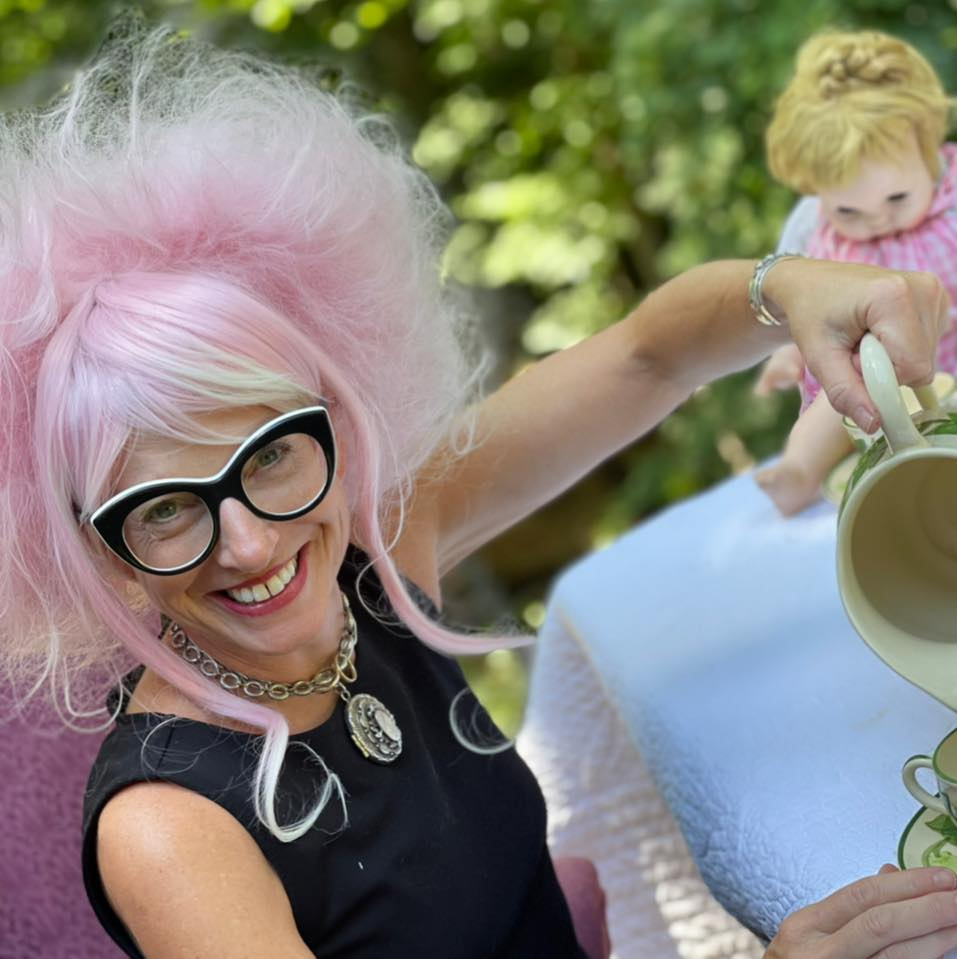
Kirsten’s practice extends beyond the individual sculpture. She often integrates her pieces into immersive, multi-sensory experiences, collaborating with music, performance, photography, and writing to expand the narrative. Her approach reminds us that ceramics can be more than functional objects or decorative forms; they can be thoughtful, expressive, and deeply human. Over more than a decade, Stingle’s work has traveled widely, from museums in Rome and Paris to high-profile art fairs in the U.S., and her sculptures are held in prominent collections such as the Macon Museum of Arts and Sciences, the Kapp Foundation, and the Addams Family Foundation. Alongside creating, she has also curated exhibitions, showing a commitment to fostering dialogue around contemporary ceramics and narrative art. Kirsten Stingle’s ceramics are a reminder of what makes this medium so compelling: patience, attentiveness, and the willingness to let the material, the narrative, and the hands of the artist work together. They show that porcelain can hold imagination, emotion, and story, all at once a testament to the thoughtful possibilities of clay in contemporary art.
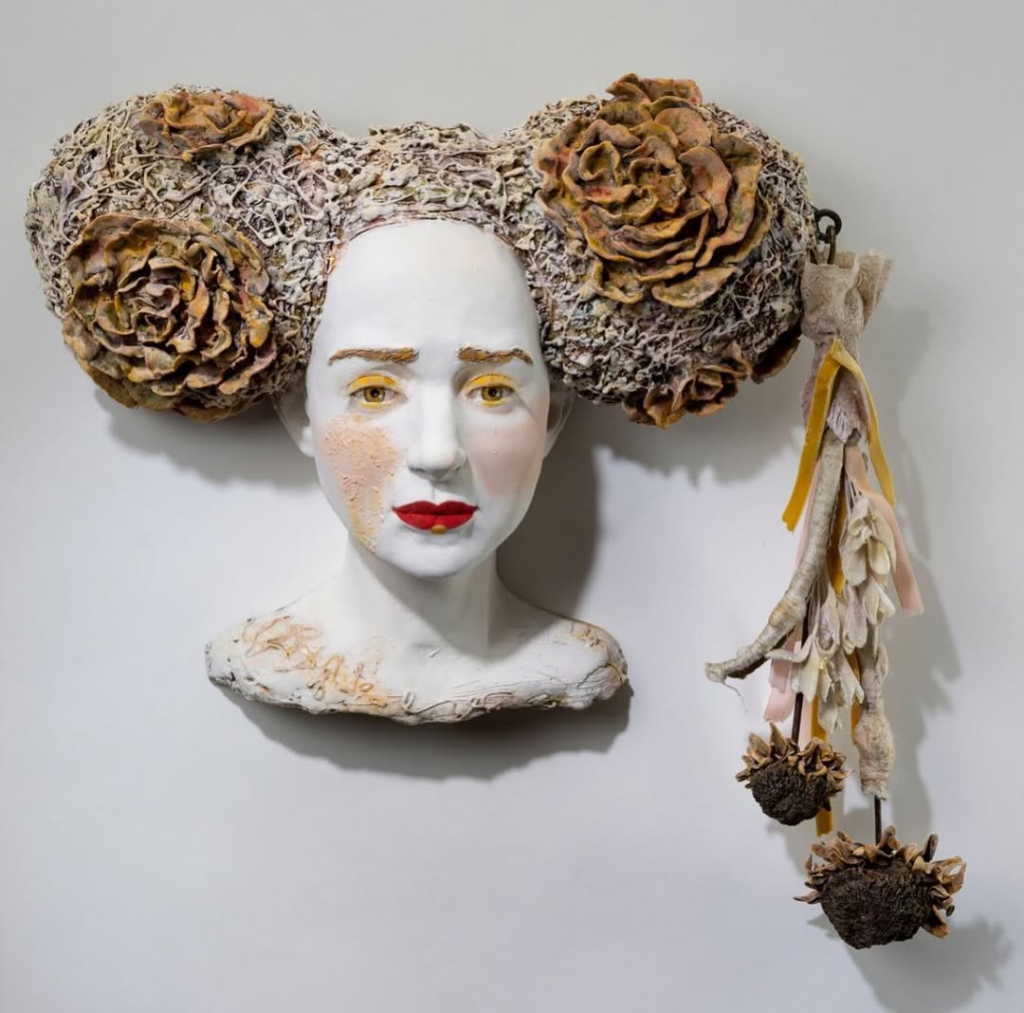
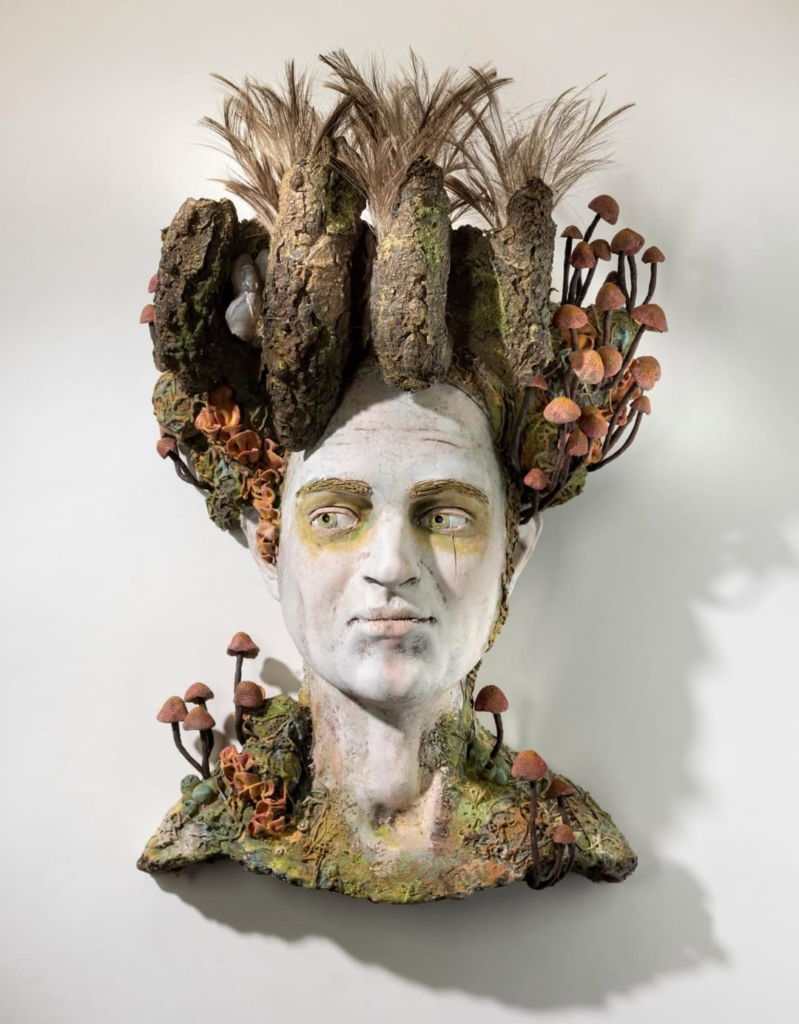
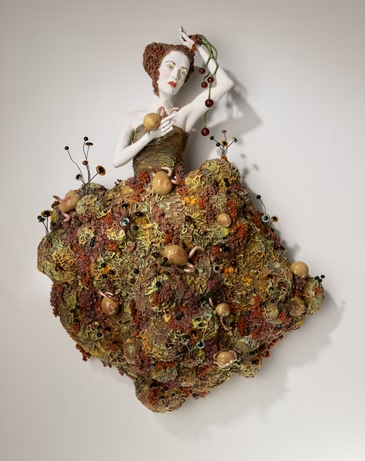
Ceramics has long carried the weight of history, sometimes admired, sometimes dismissed as “just cups and bowls.” But spending time with the artists featured here reminds us how wrong that assumption is. Clay is not a passive material; it responds, resists, and surprises. Each piece reflects decisions made in the moment, intuition guiding hands, and a deep engagement with form, surface, and space.
These works range from delicately textured vessels to hybrid, almost living forms, from grounded, weighty pieces to ceramics shaped by storytelling and narrative. Together, they show how thoughtful ceramics can be. Each approach is guided by patience, curiosity, and care. Every curve, every fold, every layer of glaze carries intention. Nothing is rushed, and nothing is accidental.
What’s striking is how varied the work is, even within the same medium. Some pieces invite quiet contemplation; others demand interaction. Some explore narrative, some texture, some the very physicality of clay. But all of them share a common commitment: ceramics as a thoughtful, expressive, and human-centered practice.
At the Arts to Hearts Project, we admire this dedication. These artists remind us that clay is more than a material; it’s a language, a way of thinking, and a space for reflection. Their work encourages us to slow down, to notice subtle details, and to appreciate the care, skill, and emotion embedded in each form. Ceramics, in their hands, become a conversation, between material and maker, object and viewer, tradition and innovation.
As you explore these works, take a moment to watch closely, touch mentally if not physically, and consider the journey each piece has taken from raw clay to finished form. These artists show that thoughtful art isn’t about speed or spectacle; it’s about attention, presence, and the quiet power of creation by hand.