

How a Background in Software Development Led Kayla Martell to Painting
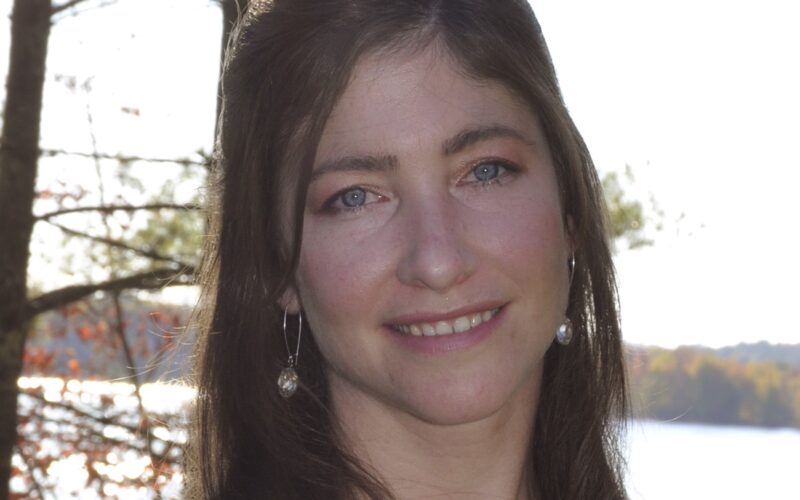
What happens when a life shaped by logic slowly makes room for feeling? For Kayla Martell, painting didn’t arrive as a sudden break from her past in software development, but it actually grew out of it, quietly and deliberately. The way she works today still carries that earlier discipline which was process-driven, attentive, thoughtful. But where code once moved through systems, her thinking now moves through colour, memory, and quiet moments that might otherwise pass unnoticed.
When she moved into full-time painting, Kayla settled in rural Ireland. Living there changed how she related to time and routine. Days move more slowly, and that shift had a direct impact on how she works and observes. With fewer distractions and a quieter pace, she began paying closer attention to small, everyday changes that might otherwise go unnoticed.
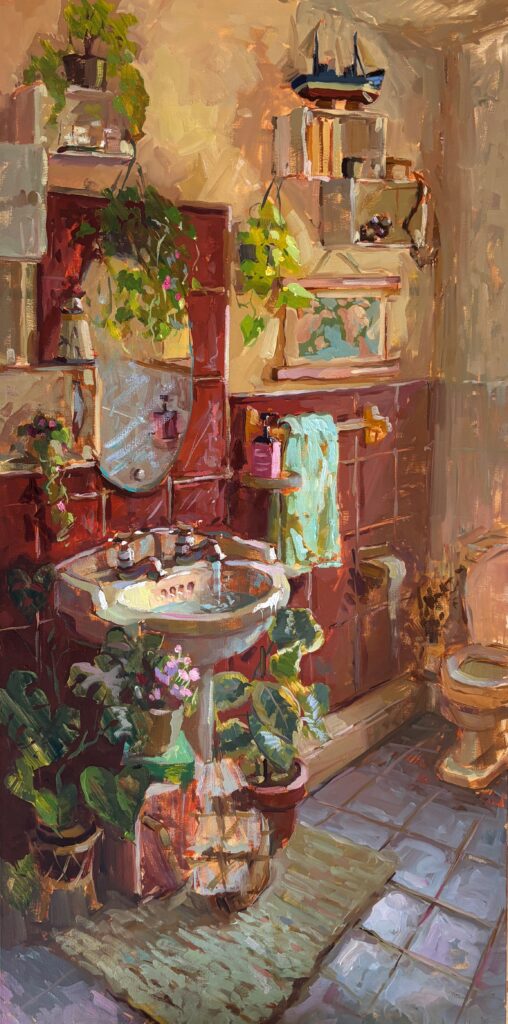
Her focus gradually turned toward ordinary moments, how light sits in a room at different times of day, how warmth stays in a space after someone has left, how familiar objects hold a sense of presence. These aren’t moments she approaches as scenes to record, but as experiences that feel remembered. The pause before a cup of coffee cools. A room that still feels occupied, even when it isn’t. These small intervals of time became central to her way of seeing.
These are the moments Kayla returns to in her work. Not because they are dramatic or symbolic, but because they feel honest. They reflect how life is often experienced — quietly, in between actions, without clear beginnings or endings. Painting allows her to stay with those moments longer, giving them attention without forcing meaning onto them.
For this feature, as part of our Best of the Art World series, we’re sharing Kayla’s work and the way she approaches painting. Her practice is built on patience, observation, and trust in the process. In many ways, it reflects how she once worked with code, breaking things down, understanding limits, and working within them.
Colour is never incidental in her paintings. She chooses it carefully and uses it with restraint. There are only so many ways to reach a particular value or level of chroma and understanding that helps her place each colour with confidence rather than guesswork.
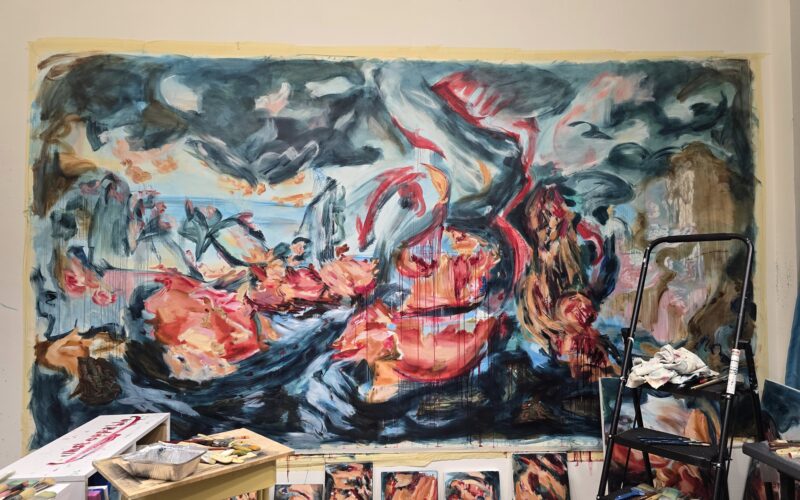
Oil paint is central to how Kayla works. Its physical qualities, the thickness, the texture, the time it takes to dry naturally slow the process down. This affects her decisions in the studio. Instead of working quickly or correcting things immediately, she lets the paint settle and responds to it over time. The medium sets the pace, not the other way around. Images develop gradually, without being pushed toward a clear resolution too early. While subject and composition are important, atmosphere tends to come first. Once the mood is established, the rest of the painting follows.
Memory is a consistent thread in her work. It appears in both her painting and her writing, often in similar ways. She’s interested in the overlap between lived experience and remembered experience how a memory can carry the same emotional weight as something happening in real time. Simple triggers play a role in this: a song that immediately takes you back to a specific moment, or a smell that brings an entire scene into focus. These experiences influence how she thinks about storytelling.
This interest extends into her writing practice as well. Her book project, The Minor Fall, explores many of the same questions, allowing narrative and image to exist alongside each other. Rather than treating writing and painting as separate practices, she sees them as connected ways of working through memory, time, and emotional recall.
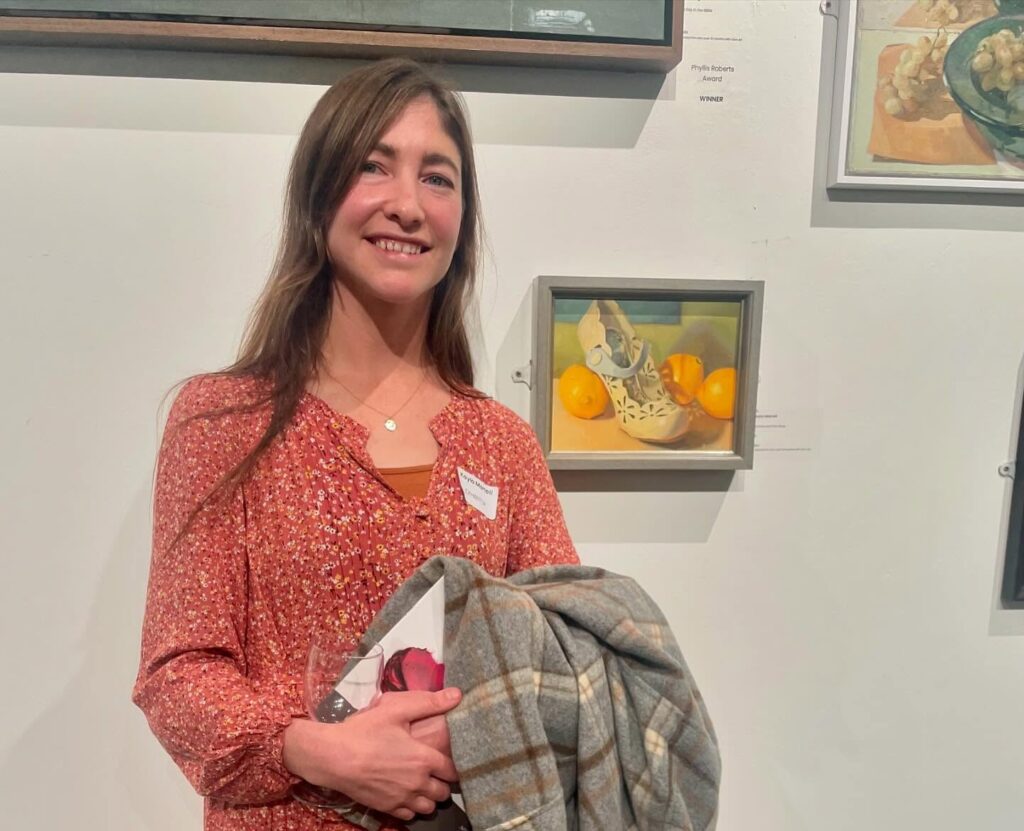
She has been recognised by several respected institutions, which has given her encouragement and a clearer sense of direction. Validation matters to her, especially when it comes from artists she admires, but it hasn’t changed what she values most. Success, for Kayla, still happens in the studio. It’s in those moments when the work fully absorbs her, when painting pulls her out of everything else and feels deeply rewarding.
Kayla’s work focuses on everyday scenes rather than dramatic moments. She pays attention to stillness, memory, and small emotional details that are easy to overlook. Her paintings encourage a slower way of looking, without pushing a fixed interpretation.
Let’s get to know Kayla Martell more through this conversation, and step into the thoughts, processes, and quiet observations that continue to shape her work today.
Q1. Can you share your background moving from software development to full-time painting in rural Ireland and how those very different worlds shaped the way you see and create today?
I approach painting from a process-orientated way, the same way I’d work algorithmically through code. From drawing, to how I use colours, each of them is their own form of measurement. There are only x colours which can achieve a certain level of value + chroma, knowing that I can properly resource them in my painting.
Q2. Many of your paintings evoke nostalgia, quiet moments, introspection. Is there a particular emotional or psychological state you aim to evoke in viewers?
Yes, always a memory, a dream, something remembered. Hopefully, the feeling of someone having just gotten up and their coffee is still steaming, of a scene suspended in time. A dreamy quality that mirrors how I write as well
Q3. You also write; your goal is to create a series where your paintings illustrate parts of your book. How do narrative, writing, and painting interplay in your practice?
In both my writing and art, I am trying to convey the importance of memories. What makes real life more “real” than a memory? When a memory can sometimes have just as much emotion, feeling, and impact as existing in the “real” world. Like when we hear a song, and for a moment, we’re in highschool again and can smell the chlorine off a swimming pool. My book, The Minor Fall, explores this as well, asking which the main character would choose–the dream, or the reality.
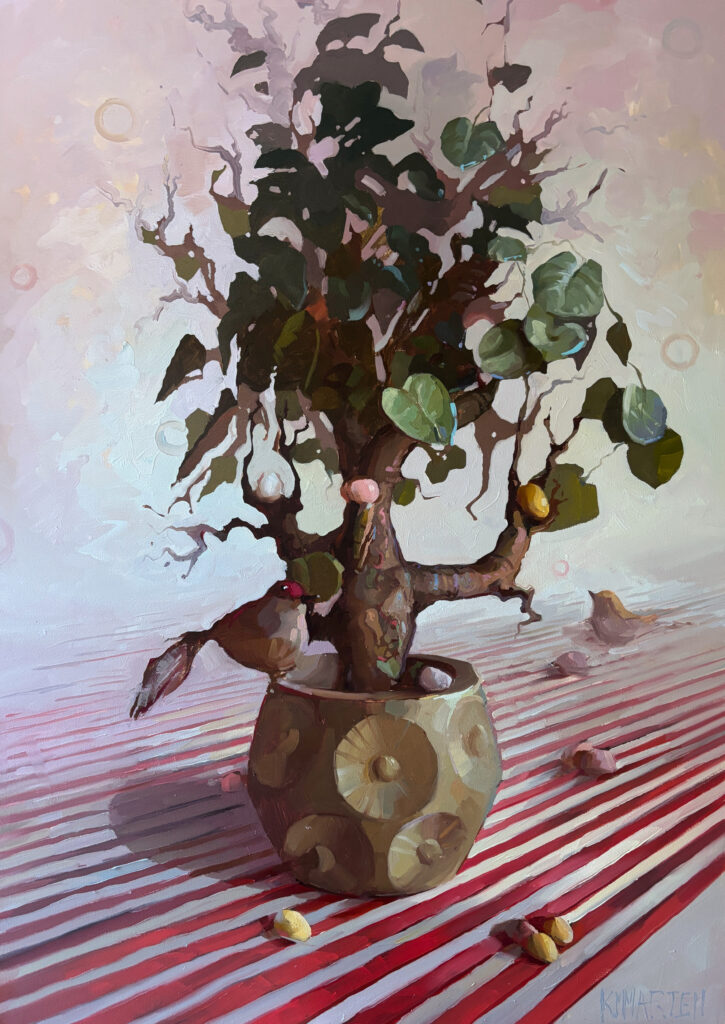
Q4. Over the years, your work has been accepted by prestigious institutions (like the Royal Society of Oil Painters, Royal Society of Marine Artists, Society of Women Artists, among others). How has external recognition shaped your confidence, ambition, or approach to art?
You want to tell yourself that being accepted or rejected from these exhibitions won’t impact how you see your art, but I’d be lying if I didn’t admit that there’s a great sense of achievement to have other artists you admire validate your work. That’s what these exhibitions have done, and why they’ve been so impactful to me as an artist, because they give me a sense of direction, of validation, of something to continually work towards, and I’m very appreciative of each one that I’ve been accepted into, and to be among such incredible artists.
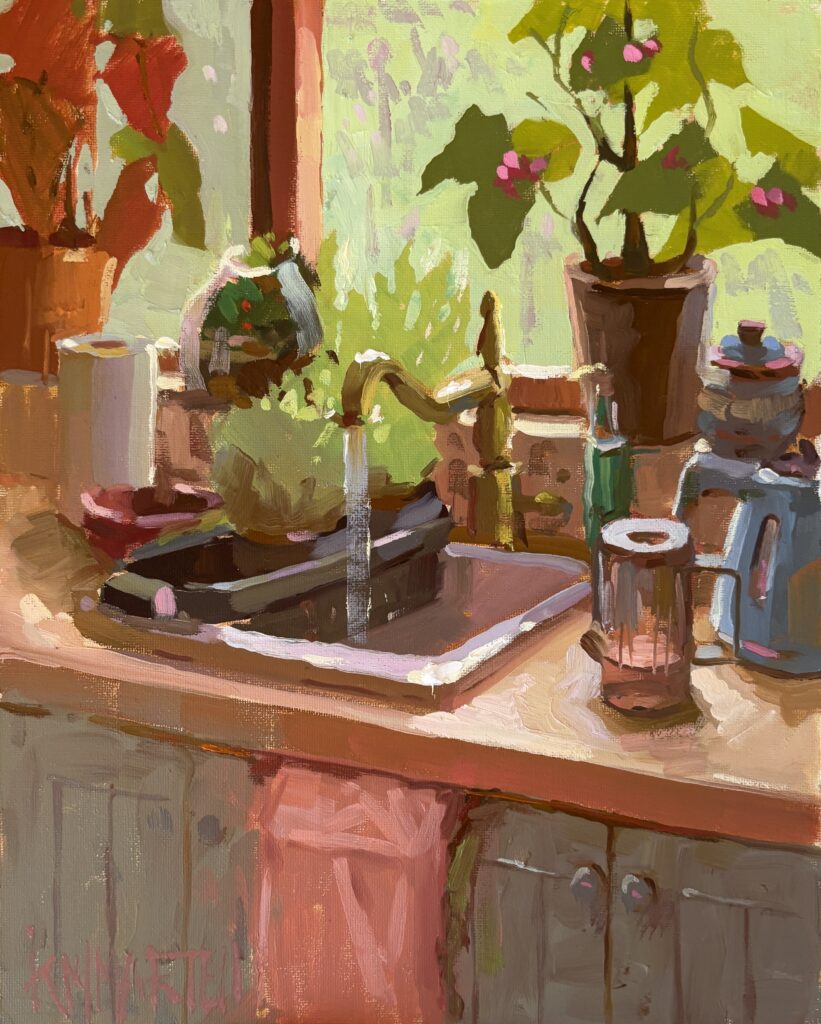
Q5. How has your relationship to “success” changed from when you began to where you are now? What does success mean to you today recognition, financial stability, creative growth, or something else?
Success is when the process of painting makes my heart stand on its tiptoe
Q6. Beyond aesthetics or technical skill, what ideas, feelings, or truths do you hope to communicate through your work? What message implicit or explicit guides your art?
I hope everyone feels a little dreamier, that’d be great.
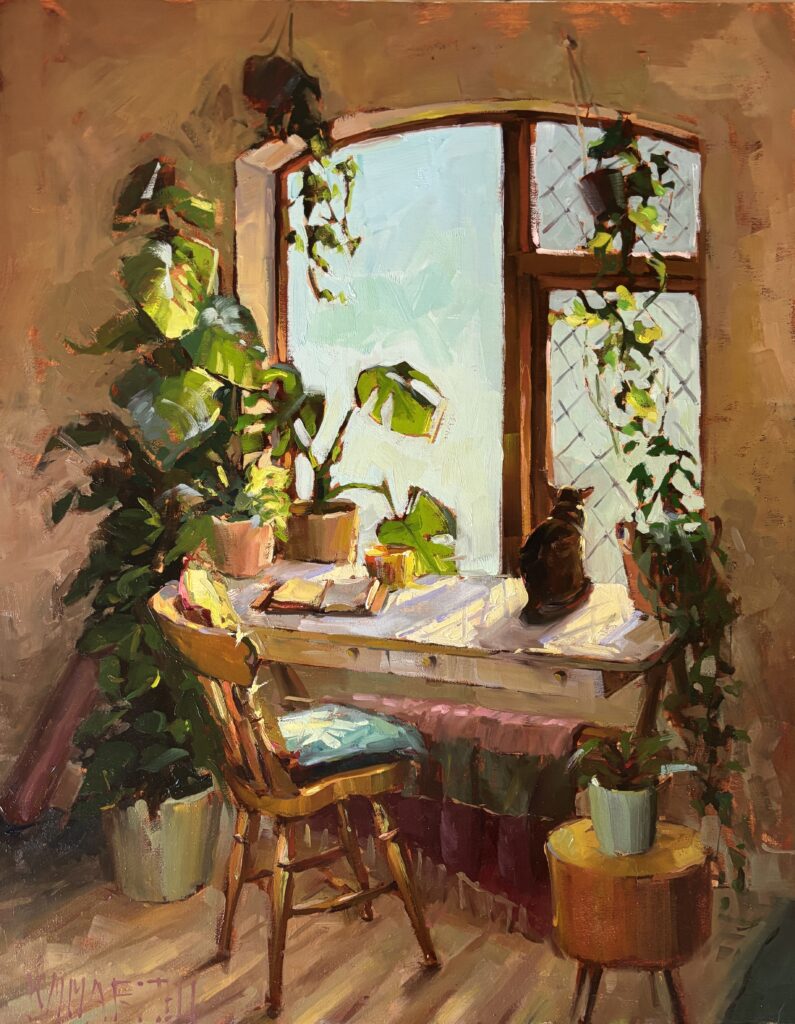
Q7. Based on everything you’ve learned, what advice would you offer to young or emerging artists who are drawn to domestic, intimate, emotionally subtle painting?
Paint what you’d like to hang on your walls. Sometimes, we’re painting what we think is allowed or that another artist has done. Better to paint what we love to look at, than to spend years painting what we think is acceptable.
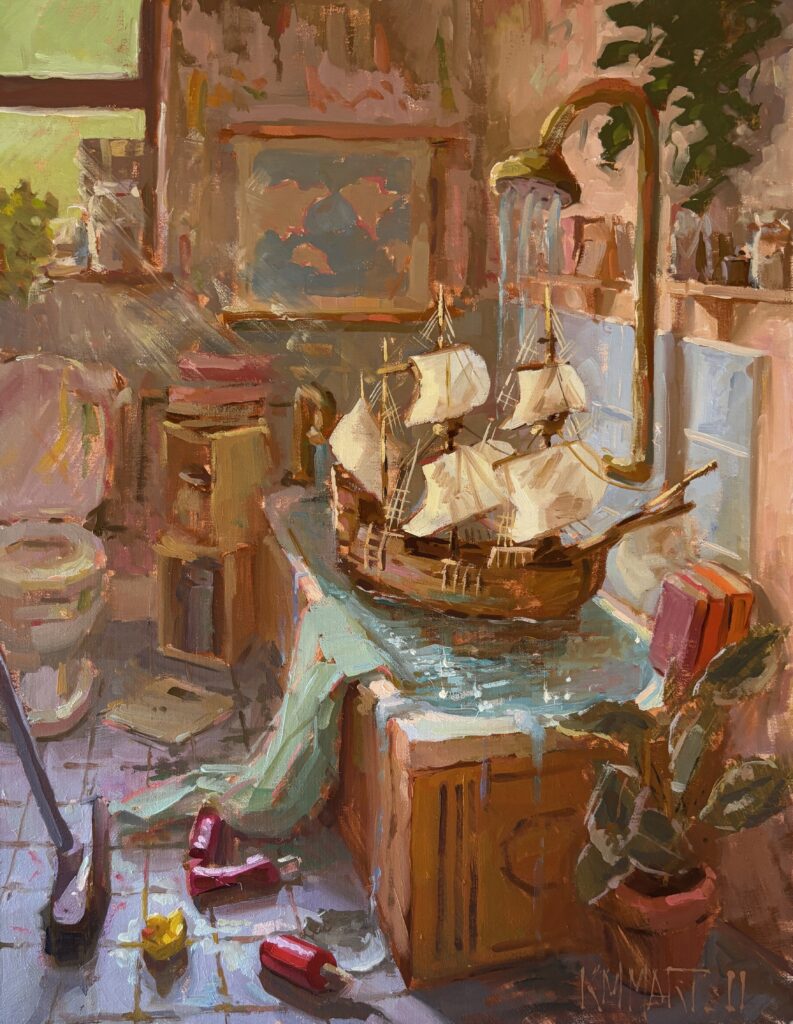
As we come to the end of our conversation with Kayla Martell, what stays with us most is how quietly assured she is in the way she works. Her paintings don’t start with fixed ideas or a need to explain themselves. Instead, they grow through patience, attention, and a deep trust in the process. She gives her work time to unfold, allowing memory, atmosphere, and feeling to take shape naturally rather than pushing them into clarity.
Over time, Kayla has built a practice that feels thoughtful and grounded, shaped by both structure and sensitivity. Her background in software development continues to influence how she approaches painting, bringing care, discipline, and intention to each decision she makes. At the same time, her work remains deeply connected to everyday life, to interiors, light, and small moments that often pass unnoticed but stay with us long after.
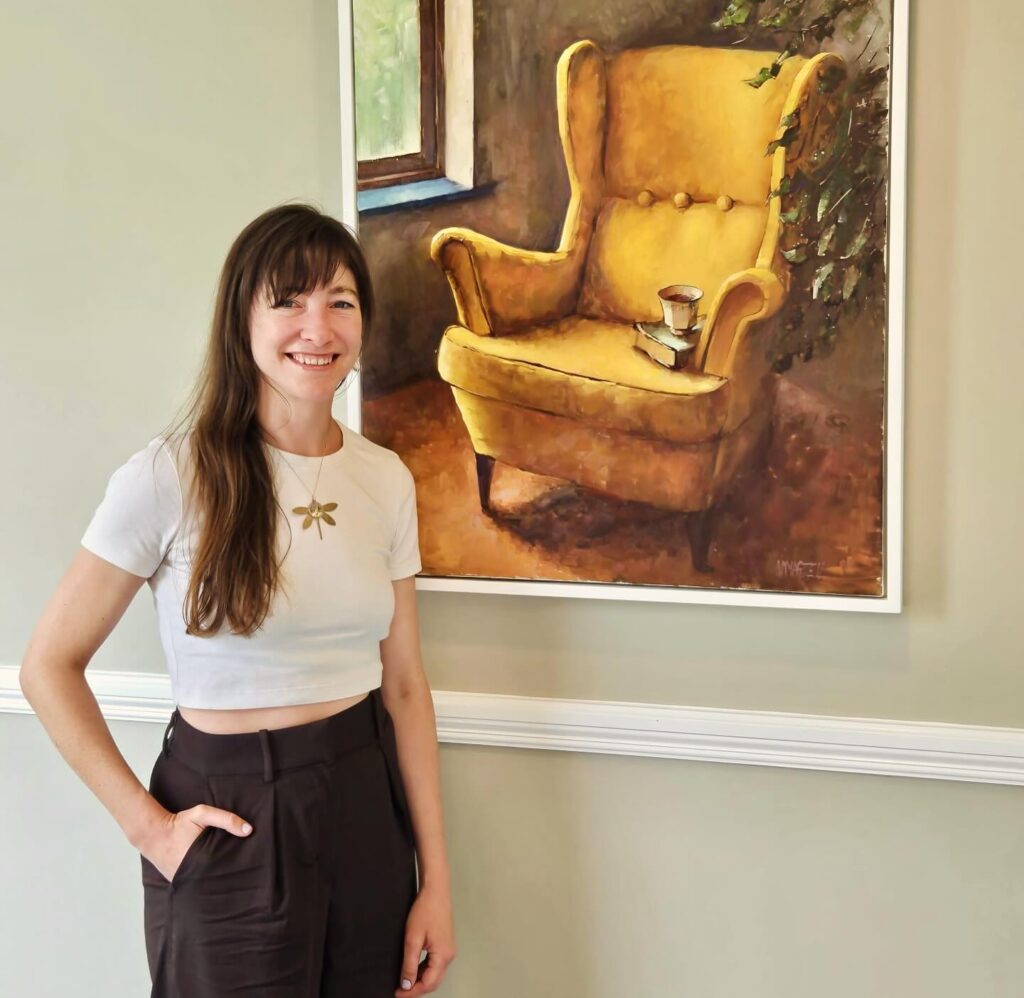
There is a generosity in how she works and in what she offers the viewer. Kayla trusts the medium, and she trusts the people encountering her work. Her paintings don’t ask for a single reading or a clear conclusion. Instead, they leave space to pause, to feel, and to bring personal memories into the experience. The work meets you where you are, and allows you to stay there for a while.
Kayla Martell’s practice is a reminder that stillness can hold real weight, and that emotion doesn’t need to be loud to be meaningful. Through consistency, care, and an ongoing commitment to process, her work continues to evolve quietly and honestly, staying close to lived experience rather than spectacle.
Follow Kayla Martell to explore a practice shaped by patience, memory, and a genuine attention to the small moments that make up everyday life.