
How an artist turns chairs into visual stories about life
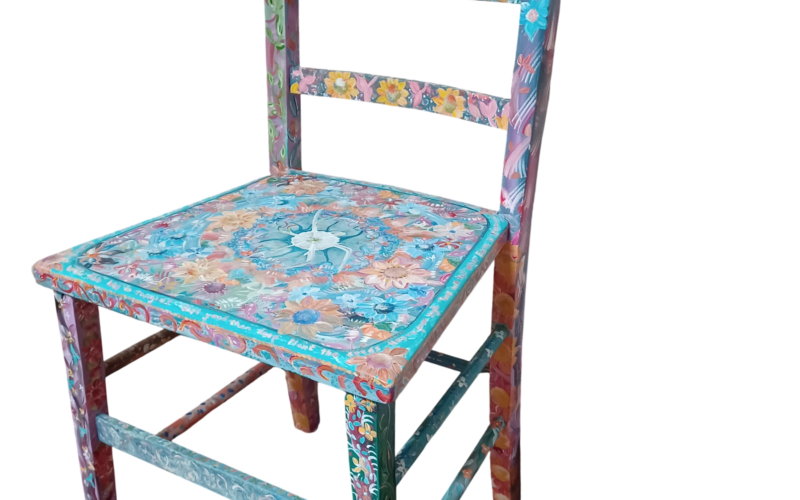
This interview with Lyris Snowden unfolds through small, everyday moments rather than formal talk about process or technique. A rescued chair, a passing insect, a mushroom appearing after rain all become entry points into a way of working shaped by curiosity, attention, and time spent with nature. Lyris shares how her background in microbial ecology and years of teaching biology quietly inform what she makes, even when she is not consciously planning an outcome. Painting, for her, is not about deciding in advance, but about staying open to what appears, whether that is an insect crossing her path, a mushroom that surfaces overnight, or a line of thought that settles onto wood.
Living on a small farm in the Sunshine Coast hinterland, she speaks about daily encounters with flora, fauna, weather, and night skies, and how these experiences inform her chairs. These rescued pieces of furniture become places to record observations, fragments of text, patterns, and images drawn from both the visible and unseen worlds. She talks about chairs as functional objects, as surfaces with many directions to explore, and as materials already carrying traces of use, labour, and time.
Throughout the interview, Lyris returns to the idea of paying attention to what is often overlooked. From microscopic systems to tiny flowers hidden in grass, from fungi that vanish as quickly as they appear to the phases of the moon, her work is shaped by noticing what usually slips past. She also speaks about inviting viewers to slow down, to circle a chair, to look underneath, and to become aware of their surroundings and their bodies as they do so.
What we learn from this conversation is less about method and more about mindset. Lyris Snowden’s practice grows from curiosity, patience, and the willingness to follow where observation leads. Her chairs sit somewhere between journal, landscape, and object, asking us to take a little more time with the everyday things we think we already know.
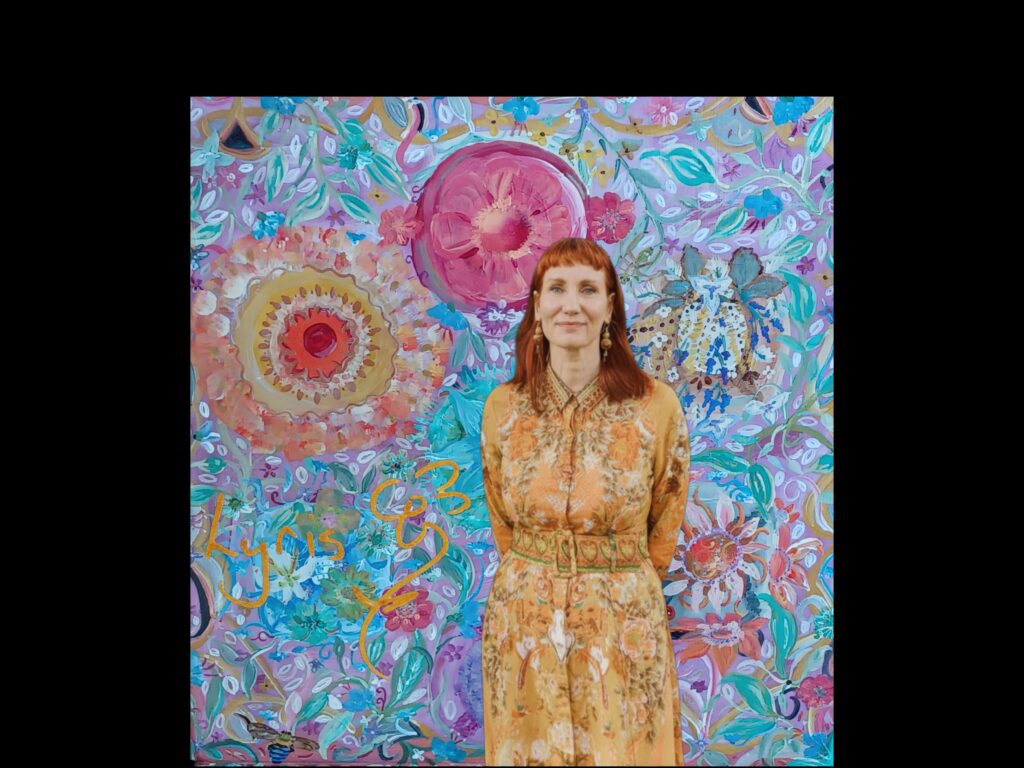
My creative philosophy is to follow my heart and let curiosity lead the way. I don’t question what emerges. I don’t plan, I paint, allowing organic forms, patterns, whatever to emerge freely across surfaces. I come from a background in microbial ecology and teaching biology and chemistry, and I have a deep appreciation for nature and art. I live on a small farm in the Sunshine Coast hinterland, surrounded by the beauty of local native flora and fauna. There is so much juicy stuff in my work and my surroundings that sparks my creativity. Life is a never-ending source of inspiration.
Growing up, I was fortunate to be surrounded by family with diverse interests, art, antiques, fossicking, museums, gardening, and anything! My father, in particular, would have me peering at some tiny, tiny flower hidden in the vegetation, something many people would be oblivious to, or gazing at the night sky. I have been drawing on and off since childhood. At some point in adulthood, I started filling small sketchbooks with brightly coloured doodles simply for the joy it provided. With my biology work came scientific illustration and exposure to natural history illustrators who meticulously documented life. My chairs are a culmination, a blend of those doodles, scientific drawing, and the continued curious peering at the small things. They are my storytelling of nature and my musings on life.
1. What first drew you to the idea of using rescued chairs as a place to record thoughts, images, and lines of poetry rather than working on a flat surface?
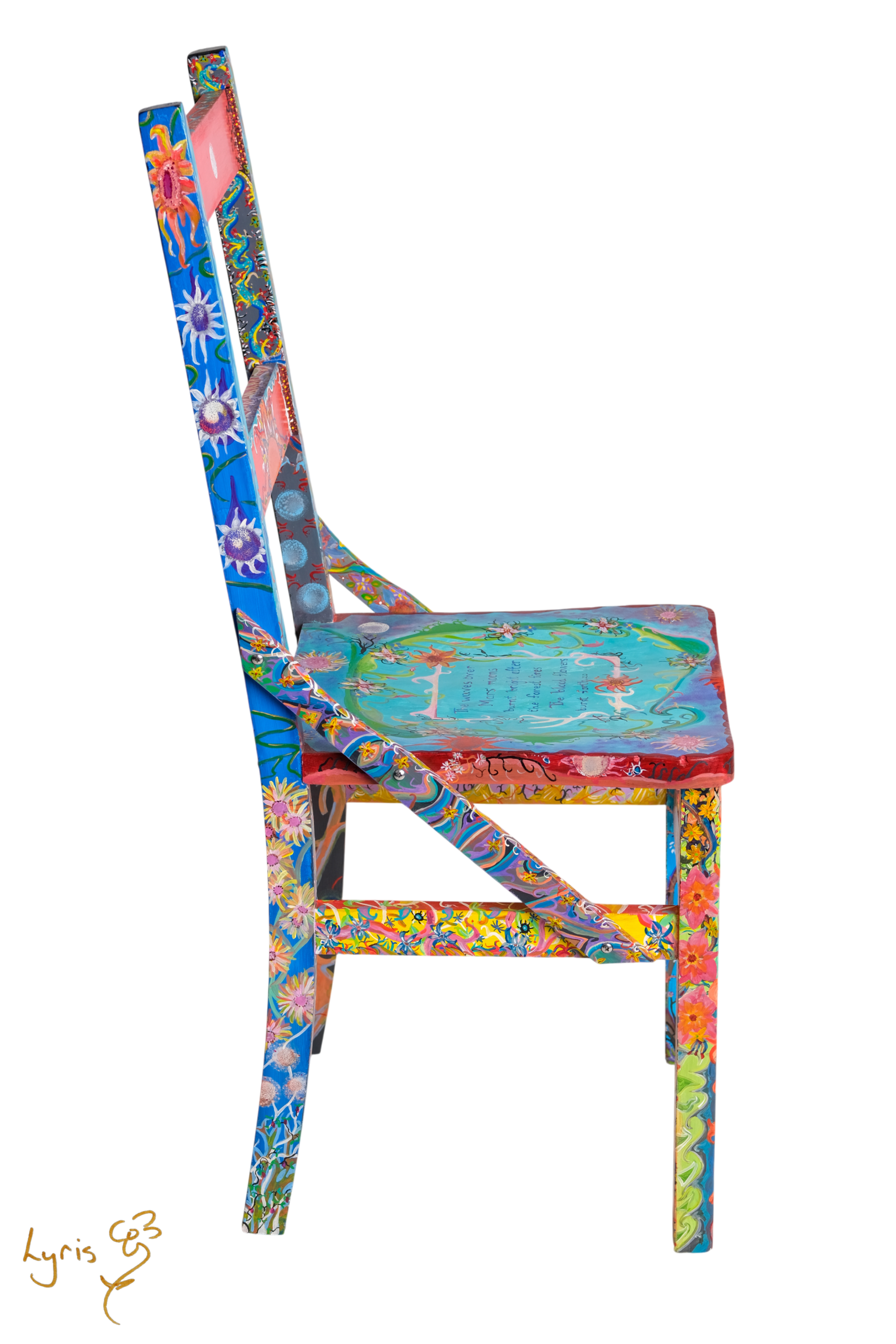
A serendipitous (?) combination of a discarded chair, a friend suggesting that I take my doodles onto canvas, and a simultaneous recognition of the paucity of wall space in my home. This collided with a spate of significant life events, leading to my first chair journal. That chair, ‘Waves over Mars’ Moons’ was my solace and therapy for many nights over several months. Then more discarded chairs started crossing my path,h offering themselves to become my functional, visual journals.
My chairs at casual glance may seem like a swirl of colour and patterns, but what are the details that underlie and create that complexity?
Lyris Snowden
2. Nature appears in very small and often overlooked forms across your chairs, from insects to fungi. How do you decide which elements find their way onto a piece?
I don’t really decide much of the time what is painted on my chairs. Insects cross my path daily on the farm. If I am able, I capture their beauty with my phone, perhaps sketch them. But usually they are captured directly in paint on the current piece—Ditto for fungi. Many species are somewhat ephemeral, appearing and disappearing overnight or within a few days, depending on the weather and season. Coming across them is happenstance. I also participate in mycological society forays to widen the spectrum of what’s out there. When something appears, I’m curious and revel in its uniqueness. There are also many small flowers to search for on my chairs. Those tiny flowers are temporarily encapsulating and expressing the beautiful variation around us. They have a language of their own. And the moons. Our moon lights our path and the night world differently depending on the phase.

3. The act of giving a discarded kitchen chair a new life became the starting point of this journey. What keeps you returning to furniture as a medium instead of more conventional formats?
I have completed a few small canvases. But I keep coming back to chairs for a few reasons. One, they’re functional. Two, they have many surfaces to paint, explore and catch the eye, like lots of little canvases. Three, I’m giving a precious resource, timber, and someone’s craftsmanship, a new life. So often things are discarded because they’re not ‘in’. People think that if they take stuff to the charity shop, it might have another life, maybe. Some ends up in the landfill. Saying that, hooray to the furniture artists out there giving old furniture a new life! Four, the first chair seemed to send out an invisible chemical signal: ‘Hey, come to Lyris’s place for a makeover!’ Chairs kept appearing on footpaths, awaiting rescue. Coffee tables and several amazing sideboards picked up on the vibe as well. They are patiently waiting in a queue on my back verandah, awaiting transformation and a new home. And finally, a few years back,k I happened upon a Maud Lewis exhibition in Halifax, Nova Scotia. I like how she painted anything. Several anonymous pieces of painted furniture spoke loudly to me. That may have planted a quiet seed.
Much of life is invisible to us simply because of its microscopic nature or we simply don’t see it because our focus is elsewhere. As a microbial ecologist, I learned that the most influential forms of life are often invisible but underlie much of life’s complexity and are essential to our existence. I perceive the many surfaces on a chair as representing the many unique landscapes or ecosystems waiting to be shaped by components known and those hidden systems and life forms that keep life functioning. What are the subtle interactions that we may only perceive on a gross level? My chairs at casual glance may seem like a swirl of colour and patterns, but what are the details that underlie and create that complexity?
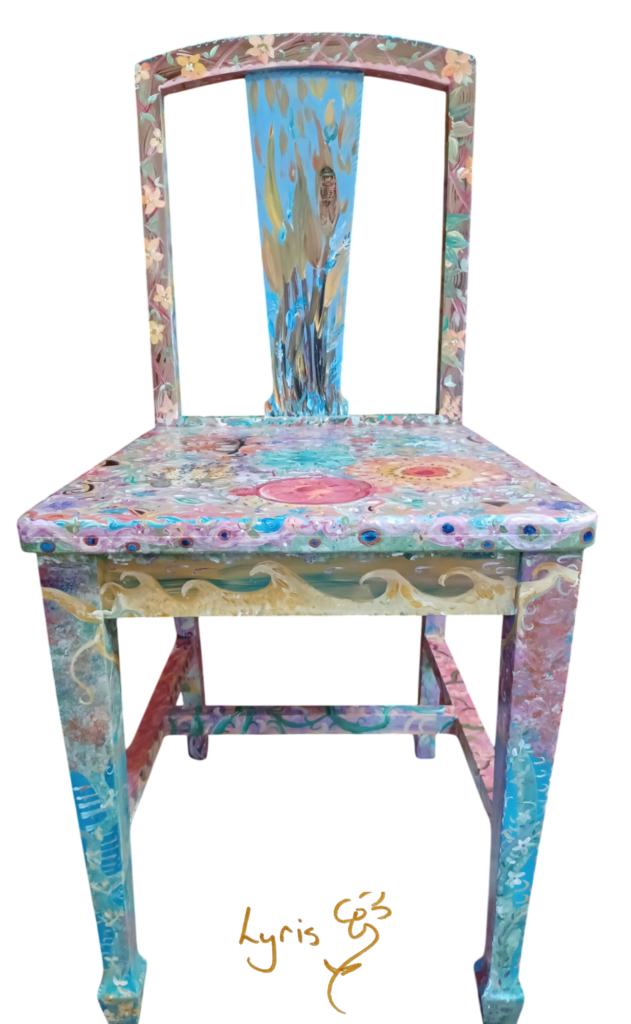
“I don’t plan, I just paint, allowing organic forms and patterns to emerge freely across surfaces.”
Lyris Snowden
5. Many of your chairs invite slow looking, with details that reveal themselves over time. What kind of experience do you hope viewers have as they spend time with a piece?
I invite viewers to slow down and be present. To observe an everyday object often used without much consideration, except for whether it’s comfy or not. Just take a few moments to look closely and slowly, circle the chair, once, twice, more, and peer underneath. Let your gaze explore every surface. Be quietly surprised by the snippets of text and poems. What’s your somatic experience? Observe what you are experiencing in your immediate surroundings. Is the painted flower, insect, fungi or moon you’re looking at real or unreal? Surely no mushroom seems like that! How do you know? There is so much we don’t know. Look at things with fresh eyes. In part, I hope viewers realise that they are part of the story on the chair.

6. Balancing lecturing in biology with studio practice can be demanding. How do these two ways of working inform each other in your day-to-day life?
Lecturing in biology, owning a small farm, and studio practice bring different perspectives on biology and nature into a single kaleidoscope lens, with the subject matter flowing onto my chairs. From the microscopic to macroscopic, the latest scientific discoveries to my hands dirty with earth; growing cells in flasks and growing vegetables, being mesmerised by an image of the intracellular universe to ramblings on the farm, seeing collective cells as organisms swaying in the breeze or gazing at the Milky Way wonder above. Each perspective, both individually and combined, maintains my connection to nature and art.
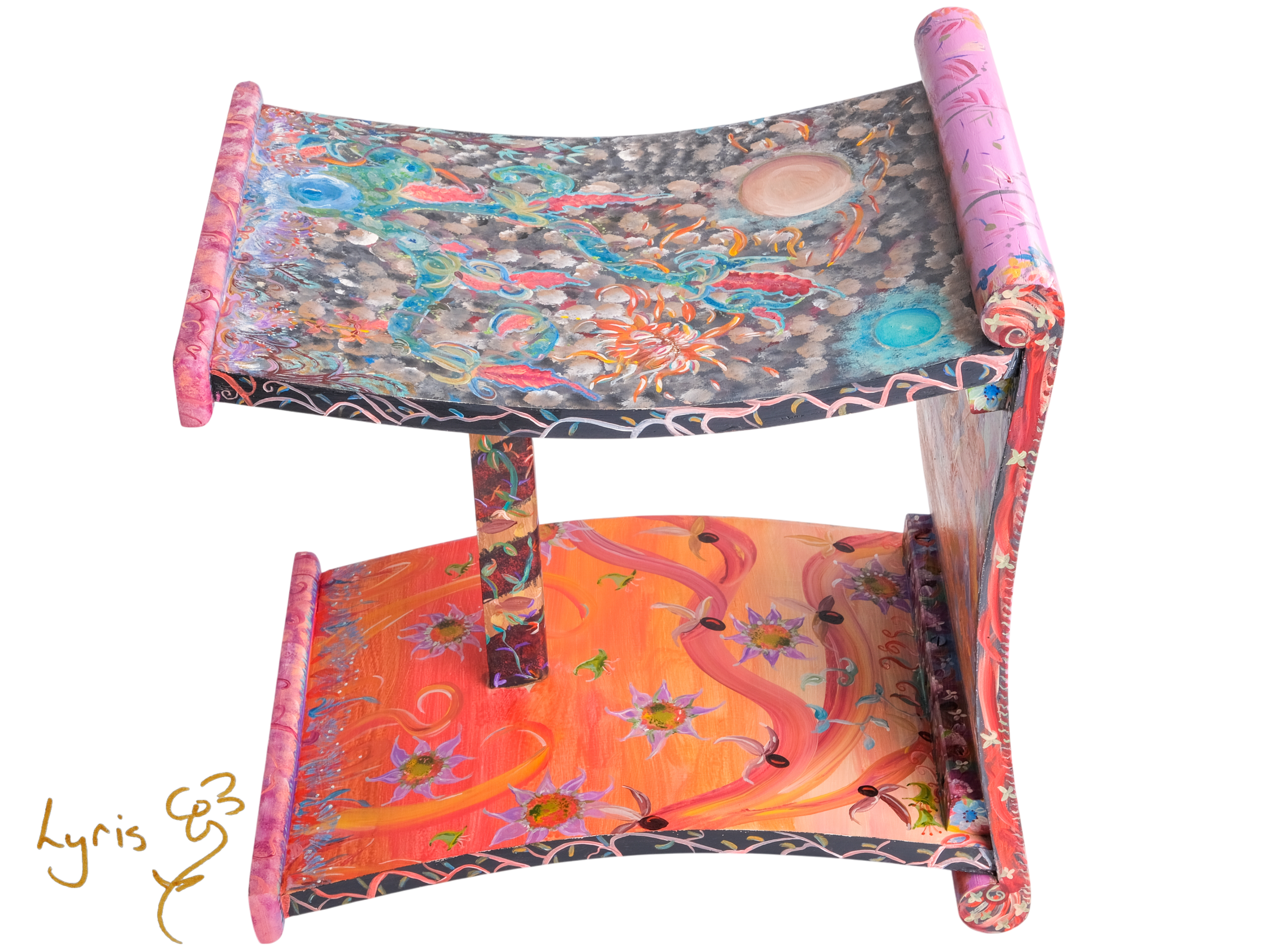
Lyris Snowden’s work grows out of curiosity and a willingness to pay attention to what is usually missed. Her painted chairs bring together fragments of daily life on the farm, years spent teaching and studying biology, and a habit of looking closely at insects, fungi, flowers, and night skies. What she makes is not planned or mapped out with a fixed goal. Each chair becomes a place where observation, thought, and chance meet, turning a discarded object into a layered record of time, place, and noticing.
From her journey, we learn that making work does not have to follow a straight line. Science, teaching, farming, and painting feed into one another in ways that feel natural rather than forced. Her chairs ask for patience from both maker and viewer. They reward slow looking and invite people to move around them, look underneath, read fragments of text, and sit with uncertainty. At the end of the interview, what stays with us is a sense that curiosity itself can be a method, and that staying open to what crosses our path can lead to unexpected and meaningful work.
To learn more about Lyris, click the following links to visit her profile.
Arts to Hearts Project is a global media, publishing, and education company for
Artists & Creatives. where an international audience will see your work of art patrons, collectors, gallerists, and fellow artists. Access exclusive publishing opportunities and over 1,000 resources to grow your career and connect with like-minded creatives worldwide. Click here to learn about our open calls.