
These Artists are Bringing Fresh Life to One of Printmaking’s Oldest Forms
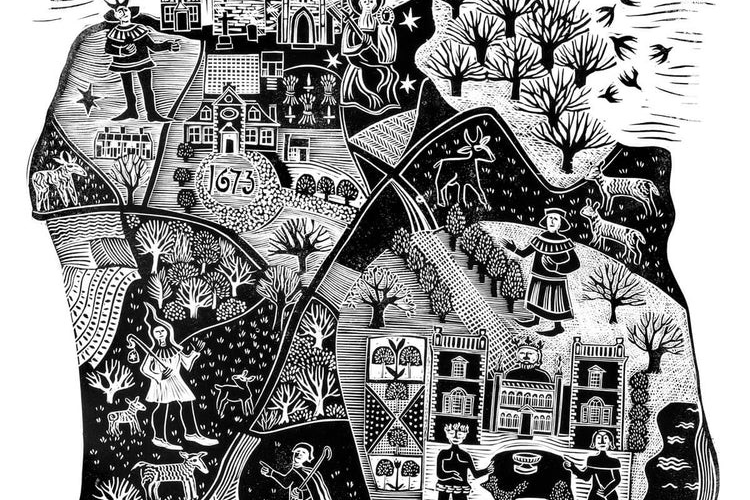
Many people don’t know what linocut is, and that’s completely okay. It’s not a word you hear every day, and it’s not always labelled when you see it. But linocut is a form of printmaking where an artist carves an image into a sheet of linoleum, rolls ink over the surface, and presses it onto paper. Whatever is carved away stays white; whatever remains holds the ink. It’s a very hands-on process, and once a line is cut, there’s no going back.
That’s what makes linocut both challenging and impressive. Every mark requires confidence. Artists have to think carefully before they carve, but they also need to trust their instincts. There’s very little room for correction, which means each finished print carries the weight of many deliberate decisions. The result is work that feels clear, intentional, and often surprisingly expressive.
Despite its simplicity, linocut takes real skill. Artists must understand composition, negative space, balance, and rhythm, all while working in reverse. What looks bold and effortless on paper is usually the result of careful planning, steady hands, and years of practice. Linocut artists learn to accept mistakes, work with limitations, and turn restraint into strength and that takes patience, discipline, and confidence.
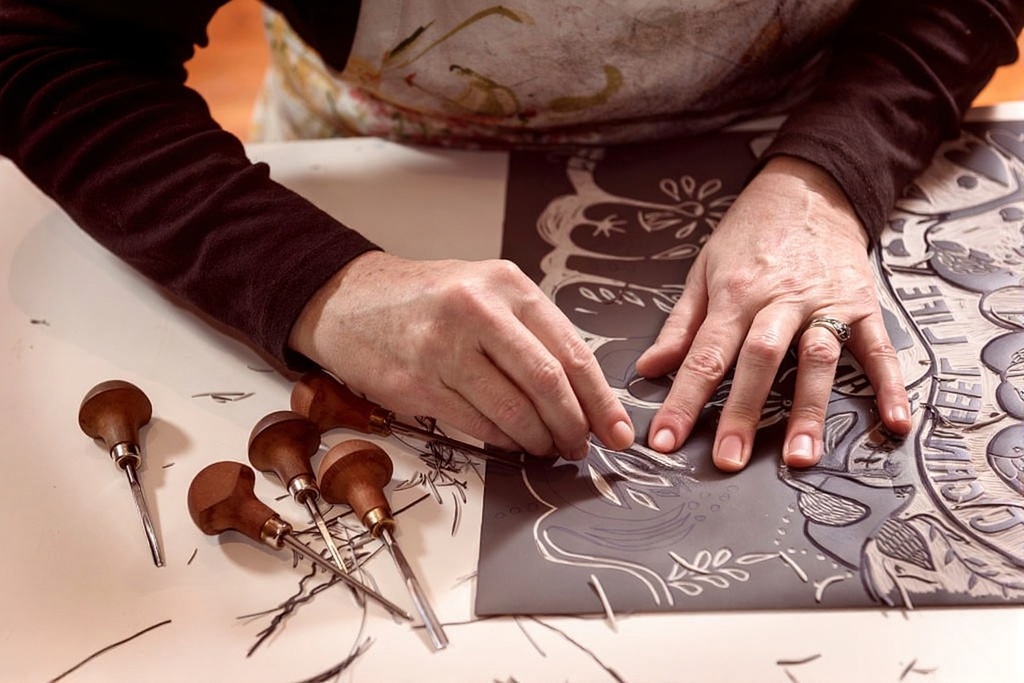
What’s especially admirable about linocut artists is their commitment to the process. They carve slowly, print carefully, and often repeat the same image again and again to get it right. There’s no shortcut. Each print reflects hours of focus and physical work. In a time when so much art is fast and easily revised, linocut stands out for the dedication it demands.
What makes linocut especially exciting today is how contemporary artists are using it. Some tell personal stories, others explore nature, identity, or everyday life. Some keep their work minimal, while others build richly detailed scenes from layered prints. With just line, shape, and contrast, they create work that feels alive and deeply considered.
At Arts to Hearts Project, we’re drawn to linocut artists who embrace both the discipline and the freedom of the medium. Artists who respect its limits and still manage to push it forward. Their work shows that linocut isn’t old-fashioned or restrictive, it’s a powerful, expressive way of making images that last.
In this article, we’ll introduce linocut artists who bring clarity, patience, and talent to their practice. Through careful carving and thoughtful printing, they remind us that even the simplest tools can create meaningful, lasting art.
Sarah Kirby @sarahkirbyprint
Sarah Kirby’s linocut work comes from a long, lived relationship with both printmaking and the places she knows best. Based in Leicester, she has spent more than two decades making original linocut prints that reflect her curiosity about buildings, gardens, landscapes, and the way ordinary spaces hold meaning for the people who move through them. Her love of printmaking began early, sparked during an art foundation course and deepened through formal study, including a degree and a master’s. That early fascination never left her. It became a way of seeing a way of paying attention that carried into everything she makes. For Sarah, linocut is both craft and conversation. She works with an old Albion press in her home studio, carving carefully into lino and printing by hand. The process is steady, tactile, and deliberate, which mirrors the calm quality of the final prints. Whether she is depicting the familiar silhouettes of Leicester’s city architecture or the welcoming lines of a favourite garden path, her work feels rooted in the lived world rather than lifted from it.
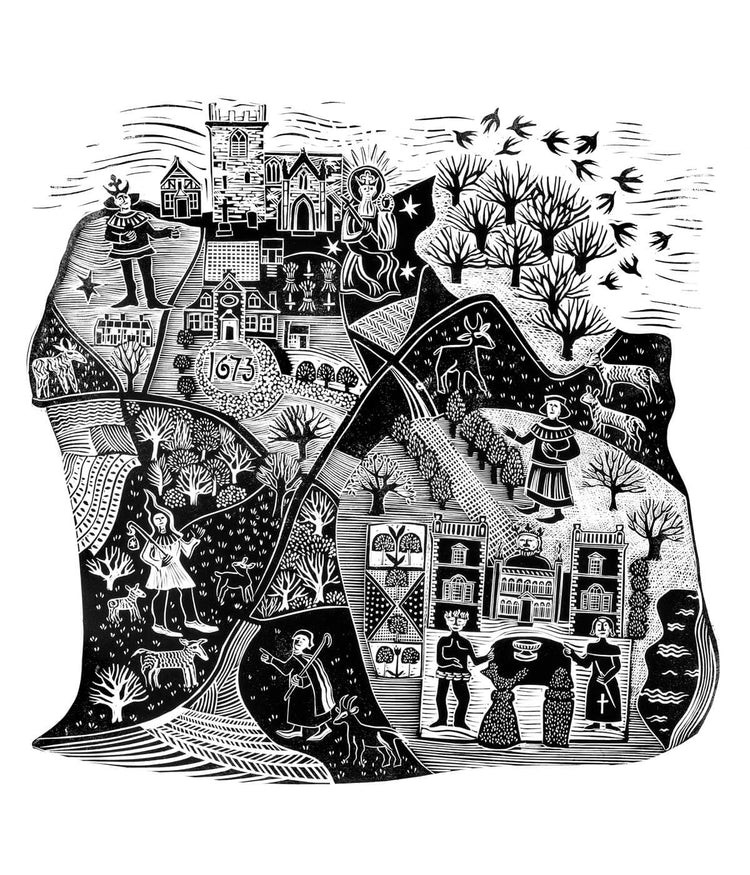
Buildings have long been a central focus in her work. Over years of observation, Sarah has built a body of prints that celebrate the physical and emotional history embedded in public and everyday structures. She doesn’t just represent these places visually; she explores how repeated use and memory make them meaningful over time.
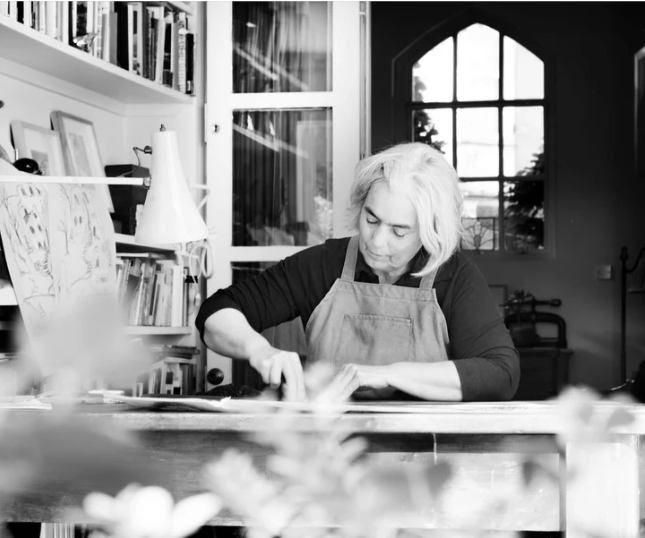
She says herself that:
Much of my work explores how buildings are imbued with meaning as a consequence of repeated use across different generations; how they acquire emotional significance for local inhabitants; and how they become repositories of memory
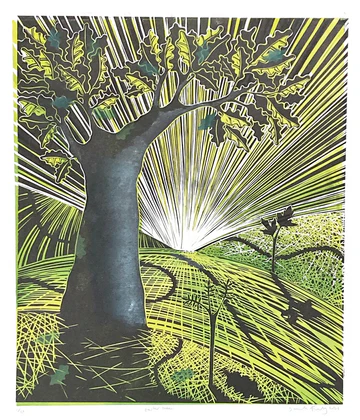
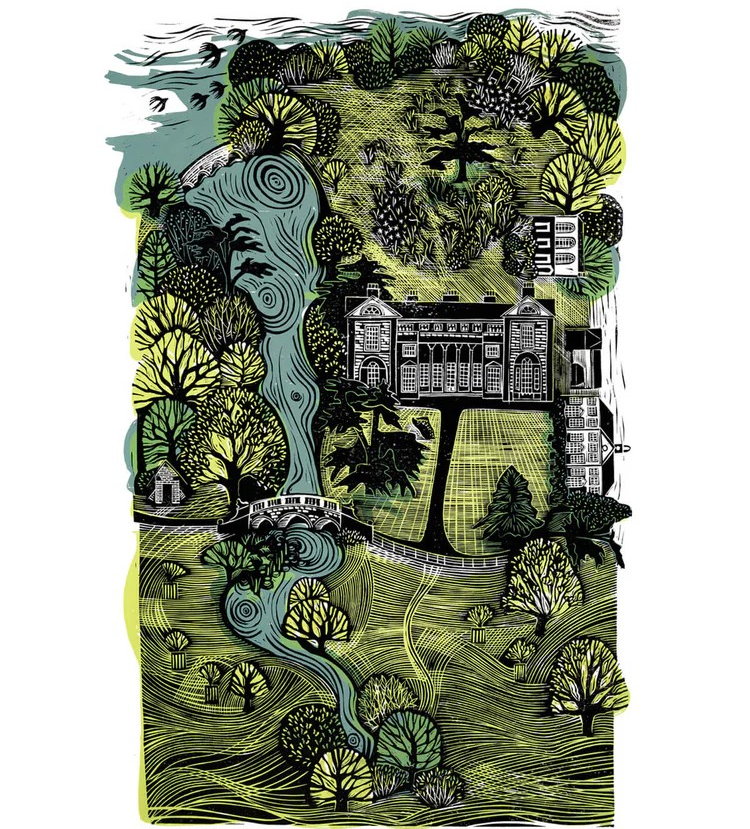
Similarly, nature and green spaces hold a personal significance. Growing up next to the Botanic Gardens in Cambridge and tending a small-town garden and allotment herself, she brings a lived affection for plants, trees, and cultivated spaces into her practice. In recent projects, she’s looked more deeply at how gardens and countryside connect to local history and community life, not as picturesque backdrops but as places of solace and inspiration. What makes Sarah’s work distinctive is how quietly it balances observation and expression. Her linocut prints are never about decoration alone. Instead, they invite you into familiar places with fresh attention, capturing the calm humanity in both architecture and natural forms. They feel like thoughtful reflections rather than quick impressions. Through her practice, Sarah Kirby shows that linocut can hold space for both personal experience and shared memory. Her prints reveal what it feels like to live in, move through, and care about the places around us, giving everyday scenes a visual weight that stays with you long after the first look.
Hazel McNab @hazelmcnabart
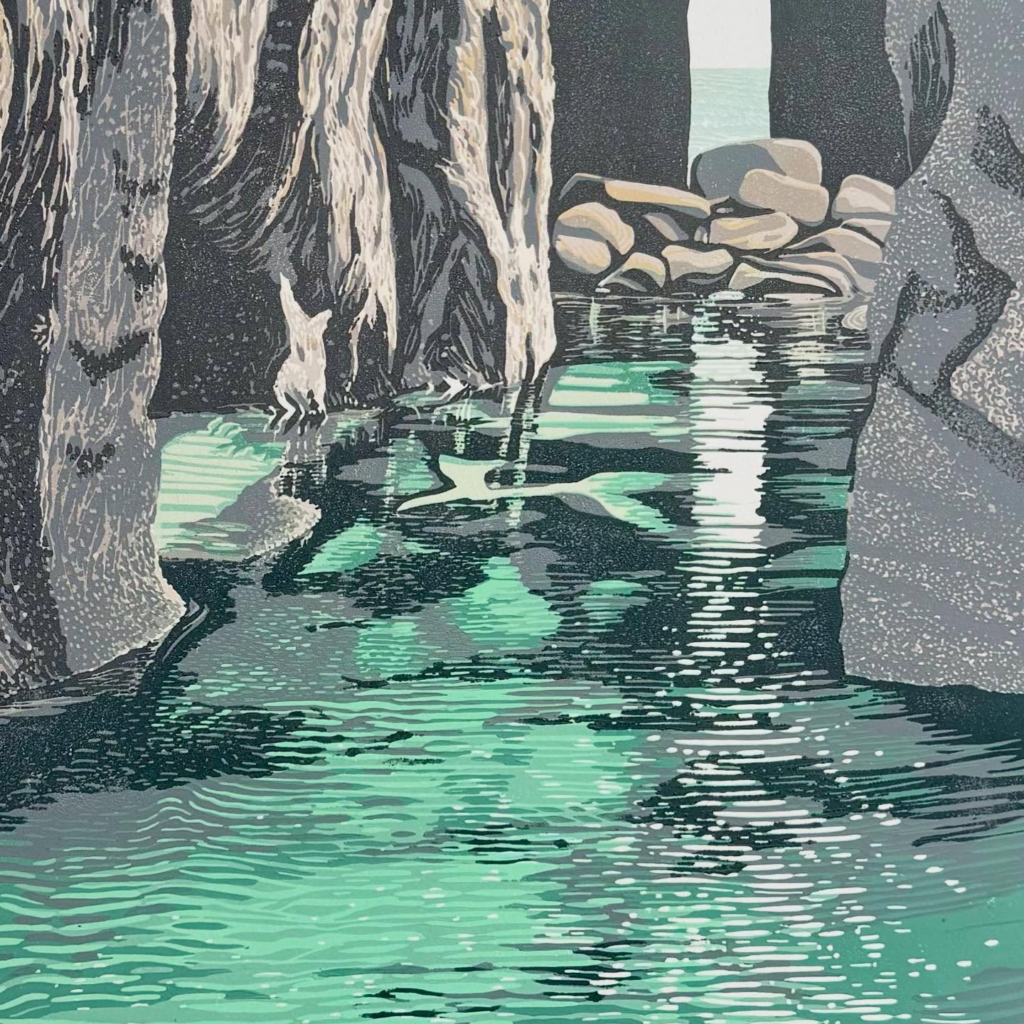
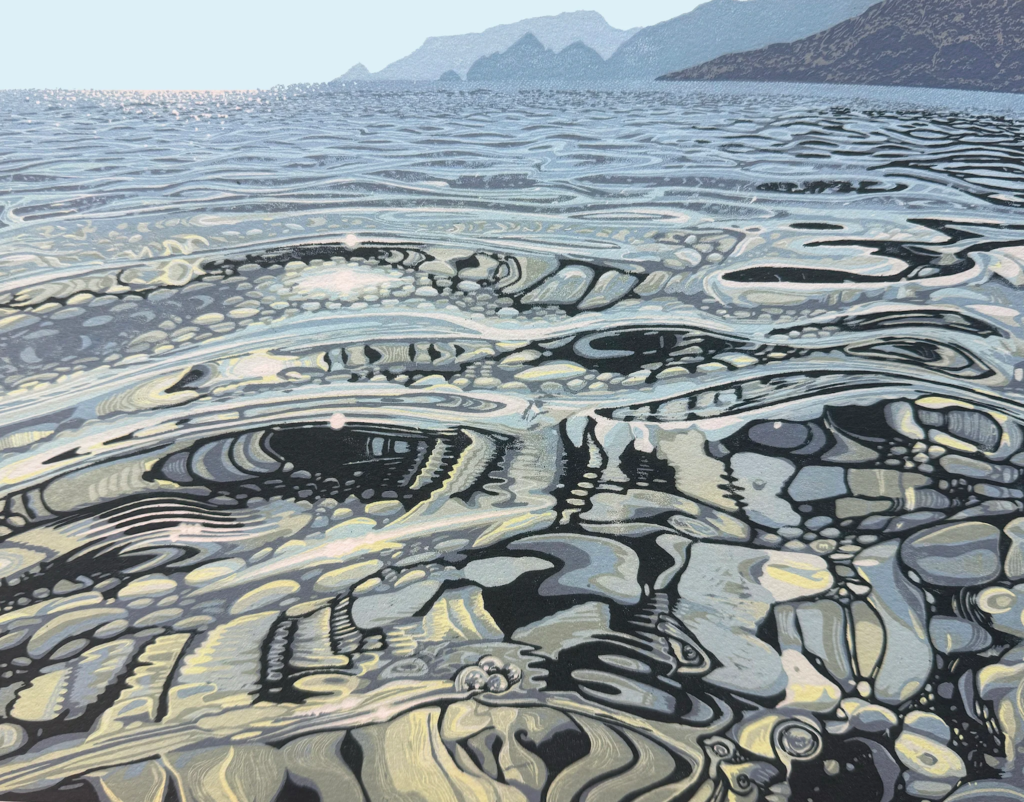
Hazel McNab’s linocut prints come from a deep connection to the natural world around her. Living and working in Cornwall, she draws inspiration from the landscapes, coastlines, and ever-changing light of her surroundings. Her work feels rooted in observation of place rather than in abstract ideas, and that connection gives her prints a grounded, heartfelt presence. Hazel works primarily in reduction linocut, a process that involves cutting and re-cutting the same block of lino to build up layers of colour. With every cut she makes, there is less surface left, so each decision matters. This method gives her prints a layered, richly coloured quality that feels both deliberate and alive. Many of her images reflect the landscape she knows so well: coastal edge rocks, rockpools glinting in shifting light, tidal pools, and sea paths are repeated as subjects because they hold a quiet beauty and subtle motion. Her attention to these small, everyday details brings out something deeper about the place itself rather than simply documenting it.
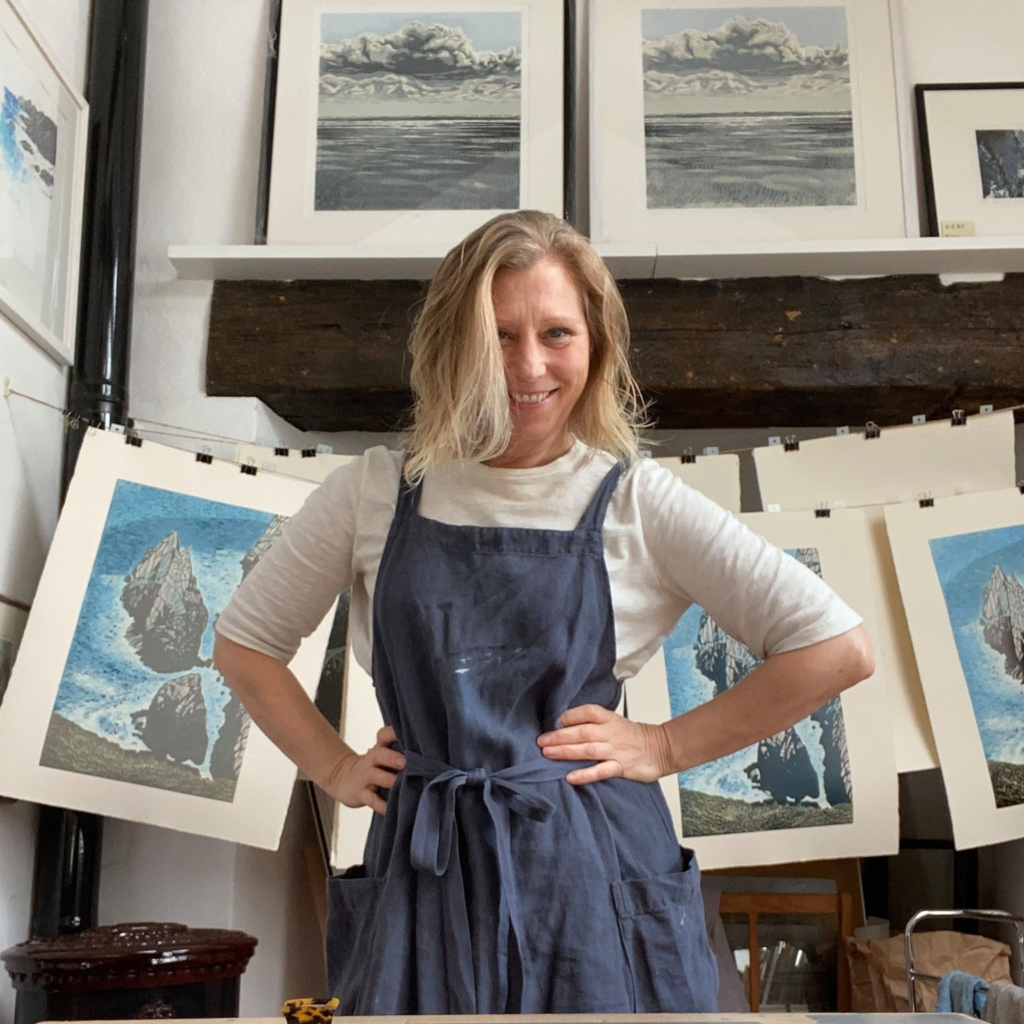
Hazel’s prints are not only about what she sees, but about how she sees it. The way she uses colour and carved forms shows an awareness of light, texture, and movement. Each image feels considered, shaped by patience and familiarity. Her practice involves experimenting with how many layers and colours she can coax from a single block, often resulting in multi-coloured, layered works that feel rich without being crowded. Working in reduction linocut also means that once a print edition is complete, it cannot be reproduced again. This finite nature gives her work an added sense of presence and value, making each print feel like a moment held in time. Through her dedication to this demanding form of printmaking, Hazel shows how an artist can bring the outdoors inside. Her linocut prints capture the spirit of Cornwall’s landscapes with clarity and care, reminding us that close attention to the world around us can reveal beauty in the familiar and unremarkable alike.
Grace Edkins @graceedkinsstudio
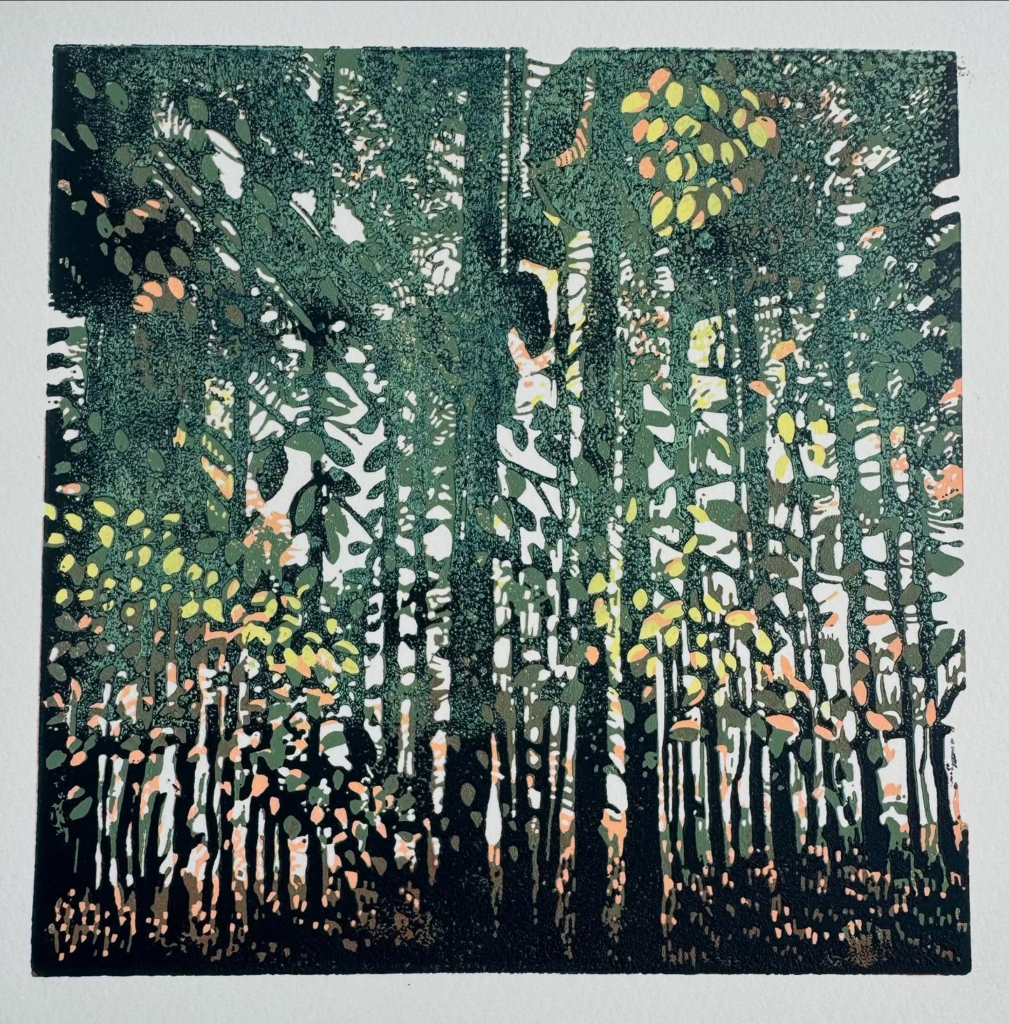
Grace Edkins makes prints that feel rooted in the rhythms of nature and the quiet beauty of familiar places. Based in the fishing town of Leigh-on-Sea on the Essex coastline, she is a self-taught printmaker who works primarily in relief methods like linocut and woodcut, often blending the two to create images that reflect the landscape she lives within.Her introduction to printmaking came later in life, sparked during the first lockdown, when a change of pace allowed her to explore making art around the rhythms of family life. That shift marked the beginning of a practice shaped by slow looking, careful observation, and a willingness to let process lead. Grace’s work draws its energy from the flora and fauna of the local area, inspired by walks across marshes, along water’s edge, and through seasonal shifts that subtly shape the world around her. Rather than chasing dramatic vistas, she finds depth in the often overlooked: the way light catches on brambles, the texture of reeds in winter, or the delicate outline of wildflowers. This attention to detail gives her prints a calm intensity that feels intimate and grounded in lived experience.
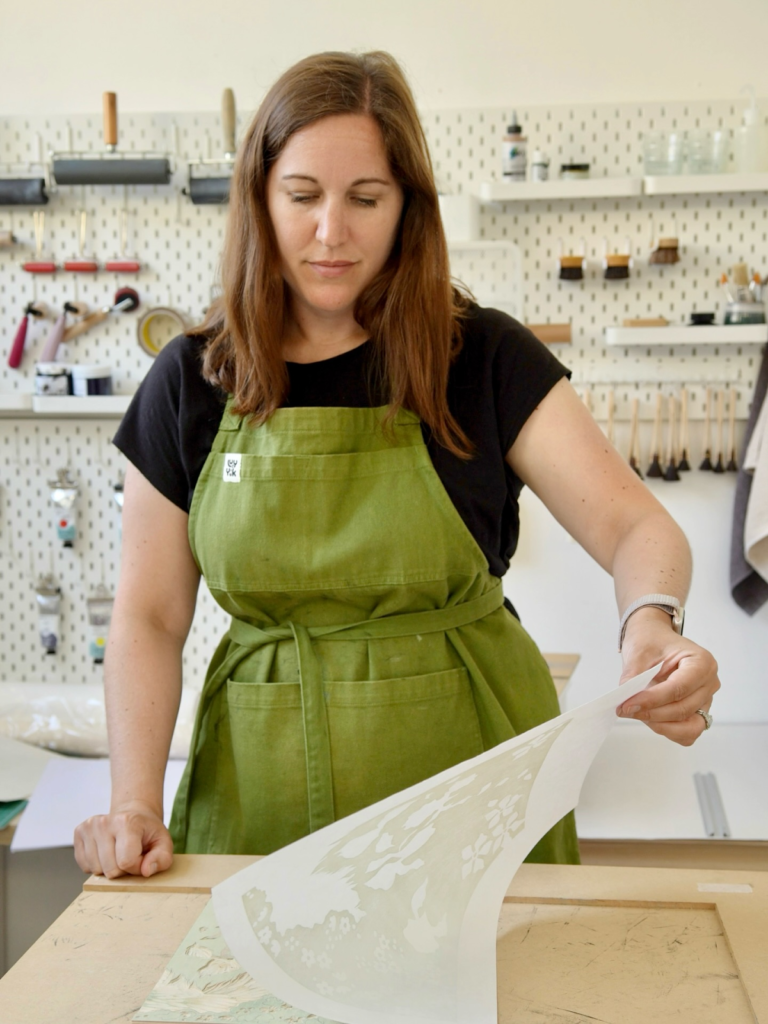
Her process begins with drawing, often from photographs taken while out walking, and then moves into carving and printing. Grace works without a press, printing her linocut and woodcut editions by hand in small batches. This hands-on method allows her to slow down and respond to the material with care, enjoying the variations that come from hand burnishing each piece rather than relying on mechanical reproduction. What stands out in Grace’s prints is the way they hold both simplicity and resonance. Lines feel deliberate, shapes feel balanced, and negative space becomes part of the composition rather than a backdrop. The limited editions she produces carry the quiet mark of time spent with each block and sheet of paper, inviting the viewer to share in that same attentive pace. Over the past few years, Grace’s work has been shown in local exhibitions and selected open shows, and she was chosen to take part in Sky Arts Landscape Artist of the Year in 2022, where she created a reduction woodcut print inspired by Whitstable Harbour. These moments of recognition reflect not just her skill with the medium, but the way her work resonates with audiences who are drawn to its thoughtful presence. Through her linocut and related printmaking, Grace Edkins reminds us that print isn’t just a technique but a way of seeing a slow, careful, and ultimately generous way of holding space for the quiet details of the world.
Caroline Erolin @erolinstudios
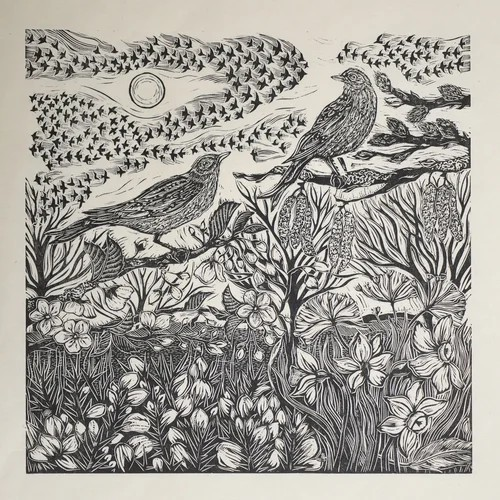
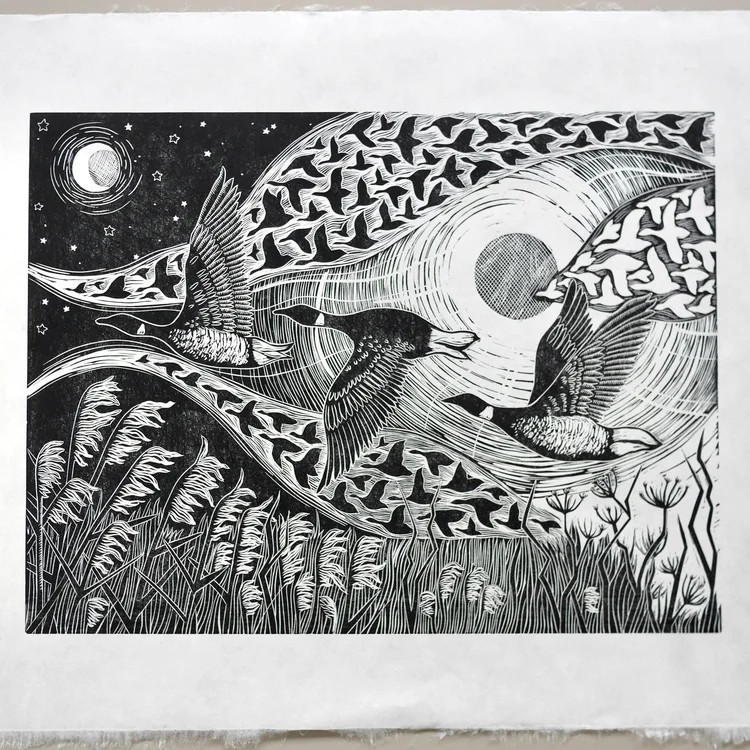
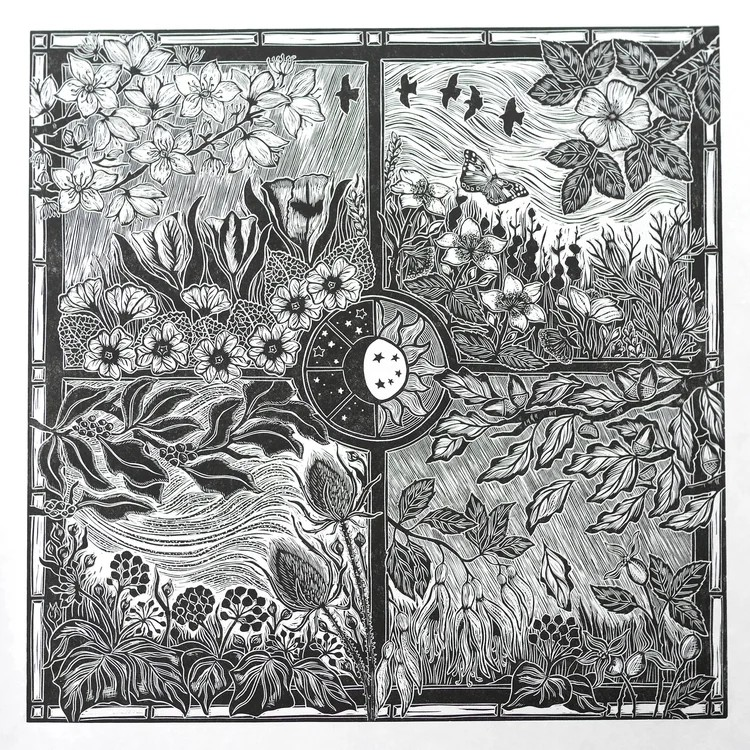
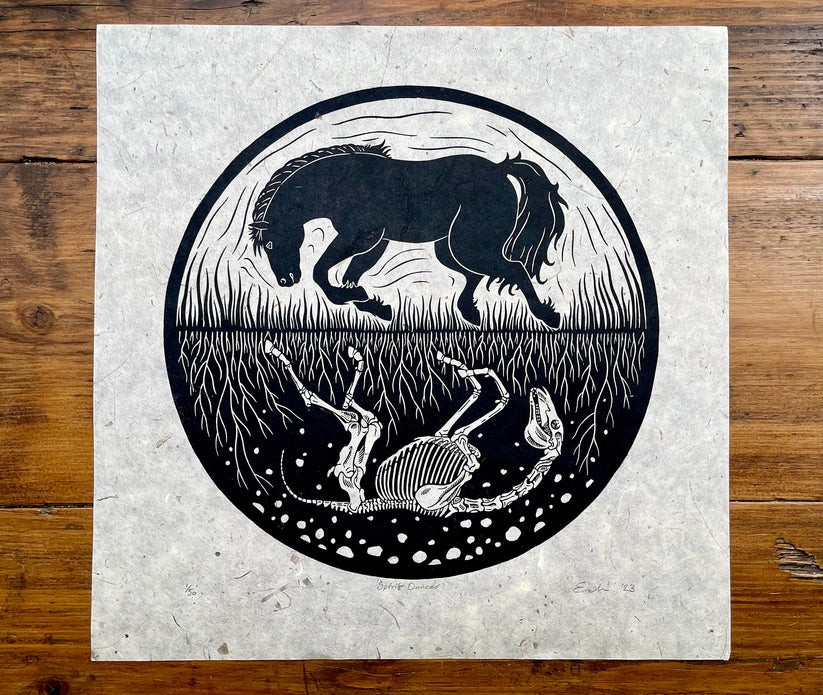
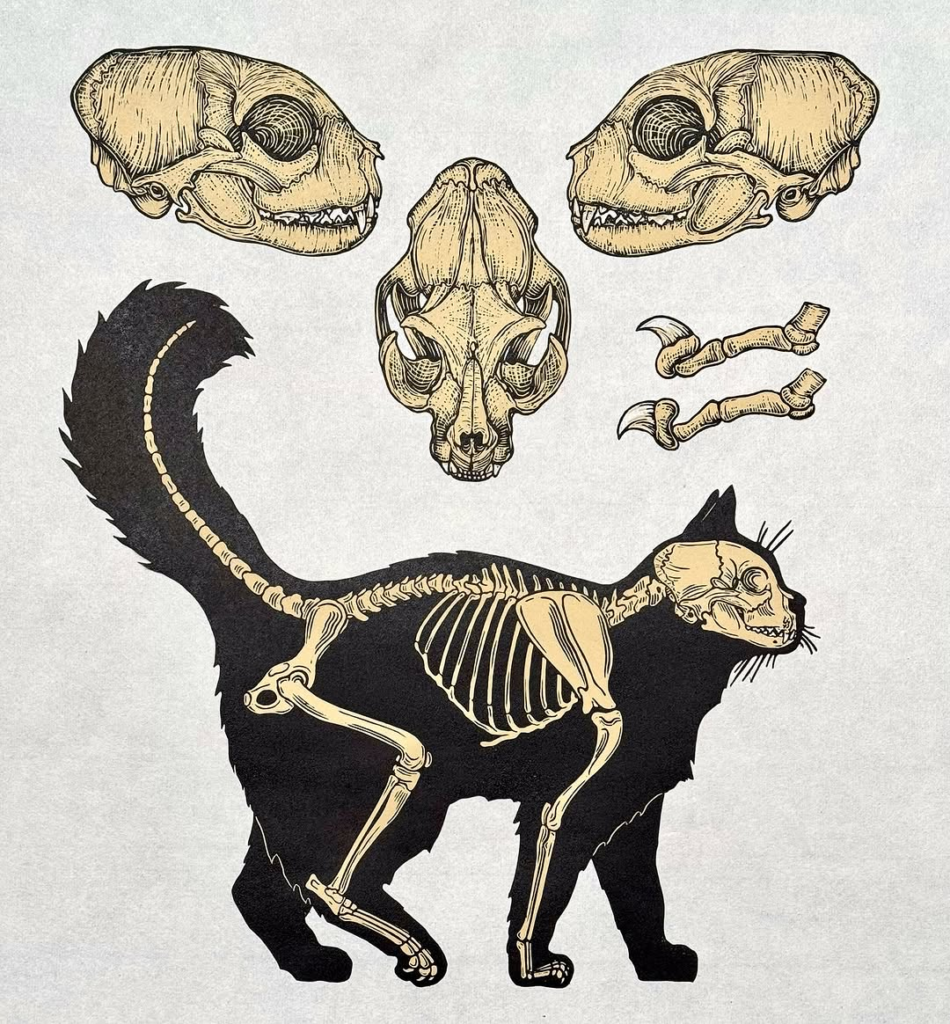
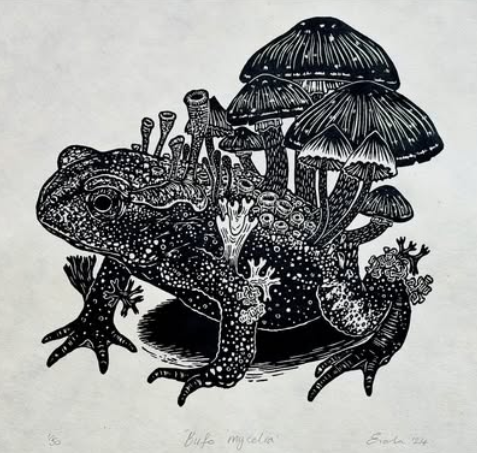
Caroline Erolin’s prints come from a place where curiosity about the natural world meets a lifetime of careful seeing. Working from her home studio in the countryside near Carnoustie, Scotland, she makes hand-crafted prints inspired by animals, nature, and the cycles of life. Her practice is rooted both in traditional printmaking and in the personal rhythms of her day-to-day life as an artist. Caroline describes herself simply as a printmaker, but her work reveals a thoughtful engagement with subject and medium alike. She is inspired by the creatures that share our world, often the ones we overlook. In many prints, animals such as insects, amphibians, or birds are depicted with attention to both form and presence, capturing a sense of motion, stillness, and quiet intrigue. Her process is traditional and hands-on. Working with linocut, etching, and wood engraving, Caroline carves and prints each image by hand, relying on age-old techniques that require both patience and precision. This handmade quality comes through in her work: the prints feel tactile, intentional, and intimately connected to the act of making.
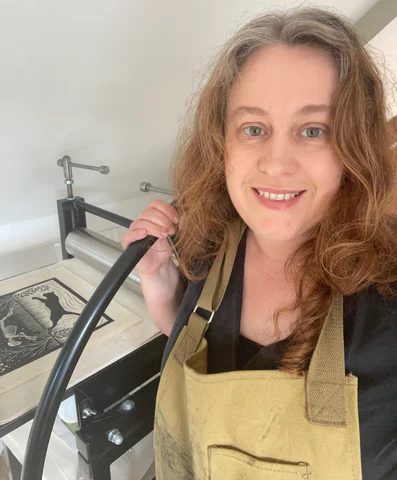
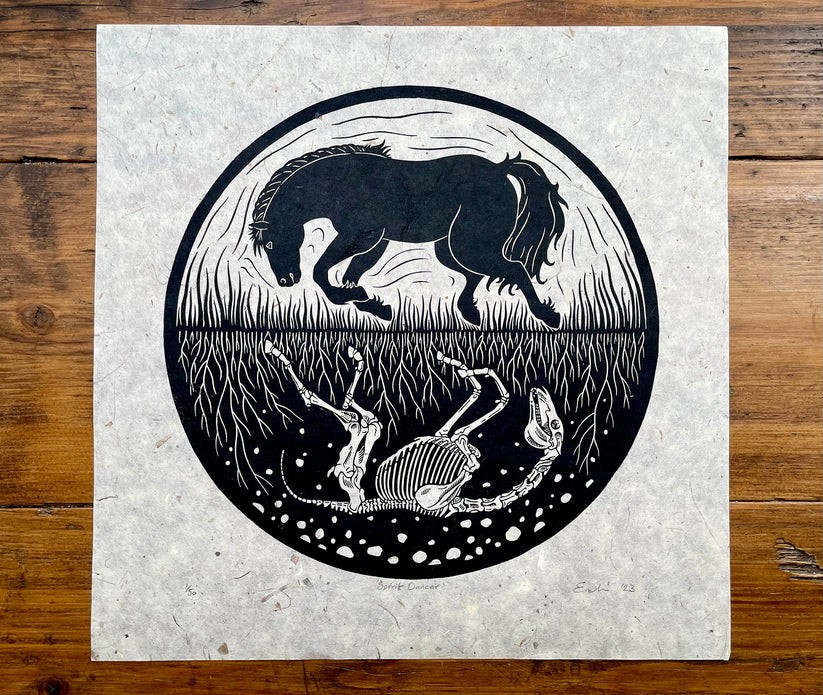
In some of her pieces, colour plays a role, in others, stark contrasts shape mood and form. Her monochrome prints, in particular, have a slightly darker tone that touches on themes of life and death, often echoing the natural rhythms she observes in the world around her. What makes Caroline’s practice distinct is how seamlessly she moves between subjects and media while maintaining a clear voice. Her printmaking does not feel distant or decorative. Instead, it feels alive, curious, and rooted in her own way of seeing and responding to nature. Her work shows how traditional processes can be both expressive and precise, capable of capturing the beauty of overlooked creatures and the subtle complexities of the world they inhabit. Through her linocut and related printmaking, Caroline Erolin reminds us that the natural world is full of quiet stories waiting to be noticed, and that handmade art has a way of making those stories visible in ways that feel both personal and visually striking.
Linocut has a quiet honesty to it. There’s no room for shortcuts, no easy fixes once the surface is cut. Every line comes from a moment of decision, and you can feel that commitment in the finished work. Spending time with these artists makes that clear. Each one approaches linocut differently, but all of them share a respect for the medium and the patience it demands.
What’s striking is how much variety lives within those limits. Some artists are drawn to landscape, others to pattern, memory, or everyday scenes. Some work with bold contrast, others with softer rhythm. Yet across all of it, there’s a shared sense of care. These prints weren’t rushed into existence. They were carved slowly, printed thoughtfully, and shaped by time spent looking closely.
Linocut asks us, as viewers, to slow down too. To notice the weight of a line. The balance between black and white. The spaces were left open on purpose. It rewards attention in a way that feels refreshing in a world that often moves too fast.
At the Arts to Hearts Project, we value practices like these. Artists who commit to their medium, trust their process, and allow meaning to build quietly rather than forcing it. The linocut artists featured here remind us that simplicity can be powerful, and that limitation can sharpen vision rather than restrict it.
As you move on from this feature, we invite you to keep that slower pace with you. Look a little longer. Notice the details. And remember that sometimes, the most lasting images come from work made patiently, by hand, one careful cut at a time.