
How These 5 Artists Are Turning Fabric into Contemporary Art
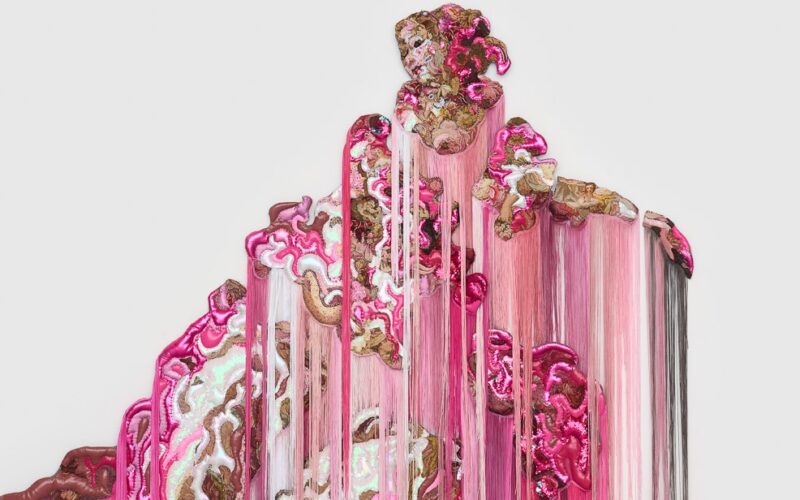
Textile was already part of our lives long before it became art. We wear it, sleep under it, carry it with us, pass it down, mend it, fold it away. It holds warmth, comfort, and memory. So when artists choose textiles as their medium, they’re not starting from nothing, they’re working with something that already knows what it means to be touched. That’s what makes textile art feel so human.
Threads, cloth, and fibre respond to time and care. You can’t rush a stitch or force fabric to behave without leaving a trace. The process is slow and repetitive, but in a way that feels intentional rather than restrictive. Stitch by stitch, layer by layer, the work takes shape. The rhythm of making matters just as much as the final form.
Textile artists often work with materials that have long been tied to home, labour, care, and tradition. For years, these materials were pushed aside in the art world, seen as decorative or utilitarian rather than expressive. Today, artists are reclaiming them using fabric and fiber to tell personal stories, explore identity, and speak about memory, resilience, and connection.
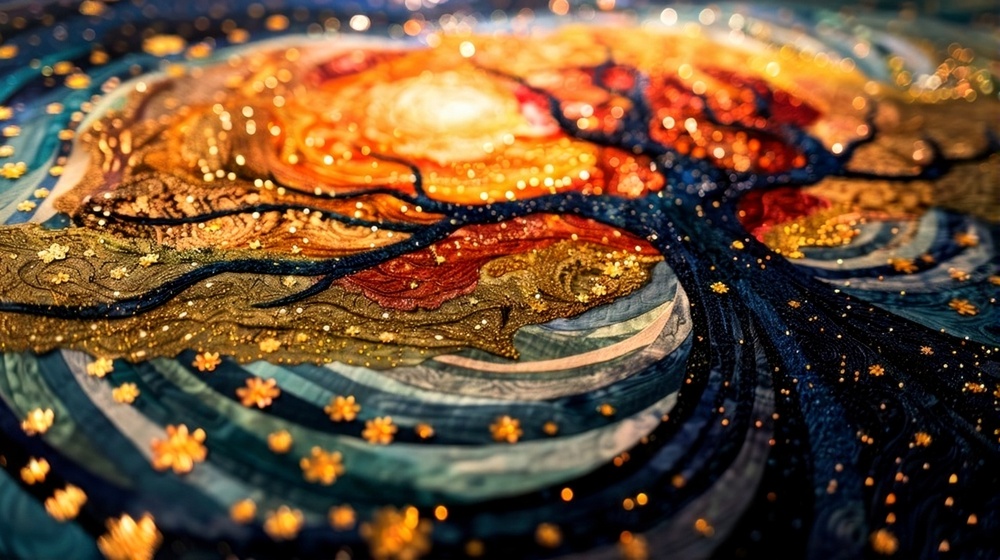
There’s also something beautifully contradictory about textile art. It can be soft and strong at the same time. Fragile in appearance yet built to last. Some pieces are intimate and meant to be experienced up close; others hold space with quiet confidence. Whether minimal or richly layered, textile works invite a slower kind of looking one that notices texture, follows the path of a thread, and feels the time embedded in the surface.
For many artists, working with textiles becomes a way of thinking through the hands. The body is involved. The rhythm of making matters. Mistakes stay visible, repairs become part of the story, and imperfection isn’t something to hide, it’s evidence that someone was here, paying attention.
At the Arts to Hearts Project, we’re drawn to textile artists who work this way, artists who treat material with respect, curiosity, and care. Artists who understand that fabric is never neutral, and that every choice of stitch, fiber, or form carries meaning. Through their work, everyday materials are transformed into something reflective, personal, and quietly powerful.
In this article, we’ll share the work of textile artists who expand what this medium can hold. Artists who use thread and cloth to speak quietly but powerfully about time, place, and lived experience. Their work doesn’t demand attention, it earns it. And in doing so, it reminds us that some of the most meaningful art is built slowly, patiently, and with care.
Anne von Freyburg @annevonfreyburg
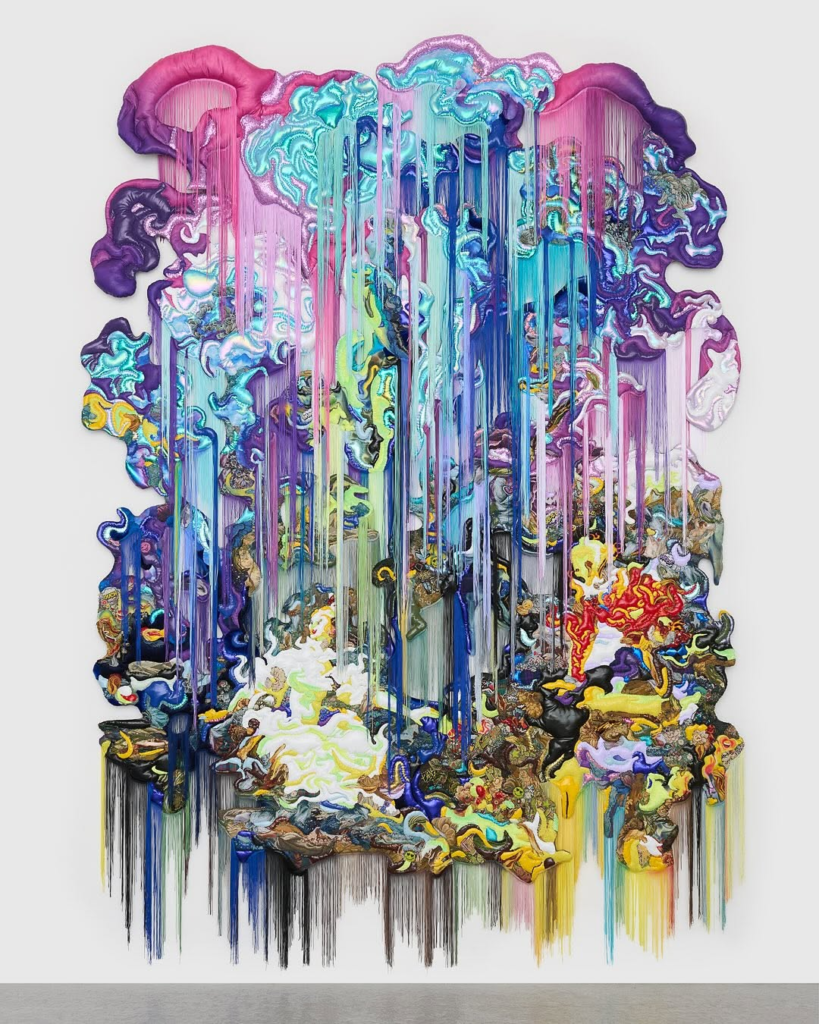
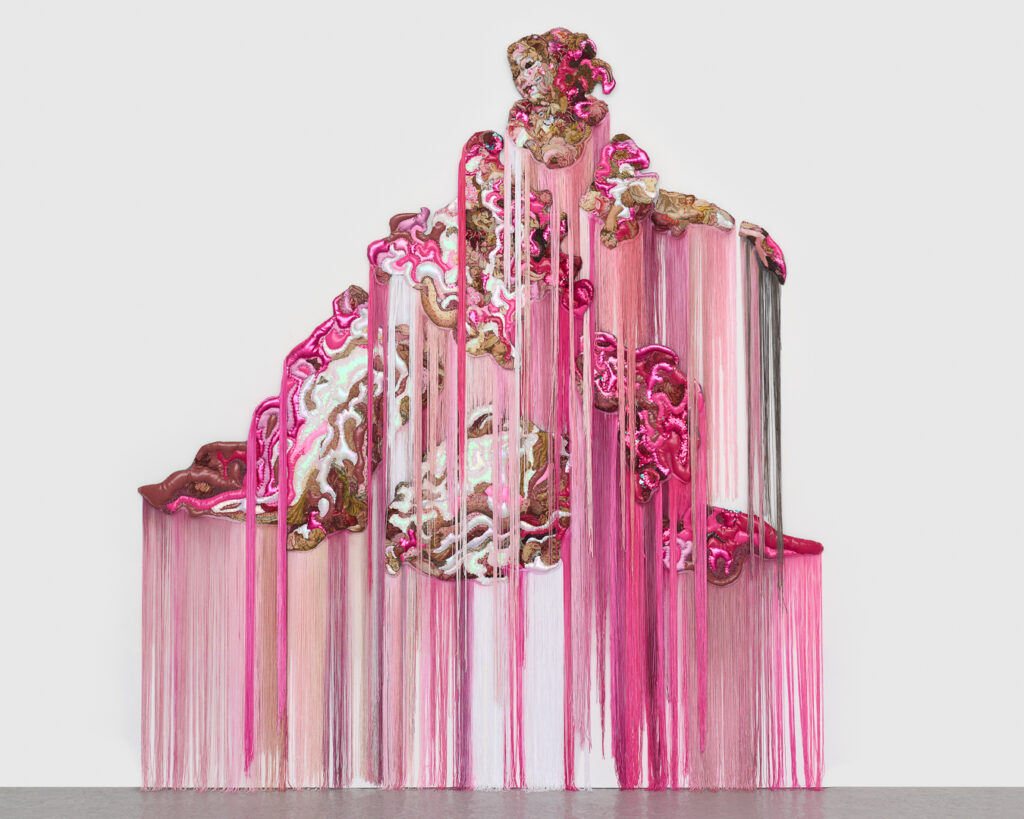
Anne von Freyburg’s work comes from a deep relationship with textiles, pattern, and surface. Her practice grows out of fabric and fashion, but it doesn’t stay there. Instead, it expands into painting, collage, and installation, carrying the language of textiles into larger, more immersive spaces. What’s clear from her work is her long-standing fascination with interiors and decoration. Patterns repeat, fabrics overlap, and surfaces become layered and dense. Rather than treating decoration as something secondary, Anne places it at the centre of her practice. Florals, ornaments, and rich colours aren’t background elements, they are the work itself. Her background in fashion and textile design shows in the way she understands material. Fabric isn’t passive. It holds structure, movement, and history. She often combines textiles with paint and wallpaper, letting different surfaces speak to one another. The work feels built rather than composed and assembled through attention to detail and an understanding of how materials behave together.
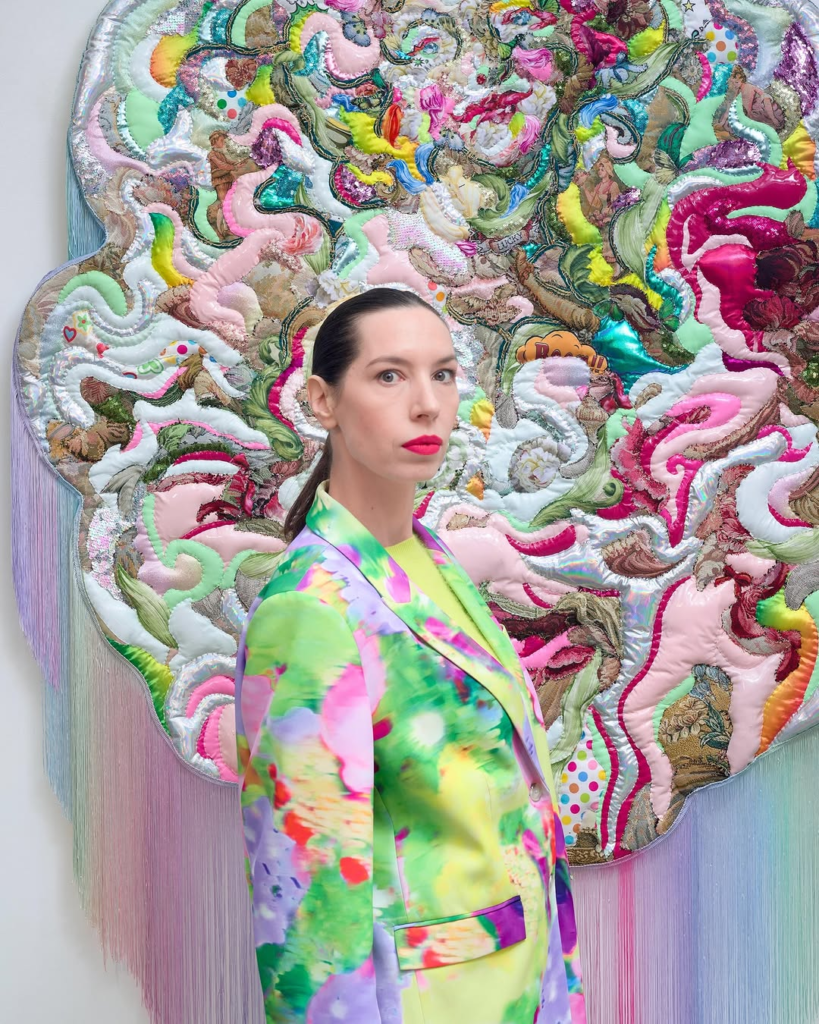
There’s a strong sense of confidence in how she works. Anne doesn’t shy away from abundance. She allows patterns to clash, colours to sit boldly side by side, and surfaces to feel full. At the same time, nothing feels accidental. The repetition and layering are controlled, shaped by experience and careful decision-making. What makes her practice interesting is how it quietly questions ideas of taste and value. Decoration, which has often been dismissed or overlooked especially when linked to textiles and domestic spaces is treated here as something serious, thoughtful, and powerful. By embracing beauty and ornament without apology, her work challenges what we’re used to seeing taken seriously in art spaces. Anne’s work doesn’t ask the viewer to decode it. It asks them to experience it. To move through pattern, colour, and texture, and to notice how familiar materials can feel entirely different when given space and attention. Through her textile-based practice, Anne von Freyburg shows how fabric and decoration can hold depth, intention, and strength. Her work reminds us that textiles don’t need to be quiet to be meaningful; they can be rich, layered, and confidently present.
Kenny Nguyen @kennynguyenclt
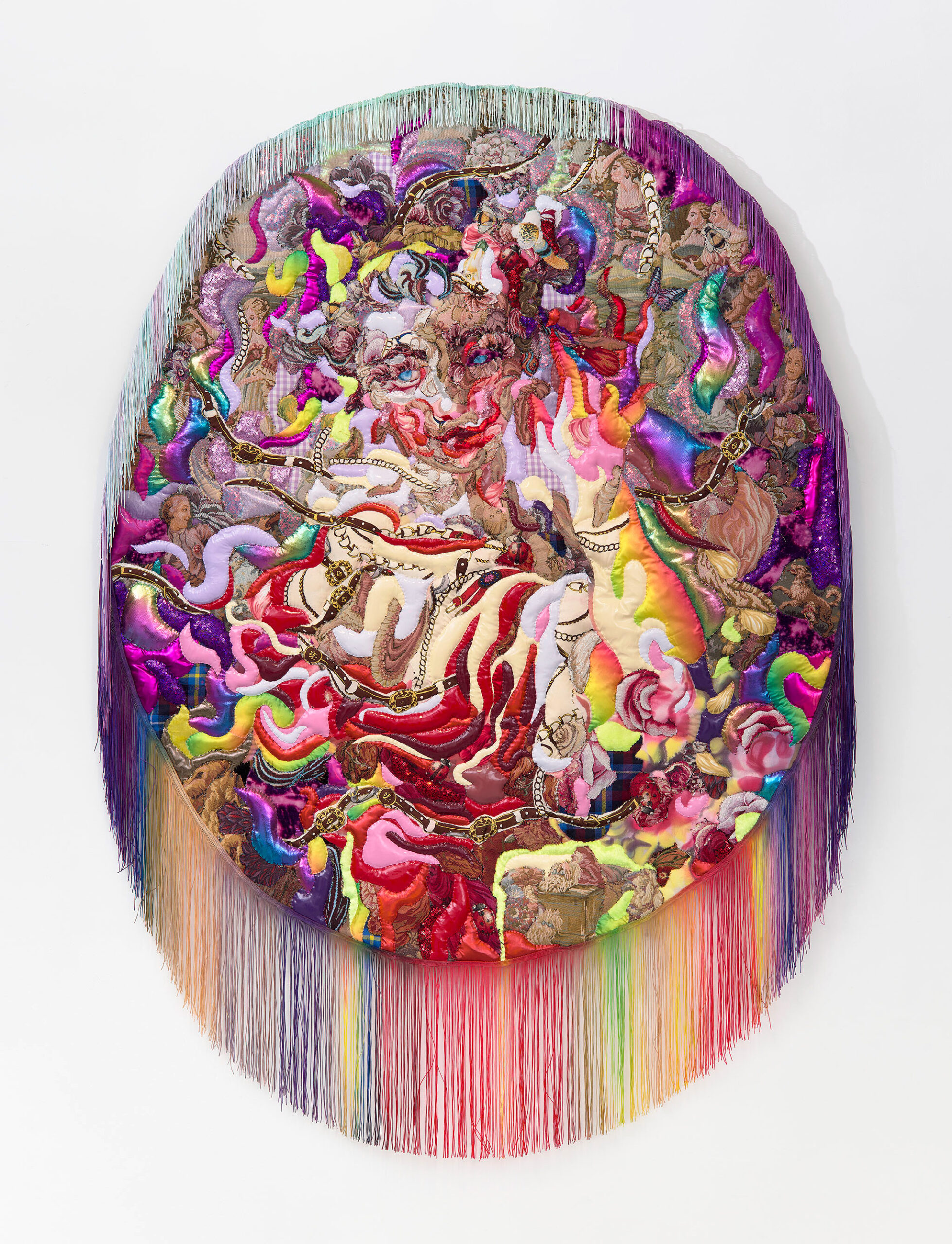
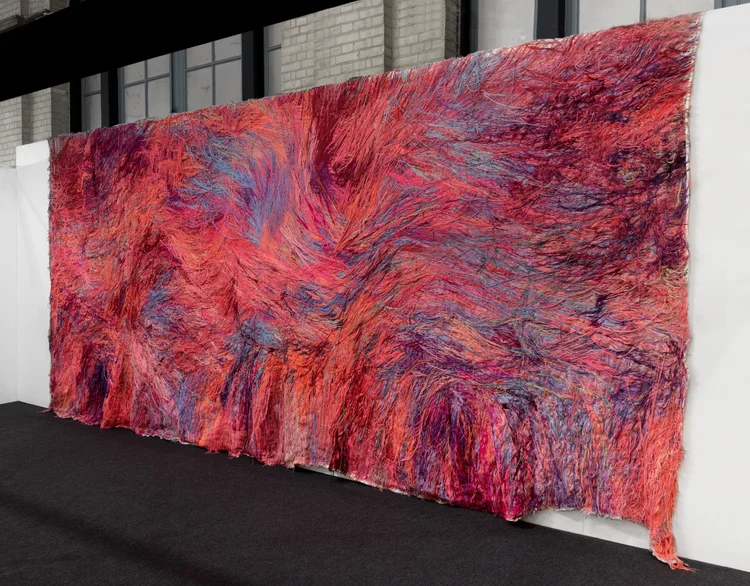
Kenny Nguyen’s work begins with silk, but it doesn’t stop there. For him, silk is not just a material it’s a way of thinking. Across his body of work from recent years, silk becomes a metaphor for the body, for identity, and for the emotional tension that comes with being seen, held, and reshaped by the world. Silk carries contradictions, and Kenny leans into them. It’s delicate, yet strong. It moves easily yet resists control. In his installations and textile works, the fabric is stretched, suspended, folded, and pulled, responding to gravity and tension as much as to the artist’s hand. Rather than forcing it into rigid form, Kenny allows the silk to behave as silk to sag, to strain, to soften, to hold. What stands out in his work is restraint. There’s no excess material, no unnecessary gestures. Each piece feels carefully considered, shaped by small decisions rather than dramatic ones. The silk is often presented in a way that feels unresolved, hovering between states. This sense of in-between neither fully settled nor falling apart becomes central to how the work communicates.
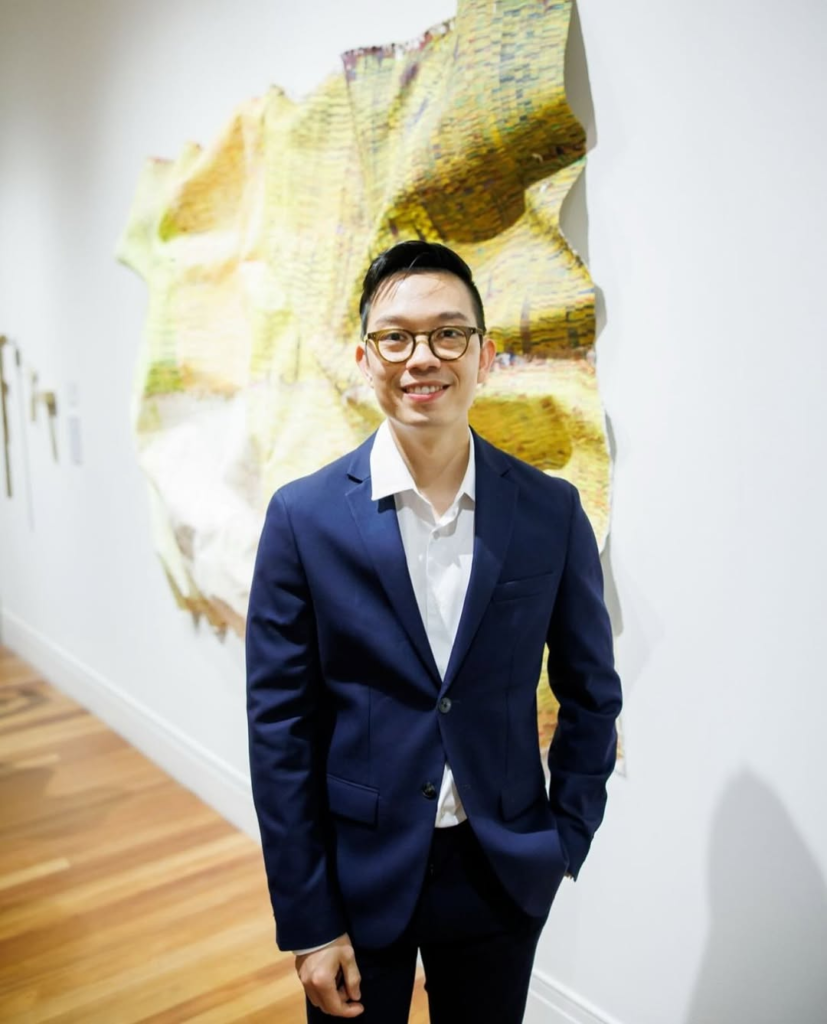
Kenny’s practice is deeply connected to the body without ever depicting it directly. The folds and tensions in the silk echo skin, posture, and vulnerability. The material stretches the way bodies do under pressure. It carries marks of force and release. The work doesn’t explain these ideas; it lets them sit quietly in the room, felt rather than stated. His installations occupy space gently but confidently. They don’t dominate the environment, yet they change how you move through it. Suspended forms draw the eye upward or inward, creating moments of pause. You become more aware of balance, weight, and your own physical presence in relation to the work. By using silk as both material and metaphor, Kenny Nguyen creates textile work that feels intimate without being personal, and emotional without being illustrative. His pieces hold tension, softness, and strength all at once. They ask for patience, for close looking, and for an openness to ambiguity. In his hands, textile art becomes a quiet reflection on what it means to exist within a body adaptable, vulnerable, resilient, shaped by forces we don’t always control, yet still capable of holding form.

Pi Williams @pi_williams_art
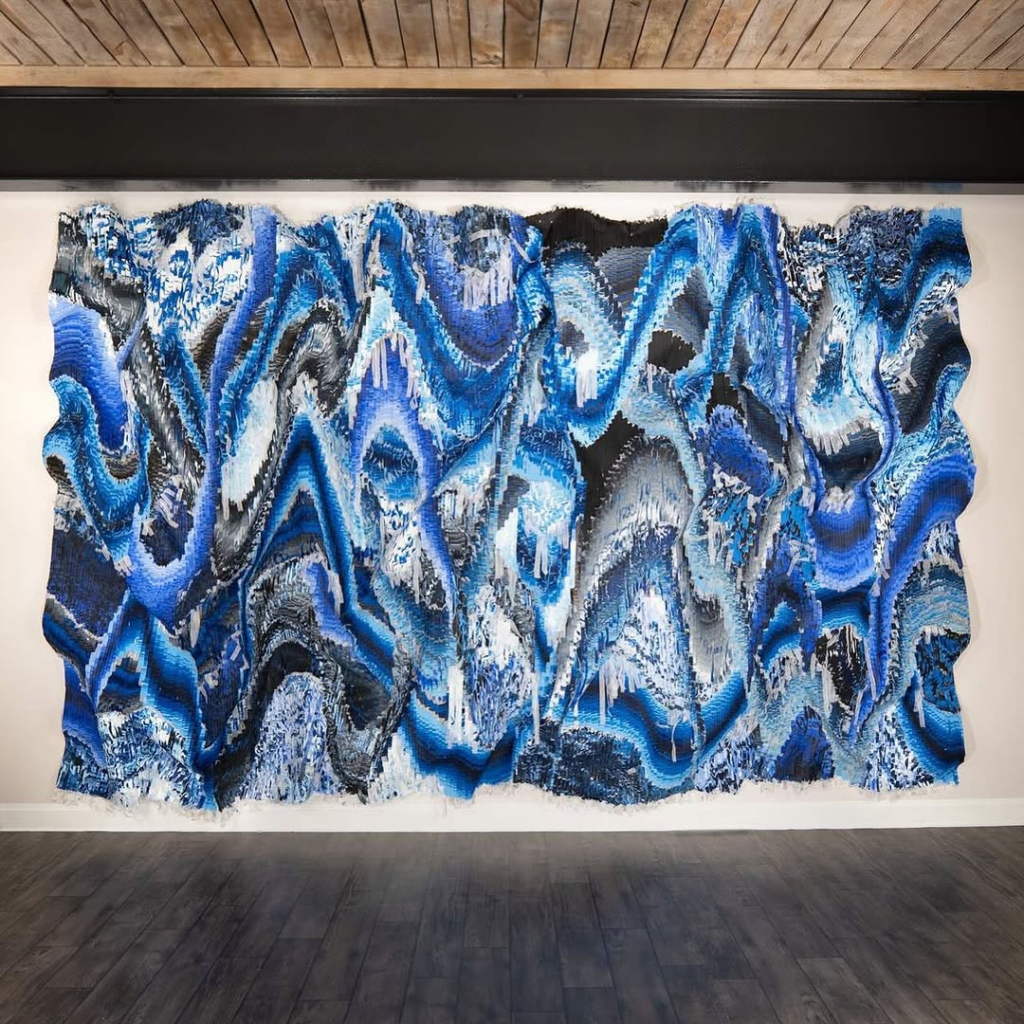
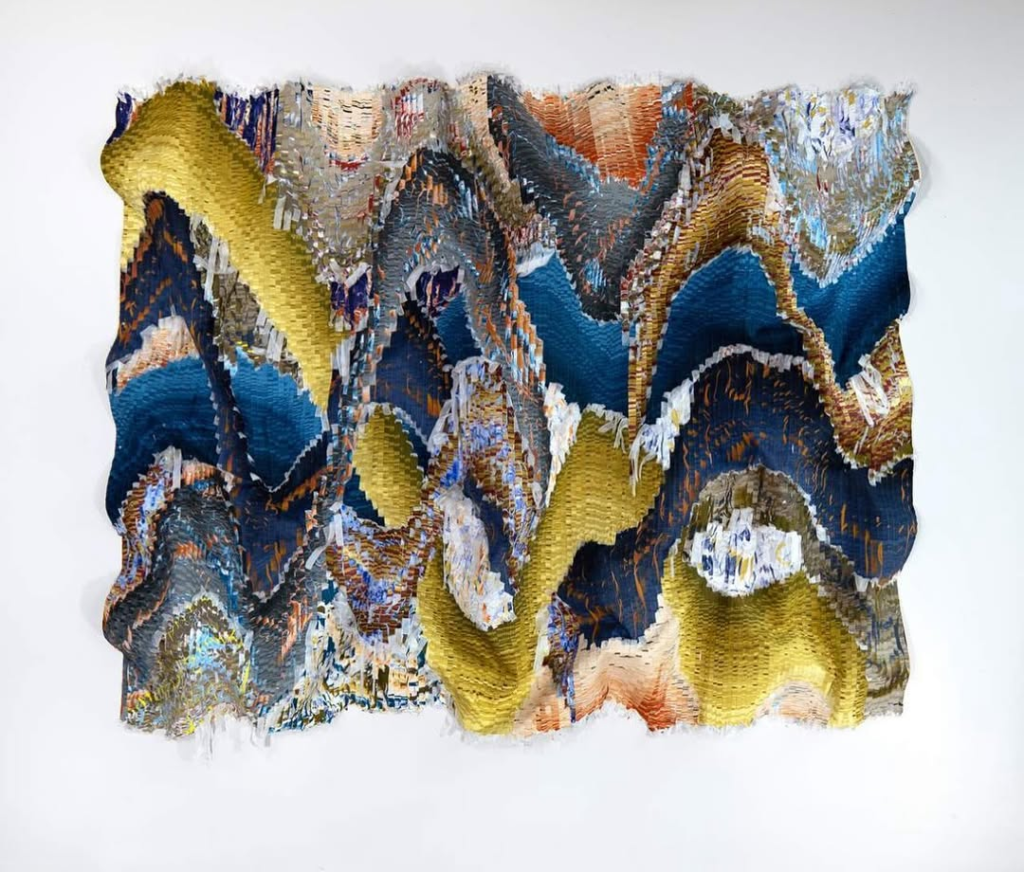
Pi Williams’s textile work comes from a place of exploration rather than conclusion. Looking through her practice, you get the sense that each piece is part of an ongoing conversation with material, a process of testing, responding, and allowing the work to evolve naturally instead of forcing it toward a fixed outcome. Her background in textiles and surface design shows through in the way she treats fabric as both structure and surface. Cloth isn’t just something to stitch into; it’s something to draw on, layer into, cut back, and rebuild. Thread moves across fabric like a line drawn by hand direct, expressive, and sometimes deliberately imperfect. You’re always aware of the act of making, of the hand returning to the surface again and again. Colour plays an important role in her work, but it never overwhelms the material. Instead, it settles into the fabric, interacting with stitch and texture rather than sitting on top of it. Some areas feel dense and worked, others lighter and more open, creating a quiet rhythm across the surface. There’s a balance between control and looseness moments where structure holds, and moments where it gives way.
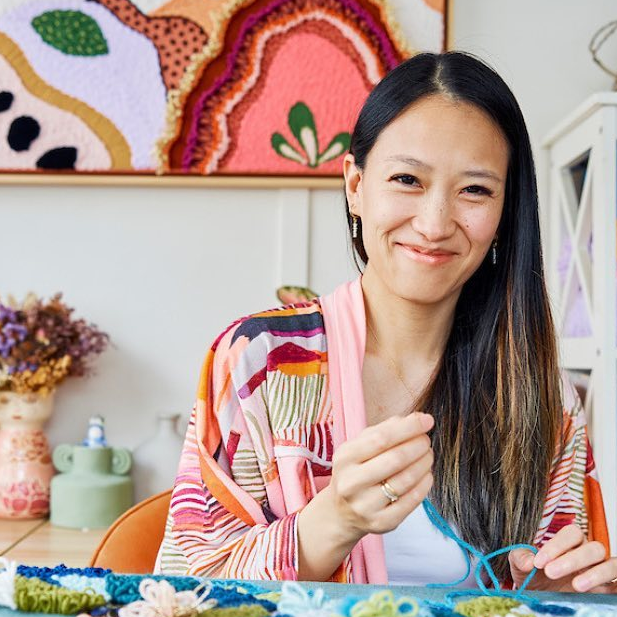
What feels especially present in Pi’s work is the idea of process being visible. She doesn’t hide seams, corrections, or changes of direction. Layers remain exposed, allowing the viewer to see how the piece came into being. That honesty gives the work a grounded quality. It feels thoughtful and considered, but never precious. Her textiles often sit somewhere between drawing, painting, and fibre work. They resist neat categorisation, and that resistance feels intentional. The work isn’t trying to declare itself as one thing or another: it’s comfortable living in the overlap. This openness gives her pieces space to breathe and invites the viewer to engage without needing a fixed interpretation. Pi’s practice reflects a steady curiosity about what textiles can do, how fabric can carry mark, movement, and feeling through repetition and touch. There’s no rush toward resolution. Instead, the work builds slowly, shaped by time, attention, and the quiet confidence of an artist who trusts the process. Her pieces reward looking closely. The longer you spend with them, the more you notice subtle shifts in texture, the tension of a stitched line, the way layers interact. It’s work that doesn’t demand attention, but holds it, offering a calm, tactile presence that stays with you.
Carmen Mardonez @desbordado
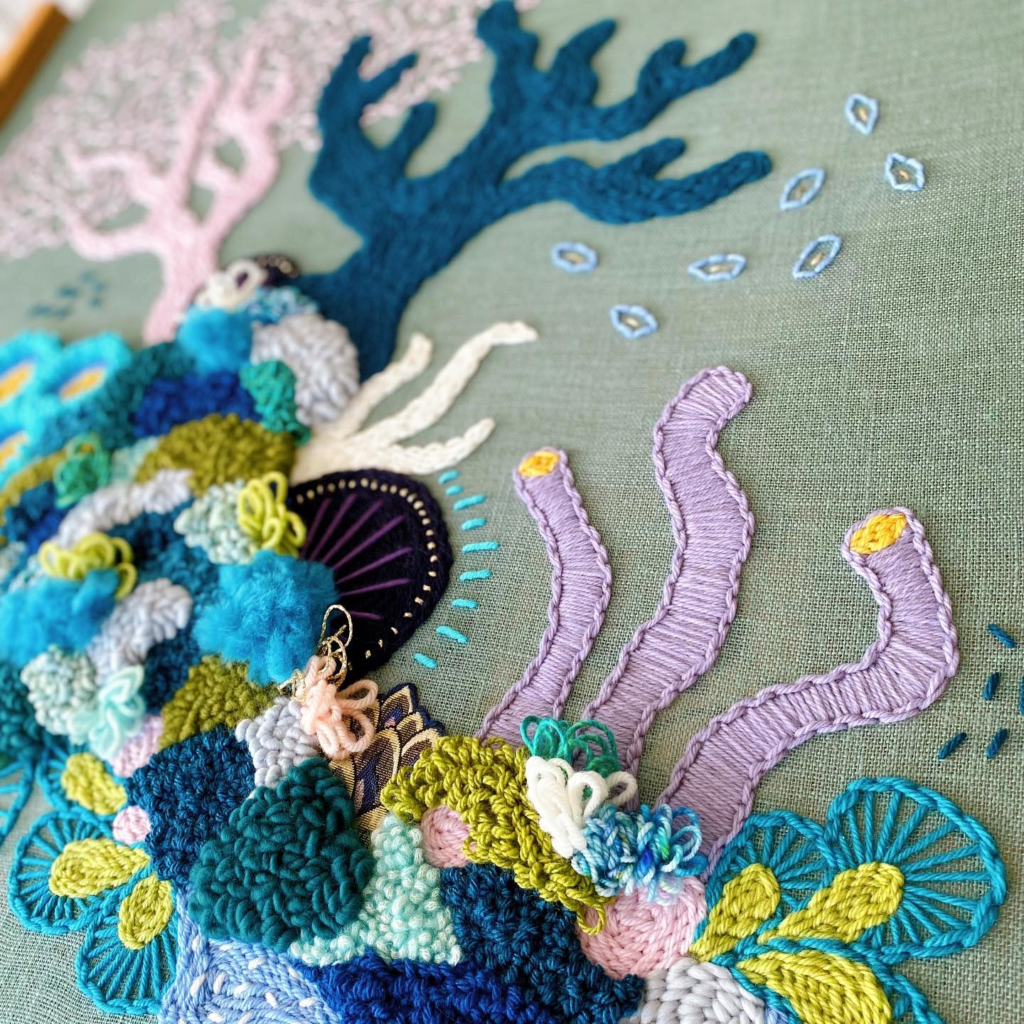
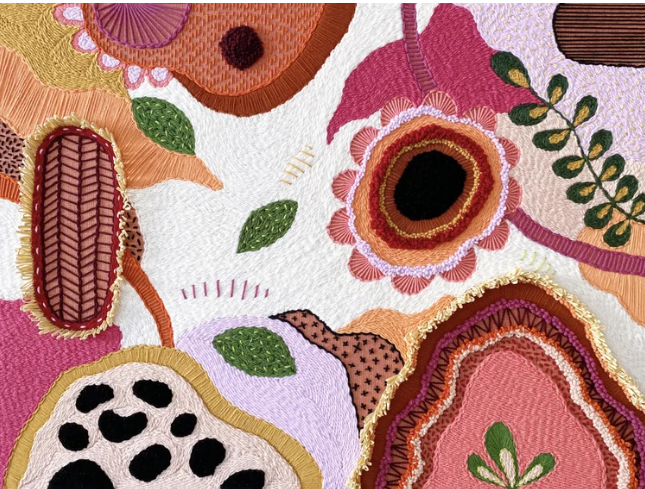
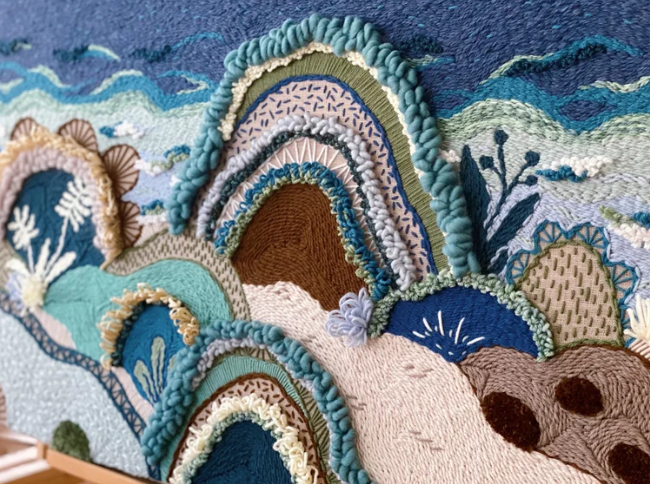
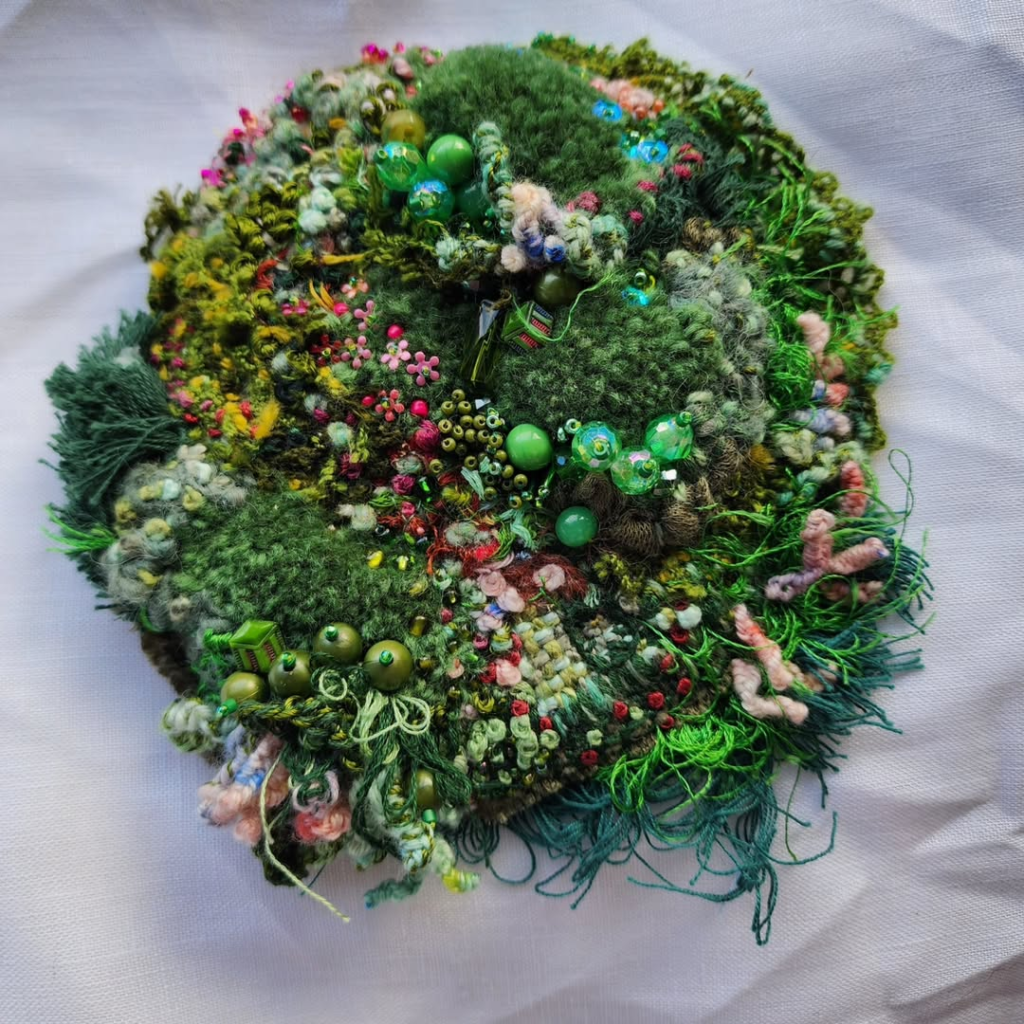
Carmen Mardonez’s work grows out of slowness. Working under the name Desbordado, she approaches embroidery and textile art as a way of staying with a moment rather than explaining it. Her practice is rooted in repetition, attention, and the quiet discipline of returning to the same gesture again and again until it begins to say something on its own. For Carmen, embroidery is not decorative. It’s a language. Thread becomes a way to mark time, to register emotion, and to sit with experiences that don’t resolve quickly. The act of stitching is steady and physical, a hand moving, pausing, continuing. That rhythm carries through her work, giving each piece a sense of calm presence. Her materials are simple and honest. Fabric is left exposed. Stitches are visible. Nothing is hidden or overly refined. You can see how the work is built, how one decision leads to the next. This openness feels intentional. It allows the process to remain part of the finished piece, reminding us that making is not always about arriving somewhere, but about staying attentive along the way.
There’s a strong sense of restraint in Carmen’s compositions. She doesn’t overcrowd the surface or search for complexity. Instead, she trusts small gestures, a line of thread, a shift in tension, the space between stitches. These choices give the work room to breathe. The pieces feel quiet, but not empty. They hold weight through simplicity. What makes her work resonate is how naturally emotion lives within it, without being spelled out. The textiles don’t tell stories directly. They hold them. The repetition of stitch becomes a way of processing, of grounding, of acknowledging what’s present without needing to define it. There’s vulnerability here, but also strength, the kind that comes from patience and care. Carmen’s practice reflects a belief in the value of time and attention. In a world that often pushes for speed and clarity, her work moves in the opposite direction. It asks us to slow down, to look closely, and to notice how much meaning can live in something made quietly, by hand. Through Desbordado, Carmen Mardonez shows how embroidery can be a space for reflection rather than resolution. Her work reminds us that textiles don’t need to be loud to be powerful. Sometimes, it’s the simplest marks repeated with intention that stay with us the longest.
Fleur Woods @fleurwoodsart
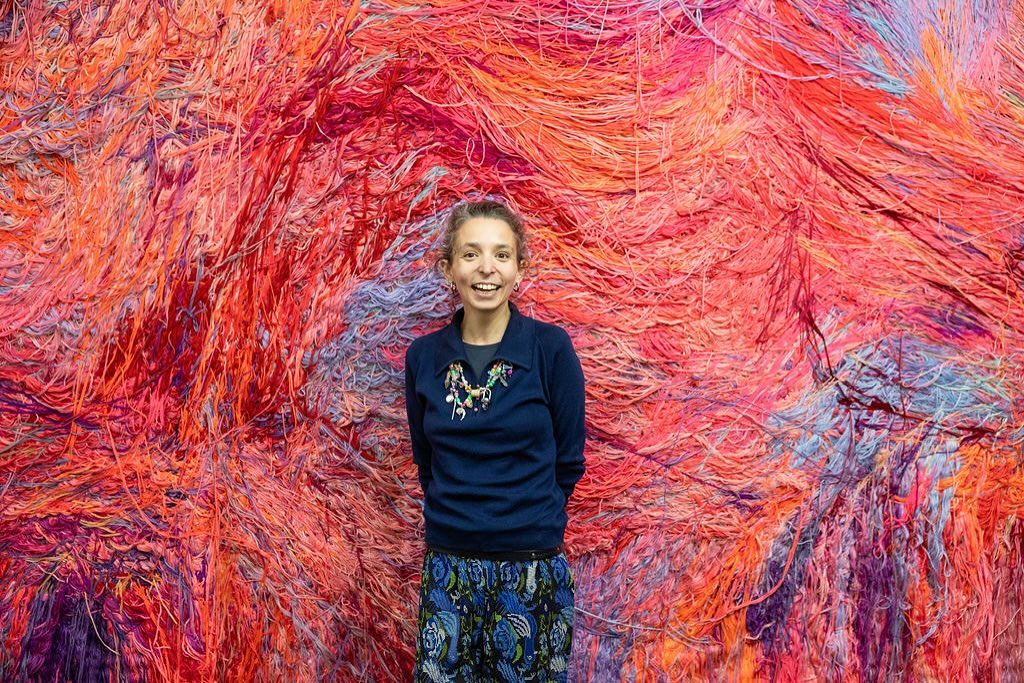
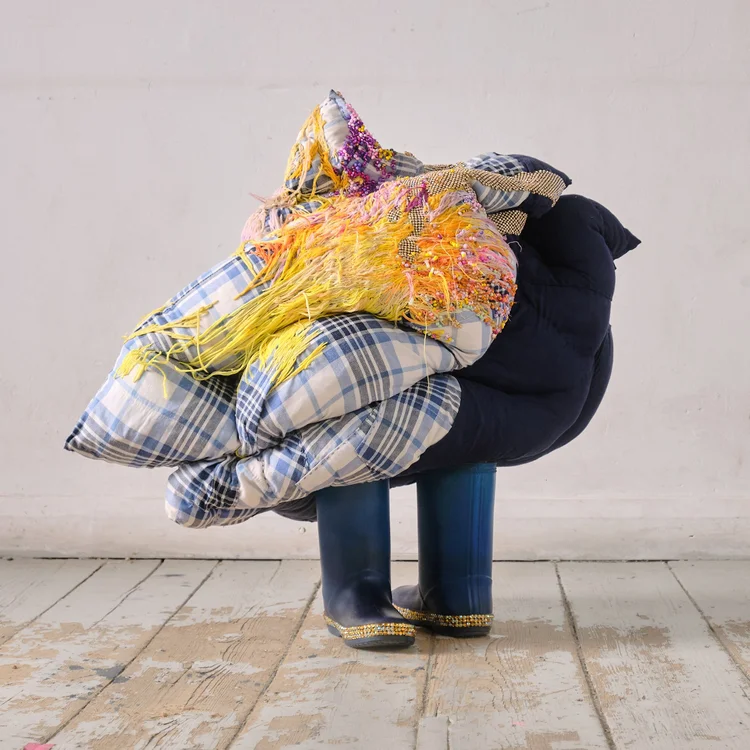
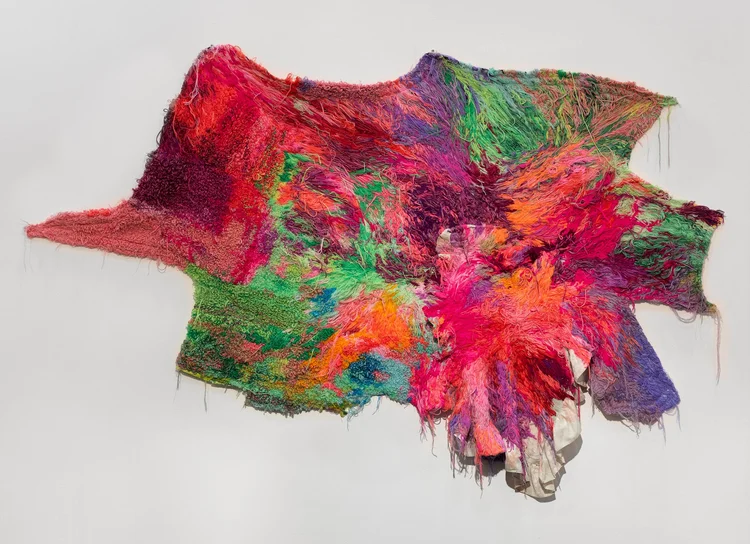
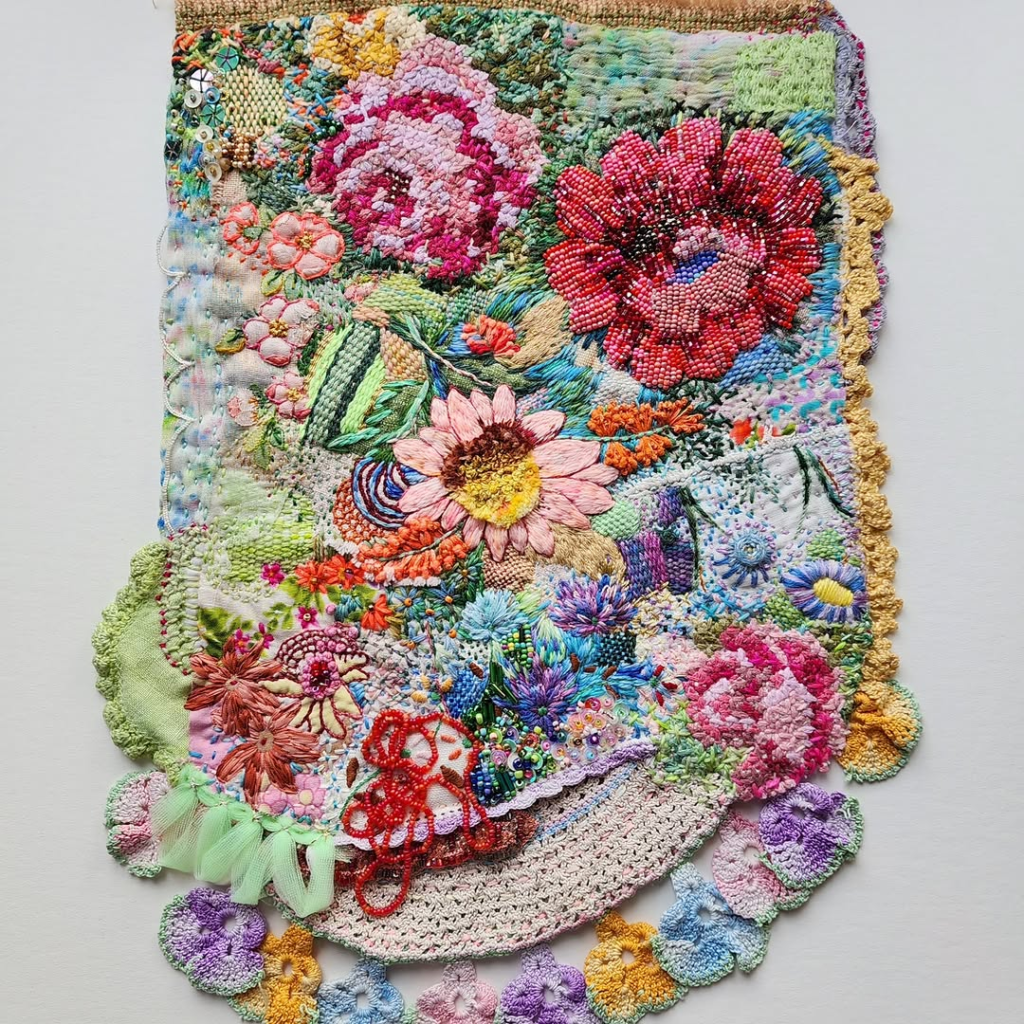
Fleur Woods makes textile art that feels like a conversation between colour, texture, and the natural world. Based in a quiet rural village near Nelson on New Zealand’s South Island, she describes her work as “contemporary stitched paintings,” a term that captures both her love of embroidery and her instinctive, painterly way of working. There’s an immediate sense of joy in her pieces, not a forced or staged happiness, but the kind that comes from really loving what you do. Fleur’s studio reflects that: vibrant hues, layered textiles, and surfaces built up with stitch and hand-painted fabric that echo the gardens, orchards, and rolling hills that surround her home. She didn’t follow a traditional art school path to get here. Like many makers whose work feels deeply personal, Fleur discovered her voice through experimentation and play. After years spent in the corporate world and raising her children, she began stitching and painting in her spare moments. That practice grew slowly, organically, until it became her full-time creative life one built not on repetition, but on exploration and intuition.
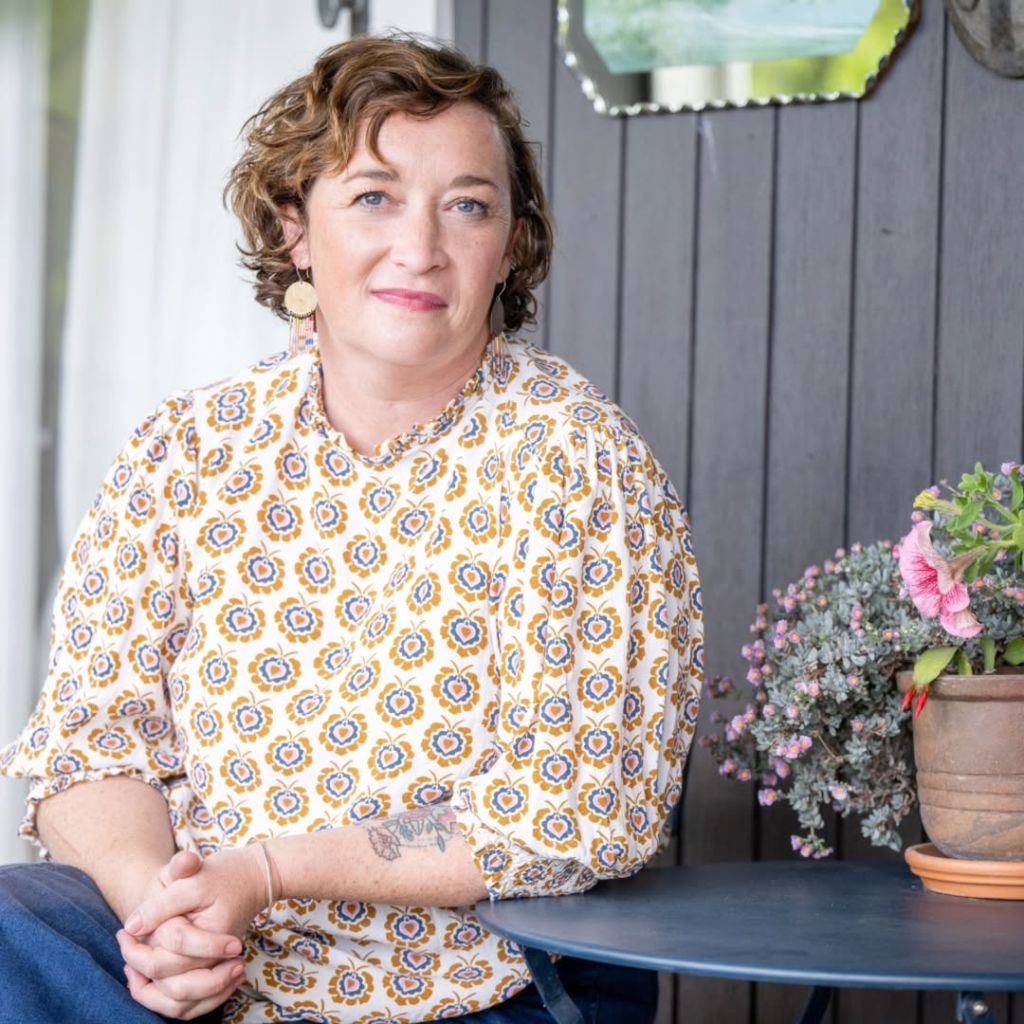
Her pieces often begin with hand-dyed or painted fabric colours that lean into natural palettes and floral inspiration before she adds layers of stitch that feel like brushstrokes made with thread. Rather than following strict embroidery rules, Fleur uses stitching as a form of mark-making, blending paint and fibre in a way that feels fresh, lyrical, and deeply connected to her surroundings. What makes her work resonate is how genuinely it reflects her creative life. There’s texture and depth, yes, but also a feeling of lived experience of long hours in the studio, of quiet afternoons spent watching light shift across a landscape, of joy in colour and fibre. She teaches workshops, shares her process with others, and even wrote a book called The Untamed Thread, offering both inspiration and encouragement to anyone drawn to stitch and slow making. Fleur’s work doesn’t shout; it invites you closer. It asks you to notice subtle shifts in tone, the way threads weave with paint, the warmth of hand-stitched lines against a softly coloured backdrop. Her art reminds us that textiles can hold both memory and imagination. Stitch is not just a craft, but a way of seeing.
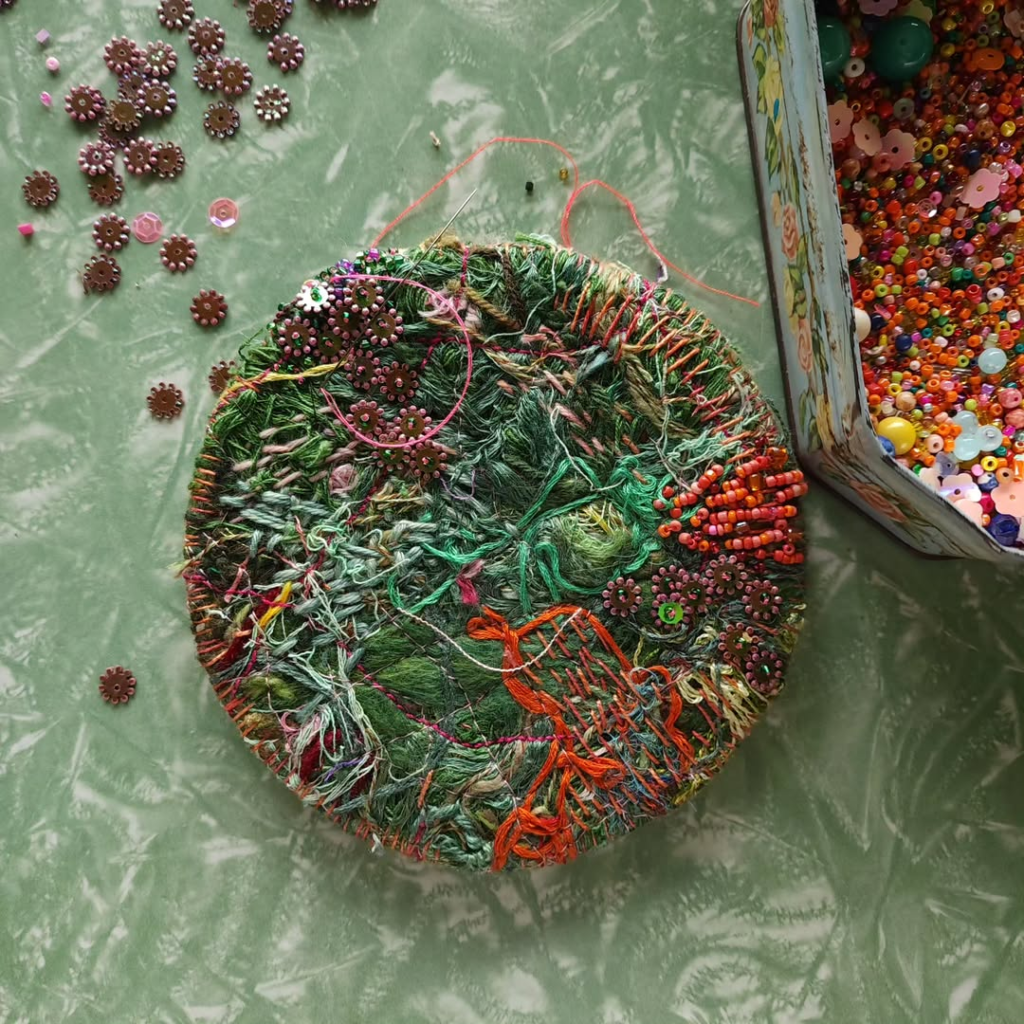
Textile art has a way of staying with you. Maybe it’s because the materials are already part of our lives. Fabric, thread, cloth these aren’t distant or unfamiliar things. We touch them every day. We live with them. And when artists work with these materials, you can feel that closeness in the final work.
The artists in this feature all work differently, but they share something important: they take their time. They pay attention to what their materials can do, how they respond, how they change through use and repetition. Their work isn’t rushed, and it doesn’t try to impress. It grows slowly, through decisions made by hand.
What’s powerful about textile art is that it doesn’t need to explain itself loudly. Meaning builds through texture, process, and presence. A stitch repeated. A fabric stretched or layered. A surface worked and reworked. These small actions add up, and over time they create something that feels personal, thoughtful, and grounded.
This kind of work invites a different way of looking. It asks you to slow down, to notice details, to spend a little longer with a piece before moving on. And in doing that, it reminds us that art like making doesn’t always have to be fast or finished-looking to matter.
At the Arts to Hearts Project, we value artists who work with care and intention. The textile artists featured here show how familiar materials can be used in honest, meaningful ways. Their work is a reminder that sometimes the most lasting impressions come from things made quietly, with patience, and by hand.
And maybe that’s what textile art offers most: a pause. A chance to look closely. And a reminder that there’s value in taking your time.