
How this painter found a new way of working after motherhood
This studio visit offers a close look into the working life and thinking of Alexandra Niculescu, a painter whose practice centers on the body, gesture, and lived experience. In the interview, she speaks about how her work developed from growing up on Calea Victoriei in Bucharest, surrounded by historic façades and ornamental details that later transformed into an inner visual language. She also shares how a difficult pregnancy, marked by medical procedures and physical strain, became a turning point in her work, leading to the recurring presence of what she calls the Unstoppable Body, a figure that breaks apart and reforms through paint.
The conversation moves through her daily studio routine and the way she works across multiple canvases at once, allowing ideas and gestures to travel from one surface to another. She describes painting as a physical act, done standing and moving, where memory is carried through the body rather than planned in advance. The interview also opens onto her current projects, including new large-scale works that expand her abstract language while staying rooted in the same sources of experience, architecture, and emotional memory.
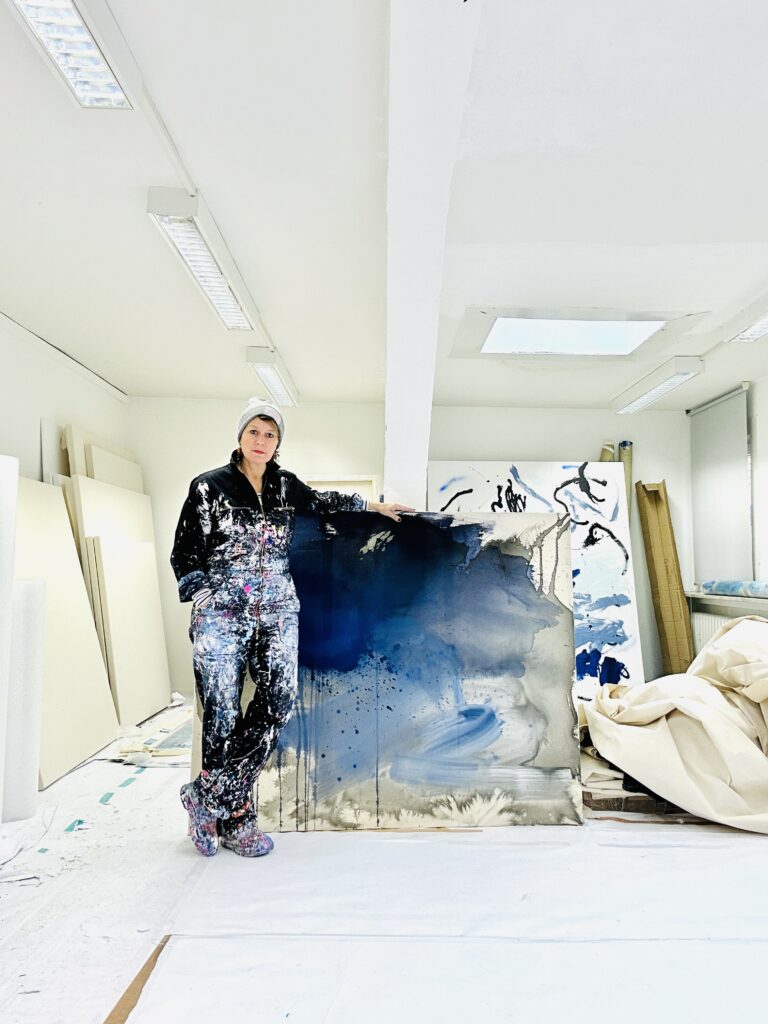
Her studio is located in Bucharest and feels closely tied to everyday life. It smells of linseed oil, fresh cotton canvas, and turpentine, the scent of layers still drying and works still unfolding. The space is often shared with her two daughters, who visit regularly, draw beside her, and quietly shape the atmosphere of the room. Their presence is woven into the rhythm of her working day and into the way she thinks about making art over time. Together, the interview reads as a slow walk through her studio, showing how painting, family, memory, and place exist side by side in her practice.
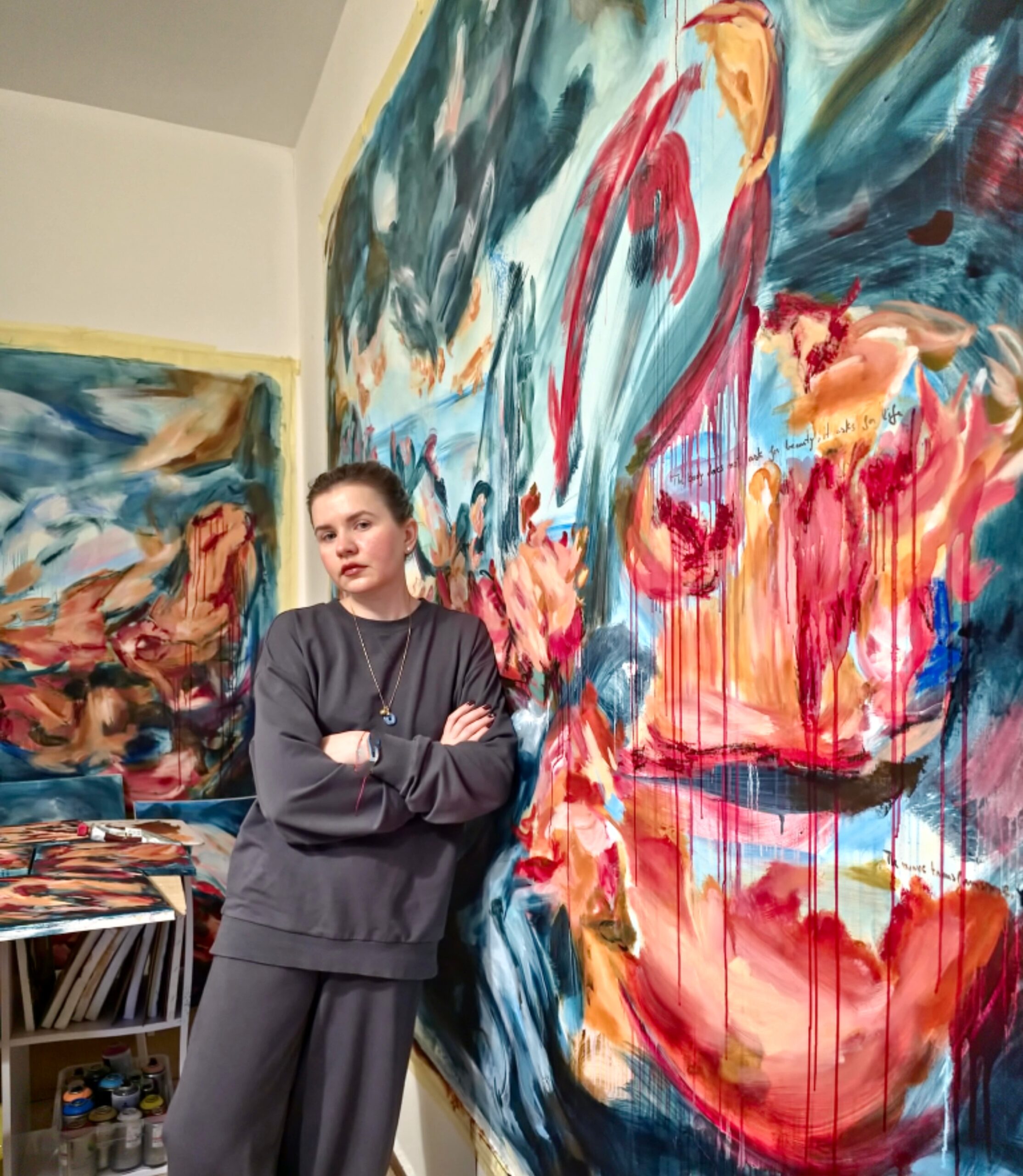
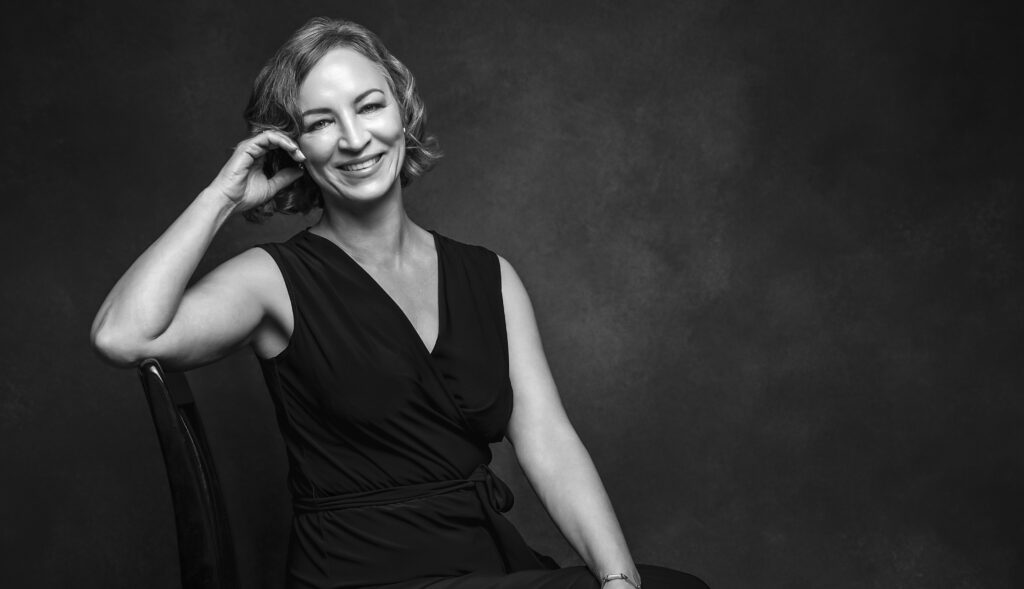
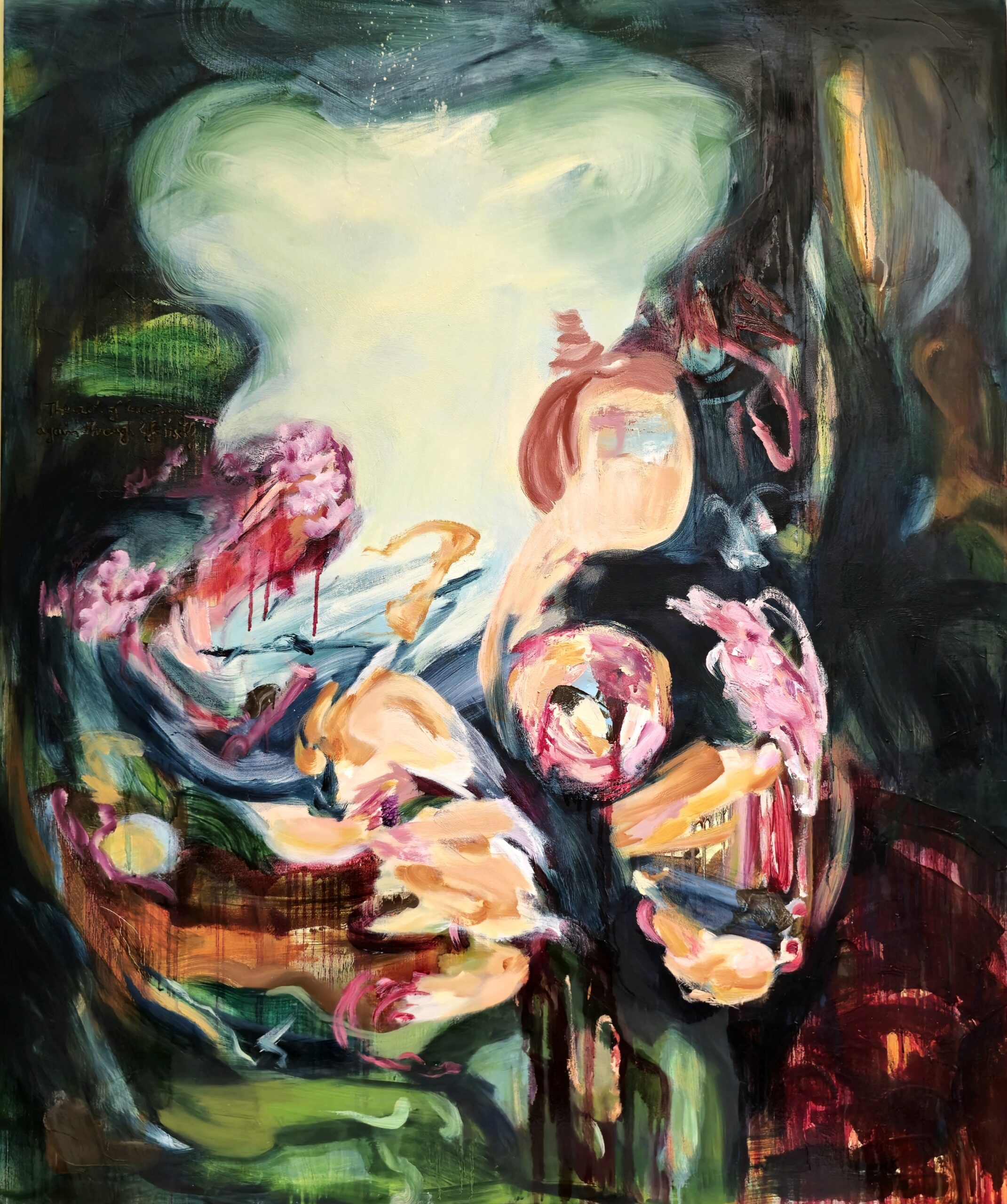
Alexandra Niculescu (b. 1988, Bucharest) is a visual artist working primarily in large-scale, gestural painting. Her practice emerges from direct bodily experience and the emotional memory of her childhood spent along Calea Victoriei, surrounded by eclectic architecture and rocaille details that have gradually transformed into what she calls an inner Rococo,a symbolic, emotional space where form expands, dissolves, and reappears transfigured. Her early visual roots trace back to Calea Victoriei’s historic palaces and their ornamental rocaille motifs, a sensory memory that now reconfigures itself in painting as fluid curves, rhythms, and gestural voluptuousness, expressing emotion rather than decoration. Alexandra’s work explores the body as an archive of trauma and regeneration.
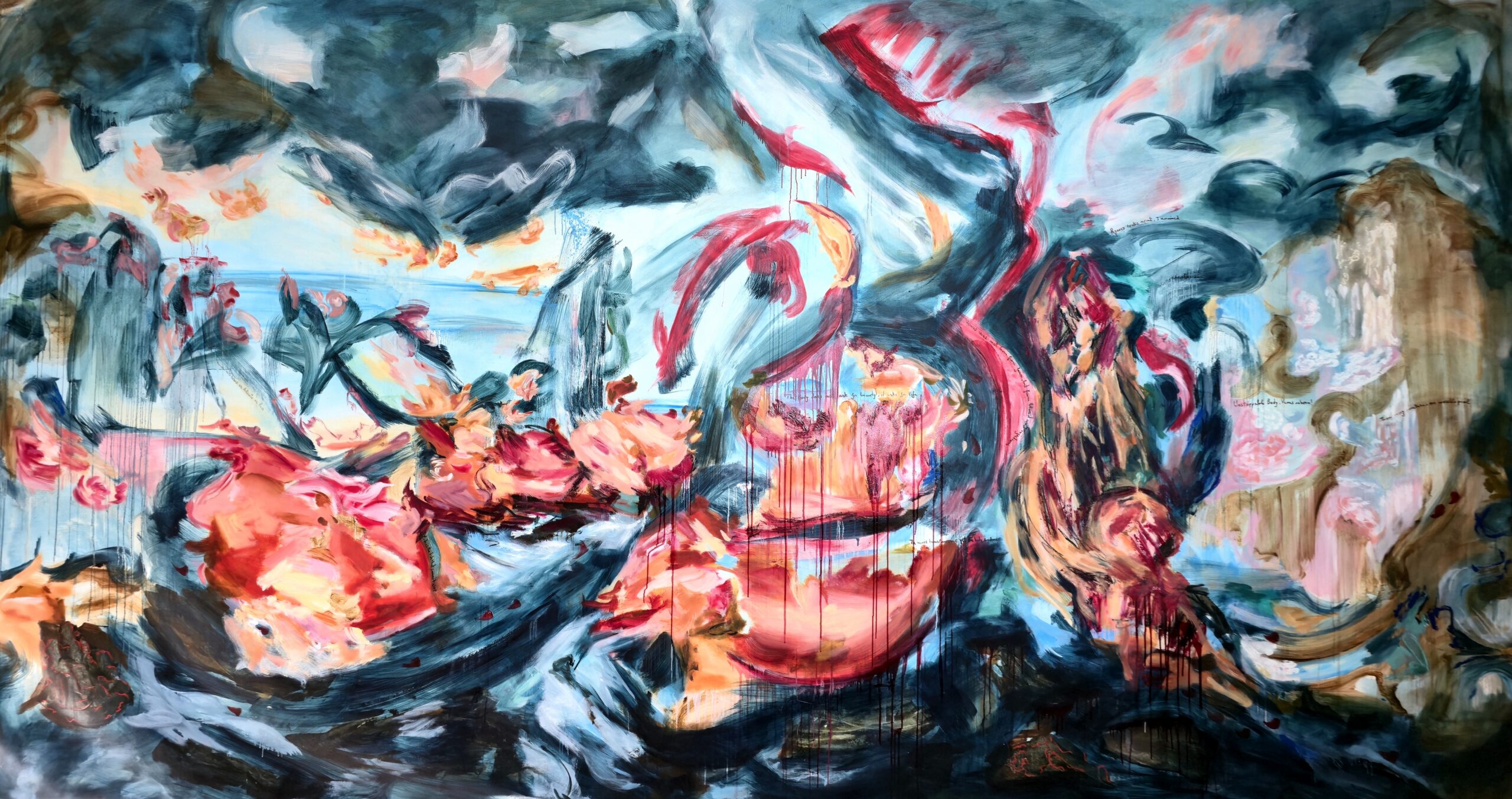
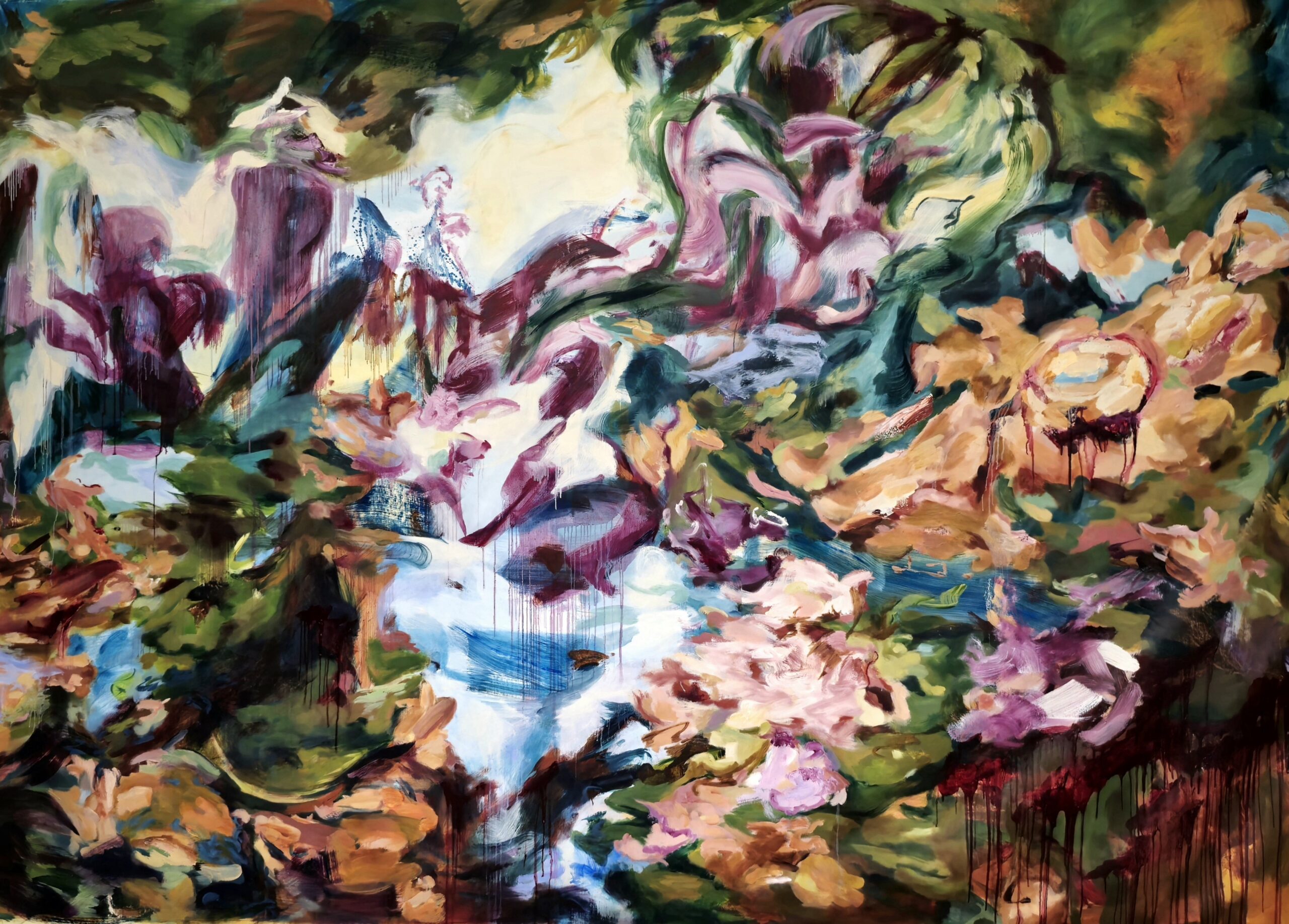
A difficult pregnancy, marked by thrombophilia and more than 300 self-administered injections, generated her central symbol, the Unstoppable Body, a fluid, vulnerable, yet fiercely resilient figure, a body that falls, fractures, and continually regenerates. In her recent works, this figure dissolves further, evolving into expansive abstract-expressionist gestures and landscapes of emotional intensity. At the intersection of Rococo refinement and the controlled ferocity of Abstract Expressionism, her painting becomes a visceral, sincere, and profoundly personal language, an art of truth. Alexandra works in a series of monumental canvases (200–400 cm) in which gesture, memory, femininity, fragility, and triumph coexist in a dynamic, poetic tension. She has exhibited internationally in curated shows in London, Geneva, and Berlin.
1. Can you describe your typical day in the studio and your creative process?
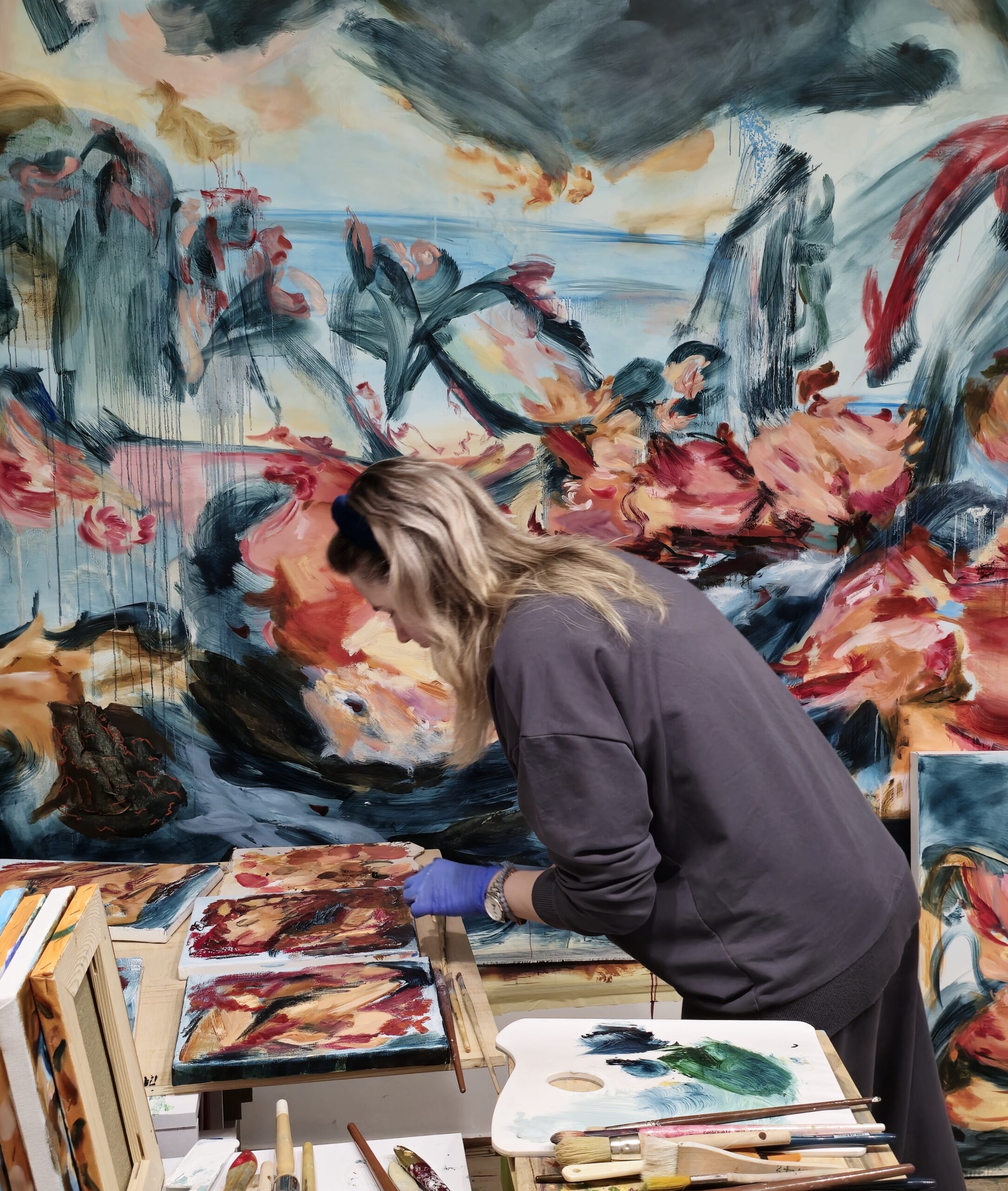
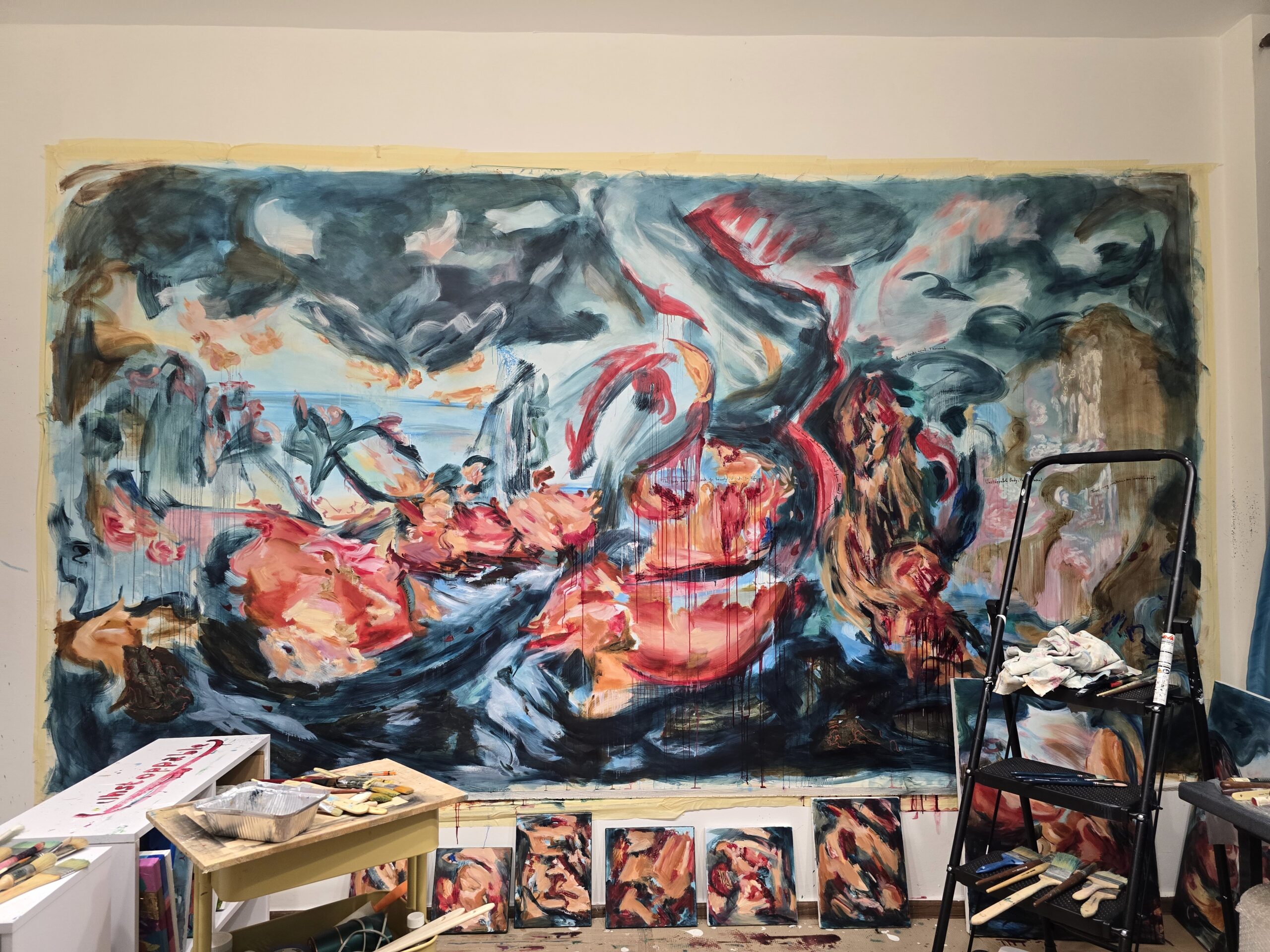
My studio days unfold in rhythm with my inner landscape. I work simultaneously on large-scale canvases and small, intimate ones. I always keep new surfaces near me because each painting activates the next. I move back and forth between works, letting them speak to one another, allowing the gesture to migrate from monumental to miniature and back again. I come to the studio almost every day. Even when I don’t paint, I enter the space to keep the connection alive, to breathe with the work, to listen to what it asks of me. The process is physical; I paint standing, moving, stretching, letting the body lead the mark.
The gesture is not decorative; it is an extension of memory, of what the body remembers and releases. Often, my daughters visit the studio. Their presence shifts the atmosphere; they draw, they paint, they move freely in the space. Their spontaneity brings a different kind of energy, a brightness that melts into my own process. It reminds me why the work exists, it grows from life, from resilience, from the soft and fierce parts of being a mother and an artist at the same time. My practice is continuous, layered, emotional, a daily act of returning to myself through colour, gesture, and the evolving memory of the body.
2. What is the primary inspiration behind your current body of work?
The primary inspiration behind my current body of work is the body itself as a site of memory, trauma, and transformation. My practice begins in the physical, the marks, the gestures, the tension of movement, the emotional charge stored in the body. At the same time, I draw from the emotional memory of my childhood on Calea Victoriei in Bucharest, with its Rococo ornamentation and architectural curves. Over time, these became an “interior Rococo” a psychological landscape of fluid lines, arabesques, and gestural excess that informs the abstract language of my paintings.
3. What is your favourite memory or incident from your studio?
My favourite studio memory is watching my daughters walk in, sit beside my canvases and start drawing or painting next to me. Their presence softens the room and reminds me that painting is not only about control or mastery, but it is also about staying open. They remind me why I create, and in many ways, they are the reason I became the artist I am today.
4. Do you have any studio assistants, or do any visitors, like pets or kids, often accompany you?
Yes ,my two daughters. They visit me often, and their presence has become a quiet, beautiful part of my studio rhythm. They move freely among the canvases, draw, paint beside me, or simply watch. Sometimes they even comment on my works or make small suggestions that shift my perspective. My story as a painter began with them. After becoming a mother, I returned to painting with a clarity and urgency I didn’t have before. Their presence reminds me every day that art is not only about mastery or control, it’s also about staying open, curious, playful. And I believe this environment helps them grow with a clear sense of life, imagination, and what art can mean.
5. How would you describe a dream studio for yourself?
My dream studio would be a bright, spacious ground, floor space inside my home, a place where my large-scale canvases can breathe. A studio with high ceilings, natural light, and long walls where gestures can unfold freely. A space that feels both intimate and expansive, where my children can wander in, and where the work can grow without limits.
6. What does your studio smell of right now?
Right now, my studio smells of linseed oil, fresh cotton canvas, and a hint of turpentine. It’s the scent of work-in-progress, layers drying, ideas unfolding. Some days it also carries the soft sweetness of my daughters’ watercolor sets, a reminder that this space is shared, lived in, and constantly becoming.
7. If you get a chance to set up your studio anywhere in the world, where would it be?
If I could set up my studio anywhere in the world, it would be in the U.S. the place where my artistic language feels most at home and where I imagine my work living on a larger scale. But I would still keep a studio in Bucharest. This city holds my childhood architecture, my early memories, and the emotional roots of my practice. My ideal future is a bridge between the two, a global studio, but with a Romanian heartbeat.
8. Can you discuss any ongoing projects or plans you have for your work?
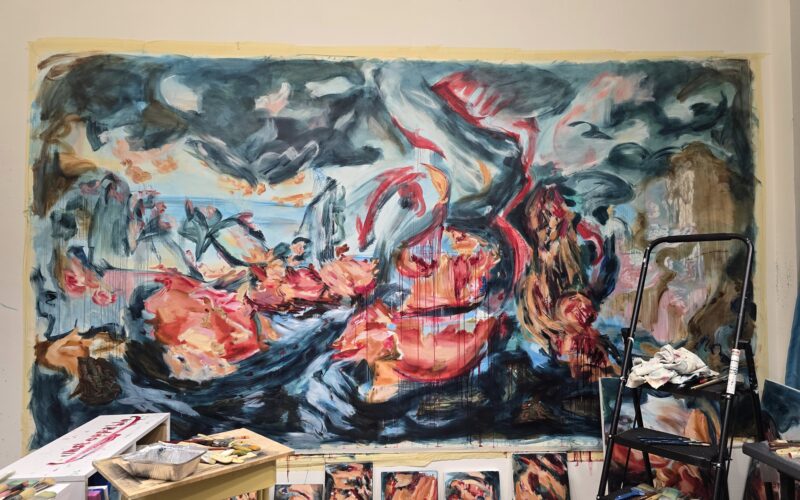
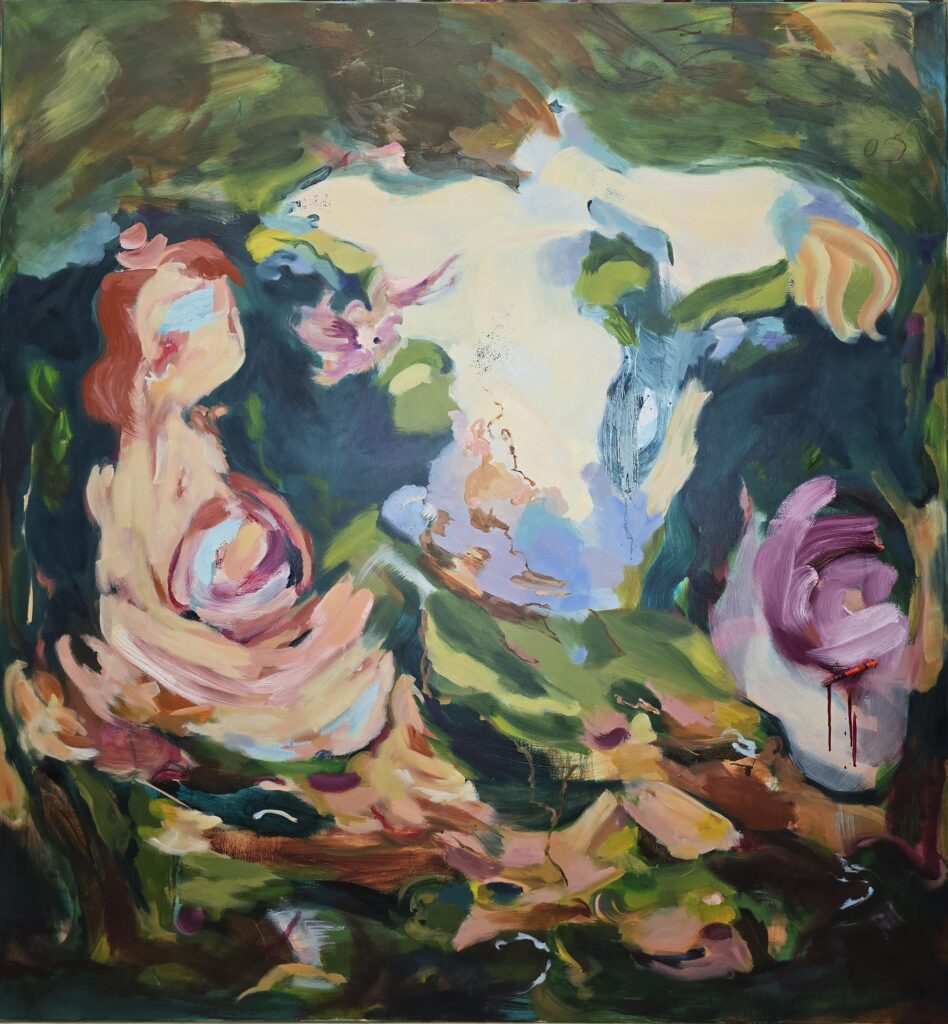
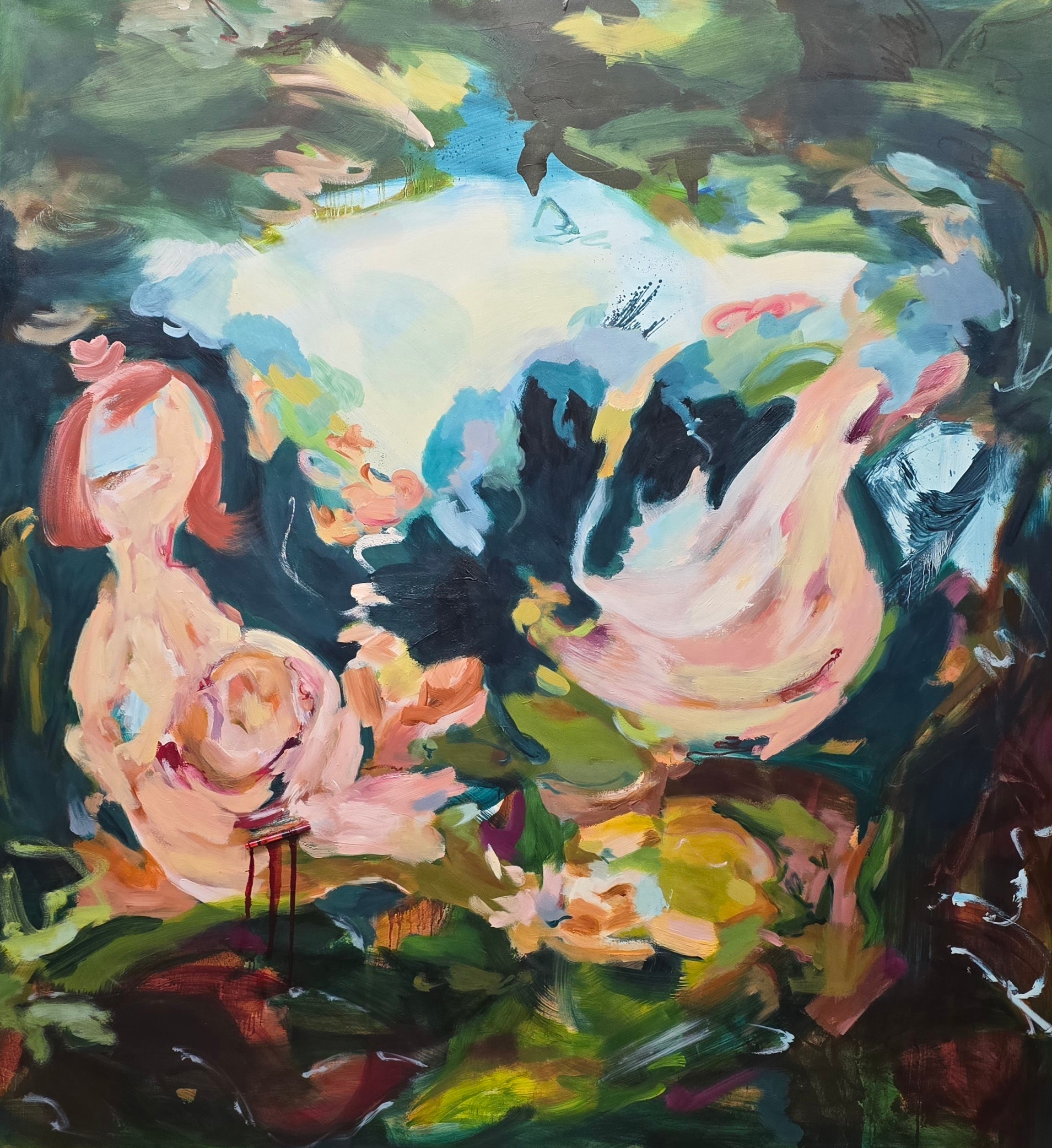
Right now I’m developing a new series that expands the monumental language of my latest painting, an abstract, gestural reinterpretation of Boucher’s Triumph of Venus. I’m working simultaneously on large-scale canvases and smaller works that draw on the same visual vocabulary: the “unstoppable body,” inner Rococo curves, and the tension between trauma and rebirth.
9. How do you organise your space?
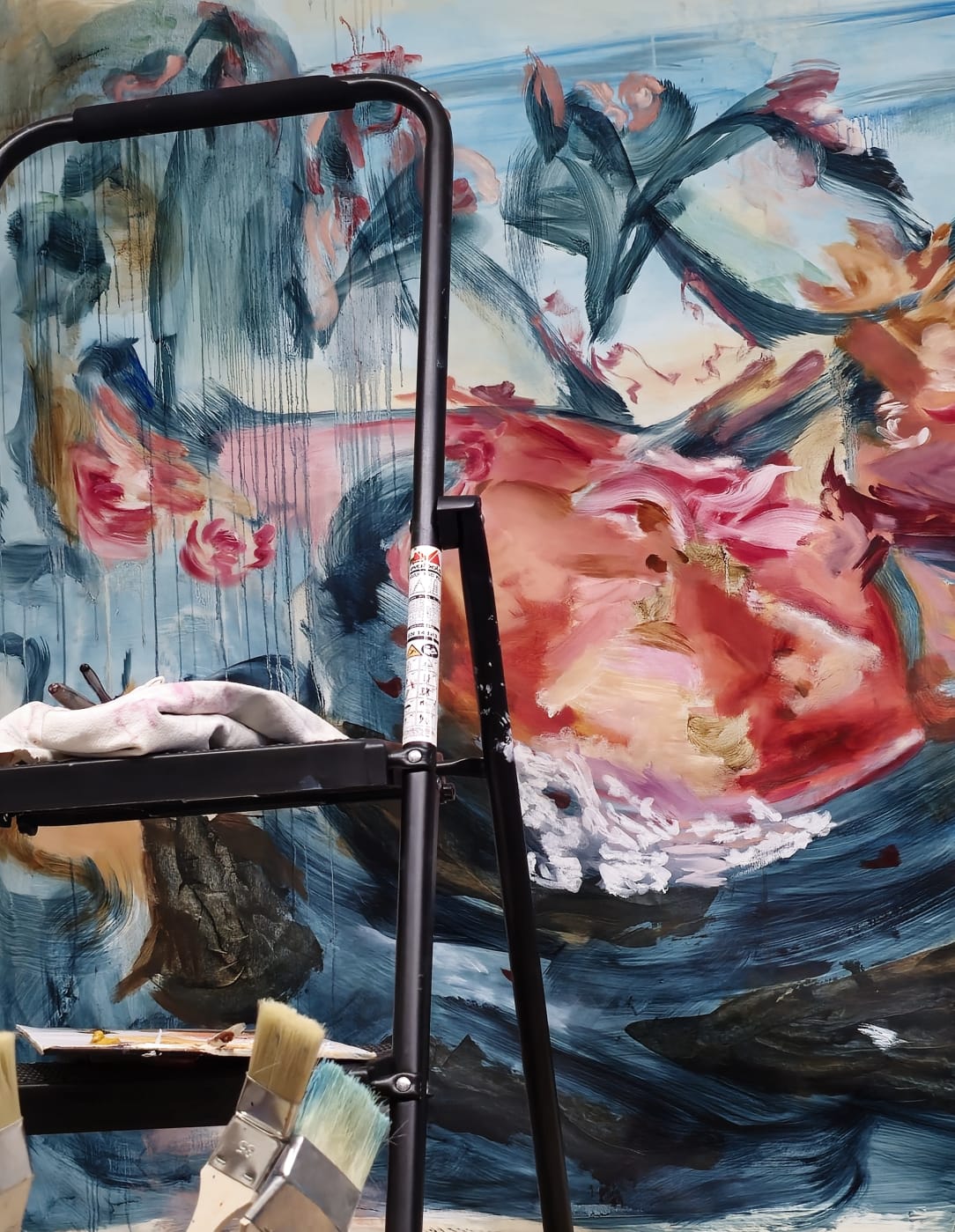
I keep my studio arranged so that the paintings can “speak” to one another. All the canvases stay visible, finished, in progress, or just started so I can feel their relationships forming. My colors sit on a large table in a kind of deliberate disorder, everything is at hand, nothing is over-controlled. The space stays open, fluid, and alive, so each new work can grow naturally inside the same visual family.
10. What is your favourite corner in the studio?
My favorite corner is the central space of my studio, where my monumental painting stands. It’s the heart of the room. I often pull up a chair and sit in front of it, watching the work breathe and deciding my next movements. Every other painting grows from that anchor point, it sets the tone for the whole studio.
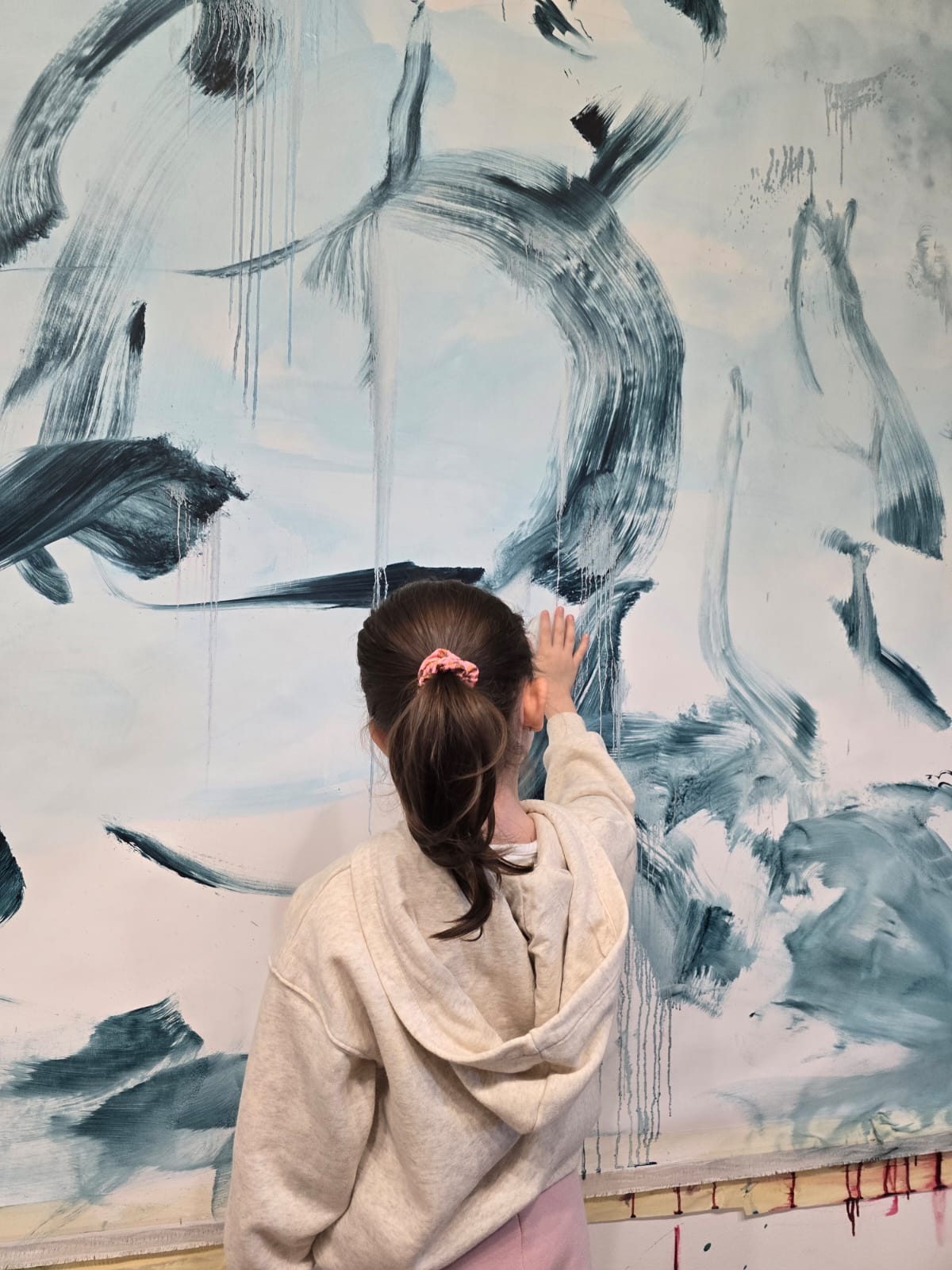
The studio feels like a place where time slows down. There is a quiet focus in the room, but nothing feels stiff or staged. Canvases lean against the walls, some towering, some small, all in different stages of becoming. There is space to move, to pause, to sit in front of a painting and stay with it. Paint is everywhere, on tables, on the floor, on the edges of canvases, showing that work happens continuously, not in neat intervals. When her daughters are there, the atmosphere shifts gently. Their voices, their drawings, and their movements make the studio feel warm and lived in, not sealed off from daily life.
The takeaway from this interview is lasting and straightforward. Alexandra’s work is not about chasing results, but about showing up, staying with the process, and letting painting grow out of real experience. The studio is not a retreat from life; it is where life and work meet. What stays with the reader is the sense that painting can hold pain, care, effort, and joy at the same time, and that returning to the work, day after day, is where meaning is built.
Visit our website to explore the virtual studio spaces of other artists. To be featured on our website, remember to apply for this month’s call for art.
Read more about Alexandra on her Website and Instagram.
Arts to Hearts Project is a global media, publishing, and education company for
Artists & Creatives, where an international audience will see your work of art, patrons, collectors, gallerists, and fellow artists. Access exclusive publishing opportunities and over 1,000 resources to grow your career and connect with like-minded creatives worldwide. Click here to learn about our open calls.