

5 TED Talks That Will Change How You See Art

Clarity in art often starts with a simple idea that meets you at the right moment. Most artists know that feeling, the moment you realise your understanding of art has stretched just a little further than before. It happens when someone explains creativity in a way that fits your lived experience.
TED Talks often create that kind of moment. They give space to people who speak plainly about what drives them, what confuses them, and what keeps them making work even when the path feels unclear. Listening to them feels less like receiving advice and more like sharing a conversation with someone who understands how layered the creative process can be.
There is comfort in that kind of honesty. It helps you recognise your own habits, your own fears, and the quiet motivations you do not always put into words. When you hear someone describe a turning point or a realisation that shifted their work, you naturally start seeing connections to your own practice. It brings clarity without forcing it.
The talks gathered here were chosen for that reason. They offer grounded insight. They speak to the reality of making art, the slow, thoughtful parts that shape who you are as a creator. They give you language for feelings and questions you may have carried for years without knowing how to explain them.
If you have been wanting something that deepens how you see art without overwhelming you, these talks are a good place to begin. They leave you with ideas that feel steady, useful, and human, the kind that stay with you long after the video ends.
1. Elizabeth Gilbert on Staying Steady When Creativity Feels Heavy
Talk: “Your Elusive Creative Genius” by Elizabeth Gilbert
Elizabeth Gilbert speaks in a way that makes artists exhale a little. She does not rush toward inspiration or push for intensity. Instead, she talks about the emotional work behind creativity with a level of honesty that many artists struggle to voice themselves. When she describes the fear of not matching past work, or the strain of carrying more expectations than you meant to, it feels like someone finally naming something you have been holding quietly for years. Her tone is gentle, but the truth in her words is firm, and that combination can shift the way you relate to your own practice.
One of the strengths of this talk is how Gilbert reframes responsibility. Instead of placing the entire weight of brilliance on the artist, she reminds you that you only control your commitment, not the outcome. This removes the pressure to constantly perform at a high level. Many artists fall into the trap of believing that they need to top their last piece every time they step into their creative space. Gilbert gives you a way out of that thinking by explaining that consistency, sincerity, and routine matter more than chasing a perfect idea.
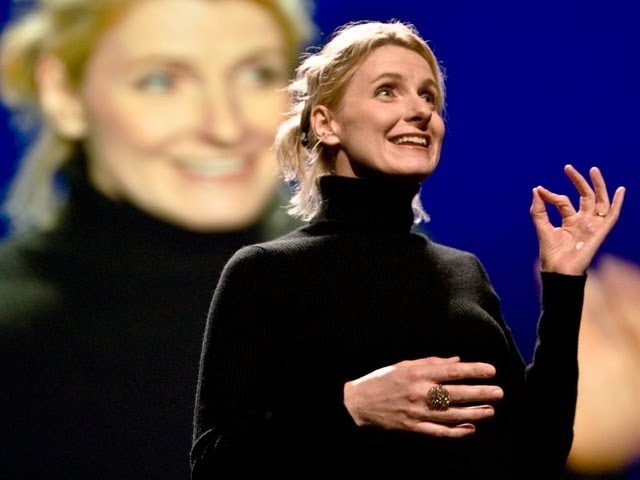
What makes her message deeply comforting is the way she talks about fear without turning it into a dramatic obstacle. She acknowledges it as something every artist feels, but she encourages you to move alongside it rather than waiting for it to disappear. That perspective helps you reconnect with the part of creativity that feels normal rather than overwhelming. It shows you that fear is not a sign that you are failing. It is simply part of the emotional landscape of making something new.
Gilbert’s talk is one you absorb slowly. It settles into your thinking in small ways. You may notice yourself approaching your next work session with a lighter heart or with less urgency to prove something. Her message helps you focus on the act of showing up rather than the pressure of performing. That shift alone can bring a new sense of steadiness to your practice, especially during moments when creativity feels more like a burden than a gift.
If you are in a phase where every step forward feels heavy, this talk offers a softer foundation to stand on. It reminds you that creativity is a long relationship, one built on patience and trust rather than pressure. It teaches you to show up with loyalty to your process instead of fear of your outcomes, and that kind of clarity can change the way you see your work entirely.
2. Phil Hansen on Finding Creativity When You Feel Limited
Talk: “Embrace the Shake” by Phil Hansen

Phil Hansen’s talk carries a kind of quiet strength that resonates deeply with artists who have ever felt restricted by circumstances beyond their control. His story of developing a permanent hand tremor and believing it marked the end of his artistic life feels painfully familiar to anyone who has watched a personal challenge threaten their progress. Yet the way he turns that limitation into a source of creativity shifts something inside you. It helps you see limitation as a possible invitation rather than a dead end.
Hansen explains how the tremor forced him to rethink the way he made art, and that reframing becomes the heart of his message. He started creating with techniques and materials he never would have tried if circumstances had stayed comfortable. That realization is powerful because it applies to every artist, regardless of medium or experience. When he describes how working inside limitations opened new pathways, it becomes easier to look at your own challenges with less frustration and more curiosity.
The examples he shares come across with a humble ease. He talks about experiments that were messy, imperfect, and often confusing, but they pushed him toward new discoveries. Hearing his calm, thoughtful descriptions makes you reflect on the moments you may have given up on an idea too soon simply because it did not look the way you expected. Hansen’s talk encourages you to slow down, accept constraints, and treat them as partners rather than obstacles.
One of the most reassuring parts of this talk is how it normalises imperfection. Hansen reminds you that your work does not lose value when it grows through difficulty. In fact, many creative breakthroughs begin in moments where you feel out of control. His story offers a gentle reminder that the path to meaningful art rarely follows a smooth line. It bends, shifts, collapses, reforms, and somehow becomes stronger.
When you finish listening, you may find that you relate differently to your own limitations. They no longer feel like a barrier that needs removing. Instead, they feel like a part of your creative fingerprint, something that influences your work in ways you may not understand yet. Hansen’s talk gives you a healthier, more compassionate way to view the challenges you carry.
3. JR on Why Art Still Reaches People When Words Cannot
Talk: “My Wish: Use Art to Turn the World Inside Out” by JR

JR speaks about art with a sincerity that feels refreshing. His work is rooted in real people, real moments, and real emotions, which gives his storytelling a grounded quality. When he explains why visual images can reach people in ways spoken language sometimes cannot, it feels less like a lofty idea and more like something you have felt but never fully articulated. His talk reminds you that art often carries meaning that slips past logic and lands directly in recognition.
Artists often carry quiet questions about whether their work matters beyond their personal circle. JR addresses those doubts gently by showing how creative work creates ripple effects, often in ways that are subtle and unmeasurable. He talks about connection without turning it into something overly sentimental. Instead, he describes simple moments where people feel seen, understood, or acknowledged through art, even when nothing is said aloud.
What makes his message compelling is how grounded his examples feel. He speaks about everyday people reacting to photographs pasted on streets and buildings, and those reactions highlight a universal truth. Art has the ability to mirror parts of ourselves that we do not always know how to express. JR’s approach focuses on human stories, and that makes his talk resonate strongly with artists who want their work to engage with the world authentically.
This talk leaves you reflecting on the quiet power your work might hold even when you cannot see it directly. It encourages you to believe that art can influence and comfort people in their own ways, at their own pace, without needing validation or grand outcomes. JR’s message is a reminder that your art does not have to be monumental to be meaningful. It simply needs to be honest.
Listening to him gives you a renewed appreciation for the way art travels. It moves into spaces you cannot access, into conversations you do not hear, and into memories you were not present for. That alone reinforces the value of creating with intention. Even the smallest artwork can become a touchpoint for someone else’s understanding of themselves or their world. JR’s talk helps you trust that your work has a place, even when you cannot see where it lands.
4. Adam Grant on Rethinking Originality in Everyday Creativity
Talk: “The Surprising Habits of Original Thinkers” by Adam Grant
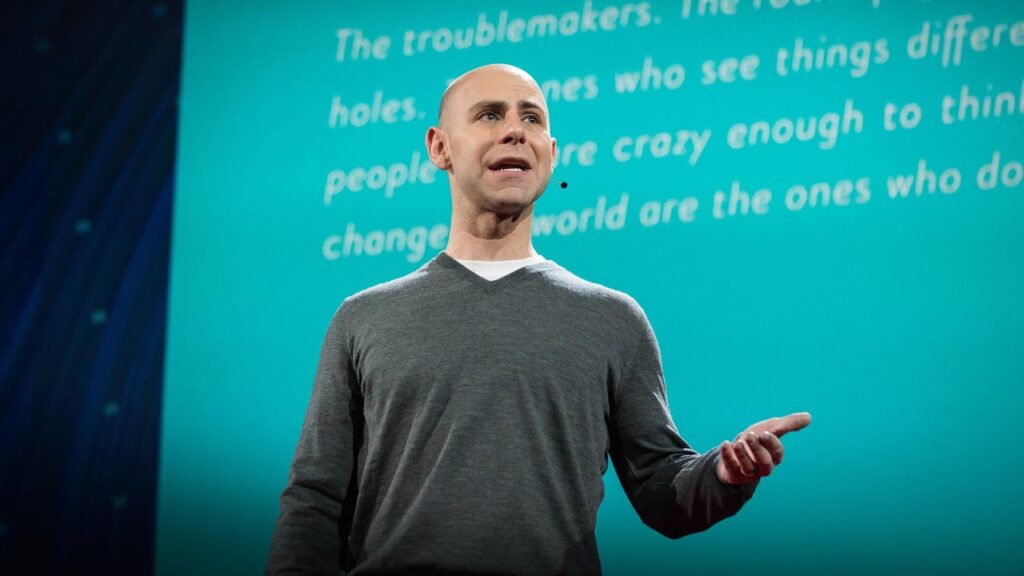
Adam Grant approaches creativity with a perspective that quiets a lot of internal noise. He explains originality in a way that removes pressure rather than adding to it. Many artists believe they must produce constantly or move quickly to be considered original. Grant calmly breaks down why that belief is misplaced. He shows that many great ideas begin slowly, grow uncertainly, and evolve through hesitation, not confidence.
One of his most helpful contributions is the reframing of procrastination. Instead of presenting it as a flaw, he shows how it can create space for ideas to mature. This does not excuse avoidance, but it highlights how creativity often thrives in moments of pause. Hearing this helps you stop treating every delay as a failure. Instead, you begin to see it as part of the natural rhythm of your thinking, something that might be giving your idea time to grow.
His examples feel relatable because they come from real people who struggled before they succeeded. He does not glorify their achievements. He breaks down the process behind them. This approach makes creativity feel accessible instead of mystical. When he describes the slow build of an idea or the uncertainty that often comes before clarity, you recognise patterns in your own practice that once felt like problems.
Grant’s message becomes especially grounding when he talks about doubt. He explains that doubt does not mean you lack originality. It means you care enough to question your own work. That shift in understanding can quiet the internal voice that keeps insisting you are not doing enough. It helps you recognise that creativity does not depend on confidence. It depends on curiosity, persistence, and willingness to experiment.
By the end of his talk, you may find your relationship with your own pace softening. Grant gives you permission to move slowly, think deeply, and revise freely. These qualities do not weaken originality. They strengthen it. His talk helps you trust your process without comparing it to the speed or success of others, and that clarity can make your next creative step feel more grounded.
5. Shonda Rhimes on Reigniting Your Creative Energy
Talk: “My Year of Saying Yes to Everything” by Shonda Rhimes

Shonda Rhimes speaks about burnout with an honesty that feels rare. She describes losing her creative spark while continuing to produce at an extraordinary pace, and the vulnerability in her story is what makes the talk resonate. Artists often push through exhaustion without acknowledging how drained they feel. Rhimes names the exhaustion directly, and in doing so she offers a kind of emotional relief. You realise you are not alone in feeling depleted.
One of the strongest parts of her message is how she finds her way back to joy. It is not through grand gestures or dramatic decisions. Instead, it grows slowly through small, unexpected moments she once ignored. She talks about saying yes to experiences she previously pushed aside, and how those yeses slowly brought back a sense of connection to life. This framing helps artists understand that creative renewal does not arrive instantly. It often comes from tiny shifts that build over time.
Her perspective on work is also striking because it separates creative identity from output. Rhimes explains that your worth does not disappear when your spark dims. That truth feels grounding for any artist afraid of slowing down. She encourages you to recognise rest as a responsible part of your practice rather than a sign of weakness. That shift can deeply change how you approach your creative energy.
What makes her talk powerful is the way she describes joy not as something fragile, but as something that can be rebuilt. She reminds you that the spark you think you lost may not be gone. It may simply be waiting for room to breathe. That message can soften self criticism and help you move back toward your work with compassion rather than pressure.
By the end, you feel encouraged to look at your own creative life with more kindness. Rhimes’s story shows that renewal is possible even when you are convinced the spark is gone. Her talk helps you recognise that energy returns when you make space for it, when you give yourself permission to experience life as a person rather than a constant producer. It feels like a reminder every artist needs at one point or another.