
Why Rest Should be Part of Your Creative Process

In 2019, researchers found that the average person spends about 47 percent of their waking hours with their mind wandering. Half the time, we’re not where we physically are. And here’s the twist: those wandering moments , when you’re staring out a window, folding laundry, or waiting for the kettle to boil , are often when your best ideas sneak in. It’s not wasted time. It’s a built-in creative feature.
Think about the last time you solved a tricky problem. Chances are, it didn’t happen when you were hunched over your desk forcing it. It happened in the shower, or on a walk, or right as you were drifting to sleep. Those quiet pauses, the ones we often dismiss as laziness or distraction, are actually where the brain stitches ideas together.
The art world loves to glorify hustle. “Always be creating, always be producing.” But science , and lived experience , disagree. Creativity doesn’t thrive on endless grind. It thrives on cycles. Input, rest, and output. Skip the rest part, and you break the loop.
We treat rest like a reward, something you “earn” after the work is done. But what if rest isn’t the afterthought, but the secret ingredient? What if it’s not indulgence but maintenance, the same way sleep isn’t a luxury but a biological requirement?
So before you guilt yourself for not “doing enough,” pause and consider this: maybe your brain is working hardest when it looks like you’re doing nothing at all.
When Doing Nothing is Actually Doing Everything
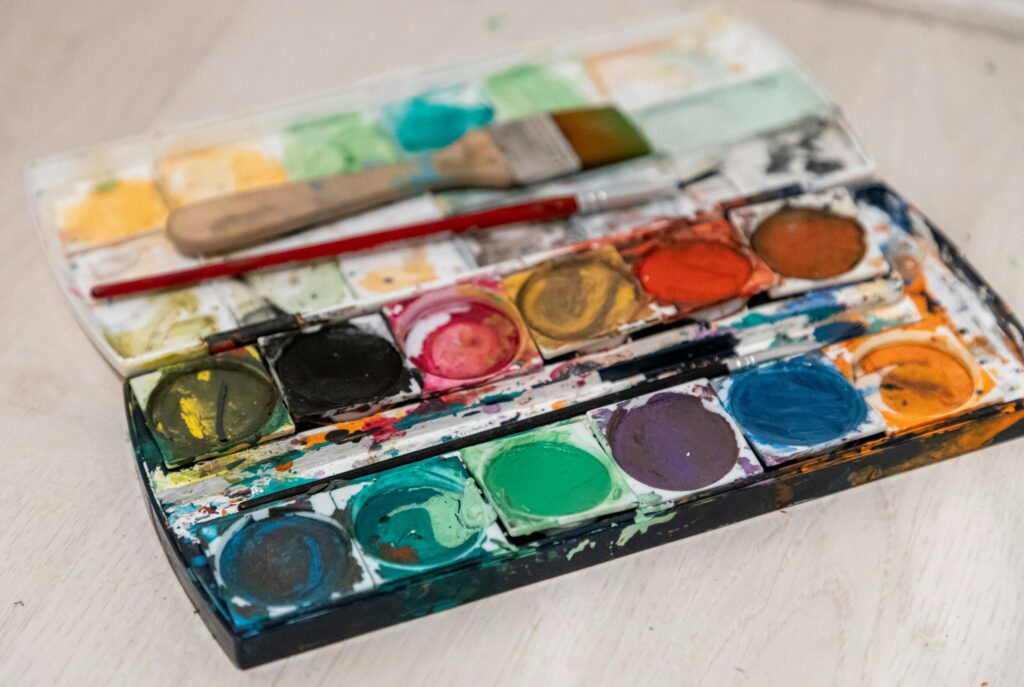
We’ve all had those moments where you’re lying on the couch, staring at the ceiling, and suddenly an idea you’ve been chasing for days drops into your head like it was waiting for you to stop trying. That’s not coincidence, that’s brain science. Your brain’s default mode network kicks in when you’re resting, and it’s built for connecting dots.
Most of us, though, feel guilty in these moments. We think we should be working, producing, doing something visible. But here’s the irony: the thing we’re avoiding , stillness , is exactly the thing that makes creativity possible. Your subconscious needs breathing room to pull threads together.
It’s like baking bread. You can’t just keep kneading forever. At some point, the dough needs to rise. That rising stage looks passive, but it’s where the real magic happens. Without it, all you’ve got is dense, flat flour mush. Creativity works the same way. Rest is your rise.
The challenge is that rest doesn’t give you instant proof. When you’re working, you see words on a page or paint on a canvas. When you’re resting, you don’t have receipts to show for it. But the payoff sneaks up later, when your “aha” moment finally shows up unannounced.
If you reframe rest as an active stage in the creative cycle, guilt falls away. You’re not skipping work, you’re doing the invisible kind of work. The brain is buzzing, even if your hands aren’t. That shift in perspective changes everything.
So the next time you’re tempted to feel lazy for staring out the window, remind yourself: you’re not wasting time. You’re baking the bread of your next big idea.
Why Breakthroughs Happen in the Shower (and Not at Your Desk)
Be honest: when was the last time your best idea showed up while glaring at a blank screen? Probably never. But the shower? On a walk? Folding laundry? That’s where the breakthroughs actually sneak in.
It feels random, but it’s not. When your brain switches off from focused thinking, it slips into what scientists call “diffuse mode.” That’s the state where far-flung ideas, memories, and observations quietly collide. And collisions are the birthplace of originality.
Here’s a fun twist: water, in particular, is a catalyst. A recent study showed creative problem-solving skyrockets when people are in the shower. Why? Because showers combine relaxation, gentle sensory stimulation, and privacy. You can’t doom-scroll, you can’t overwork , your brain is free to wander.
But we rarely build this space on purpose. We force ourselves to “grind through” blocks, thinking more effort will produce results. What actually helps? Backing off. Ideas don’t like being shoved; they like being invited.
Try treating your rest breaks as brainstorming sessions you don’t have to control. Take a walk without podcasts, let your mind drift in the shower, fold laundry with no background noise. Notice how ideas suddenly slip in sideways when you stop grabbing for them.
Creativity is less about “squeezing harder” and more about “loosening the grip.” That’s why your greatest flash of inspiration often arrives when your hands are wet, your hair is full of shampoo, and you’re nowhere near your notebook.
The Hustle Hangover: Why Overwork Kills Creativity
There’s a strange badge of honor in creative circles: bragging about pulling all-nighters, working weekends, and “living on coffee.” It feels heroic , until the burnout hits. And here’s the truth: an exhausted brain doesn’t make better art. It just makes faster mediocrity.
Think of your mind as a sponge. You can only squeeze out what’s soaked in. If you never stop to let it refill, you’ll keep wringing out the same stale drops. Rest is the soaking part, and without it, your work starts to taste dry and recycled.
The irony is that hustling harder often feels safer. More hours = more productivity, right? But in creative work, there’s a curve. Push past your mental peak, and quality falls off a cliff. Suddenly you’re producing more words, strokes, or designs, but each one is emptier than the last.
And the hangover isn’t just creative, it’s emotional. Burnout strips away your joy. The very thing that pulled you to create , curiosity, excitement, passion , gets buried under fatigue. What’s left feels like drudgery, not art.
Rest doesn’t just recharge your body; it protects the spark that made you want to create in the first place. It’s the secret fuel of sustainable creativity, the difference between a short sprint and a lifelong practice.
So the next time you feel proud of “pushing through exhaustion,” ask yourself: am I creating something meaningful, or am I just staggering toward burnout with a paintbrush in hand?
Daydreaming: The Studio You Didn’t Know You Had
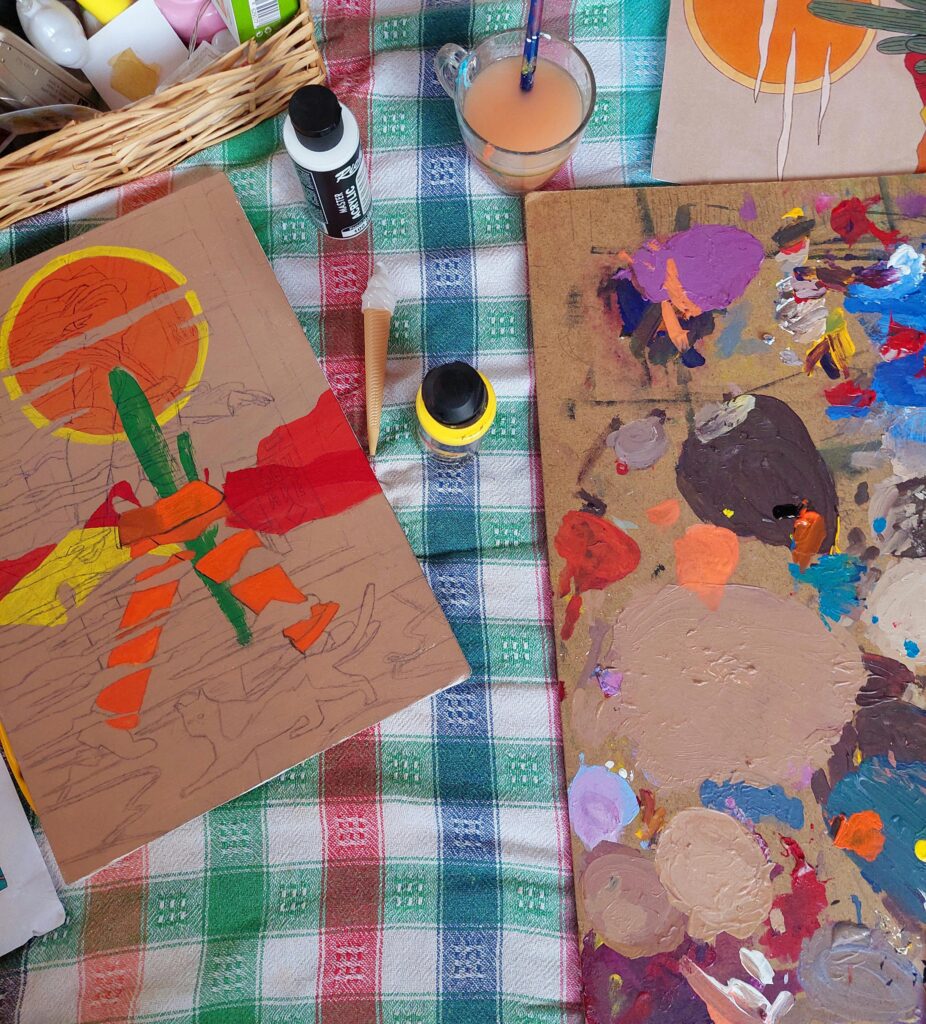
Remember staring out the classroom window as a kid, completely lost in your own head? Teachers scolded it as “not paying attention.” But in reality, you were rehearsing the most important creative skill of all: letting your mind wander.
Daydreaming gets a bad rap because it looks idle. But research shows that people who daydream regularly are often better at problem-solving and creativity. Why? Because the wandering brain builds bridges where the focused brain only builds walls.
For creatives, daydreaming is a hidden studio. It’s where you storyboard future projects, test wild scenarios, and stitch together scraps of memory and imagination into something new. It’s messy, unstructured, and exactly what art thrives on.
The trick is to stop treating daydreaming as a waste of time. Instead, schedule it. Block out walks, window-staring, or unstructured downtime into your creative calendar. Treat it like sketching , not visible output, but essential groundwork.
Here’s the key: daydreaming is rehearsal. It’s not the final performance, but it shapes how the performance will unfold. When you finally sit down to work, you’ve already toyed with half the ideas in your mind’s rehearsal room.
So the next time your brain drifts mid-project, don’t yank it back immediately. Give it space. It might just be drawing the blueprint of your next masterpiece while you think it’s “slacking off.”
Rest as Collaboration: Letting Your Subconscious Do the Heavy Lifting
We often think of creating as a solo effort , you versus the canvas, the draft, the blank page. But what if half the work was happening behind the curtain? Your subconscious is your quietest collaborator, and it only shows up when you rest.
Ever notice how solutions pop up “out of nowhere”? That’s not random. While you’re resting, your subconscious is sorting, filing, and testing possibilities. It’s like having an assistant who works the night shift while you sleep.
The problem is, most of us don’t trust that process. We panic when progress isn’t visible, so we double down on control. But the truth is, your subconscious hates being micromanaged. It works best when you step back.
Rest is the invitation. It’s how you tell your subconscious, “I trust you, take it from here.” That’s why naps, breaks, and walks feel so strangely productive. They are. You’re outsourcing the work.
Think of it like planting seeds. You can’t tug on them every five minutes to make them grow faster. You plant, water, and wait. The subconscious is the soil , it does the work invisibly until one day, a sprout appears.
If you start viewing rest as a form of collaboration, you’ll see it differently. You’re not stopping work, you’re handing the baton to a partner who’s been quietly waiting for their turn.
If rest is crucial to your creative cycle, why not give yourself a tool that helps you truly step away without guilt? The Artist Income & Expense Tracker Template from ArtsToHearts is a practical helper that frees your brain from financial nagging. By automating your earnings, spending, and savings tracking, it gives you clearer boundaries so when you rest, you actually rest. Think of it as setting all the little money-worries on pause so your creative mind can breathe freely.

The Myth of Inspiration Striking Like Lightning
We love the story of inspiration hitting out of the blue , the genius waking up with a fully formed symphony or a painting idea. But here’s the spoiler: lightning doesn’t strike randomly. It strikes when the ground is charged. Rest is how you charge it.
When you’re tired, overworked, or overstimulated, you can’t hold a charge. Your brain’s connections are scattered, your creativity fried. But give yourself proper rest, and suddenly you’re receptive. The ideas don’t come from nowhere; they come from your rested brain being able to notice them.
The myth of lightning-strike inspiration makes us overvalue hustle. We think if we just “push harder,” we’ll catch the spark. But sparks don’t land on soaked ground. They need dryness, space, and readiness , all things rest creates.
What’s more, rest also creates patterns you can’t see while grinding. That lyric, that brushstroke, that solution to a design problem… it’s been floating in your mental atmosphere all along. Rest makes the air clear enough for it to land.
The better metaphor for inspiration isn’t lightning at all. It’s a puzzle piece falling into place. And puzzles don’t solve themselves while you’re forcing them. They solve themselves while you’re taking a step back.
So if you want more “lightning,” stop waiting for the storm. Rest, recharge, and let your creative ground get ready. That’s when the spark knows where to land.
Why Your Brain Works Harder When You’re Asleep Than When You’re Awake
Here’s the wild part: during sleep, your brain is actually firing more actively in some regions than when you’re awake. That’s right , your brain doesn’t snooze just because you do. Instead, it starts replaying your day, reorganizing memories, and shuffling around ideas you didn’t even know were connected. What feels like rest on the outside is overtime work on the inside.
Think of it like a backstage crew after a theater show. The audience leaves, the lights dim, and suddenly an army of people rushes in to rearrange props, sweep up confetti, and set the stage for tomorrow. That’s your brain at night, quietly piecing together insights and sweeping away unnecessary clutter. Without this stage crew, tomorrow’s performance falls apart.
Artists, writers, and inventors often credit dreams for sparking breakthroughs. Paul McCartney dreamt the melody for “Yesterday.” Salvador Dalí used “micro naps” to catch surreal images floating in his half-sleep state. These aren’t myths, they’re living proof that rest is an active collaborator in creation.
Yet so many creatives still treat sleep as optional. Pulling all-nighters to finish a piece feels romantic until you realize you’re robbing your future self of clarity. Sleep is not lost time, it’s rented time , and the payback comes in sharper ideas and clearer instincts the next day.
If you’ve ever woken up with the answer to a problem you wrestled with the day before, you’ve experienced firsthand how rest outperforms grind. It’s your brain saying, “I’ve got this, but I’ll need a few hours off-duty.”
So the next time you’re tempted to sacrifice sleep for “just one more hour of work,” ask yourself: would you fire your most reliable collaborator? If the answer is no, close the laptop and let the night shift brain crew clock in.
The Paradox of Doing Nothing and Achieving More
We live in a culture where productivity is measured by visible output. Emails sent, canvases painted, words typed. But what if the moments when you appear to be doing absolutely nothing are the ones pulling the heaviest creative weight? It sounds backwards, but science keeps backing it up.
Neuroscientists call it the default mode network , the brain’s system that kicks in when you’re daydreaming. It’s where disconnected thoughts suddenly form links. You’re folding socks, and bam, you figure out how to solve that color composition problem in your latest piece. The irony? You can’t force this mode. It only shows up when you step back.
Historically, many great thinkers relied on this paradox. Archimedes wasn’t scribbling on parchment when he shouted “Eureka!” He was in the bath. Newton didn’t discover gravity by grinding through equations. He was chilling under a tree when the apple fell. Genius often masquerades as idleness.
The problem is, in today’s hustle culture, “doing nothing” feels guilty. If your hands aren’t busy, you assume you’re falling behind. But what you’re really doing is giving your brain the space to connect the dots no spreadsheet could line up for you.
So, maybe the next time you sit on your porch, sip coffee, and just stare at the sky, you’re not wasting time. You’re inviting insight. You’re basically scheduling a brainstorming session with your subconscious.
And here’s the secret: those who embrace strategic nothingness often end up doing more in less time than those who grind endlessly. Turns out, the laziest-looking creatives often have the smartest process.
Why Overworking Can Make Your Art Look Tired Too
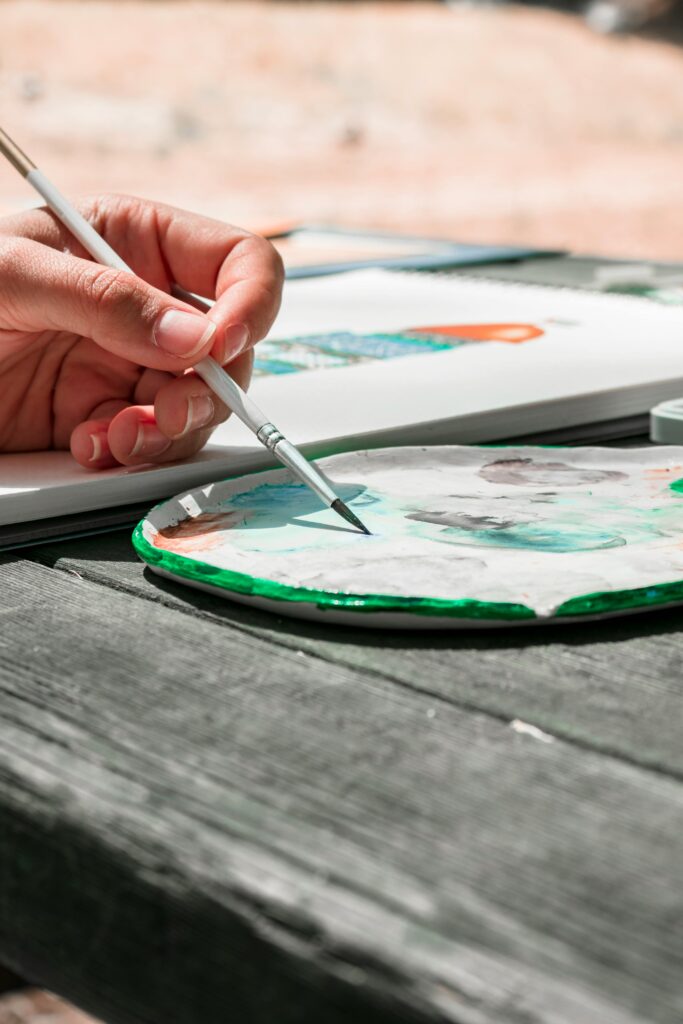
You’ve seen it before. That painting with too many brushstrokes, that song with one verse too many, that novel dragging on past its natural ending. Sometimes, the work isn’t weak because you lacked effort , it’s weak because you poured in too much. Overworking drains not just you, but the art itself.
When you ignore rest, you start chasing perfection in circles. Your eyes blur, your standards wobble, and instead of elevating your work, you flatten it. What you think is refinement might actually be erasure of the very spark that made it powerful in the first place.
Many seasoned artists swear by the “walk-away” method. They step back mid-process, sometimes for hours, sometimes for days. Then they return with fresh eyes and realize half the tweaks they were about to make weren’t necessary at all. Rest protects the work as much as it protects the maker.
Consider how audiences experience art. They don’t see the 57 versions of a sentence you obsessed over. They only see the final balance. But if your exhaustion shows through, they feel it. A painting can look labored. A song can sound forced. Energy translates directly from the creator to the creation.
Rest isn’t laziness in this context, it’s editing. It’s knowing when to pause before you add one layer too many. It’s trusting that leaving space is just as important as filling it. Without pauses, your art risks suffocating under the weight of your own effort.
So, if your project starts to feel heavy, tired, or forced, don’t push harder. Instead, push back from the desk. Go nap, walk, or breathe. Your art doesn’t need another revision, it needs your restored energy.
Rest as a Radical Act in a World Obsessed With Output
In a society that worships productivity, choosing rest can feel rebellious. You’re basically saying, “I refuse to measure my worth by how much I produce.” For creatives, this is radical self-preservation. Because unlike machines, humans can’t endlessly churn without consequence.
The hustle myth tells us that constant output is the only path to success. But history remembers not the busiest artists, but the most resonant ones. And resonance often comes from those who knew when to retreat, refill, and then return with something meaningful.
By claiming rest, you’re not opting out of ambition, you’re investing in its longevity. Burnout is not a badge of honor, it’s a sign of mismanagement. Rest is the counterbalance, the silent protest against a culture that confuses exhaustion with dedication.
Look at movements like The Nap Ministry, which reframes rest as liberation. It’s not about pampering, it’s about reclaiming your right to exist beyond constant work. For creatives, this reframing can be life-saving. It allows you to protect your spark before it burns out.
The truth is, rest doesn’t make you less professional, less ambitious, or less serious about your craft. It makes you sustainable. It ensures your career is not a sprint but a marathon where the joy doesn’t run out halfway through.
So, next time you feel guilty for stepping away, flip the script: you’re not wasting time, you’re practicing resistance. Rest is your quiet form of rebellion, and in the long run, it’s what will keep your art alive.