


👁 267 Views
Watch & Listen to this podcast Episode.
Welcome to this episode of Arts to Hearts Project with host Charuka and guest Sonia Borrell. The talk is about how someone who loved museum magazines as a kid grew into a global collector and curator. Sonia shares how she buys work that truly resonates with her, why she advocates for women artists, and how she transitioned from a career in real estate to being a full-time collector. She also walks us through lending pieces to museums, curating a show in Shenzhen, and using simple tools like tours and stories to help visitors learn.
Charuka adds the maker’s view. She asks the questions many of us have about money, fear, and entering the art world without a background in it. She also shares why access matters through prints, catalogues, and small items that let more people live with images every day.
Key takeaways are clear. Start where you are and look a lot. Support women artists and new voices. Buy what truly speaks to you and be patient. Build real ties with artists and galleries. Continue learning, move pieces around, and let art be an integral part of your daily life.
This set effectively summarizes and segments the detailed content of the interview into easily navigable chapters for viewers
00:00 Introduction to Sanya Borrell
01:53 Advocacy for Women Artists
03:11 Sonia’s Artistic Journey
08:07 Becoming a Collector
12:04 Navigating the Art World
15:00 Transitioning to Full-Time Art Collector
19:40 Impact of COVID-19 on Art Collection
23:12 Artworks in Museums and Their Significance
25:19 Creating Engaging Art Exhibitions
26:53 The Art of Choosing Artworks
29:31 The Emotional Connection with Art
31:57 The Role of Social Media in Art Discovery
33:58 The Artist-Collector Relationship
38:15 The Passion for Art and Advocacy
Charuka (00:01.283)
Welcome to the podcast, Sanya. I’m so happy to have you on the Arts2House podcast with us today.
Sonia Borrell (00:08.129)
Thank you, Charukka. Thank you for having me here today. It’s an honor to be here in your podcast.
Charuka (00:11.563)
It is a complete honor for me to have you here. We’ve chatted before. I know I really appreciate you being traveling and spending the time for us. I really appreciate it.
Sonia Borrell (00:27.864)
Thank you. Yes, I was yesterday, I just arrived from London. I was helping a little bit on the promotion of the Women in Art Prize. And it has been really, really rewarding and very, very nice to help all these women artists that this year incorporated the International Prize. So I’m very happy for all these women artists that they got their awards.
Charuka (00:37.464)
Yeah.
wow.
Charuka (00:46.787)
Bye.
Charuka (00:51.019)
I love that. You’re a huge advocate for women,
specifically in the arts.
Sonia Borrell (00:57.176)
Sorry, I think there is a problem with the sound because I couldn’t hear you well now.
Charuka (01:02.305)
Yeah, yeah. Can you hear me now?
Sonia Borrell (01:06.176)
Now, for instance, your image is not 100 % clear to me.
Charuka (01:10.595)
I can try and switch my internet once and let’s see if that works.
Sonia Borrell (01:22.636)
because it was perfect until you start recording.
Charuka (01:33.718)
Does this work better?
Sonia Borrell (01:35.906)
Yeah, better. Yeah, because everything was perfect when you start recording, but when you move a little, it becomes a little bit pixelated, the image.
Charuka (01:39.808)
the recording I also felt that.
Charuka (01:45.185)
Your voice was also lagging. Now it’s okay?
Sonia Borrell (01:48.874)
Mm-hmm. Yeah, but I still see you a little bit pixelated, okay?
Charuka (01:53.44)
That’s okay because we’ll go on the clouds so the video will come out differently. This is only a live recording. You can hear me well. Perfect. That’s great. Perfect. So my question, you’re a big advocate for women, specifically women artists. What brings you, what motivates you to be there?
Sonia Borrell (01:58.305)
Okay. Okay, perfect. But I can hear you well. Yeah.
Perfect.
Sonia Borrell (02:14.476)
Yeah, so for me, being a young girl, always wanted to be an artist when I was young, motivated me. Yes, yes, I wanted to be an artist, but I’m not talented enough. But I think I’m talented to recognize good art.
Charuka (02:20.362)
You did!
Over.
Charuka (02:27.266)
Isn’t that a skill of art is only? Just a different kind of art.
Sonia Borrell (02:33.376)
Yes, exactly. So I feel in the heart, I feel like an artist because I am a collector, I’m an advisor and I’m an author. I like to, my part in art is to support people, you know, and I support male artists and female artists, but I’m really an advocate for female artists because I feel that they are unrecognized.
And there are a lot of artists that are super talented that now with the years, they are being more noticed, you know, and I feel like the new generation needs more support. So that’s why I’m supporting initiatives like the Women in Art Prize, you know, and I am mentoring as well a lot of artists. I write a lot of articles about the art world and most of the articles, I write more about female artists than male artists.
Charuka (03:08.172)
Yeah.
Charuka (03:12.267)
Yeah.
Charuka (03:22.593)
Yeah.
Charuka (03:27.242)
Yeah, yeah.
Sonia Borrell (03:27.694)
to because I want to make the difference because it’s a little bit decompensate now.
Charuka (03:32.254)
Yeah. Can you take me through your own personal journey? brought you here? Art collecting, it’s not something that everybody gets into. Specifically, how was it growing up? What’s been your journey reaching here, Asoka?
Sonia Borrell (03:49.646)
So when I was young, I always loved art. So I was the typical girl going to the bookstore and buying the magazines that you collect to have the encyclopedia. So I was collecting Leonardo da Vinci, Barcelona. Barcelona in the seventies, okay? So I was very enthusiastic about the big masters. I think my journey started with Leonardo da Vinci.
Charuka (03:53.632)
Okay.
Charuka (04:03.583)
This is Barcelona.
Yes, you. my goodness.
Sonia Borrell (04:17.108)
buying those magazines, reading about and trying to copy his art. Then I evolved more into Impressionism because I thought that it was like really a movement that I really liked because it was so innovative for their time.
Charuka (04:17.239)
Wow.
Charuka (04:24.476)
Sonia Borrell (04:44.768)
that the people really, the people in the fine arts or the academy, they hate it. And I thought it was like so remarkable that they managed to get through, you know? So I really liked it. And one of my favorite artists was Edvard Munch. And it was incredible because in 1995, I was like copying different paintings of Edvard Munch. And then I decided to move to London. And I moved to London.
Charuka (04:53.057)
Yeah.
Charuka (05:01.043)
Okay.
Sonia Borrell (05:13.65)
And in the first weekend, I meet one guy that became my husband, Trigva, you know? And he was from Norway. And I was like, my God. I was like, I was studying Edvard Munch before I go to London. And the first guy I meet is a Norwegian guy, you know? It was incredible. So I started dating him and then we went to Norway one weekend and he had to work. So I spent the whole weekend.
Charuka (05:17.535)
Hmm.
Charuka (05:25.376)
This
Yeah.
Guy you meet. Yeah.
Sonia Borrell (05:41.826)
going to the museums, which was very cool. It was like in January, you know? And I really enjoy it. And then I bought a book from Edward Munch. And then when I came home, I was all the time like trying to copy because for me, is about go to the museum, look, observe, buy the book, come home, read the book and copy the artworks. It was like this before. And then I always dream of being a collector, but I didn’t have the money to become a collector, you know?
Charuka (05:42.941)
music
Charuka (06:01.404)
Okay.
Charuka (06:11.069)
Yeah, One day you will. Yeah.
Sonia Borrell (06:11.649)
So I was like, one day I will be part of the art world. One day, one day, you know? But I knew I was not talented enough to become an artist, but I didn’t know if one day will have my own gallery or I will be a curator. I really want to be a curator, you know? But I never liked the gallery part of it, of sitting in the gallery waiting for people to come in. But I liked the aspect of the art, like when they come in, to explain them.
Charuka (06:27.039)
Yeah.
Charuka (06:38.11)
Yeah.
Sonia Borrell (06:38.433)
So I thought maybe I should be like a museum guide or tour guide in museums, know? Something like that. yeah. And then in the end, when I had a little bit of savings, I decided to start buying artworks. So one of the first artworks I bought, it was from Jaume Applensa, he’s a Catalan artist. And I bought like a kind of black painting, you know?
Charuka (06:41.872)
Yeah, taking people through. Yeah. That’s also like an exciting work.
Sonia Borrell (07:07.277)
And it was like, it was not like painting. It was like kind of resting between painting and sculpture. And it was like a half hive, glue on a kind of surface and surrounded by black iron. Very black, very black, you know, but I loved it. Then I was buying more like, I was from Spanish artists because I was from Barcelona and this is what I knew. I was buying, yeah, you know, the art that I knew.
Charuka (07:07.401)
Okay.
Charuka (07:19.132)
Okay.
Charuka (07:22.82)
Okay. Okay.
Charuka (07:29.651)
Yeah.
Sonia Borrell (07:34.636)
So I started buying from Miguel Macaya. They was more Barroco style artworks, know, bullfighters, animals. And then we evolved for different circumstances in life. We evolved more. I say we because my husband and I, always have been buying the art together and he always has been very supportive. Yeah, very, very supportive, you know? And then we evolved more into color.
Charuka (07:50.909)
and like.
together.
Yeah.
Sonia Borrell (08:01.536)
And then when I was in London, I always loved all these movements of street art, like Banksy and all the followers of Banksy painting on the streets and things like that. So I was always like the first one going to see, trying to see the artists, trying to meet them. You know, it was so exciting. Everything was super exciting. I was just very excited to meet the artists. And then I evolved into becoming very good friends with many artists, visiting them in their studio.
Charuka (08:08.116)
Yeah.
Charuka (08:11.71)
Hmm.
Charuka (08:15.721)
Hmm.
Mm.
Okay.
Sonia Borrell (08:30.525)
learning more, reading about art, being more, introducing the art world, getting to know more people. So I became like kind of a bridge. So helping artists to meet the gallerists, helping artists to go into shows. I started creating shows and helping the artists to be in those shows, group shows, solo shows. So I don’t know, it became like it was something not planned, you know?
Charuka (08:57.872)
Yeah, Do good.
Sonia Borrell (08:58.349)
I didn’t plan to do it, but it came so naturally, you know? And then one thing took me to Saudi Arabia, another thing took me to China. So now I create shows everywhere in the world, Saudi Arabia or China or in Europe, in London, in Paris, everywhere, really. I don’t have any preference, but I always choose the projects that they need to make the difference in the world, okay?
Charuka (09:02.824)
Yeah.
Charuka (09:08.986)
Yeah. Yeah, yeah.
Charuka (09:19.955)
Yeah.
Charuka (09:23.944)
Yeah.
Yeah, yeah. How do you decide that?
Sonia Borrell (09:28.479)
So I always feel, yeah, because I decided.
Charuka (09:32.158)
What does it feel like? This is the project I really want to pursue. Or this is the I want to curate or work with.
Sonia Borrell (09:38.806)
Okay.
Yeah, first I need to like the art. So if somebody proposed me artists that I don’t like, or I don’t feel identified, or I don’t connect, I say no. Because there are many, for instance, commercial galleries that they are contacting me. And they say, can you create a show with our artists, for instance? But if I don’t get identified with their gallery, I don’t want to do it. Because I don’t see that I can make the difference.
Charuka (09:53.342)
Okay.
Charuka (10:07.333)
Yeah.
Sonia Borrell (10:08.801)
I don’t want to make the difference only because I go there and I say hello to the people. want to make the difference because I have something to explain, because I see that those artists, they have a voice or their voice needs to be heard. So that I really like. So for instance, now recently this summer, I created a show in China, in Shenzhen, in a very big museum called the Sea Wall Culture Arts Center in Shenzhen.
Charuka (10:11.568)
Yeah. Yeah.
Charuka (10:16.903)
Yeah. Yeah.
Charuka (10:23.119)
Yeah. Yeah.
Charuka (10:32.007)
Okay.
Sonia Borrell (10:38.261)
And Shenzhen is a very big city with 17 and a half million inhabitants. Only half an hour drive from Hong Kong.
Charuka (10:43.375)
Okay.
which is pretty capital city.
Sonia Borrell (10:49.431)
So you get the audience from Mainland China. Yeah, you can go every day. If you are in Hong Kong, you just go to Shenzhen every day because only half an hour drive. It’s like going from Kensington in London to Newborn Street. It’s very short. It’s like the next town. And it has a lot of opportunities because in Mainland China now, there are a lot of people interested for art.
Charuka (10:58.064)
Yeah, half an hour.
Sonia Borrell (11:18.333)
and they are giving more opportunities to international artists and international curators to come and they open more doors to you to show and do like exchange of arts, you know, so you can show Chinese people how international art is thriving around the world. So what they want as well is like to open doors for them to show their art in other countries, you know, and I think it’s a wonderful thing.
Charuka (11:26.347)
wow.
Sonia Borrell (11:47.339)
when the people are so open to it and there are so many new museums and they give a lot of opportunities for the artists, for the creators, for the galleries to be present, you know, because art is the voice of the people and it can change a lot of things and it’s really touching the soul and the hearts of people. So for me, the projects they need to be that they’re touching the heart and the souls of people. And when the people come to my shows,
Charuka (11:47.589)
Yeah.
Charuka (11:52.881)
Nah.
Charuka (12:02.94)
Yeah.
Sonia Borrell (12:17.056)
They need to learn something. I don’t want the people to come and left empty handed. No, everything is educational, you know? So this is the way I choose what I do, you know?
Charuka (12:18.619)
Yeah.
Charuka (12:22.232)
Yeah. Yeah.
Charuka (12:30.397)
know, couple of things that come to my mind. And I’m going to be very real when I ask this. And it’s also very inspiring because where you were, let’s say, 20 years ago is where a lot of us could be right now. A lot of people, we all… I love collecting art. And like you said, I may not be able to buy the most expensive ones, but I’d really like to buy the ones that I love. because I come from India and my love for Indian craft and culture is really like…
I love to collect Indian folk art and, you know, crafts that are dying or modes that are dying. And women and, you know, matters that really speak to me. But not, you know, being, you know, just even thinking, being thinking like, you know, you want to be an artist is very dreading for a lot of us. Just being a part in sense of the art world, if you don’t come from it, right. I never came from the art world. I don’t know how I happened here.
I never, I really don’t know. But it feels intimidating. It feels intimidating because, you know, it feels like, you need to have money to be in, let’s say, you know, case one, I need to have money because what if I don’t make money as an artist? So I need to come from money to be able to afford this as a career also, like, you know, things have changed now, but let’s also be very true that it is, it takes time. Any career, this career can
pay you not today, it may take a lot more time and patience for you to be able to reach where you want. Or even a gallery, no work is easy, not being a gallery is not, but collecting art in itself is a very, is this dream in me, I think in all of us creatives. But it also feels overwhelming, it also feels not always something that you feel that you will be able to reach to.
From that, where you were, to where you are now, and these are two extreme, let’s say, extreme poles, right? What was the first, I want to ask you, what was the first time you started thinking like, this is getting serious, and this could become something, or you are, like, you know, I think, I don’t know, I still don’t call myself like an art collector.
Charuka (14:55.119)
But I’m sure like as an artist, there’s a point like even though artists are painting for a while, but there’s a turning point that an artist says, yeah, I am an artist and a lot of things start to feel fear. Like, did you have those moments? Did you have fear that, even I’m just, I don’t know if that happened, but I’m just asking maybe like, you know, feel, why am I putting this money, buying a painting or I could do something else, make a more practical decision, we all.
feel advised to. Like I’m just asking questions that I feel like a lot of us would be thrown at.
Sonia Borrell (15:26.666)
Yes, no, think, you know, I always was a collector as a hobby, but I was not like a serious collector until 2018. In 2018, I had a business in I had a real estate business and I was investing in real estate in Barcelona. so my job, like my full time job was to buy properties that they needed renovation.
Charuka (15:34.233)
Yeah.
Charuka (15:39.097)
Okay.
Charuka (15:43.832)
Okay.
Charuka (15:47.751)
wow.
Charuka (15:53.806)
and sell.
Sonia Borrell (15:55.135)
And then I was having a team renovate and then I had tenants. So one of the things I did every time I finished one apartment, I only rented the apartment to women. Because I want, yeah, because I wanted to help women because the apartments were small, normally two bedroom apartments. So normally where women alone or women with a baby or with a child, you know?
Charuka (16:08.186)
Charuka (16:19.96)
Yeah, yeah, yeah.
Sonia Borrell (16:21.79)
And then they are always very vulnerable when they don’t have a husband. It was more difficult. So I decided to interview these women and say, OK, if you connect and I feel that she’s a good fit for the apartment, I will give her 25 % discount. OK, so I can help her, but only one condition.
Charuka (16:24.793)
Yeah, has been, yeah.
Charuka (16:30.638)
Okay.
Charuka (16:39.392)
okay. You were curating back then also, looks like. You were matchmaking, like an artisan or collector. This is a woman with the apartment.
Sonia Borrell (16:46.996)
Yes, and only one can.
Yes.
Exactly. But then these women, had to leave after three years. So I gave them the opportunity to leave for three years, 25 % discount. So this can help, you know. So it was my philanthropic part of it to do it. But then in 2018, I, because you know, when you are like decorating and you are kind of in the creative world when you are decorating the apartments and all that.
I wanted to always decorate to buy artworks and to make them nicer, you know, and then you start buying more and more and more. And then I, yeah. And then I decided to sell my company and to invest all the money in art and be a full-time collector. And that moment was like, wow. It felt very risky. Okay. Because when you are in real estate, you have stones. Stone is a stone. It will always be there.
Charuka (17:24.396)
Yeah. Yeah. More and more and more.
Charuka (17:37.592)
Okay. How did it feel?
Charuka (17:45.689)
Okay.
Charuka (17:49.111)
Yeah. Yeah. Yeah.
Sonia Borrell (17:52.714)
The art, think about it, could be flooding, or could be a fire, or it could be stolen. I mean, it’s more risky, you know? And the art market is a very…
Charuka (18:01.271)
Yeah, not only in that, it’s like a stock market. Yeah, it’s variable. Yeah.
Sonia Borrell (18:06.692)
It’s very liquid, but the stock market is more liquid, but the art world is very liquid. But it was my dream. I wanted to be a part of the art world, and I thought, this is my chance. It’s like the chance came. So I took the opportunity and I said,
Charuka (18:11.051)
Yeah. Yeah.
Charuka (18:22.778)
What had happened that made you do this? Was it like, what is some event or something that?
Sonia Borrell (18:31.775)
I was
It was when my children grew up and I saw that my husband could be very independent, maintaining the, sustaining the family. My children were growing up. My first son went to university and we moved to London because on those days we were in Switzerland and then we went back to London. And then I saw, because we had been in London before for 11 years.
Charuka (18:37.122)
Okay.
Sonia Borrell (19:01.907)
And then we came back to London in 2018. And I thought, you know, this is my chance. I want to have time to meet all the artists, revisit them, to meet them again, to go to their shows, to be a part of them. And in reality, I don’t need money because I sold my company. I can dedicate my time to buy artworks and do whatever I want. So I started mentoring the artists for free. So I thought, okay, I don’t need to make a living. I mentor for free.
Charuka (19:09.677)
Pee-pee. Yeah.
Charuka (19:19.639)
Yeah.
Charuka (19:29.641)
This had, yeah. So I think one driving force at that point was that you had money that you didn’t need for a living and you were stable. So this didn’t feel like a career that you needed to do because you needed to make money. It was more because your heart was in that place.
Sonia Borrell (19:47.082)
Yes, and I thought, you know, I wanted to make it before I get too old to be able to enjoy it, you know? Yes, and I thought my children now, they don’t need me so much because they are grownups, you know, and they’re independent. They go to school alone or the university. They don’t need me. So during the day, I can do anything I want. So until they came back home, two of them, because the other one was at the university.
Charuka (19:52.414)
Old, you all feel that, yes. For sure.
Yeah. Yeah.
Charuka (20:10.295)
You with it.
Sonia Borrell (20:12.563)
I had from 8 in the morning until 5-6 in the evening I could do anything I wanted.
Charuka (20:16.58)
Sonia Borrell (20:20.019)
So it was great, but then the problem came, COVID.
Charuka (20:24.307)
goodness. Then.
Sonia Borrell (20:26.857)
And I was like, my God, what am I gonna do now? I can’t go, because my life was going every day out, going to different cities in London, around London or in different neighborhoods and looking at artworks, museums, exhibitions, and all of a everything was closed. I was like, I’m gonna get so bored now, you know? Then at the beginning, I start organizing the collection of artworks that I’ve been buying over the years.
I opened one account in one of these major platforms that the galleries use to organize the artworks. I took pictures, I put all the documentation and the collection became serious. And then I realized, my God, I have a lot of artworks. Because you don’t have them in one place, you don’t know. And then I was on a few hundreds.
Charuka (21:03.852)
because
Charuka (21:13.057)
Yeah.
Sonia Borrell (21:18.539)
But then the collection started growing and growing. Now I have over, I think I have like 450 hours or something like that. So it’s quite big now. But during the second lockdown of COVID, let’s say, I started talking to a lot of collectors because I think we became more comfortable. I moved back to Switzerland then for the second lockdown and I was sitting, instead of visiting people and artists in person, we were doing it online.
Charuka (21:18.797)
wow.
Charuka (21:25.863)
wow. Wow.
Charuka (21:36.331)
Okay.
Yeah.
Charuka (21:48.247)
Yeah.
Sonia Borrell (21:48.972)
And it was a lot of fun, you know? And then I made a lot of collectors online and we’re discussing about the same artworks we collect. And in fact, two of the collectors, one was from Saudi Arabia and the other one from China. And we were collecting the same type of artworks and we became partners for different activities that we do. We do activations in Saudi Arabia, we do activations in China and they are my partners and now we have been friends for like five years.
Charuka (21:50.935)
Yeah.
Charuka (22:02.688)
But…
Charuka (22:07.412)
wow.
Charuka (22:19.179)
Wow.
Sonia Borrell (22:19.259)
and they don’t know each other. yeah, we, yes, and it’s a lot of fun and it’s a lot of trust because when you know the people for a while and you have been sharing everything, all your information and helping each other to acquire artworks because you know the artwork is a little bit difficult and it’s quite hermetic. So when the people are private and they don’t want to disclose what they have in their collections and
Charuka (22:21.779)
Okay, you know both of them.
Charuka (22:31.273)
Absolutely.
Charuka (22:41.098)
Yeah.
Charuka (22:48.022)
Yeah.
Sonia Borrell (22:48.171)
They don’t want to disclose their jobs and things like that. Their work is hermetic and they don’t want to sell you certain artworks or they don’t want to let you in, you know? So during COVID, it was very difficult because I was used to that before. Every time I contact a gallery, was like they were sending me the PDFs and everything. I could buy anything I wanted. But all of a sudden, yeah, during COVID, everything was unavailable. And I was like, oh my God, people have turned crazy.
Charuka (23:03.244)
Yeah.
Charuka (23:08.423)
anything you got.
Charuka (23:13.609)
Yeah. What’s happening?
Sonia Borrell (23:17.353)
So many new people came into the art world because I’ve been in, yeah, I was in art from, I think my first artworks I bought in 2006, but I became more like a collector in 2008 for hobby and like a serious, serious collector in 2018, you know? And now I always, what I like is to see my artworks in museums. So I try to lend artworks to museums.
Charuka (23:19.201)
K-Me Networld.
Charuka (23:35.841)
Yeah.
Sonia Borrell (23:45.707)
and then I go and see them hanging there. Because then, yeah, it’s like incredible. It’s like, know when you have a son and finish the university and you go to the graduations, can I?
Charuka (23:45.846)
Oh wow. Cow how does that feel? It’s like…
Charuka (24:01.078)
I’m sure you, I mean I’m sure it must be like that because it’s such an incredible feeling.
Sonia Borrell (24:06.835)
Yes, it’s incredible because you you have managed that your child, because my artworks, they’re like my children, or my grandchildren, the artists, they are like my kids, and the artworks, they are my grandchildren. my God, they’re hanging in this museum, and they have hundreds of thousands of viewers every day. So it’s very important for the artist. So the long journey that it came from meeting the artist, mentoring the artist,
Charuka (24:15.456)
Till then.
Charuka (24:19.062)
Yeah.
Charuka (24:25.494)
Yeah.
Sonia Borrell (24:35.114)
and the artists making it in their world and being recognized in a museum. And all of sudden your artwork, they call you and say, can you lend the artwork to this museum? Wow. It becomes like, it’s incredible, you know? So now my next step, my next step started this year in China because now my partners have a lot of contacts with museums from the government and private museums in China.
Charuka (24:46.806)
Yeah, absolutely.
Charuka (24:55.379)
Okay.
Charuka (25:03.092)
Hmm.
Sonia Borrell (25:03.496)
So I curated my first exhibition in a public museum in China. Thank you so much. Wow, the opening was unbelievable. And then I say, okay, this exhibition has to be that I fulfill my dreams every day, you know? So the, yeah, it’s like for me.
Charuka (25:06.806)
Congratulations. How does it feel?
Charuka (25:22.506)
You’re not fulfilling your dream. Imagine what you’re fulfilling. You’re fulfilling your, but so many other artists would have part of this movement for you. It’s not a win for you. It’s such a big win for all of you. Imagine the impact that you’re making in so many other artists. For an artist, it’s a dream to be able to go into collections and go into museums and navigate that part of the world. And it’s through vessels like you that happens.
Sonia Borrell (25:32.681)
Yes.
Sonia Borrell (25:48.137)
Yes.
Charuka (25:51.055)
Imagine your hard work and your efforts and the impact that that has brought to artists.
Sonia Borrell (25:51.828)
Mm.
No, no, it has been incredible. Okay, so I decided, I say, how can I enjoy and make everybody enjoy the exhibition? So we have to make different things. So the opening will be divided in three days. So the opening, was three days. One day for the super VIP, another day for the VIP, and then another day for people that they want to be invited, influencers and people from their world, people from…
Charuka (26:09.639)
Okay.
Sonia Borrell (26:22.89)
local galleries in the city, people that are from Hong Kong and they want to come, like this. So we did tours explaining all the artis and artworks. So I say, I want to do it. And they told me, but many people don’t speak English. I say, okay, so I’m going to write everything in English. You translate it to Chinese and we’re going to do two tours, one in English and the people that speak English can follow me, like one hour tour.
Charuka (26:32.241)
all day.
Charuka (26:45.074)
wow.
Sonia Borrell (26:49.288)
And the words they don’t speak English, 15 minutes later the Chinese tour follows and says the same in Chinese.
Charuka (26:55.864)
wow. Imagine you navigating this.
Sonia Borrell (26:58.632)
So it was very, very… And the people loved it because, know, I never talk about things that the audience can see on Google or on the books. So every artist had a story from an artist and I wanted to explain. to hook the audience into the conversation, I always tell them that I’m gonna explain them a lot of gossips that I’ve learned by visiting the artists in their studios.
Charuka (27:24.789)
Yeah, the studios. Yeah. Okay. So what makes you itch?
Sonia Borrell (27:28.84)
Yeah. So I try. Yeah.
Charuka (27:33.95)
This is the work I want to collect. This is the artist that connects to me. How do you go directly? Do you go out? And specifically, think like socials, COVID, finding artists on the internet today and like, how is this magic happening for you? Sorry, my throat is really bad.
Sonia Borrell (27:51.733)
So, no, yes, I know that you have been with sore throat, but I see that you are well now, but yeah, when you talk to a lot, it’s like, yeah, so the way I choose the artworks for an exhibition or for my collection, I always think that the artwork is choosing me more than I choose the artwork, okay? So I have this, yeah, so for instance, when I go to a museum,
Charuka (27:54.436)
Yeah.
Charuka (28:15.034)
That’s true.
Sonia Borrell (28:20.37)
And I am very, you know, many times I go with my husband, instance, to an exhibition in a museum, you know, and I never follow an order. Like I know that the curators of the museum, they want you to start reading and then you continue in order, right? For me, no. For me, I enter, I look around and always there is one artwork that is calling me. So I go directly to that artwork. And when I go to a gallery, it’s the same. So if they invite me to an exhibition in a gallery, I never start for
Charuka (28:31.766)
once. Yeah. Yeah.
Charuka (28:43.495)
Okay.
Sonia Borrell (28:50.31)
looking at the first artwork, I look around like one minute and then, or two minutes, and then I go directly to the one I like, you know, because this artwork is calling me. So when I choose an artwork for my collection, I always want to choose the one that is calling me. And if it’s not available, I went, I wait for the next exhibition because I think it’s very important to have a connection with the artworks and with the artists because if I feel something…
Charuka (28:59.346)
Okay.
Charuka (29:16.295)
Yeah.
Sonia Borrell (29:17.618)
when I see an artwork, this is the one I want because sometimes other artworks they don’t give me any feelings because for me, I don’t know. I have this special sensibility that many times when I see an artwork, I hear music in my brain.
Charuka (29:20.148)
Yeah.
Yeah.
Charuka (29:28.551)
Yeah.
Charuka (29:32.676)
I can relate to it. Absolutely. Absolutely. When I look, I feel they can speak, they can talk, they can sing, dance.
Sonia Borrell (29:37.716)
So.
Sonia Borrell (29:42.686)
Yeah. Yes. So what I like is like a once I decided, okay, I’m going to buy this artwork and it’s available and I can buy it and I bring it to my house. Normally when there are new artworks coming, there are other artworks moving around the house. So every three months I have a handyman coming. Yeah. And then they’re helping me to move artworks and every artwork is in a different room. They have a different vibe, you know, and the room changed vibes as well.
Charuka (29:59.379)
creating space for more.
Charuka (30:10.481)
Yeah. Yeah.
Sonia Borrell (30:12.061)
So create a lot of conversations and I like, it gives me a lot of joy because when I was young, my parents, they didn’t like art. So all the walls were empty. So I had a lot of white walls and beige sofas and like very like, very, I don’t know, it was very minimalistic decoration, you know? And I always needed color. Yeah, I needed color, you know? I needed to see art work so.
Charuka (30:24.552)
Yeah.
Charuka (30:33.039)
Yeah, practical. Yeah, yeah.
Sonia Borrell (30:40.647)
Many times what I did is like I was painting and drawing and hanging them on the walls in my bedroom. Because it can so give me, I feel very lonely when I don’t have art around me. So if I can’t buy it or they don’t allow me to hang it, I painted myself and I could have an SL or two with my paintings, you know? So art gives me comfort, art makes me to reflect, makes me reflect and art is a very good companion in life.
And different artworks, when you move them around the house, they fit different necessities that you have. For instance, if you are sad, sometimes you need to look at black artworks because they make you happier. Because maybe it could look contradictory, when a very sad artwork talks to you, you see your life in perspective and think, OK, I’m not so bad. I can be, you know, or when you see very happy artworks,
Charuka (31:21.776)
Yeah.
Charuka (31:33.02)
back to it’s bad. wow, I love that. Yeah.
Sonia Borrell (31:40.529)
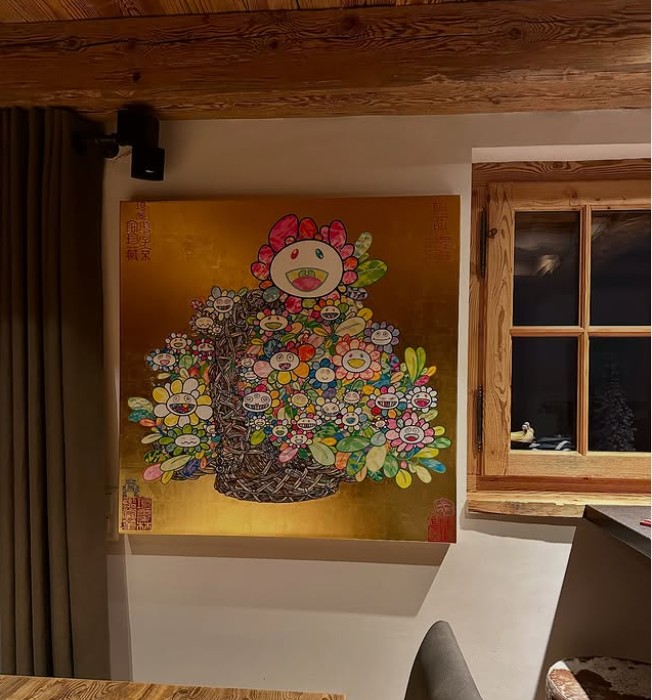
Yes, and when you see very happy artworks, I feel like this one I have behind is from Takashi Murakami. And it has a lot of facial expressions, you know? So this is like such a joy to see it, you know? So it’s like I always create conversations every day. Every day I study the artworks, I see different things. I love it. So I think the artworks more or the artists, sometimes artists are choosing me.
Charuka (31:59.1)
Yeah.
Sonia Borrell (32:08.67)
they contact me and say, hey, can you look at my artworks? What do you think? And then sometimes we even become friends, you know? Is a, I don’t know. Sometimes other artists, they tell me, hey, do you know I have an artist that’s a friend. Maybe you like his artworks or her artworks. I don’t know. I think Instagram opened up a lot. I didn’t want to have Instagram until 2019. But then when I started collecting seriously,
Charuka (32:12.196)
Yeah.
Sonia Borrell (32:37.841)
From 2018 to 2019, many galleries didn’t want to, I don’t know, take me seriously because I didn’t have an Instagram account. So I was like, my God, I need to have an Instagram account. So I created an Instagram account in 2019.
Sonia Borrell (33:08.583)
I think we… I lost you. I don’t know if I have to do something or you will come back.
Okay, yes. You disappeared and now you are back.
Charuka (33:15.711)
Sorry. Yeah, yeah, I’m back. don’t know what happened. Yes. Yeah. Sorry. You were talking about colors.
Sonia Borrell (33:27.891)
Sorry, so whatever.
Sonia Borrell (33:33.991)
Yes, so I think color is something that I learned with
Charuka (33:38.046)
No, no, no, you said artists also come to you and ask. That is where I dropped off.
Sonia Borrell (33:47.579)
You know, the connection is not very good, so I didn’t hear your question. Sorry.
Charuka (33:53.022)
Can you not hear me? Can you hear me now?
Sonia Borrell (33:56.955)
It’s very unclear. It’s unclear. The speech is unclear.
Charuka (34:01.884)
I don’t know what’s happened suddenly. The internet here, because there’s also a lot of better. Perfect. So we have a bad weather. There’s a lot of rainfall. But is it better? Can you hear me? I dropped off where you were saying a lot of times artists reach out to you. They ask you, you know, looking at their work.
Sonia Borrell (34:06.363)
No better, no better.
Sonia Borrell (34:14.941)
Mm-hmm.
Yeah, yes.
Charuka (34:29.605)
You can’t hear me.
good.
Sonia Borrell (34:34.673)
It’s breaking up. It’s breaking up.
Charuka (34:39.813)
make me try again.
Sonia Borrell (34:44.721)
Maybe if we try to reconnect?
Charuka (34:48.304)
I think it’s my internet only because there’s bad weather so it’s like a little hazy.
Sonia Borrell (35:00.381)
I don’t know. I don’t know. I think I checked mine. Mine is good. I think it’s your internet connection.
Sonia Borrell (35:15.847)
because your image is still.
Sonia Borrell (35:27.943)
I don’t know if I should go and come back.
Sonia Borrell (35:47.837)
Thank you.
Sonia Borrell (37:14.202)
Hello? I left and came back, now it’s good.
Charuka (37:16.039)
wonderful, wonderful, I can hear you well.
Sonia Borrell (37:21.328)
Perfect. Sorry, one second. I need to close the other riverside.
Charuka (37:22.726)
Perfect. Okay. So, very well. Bye.
Yes, yes.
Charuka (37:33.19)
No problem. Yeah, yeah. So I got dropped off while you were saying that artists also reach out to you. Like it’s also artists choosing you, like they ask you for your work. So we’ll start from there. Go ahead.
Charuka (37:59.129)
Yeah.
Charuka (38:06.682)
Yeah.
Charuka (38:13.977)
Yeah.
Charuka (38:25.462)
Yeah. What kind of artists and art really speaks to you the most? is there a particular like emerging or you like masters or like you know what kind of art do you like more? What kind of artists are you searching for? What’s your favorite way of finding artists?
Charuka (38:53.828)
Okay.
Charuka (38:57.892)
Okay.
Charuka (39:06.715)
Hell.
Charuka (39:10.406)
Yeah.
Charuka (39:15.481)
Yeah.
Charuka (39:23.705)
Yeah.
Charuka (39:29.87)
Yeah.
Yeah.
Charuka (39:38.457)
Bye twice.
Charuka (39:49.144)
Yeah, yeah.
Charuka (39:53.423)
Yeah.
Charuka (39:59.192)
Yeah.
I won’t.
Charuka (40:20.004)
Yeah.
Charuka (40:35.31)
Yeah.
Charuka (40:40.696)
Yeah.
Charuka (40:59.608)
Yeah. Yeah.
Charuka (41:05.316)
to the public.
yeah yeah
Charuka (41:37.571)
Yeah
Charuka (41:44.53)
wow.
Charuka (41:51.17)
I would be here. Yeah. Yeah.
Charuka (42:05.741)
Yeah.
No, I bite you.
Charuka (42:17.421)
Yeah.
Charuka (42:21.899)
Yeah.
Yeah.
Charuka (42:29.106)
So that works absolutely. Yeah.
Charuka (42:35.063)
Yeah, same. Yeah.
Yeah.
Charuka (42:46.66)
It’s also the joy, like you said, what it makes you feel like, even for someone like, I love collecting catalogs and every time I go to a museum, would just look through and it’s also like my desire to have more visuals in my bookshelf when I look up. But also like when you look at your fridge, then you see the things that you like. It’s not only on the walls. It’s also like, I think I
like as creative people and like you know like you said you’re not an artist but you’re really an artist like isn’t it we all express and create in just different ways like
Yeah, absolutely.
Charuka (43:36.472)
Yeah.
Charuka (43:46.349)
Yeah, yeah.
Charuka (43:53.026)
No.
Charuka (44:05.613)
Mmm.
Yeah, and you want to see them. Yeah, like the joy like when you see someone like it’s like raising babies or building businesses while you know it from nothing to, you know, you know that you know, you’ve seen them personally where you’ve been part of the journey to story to experience.
Charuka (44:38.259)
Yeah, yeah.
Charuka (44:44.214)
Yeah.
Yeah, yeah, yeah, yeah, yeah.
Charuka (45:03.124)
Yeah. Yeah.
Charuka (45:08.64)
Yeah. Yeah.
Charuka (45:16.181)
about it.
Yeah.
Charuka (45:24.418)
experience.
Charuka (45:31.284)
Okay.
Charuka (45:34.902)
Okay.
Charuka (45:39.04)
Okay.
Charuka (45:46.266)
wow.
Charuka (45:59.969)
Yeah.
Charuka (46:03.969)
Yeah.
Charuka (46:25.846)
Hmm. Hmm.
Charuka (46:34.388)
Ha ha ha!
Charuka (46:42.038)
Hmm. Yeah, absolutely.
Charuka (46:49.803)
Wow.
Yeah.
Charuka (47:21.067)
Yeah.
Charuka (47:30.975)
wow.
Too exciting. Yeah, but not in…
Charuka (48:35.506)
Okay?
Charuka (48:53.695)
Hmm.
Charuka (48:57.377)
Hmm.
Charuka (49:36.449)
wow, I love textiles.
Charuka (49:55.753)
Yeah.
Charuka (50:00.051)
wow!
Charuka (50:09.769)
Hmm.
Charuka (50:23.806)
Yeah.
Yeah. Yeah. And
Charuka (50:36.127)
Yeah.
Charuka (50:44.293)
Yeah.
Charuka (50:48.178)
I love that.
Charuka (50:59.07)
You know what?
Please finish.
Charuka (51:10.098)
Yeah.
Charuka (51:13.723)
yeah.
Yeah, absolutely.
I both want to learn.
A pamphlet.
Charuka (51:46.692)
Accessibility, yeah.
Charuka (51:53.554)
Yeah.
Charuka (51:59.013)
Yeah. Yeah. And I think it also is such a starting… I feel like it’s such a starting point to build a connection. Like somebody who needs more time and starts small and like spend time and then think about it and think about it. It’s such a nice way. And for artists also, think the… having… There is nothing that can compete in original artwork, for sure. Like we all know that.
But there’s also accessibility of creating beautiful things, like making it accessible that keeps reminding artists. Nobody wants somebody to be locked up or painting locked up at one place. But what if it could happen both ways? If somebody had an access to an original, that’s a different, it’s like the palace of everything. But then prints and margin, bag and bookmarks or magnets. Absolutely.
Charuka (53:01.118)
skin.
Charuka (53:11.899)
Yeah, yeah.
don’t know. It didn’t have.
Yeah.
Charuka (53:29.148)
Yeah. Yeah.
Charuka (53:41.434)
yeah absolutely
Yeah, I fucked a little bit. Yeah, I fucked.
Yeah.
No way.
Charuka (54:00.892)
Yeah.
Charuka (54:07.26)
neurodermis.
Yeah.
Charuka (54:22.981)
Yeah. Yeah.
Charuka (54:32.207)
Yeah, you know what Sonia, I have such a I’ve had such an exciting time speaking to you. And it’s not every time I experience this, right? I speak to so many different people. But but the moment I like I can see your eyes shine and I can I can just see your face lit up while you talk about it. And believe me, as an artist to
I’m not talking to you as someone who’s on the business side of, know, just forget it. Like as an artist to have somebody like you advocating for that person or for that artist, you, I mean, it’s magic. It’s, you are magic. It’s so humbling to look at you and like, and you know, like because I’ve often seen artists speak about things like this or people who are really like, you know, for people.
For artists who not here, you will find a lot of people who will be. But just your passion of how excited and you know, when you’re talking about all of this, all I can think about you is like you’re this director, like who’s creating a stage for all these artists and creating the story so that, you know, it’s a skill, it’s a craft that you’re doing. like, I love how it’s magical how passionate you are. it, I’m sure people who will, you know, watching this episode.
can also see through it. It’s like I can see your soul shining through it. So it’s truly an honor.
Charuka (56:12.742)
Yeah.
Yeah.
I mean, he’s in the job.
Charuka (56:35.868)
friends.
Charuka (56:47.888)
Yeah.
Charuka (56:52.08)
wow.
Charuka (57:06.47)
Creator.
Yeah.
Charuka (57:14.458)
Yeah.
Charuka (57:22.776)
Yeah. Yeah.
Charuka (57:29.263)
Yeah.
Charuka (57:36.356)
Yeah.
I think two passions, Somebody who’s creating is, yeah, it’s like your passion is, an artist’s fate in their own work because they have to create. I think artists, we don’t have a choice. Like there’s no choice. I can’t live without doing it. It’s just as simple as that. And you cannot stop yourself from finding beauty and a purpose into all of this. So it’s like two people who just come.
and advocating for each of their own works. It’s such a big system and it’s like, you know, how magical that is.
Charuka (58:20.047)
Please come. Please come. Please come. Let’s do it.
Charuka (58:31.419)
You know what? After this call, I’m going to show you something and it will blow your mind which is happening right now in India. I don’t want to extend the call this recording too far but…
Sonia Borrell (58:53.427)
Sorry, I’m back. I don’t know what happened. He was telling me to refresh and then, yeah. Please tell me.
Charuka (58:55.811)
lost you. I’m back. No problem. I’m saying I will feed your soul. I will feed your soul. But I will wind up this episode and I will chat with you and I will show you things that will really make you happy. But before, for your time’s sake and everybody’s, I want to say this is a half continue. We’ll have you back. I will have you back for sure because this conversation is not done yet.
Thank you so much Sonia. Thank you so much for being on the podcast. You are all hearts. Yes, you will. You for sure will. Thank you.
Sonia Borrell (59:26.911)
Thank you so much. Yes, I will come back. Take care. Big hug and thank you for having you in your podcast. Bye bye.
Charuka (59:35.578)
Thank you.
Sonia Borrell (59:38.677)
Take care, bye bye.
Charuka (59:39.01)
You have to stay. No, no, we’re staying here. I’m-
.
About the Guest(s):
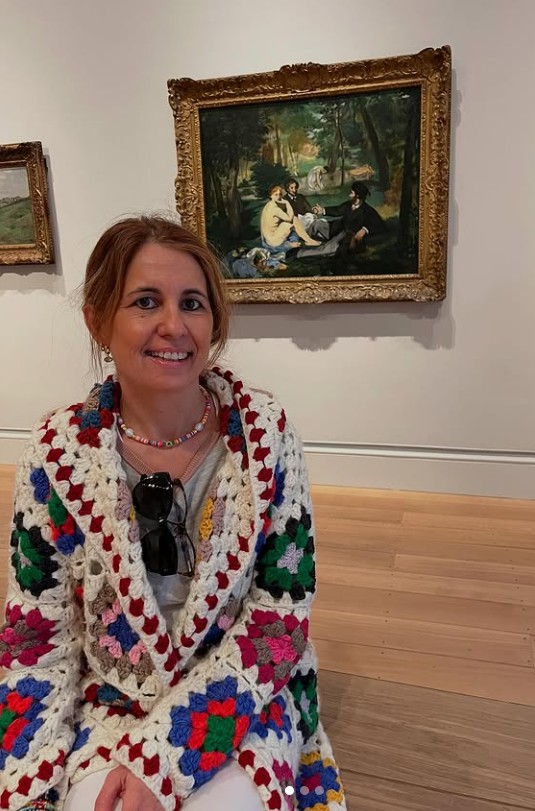
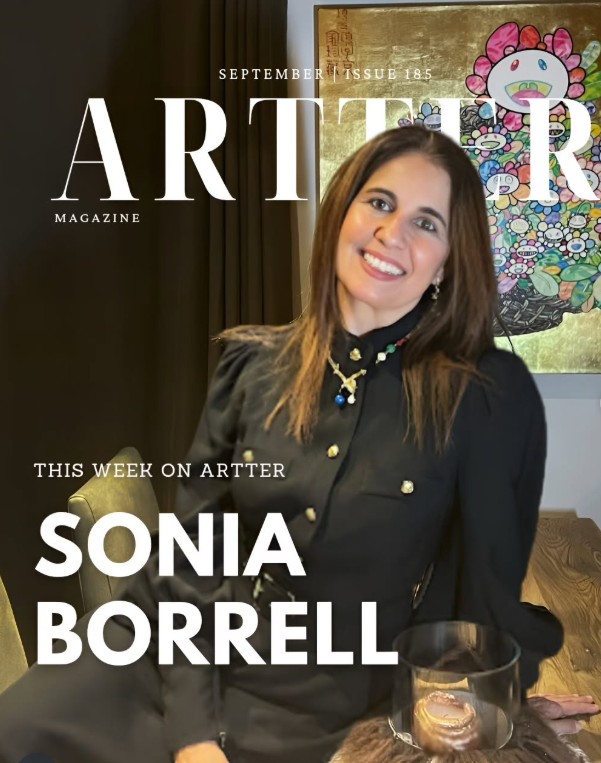
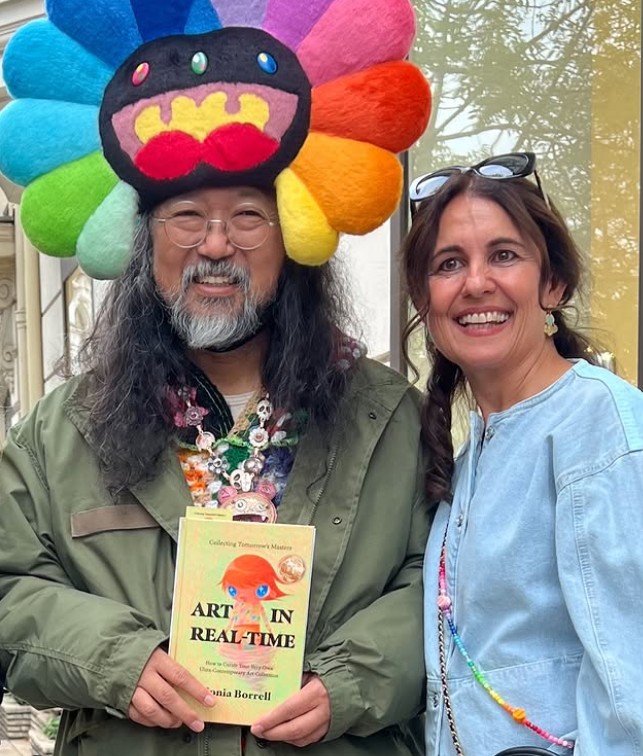
Sonia Borrell is an international Art collector, curator, advisor, lawyer, writer, philanthropist, and entrepreneur. Since founding the Tryson Collection in 2008, Sonia has dedicated her life to discovering talent, nurturing creativity, and curating excellence from Japan, South Korea, Indonesia, Germany, the UK, the US, Spain, and beyond. Her collection has been featured in some of the world’s most prominent museums, including the Kyoto City KYOCERA Museum of Art, the Thyssen-Bornemisza National Museum in Madrid, and the Museo Novecento in Florence. She owns works from the top figurative and contemporary artists, including Alex Katz, Takashi Murakami, Yoshitomo Nara, Jaume Plensa, and Robert Nava. With her Soniabblondon brand, she’s set to uplift the next generation of artists and collectors to advance the scene forward. As an art advisor for The Althari Group in Saudi Arabia, her commitment to cultivating the Kingdom’s art scene has captured acclaim in GQ, Harper’s Bazaar, Women’s Herald, L’Officiel, and others. Her personal journey reflects her mission: Art lovers follow movements. Art collectors move them further.
Episode Summary:
Summary
In this engaging podcast episode, Sonia Borrell shares her inspiring journey as an advocate for women artists and a passionate art collector. From her early love for art to her current role in curating international exhibitions, Sonia discusses the importance of supporting female artists and the transformative power of art. She reflects on her experiences during the COVID-19 pandemic, the growth of her collection, and the personal connections she forms with the artworks she chooses. Sonia emphasises the role of social media in discovering new artists and the joy she finds in advocating for their work.
Key Takeaways
Sonia Borrell is a strong advocate for women artists.
She feels like an artist through her work as a collector and curator.
Her journey in art began with a passion for collecting.
Sonia aims to make a difference in the art world.
She transitioned to full-time art collecting in 2018.
COVID-19 impacted her ability to engage with the art community.
Sonia’s collection has grown significantly over the years.
She believes art is the voice of the people.
Art gives her comfort and joy in her life.
Social media plays a crucial role in discovering new artists.
Notable Quotes:
“I always feel the artwork is choosing me more than I choose the artwork.”
“I support male and female artists, but I am really an advocate for female artists because I feel they are unrecognized and need more support.”
“When I lend a work to a museum and see it hanging there, it feels like watching your child graduate. The journey from the studio to that wall is incredible.”
“Selling my company and investing everything into art felt risky, but it was my dream. I thought, this is my chance and I have to take it.”
“For me, projects need to touch the heart and the soul of people. I don’t want anyone leaving an exhibition empty handed—I want them to learn something.”
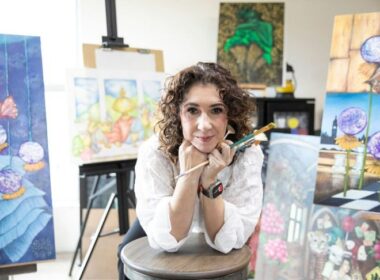
Charuka Arora is the founder of the Arts to Hearts Project and Host of the Arts to Hearts Podcast. She is also an acclaimed Indian artist known for her contemporary embellished paintings. Her unique blend of gouache, collage, embroidery, painting, and drawing explores the intersection of art, culture, heritage, and womanhood. Through her work, she tells stories of female strength and encapsulates them in pieces that can be treasured for generations.

Charuka’s work draws inspiration from Hindu mythology, recognizing women as vessels of Shakti, the cosmic energy. She beautifully portrays powerful goddesses like Durga Maa riding a tiger or lion, symbolizing their unlimited power to protect virtue and combat evil.
Through her art, Charuka invites us into the world of women, showcasing their beauty, strength, and resilience. Her creations not only exhibit exceptional talent but also serve as an inspiration and a symbol of hope for those challenging societal norms.
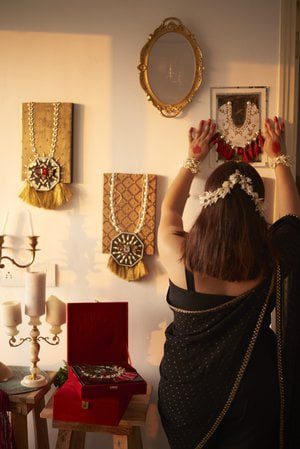
Arts to Hearts Podcast is a show delving into the lives and passions of renowned artists. From running creative businesses and studio art practices to cultivating a successful mindset, Charuka Arora engages in heartfelt conversations with her guests. Experience your personal happy hour with your favorite artists right in your studio.
Through candid discussions, Charuka and her guests reveal the joys and challenges of a vibrant creative life, both within and beyond our studios. Get ready to be inspired and uplifted as you tune in.
When Sonia Borrell sits down with Charuka for the Arts to Hearts Project, you can tell this chat is going to be more than a quick hello. Sonia has stories that run from Barcelona bookshops to museum openings in China, with a lot of guts, curiosity, and care in between. Here is the whole ride through their conversation, told straight.
The London landing and a chance meeting that changed everything
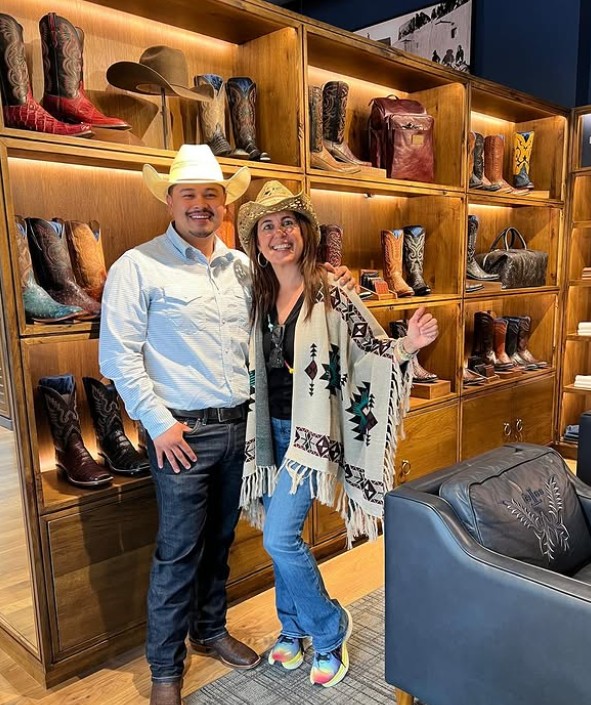
Sonia grew up in Barcelona in the seventies, the kid who saved up for art encyclopedia magazines and tried copying Leonardo at home. She moved on to Impressionism, got obsessed with Edvard Munch, and then moved to London. On her first weekend there, she met her future husband, who happened to be Norwegian. Soon, she was visiting museums in Norway, studying Munch even more, and realising that while she did not want to be an artist, she had a sharp eye for it.
Buying the first work and learning by doing
With time and some savings, Sonia started buying. Early pieces came from Spanish artists she knew best. One of the first was by Jaume Plensa. From there, she continued, meeting artists, walking into studios, and gradually becoming the friend who connected artists, galleries, and shows. None of this was planned. She followed the work, the people, and the feeling that she could make a difference.
I always feel the artwork is choosing me more than I choose the artwork.
Sonia Borrell- Arts to Hearts podcast s05e12
Why do women artists come first for her
Sonia supports many kinds of artists, but she champions women because she sees how many are overlooked. She mentors, writes about them, and backs platforms like the Women in Art Prize. For her, this is about levelling the field and opening doors for new voices. It is also about the next generation seeing clear paths forward.
Real estate paid the bills until it was time to go all in.
Before art took the lead, Sonia ran a real estate business in Barcelona. She renovated apartments and rented them out. She even offered a discount to single women and mothers for up to three years as a small way to ease a tough stretch. In 2018, she sold the company, moved back to London, and made a decision. She would treat collecting as her full-time work. She started mentoring artists for free and spent her days in studios and shows.
I support male and female artists, but I am really an advocate for female artists because I feel they are unrecognized and need more support.
Sonia Borrell- Arts to Hearts podcast s05e12
Then came lockdown and a new way to build a collection
When the world shut down, Sonia could not spend her days on the road. So she got organised. She catalogued everything, realised just how much she had acquired, and continued to learn. She also met collectors online, including two who later became partners for projects in Saudi Arabia and China. Those relationships grew into trust, shared research, and genuine collaboration.
What she looks for when a work calls her name
Sonia swears the work often chooses her. In a museum or gallery, she scans the room first, then goes straight to whatever pulls her in. If that piece is not available, she waits for the next chance. She needs a genuine connection to the work and the person who made it. She listens for stories. She looks for a voice that should be heard. If a gallery invites her to work with artists she does not connect with, she says no. She wants to make a difference, not just show up.
When I lend a work to a museum and see it hanging there, it feels like watching your child graduate. The journey from the studio to that wall is incredible.
Sonia Borrell- Arts to Hearts podcast s05e12
How the house turns into a living conversation
New works at home set off a little chain reaction. Every few months, she brings in a handyman and rehangs pieces. Rooms shift mood. Corners feel new. Sonia loves how different works fit different moments in life. When she was young, there was very little art on the walls at home, so she drew and hung her drawings herself. She still needs to be surrounded by images. It keeps her company and keeps her thinking.
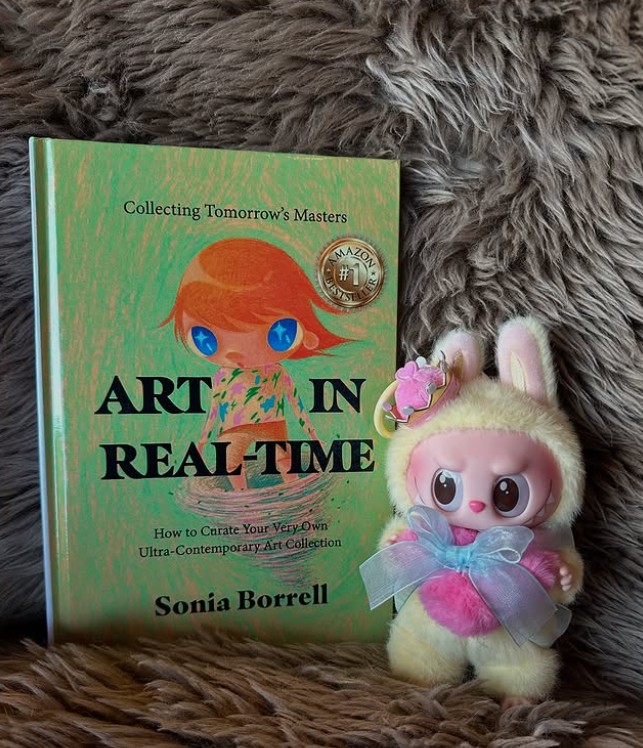
Lending to museums and watching the journey continue.
One of Sonia’s biggest joys now is lending works to museums. When a piece from her collection hangs on a public wall and thousands see it, she feels like a proud parent at graduation. The path from meeting an artist to seeing that work in a museum is long, and it matters for the maker’s career. It also teaches visitors something new, which is always her goal.
Selling my company and investing everything into art felt risky, but it was my dream. I thought, this is my chance and I have to take it.
Sonia Borrell- Arts to Hearts podcast s05e12
Curating in China and making the opening an experience
This summer, Sonia curated her first exhibition in a public museum in Shenzhen at the Sea Wall Culture Arts Centre. She wanted everyone to feel included and informed, so the opening ran over three days. One day for super VIPs, another for VIPs, and a third for guests and the local scene. She designed guided tours in English with a follow-up in Chinese. She shared stories that cannot be found in a press release, the kind of studio anecdotes that bring faces and works to life.
Sonia resisted Instagram for a long time but finally joined in 2019 when she realised some galleries would not take her seriously without it. Now she finds artists through many routes. Some reach out to her. Others are recommended by artists she already knows. She still values the quiet of looking in person and the instinct that tells her yes or no. Selling a property company to buy art is not a small move. Sonia admits it felt risky. Real estate felt solid. Art can be fragile, and the market can be fickle. But timing matters. Her kids were older. Her husband could cover the household. She had a window she wanted to use while she had the energy to move fast. She took it.
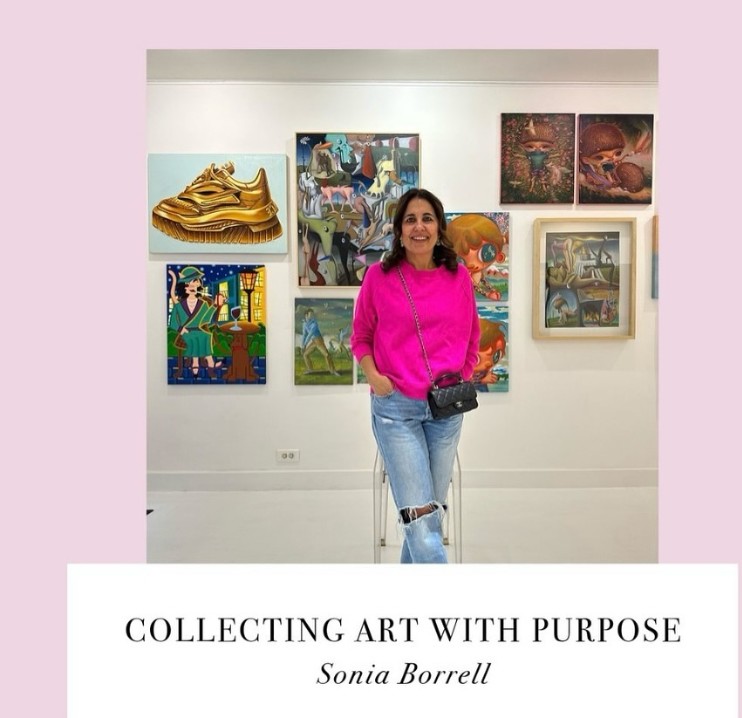
Art that goes beyond walls and price tags
Sonia and Charuka frequently discuss access. Prints, catalogues, magnets, and small items may never replace original work, but they help bring images into the daily lives of more people. That is often the start of a long relationship with a maker. For artists, it is also a way to keep the studio going while saving their one-of-a-kind pieces for the right collectors and shows.
The recording had its share of hiccups. The video got pixelated. Audio cut out. They reconnected and kept going. In a way, it mirrors the path Sonia describes. Plans rarely go perfectly. You adapt, keep the talk going, and focus on what matters.
For me, projects need to touch the heart and the soul of people. I don’t want anyone leaving an exhibition empty handed—I want them to learn something.
Sonia Borrell- Arts to Hearts podcast s05e12
What stays with you after listening
Sonia is the kind of collector who wants to open doors. She follows her curiosity, says yes to projects that teach and move people, and builds long relationships along the way. She loves seeing artists grow and works travel from studio to public view. She believes you do not need to come from the art world to belong in it. Start where you are. Look a lot. Talk to people. Buy what truly speaks to you when you can. Move pieces around. Keep learning.
Charuka wraps by thanking Sonia for the time, the care, and the infectious energy she brings to this space. This episode is only part one. There is more to share, and they will have her back. Until then, consider this your nudge to visit a show, check out a museum catalogue, or write a note to an artist whose work keeps following you around in your head.
Click here to read more about the Arts to Hearts Podcast and its episodes.
Listen to this & other episodes on
How Artist Sarah Fishbein Turns 1950s Romance Comics into Modern Paintings
Inside Susie Sprinkel’s Art Stories Woven with Fabric and Thread
How The Restless Creative Anita Clipston Turns Trauma into Art
Inside Radhika Gupta-Buckley’s Creative Journey with Indian Roots