
This Artist’s Journey from Sketch to Canvas

For Karin, art has always been more than an escape; it was a calling she knew from childhood, a path she pursued with determination from Rotterdam’s art academy to a 24-year career as a self-employed artist. Starting with portraits and pop art, her work has evolved into deeply textured explorations of nature, particularly trees and skies, where abstraction and surrealism intertwine.
Blending digital precision with painterly depth, she has pioneered her own technique, what she calls “3D pointillism”, transforming photographs and Photoshop layers into rich canvases that shift between the virtual and the visceral. In this interview Karin talks about why her art is celebrated across Europe and collected worldwide, and how it is a testament to her ability to merge innovation with emotional resonance.
Hi Karin, can you share more about your passion for art and when did you realize you want to take it up as a full-time career?
I knew from a very young age that I wanted to do something creative. I struggled a lot at school, but spent day and night drawing and painting. In elementary school, I told my mother that I wanted to go to an art academy, and I did just that. My first interest was in fashion, but later I switched to illustration, in which I also graduated in 1994 in Rotterdam. In the first years after the academy, I worked as a decorative painter. After about six years, I decided to quit my job and started working for myself with the plan to create large wall paintings. I was then asked to make paintings on commission for hotels and interior decoration. This was a very applied way of making paintings. Over the years, I developed a greater desire to create free work and not work on commissions. I gradually built this up alongside my commercial work. Now, I only do autonomous work. I have been active as a self-employed artist for 24 years.
Can you describe your process of creation from ideation to completion?
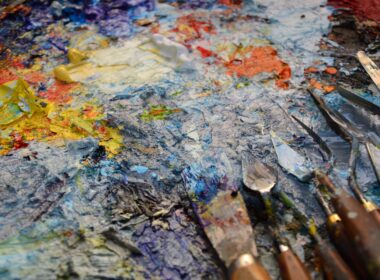
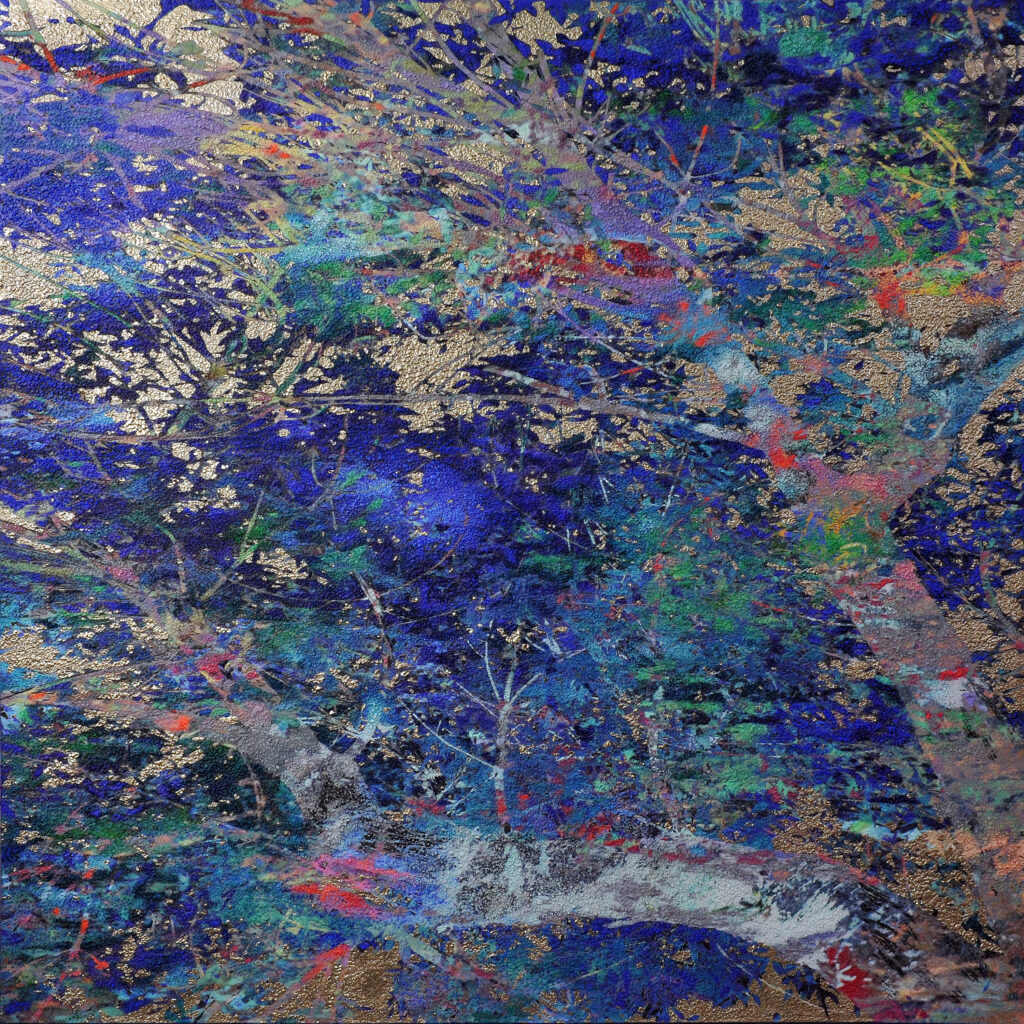
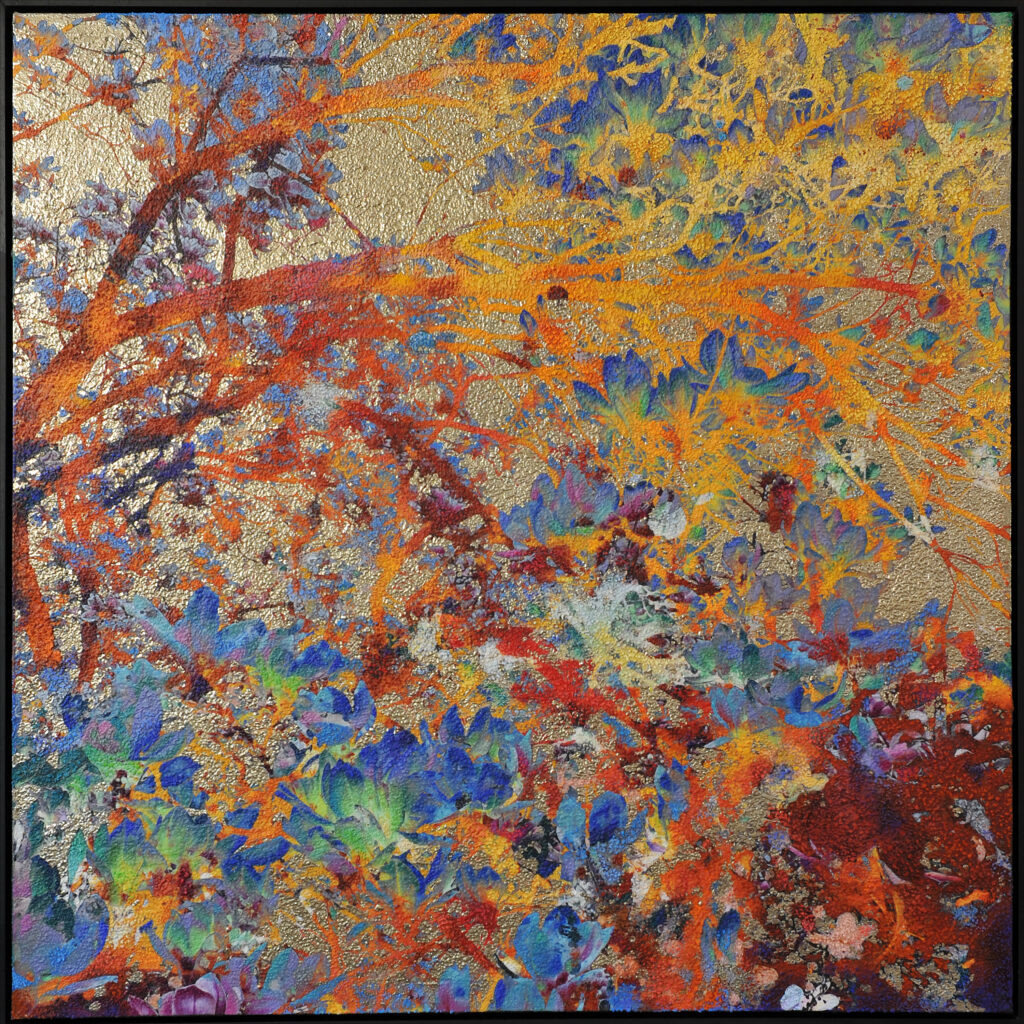
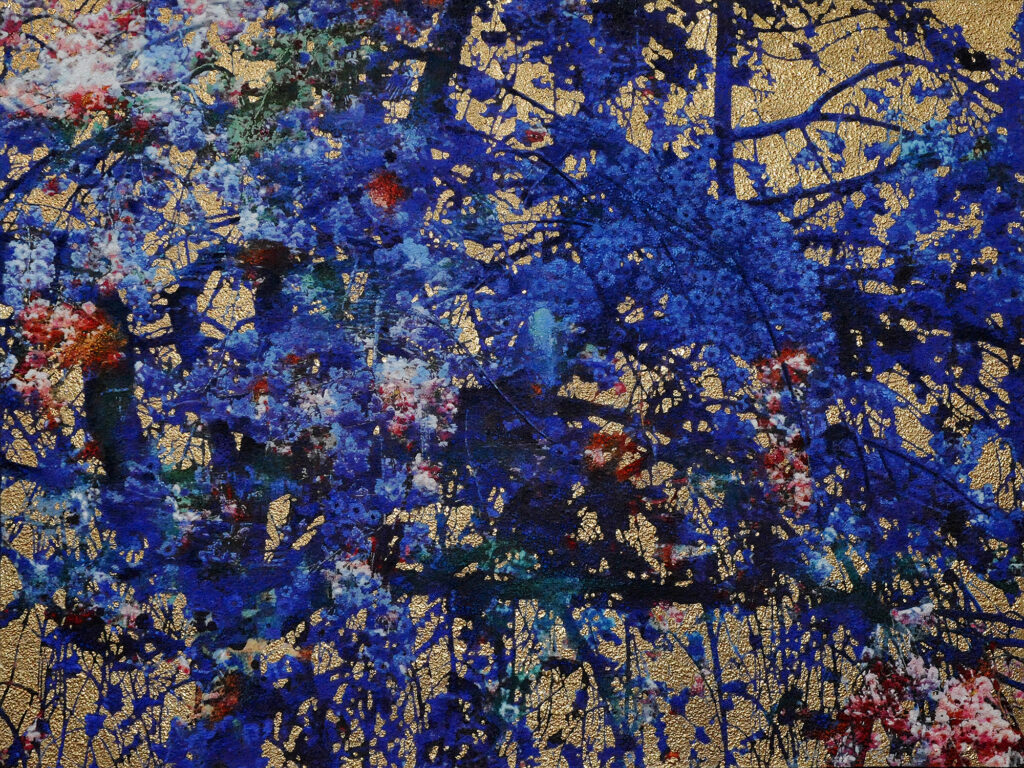
My favourite output is photographs that I take and collect. I have an extensive database of images that I scroll through before I start working. I begin by mixing images in Photoshop. Playing with the multiple layers that I blend first brings me to a digital artwork. This forms the basis of the final piece I want to create. I have this digital work printed and then started to modify it. First, I glue the print onto canvas and then apply the texture layer with gel medium. This is a process that takes about two weeks. The texture consists of 10 layers, which need to dry for 24 hours each. Once the texture is to my liking and fits the image I have in mind, I start painting. Due to the thick layers of texture, the colours and contrast have become somewhat faded, and I need to bring them back. Initially, I work with chrome paint, which I apply when the painting is lying flat—it’s a very detailed process. Then I stand the work upright and begin with oil paint, working from the depth toward the front. When the colours and contrast are restored, I start with oil sticks. With these, I sketch the top peaks of the texture layer, creating a sort of granular structure. I call this 3D pointillism (a term I invented). This results in a rich palette of colours that, from up close, are almost abstract, but from a distance, give a more realistic image. It almost looks like fabric and invites people to touch it.
What are the themes that you explore through your artworks?
I started with portraits and pop art, which I did for a very long time. Currently, my interest is mainly focused on nature. I am fascinated by trees and try to depict them by looking through the branches towards the sky. I am actually trying to abstract this and create a somewhat surreal image from it.
If your studio were one of your digital designs, what would it be and why?
My studio is exactly how I want it to be. I have a space where I can sit at the computer to work on designs (but I always do this in the evenings at home, where I also have a workspace). My atelier is beautifully lit and spacious, with all materials abundantly available. I always keep exact records and ensure that everything is in stock so that I never run out of materials or have to leave suddenly because something is finished. That takes time and is a waste. Every day when I walk into my atelier, I always think, “Oh, how wonderful, I’m back here.”
Do you work on multiple artworks simultaneously? How do you balance the shift in emotion and energy in each of them?
I usually work on 5 to 10 paintings simultaneously. That’s necessary because of the extensive process with many layers that each needs a day to dry, and I don’t like to stand still; I always want to keep painting. The good thing about this process is that I can take enough distance and can put the painting away from time to time, allowing me to move on to another piece. This is very helpful when I can no longer see or understand the next step in a particular work.
Viewers often share images of your artwork displayed in their homes. How does this personal space change impact you as an artist?
I find it always so beautiful to see. It’s such a great compliment that something I have made, which I put my heart and soul into, ends up hanging in someone else’s personal space. It’s created with a lot of emotion, but also with struggles. Making such a work is a very intense process, and it’s not always easy. When this is recognised and appreciated, it’s genuinely fantastic.
Your work has appeared at fairs across Europe and sold worldwide. How does your art travel between different audiences and cultural frameworks?
I sell work through established galleries and an art wholesale partner I work with, but I also offer my work on online galleries. Collectors also know how to find me directly or via social media.
You are celebrated for the alchemy between the virtual and the visceral. What do you hope art lovers take away from that interplay in your work?
I hope they see that one cannot exist without the other. I don’t do the work on the computer because it makes things easier for me. I find this way of working very different and interesting because with this method, I cannot create the same things as when I paint alone, and it all comes from within me.
For me, it’s truly a combination that can no longer be separated. The speed of the digital process versus the slow, traditional painting process forms such an interesting interplay. It makes working so captivating. I can paint very realistically, so that’s not what it’s about. I find both worlds very fascinating, and why should I choose between them if they also complement each other so well?
Looking ahead, what areas, materials, themes, scales are you curious to explore next?
At the moment, I am actually in a new phase that I am fully exploring. Working with the oil stick is almost meditative for me, which I love so I will continue with it for some time. I also want to delve deeper into abstraction and the structures. I can derive much more from this than I already do. I am still looking for more coherence, but I am still too much in my comfort zone. I want to break free from that even more. Still a lot of plans ahead.
Karin’s practice reminds us that art can be both fast and slow, rooted in both digital speed and traditional patience. Her layered works invite touch, reflection, and wonder mirroring her own layered journey as an artist who has continuously pushed beyond comfort zones. As she ventures further into abstraction and structure, her art remains a powerful bridge between imagination and materiality, offering viewers not just images, but experiences.
To learn more about Karin, click on the links below