
How Art Grows when Life Takes unexpected Turns | Anastasia Gladkova

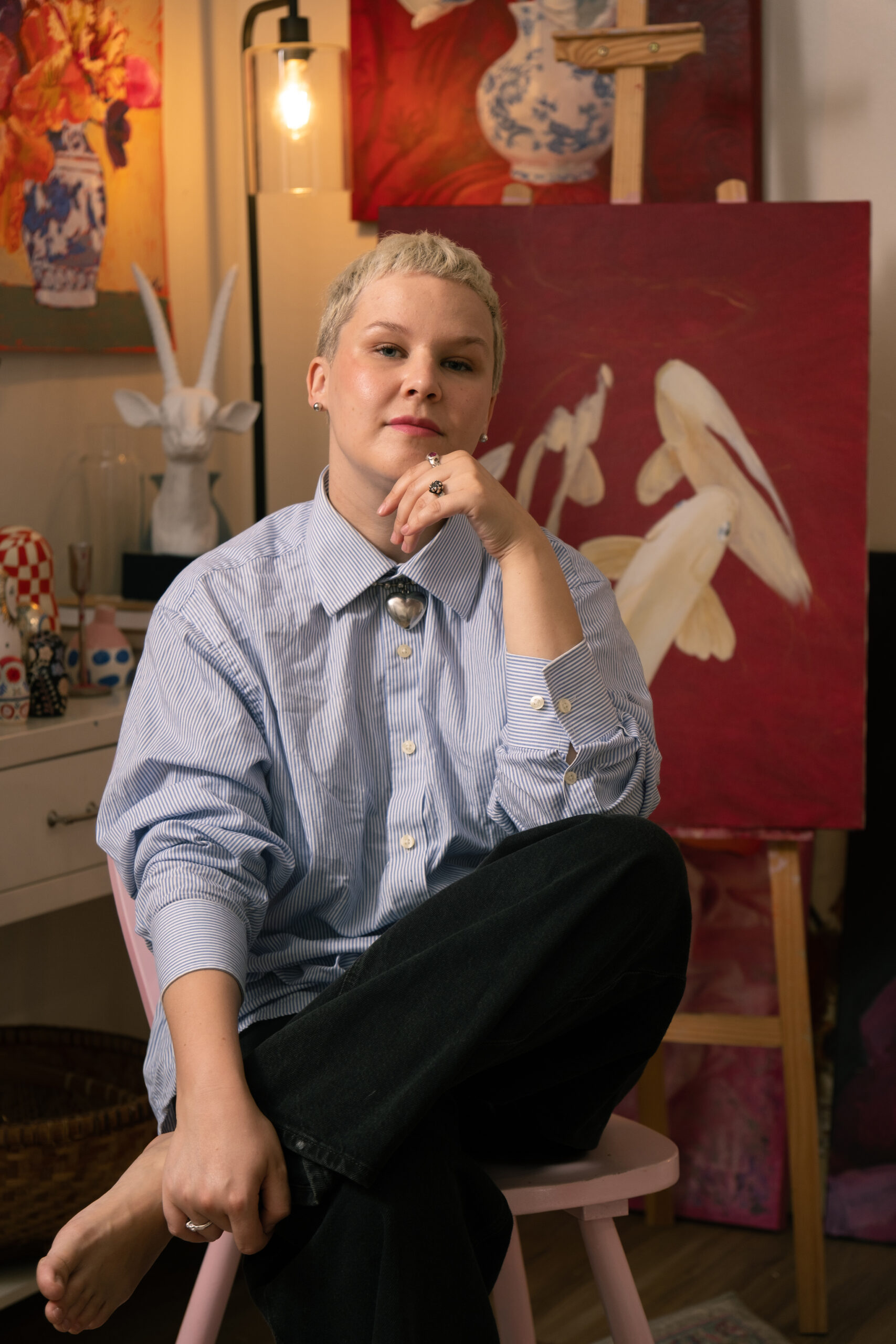
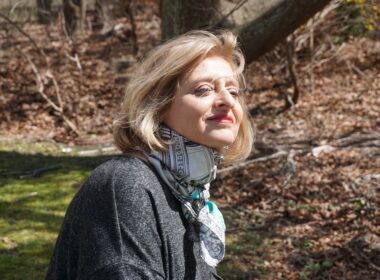
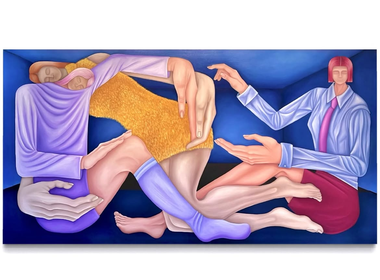
In this interview for the Arts to Hearts Project, we sit down with NASKA (Anastasia), a Russian-born, Florida-based artist whose work explores themes of fragility, femininity, memory, and life changes. She opens up about growing up in a creative family, how motherhood and emigration reshaped her relationship with art, and the stories behind the symbols and textures in her work — from porcelain apples to fabric quilts.
Through our conversation, we learn how childhood tales, family traditions, and emotional shifts guide her practice. NASKA talks about finding her visual language after moving to the U.S., using painting as a way to stay connected to herself and her roots. She shares how materials like ceramics, textiles, and oil paint help her build quiet, emotional spaces that invite viewers to pause and feel something personal.
Anastasia Gladkova is a featured artist in our book, “100 Emerging Artists 2025” You can explore her journey and the stories of other artists by purchasing the book here:
https://shop.artstoheartsproject.com/products/the-creative-process-book

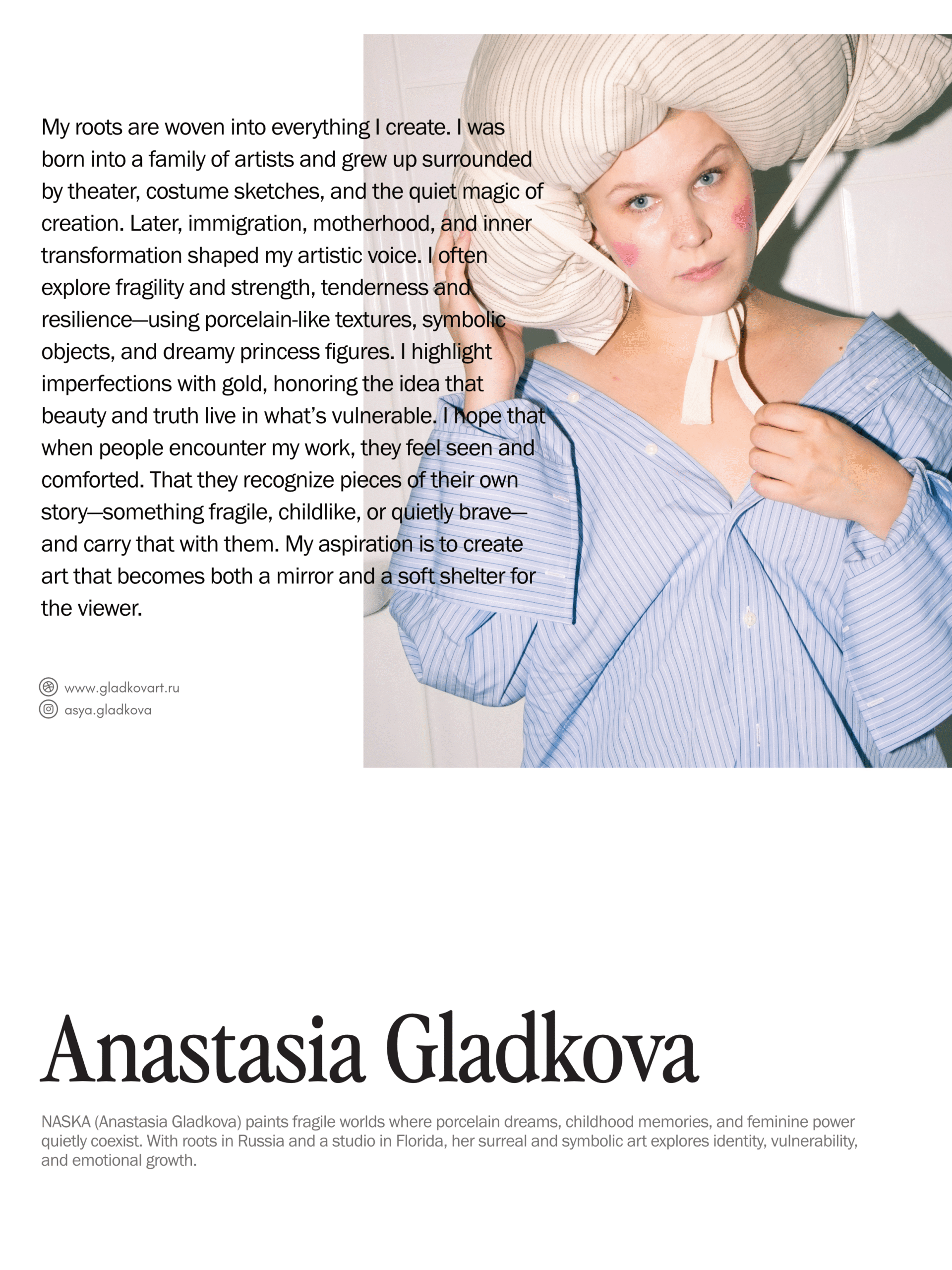
NASKA (Anastasia) was born in Moscow, Russia, into a family of artists and designers. She graduated with honours from the Penza Art College with a degree in Graphic Design, and later from the Kosygin State University of Textiles (specialising in Fashion Design). She has participated in several exhibitions, including the group show “Sustainable Development: The Evolutionary Path of Humanity” in Moscow (2024) and “Feminine Energy: Resistance & Revival” in the USA (2025). Her work is scheduled to be featured at Red Dot Miami during Miami Art Week later this year. NASKA’s artworks are held in private collections in Russia, Europe, and the United States. She currently lives and works in Florida, USA, and is developing her series “Fragile World” for a solo exhibition and participation in the Miami show.
1. How did growing up in a family of artists shape the way you approach your work today?
Growing up in a family of artists had a significant impact on me. My parents were painters and costume designers, and from early childhood I was immersed in their creative world — drawing, sewing, experimenting. We often went to museums and exhibitions together and talked about art, which helped shape my taste and sense of beauty. They were also demanding teachers — they taught me to value craftsmanship and to think deeply about what I want to say through art. But for a long time, I felt I couldn’t live up to their level, so I kept my creative side more private. That changed when I became a mother — I finally had both the space and the desire to paint again. It marked the beginning of a new chapter, where I allowed myself to grow as an artist in my own way.
2. You often explore childhood memories in your art—what drew you to this theme, and how do you decide which memories to revisit?
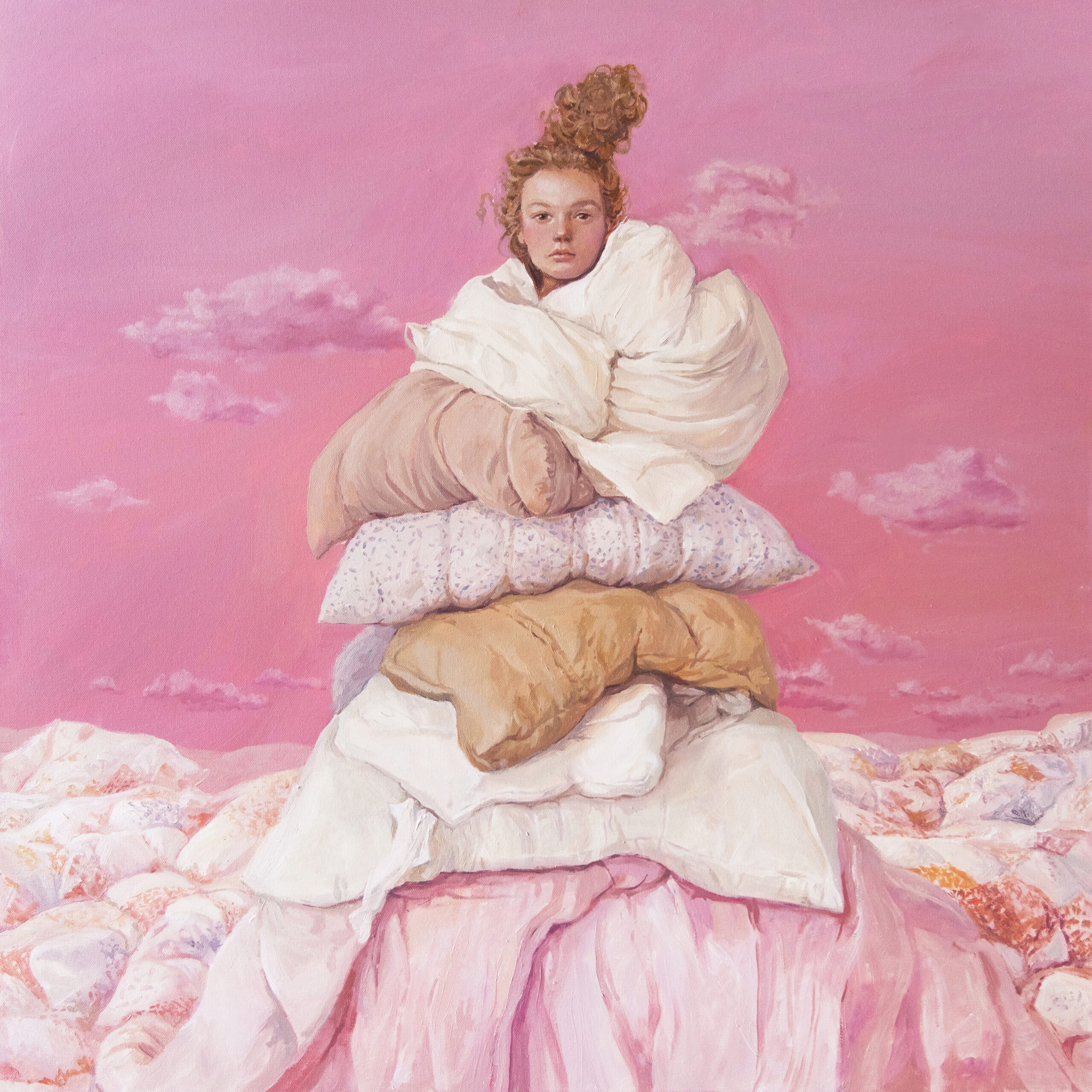
When I was pregnant, we had just moved from Russia to the U.S., and I started thinking a lot about how I wanted to raise my son — what stories to read, what values to pass on. That brought up memories of my childhood, especially Russian fairy tales. I created a collage series based on those stories, but with deeper symbolic layers that go beyond simple illustration. Later, I started working on the Princess and the Pea series, during a time when I was learning about inner child work and the emotional patterns we carry from childhood.
That series became very personal — it’s about the little girl inside me who still exists, sometimes vulnerable, sometimes needing to be seen. I was the oldest child in my family and carried a lot of responsibility early on, so now, raising my child, I’m rediscovering how to play, experiment, and feel joy like a child. These paintings are a way of reconnecting with that part of myself — and I love that different viewers find their own meanings in them.
3. Textures play a significant role in your work—how do you choose the materials or surfaces that help you tell each story?
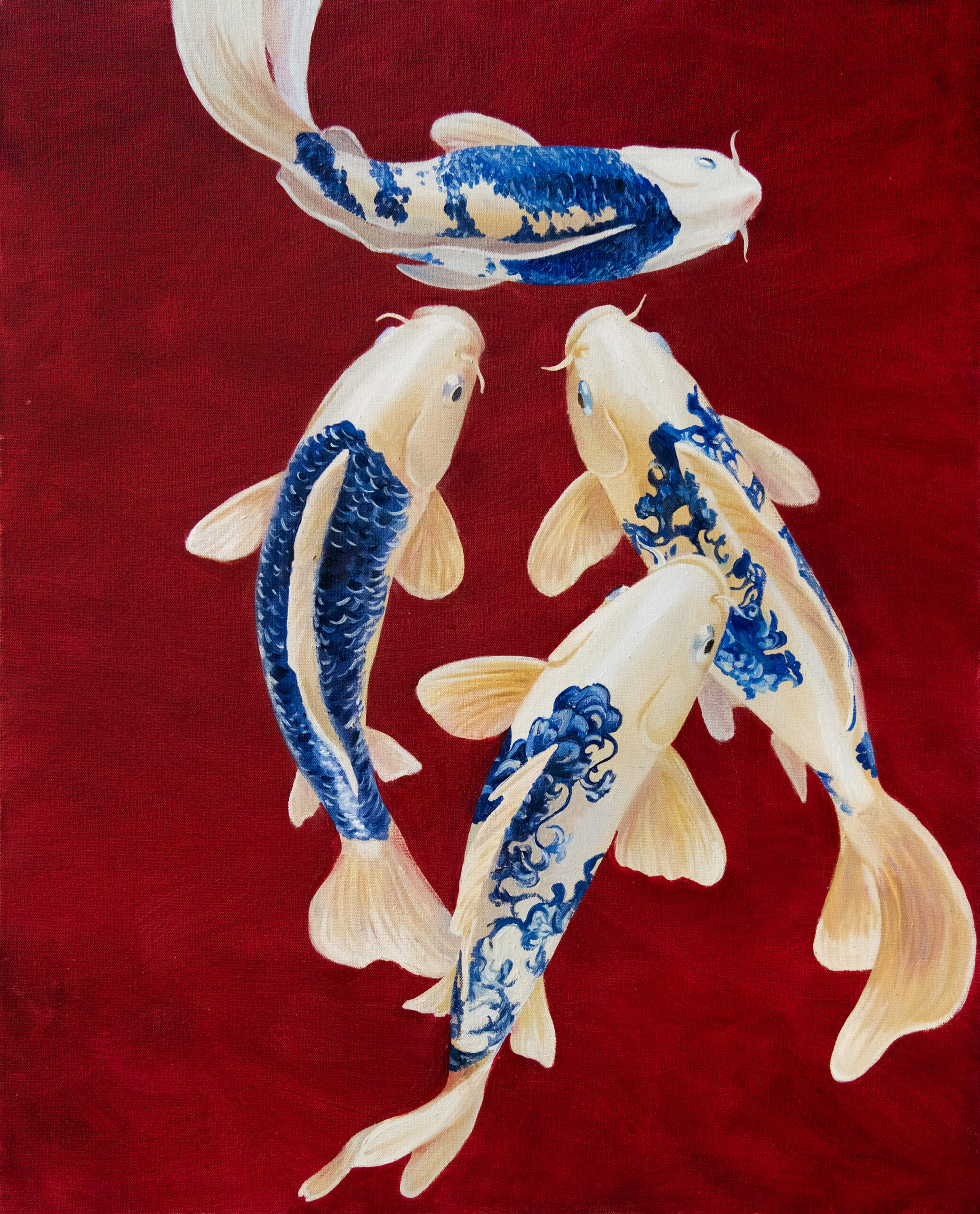
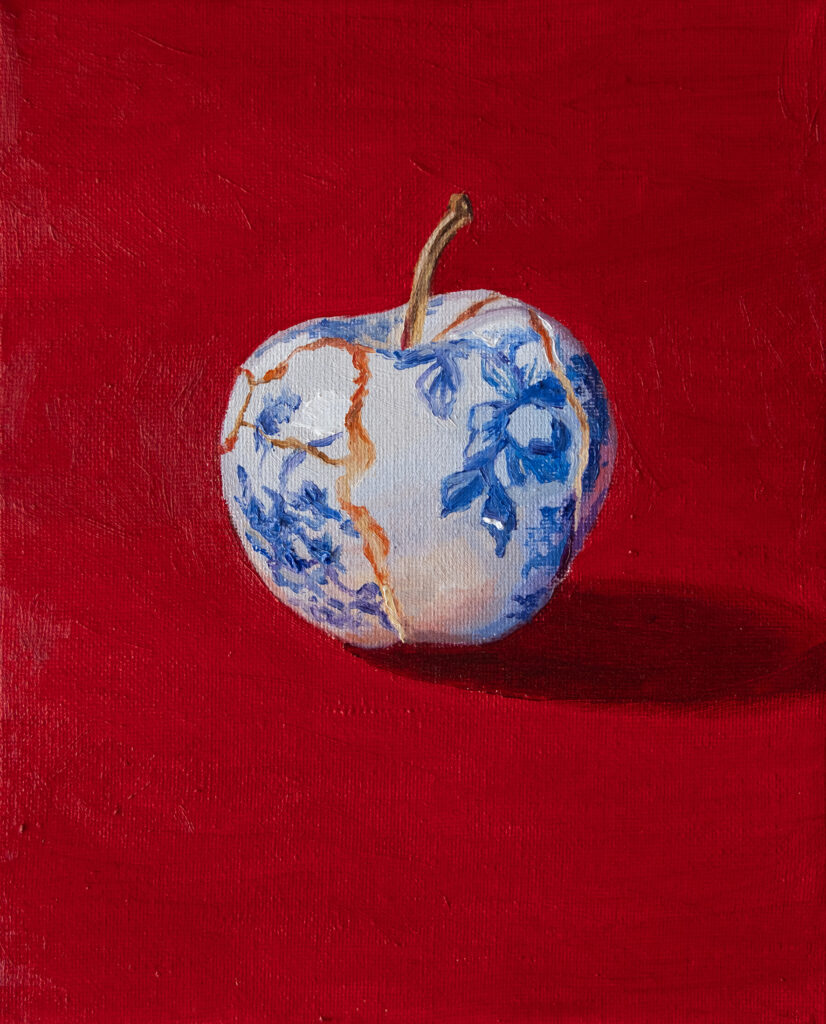
Texture helps me tell emotional stories, so I choose materials that reflect the feeling behind each work. Right now, I mostly paint in oil on canvas, but I’m starting to work with ceramics and porcelain. I’ve collected and broken a variety of old dishes, and I plan to use the shards to build delicate figures for my Fragile World series — real porcelain characters assembled from fragments with different patterns and shades, mostly in blue and white. I’m inspired by kintsugi, the Japanese art of repairing broken pottery with gold.
I love the philosophy behind it — not hiding our cracks, but honouring them. It feels very human. I’m also drawn to textiles. While painting my princess series, I was sewing a patchwork quilt for my son. That connection between soft, layered fabric and emotional storytelling felt very natural. I want to explore that more — maybe even create textile versions of my porcelain fish using appliqué. I’m not sure what the result will be yet, but I’m excited to try.
I love the philosophy behind kintsugi—not hiding our cracks, but honoring them. It feels very human.
NASKA (Anastasia Gladkova)
4. From branding to costume design to collage, your path has crossed many creative fields—what made you turn fully toward painting again?
Costume design was my childhood dream — and also my mother’s profession, so I was surrounded by it from an early age. Later, I studied branding at an art college while also taking fine art courses. Branding became my primary profession, and painting remained more of a personal hobby for many years. That changed after the birth of my child and our move to a new country. For the first time, I felt a quiet but powerful sense of freedom — and the confidence to try building a career as an artist. I wasn’t just painting anymore — I started to have fundamental ideas and meanings I wanted to explore, which is what I’ve always loved most about contemporary art.
Even though I studied academic fine art, I never saw myself as the kind of artist who paints still lifes or portraits just from observation. I was always drawn to art with strong concepts behind it — but for a long time, I didn’t know what I wanted to say. I even felt a bit envious of artists who had something meaningful to express. Once I had time to slow down and reflect, I began looking inward — and that’s when ideas started to take shape. I realised what themes mattered to me and what I wanted my viewer to feel or think about. That’s how my surreal world began to emerge — a space where emotion, symbolism, and imagination come together.
I realized what themes mattered to me and what I wanted my viewer to feel or think about. That’s how my surreal world began to emerge.
NASKA (Anastasia Gladkova)
5. Symbols like porcelain apples and eggs appear often in your work—how did these images find their way into your visual language?
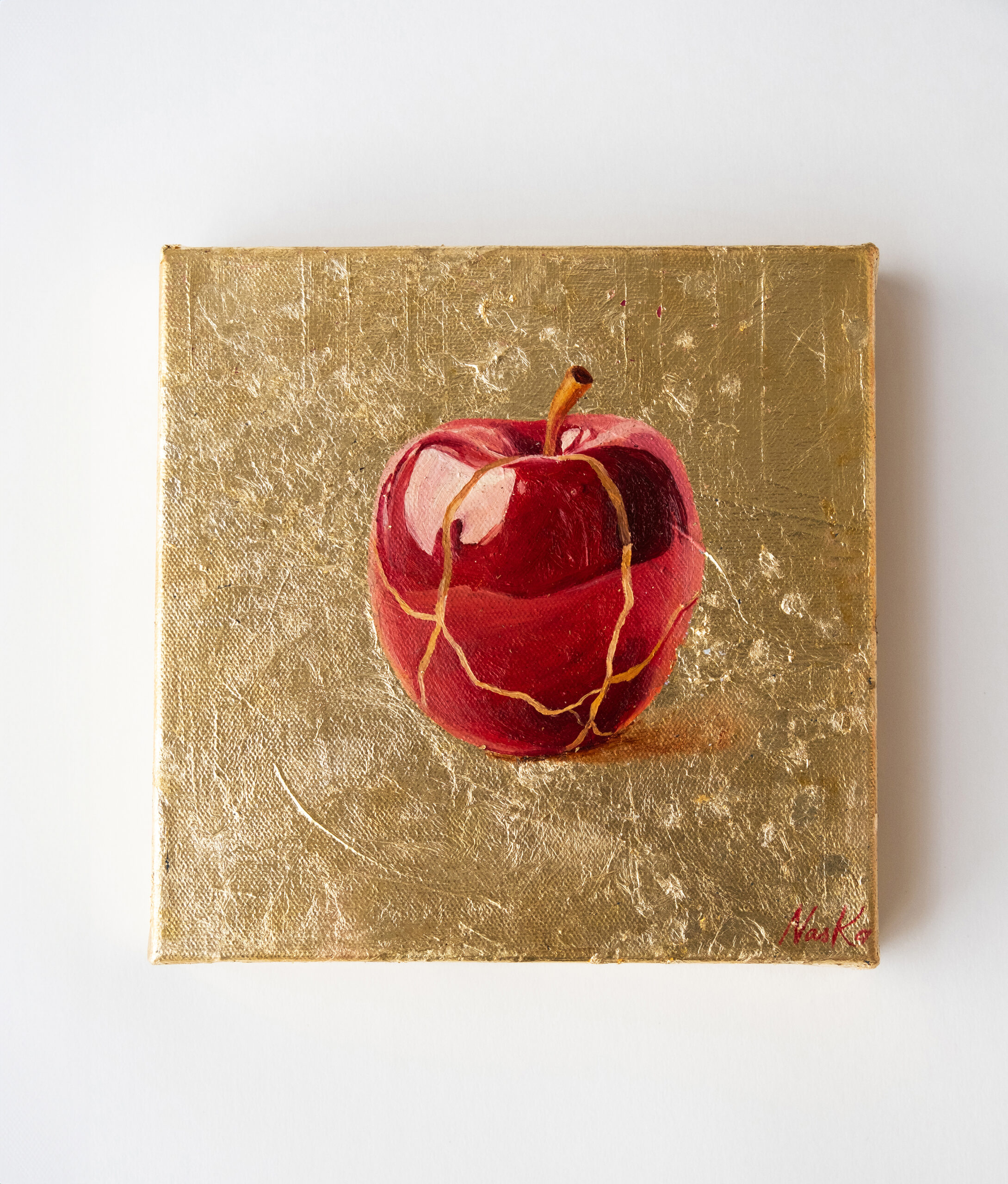
While developing my Fragile World series, which began with a porcelain dove, I started exploring what else could be fragile and symbolically rich. That’s how apples appeared — they carry many meanings: nature, temptation, maturity, even original sin. I’ve painted red porcelain apples with golden cracks, referencing kintsugi — they’re about desire, maturity, and the beauty in imperfection.
Eggs came more intuitively — at first as a compositional element, but they quickly revealed deeper meaning. They represent life, beginnings, and are naturally fragile, which fits the theme perfectly. I haven’t fully explored them yet in finished pieces, but I have several in progress — including ideas that combine eggs with my princess figures in a new, more complex series.
6. Having lived and worked in both Russia and the U.S., how has this shift in environment shaped the subjects or tone of your recent work?
I never really planned to build a career as an artist while living in Russia. I worked full-time in branding, and painting was something I kept on the side. But when the war in Ukraine began, all my projects stopped — and emotionally, it was a challenging time. That’s when I started creating art rooted in Russian folk culture and fairy tales. I even reimagined traditional matryoshka dolls in a more contemporary, porcelain-like style.
But I found my own voice and visual language only after moving to the U.S. Emigration changed me — being far from my family, from what was familiar, brought back memories of childhood, family, stories, and Russian craft traditions. Some of these elements naturally find their way into my work now — like blue-and-white patterns reminiscent of Gzhel ceramics, or red apples that often appear in Russian fairy tales. I don’t use them to be directly recognisable, but those roots are there. They became part of my language without me planning it.
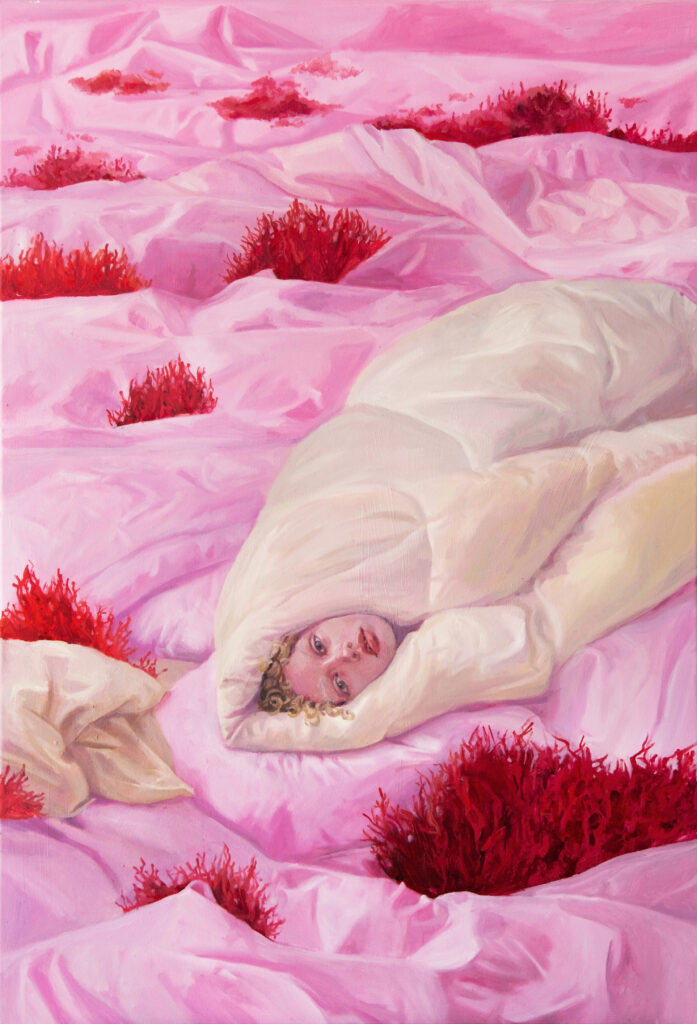
NASKA (Anastasia Gladkova)’s work invites us to look closely at the softer sides of life—the quiet emotions, the fragile memories, and the in-between moments we often overlook. Through porcelain, fabric, and fairy tale imagery, she shares stories that speak to childhood, womanhood, and the feeling of starting over in a new place.
Her journey shows us how art can become a way to rebuild, reconnect, and stay grounded when everything else is changing. What we learn from her is that beauty can live in the cracks, strength can grow from softness, and sometimes, looking back helps us move forward.
To learn more about Anastasia, click the following links to visit her profile.
Arts to Hearts Project is a global media, publishing, and education company for
Artists & Creatives: An international audience will see your work of art, patrons, collectors, gallerists, and fellow artists: access exclusive publishing opportunities and over 1,000 resources to grow your career and connect with like-minded creatives worldwide. Click here to learn about our open calls.