


How to Transition from Hobbyist to Professional Artist

So, you’ve been making art on the side. Maybe your evenings are full of watercolors and your weekends smell like acrylic paint. Friends keep saying, “You should sell this!” and you’ve even done a few commissions. But now you’re feeling the nudge, that gentle but persistent tug that says maybe this could be more. If you’re itching to turn your art from a beloved hobby into a bona fide career, you’re not alone, and you’re in the right place.
This guide isn’t just about “going pro.” It’s about building a sustainable, joyful art life that grows with you. So, let’s walk through this exciting, sometimes messy, always rewarding shift, together.
“When Is the Right Time?” (Spoiler: There’s No Perfect One)
Let’s get this out of the way first: there will never be a perfect time to go pro. There will always be bills, responsibilities, and moments of doubt. What matters more than timing is readiness, and not just creatively, but emotionally and logistically.
Think of it like moving from shallow water to deep sea. Are you comfortable swimming in the unknown? Are you willing to build skills beyond just making art, like marketing, communication, and pricing? These are the questions that matter more than whether your work is “good enough” (trust me, it is). Real-life artists make the jump at all stages, some with years of experience, others just months in, but the thread is the same: they were ready to commit.
If you’ve found yourself consistently showing up for your art, treating it like something that matters, and dreaming of more, then guess what? That’s a sign you’re already halfway there. Perfection is not the goal, progress is.
The Artist Mindset Shift: From “Play” to “Purpose”
When art is just for fun, there’s freedom in that. But going pro means learning to create even when inspiration isn’t knocking. It means showing up even on days when your brush feels heavy or your sketches look flat. This isn’t about forcing it, though, it’s about honoring your craft as a practice, not just a pastime.
The big shift? Seeing yourself as an artist. Not just someone who “likes to draw” or “dabbles in ceramics.” You are an artist. Say it out loud, write it on your mirror, put it in your email signature. This small affirmation can spark a big internal change.
This doesn’t mean you stop playing. In fact, the best professional artists keep a little play in their pocket. But now, you’ll also start thinking about things like consistency, growth, and your audience, without letting it dim the joy.
Build Before You Leap: The Side-Hustle Phase Is Golden
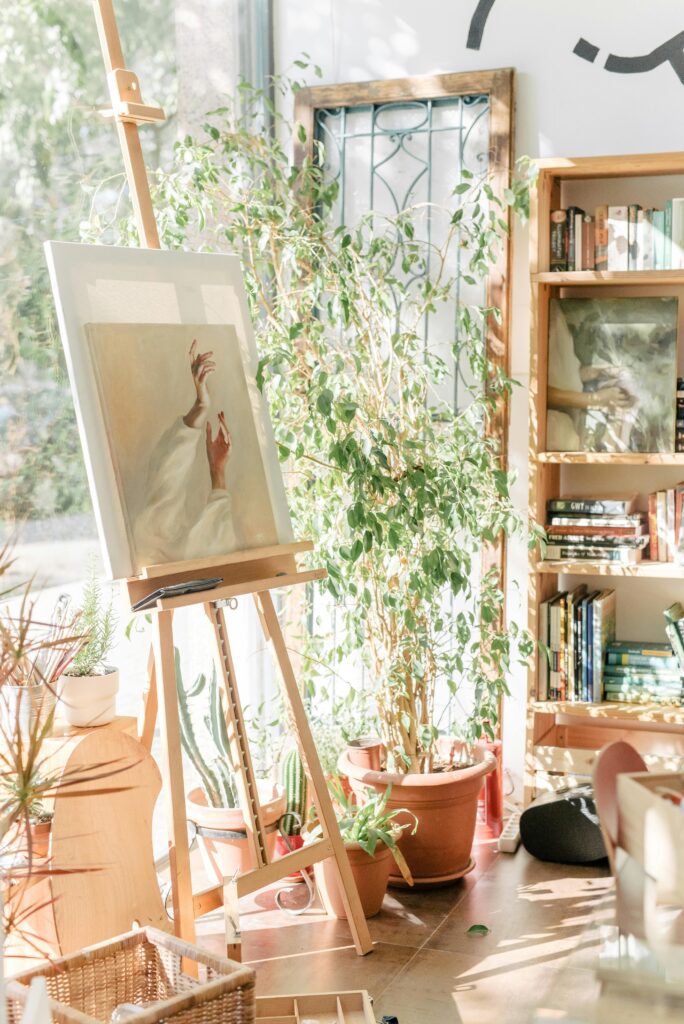
You don’t need to quit your job cold turkey or throw all your eggs into the gallery basket. In fact, the “slow transition” is often the smartest one. This phase is where you build the foundation: growing your portfolio, experimenting with selling, and testing the waters of what people respond to.
Use this time to understand what kind of art you want to be known for. Is it your dreamy character illustrations? Your bold abstract canvases? Or a mix? Try pop-ups, commissions, or online sales. Pay attention to what lights you up, and what sells. These don’t always match up at first, but you’ll find a rhythm with time.
The goal here is to get messy, learn without the pressure of total income dependence, and slowly shift your time and income streams so that art becomes less of a side hustle and more of the main show.
Finding Your First Buyers (Hint: They’re Closer Than You Think)
One of the myths that holds people back? The belief that no one will buy their work. But your first collectors probably aren’t strangers, they’re people already in your orbit. Friends, coworkers, social media followers. Even your mom’s book club buddy.
Start by posting your art regularly and confidently. Add a “for sale” highlight on Instagram. Say yes to a local fair or market. Mention your work when someone asks what you do. It’s less about selling and more about inviting people into your creative world.
Even if those first few sales are small, they matter. They validate your journey and remind you that people do see value in what you make. From there, word spreads faster than you’d think.
Need some advice from artists who’ve been in your shoes? The “Tips from Top Artists on Selling Your Art” guide is a treasure trove of insights, strategies, and behind-the-scenes know-how. It’s not theoretical fluff, it’s real talk from creatives who know exactly what it takes to start selling without selling out. And it’s offered free, to support artists like you!
Creating a Professional-Looking Portfolio Without Fancy Tools
Now that you’re inching into professional territory, you’ll need a portfolio. But don’t let that word intimidate you. You don’t need to be a designer or drop money on a custom website right away.
Start simple. Free tools like Adobe Portfolio, Cargo (free version), ArtStation, or even a clean Notion template can be fantastic starting points.
Your portfolio should reflect your style, show your best (not all) work, and include a short, human bio. Keep it easy to navigate, and remember: you can always evolve it later. The goal is progress, not perfection.
And if you’re looking for something tailored to emerging artists, Women in Arts Network has your back. They regularly offer open calls that include portfolio features, artist spotlights, and digital showcases, so you’re not just building a portfolio, you’re getting eyes on it too.
How to Create Your WIA Profile (Step-by-Step):
- Visit women in arts network.
- Click “Join” or “Create Artist Profile”
- Fill in your artist bio
- Upload your artwork
- Link to your socials or website
- Submit and go live
What You Get from Having a WIA Profile:
A Beautiful, Ready-to-Use Portfolio Page
No need for a separate website right away. Your WIA profile can serve as your main portfolio link, clean, professional, and curated.
Visibility with the Right Audience
WIA is browsed by curators, collectors, and collaborators specifically looking for women-identifying artists. This isn’t just traffic, it’s targeted visibility.
Eligibility for Features & Showcases
As a member, you’re the first to hear about open calls, themed exhibitions, publication opportunities, and more. Many features are exclusive to listed artists.
Built-In Credibility
Being part of a global artist platform gives your creative practice a professional edge. It signals: “I take this seriously.”
Networking with a Real Community
It’s not just about being seen. WIA opens the door to real connections, with fellow artists, mentors, and advocates who want to see you thrive.
Pricing Your Work Without Panic Attacks
One of the trickiest parts of going pro? Pricing. It’s emotional. It’s confusing. And it’s easy to undercharge. But you deserve to be paid for your labor, your vision, and the years you’ve spent developing your craft, even if that development happened on the weekends.
Start with a formula: materials + time + overhead = base price. Then, add your value, your unique vision, your audience, your demand. Don’t be afraid to research what other artists at your level are charging. Your prices don’t need to be identical, but it’ll help you find your comfort zone.
And yes, it will feel awkward at first. Most artists struggle with this. But pricing is a skill, not a moral judgment. You’ll get better at it the more you practice.
If you’re feeling completely lost on how to even begin? Grab the “Tips on How to Price Your Artwork” guide from Arts to Hearts Project. It’s free of cost, short, smart, and full of actionable advice that doesn’t require a finance degree. From creative pricing models to mindset shifts, it’s the kind of resource you’ll come back to again and again.
Need a Little Extra Help Mapping Out Your Next Steps?
If you’re serious about turning your passion into something sustainable but feel a little stuck on how to grow from here, this guide from Arts to Hearts might be your new favorite resource.
How to Grow Your Art Career is part workbook, part gentle coach, and part creative compass. It’s not some generic checklist, it’s packed with honest questions, real strategies, and thoughtful prompts that help you actually figure out what you want your career to look like and how to get there without burning out or selling your soul. Plus, it requires zero investment.
It’s especially great if you’re in that weird in-between space of “I want to do this professionally” but “Where do I even start?” Think of it as a launchpad—not just for action, but for clarity.
If you’re ready to dream bigger and plan smarter, this one’s absolutely worth a download. No fluff. Just tools that work.
Marketing Without the Ick: Sharing Authentically
Marketing doesn’t have to be salesy or soul-sucking. At its core, it’s just storytelling. It’s you, saying: “Here’s what I made and why I love it.” The right people will feel that.
Start with one platform where you feel comfortable. For many artists, that’s Instagram. For others, it might be Pinterest, TikTok, or even a newsletter. Don’t spread yourself too thin at the beginning, consistency beats ubiquity.
Show your face sometimes. Talk about your process. Let people see the messy in-between stages. Audiences don’t just fall in love with art, they fall in love with artists. You don’t have to perform or overshare. Just be honest. Let your quirks and passions show.
Building Systems (Yes, Even Creative Ones)
Going pro doesn’t mean chaos. In fact, the more you systemize your practice, the more freedom you gain. Think of this like giving your creativity a strong container to live in.
Start with small systems: a spreadsheet for orders, a weekly content plan, templates for email responses. As your business grows, you’ll thank yourself for these tiny organizational wins.
Also consider tools like Trello, Airtable, or Google Calendar to track commissions, social posts, and deadlines. These don’t have to be fancy, they just have to work for you.
Structure isn’t the enemy of creativity. It’s the scaffolding that lets your creativity soar higher.
Dealing With Doubt, Fear, and the “What If I Fail?” Monster
This path comes with fear. What if you try and no one buys? What if you run out of ideas? What if people think you’re not a real artist?
These thoughts are normal. They’re not signs you’re on the wrong path. They’re signs you’re doing something brave. Every professional artist, yes, even your idols, has wrestled with doubt. The difference is, they kept going.
Surround yourself with community. Find other emerging artists, join online groups, or start a local art accountability pod. Being seen and supported helps quiet the inner critic.
And if you do “fail”? That just means you learned something. You adjust, you recalibrate, and you keep creating. Because this isn’t just about profit. It’s about purpose.
Cheat Codes and Shortcuts (That Actually Work)
Let’s pause for a second and give you a cheat-sheet. These tricks won’t magically make you successful, but they’ll give you a head start:
- Batch your content. Spend one afternoon photographing your work and writing captions. Schedule it out for the week.
- Create a simple intake form for commissions (Google Forms works great).
- Use mockup generators like SmartMockups or ArtPlacer to present your work in real-life spaces.
- Sign up for newsletters like Create! Magazine, Arts to Hearts, or Art Mums United, they share open calls, grants, and artist features.
- Repurpose your content. One painting can become a story, a reel, a blog post, and a newsletter.
These aren’t hacks to avoid the work, they’re tools to help you do it better.
Your Art Career, Your Rules
Here’s the best part of going pro: you get to define what that looks like. Maybe you want to sell originals and never do commissions. Maybe you dream of licensing your work. Or teaching. Or running a collective. There is no one version of “success.”
The transition from hobbyist to professional isn’t a line you cross, it’s a landscape you grow into. Some days will feel magical. Others might be exhausting. But through it all, you’ll be building a life around your art, and that is no small thing.
Give yourself permission to evolve. To change directions. To rest. This is your art life. Let it be beautiful, bumpy, and fully yours.
Ready Is a Feeling You Create
There’s no official badge that makes you a professional artist. No grand announcement. The shift is quieter than that. It happens when you start saying yes, to yourself, to your work, to the dream that refuses to let go of you.
So, whether you’re just starting to explore this idea or already halfway there, know this: you don’t have to wait for permission. You just have to begin.
And if you’re looking for some tools to support you on the way, check out Arts to Hearts’ free portfolio template and Women In Arts Network Website. These resources can help you organize, present, and celebrate your work in ways that feel true to you.