
How Krista Voto’s Sculptures Help Us See the World Differently


In this interview for our Arts to Hearts project, we get a peek into the creative journey of Krista Voto, an interdisciplinary artist based in Atlanta, Georgia. From her early days experimenting with materials in her father’s garage to becoming a sculptor who transforms large spaces into immersive experiences, Krista shares insights into her creative evolution, themes of womanhood, natural forms, and human connection.
She opens up about the materials and forms that drive her work, often inspired by organic, feminine shapes found in nature and the impact of teaching on her studio practice. Krista also reflects on the challenges and rewards of working on public art projects, like her upcoming Serpentine Dancer sculpture, and explains how she adapts her art for diverse spaces and audiences.
Through this candid conversation, we learn how her art practice is deeply intertwined with her journey and how it continues to evolve, fueled by passion, intuition, and a sense of purpose.
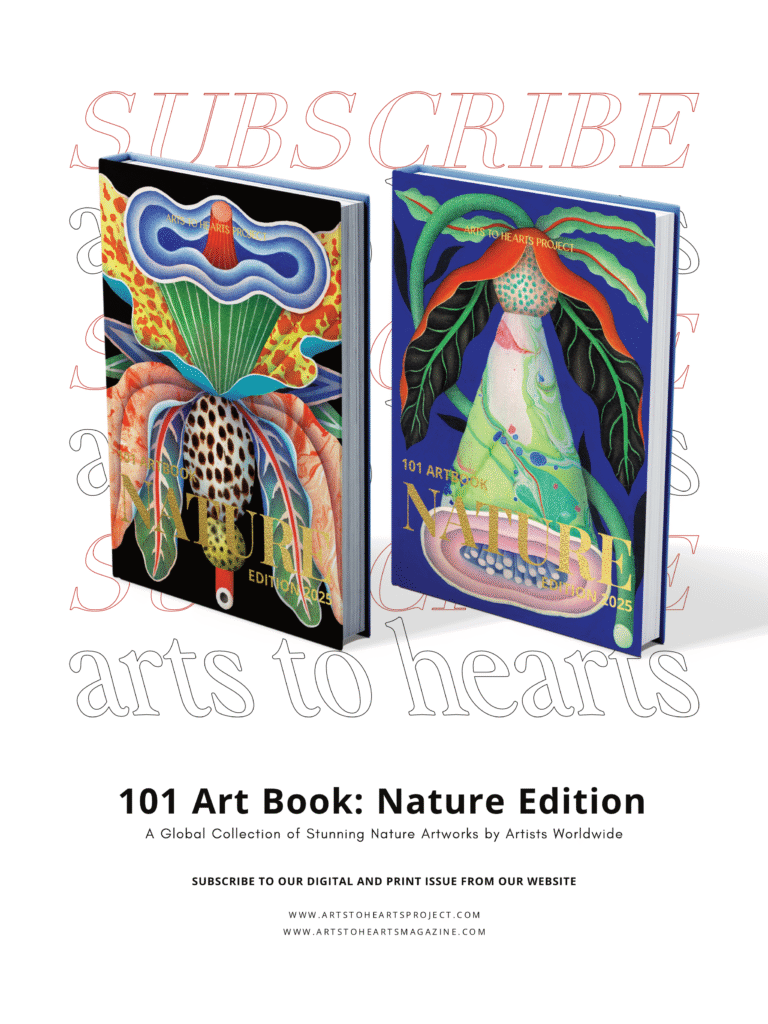
Krista Voto is a featured artist in our book, “101 ArtBook – Nature Edition” You can explore her journey and the stories of other artists by purchasing the book here:
https://shop.artstoheartsproject.com/products/the-creative-process-book

Krista Voto is an interdisciplinary artist based in Atlanta, Georgia. Originally from New Jersey, she earned her BA in Visual Art and Art Education from Ramapo College of New Jersey. She later received her MFA in Sculpture from the Savannah College of Art and Design. Her work incorporates various materials, including metals, wood, and textiles. These sculptures frequently mimic chrysalis-inspired forms and the organic femininity found in tree structures. Voto’s work explores themes of womanhood, societal pressures, protection, and the human experience. Her most recent body of work, “Uprooted Ties,” draws parallels between naturally occurring root and vine formations and the intricate interweaving of fibrous structures. These organic labyrinths evoke a sense of biological and emotional interconnectedness, a poignant contrast to the current sense of social and cultural disconnection. Through these forms, she reminds us that, despite external division, nature connects us.
1. Your work explores themes like Womanhood, Natural Forms and the Human Experience—how do these themes show up in your materials and forms?
Womanhood and transactional feminism appear in my work both formally and conceptually. I find myself drawn to naturally occurring curvatures in vines, roots, and tree limbs because they feel inherently feminine to me. You’ll often see nest-like structures or curved enveloping forms in my work, symbols of nurturing, protection, and the societal expectations placed on women, especially regarding motherhood and bodily autonomy. More recently, my practice has expanded to reflect the broader human experience, particularly the biological and emotional threads that connect us.
In a time when humanity feels increasingly divided culturally, politically, and emotionally, I look to the natural world as a source of quiet truth. The intertwining crepe myrtle roots in Georgia and the suspended vine systems of the Banyan trees I encountered in Vietnam speak a universal language of connection. I translate these forms into wall and ceiling hanging soft sculptures, using them as visual metaphors for resilience and interconnectedness. In contrast to the uprooted ties and fragmentation that define so much of modern society, the natural world persists in its quiet, unwavering unity.
Creating isn’t a hobby for me; it’s deeply embedded within the fibers of my being. I was made to do this, and I’ll stop at nothing for success.
Krista Voto

2. As both an educator and practicing artist, how does teaching influence your studio practice, or vice versa?
My studio practice and teaching are deeply intertwined. Teaching at Kennesaw State University, just outside Atlanta, where I actively exhibit and create, allows me to maintain a direct connection between my professional art practice and my role as an educator. I regularly bring conversations about the Atlanta art scene into the classroom, exposing my students to the realities of being a working artist.
I invite them to attend my exhibitions, talk openly about pricing their work, and emphasize the importance of valuing their time, labor, and creative voice. In return, my students inspire me. Their ideas, choice of materials, and ways of interpreting the world spark new thoughts in my practice. There’s a beautiful reciprocity in sharing space with young artists; they challenge me to stay curious and grounded. For me, creating and teaching are part of the same ecosystem. Art making is about community, and my classroom is an extension of that creative space. We learn and grow together, constantly exchanging energy and ideas that feed our individual and collective practices.

3. What drew you to large-scale installation and sculpture as your primary mode of expression?
Multiple times within my artistic career, I’ve tried something for the first time and felt something intrinsic within me click into place. Making my first installation piece was one of those times. When I entered graduate school at SCAD, I had no idea where my practice would lead. I went from woodworking alongside my dad in his garage to suddenly having access to professional gallery spaces to install in. My first project in grad school, a rough combination of clay and twigs, was unsuccessful.
After this failure, one of my professors challenged me to try something new: an installation. At the time, I didn’t even know what that meant. But I did research and accepted the challenge. That first installation I made involved a projection, a nested form, and an immersive soundscape that viewers had to enter physically. From that point forward, I became captivated by creating experiences, moving beyond the idea of simply placing something on a pedestal. I wanted my viewers to physically interact with the work and move through my sculptures. Large-scale installation became my primary mode of expression because it allows me to activate space, emotion, and bodily presence in ways that resonate deeply with viewers. It turns passive observation into active engagement.
I received my first public art commission in 2023, a multi-story metal sculpture titled Serpentine Dancer, which is slated for completion in May 2025. This marked my first foray into public art. I quickly realized that creating a large-scale, permanent installation for a community space is an entirely different endeavor than working in the studio. It demands years of planning, coordination, and problem-solving. With guidance from my mentor, Maria Artemis, a well-established public artist and genius fine artist, I was confident I could proceed with the project.
Her support and experience helped me navigate the complexities of creating sculpture at this scale. This project has completely reshaped my understanding of what it means to be a public artist. From working closely with engineers and fabricators to collaborating with city officials and my partners at SCAD, I’ve learned how much time, intention, and care go into creating a piece that is not only safe and structurally sound, but also meaningful, accessible, and visually compelling for the public. This experience has deepened my commitment to creating artwork that lives outside traditional gallery spaces, art that becomes part of a city’s landscape and people’s daily lives. I’m energized by the idea that this piece will be a permanent presence, something people can return to, experience, and interpret in their own ways for years to come.

Art making is about community, and my classroom is an extension of that creative space. We learn and grow together, constantly exchanging energy and ideas that feed our individual and collective practices.
Krista Voto
5. You’ve exhibited everywhere from Burning Man to traditional galleries—how do you adapt your work to such different spaces and audiences?
When I create work, it is driven by obsession and intuition. I don’t typically begin with the space or audience in mind; I start with a concept or material that captivates me, and the work naturally evolves to fit its environment. For example, when developing my Serpentine Dancer textile sculptures, I was deeply fascinated by the idea of freezing movement, specifically capturing a fleeting moment. After months of trial and error, I discovered a way to suspend fabric mid-motion, mimicking the ephemeral lightness of the serpentine dance. These sculptures, full of color, motion, and light, felt at home in Burning Man’s immersive and experiential setting. Their temporary, interactive nature matched the spirit of the event perfectly.
More recently, I’ve been fixated on the root structures of Crepe Myrtle trees, especially the way they erupt from sidewalks, refusing to be suppressed. That obsession and inspiration from the suspended root systems of the Great Banyan trees I encountered in Saigon led to a new body of work. I took root impressions and translated them into wall sculptures that feel more suited to traditional gallery spaces. These works hang from walls and ceilings, creating quieter, more contemplative experiences for viewers. Ultimately, I don’t tailor the work to the space; I let the work lead. Once it’s realized, I think about where it belongs and how it might interact with a specific audience or environment.

6. What’s been the most transformative moment in your creative journey so far?
The most transformative moment in my creative journey was when I realized that being a working artist wasn’t a choice. It was an absolute. Growing up, I was always creating. I took art classes outside of school and worked with photography, drawing, painting, and sculpture—I even flipped furniture and cabinetry. I drew on every scrap of paper I had. But despite my love for making, It was constantly hammered into my brain that being an artist wasn’t a “real” job. I internalized that, and for a long time, I assumed art would remain a hobby.
Then, in undergrad, everything changed. I took my first sculpture class and had my first true artistic clicking moment. Suddenly, I understood that first, I was a sculptor and, second, that this wasn’t just something I enjoyed; it was part of who I am. Creating isn’t a hobby for me; it’s deeply embedded within the fibers of my being. From that moment forward, I committed fully to this path. I now create not only to prove, especially to myself and to those who doubted that a life in art is possible but also because I genuinely don’t have a choice. I was made to do this, and I’ll stop at nothing for success.
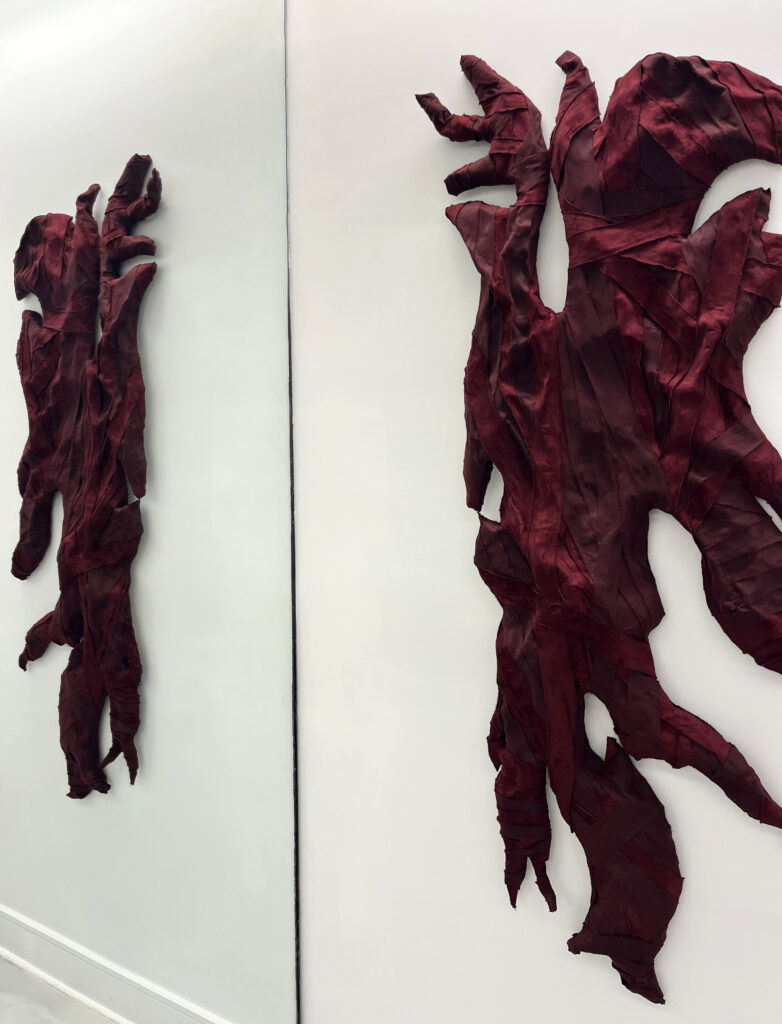
Krista Voto’s artwork is a powerful exploration of the intersections between nature, womanhood, and the human experience. Through her sculptural work, she highlights themes of interconnectedness, resilience, and the emotional and biological threads that bind us together. Her art, often inspired by organic forms such as tree structures and root systems, speaks to a universal need for connection in an increasingly fragmented world.
Krista’s journey—from teaching and collaborating with emerging artists to creating large-scale public installations—shows how art can be both a deeply personal expression and a way to engage with the broader community. Her work is a reminder of nature’s quiet truths and the strength we find in our shared humanity.
To learn more about Krista, click the following links to visit her profile.
Arts to Hearts Project is a global media, publishing, and education company for
Artists & Creatives: An international audience will see your work of art, patrons, collectors, gallerists, and fellow artists: access exclusive publishing opportunities and over 1,000 resources to grow your career and connect with like-minded creatives worldwide. Click here to learn about our open calls.