
6 Ceramic Artists Who Let Their Hands Speak Through Clay

👁 629 Views
Ceramics carry with them a language older than words. Born from earth, transformed by fire, and refined by human hands, this medium has always been a dialogue between fragility and endurance. Clay remembers every touch, every press, every carving it holds within it the story of both the maker and the moment. What begins as raw, unformed earth becomes something lasting, something that can hold water, light, or memory itself.
At the Arts to Hearts Project, we celebrate ceramics as more than utility or ornament; we see it as an intimate art form that connects nature, craft, and imagination. From the vessels of ancient civilizations to today’s experimental sculptures and installations, ceramics have always embodied resilience and transformation. They remind us that beauty can emerge from patience, from fire, and from the willingness to mold what is formless into form.
This week, we turn our gaze to ceramic artists who are expanding the boundaries of this elemental medium. With clay, glaze, and kiln, they create pieces that are not just objects but experiences textures that invite touch, surfaces that capture light, and forms that speak of both tradition and reinvention.
Ceramic art is, at its heart, a practice of metamorphosis. It teaches us that fragility and strength can coexist, that what begins as fragile clay can, through fire, become enduring. In the hands of these artists, earth becomes a story, and every vessel, sculpture, or shard whispers of permanence, transformation, and the quiet power of creation.
Jacqueline Schapiro @jschapiro
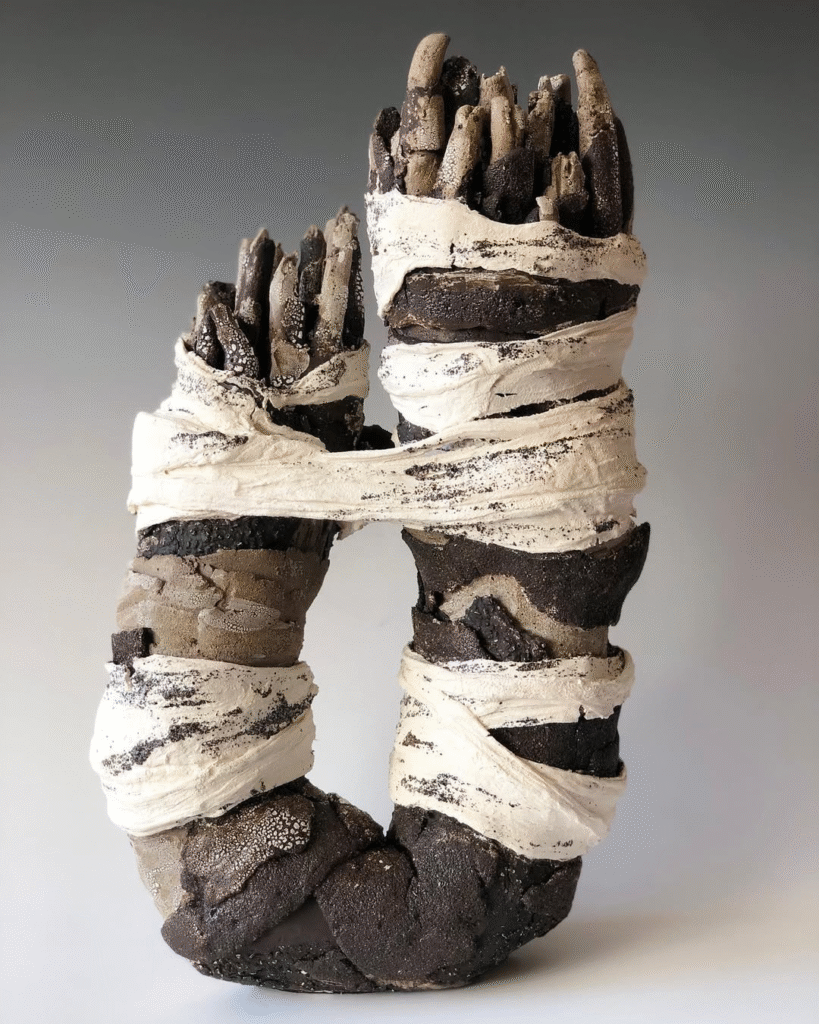
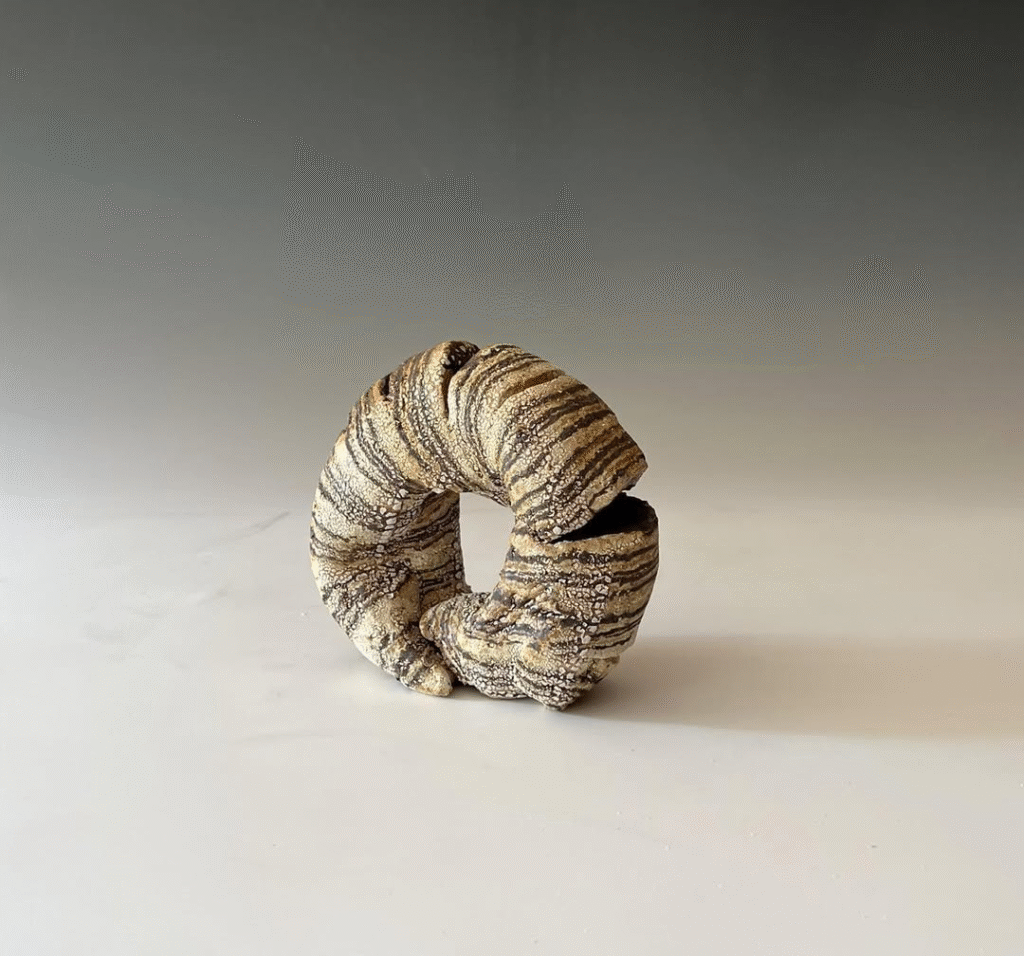
Jacqueline Schapiro’s ceramic practice is rooted in the Chilean landscape, where clay, porcelain, and volcanic lava carry both ancestral memory and contemporary vision. Born in 1969 in Chile, Schapiro grew up the granddaughter of immigrants, her early life shaped by discipline and perseverance. At the age of three, she was diagnosed with severe hearing loss, a circumstance that heightened her visual sensitivity and deepened her capacity to observe materiality, nature, and the pre-Columbian traditions embedded in her cultural environment. What began as a painterly exploration of mimesis and abstraction evolved into a sculptural practice where ceramics became her chosen language of rupture, resilience, and transformation. Her works draw inspiration from the wrappings of the ancient Chinchorro culture in northern Chile, bodies bandaged and preserved for millennia, testifying to the endurance of material against the corrosion of time. Echoing these forms, Schapiro incorporates volcanic sand, clay, and porcelain into plates, layers, and solid structures, leaving intentionally irregular finishes that foreground both fragility and permanence.

For Schapiro, clay is more than a medium; it is a vessel of memory and dialogue. By preserving the rawness of earth textures, fractures, asymmetries she magnifies the sublime qualities of nature and its wild landscapes. Her work reflects on similarity and contrast across territories, cultures, and time, engaging ceramics as a way of interpreting the stratification of history and the scars of transformation. In her hands, clay becomes skin, landscape, and memory all at once. Since 2011, Schapiro has dedicated herself fully to ceramics, shaping a career that bridges personal research with international recognition. She studied at the Pontificia Universidad Católica de Chile and has expanded her practice through seminars with artists including Rafa Pérez, Cristina Córdova, Ruth Krauskopf, and Alberto Bustos. In 2021, she was accepted into the International Academy of Ceramics (AIC), affirming her position within the global field. Her works have been exhibited across Chile, Europe, and beyond: from the Biennale Révélations at the Grand Palais in Paris (2019), to the Porcelain Museum in Riga and many more Schapiro’s career is also marked by solo exhibitions including Dancing Textures at Galería Modigliani, Viña del Mar (2017), and Sediments (2017–2024) at the Israelite Community of Santiago, alongside multiple group exhibitions spanning Chile, Europe, and UNESCO cultural forums. Her trajectory is one of persistence and reinvention: beginning in painting, evolving through rupture, and crystallizing in ceramics as a form of cultural and ecological reflection.
“Ceramics gives me freedom of expression, valuing and dignifying the sublimity of nature,” Schapiro writes. “Through my work, I seek to replicate it, to dignify what I observe, and to create beauty. The flame passes unpredictably over the clay, leaving its scars, highlighting the journey from beginning to final form.”
Through her practice, Jacqueline Schapiro transforms ceramics into both vessel and voice, a medium where time, memory, and the earth itself converge.

Muhammad Soudy @soudy.mohamad
Muhammad Soudy is a ceramic artist whose journey spans more than twenty-five years, a life shaped by clay, research, and an unshakable commitment to expanding the language of ceramics. Born and raised in Egypt, he studied at the Faculty of Applied Arts, Ceramics Department, Helwan University, graduating in 2003 with a degree in ceramic art design. From the beginning, he stood out for both his technical mastery and his hunger to push beyond tradition, exploring new ways of marrying material, form, and meaning. Soudy’s practice has always been deeply personal, rooted in themes of women, home, and the hidden struggles of the soul. Clay becomes, for him, a vessel of expression, a way of embodying both individual and collective experience. His work is not only aesthetic but human—sculptures that speak of fragility, resilience, and the complexity of belonging. In his hands, ceramic forms become a language of empathy. His career has been marked by a wide arc of recognition. He has received awards in Egypt and abroad, among them the Egyptian Incentive Award, the Youth Salon prizes, and most recently the prestigious Multicultural Fellowship from the National Council on Education for the Ceramic Arts (NCECA) in the United States in 2023. His exhibition history is equally expansive, with solo presentations at the Palace of Arts in the Egyptian Opera House and Al Jazeera Arts Center, and participation in group shows and biennales from Cairo to Izmir, Barcelona to Zagreb, Belgium to Ukraine. These exhibitions not only reflect his creative reach but also his belief that ceramics can act as a bridge across cultures.

Soudy is constantly searching for new techniques, experimenting with materials that challenge convention. He has developed unique crawling glaze effects through the use of gypsum, and explored ways of integrating metal frameworks into his ceramic structures, expanding the scale and stability of his works. For him, ceramics is a living field, one that requires continual innovation. This spirit has carried him into international symposiums in Egypt, Latvia, Poland, Serbia, and beyond, where he has both learned and shared his expertise, often teaching workshops on the legacy of ancient Egyptian ceramics. Alongside his studio practice, Soudy also forged a career as a ceramic engineer, working with major companies like Duravit, Ideal Standard, and Vitro Egypt. For more than a decade, he oversaw production, liaised with clients, and designed for mass manufacture, applying his deep material knowledge to industry. What unites all of Soudy’s work, whether in art or engineering, is a belief in ceramics as a mirror of life itself. His pieces reveal both strength and vulnerability, permanence and fracture, innovation and tradition. They remind us that clay, like the human spirit, can be pressed, shaped, scarred, and yet still emerge with resilience and radiance. With decades of experience, a body of work that spans continents, and a research-driven practice that continues to evolve, Muhammad Soudy stands among the most significant voices in contemporary ceramics today an artist whose vessels and forms carry not just clay, but the weight and beauty of the human condition.


Rosa Nguyen @rosamandenguyen
Rosa Nguyen’s ceramics are born from an intersection of cultures, disciplines, and deep attentiveness to the natural world. A London-born artist of French and Vietnamese heritage, Nguyen studied Ceramics and Glass at Middlesex Polytechnic and the Royal College of Art. What began as a study of form and material has grown into a poetic practice that positions ceramics as a language of memory, impermanence, and transformation. Her ceramic works are instantly recognizable for the way they weave fragility with permanence. Using porcelain, stoneware, and experimental glazing, Nguyen creates vessels and sculptural pieces that echo both botanical forms and celestial landscapes. Some appear like relics excavated from the earth, eroded by water and time, while others feel weightless and otherworldly, reminiscent of seeds, blossoms, or planets suspended in space. Each piece reflects her ability to transform clay into objects that feel alive, pulsing with the rhythms of growth, decay, and renewal. What sets Nguyen apart is her use of nature not as ornament but as collaborator. She often presses plants into clay, fires them into porcelain, and allows the organic matter to burn away, leaving behind delicate imprints ghostly stems, fragile blossoms, and empty veins that trace what once lived.
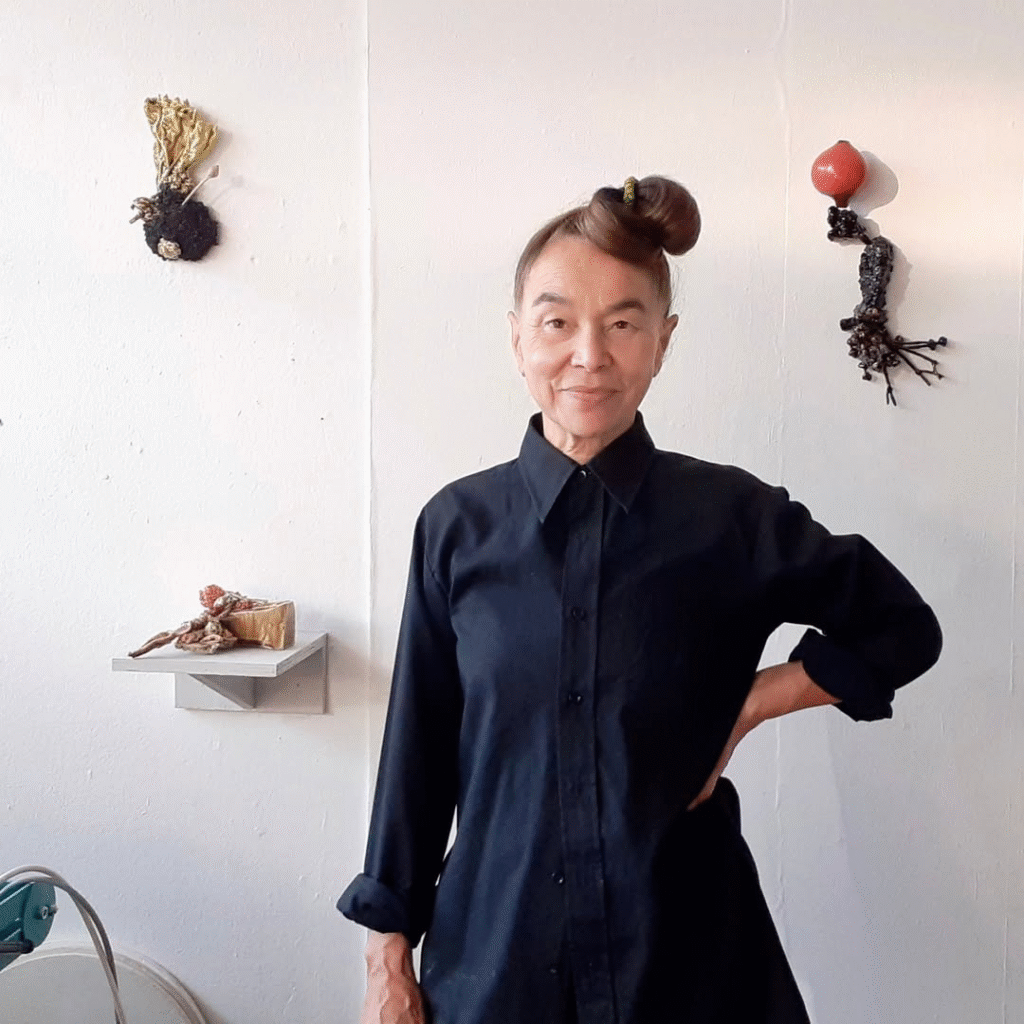
In other works, she incorporates found flora and natural pigments, building compositions that feel both scientific and spiritual, bridging herbarium and galaxy. Her ceramics often resist functionality; instead, they serve as vessels of memory, holding onto what time erodes. Exhibited widely across the UK and internationally, Nguyen’s ceramic installations have appeared at Collect Saatchi Gallery, Garden Museum London, and Arnolfini Gallery. Collectors and curators alike are drawn to her ability to push clay beyond its materiality, presenting ceramics not as static craft but as evolving ecosystems of form, texture, and meaning. Her work also extends into public commissions, where ceramics enter dialogue with architecture and landscape, further blurring the line between art and environment. For Nguyen, clay is not merely a medium but a philosophy, a way to embody the fragile balance between destruction and renewal. Her ceramic art captures the ephemeral beauty of nature and translates it into lasting form, offering audiences a moment to reflect, to slow down, and to recognize the quiet magnificence that lies in impermanence. In her hands, ceramics are not just vessels; they are constellations of memory, earth, and sky.


Hasan Şahbaz @hasansahbaz_ceramic
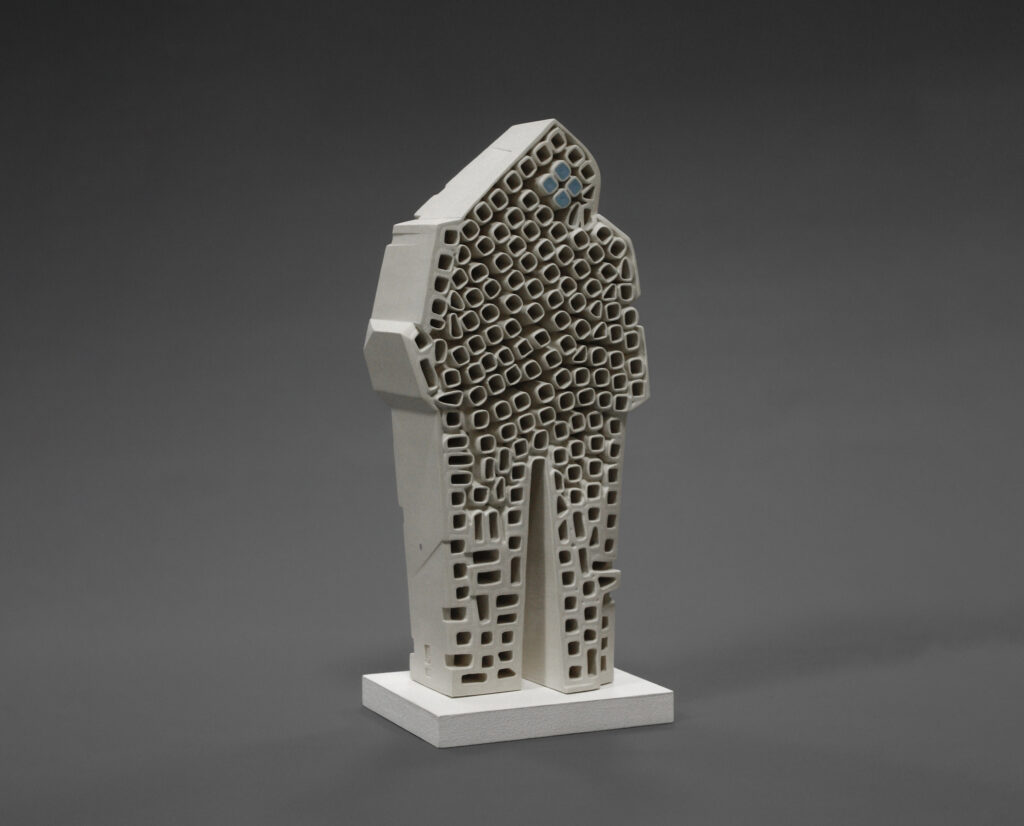
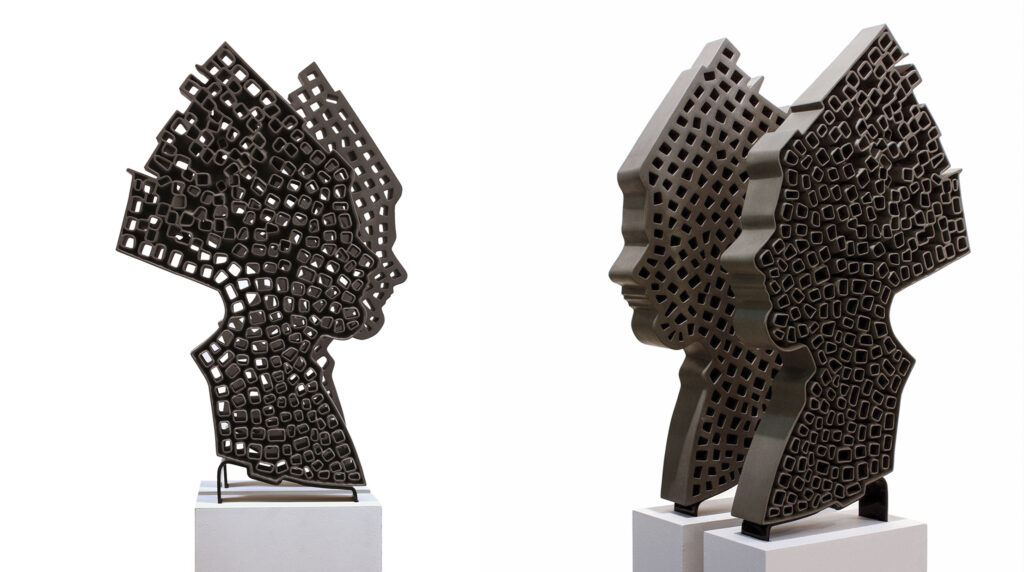
Hasan Şahbaz’s ceramic practice unfolds at the intersection of body and form, where clay becomes both structure and metaphor. Born in 1975 in Akşehir, Konya, Turkey, he pursued his studies at Anadolu University’s Department of Ceramics, later completing a master’s degree and a Proficiency in Art with the thesis Construction of the Body: Figure. Alongside his artistic journey, he has cultivated a distinguished academic career as lecturer, researcher, and mentor shaping not only clay but also future generations of ceramic artists. What began as a technical investigation into material has grown into a practice profoundly centered on the human figure as a vessel of meaning. In his recent works, Şahbaz employs coloured stoneware and multi-part plaster Molds to merge technical mastery with expressive force. Some sculptures resemble fragmented anatomies fractured yet complete while others stretch the figure into abstract forms that shift between architecture and sculpture. These works inhabit a space that is simultaneously corporeal and conceptual, fusing presence with memory, anatomy with abstraction. Şahbaz’s practice is a relentless search for innovation in form. He treats clay not merely as a material to be molded but as a language capable of articulating questions of permanence, vulnerability, and transformation.
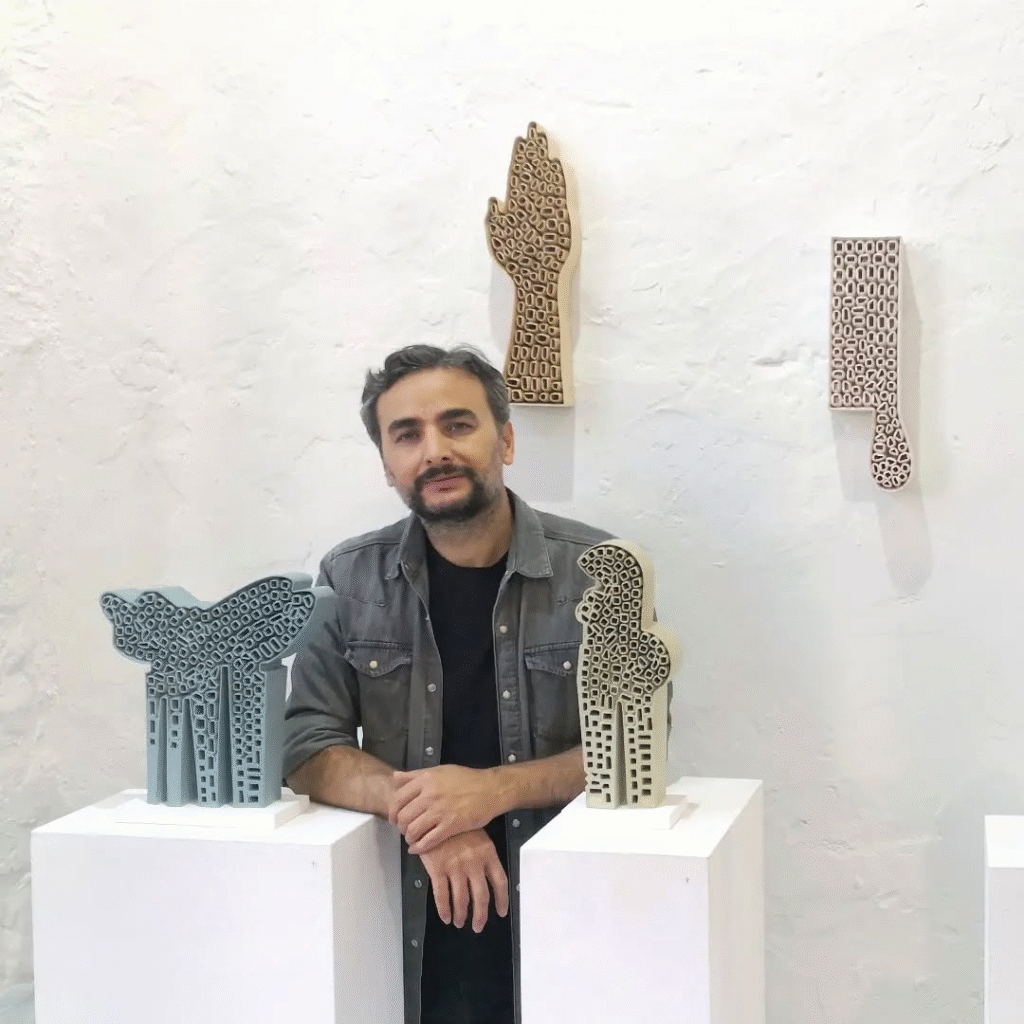
By reimagining the body through ceramic processes molding, casting, layering he creates pieces that resonate as both intimate explorations of identity and universal symbols of human experience. His career has earned international acclaim. To date, Şahbaz has held nine solo exhibitions and participated in more than one hundred biennials, symposiums, and exhibitions across the globe, from Japan and Korea to Latvia, Finland, Germany, Romania, and Tunisia. His achievements include First Prize at the CICA International L’Alcora Ceramics Competition in Spain (2018), the Bronze Award at the Martinson Ceramic Awards in Latvia (2016), as well as repeated recognition at biennials in Japan, Romania, and Korea. Within Turkey, he has been honoured five times with the Ministry of Culture and Tourism’s State Painting and Sculpture Competition “Success Award,” firmly establishing him as one of the country’s leading ceramic artists. His works and ideas have been featured in publications including New Ceramics, Seramik Türkiye, De Kleine K, and Infocerámica, contributing to an international conversation that bridges cultures and disciplines. Ceramics, in Şahbaz’s practice, transform into a space of inquiry and unfolding conversation between the body, memory, and transformation. His sculptures render clay as flesh, skin, and scar, turning fracture into narrative. Through them, the ceramic body speaks of fragility, persistence, and the endless journey of becoming.

Brook Sigal @brooksigal
For Brook Sigal, clay is never just clay. It is memory, metaphor, and a living reminder of cycles that shape both earth and human experience erosion, renewal, transformation. Born in Puerto Rico in 1962 and raised across Europe, Sigal discovered ceramics in 1999 as a self-taught maker. What began as an instinctive exploration later deepened into formal study at Central Saint Martins, London, where she graduated in 2015 with a project connecting water, minerals, and sustainability. From the start, her philosophy has been circular: nothing is wasted. Shards, misfires, and broken remnants are not discarded but given new life as the foundations for future work. This approach infuses her sculptures—twisted, perforated, layered with glazes that feel at once unearthed from the past and reaching toward the future, alive with the tension between fragility and endurance. Her path has been shaped by both apprenticeship and dialogue: learning from Jane Perryman, Marcus O’Mahoney, and in conversation with artists such as Alessandro Twombly and Gareth Mason. These encounters helped her develop a distinct vocabulary, one that holds permanence and impermanence in delicate balance.
Collaboration has always been central to Sigal’s practice. She has reinterpreted terracotta traditions in Salerno’s historic Cotto di Martino workshops, designed for international luxury brands, and in 2019 co-founded La Mine Studio in Paris a space for teaching, experimentation, and exchange. Her work has travelled widely, exhibited in museums, galleries, and biennials across Europe and beyond. In 2023, her series If Only One More Day was chosen for the 62nd Premio Faenza at the Museo Internazionale della Ceramica, affirming her place within contemporary ceramic discourse. Publications including World of Interiors, Elle Decoration, Marie Claire Maison, and i-D have also celebrated her vision. In recent years, Sigal has chosen a more nomadic way of working. Leaving her Paris studio in 2023, she began a cycle of residencies in Finland, Denmark, and Italy, letting new landscapes and traditions disrupt and reshape her practice.Sigal’s practice is a willingness to dwell in questions rather than answers. She asks how clay might safeguard memory, what its fractures might teach us about resilience, and how age-old ceramic traditions can respond to the urgencies of our time. Her latest works pierced, folded, and intentionally distressed carry these inquiries in their very surfaces. They speak of survival as something delicate yet determined, broken yet constantly renewing itself. Through them, ceramics became her language of both rupture and repair, where imperfection is not a flaw but a vital source of beauty and transformation.


Anthony Sonnenberg @anthonysonnenberg
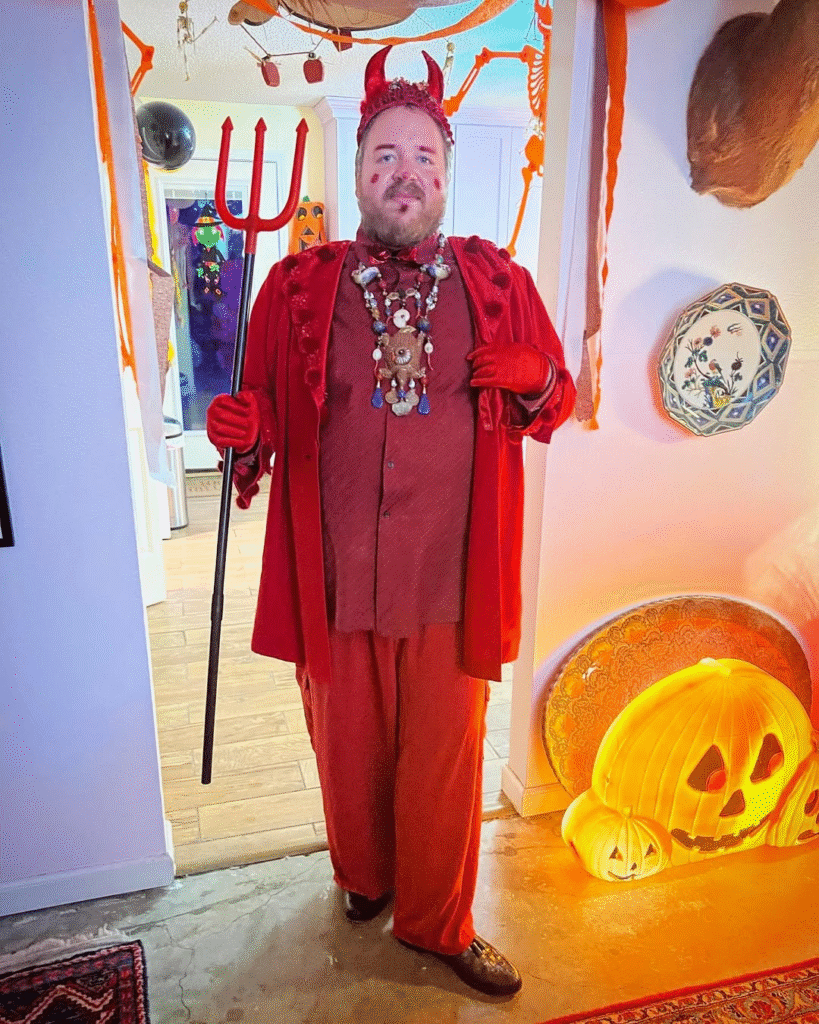
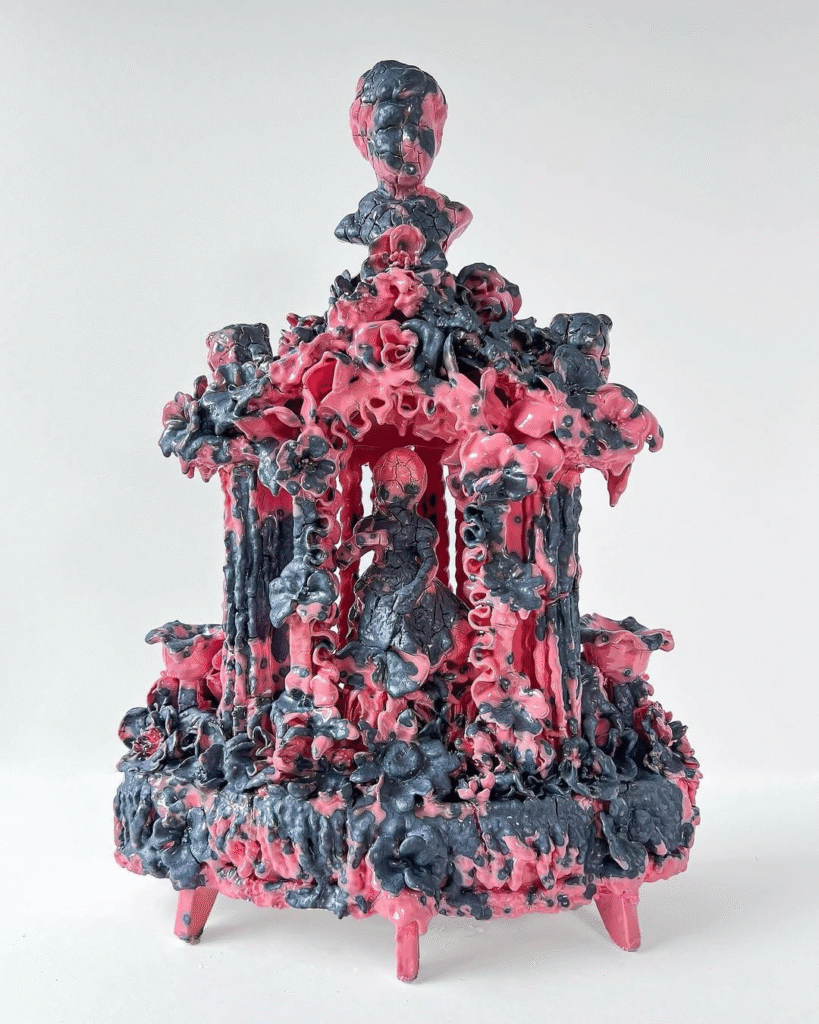
Anthony Sonnenberg’s creative vision exists at the meeting point of extravagance and delicacy, where ornament becomes at once a form of protection and an act of revelation. Born in 1986 in Graham, Texas, Sonnenberg first studied Italian and Art History before completing his MFA in Sculpture at the University of Washington, Seattle. What began as a scholarly fascination with history, form, and material has since unfolded into a practice that spans ceramics, performance, and installation, each medium becoming a platform to interrogate ideas of beauty, excess, and endurance. His ceramic sculptures are immediately identifiable for their luxuriant surfaces layered with lavish glazes, dripping in ornament, and yet always edged with the suggestion of fragility and decline. Floral, gilded, and baroque in sensibility, these works evoke altarpieces or treasured relics, but rather than glorifying authority, they uncover vulnerability. Decoration itself becomes metaphor: expressions of longing, sorrow, love, and mortality woven into porcelain and glaze.
His works remind us that splendour and ruin are forever entwined. What distinguishes Sonnenberg is his philosophy of excess. Rather than treating ornament as indulgence, he reclaims it as a form of defiance against austerity, invisibility, and the notion that fragility must be concealed. Across sculpture, performance, and installation, his art insists on fullness, emotional, material, and symbolic rooted in both historical resonance and contemporary urgency. Sonnenberg’s work has been shown extensively throughout the United States and abroad, including State of the Art II at Crystal Bridges Museum of American Art in Bentonville and many more. His career has also been enriched by several acclaimed residencies. These residencies not only deepened his engagement with craft traditions but also expanded the theatrical dimensions of his practice. Sonnenberg approaches ceramics as living allegories ornaments that carry the weight of history while revealing the fragility of the present. His works dwell on beauty’s paradox: brilliant yet impermanent, ornate yet delicate. Through clay, glaze, and performance, he creates a language where ornament reflects the human condition opulent, vulnerable, and enduring.


Ceramic art has always been a story of earth transformed of taking what is raw, fragile, and malleable, and shaping it into something that endures. These artists continue that tradition in ways both intimate and profound. Through fire, patience, and imagination, they coax clay into forms that hold memory, texture, and presence. Every vessel, every sculpture, every fragment of glaze carries its own history, but when brought together, they become something far greater than themselves. In this way, ceramics becomes not just an art form, but a meditation on transformation: a reminder that fragility and strength can live side by side, and that permanence is born through change. Their works are not only objects to behold, but experiences to feel pieces that hold warmth, rhythm, and silence within their surfaces.
At the Arts to Hearts Project, we believe that behind every ceramic work lies not only craftsmanship but vision: the courage to shape the formless, the patience to honor the process, and the willingness to let earth and fire speak together as one. To work with clay is to trust in transformation, to embrace imperfection, and to let every surface tell its own story.
If art that transcends form speaks to you, these ceramic artists deserve your attention. Their work reveals how process shapes beauty, how fragility holds strength, and how simple earth can become something luminous, lasting, and deeply human.