



10 Museums Every Art Lover Should Visit at Least Once
👁 65 Views
Museums have long been places where the world gathers its memory. Inside their galleries are objects that have survived centuries: paintings that once hung in royal courts, sculptures carved by ancient civilizations, and works that changed the course of artistic history. Standing in front of them offers something no reproduction or digital image can fully replace: the experience of encountering art in its physical presence.
For many travelers and art lovers, visiting a great museum is less about checking famous masterpieces off a list and more about understanding how cultures have expressed themselves over time. A single visit can move from the quiet precision of an Egyptian sculpture to the drama of a Baroque painting or the experimentation of modern art. These institutions reveal not only artistic achievement but also the stories of the societies that created it.
Around the world, certain museums have become cultural landmarks because of the extraordinary collections they safeguard. Institutions such as The Louvre in Paris, The British Museum in London, and the Vatican Museums draw millions of visitors each year, offering rare access to works that have shaped global art history.
The museums featured below represent some of the most remarkable places to experience art in person. Together they trace a journey through civilizations, movements, and artistic revolutions that continue to influence how we understand creativity today.
1. The Louvre (Paris, France)
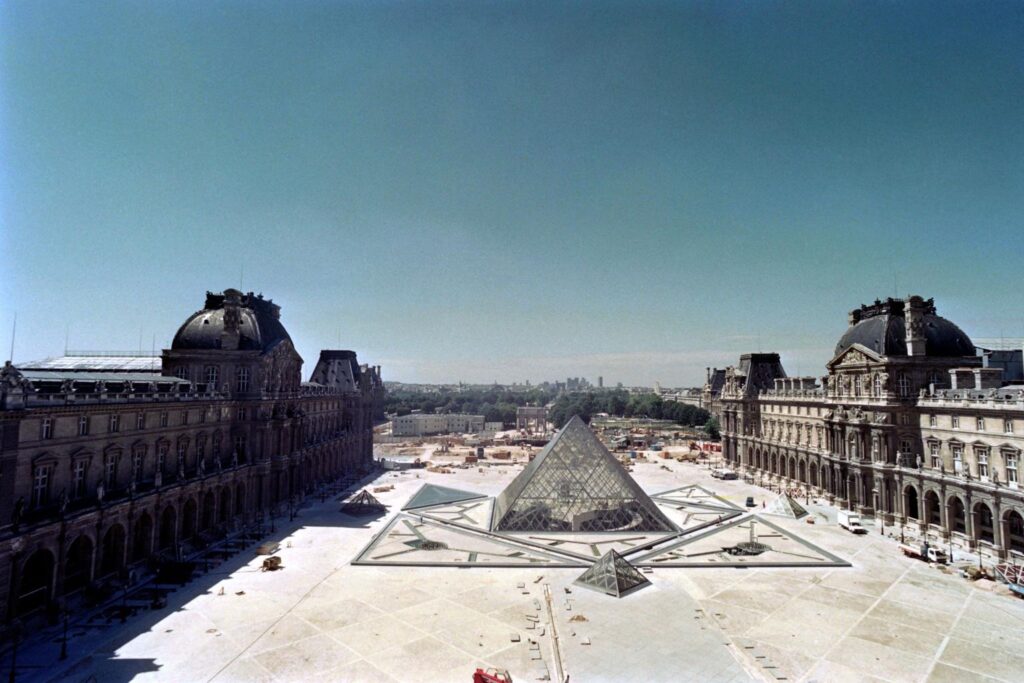
Few museums in the world carry the same cultural weight as the Louvre. Situated along the banks of the Seine in the heart of Paris, the museum occupies what was once a royal palace before being transformed into a public institution during the French Revolution in 1793. Today, it stands as the largest art museum in the world and one of the most visited cultural landmarks globally, welcoming millions of visitors every year.
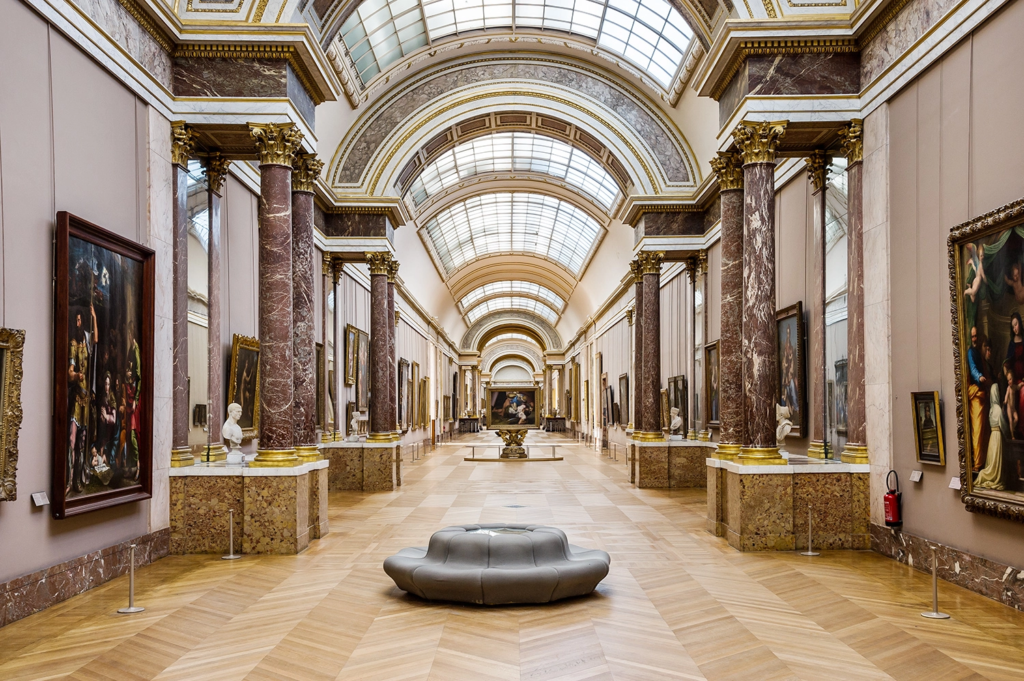
What makes the Louvre remarkable is not only the size of its collection but the breadth of history it represents. The museum houses tens of thousands of artworks spanning thousands of years from ancient Egyptian antiquities and Greek sculptures to Renaissance masterpieces and 19th-century European painting. Moving through its galleries feels like stepping through a living timeline of human creativity, where civilizations separated by centuries and continents appear side by side.
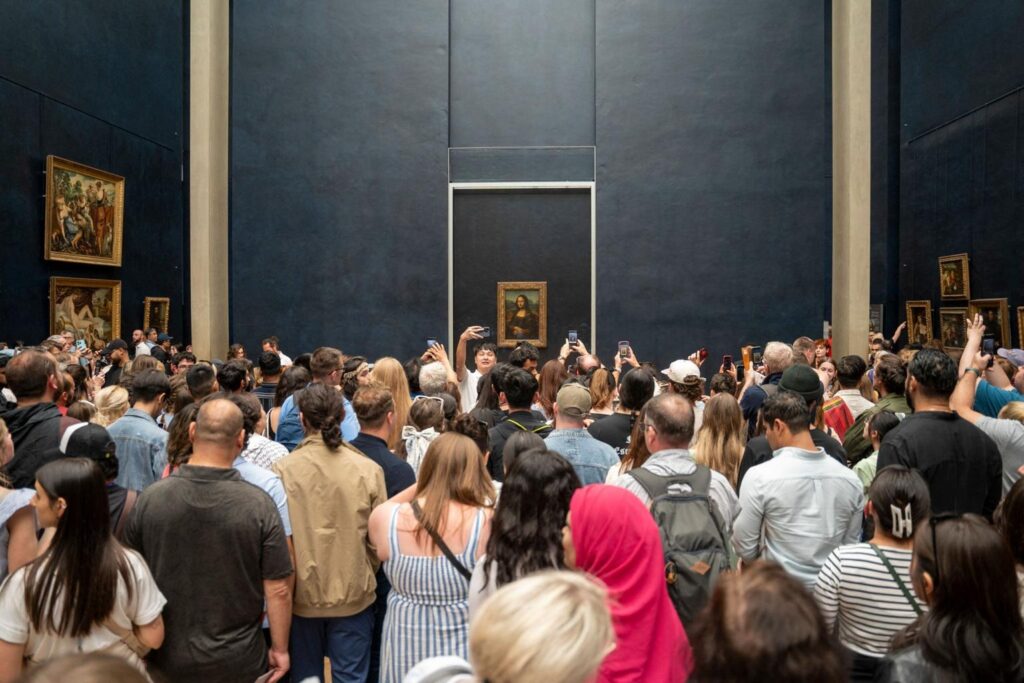
Among its most famous works are Leonardo da Vinci’s Mona Lisa, the graceful Greek sculpture Venus de Milo, and the dramatic Winged Victory of Samothrace. These iconic pieces draw enormous crowds, yet they represent only a fraction of what the museum holds. Entire wings are dedicated to Islamic art, Near Eastern antiquities, decorative arts, and monumental paintings, revealing how artistic traditions have evolved across cultures and eras.
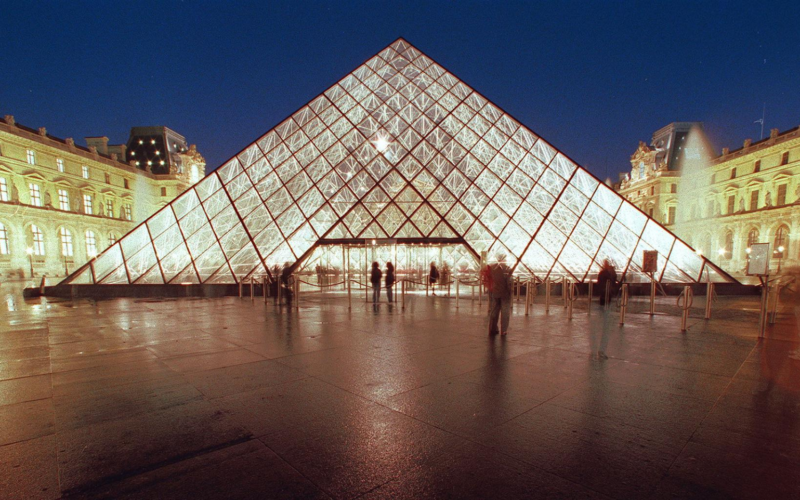
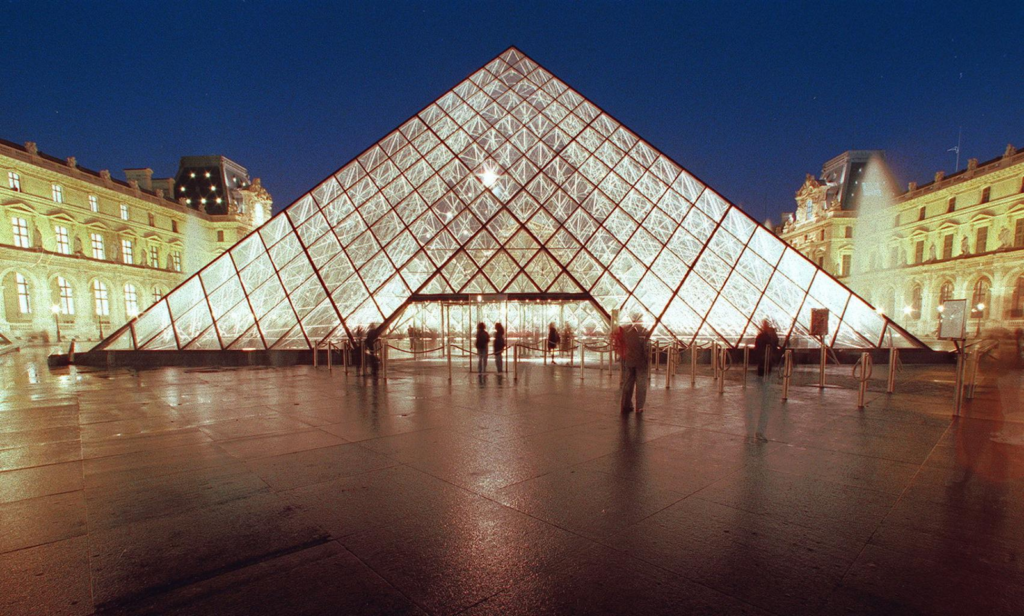
The Louvre’s architecture also adds to its impact. The glass pyramid entrance, designed by architect I. M. Pei, unveiled in 1989, stands in striking contrast to the surrounding classical palace. The structure has since become one of Paris’s most recognizable landmarks, symbolizing the museum’s ability to connect the historic past with contemporary design.
For many visitors, the Louvre is more than just a museum, it is a cultural pilgrimage, offering an unparalleled encounter with the history of art.
Museum Website: https://www.louvre.fr/en
2. The British Museum (London, United Kingdom)
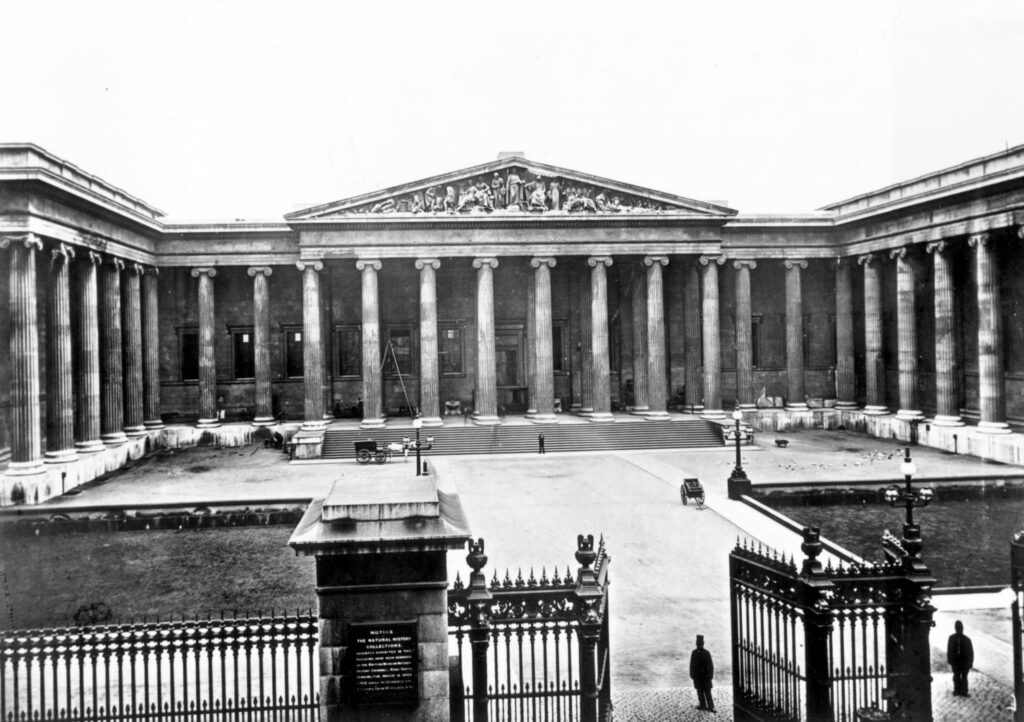
Standing in Bloomsbury in central London, the British Museum has long been considered one of the world’s most influential cultural institutions. Established in 1753 and opened to the public in 1759, it was among the first national museums created with the idea that knowledge and cultural heritage should be accessible to everyone. Over the centuries, its collections have grown into one of the most comprehensive records of human civilization ever assembled.
Today, the museum holds more than eight million objects representing cultures from every corner of the globe. Rather than focusing only on paintings or sculpture, its galleries present the story of humanity through artifacts, archaeological discoveries, and historical objects. Moving through the museum feels like traveling across continents and eras from ancient Egypt and Mesopotamia to classical Greece and Rome, as well as the artistic traditions of Africa, Asia, and the Americas.
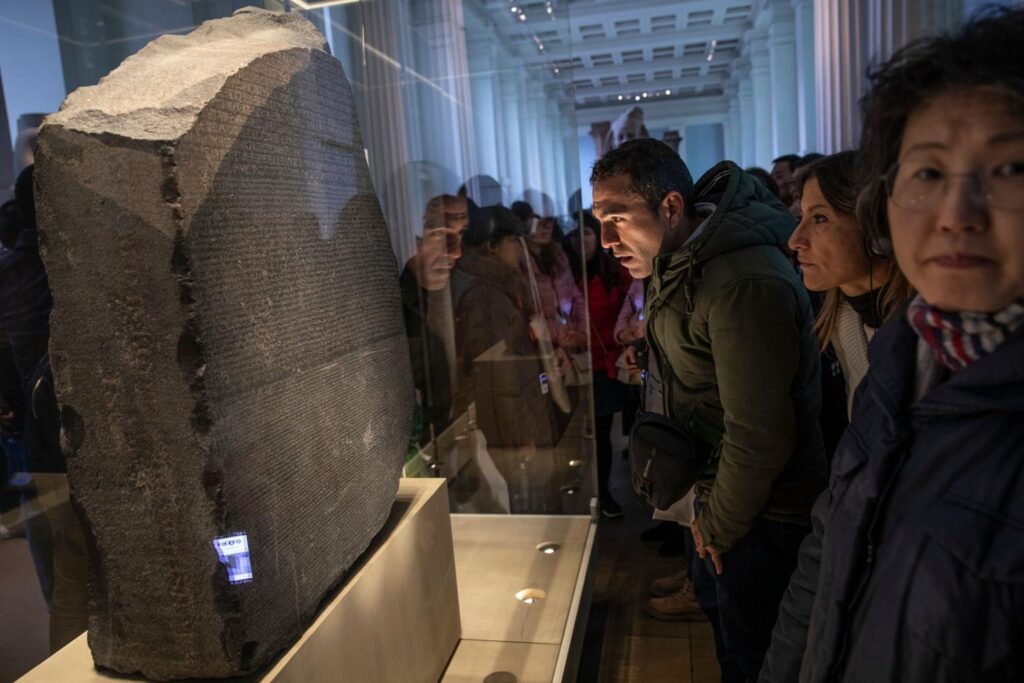
Among the museum’s most famous objects is the Rosetta Stone, the artifact that helped scholars decipher ancient Egyptian hieroglyphs and unlock a lost language. Nearby galleries contain the Parthenon sculptures from ancient Athens, monumental Assyrian palace reliefs, and intricately crafted Chinese ceramics. Together, these works illustrate how different civilizations expressed power, belief, and identity through art and craftsmanship.
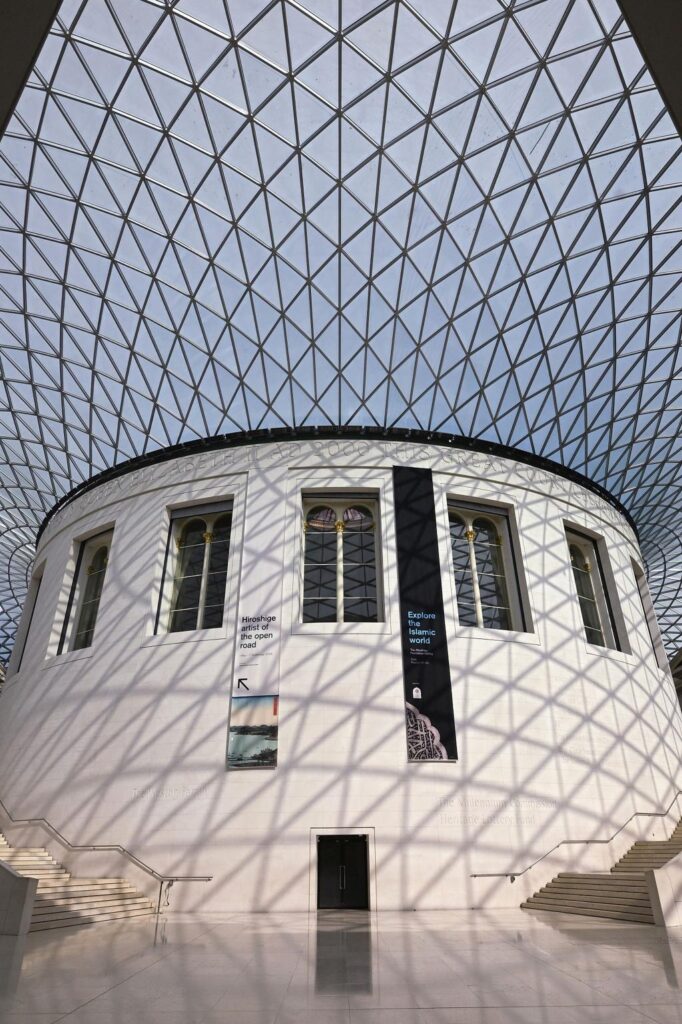
The museum’s architecture also contributes to its distinctive atmosphere. At its center lies the Queen Elizabeth II Great Court, a vast glass-roofed atrium designed by architect Norman Foster. The luminous space brings natural light into the historic complex and has become one of London’s most striking public interiors.
Few museums place the world’s cultures side by side in quite the same way. Within a single visit, travelers can encounter Egyptian funerary objects, Assyrian carvings, Greek sculpture, and Asian decorative arts. The experience is less about viewing isolated masterpieces and more about understanding how civilizations developed, interacted, and influenced one another over thousands of years.
Museum Website: https://www.britishmuseum.org
3. Vatican Museums (Vatican City)
Inside the walls of Vatican City lies a vast network of galleries and chapels that together form one of the most remarkable museum complexes in the world. The Vatican Museums are not the result of a single vision but centuries of collecting by popes who saw art as both an expression of faith and a reflection of cultural power. Over time, their patronage brought together an extraordinary range of sculptures, paintings, tapestries, and antiquities, turning the Vatican into one of the most significant centers of artistic heritage in Europe.
The museum complex includes dozens of galleries, each offering a glimpse into different periods of artistic history. Classical sculptures from ancient Greece and Rome sit alongside Renaissance masterpieces, while long corridors display detailed tapestries and elaborately painted ceilings. One of the most striking spaces is the Gallery of Maps, where enormous frescoed maps of Italy line the walls, revealing the Renaissance fascination with geography, science, and artistic spectacle.
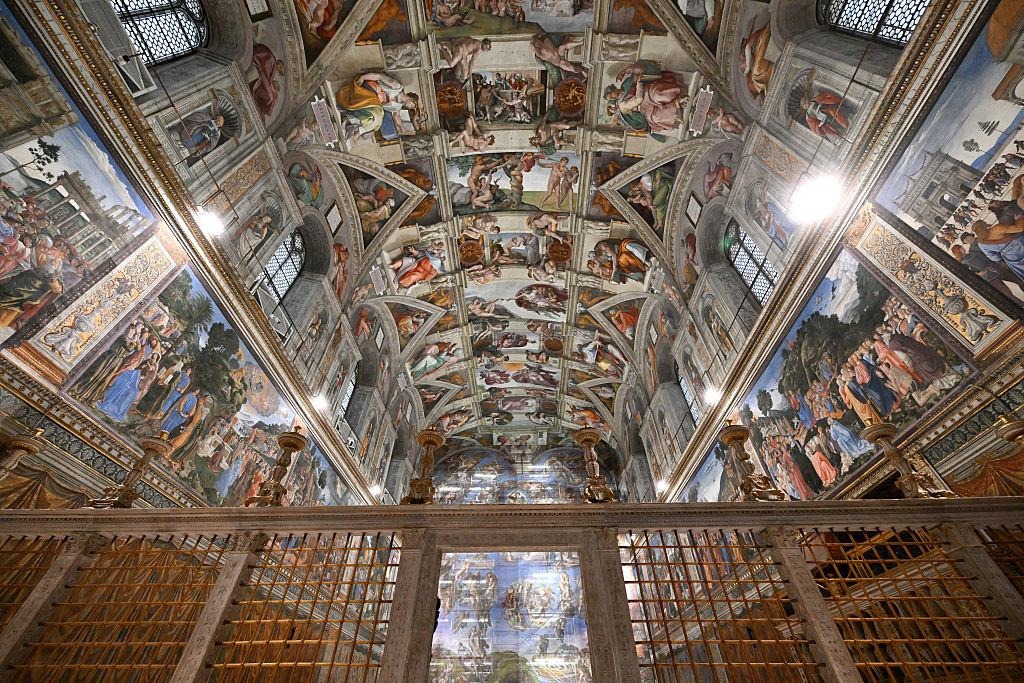
For many visitors, however, the journey through the museums builds toward a single destination: the Sistine Chapel. Michelangelo’s legendary ceiling frescoes transform the chapel into one of the most powerful artistic spaces ever created. Scenes from the Book of Genesis unfold across the ceiling, culminating in the iconic moment of The Creation of Adam. Years later, Michelangelo returned to paint The Last Judgment on the altar wall, filling the chapel with a dramatic vision of divine judgment and human destiny.
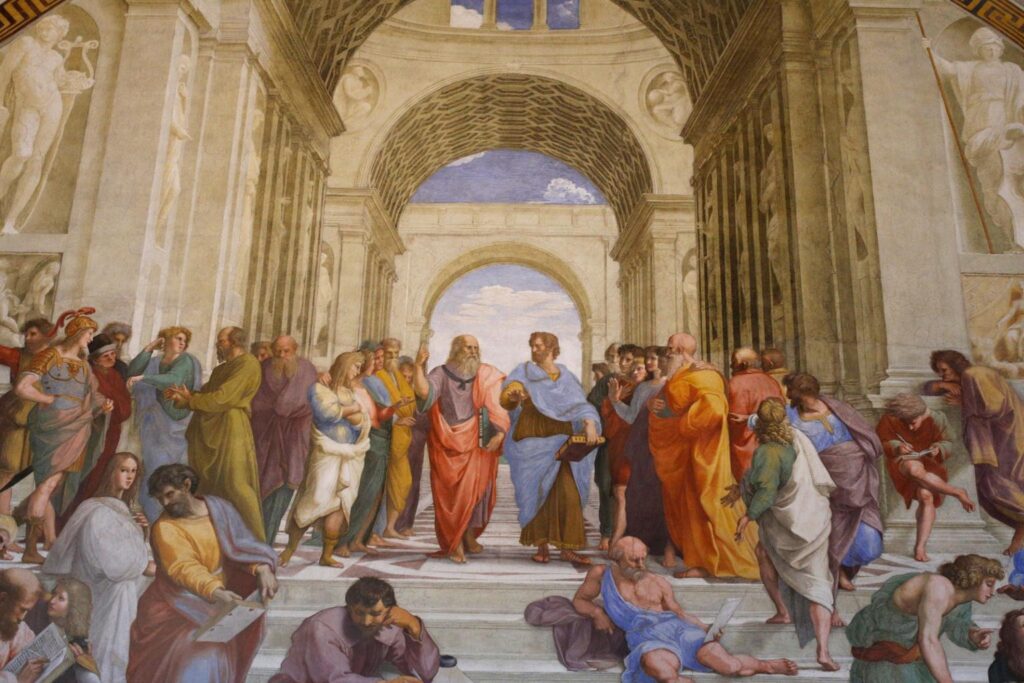
Nearby, the Raphael Rooms display another triumph of Renaissance painting. Raphael’s School of Athens brings together philosophers such as Plato and Aristotle in a grand architectural setting, symbolizing the intellectual spirit of the Renaissance.
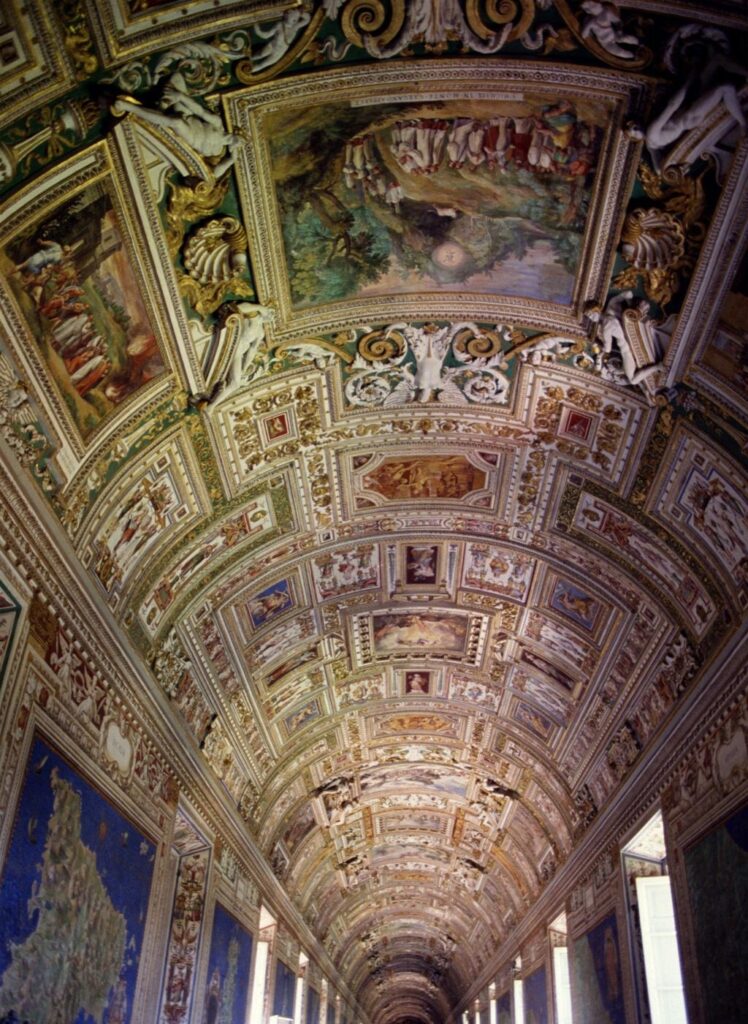
Moving through the Vatican Museums reveals how closely art, religion, and political authority were intertwined during the Renaissance and beyond. Each gallery reflects centuries of patronage that shaped some of the most influential works in Western art history.
Museum Website: https://www.museivaticani.va/content/museivaticani/en.html
4. The Metropolitan Museum of Art (New York City, United States)
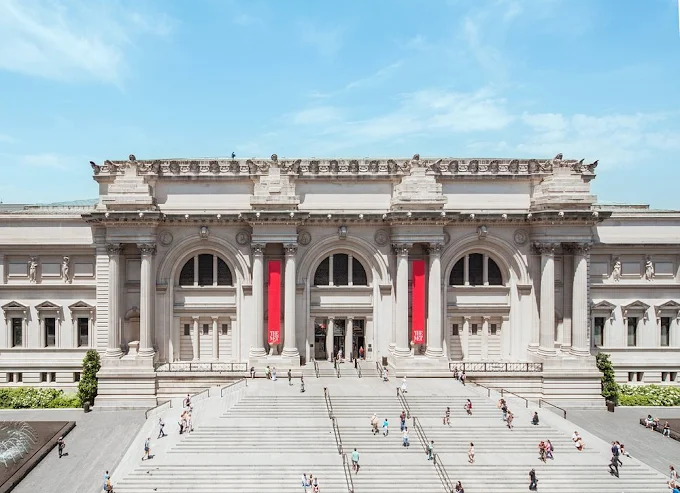
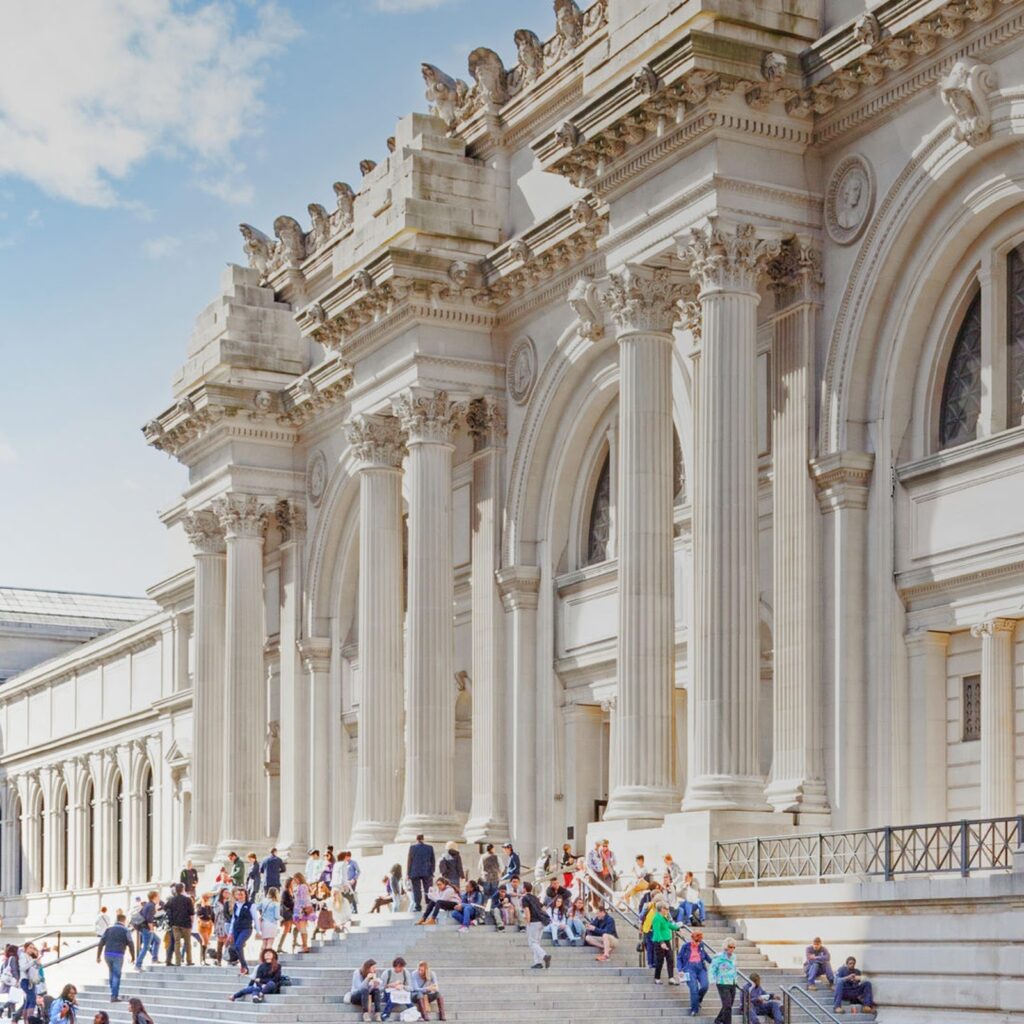
On the eastern edge of Central Park, a broad staircase leads into one of the most ambitious museums ever created. The Metropolitan Museum of Art, often simply called “The Met” was founded in 1870 with a bold vision: to bring art from around the world to the American public and to create an institution that could rival the great museums of Europe.
More than a century later, that ambition has largely been realized. The Met now houses over two million works spanning more than 5,000 years of history. What makes the museum particularly remarkable is the range of cultures represented under one roof. Its galleries move fluidly from ancient Egyptian temples and Greek sculpture to African masks, Japanese prints, medieval armor, and modern European painting.
One of the museum’s most memorable spaces is the Temple of Dendur, an ancient Egyptian monument that was carefully relocated to New York in the 1960s. Installed inside a vast glass gallery overlooking Central Park, the temple creates a striking dialogue between antiquity and modern architecture. Elsewhere, visitors can encounter masterpieces by artists such as Rembrandt, Vermeer, and Vincent van Gogh, alongside intricate decorative arts, textiles, and historical artifacts.
The Met is also notable for how it encourages visitors to explore connections between cultures. Rather than presenting art as isolated national traditions, the museum’s departments reveal how artistic ideas have traveled across continents through trade, migration, and cultural exchange.
For many visitors, a single trip only scratches the surface of what the museum contains. Entire afternoons can disappear inside its galleries, moving from one era to another. In that sense, the Met functions not only as a museum but as a vast cultural archive, one that reflects the diversity and complexity of human creativity across time.
Museum Website: https://www.metmuseum.org
5. State Hermitage Museum (St. Petersburg, Russia)
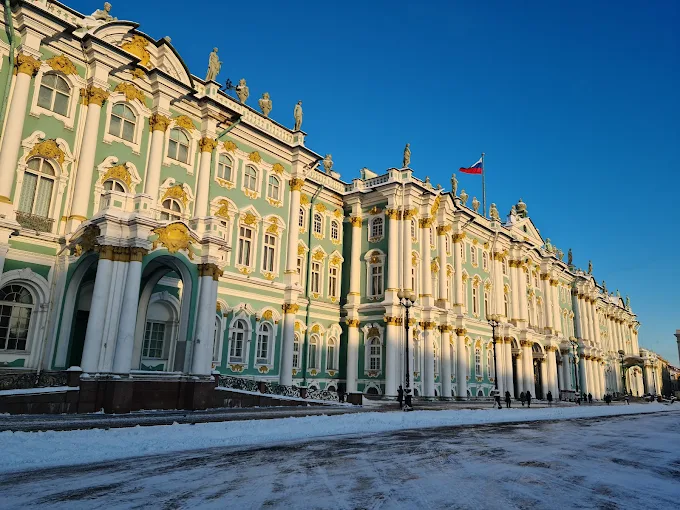
The story of the Hermitage begins not with a public museum but with a private imperial collection. In 1764, Empress Catherine the Great purchased a group of European paintings to decorate her palace in St. Petersburg. What began as a personal passion for collecting soon grew into one of the most extraordinary art collections in the world. Over time, the imperial holdings expanded dramatically, eventually forming the foundation of what is now known as the State Hermitage Museum.
Today the museum occupies a vast complex of historic buildings along the Neva River, including the famous Winter Palace, once the official residence of the Russian tsars. With millions of objects in its collection, the Hermitage ranks among the largest museums on the planet. Its galleries contain an astonishing range of works, from ancient Greek and Roman artifacts to masterpieces of European painting and sculpture.
The museum is particularly renowned for its collection of Western European art. Visitors can encounter paintings by Leonardo da Vinci, Rembrandt, Raphael, and Titian, alongside major works by later artists such as Van Gogh, Monet, and Matisse. These masterpieces appear within lavish palace interiors filled with gilded moldings, marble staircases, and vast ceremonial halls reminding visitors that the museum itself was once a center of imperial power.
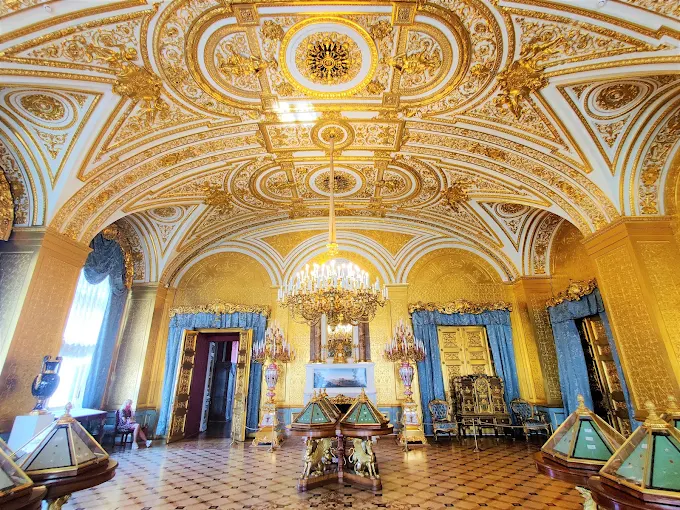
Exploring the Hermitage is as much about architecture as it is about art. Each room reflects a different chapter of Russian history, from the opulence of the Romanov dynasty to the cultural ambitions of modern Russia. Walking through its corridors offers a rare glimpse into how royal collections were transformed into a museum open to the public.
For many travelers, the Hermitage represents one of the most unforgettable museum experiences in the world, a place where artistic masterpieces and imperial history exist side by side.
Museum Website: https://www.hermitagemuseum.org
6. Museo Nacional del Prado (Madrid, Spain)
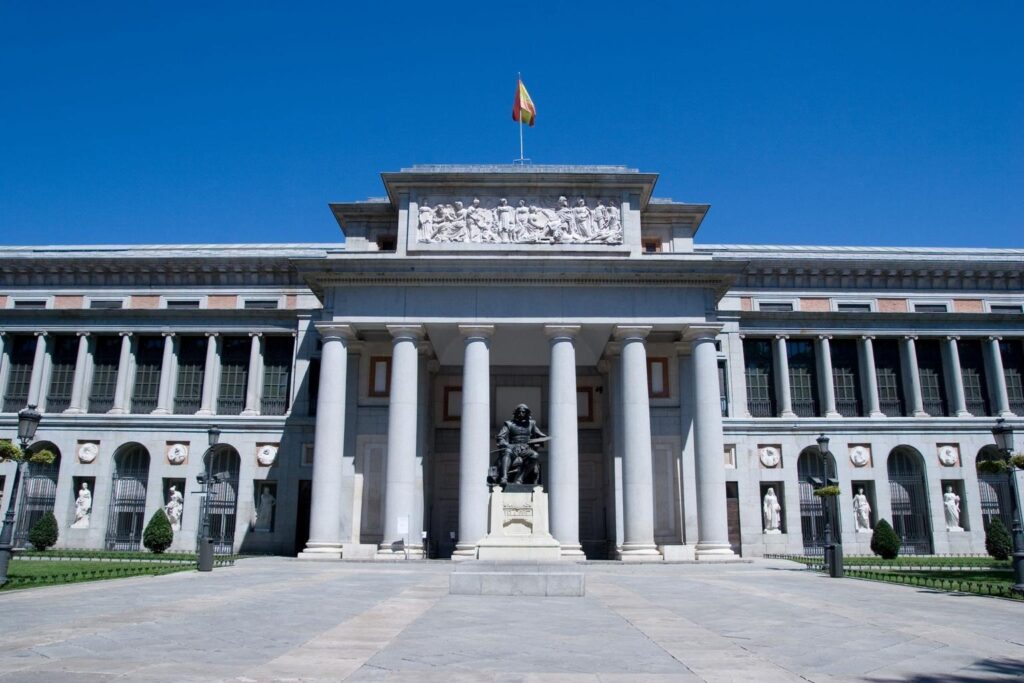
In Madrid, art history unfolds through the powerful tradition of Spanish painting, and few places present it more compellingly than the Prado Museum. Established in 1819, the museum was originally created to display works from the Spanish royal collection. Over the centuries, that collection evolved into one of the most important repositories of European painting, with a particular emphasis on Spanish masters.
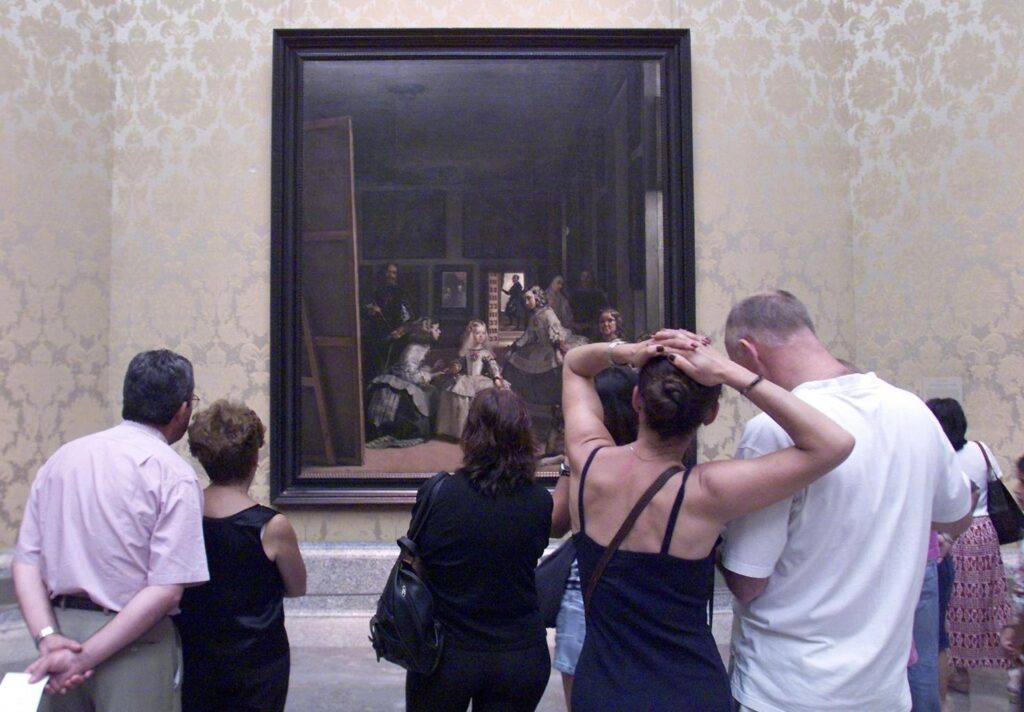
The Prado is often described as a museum where individual artists can be experienced in extraordinary depth. Few institutions offer such extensive collections of painters like Diego Velázquez, Francisco Goya, and El Greco, figures who fundamentally shaped the course of Spanish art. Velázquez’s Las Meninas, widely considered one of the most influential paintings in Western art history, remains the centerpiece of the museum. Its complex composition and subtle play between viewer, subject, and artist continue to fascinate scholars and visitors alike.
Beyond Spanish painting, the Prado also holds exceptional works by other major European artists. Paintings by Titian, Peter Paul Rubens, and Hieronymus Bosch reflect the historical connections between the Spanish crown and the wider artistic networks of Europe. Bosch’s haunting triptych The Garden of Earthly Delights, for instance, remains one of the museum’s most captivating and mysterious works.
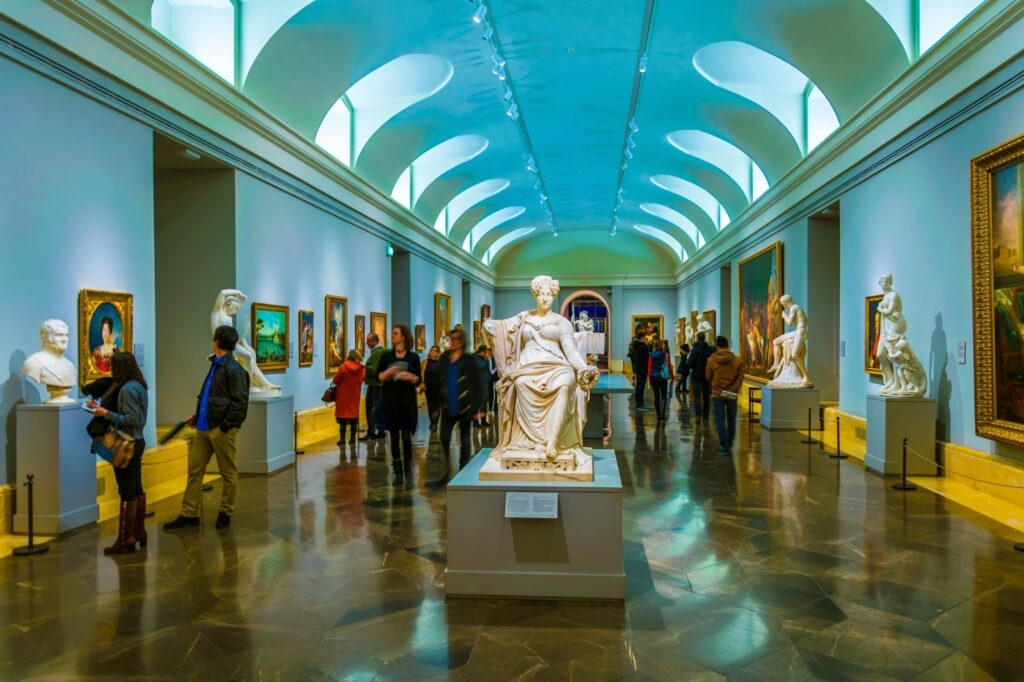
Despite its global importance, the Prado retains a sense of focus and clarity that distinguishes it from some of the world’s larger museums. Rather than attempting to represent every artistic tradition, it tells a more concentrated story, one that highlights the evolution of European painting from the Renaissance through the nineteenth century.
For visitors interested in the drama, symbolism, and emotional intensity of classical painting, the Prado offers an unforgettable encounter with some of the most profound works ever created.
Museum Website: https://www.museodelprado.es/en
7. Museum of Modern Art (New York City, United States)
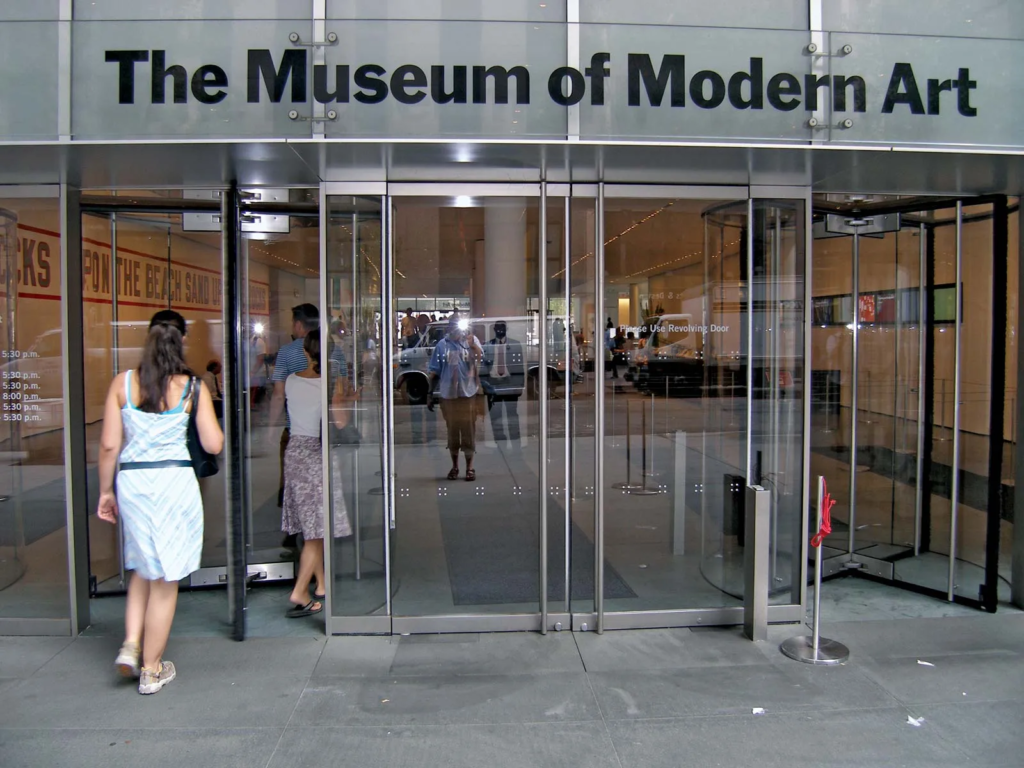
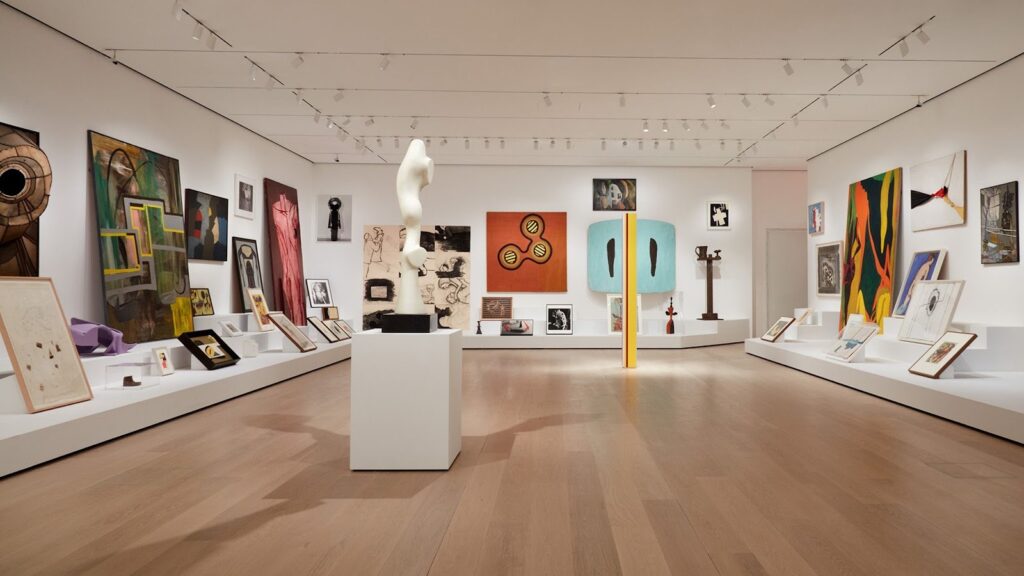
Modern art did not always have a place in major museums. In the early twentieth century, many of the works that are now considered masterpieces were once viewed as radical, experimental, or even controversial. The Museum of Modern Art—better known as MoMA was founded in 1929 with the goal of presenting this new artistic language and giving modern artists a platform within the museum world.
From its earliest exhibitions, MoMA played a crucial role in shaping how audiences understand modern and contemporary art. The museum championed movements such as Cubism, Surrealism, Abstract Expressionism, and Pop Art, helping introduce artists like Pablo Picasso, Jackson Pollock, and Andy Warhol to wider audiences. Over time, its collection grew into one of the most influential surveys of modern creativity anywhere in the world.
Today, MoMA’s galleries contain works that have become defining images of twentieth-century art. Vincent van Gogh’s The Starry Night, Salvador Dalí’s The Persistence of Memory, and Picasso’s Les Demoiselles d’Avignon are just a few of the paintings that draw visitors from around the globe. Yet the museum’s scope extends well beyond painting and sculpture. Photography, film, architecture, and industrial design all play an important role in its collection, reflecting the many ways modern culture expresses itself visually.
Another distinctive feature of MoMA is its sculpture garden, a quiet outdoor space surrounded by the city’s skyscrapers. Here, visitors can encounter works by artists such as Auguste Rodin and Alexander Calder while momentarily stepping away from the energy of Manhattan.
MoMA remains one of the most influential institutions for modern art, continuing to shape conversations about creativity, innovation, and the evolving role of art in contemporary life.
Museum Website: https://www.moma.org
8. National Museum of China (Beijing, China)

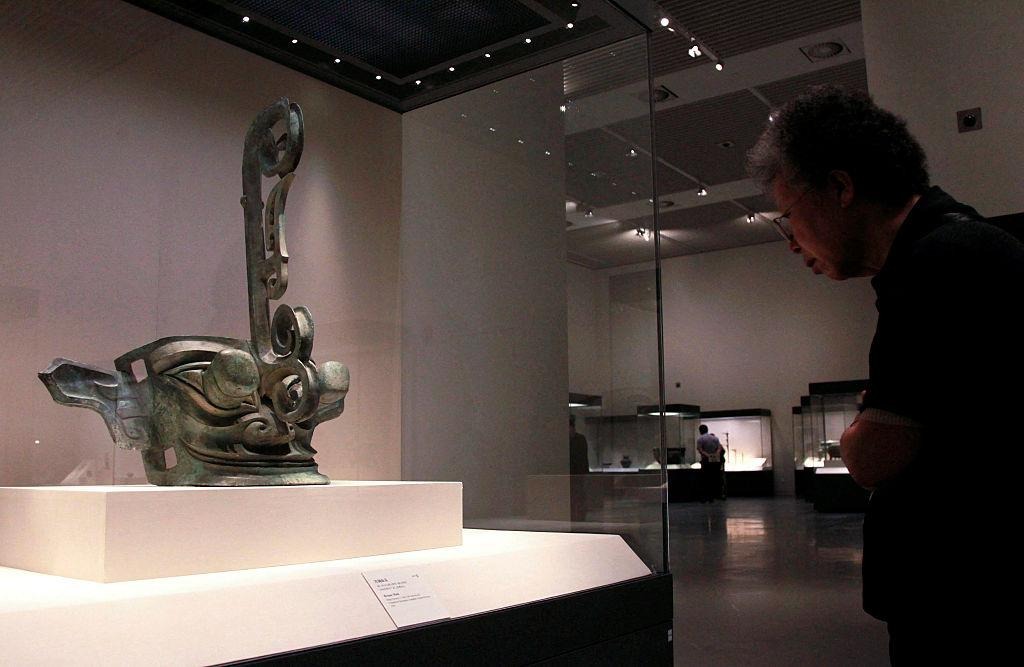
Facing Tiananmen Square in the heart of Beijing stands one of the largest museums in the world. The National Museum of China was formed in 2003 through the merger of two earlier institutions dedicated to Chinese history and revolution, and it now serves as one of the country’s most important cultural landmarks. With an immense collection that spans thousands of years, the museum offers visitors a sweeping view of Chinese civilization and its artistic traditions.
The museum’s galleries trace the development of Chinese culture from prehistoric societies to the modern era. Among its most remarkable holdings are ancient bronze ritual vessels, delicate jade carvings, intricately painted ceramics, and early examples of Chinese calligraphy. These objects reflect the extraordinary craftsmanship that has long been central to Chinese artistic expression, as well as the philosophical and spiritual ideas that shaped the country’s cultural identity.
One of the most striking aspects of the museum is the scale of its exhibitions. Vast halls allow for monumental displays that highlight key moments in Chinese history, while carefully curated galleries present smaller works that reveal the sophistication of traditional materials and techniques. Visitors can encounter artifacts from the Shang and Zhou dynasties, imperial court objects from later dynasties, and works that illustrate the transformations of modern China.
Beyond its historical collections, the museum also emphasizes the continuity of Chinese culture. By presenting ancient artifacts alongside later artistic developments, it demonstrates how traditions of craftsmanship, symbolism, and storytelling have evolved while remaining deeply connected to the past.
For travelers interested in understanding one of the world’s oldest continuous civilizations, the National Museum of China offers an extraordinary journey through time revealing how art, history, and cultural identity have been intertwined for thousands of years.
Museum Website: http://en.chnmuseum.cn
9. Acropolis Museum (Athens, Greece)
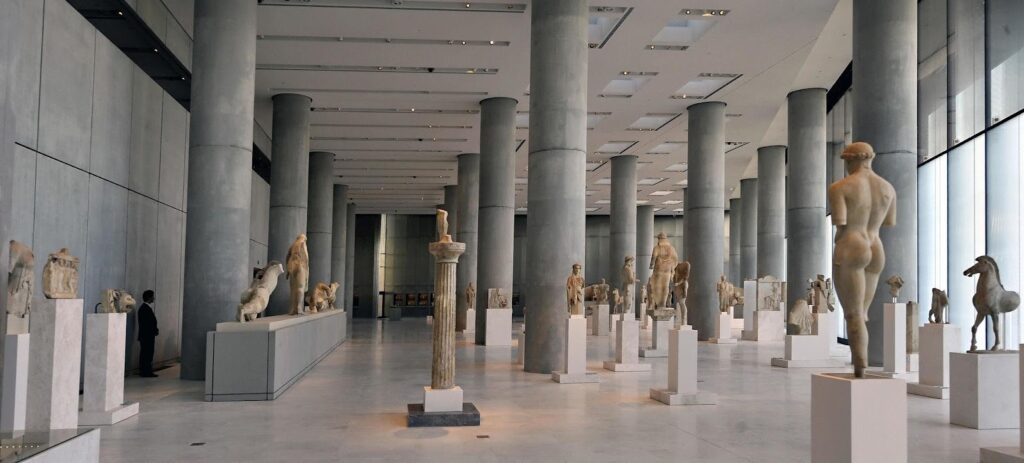
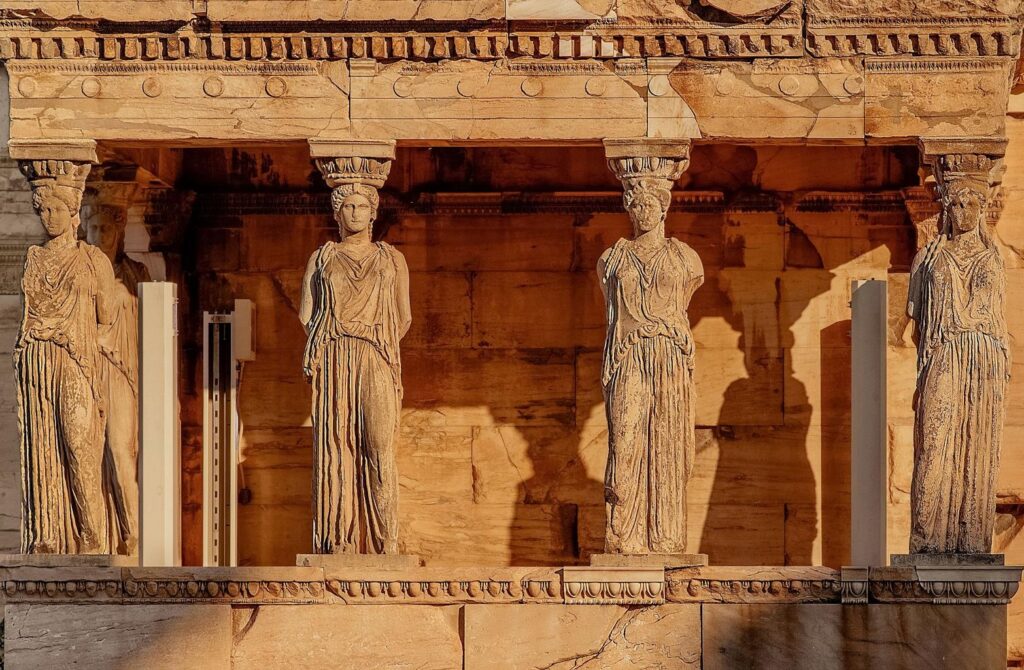
At the foot of the Acropolis hill in Athens stands a museum designed to reconnect ancient artifacts with the landscape that produced them. Opened in 2009, the Acropolis Museum was built specifically to house and display the sculptures, architectural fragments, and archaeological discoveries found on the nearby Acropolis. Its modern design creates a striking contrast with the ancient monuments that rise just above it.
The museum was conceived not only as a place to preserve artifacts but also as a space where visitors could better understand the context in which these works were originally created. Large glass walls allow natural light to fill the galleries, while offering direct views of the Parthenon and other ancient structures on the Acropolis hill. This visual connection helps visitors imagine how the sculptures once appeared in their original architectural setting.
Among the museum’s most celebrated works are the Caryatids graceful marble figures that once served as architectural columns in the Erechtheion temple. Their elegant drapery and poised stance demonstrate the extraordinary skill of ancient Greek sculptors. Another highlight is the Parthenon Gallery, where surviving sculptures from the Parthenon are displayed in an arrangement that mirrors the layout of the temple itself.
Walking through the museum reveals the artistic achievements of classical Athens during the fifth century BCE, a period often regarded as one of the most influential in the history of Western art and architecture. From sculpted friezes depicting mythological battles to finely carved reliefs that once adorned temples, these works illustrate how art played a central role in ancient Greek civic and religious life.
By combining archaeological discovery with thoughtful contemporary design, the Acropolis Museum offers visitors a rare opportunity to experience ancient Greek art in close dialogue with the site that inspired it.
Museum Website: https://www.theacropolismuseum.gr/en
10. Stedelijk Museum Amsterdam (Amsterdam, Netherlands)
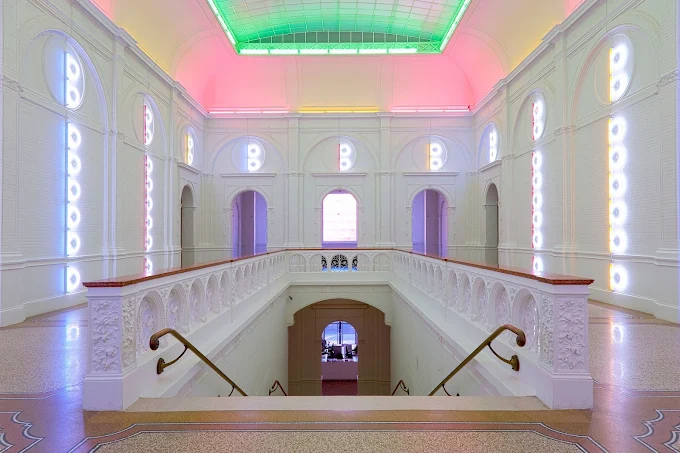
In Amsterdam’s Museumplein, an area already home to several of the Netherlands’ most important cultural institutions, the Stedelijk Museum stands out for its dedication to modern and contemporary art and design. Founded in 1874, the museum gradually evolved from a municipal art collection into one of Europe’s most influential institutions for twentieth- and twenty-first-century art.
Stedelijk is particularly known for its strong connections to major artistic movements that shaped modern visual culture. Its collection includes works associated with De Stijl, the early twentieth-century Dutch movement that emphasized abstraction, geometry, and primary colors. Paintings and drawings by artists such as Piet Mondrian reveal how radically artists began rethinking the role of form, color, and composition during this period.
Beyond painting, the museum also places a strong emphasis on design. Furniture, graphic design, typography, and industrial objects are presented alongside traditional artworks, reflecting the museum’s belief that creativity extends beyond the gallery wall and into everyday life. This broader perspective has made the Stedelijk an important institution not only for art history but also for the history of modern design.
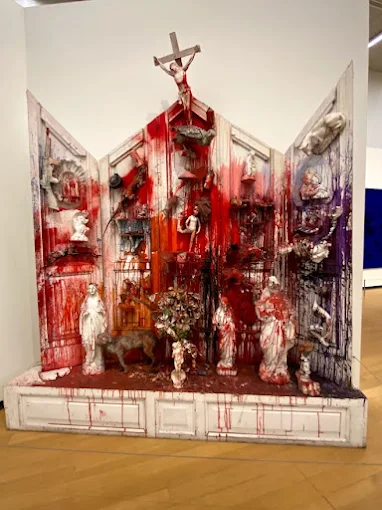
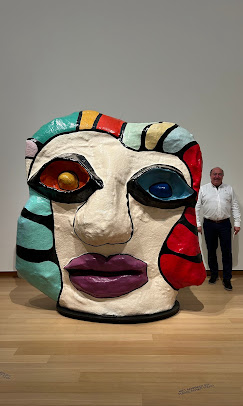
The museum’s architecture itself reflects its forward-looking approach. A major renovation completed in 2012 added a striking contemporary wing, whose smooth white form has earned the nickname “the bathtub.” The extension contrasts with the original nineteenth-century building while reinforcing the museum’s identity as a space dedicated to innovation.
Through its exhibitions and collection, the Stedelijk continues to explore how artists respond to social change, technology, and cultural shifts. For visitors interested in the evolution of modern visual culture from early abstraction to contemporary experimentation the museum offers a dynamic and constantly evolving perspective on art and design.
Museum Website: https://www.stedelijk.nl/en
Beyond the Giants: The Charm of Smaller Museums
While the world’s most famous museums attract millions of visitors each year, many unforgettable art experiences happen in quieter institutions that rarely appear on global “must-see” lists. Smaller museums often offer a different rhythm of viewing one where visitors can spend time with individual works, explore focused collections, and engage with art without the crowds that surround blockbuster masterpieces.
In Boston, the Isabella Stewart Gardner Museum offers one of the most intimate museum experiences in the United States. Designed as a Venetian-style palace, the museum was created by collector Isabella Stewart Gardner to display her personal collection of Renaissance paintings, sculptures, tapestries, and decorative objects. The galleries remain arranged exactly as she intended, creating a deeply personal atmosphere that feels closer to visiting a historic home than a traditional museum.
Paris is home to another remarkable example in the Musée Marmottan Monet. Although smaller than the city’s major institutions, it houses the largest collection of works by Claude Monet in the world. Among its treasures is Impression, Sunrise, the painting that gave the Impressionist movement its name. The museum’s quiet galleries allow visitors to appreciate Monet’s work in a setting far removed from the crowds of larger Parisian museums.
In Denmark, the Louisiana Museum of Modern Art demonstrates how a smaller institution can create a powerful dialogue between art, architecture, and landscape. Located along the Danish coast north of Copenhagen, the museum blends modern art with sculpture gardens overlooking the sea, offering a museum experience shaped as much by its environment as by the artworks themselves.
These institutions remind us that museum experiences do not depend on scale alone. Smaller museums often reveal unexpected stories, highlight overlooked artists, and preserve collections that reflect the unique passions of their founders and communities.
Taken together, these museums reveal just how wide the landscape of art truly is. From the imperial halls of the State Hermitage Museum to the modern galleries of the Museum of Modern Art, each institution reflects a different moment in the story of human creativity. Some were built to house royal collections, others to champion modern experimentation, while many continue to evolve alongside contemporary artistic movements.
What unites them is the opportunity they offer visitors: a direct encounter with works that have shaped cultures, challenged ideas, and inspired generations of artists. Standing before a painting by Velázquez in the Museo Nacional del Prado or looking up at the ceiling of the Sistine Chapel inside the Vatican Museums is an experience that cannot be fully replicated in books or on screens. Museums preserve these encounters, allowing visitors to connect with art in ways that feel immediate and deeply personal.
At the same time, the global museum landscape continues to expand. Alongside the great institutions that define cultural capitals, smaller museums and new cultural spaces are constantly introducing audiences to emerging artists, regional histories, and fresh perspectives on creativity. Together, they form a network of places where art is not only preserved but continually rediscovered.
For anyone drawn to art, visiting museums becomes more than a cultural activity, it becomes a way of exploring the world through the ideas, craftsmanship, and imagination of the people who shaped it. Which museum has left the strongest impression on you or which one from this list would you most love to visit one day?