



10 Most Famous Horse Paintings in Art History
👁 19 Views
Every twelve years the Chinese zodiac returns to the Horse, but far more rarely it aligns with the element of fire. The Fire Horse appears only once every sixty years, symbolising intensity, speed, independence, and restless energy. Across cultures and centuries, artists have repeatedly turned to the horse to express these same qualities. Few animals have held such a powerful place in the human imagination. Horses have carried warriors into battle, transported travellers across continents, powered agriculture and trade, and embodied ideals of freedom and movement. Famous horse paintings have appeared throughout art history, capturing the power, movement, and symbolism of one of humanity’s most enduring companions.
It is therefore no surprise that the horse has been one of art’s most enduring subjects. From the earliest prehistoric cave paintings to modern and contemporary works, artists have tried to capture the animal’s remarkable presence, its strength, elegance, and nervous vitality. Sometimes the horse appears as a symbol of power or heroism, sometimes as a companion to humanity, and sometimes as a creature whose beauty exists entirely outside human control.
The Year of the Fire Horse offers a fitting opportunity to revisit some of the most compelling representations of horses in art history. These works span thousands of years and reflect dramatically different artistic approaches, yet they all share a fascination with the same animal. Together, they form a loose visual history of how artists have tried to capture something that is always in motion.
1. Horses of Lascaux Cave (c. 15,000–13,000 BC)
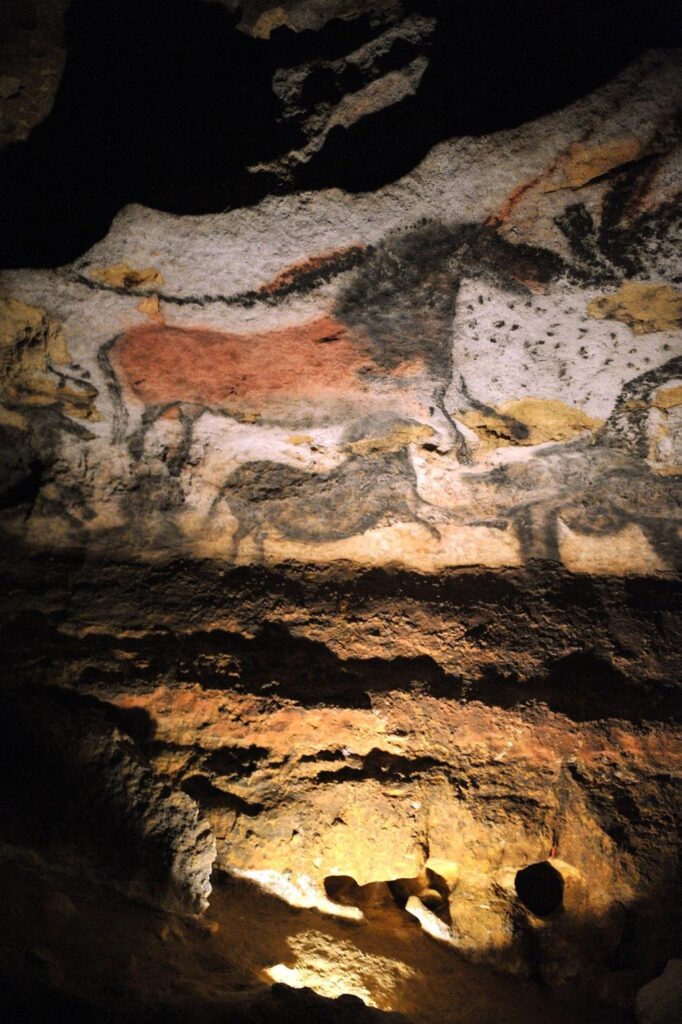
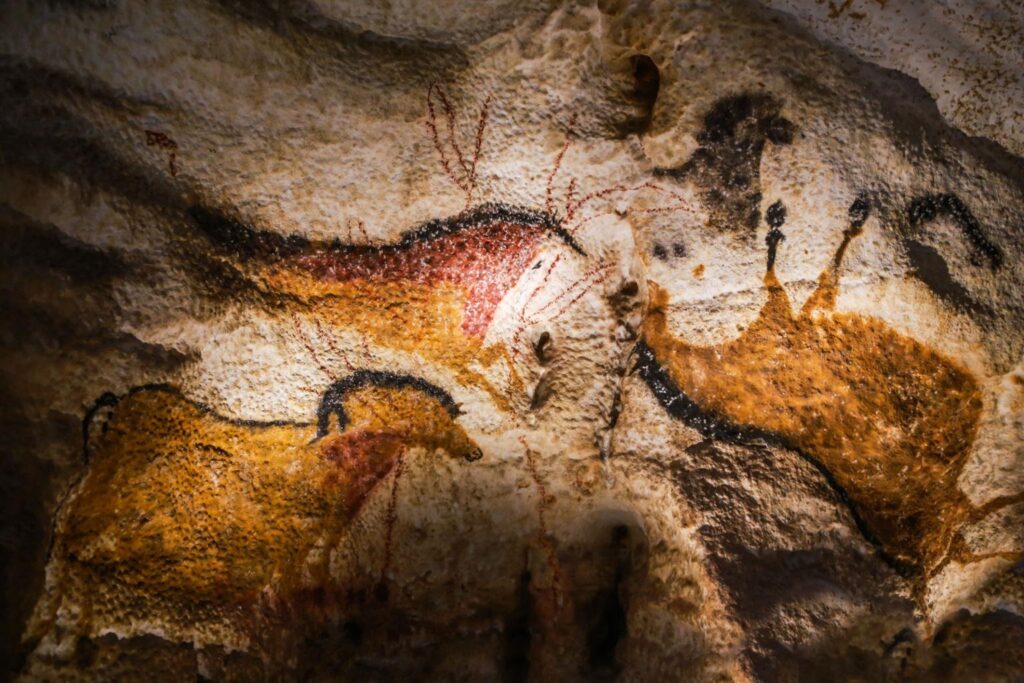
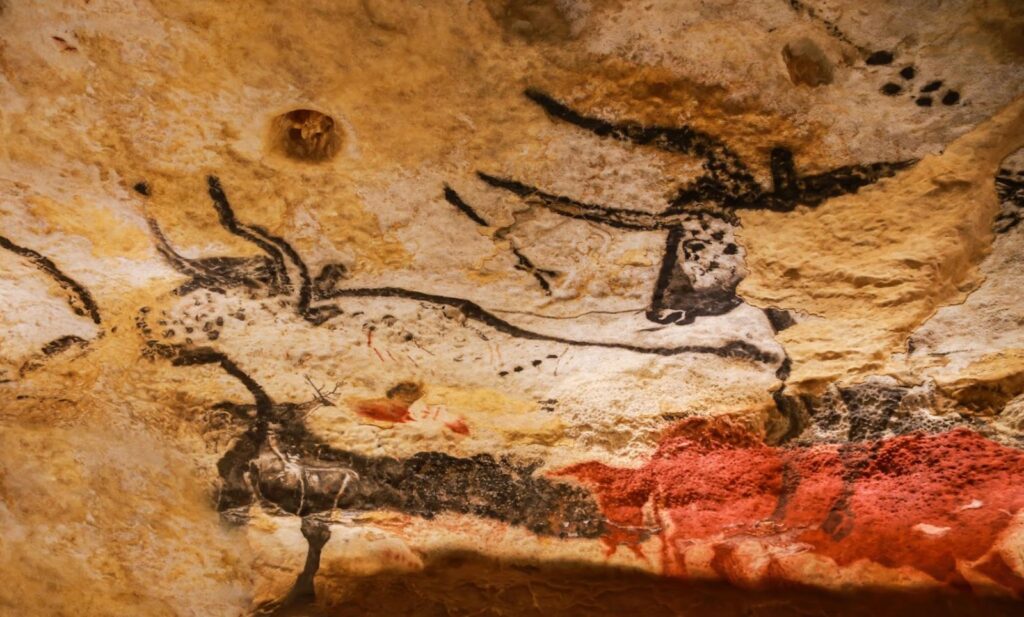
Long before the invention of oil paint, canvas, or sculpture, horses were already racing across the walls of caves. The prehistoric paintings inside Lascaux Cave represent some of the earliest known depictions of animals in art. Created more than fifteen thousand years ago using charcoal and mineral pigments, these horses appear astonishingly alive even today.
The artists who painted them made use of the natural curves and contours of the limestone walls to suggest the bulging muscles and shifting weight of the animals. Rather than appearing static, the horses seem to move across the surface of the cave itself, as though caught mid-gallop. Many scholars believe these images were created for ritual or symbolic purposes related to hunting and survival, rather than purely decorative intent.
What makes these paintings so extraordinary is their sense of observation. The horses are rendered with surprising accuracy, rounded bodies, short legs, and expressive heads that resemble ancient wild breeds such as the Przewalski horse. Even at this early moment in human history, artists were already fascinated by the energy and movement of the animal.
Seen today, these prehistoric images remind us that the artistic fascination with horses began thousands of years before written history itself.
2. Horse Studies – Leonardo da Vinci (late 15th century)
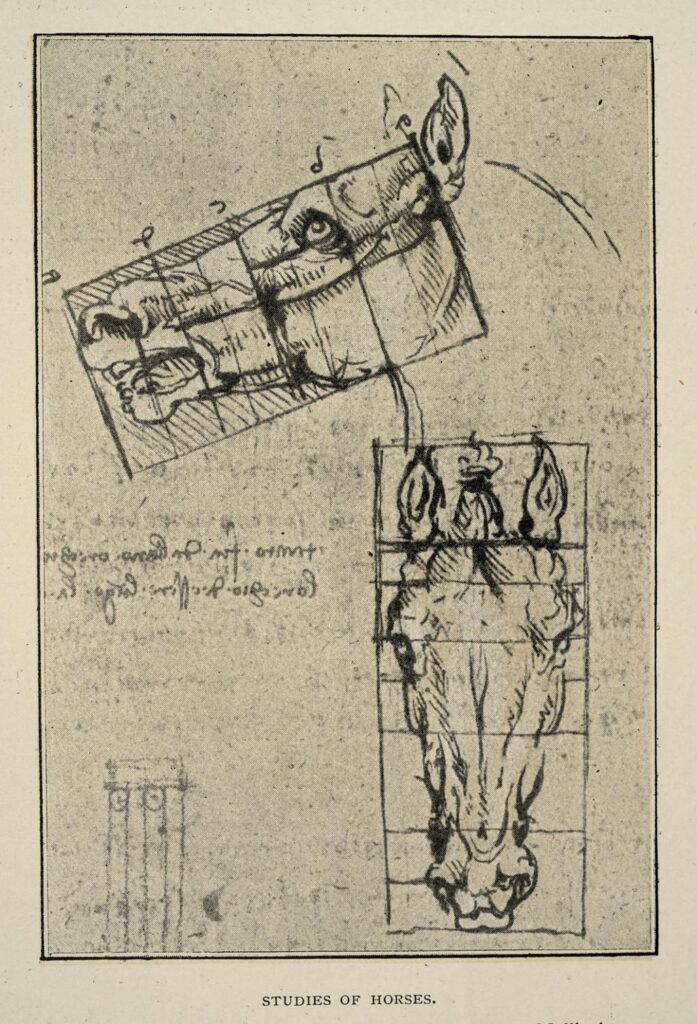
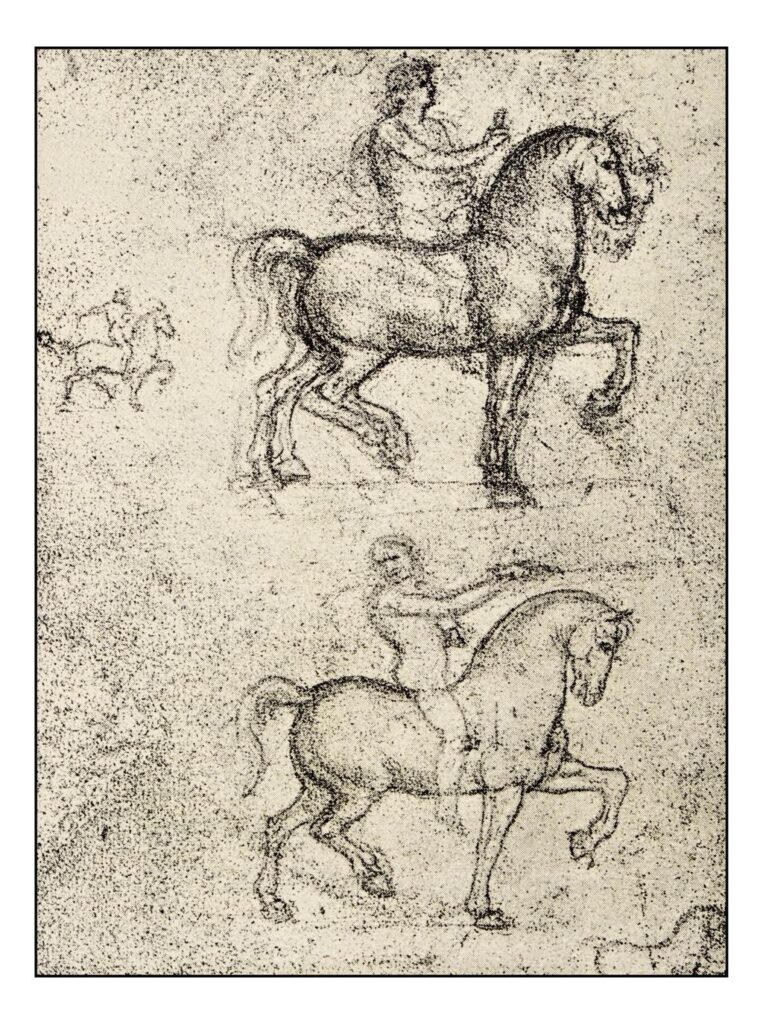
Few artists studied the horse with as much intensity as Leonardo da Vinci. Across countless pages of his notebooks, Leonardo produced detailed drawings examining the anatomy, movement, and structure of horses. These studies were part of his preparation for a monumental equestrian sculpture commissioned by Ludovico Sforza, the ruler of Milan.
Leonardo approached the horse almost like a scientist. He carefully analysed how muscles stretched beneath the skin, how legs moved during a gallop, and how weight shifted through the body when the animal turned or reared. His sketches break the horse down into mechanical problems – geometry, proportion, and motion, yet they never lose their sense of life and curiosity.
The sculpture he planned, often referred to as the Sforza Horse, was intended to be the largest bronze equestrian statue ever created. Leonardo worked on the project for years, producing clay models and extensive anatomical studies. However, the statue was never completed. Political conflict eventually led to the destruction of the massive clay model before it could be cast in bronze.
Despite the failure of the final monument, Leonardo’s horse drawings remain among the most remarkable studies of animal movement ever produced, capturing both scientific precision and artistic fascination.
3. Saint George and the Dragon – Raphael (1504–1506)
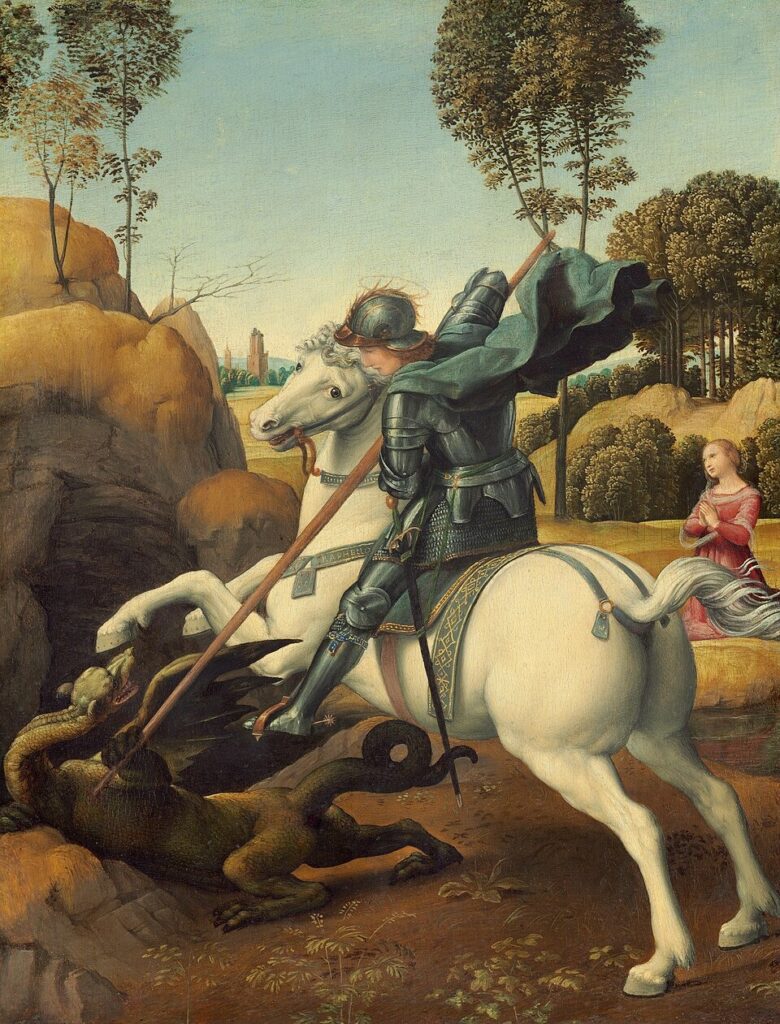
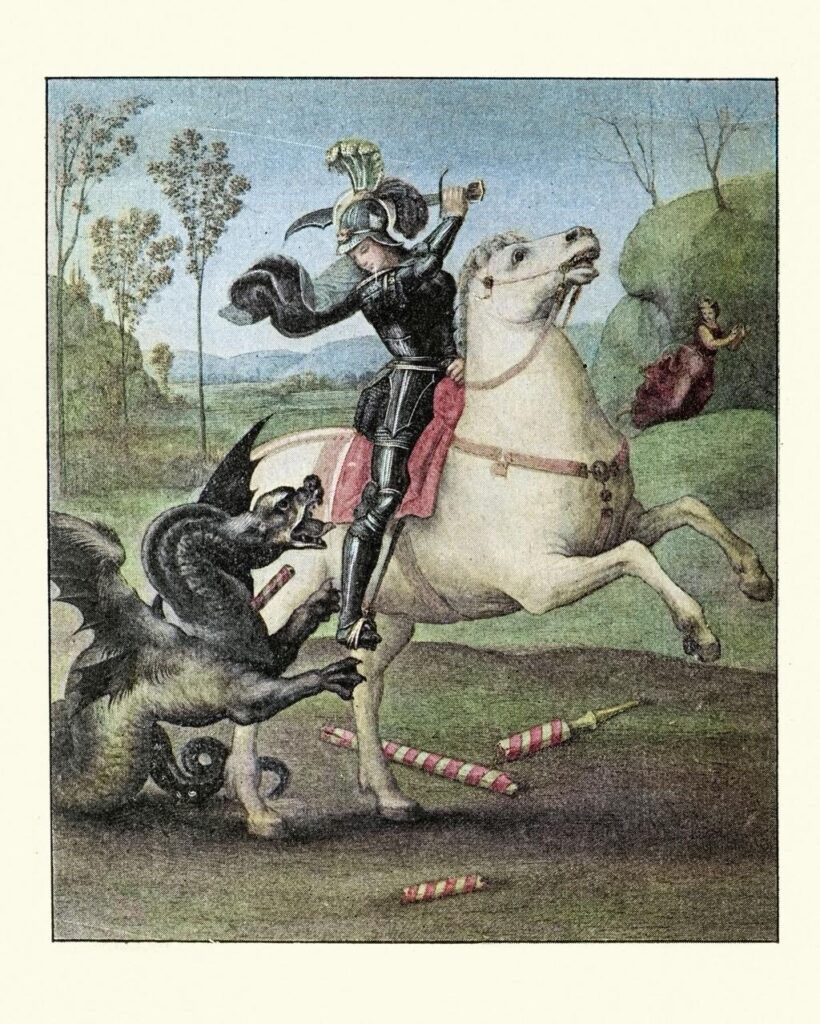
In Renaissance painting, horses often appeared as companions to heroic figures. In Saint George and the Dragon, the young knight Saint George charges forward on horseback as he battles a dragon threatening a nearby kingdom. Painted by Raphael, the work combines drama, elegance, and symbolic storytelling.
The horse in this painting is more than simply a means of transport. Its posture and tension mirror the intensity of the battle unfolding before it. With raised forelegs and a twisting body, the animal becomes an extension of the rider’s courage and determination. The movement of horse and rider together creates a dynamic sense of action that drives the composition.
Raphael’s approach reflects the Renaissance fascination with balance, harmony, and controlled energy. Even within the chaos of a mythical battle, the forms remain carefully organised. The horse’s muscular body and graceful curves demonstrate Raphael’s ability to combine anatomical understanding with idealised beauty.
Within the story itself, Saint George represents triumph over evil, and the horse plays a crucial role in that narrative. It becomes a partner in the heroic act – a creature that shares in the danger and the glory of the moment.
4. Horse Frightened by a Lion – George Stubbs (1770)
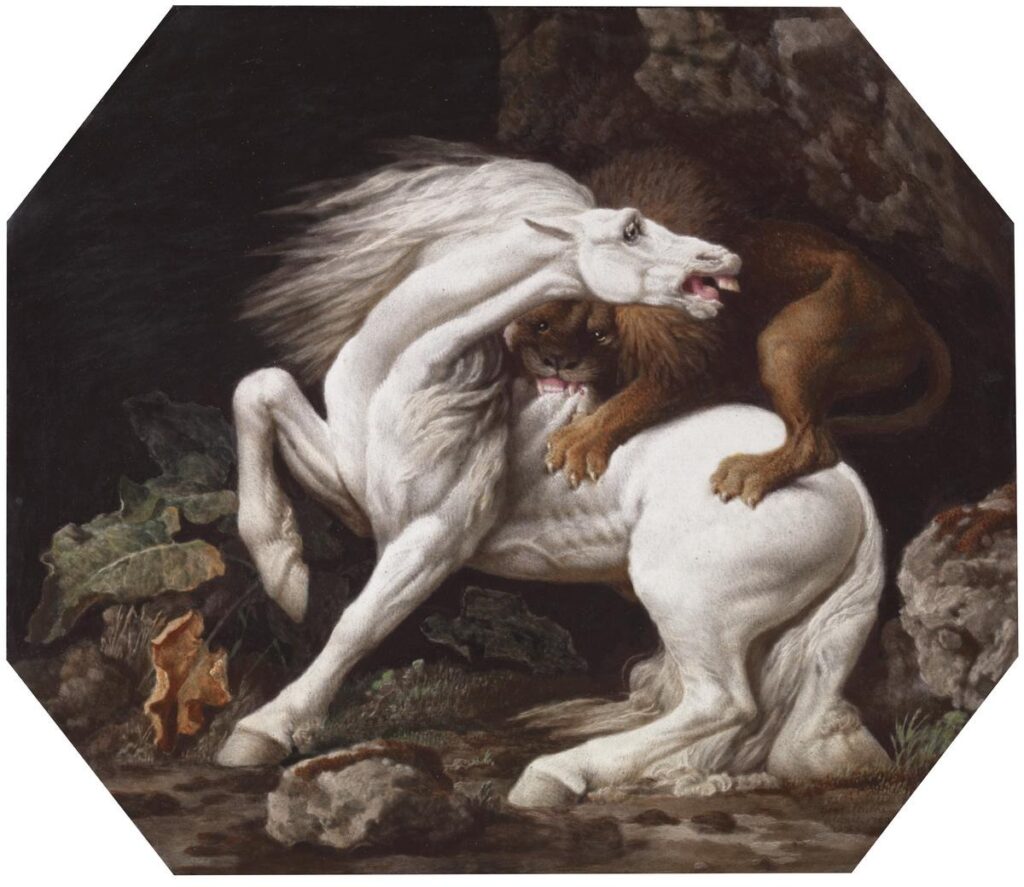
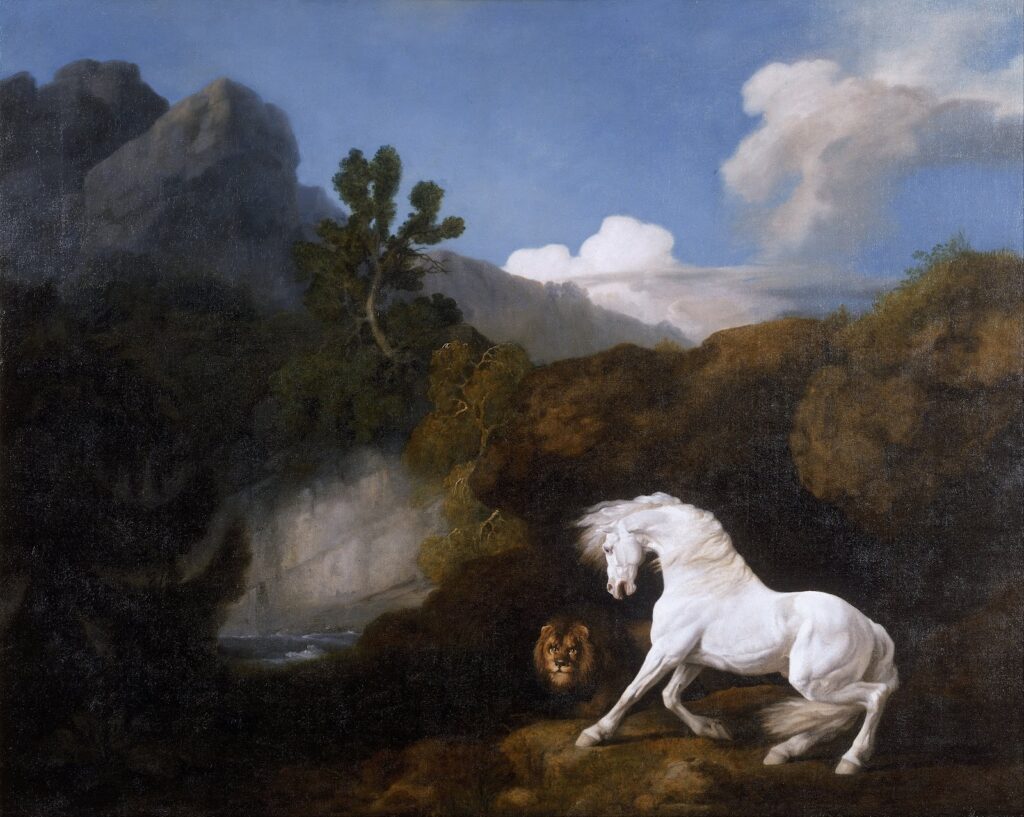
During the eighteenth century, the British artist George Stubbs became one of the greatest painters of horses in art history. Unlike many artists before him, Stubbs pursued an unusually scientific understanding of animal anatomy. He even dissected horses in order to study their musculature and skeletal structure.
His dramatic painting Horse Frightened by a Lion captures a moment of raw instinct. A terrified horse rears backward as a lion emerges from the shadows. The animal’s eyes widen, its muscles tighten, and its entire body twists in panic.
What makes the painting so powerful is its psychological intensity. Stubbs was not simply interested in depicting horses accurately; he wanted to capture their emotional responses. The horse appears vulnerable and alert, responding to danger with a sudden burst of energy.
The contrast between the powerful predator and the startled prey creates an atmosphere of tension. Yet the horse remains the central focus of the scene. Its luminous body stands out against the darker landscape, emphasising both its beauty and fragility.
Stubbs’ paintings helped establish the horse as a serious subject within European art, elevating animal painting to new artistic heights.
5. Napoleon Crossing the Alps – Jacques-Louis David (1801)
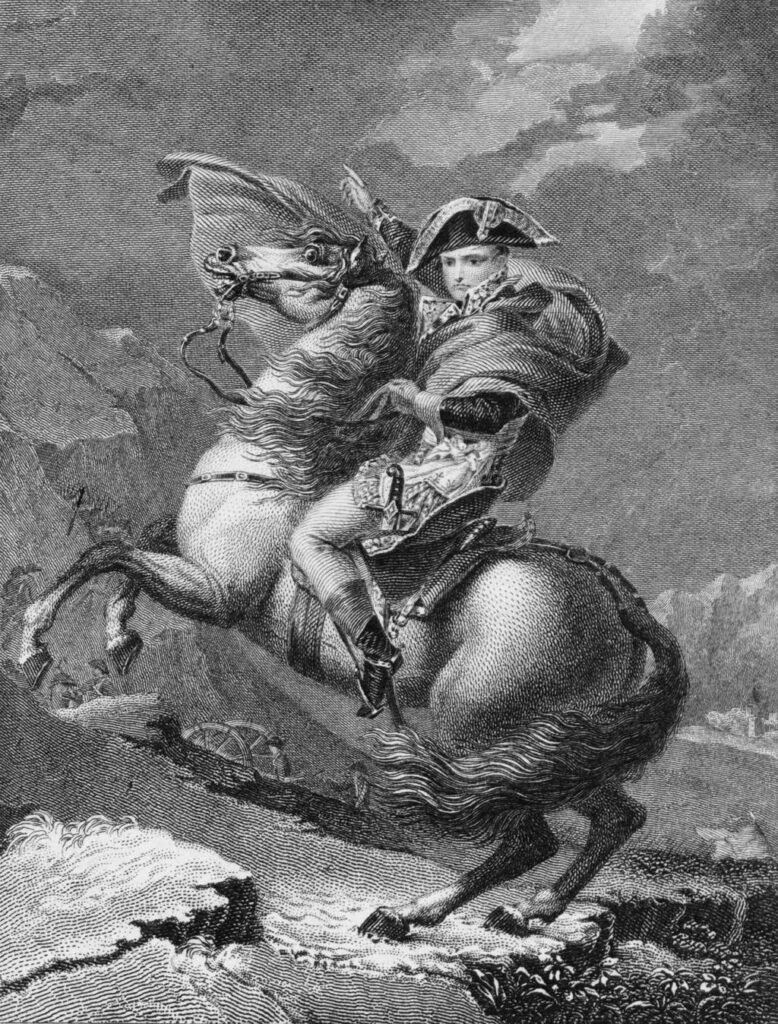
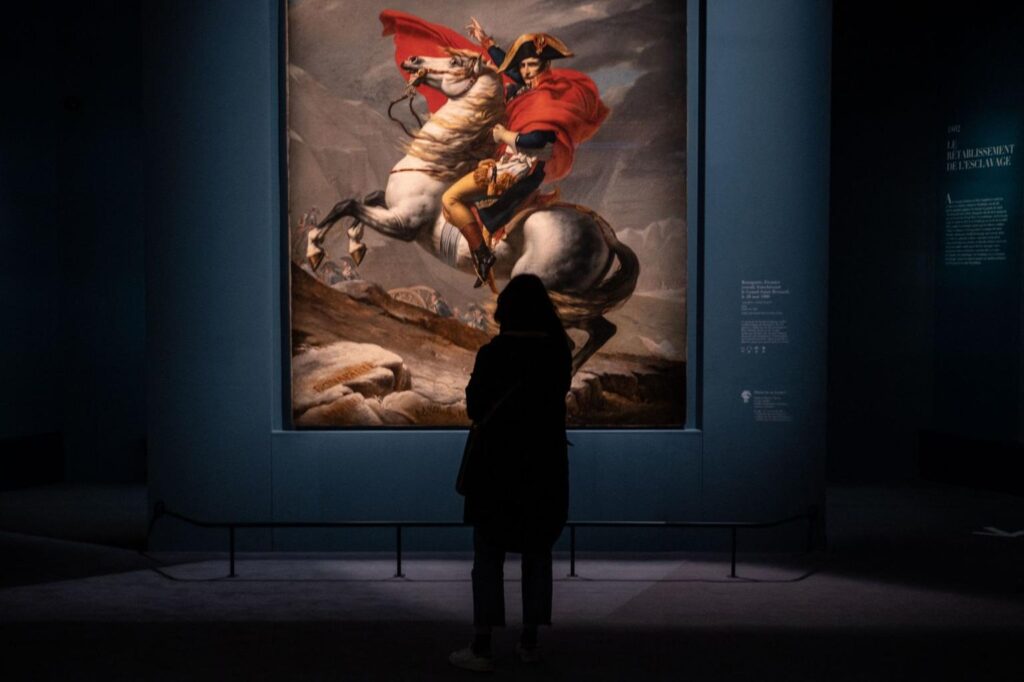
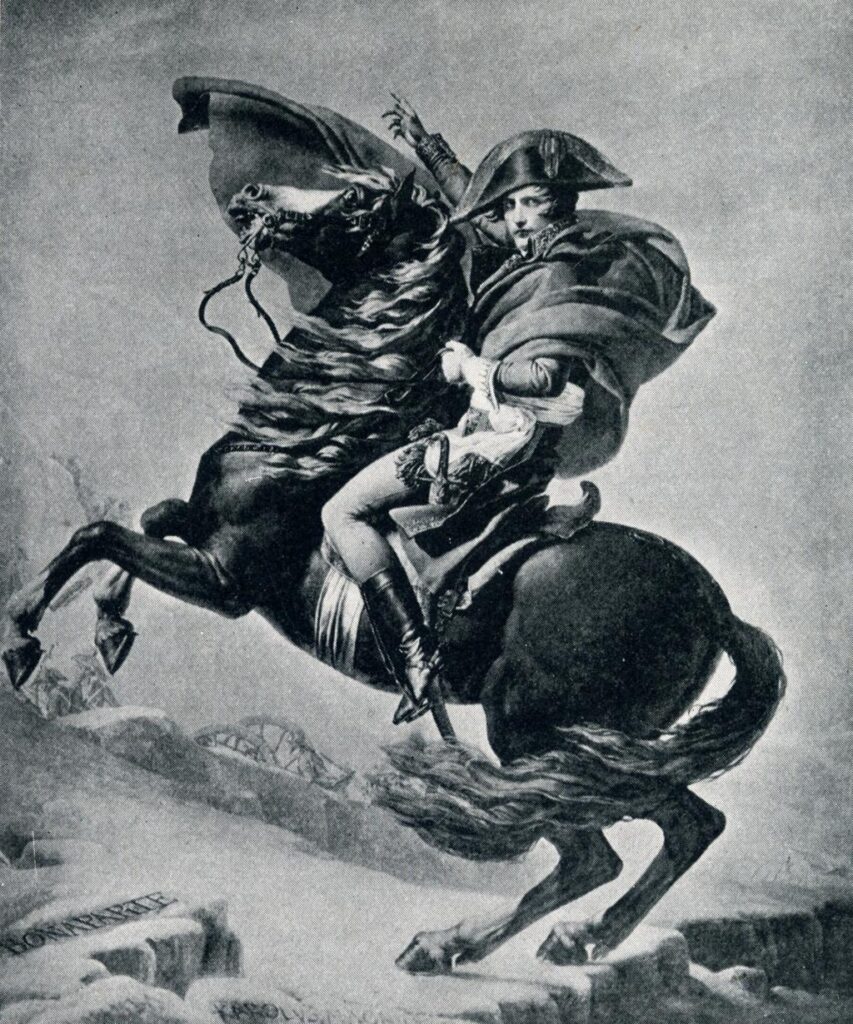
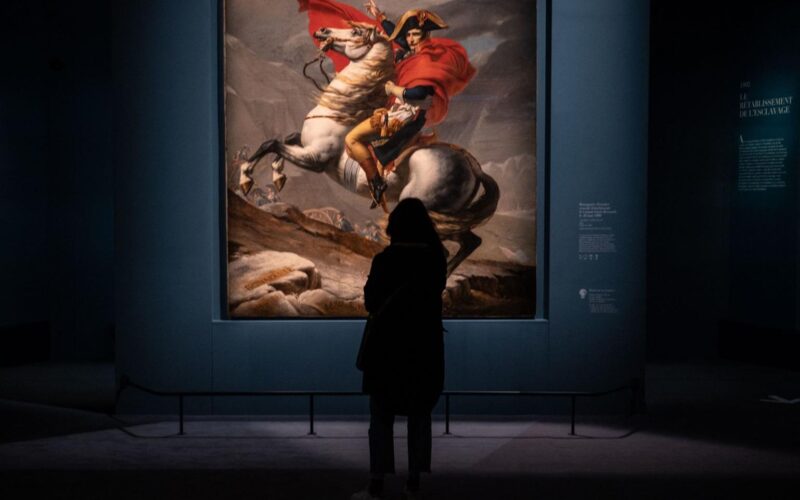
Few equestrian images in art history are as iconic as Napoleon Crossing the Alps. Painted by the French Neoclassical artist Jacques-Louis David, the work depicts Napoleon Bonaparte dramatically guiding his army across the Alpine mountains.
In reality, Napoleon crossed the Alps on a mule rather than a rearing warhorse. Yet historical accuracy was not David’s priority. The painting was designed as political propaganda, transforming the French leader into a heroic and commanding figure.
The horse plays a crucial role in creating this heroic image. Its powerful stance and swirling movement mirror the stormy winds and treacherous terrain around it. Mane and tail whip through the air, amplifying the sense of unstoppable forward motion.
Together, horse and rider become a symbol of ambition, authority, and national pride. The dramatic composition and theatrical gestures reflect the ideals of Neoclassical painting, where history was often reshaped to serve political narratives.
Even today, the image remains one of the most recognisable equestrian portraits ever created.
6. Relay Hunting – Rosa Bonheur (19th century)
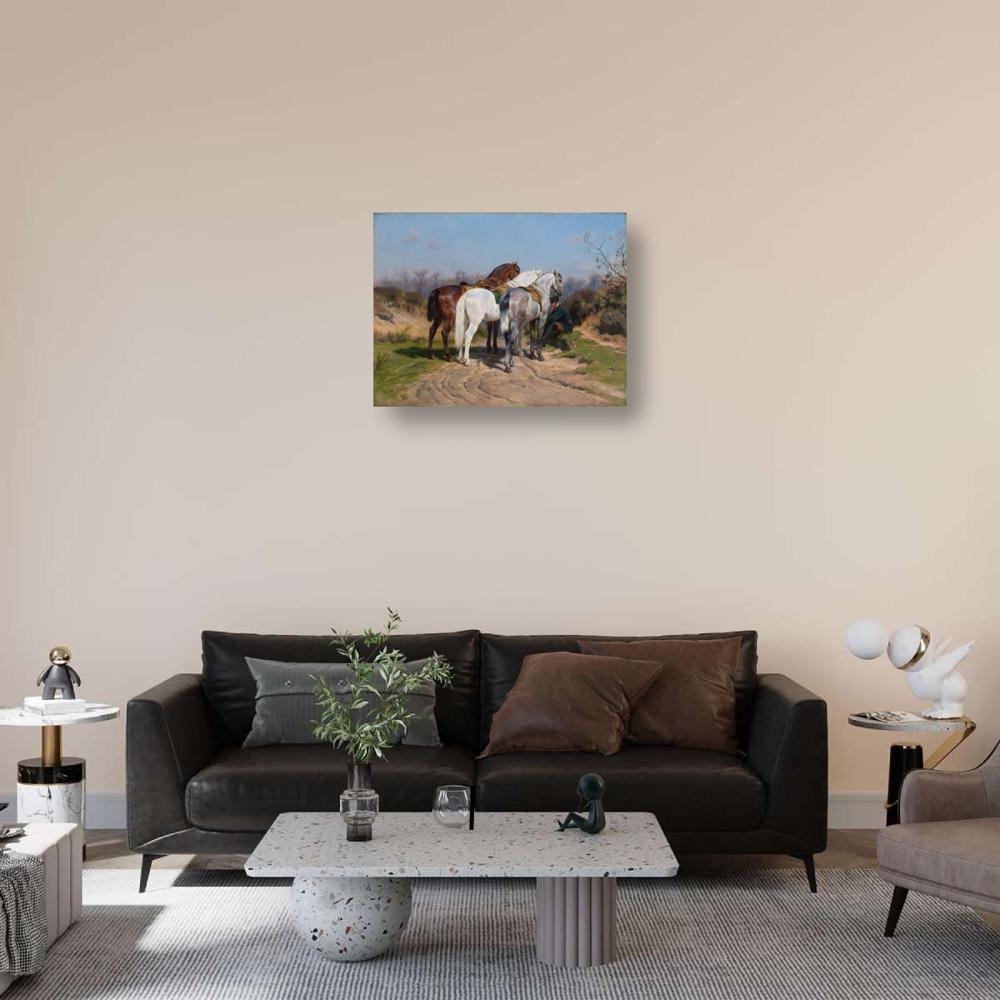
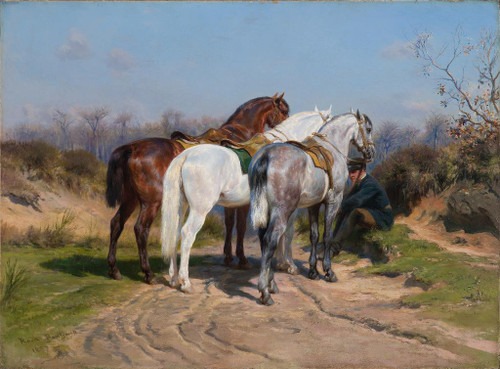
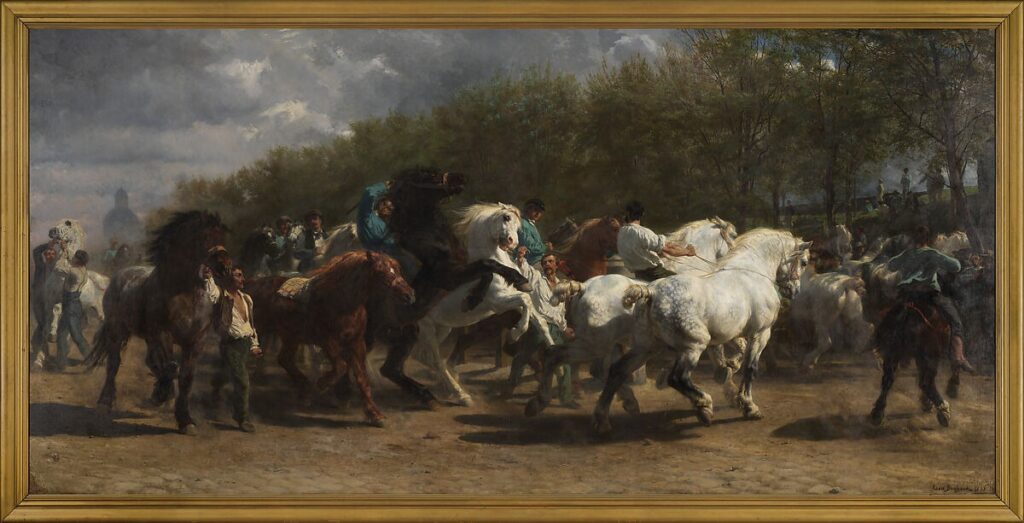
The French artist Rosa Bonheur devoted much of her career to painting animals with remarkable accuracy and sensitivity. Her deep interest in animal anatomy led her to study horses, cattle, and other creatures directly from life.
In Relay Hunting, Bonheur depicts horses in the midst of a hunting scene, capturing their muscular movement and controlled energy. Unlike many earlier artists who treated animals as decorative elements, Bonheur placed them at the centre of her compositions.
Her horses feel solid and grounded, their bodies carefully observed and convincingly rendered. Each animal appears distinct, with its own posture and character. This attention to detail reflects Bonheur’s commitment to realism and her respect for the animals she painted.
Bonheur achieved significant success during her lifetime, becoming one of the most celebrated animal painters of the nineteenth century. Her works were widely exhibited and collected, and she earned international recognition for her skill.
In paintings like Relay Hunting, Bonheur demonstrates that animals can be just as compelling a subject as human figures, revealing the beauty and complexity of the natural world.
7. The Jockey – Edgar Degas (late 19th century)
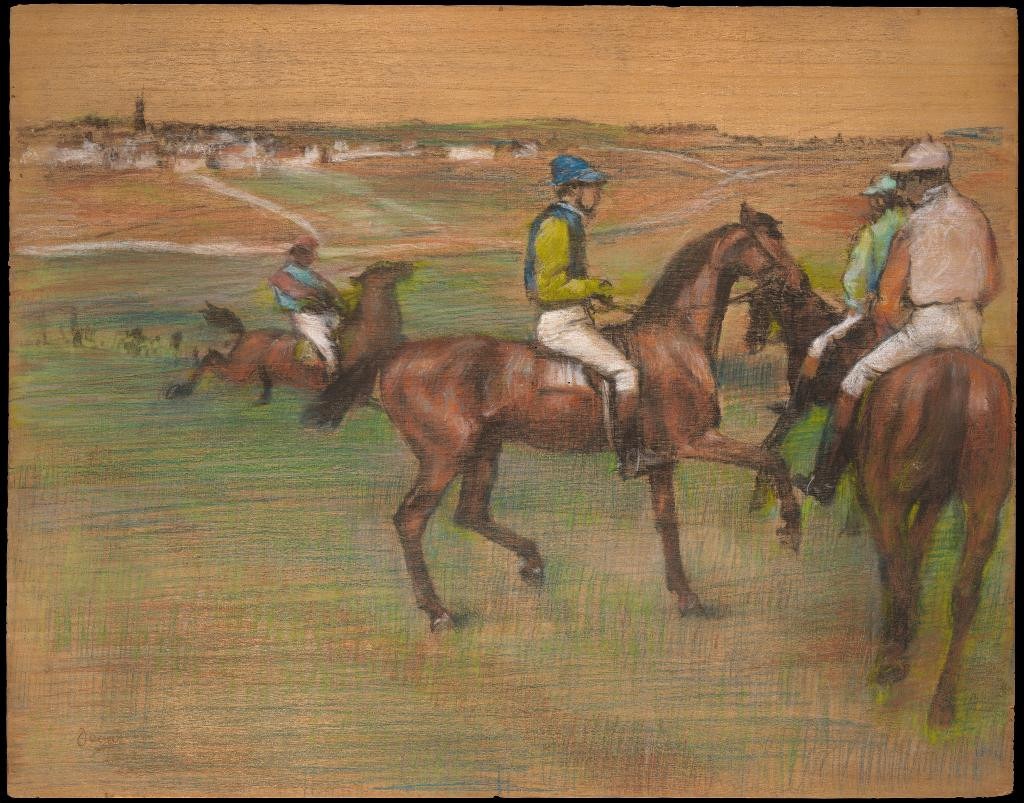
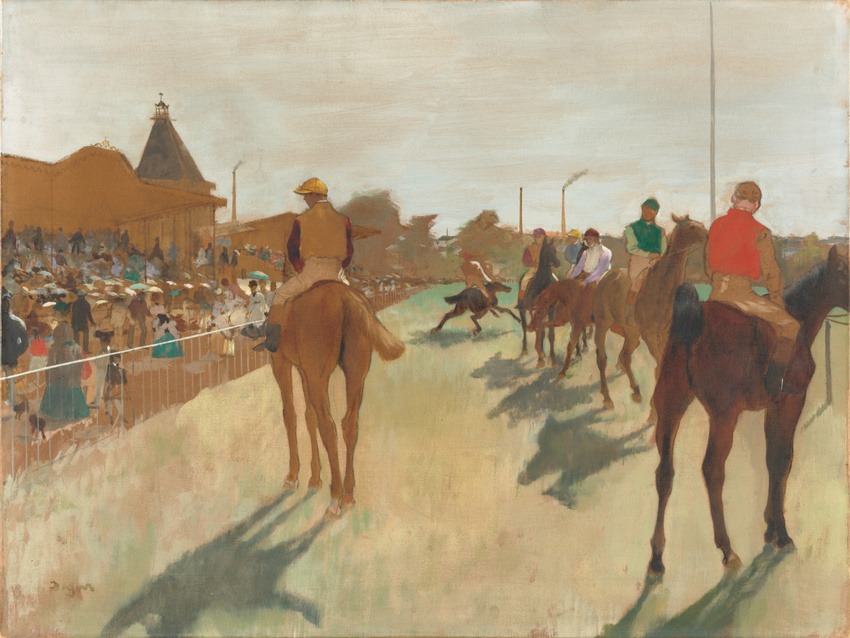
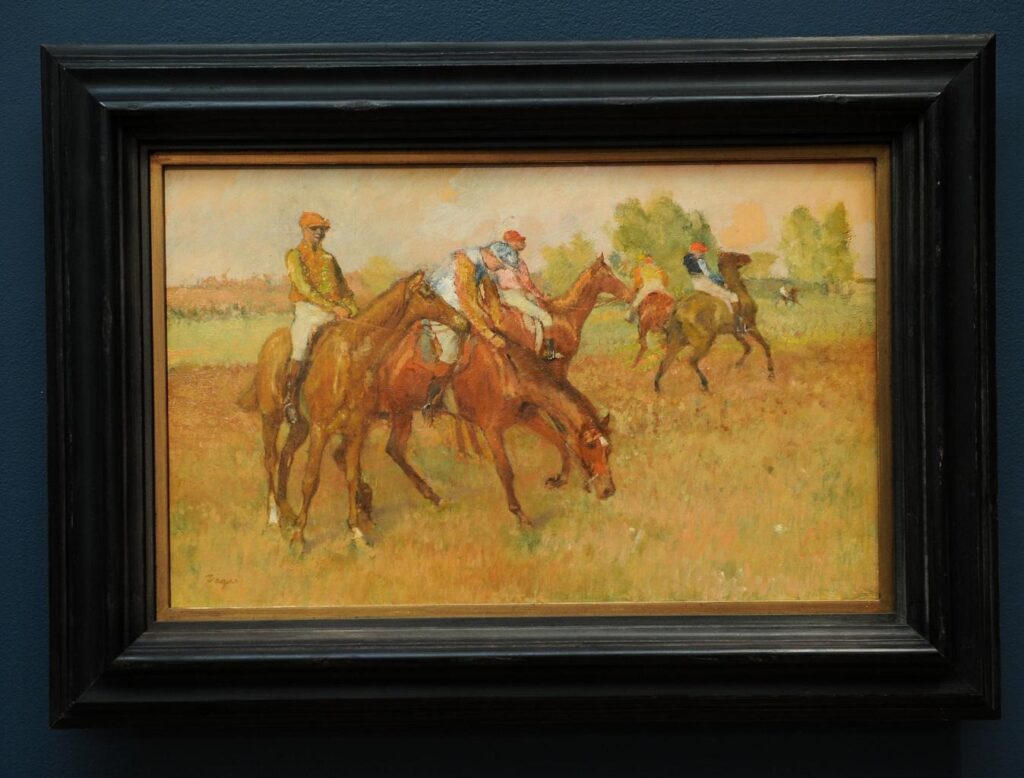
Horse racing fascinated the French Impressionist Edgar Degas, who produced numerous paintings, drawings, and sculptures of racehorses and jockeys. Rather than depicting dramatic victories or heroic riders, Degas focused on quieter moments before and after the race.
In The Jockey, the horse appears alert and tense as the rider prepares for action. Degas was deeply interested in movement and balance, and he carefully observed how horses shifted their weight and posture while standing or walking.
Photography also influenced his work. Early motion studies revealed how horses moved in ways that were not always visible to the human eye. Degas incorporated this new understanding into his compositions, creating images that feel both natural and modern.
His paintings often feature unusual cropping and unexpected viewpoints, making the scenes appear almost spontaneous. The horse becomes part of a larger study of motion and human activity.
Through these works, Degas captured the rhythm of modern urban life while continuing the long artistic fascination with the horse.
8. Blue Horse I – Franz Marc (1911)
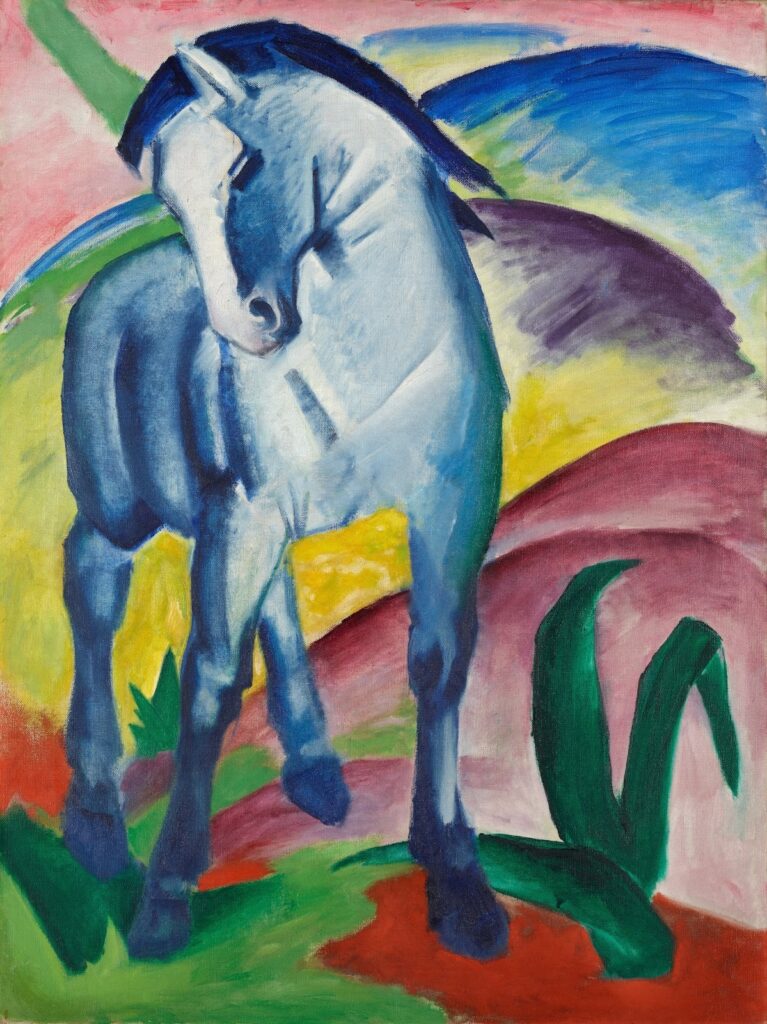
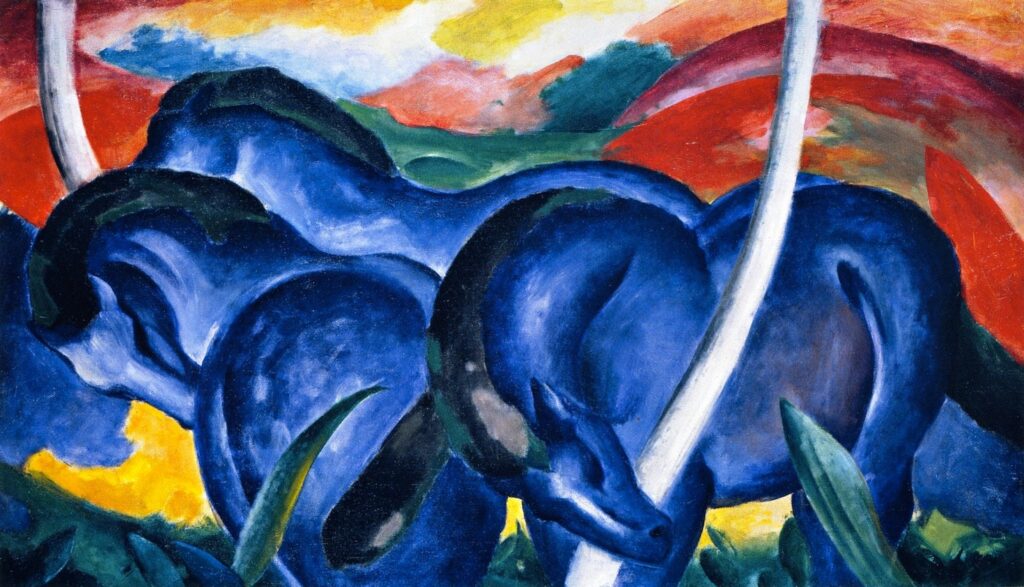
By the early twentieth century, artists began exploring more symbolic and emotional approaches to representing animals. German Expressionist Franz Marc was particularly fascinated by horses, which he saw as symbols of spiritual harmony.
In Blue Horse I, the animal is rendered in luminous shades of blue, standing against a landscape of vivid colours and simplified shapes. Marc believed that colours carried emotional and symbolic meanings. For him, blue represented spirituality and calm.
Rather than depicting a realistic horse, Marc created a stylised form that feels both powerful and serene. The curved lines of the animal’s body echo the shapes of the surrounding hills, suggesting a deep connection between the creature and the natural world.
Marc’s work was part of the German Expressionist movement, which sought to express inner emotion rather than external reality. His horses therefore become more than animals; they represent a vision of purity and harmony untouched by human conflict.
Tragically, Marc’s life and career were cut short during the First World War, but his paintings remain some of the most poetic representations of animals in modern art.
9. Guernica – Pablo Picasso (1937)
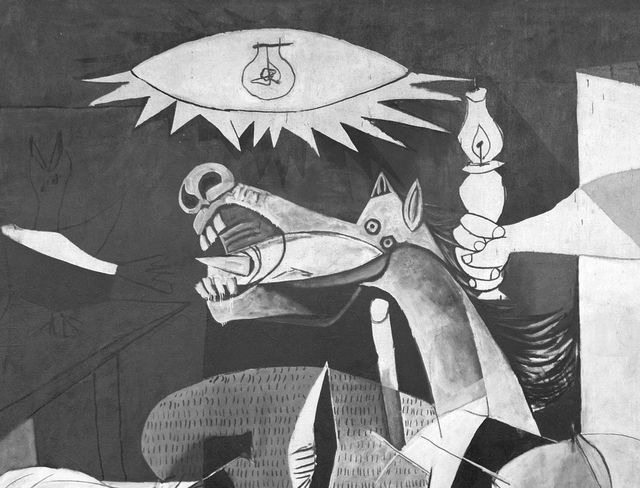
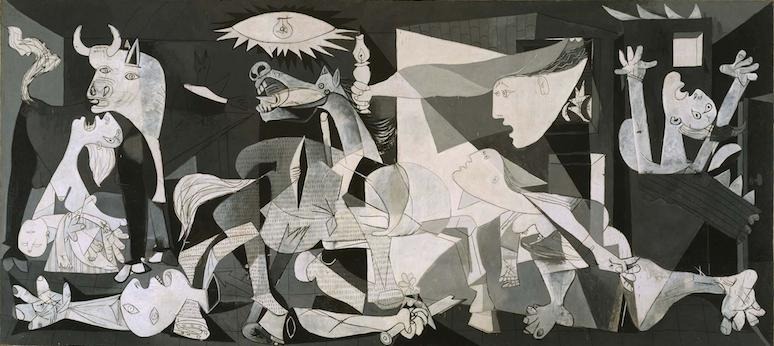
The horse at the centre of Guernica is one of the most haunting animal images in modern art. Painted by Pablo Picasso in response to the bombing of the Spanish town of Guernica during the Spanish Civil War, the monumental painting expresses the chaos and suffering of war.
Unlike earlier depictions of horses as symbols of heroism or strength, Picasso’s horse appears wounded and terrified. Its mouth opens in a silent scream, its body fragmented into sharp angular forms. The distorted shapes reflect the violence and confusion of the event that inspired the painting.
The horse occupies a central position within the composition, surrounded by other figures, including a bull, grieving humans, and collapsing buildings. Together they create a scene of devastation and despair.
Picasso used the horse to symbolise the suffering of innocent victims caught in the destruction of war. The animal’s agony becomes a powerful visual metaphor for collective pain.
More than eighty years after its creation, Guernica remains one of the most influential political artworks of the twentieth century.
10. Wild Horses – Helena Pérez García (Contemporary)
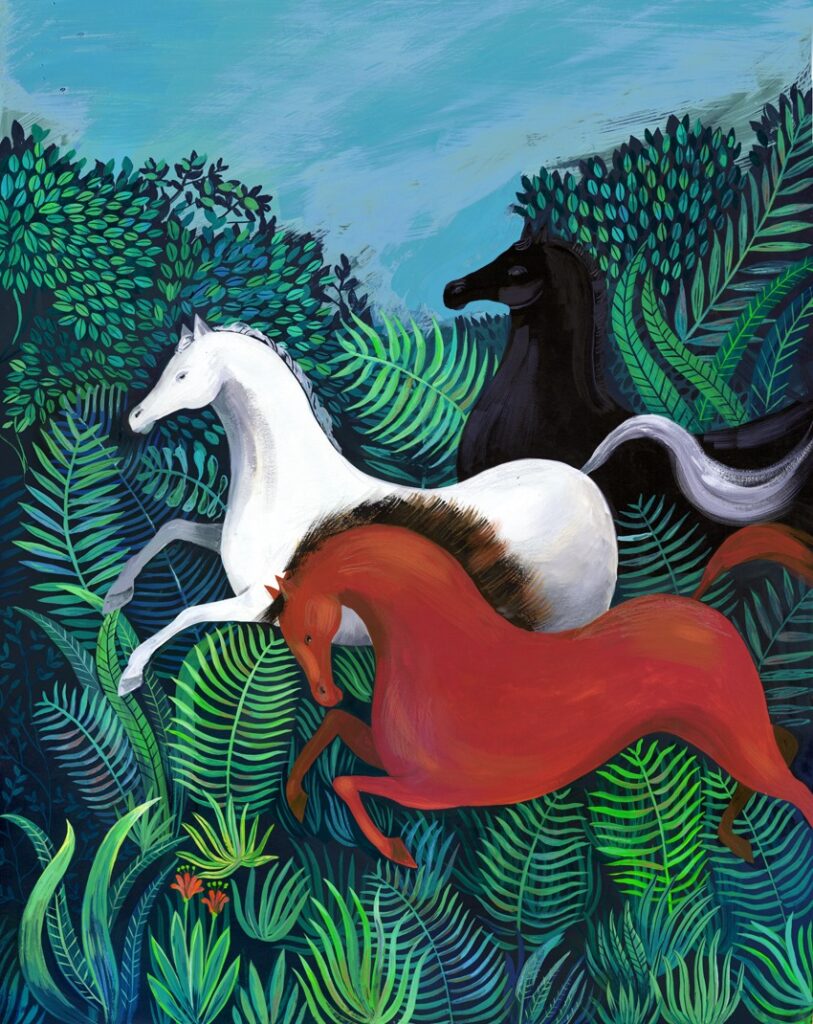
Contemporary artist Helena Pérez García continues the long tradition of depicting horses in art, but she approaches the subject with bold colour and expressive brushwork.
In Wild Horses, the animals appear dynamic and full of movement, their bodies defined through sweeping gestures of paint rather than precise anatomical detail. The focus is less on realism and more on capturing the sensation of energy and motion.
García’s horses seem almost to dissolve into colour and light, suggesting freedom and vitality rather than strict physical form. This approach reflects contemporary painting’s interest in expression, atmosphere, and emotional experience.
By including a modern example such as this, we can see how the horse continues to inspire artists today. Even in an era of technology and rapid urbanisation, the animal still represents power, independence, and untamed beauty.
Across thousands of years of artistic history, the horse has remained a compelling subject, a creature that embodies both physical strength and symbolic meaning.
From the earliest cave walls to contemporary canvases, the horse has remained one of the most compelling subjects in art. Across thousands of years, artists have returned to the animal again and again, each time discovering something new within its form. Sometimes the horse appears as a symbol of power and authority, as in grand equestrian portraits of rulers and military leaders. At other times it becomes a spiritual or emotional presence, reflecting harmony with nature or expressing the anxieties of the modern world.
What makes the horse such a powerful artistic subject is its unique position in human history. Few animals have shared such a close and complex relationship with humanity. Horses have carried explorers across continents, accompanied soldiers into battle, and worked alongside people in agriculture and transport for centuries. This deep connection has inevitably shaped the way artists represent them, not simply as animals, but as partners, symbols, and mirrors of human experience.
The Year of the Fire Horse offers a particularly fitting moment to reflect on this enduring relationship. Associated with energy, intensity, and transformation, the Fire Horse embodies qualities that artists have long tried to capture: speed, vitality, unpredictability, and raw strength. The artworks explored in this list reveal how different generations of artists have interpreted these qualities in their own ways.
Yet the horse in art is never entirely fixed or fully understood. It can represent heroism or vulnerability, beauty or chaos, freedom or discipline. Perhaps this is why artists continue to return to the subject, searching for new ways to capture an animal that seems always on the verge of movement.
Even after millennia of artistic exploration, the horse remains a subject that refuses to stand still. Art history holds countless remarkable depictions of horses beyond the works mentioned here, each offering its own interpretation of the animal’s power, beauty, and symbolism. If you could add one more horse painting to this list, which artwork would it be?
What do you think about it? If you have thoughts you’d like to share, write to us at support@artstoheartsproject.com we’d love to hear from you.