

What Do We Do With Memories That Refuse to Stay Still?


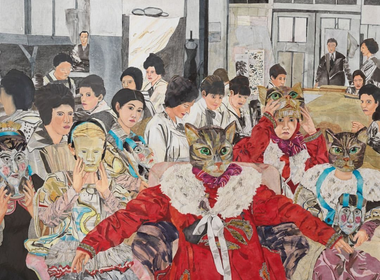
For this week’s artist feature, we sit down with Los Angeles–raised artist and technologist Wendy Montero, whose work tracks memories, displacement, and how machines misread us. With roots in Mexican heritage and a practice spanning photography, writing, and AI-generated imagery, Wendy guides us through two ongoing series, “Desert Series” and “Something Like ‘Memory'”, and the questions that drive them.
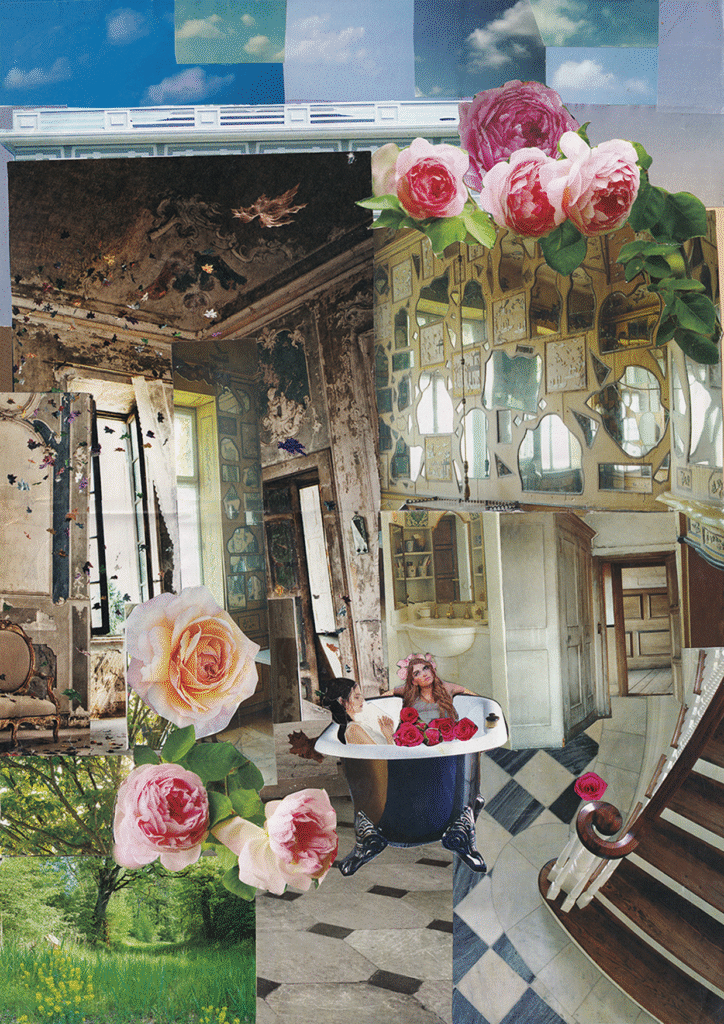
She shares how the desert becomes a place to rethink presence and care, especially around migrant women, using AI to stage scenes that lean toward ritual and symbolism rather than literal reportage. In “Something Like Memory”, she works with journals, family photos, and archives, then watches what the model returns, polished, sometimes off, and full of glitches that she edits, curates, or rejects. Wendy positions herself as a co-author with firm editorial control, shaping the outputs with prompts, selection, context, and post-production tools like Lightroom and Photoshop.
What we learned: displacement—geographical and emotional—pushes her to build from fragments; photography and writing move in parallel as spaces for searching rather than certainty; and machines often smooth away nuance, which becomes material for the work. Conversations during her residency at Zaratan in Lisbon brought colonial histories, translation, and circulation of memory into sharper focus. As one of Arts to Hearts’ 100 Emerging Artists 2025, Wendy situates her practice within the broader moment where image-makers are experimenting with analogue and digital methods while maintaining intention, care, and authorship at the centre.
Wendy Montero is a featured artist in our book, “Art and Woman 2025” You can explore her journey and the stories of other artists by purchasing the book here:
https://shop.artstoheartsproject.com/products/art-and-woman-edition-


Wendy Montero is an artist and technologist whose work explores memory, displacement, and digital misinterpretation through photography, writing, and machine-generated imagery. Her current projects, Desert Series and Something Like Memory, merge personal archives with speculative technologies, asking what it means to remember through machines. Drawing from her upbringing in Los Angeles and her Mexican heritage, Montero’s practice navigates the tension between intimate storytelling and systemic erasure, often through hybrid media.
1. In “The Desert Series”, the idea of landscape seems to meet technology. How do you see the desert as a site for negotiating memory and distance?
In Desert Series, the desert becomes a conceptual space where landscape and technology converge to explore migration, memory, and presence. I utilise AI-generated imagery to create luminous, imagined desert environments that feel cinematic, ritualistic, and charged with symbolic meaning. The desert holds significant geopolitical weight, particularly in narratives surrounding border crossings and erasure. I’m reimagining it as a space of agency and rest for migrant women. Through machine-generated images, I can craft scenes that wouldn’t exist otherwise; ones where the subjects aren’t reduced to trauma or disappearance, but are fully present, centred, and dignified. In that sense, the AI becomes a tool for negotiating distance, not just physical distance, but also the emotional and cultural distances between lived experience and its representation. The desert is a threshold, but in this work, it’s also a stage for speculative memory.
Displacement teaches me to work with rupture, to see absence not as a lack, but as material.
Wendy Montero

2. “Something Like Memory ” weaves together archives and machine processes. What has surprised you most about how machines reinterpret your material?
What has surprised me most is how machines can flatten emotional nuance. I feed them highly personal materials, such as journal entries, family photos, and bits of memory, and what comes back is often cold, overly smooth, or strangely impersonal. It’s not always a failure, though. That dissonance becomes part of the work. In Something Like Memory, the reinterpretations are marked by glitches, gaps, and moments of false clarity. What’s compelling is that these outputs often feel emotionally adjacent to the truth, even when they’re factually off. That tension—between what I know and what the machine insists—is where the project lives. It becomes a mirror, not of memory itself, but of the distortions embedded in how we try to preserve it.

3. How does displacement, geographical or emotional shape the way you approach photography and writing in parallel?
Displacement shapes both my writing and photography by forcing me to work from fragments. Geographical distance means I often don’t have access to the places or people I’m trying to remember. Emotional distance complicates what I feel ready to say or show. So I’ve learned to build from what’s partial —a cut-off image, an unfinished sentence, a degraded file. In both mediums, I’m drawn to what’s missing or unstable. Photography becomes a site of speculation, not proof. Writing becomes a process of circling rather than declaring. Displacement teaches me to work with rupture, to see absence not as a lack, but as material. Together, they allow me to hold contradiction: the impossibility of full return, and the urgency to remember anyway.
4. During your residency at Zaratan in Lisbon, what conversations or encounters are shaping the direction of your current projects?
During my residency at Zaratan in Lisbon, several conversations and encounters have shifted and sharpened how I think about both Desert Series and Something Like Memory: Lisbon is a port city with deep colonial history and complex stories of movement (from Africa, from former Portuguese colonies, from Latin America). Conversations with local artists and community members about how displacement is remembered (or silenced) here have inspired me to consider more explicitly how cultural memory circulates across places, how language shifts, and what gets lost in translation—not just in words, but in images and archival objects.

The desert is a threshold, but in this work, it’s also a stage for speculative memory.
Wendy Montero
5. Working at the intersection of images and algorithms often blurs authorship. How do you position yourself in relation to the machine’s output?
I position myself not as a neutral operator, but as a co-author with complete editorial control. The machine generates possibilities, I decide what to keep, what to reject, and how to shape the final form. Often, I use other tools such as LightRoom and Photoshop to really narrow it down to how I want it to look and feel, since AI is not always a reliable source – it hallucinates. My authorship is evident in the prompts, curation, refusal of specific outputs, and the way each image is contextualised within a narrative or political frame. Especially when I’m training it based on personal photography or poetry. In Desert Series, I’m careful about how representation is constructed, avoiding realism in favour of symbolism, ritual, and intentional distance.
6. Being included in Arts to Hearts’ 100 Emerging Artists 2025 places your work in a broader context. How do you hope your practice speaks to this moment in contemporary art?
I hope my practice contributes to a broader conversation about care in image-making, especially when working with memory, representation, and emerging technologies. Whether through AI-generated portraits or fragmented personal archives, I’m asking: how do we construct presence without flattening it? What does it mean to remember ethically, visually, and politically? Being named among Arts to Hearts’ 100 Emerging Artists reinforces that these questions resonate beyond my own studio. I see this moment in contemporary art as one of critical redefinition, and I’m interested in how image-makers are using both analogue and digital tools to hold nuance, honour complexity, and push form without losing intention.

Wendy Montero’s work explores the preservation of memory in uncertain forms, whether through archives, photography, or machine processes that distort and reshape the stories we carry. Her projects show how absence, distance, and dissonance can become materials in themselves, offering ways to remember without simplifying.
From the deserts of the borderlands to the glitches of algorithmic outputs, Wendy’s journey teaches us that technology and storytelling can work together to question how presence is constructed, how erasure happens, and how images can carry care across time and space.
To learn more about Wendy Montero, click the following links to visit her profile.
Arts to Hearts Project is a global media, publishing, and education company for
Artists & Creatives. where an international audience will see your work of art patrons, collectors, gallerists, and fellow artists. Access exclusive publishing opportunities and over 1,000 resources to grow your career and connect with like-minded creatives worldwide. Click here to learn about our open calls.