

From calm waters to turbulent tides, Sharon Goodenough paints the changing sea

At Arts to Hearts Project, Art and Woman has always been about women whose creative practice is inseparable from who they are as people. Women whose work did not come from a textbook or a trend but from a real moment in their real lives when making things stopped being optional and became necessary.
Sharon Goodenough is one of those women. She is one of our selected artists for Art and Woman Edition 3 and her story is one that we think a lot of women in particular will feel in their bones.
Sharon is a British oil painter based in Ascot, working almost entirely with the sea, the sky, and the coast. She describes herself as an artist exploring freedom, self-expression, and the quiet strength found in coastal space, and says the sea has always been a place of restoration, perspective, and expansive possibility for her, something she’s trying to bring into the homes and lives of the people who collect her work.
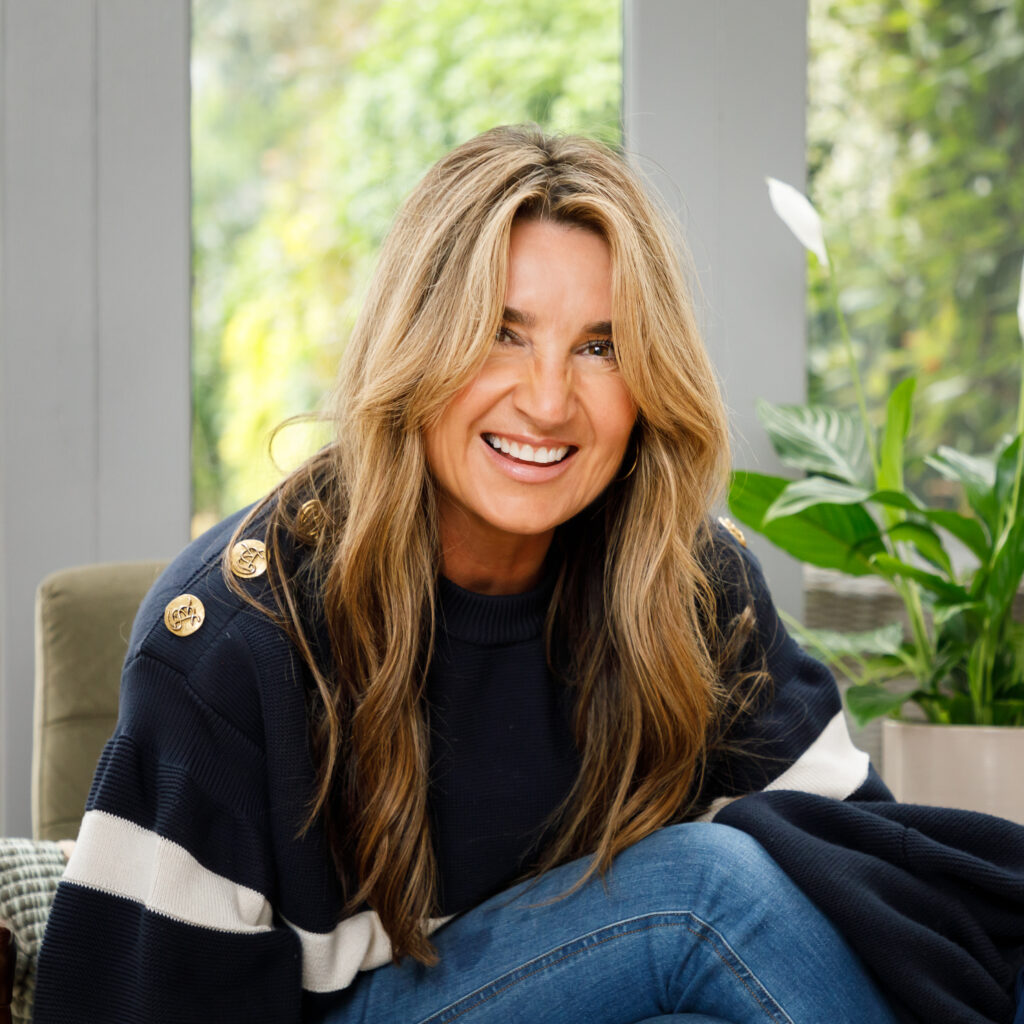
As she puts it on her own page, she paints the sea so people can feel it, not just look at it. Her path to painting was not a straight line. Creativity showed up early through drawing and photography, and her first jobs were as a photographer’s assistant and later a special effects makeup artist, working on projects with celebrities and emerging musicians that landed her in the national press and on album covers.
In her twenties, practical needs pulled her away from art entirely and into a long stretch in financial services sales, a detour she has said left her unfulfilled but built real resilience. It wasn’t until she had a bit more room in her life that she went back to formal art study, enrolling in a Diploma of Higher Education in Fine Art that covered painting, printmaking, and art history.
She was especially drawn to the Impressionists, pulled in by how simply and honestly they painted what they saw, thought, and felt. What makes her work unusual isn’t just the subject matter, it’s what’s underneath it. Before she ever applies paint, Sharon writes words directly onto the canvas.
Nobody is meant to read them; they disappear completely once the paint goes on, but she says they stay there, adding energy and depth in the same way the experiences we carry inside us quietly shape who we become, even when nobody else can see them. Every finished seascape is, quite literally, built on top of something hidden.
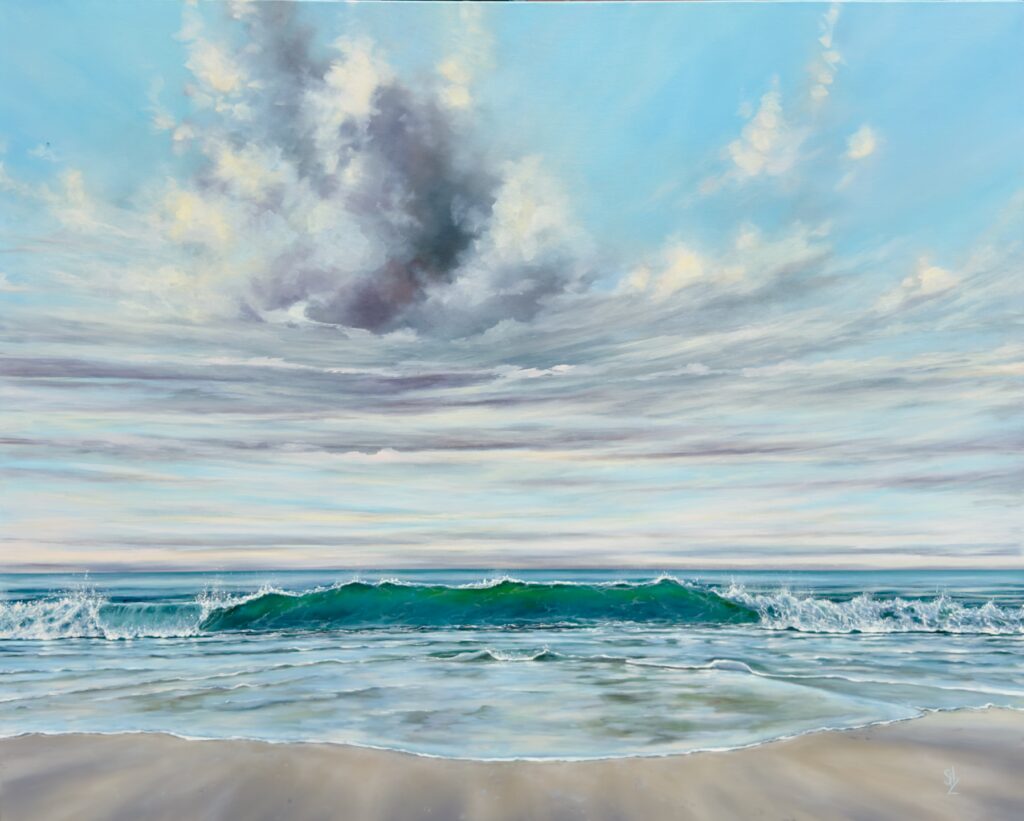
Her colour palette is known for soft blues and whites and luminous coastal tones but it is not fixed there. It shifts depending on the emotion and the place and the light and the feeling she is trying to hold. There is a recent painting from Italy that is nothing like her usual palette and the reason for that shift tells you a lot about how she thinks about colour as atmosphere rather than description.
Her career has picked up real momentum in the last few years. Her paintings have been represented by a gallery abroad and shown internationally, alongside representation closer to home through a couple of local galleries.
She’s also been recognised in the press as an artist to watch, and became a two-time bestselling co-author as part of a wider collaborative book series. Alongside her studio practice, she also makes occasional appearances as a radio presenter.
Let’s get to know Sharon through our conversation with her about how painting became the way through, what’s hidden beneath her layers of paint, and why the sea mirrors the human experience so precisely.
Q1. Sharon, could you share a little about your journey and what first drew you to painting?
Looking back, making art was never something I consciously chose. I drew and painted for as long as I can remember. My early career began in photography and special effects makeup artistry, and creativity seemed to follow me through every stage of my life. Even when it wasn’t centre stage, it was always there in some form. Art became much more than a creative outlet in my early forties.
At a time when my confidence, energy and sense of self had been shaken by perimenopause, I found myself returning to painting in a very different way. What had once been something I enjoyed became something I needed. As my energy slowly returned, so did my creativity. I studied with an established seascape artist, learning techniques inspired by the Old Masters, but the challenge was never really making the work. It was allowing myself to be seen.
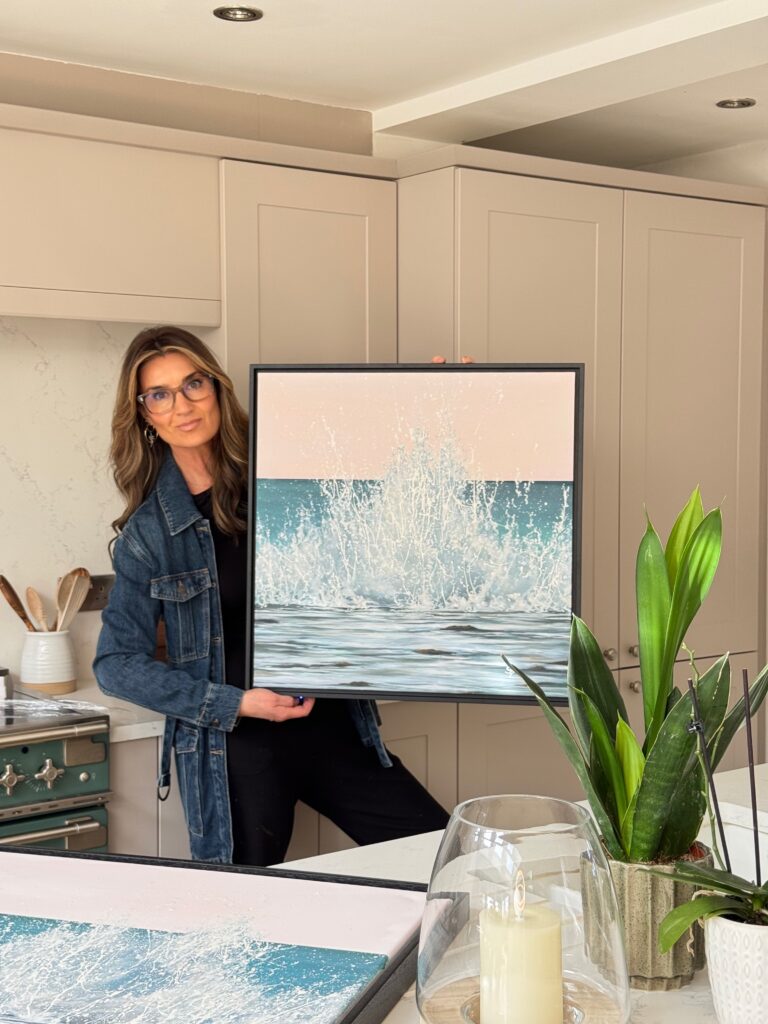
I convinced myself I needed more courses, more skills and more time, when really I was hiding behind perfectionism and a fear of being judged. Painting became the way through. It gave me a space to process what I was feeling and reconnect with myself. I realised the objective was never really to make art. It was to be in a state where creativity could flow, and the art followed naturally from that. That shift changed everything.
Today I paint because I’m driven by the process itself, by following an idea or a feeling and seeing where it leads. When someone connects with a painting and recognises something of their own experience within it, that feels like pure magic.
Q2. Your paintings use the sea to explore emotion. What is it about the ocean that continues to speak to you?
The sea has always felt like more than a beautiful view to me. It engages all the senses. What fascinates me most is its constant evolution, the tides shaped by the pull of the moon, the light always shifting, no two moments ever quite the same. I thrive on change, and the sea certainly does too. I recognise so many parallels between the ocean and the human experience.
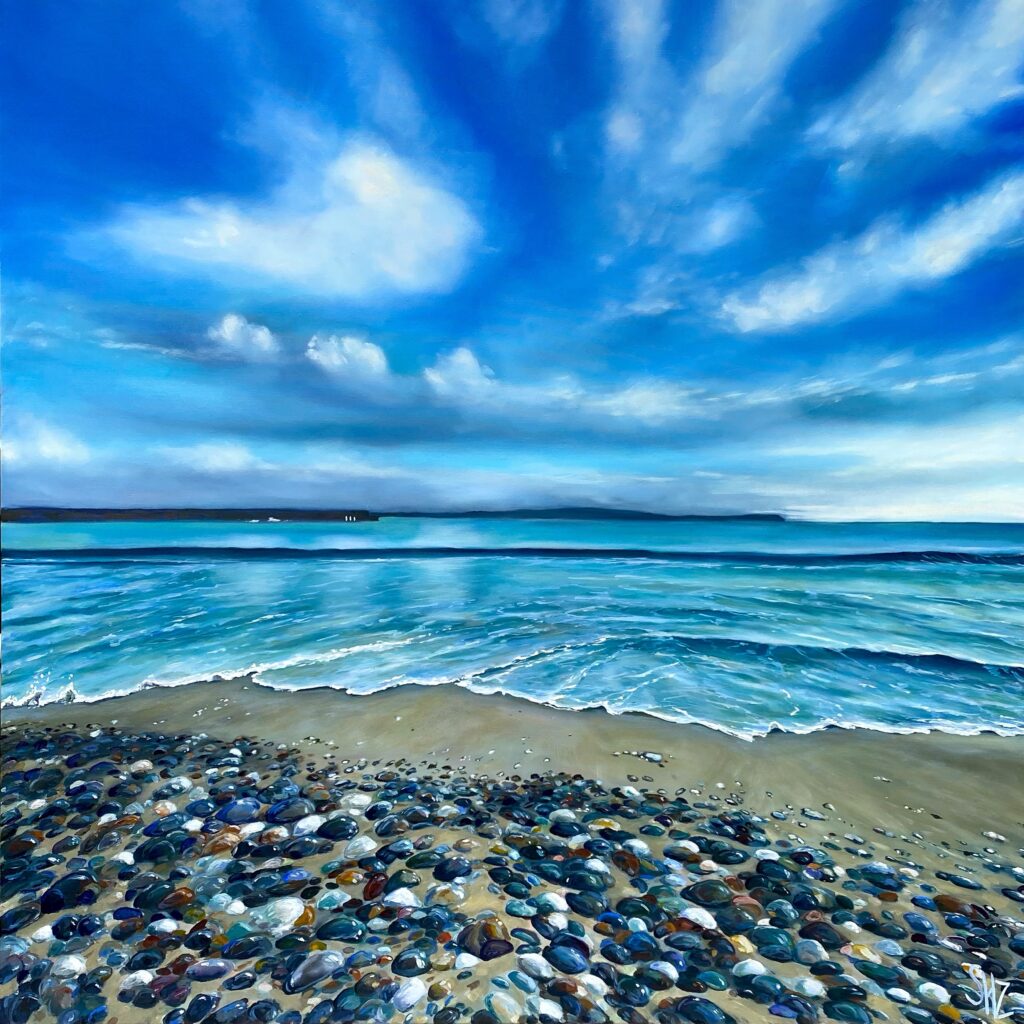
I’m particularly drawn to the way opposing states coexist so naturally within it. The sea can be calm and turbulent, powerful and fragile, all at once, with unpredictability running through everything. Beneath the surface, there’s an entire world unfolding. Some things stay buried. Some remain hidden for years. Some eventually rise. I think people are much the same. We all carry experiences, emotions and stories beneath the surface, whether they’re visible to others or not. That complexity is what keeps drawing me back to the sea, and into my paintings.
Q3. What interests you about the sea as a symbol of both strength and vulnerability?
Strength and vulnerability rarely get to sit together in how we talk about people. We tend to treat them as opposites, when really one often depends on the other. The sea taught me that. Its power and strength come from constant movement, and that same movement also makes it unpredictable. I think the same is true for us. Vulnerability isn’t the absence of strength, it’s often what strength is built from. We just rarely allow ourselves to hold both at once.
Q4. What inspired you to begin embedding hidden words beneath the layers of your paintings?
The words beneath my paintings began as a form of journaling. I have always found it easier to express emotions through creativity than simply speaking them out loud, and writing became a way of releasing thoughts and feelings that I was struggling to process. Painting over those words became a powerful part of that process. It felt like a way of allowing emotions to move through me, acknowledging what was there, but also letting go and creating space for something new.
Combining writing and painting helped me work through experiences I had carried for a long time and became a deeply healing part of my creative practice. Over time, the words beneath the surface have evolved. Today, I write intentions around love, expansion, gratitude and growth. I also include lyrics from songs that hold meaning to me.
I always seem to have a head full of songs and although I can forget where I put my bag or my reading glasses, I somehow remember lyrics and poems from decades ago! These words become part of the painting’s story. They may no longer be visible, but they remain embedded within the layers, much like our own experiences shape who we become even when others cannot see them.
Q5. How do you use color to create emotion rather than simply depict a landscape?
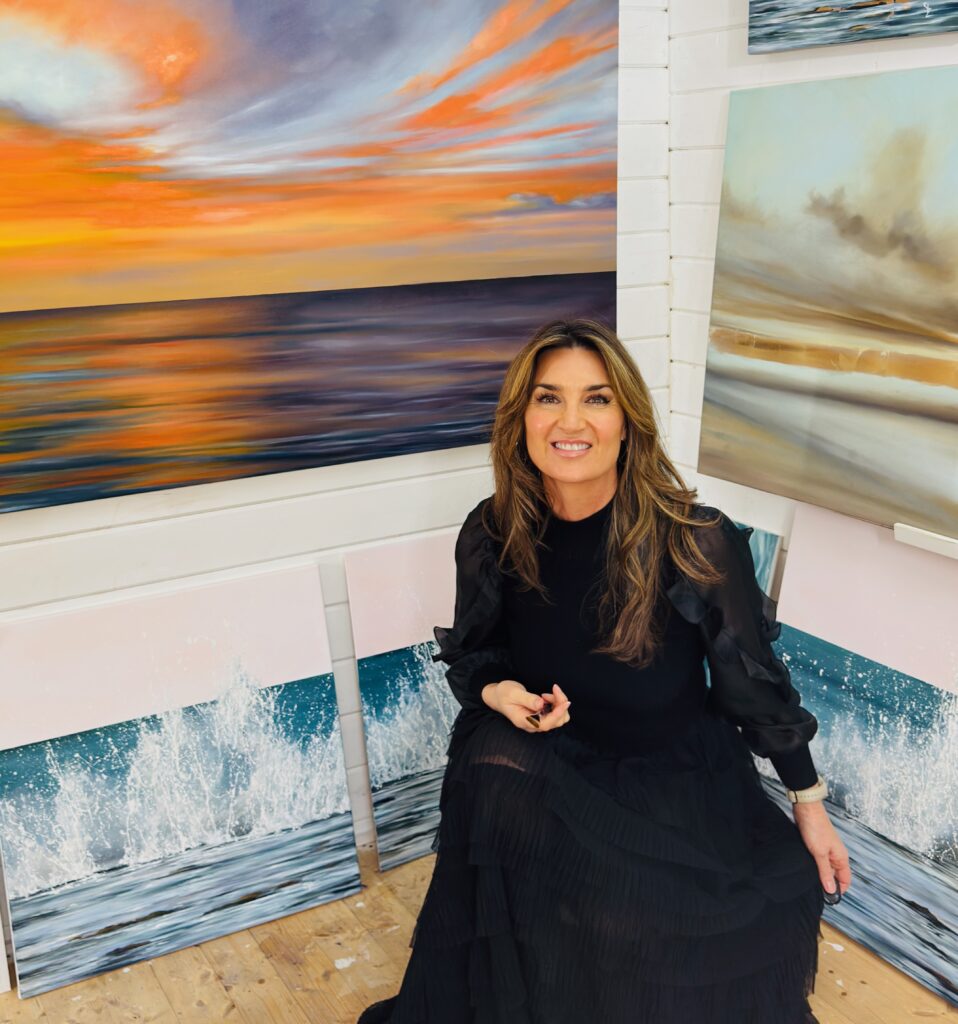
Colour for me is less about describing a scene and more about recreating the feeling of being there. Although many of my paintings are known for soft blues, whites and coastal tones, my palette naturally changes depending on the emotion and atmosphere I want to capture.
The colours are influenced by the place, the light and, most importantly, how I felt in that moment. I recently painted a large sunset over the sea in Italy, and it was a completely different expression of the coast. The palette was filled with vermillion, deep yellows and pinks because those colours reflected the warmth and intensity of the experience I had while I was there.
Q6. What inspired your LOVE UNBOUND series, and how has it changed your own understanding of freedom?
The Love Unbound Collection was inspired by my own experiences of relationships and how my understanding of love has changed over time. Growing up around unpredictability and later navigating my own challenges, I spent years believing that love meant adapting, accommodating, and putting other people’s needs before my own. As I’ve grown older, I’ve come to see love very differently.
To me, love is not about control, expectation, or losing yourself. It is about being fully accepted for who you are and extending that same acceptance to others.
This collection explores that shift. It reflects the freedom that comes from letting go of old stories and discovering that real love does not ask us to lose who you are; it gives us room to grow.
Q7. Why do you think so many people today are searching for space to slow down and reconnect?
I think many of us are feeling overwhelmed by the sheer amount of noise we are exposed to every day. We are constantly bombarded with headlines, opinions, notifications, conflict and information competing for our attention. As a result, I think people are increasingly searching for moments of quiet and opportunities to reconnect with themselves.
The answers we are looking for rarely come from outside of us. They tend to emerge when we slow down, unplug, and create space to listen to our own thoughts and feelings. For me, the sea provides that space, and I think that is why so many people are drawn to it.
Q8. Do you think the sea helps people feel connected to themselves?
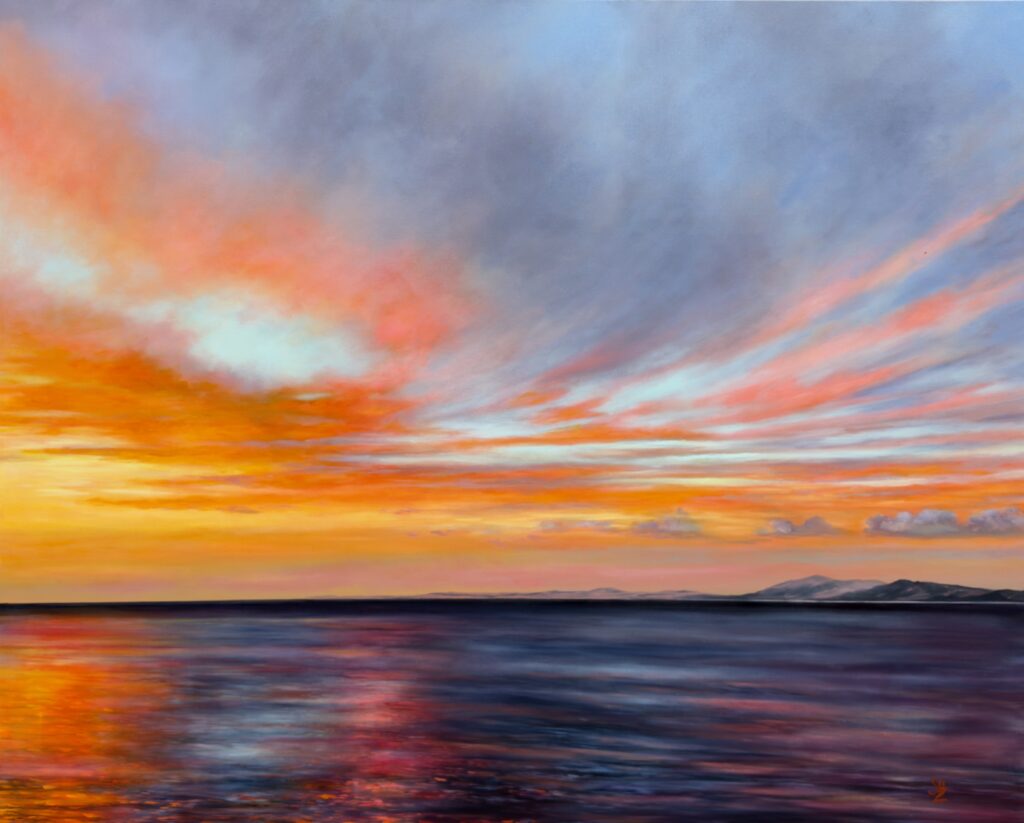
I think water has such a powerful effect on us because it changes both our physical and mental state. Research around the concept of “Blue Mind” shows that being near water can reduce stress, calm the nervous system and improve our overall sense of wellbeing. Unlike modern life, which constantly demands our attention, the sea offers what researchers call “soft fascination”.
The movement of the waves, the changing light and the rhythm of the tides gently hold our attention without overwhelming it. Our minds get a chance to rest. I’ve read that when our peripheral vision isn’t obscured, by buildings, screens, walls, the body actually relaxes. Our heart rate lowers.
It’s why looking out at the sea or across mountains feels different to looking at a phone or a cluttered room. There’s nothing for the eye to dodge or process, so the nervous system gets permission to stand down. Looking out at something so vast also puts things in proportion. Our worries don’t disappear, but hopefully they reduce a little against a horizon that big.
Q9. How do you see the role of beauty and emotional connection in contemporary art today?
I think they can be overlooked, yes. Contemporary art often rewards work that provokes, confronts or makes a statement, and there’s real value in that. But beauty and healing can sometimes be seen as less serious, almost too gentle to be considered important. I don’t agree with that.
Creating work that offers comfort or stillness is just as valid as creating work that challenges. It just serves a different purpose. Art has always reflected the world around us, so in many ways it becomes a record of the time it was created in. Right now, with so much noise and overstimulation, I think there’s a real need for art that does the opposite, art that slows people down rather than demanding their attention.
Ultimately, art is subjective. What one person finds healing, another may find provocative. That diversity of response is part of what makes it powerful, but I don’t think beauty and healing should be treated as the lesser path.
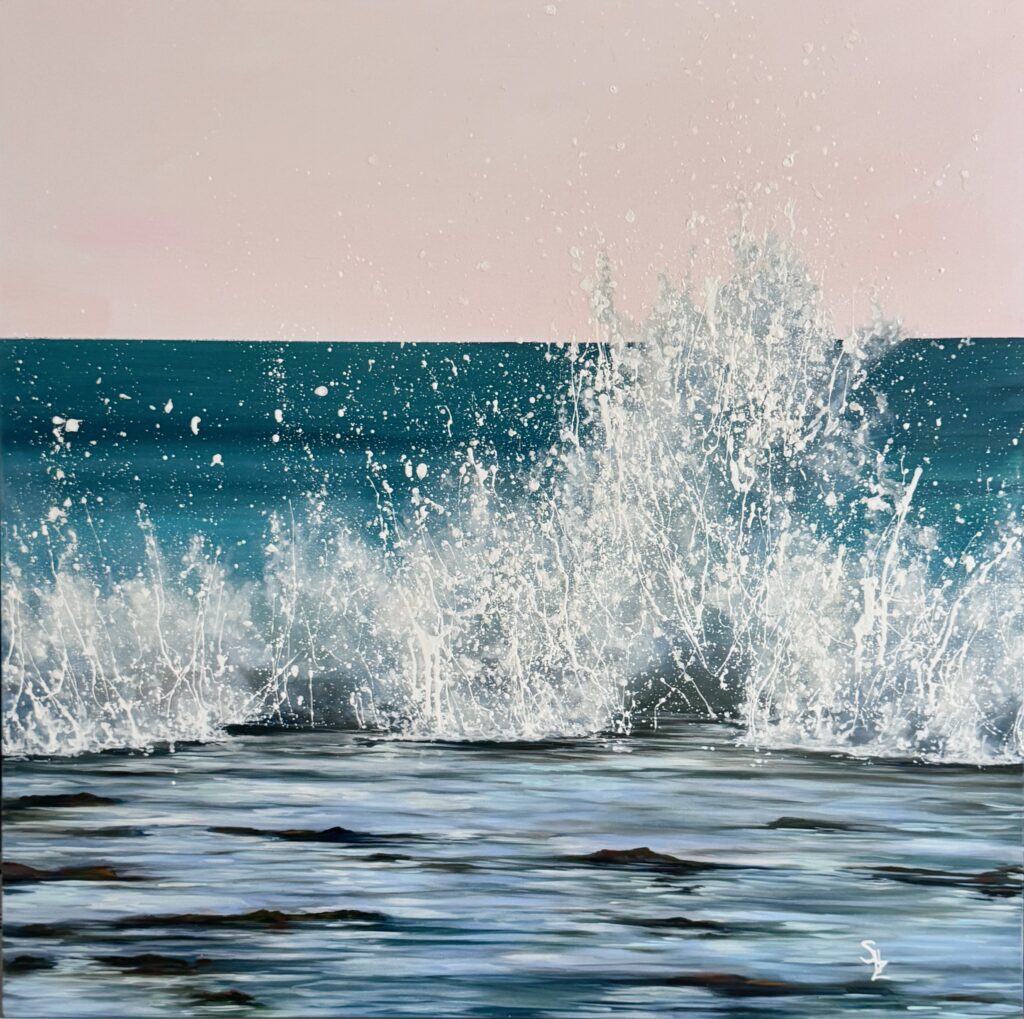
Q10. Looking back, was there a painting or series that changed the way you understood your own work?
Yes, without question, it was my Ebb & Flow Collection. The series consists of four paintings of the same location, each painted with a different colour palette and emotional energy. What I didn’t realise at the time was that I wasn’t just describing a place. I was describing myself.. This was the series where I began writing directly onto the canvas before painting. Journaling became part of my process, and the words were gradually covered by subsequent layers of paint, remaining present but unseen.
The four paintings are titled Awaken, Heal, Renewal and Thrive, and together they tell a story of transformation. Awaken emerged at a time when I was beginning to understand myself more deeply and becoming honest about what I truly wanted from life. That awareness brought uncomfortable truths and the acceptance that some things cannot be changed.
From there came Heal, which reflected the process of sitting with those emotions rather than avoiding them. Renewal followed, bringing a sense of space, clarity and the feeling that I had moved through some difficult lessons and emerged stronger. Finally came Thrive, which captured a growing sense of confidence, freedom and possibility. Looking back, I can see that I wasn’t just painting the series; the series was shaping me too.
Q11. What advice would you give artists who want to create work that feels true to who they are?
I would encourage artists to let go of any attachment to where the work might end up and focus instead on the experience of creating it. When we start worrying about whether a piece will sell, be exhibited, or be liked by others, we can easily lose touch with our own voice. The most authentic work often emerges when we are fully present, curious and in a state of play. If you allow yourself the freedom to explore without judging the outcome, it’s surprising what unfolds, sometimes your deepest thoughts and experiences find their way into the work without you even realising it.
Before starting a piece, ask yourself what genuinely moves you, and what emotions, memories or experiences keep calling you back. Start there and create for yourself first. Authenticity comes from being honest, not from trying to create what you think others want to see.
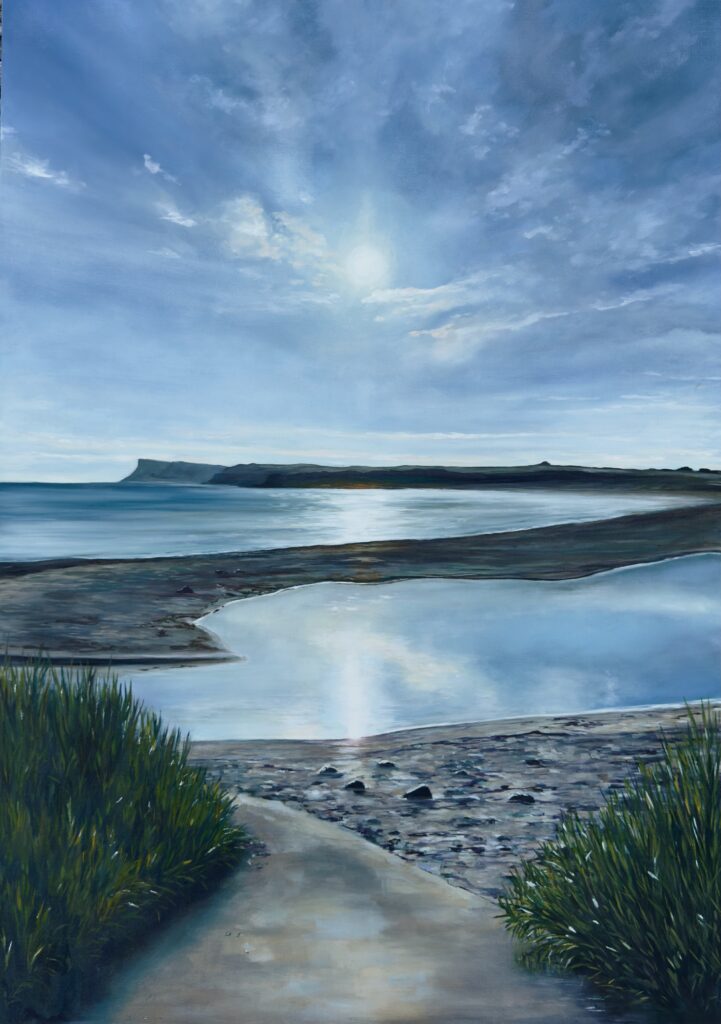
As our conversation with Sharon wrapped up, we found ourselves thinking about surfaces. And everything that lives underneath them. Because that’s really what Sharon’s entire practice is about.
The surface of the sea that looks calm while everything underneath keeps moving. The surface of a painting that looks finished while buried words and feelings sit embedded in the layers below. The surface of a person who looks fine while carrying years of experience that nobody else can see.
Most of us live on the surface. We present the version of ourselves that feels safe and manageable, and we keep everything else tucked away where it won’t make anyone uncomfortable. And that works, until it doesn’t. Until something cracks the surface open and everything underneath demands attention.
Sharon had that moment. And instead of sealing the cracks and getting back to looking fine, she picked up a brush and started painting what was actually there.
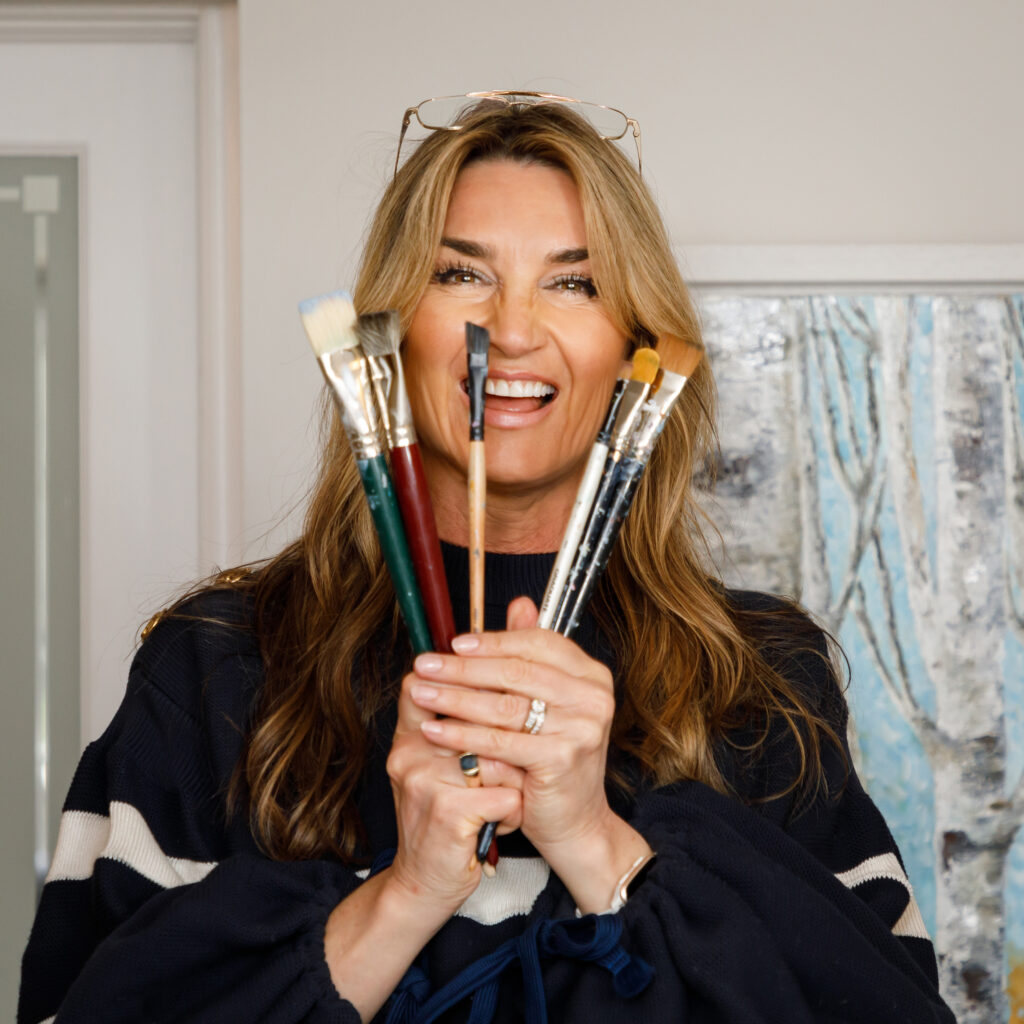
That’s something worth sitting with for any artist who’s holding back. Who’s making work that’s technically competent but emotionally safe. Who’s painting the view instead of the feeling. Who knows there’s something more honest underneath their current practice but is afraid that showing it will be too much, too personal, too exposing.
Sharon was afraid of that too. She hid behind perfectionism, extra courses, and the idea that she wasn’t ready yet, when really she was just scared of being seen. And then she painted anyway. The work that came from that decision carries more life, more connection, more real use to the people who encounter it than anything she made while playing it safe.
Her instinct toward beauty in contemporary art deserves attention too. Work that offers comfort or stillness is just as valid as work that confronts or challenges. Both serve a purpose. Both are needed. But in a culture that often treats gentleness as weakness and beauty as superficial, choosing to make quiet, healing work takes its own kind of courage. Sharon makes that choice with every painting, and the response from people who encounter her work suggests the choice is right.
For collectors and art lovers, Sharon’s seascapes bring something into a space that goes beyond aesthetics. A quality of calm that isn’t passive or empty but grounded and alive. The surfaces carry depth from that layered process writing, painting over, building up, revealing, concealing. And because every painting holds hidden words and intentions inside it, living with one means living with something that has more to it than meets the eye. That’s the kind of art that keeps giving back. Not because it changes, but because you do and the painting meets each new version of you with something it was quietly holding all along.
Follow Sharon Goodenough through the links below and see her work for yourself.