

This artist turns thousands of hand cut paper pieces into wild mythological creatures│ Patricia Gillberg
At Arts to Hearts Project, every now and then an artist’s work hits us in a way where we cannot tell if we are looking at something from right now or from a hundred years ago. And we mean that as a compliment.
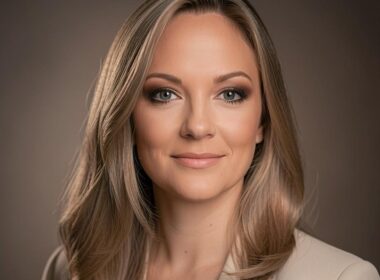
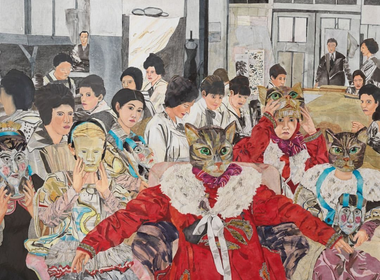
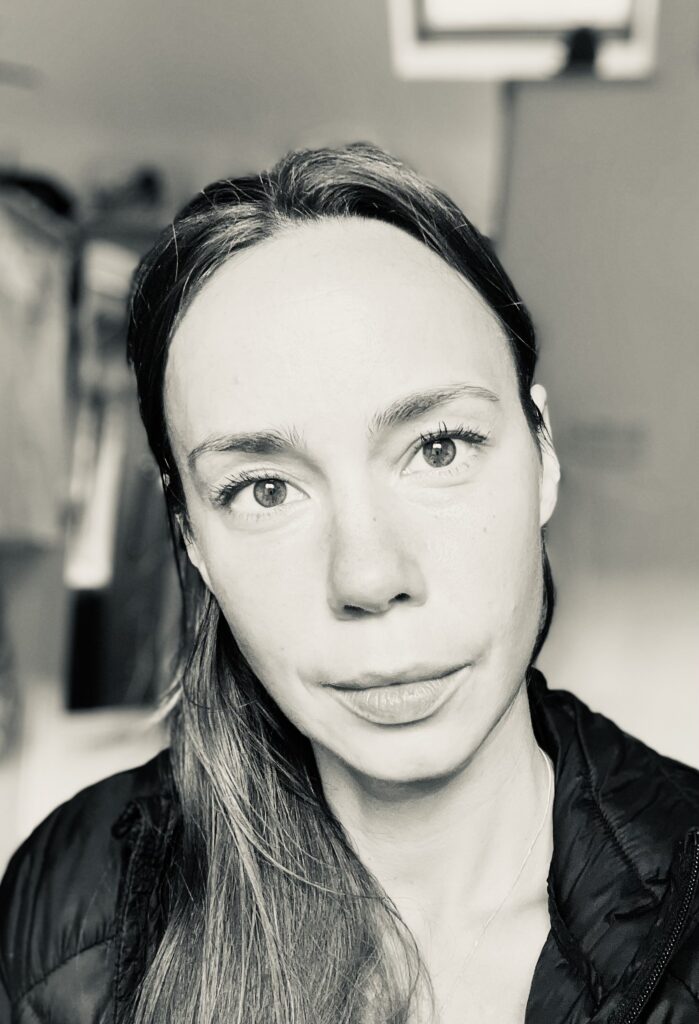
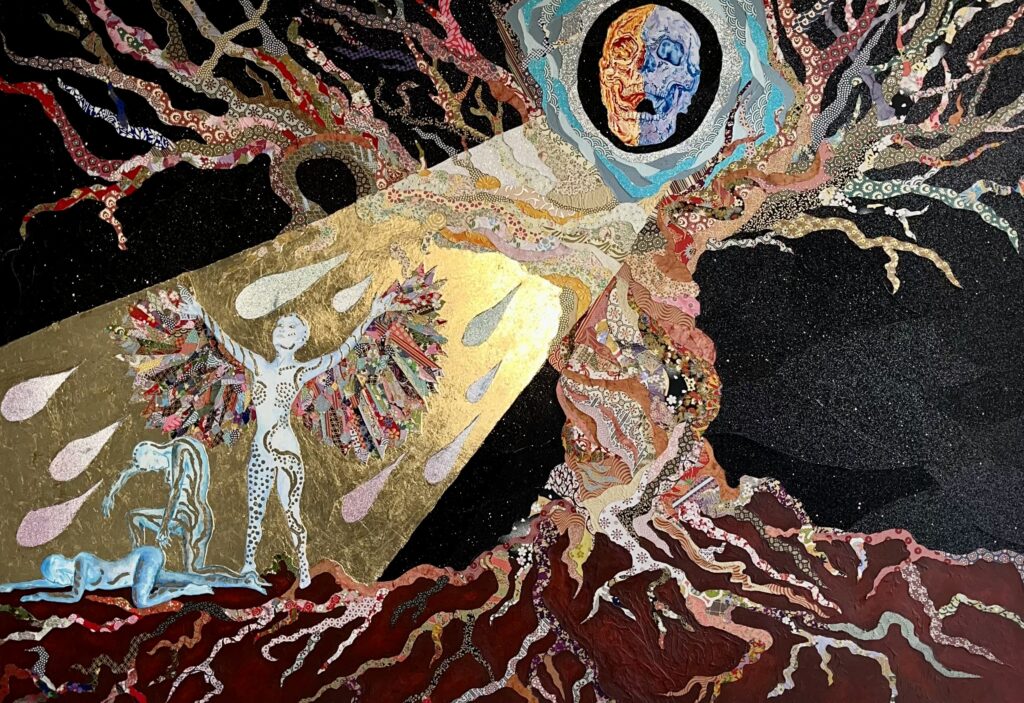
Patricia Gillberg’s collages carry something ancient and alive at the same time and honestly, we have not stopped thinking about them. She is one of our selected artists in our first Artist of the Year Book. And her work has this quality where you feel like you are standing at the edge of something ancient that is still somehow alive.
Patricia grew up in Stockholm but Sweden did not stir what she needed stirred. She has talked about the system there being convenient and functional but also rigid in a way that did not push her creatively. So she left. She went to Scotland and stayed for over a decade. And Scotland did something to her that Sweden could not.
There was a rawness to it. An untamed energy in the culture and the people and the land that woke something up in her. She lived in collectives with filmmakers and photographers and musicians and circus artists. She was surrounded by people who were making things from the edges, not from the centre. And that shaped her completely.
Celtic mythology and culture pulled her in deep. The fire festivals. The folk music on the streets. The mythology that honours the cycles of nature and sits right on the boundary between the human world and something older and stranger.
She is not borrowing Celtic imagery as decoration. She has genuinely lived inside that world and it has become part of how she sees everything.
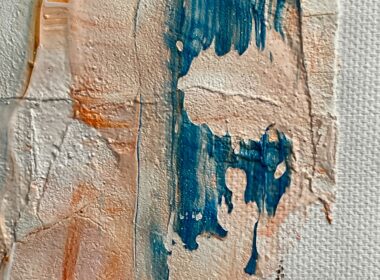
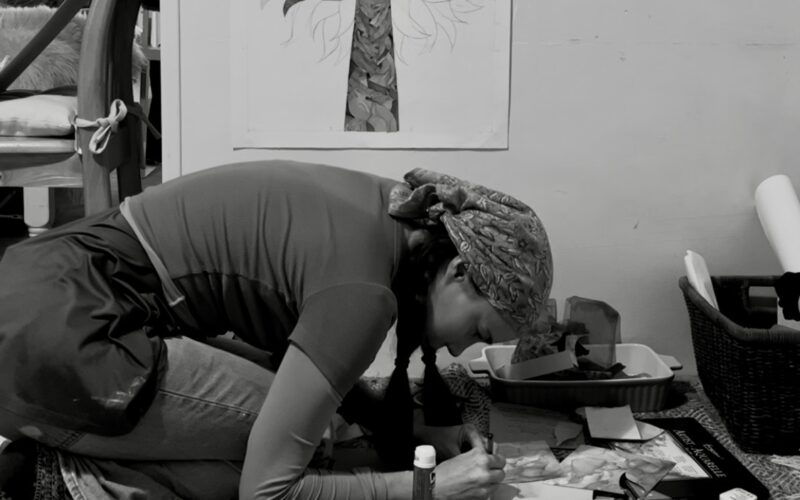
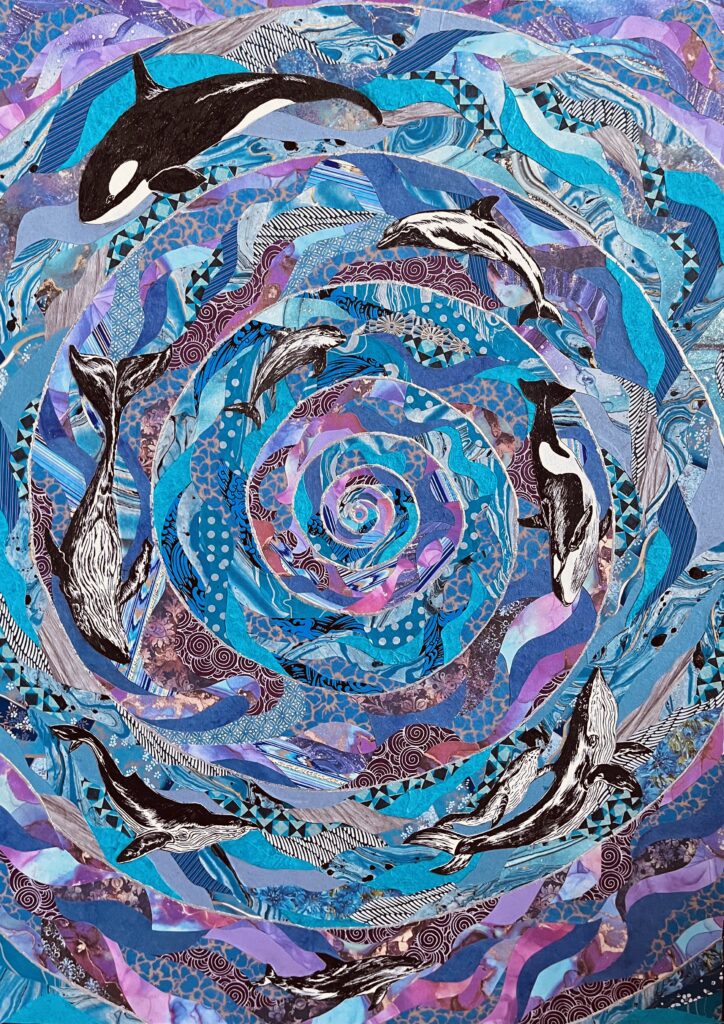
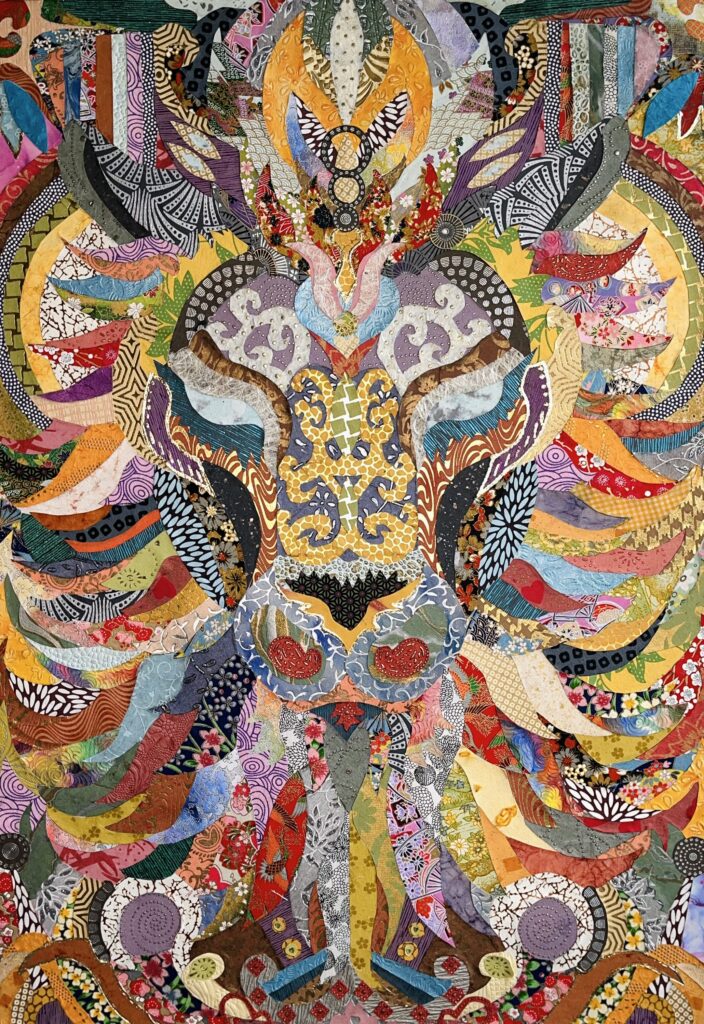
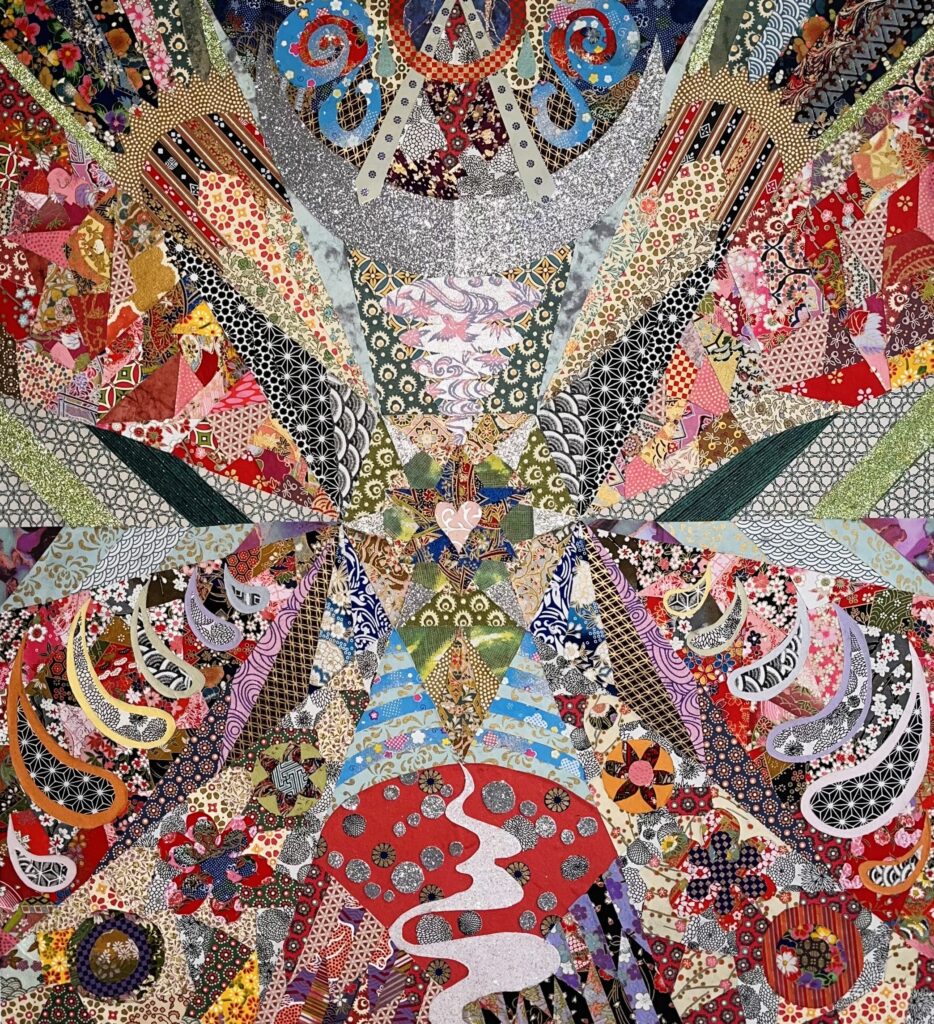
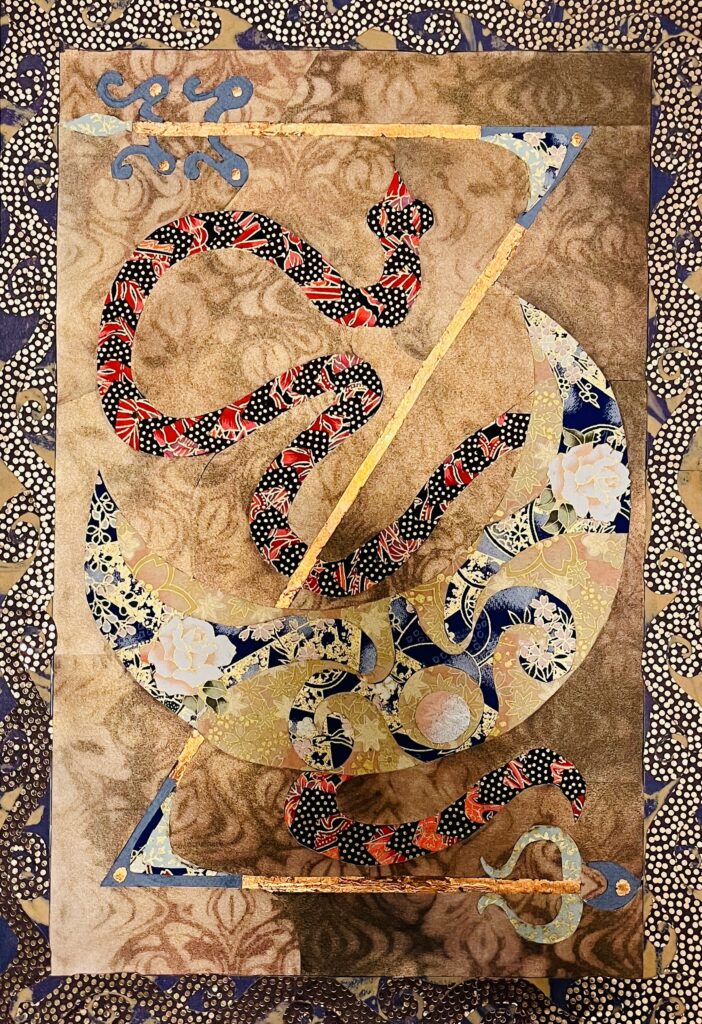
Her work is collage. Drawing, tracing, patterned paper, layered compositions built piece by piece. And there is something about how she describes her process that we find really interesting. She does not plan things out rigidly. She starts with a vision or a feeling and then she lets the work build itself through her.
There is a mythic quality to her pieces but it never feels pretentious or heavy. It feels open. Warm. Like someone left a door open between this world and an older one and invited you to stand in the doorway for a minute. She told us she hopes her work gives people a sense of certainty in the light of the human soul. That line has not left us.
Let’s get to know Patricia through our conversation with her about what Scotland woke up in her that Sweden could not, why Celtic mythology became central to her creative life, how her collages build themselves, and what she means when she talks about the light of the human soul
Q1. Can you share how growing up in Stockholm and later living in Scotland shaped the way you see and create today?
The transition from a wealthy and well functioning welfare system in Scandinavia going to a less robust and more rugged system in the uk naturally had its challenges that comes with getting by work wise. Less pay, less security. However Scotland, I found, has an atmosphere that has kept alive its ancient connection with nature – unrefined, untamed and unmoved. It still inhibits an aliveness in spirit in the people and culture that I don’t sense amongst people in Sweden/Scandinavia the same way.
I spent the first majority of my years in Edinburgh and I met many fellow artists, from different parts of the world, that embraced different areas of creativity and shared it through events and various community cliques that were then. Living in different collectives I met filmmakers, writers, photographers, circus artists and aspiring musicians that introduced me to their works.
When I was younger I found the swedish capitol atmosphere cold, rigid and suffocating. I think that Bjork’s lyrical phrase in the song Hunter: ”I thought I could organize freedom / How Scandinavian of me” fits well as described. I don’t hate the system it just doesn’t stir the creative urge in me. Perhaps it’s the settling for a convenient life that kills the search and evolution of the soul.
Q2. You’ve spoken about your connection to Celtic culture and mythology, what drew you so deeply to that world?
Celtic mythology honors the cycles of mother nature and explores themes like fate, magic, transformation and the thin boundary between the human world the otherworlds. I love that pubs still play folk music and the buskers are still on the streets with the pipes, flutes and the drums – it keeps the mythical spirit of the land and lore alive.
I’m a big fan of Clanadonia you can see them on the streets of Glasgow, they really carry that untamed wild sound of foregone warriors. The modern interpretations and celebration of the celtic fire festivals Beltane and Samhuinn held and organized by the Beltane Fire Society in Edinburgh have also been great sources of inspiration to me on my journey.
Some music with celtic influences are: Kíla – Mébh’s Tune, Afro Celt Sound System – Deep Channel, Dougie Maclean – the Gael northwest. I find many of these songs holding a musical echo chamber from an almost forgotten time that re awakens the mysteries of humanity’s connection to earth and our old ways of living a more balanced life.
Q3. There’s a quiet magic in your work, does it come more from the world around you or from your inner imagination?
Thank you so much. It’s more internal, not imagined. It comes through vision and depends on the piece, if I allow it to come through without too much resistance it hopefully unfolds well. I want to avoid perfection, but I do strive towards precision in terms of capturing the threshold between the viewer and the message/being/symbolism that is the finished piece.
Q4. Much of your work grows from personal experience,how do you translate something deeply personal into a visual language?
I don’t always know if a personal experience is going to become a piece of art. It takes time. I write poetry, to understand and describe my own emotions in images. Then as i go along i may have other encounters that inspire as building blocks and i take note of them and put them down on paper, in words or drawings.
A piece usually unfolds best without too much planning. I feel like i have to allow it to create itself, that my mind and emotions are only guiding tools.
Q5. Your collages combine drawing, tracing, and layered materials, does layering function more as a visual technique, a symbolic one, or both?
Both I’d say, i usually have to envision first and let the symbolism come to me then i create it piece by piece. The drawing comes first, then i look at different colour compositions of paper to see what would potentially work then I start the tracing and cutting.
Oftentimes I change my mind, sometimes when I turn the paper over to fit it, it has created its own pattern in and of itself which i always find so fantastic!
Q6. There’s a mythic quality to your work, do the stories reveal themselves as you build the piece?
I do research depending on the theme, to see if I can find something that inspires me. That’s usually for pieces that aren’t based in personal experience, but the narrative often plays out by itself along the way as I do the work.
Q7. Your work feels emotionally deep yet open, what do you hope viewers take away from it?
That it gives them a magical sense of certainty and steadfastness in the belief of the light of the human soul. I believe we are multifaceted beings morphing all the time. Being alive is an ever changing art in itself, with many different shades of colours and complexions throughout the seasonal shifts of life.
There will be darkness but more importantly there will also be treasures.
Q8. Building a deeply personal practice can bring uncertainty, how have you navigated moments of doubt in your creative journey?
Yes there has definitely been times in life when I’ve been uncertain. The pandemic put a halt to many plans i had initially. It’s important to have a lot of endurance and patience. I’ve learned to surrender more and to not try and control outcomes, allow whatever happens and then work around it. There are many paths leading up to the same mountaintop.
Q9. Looking ahead, what ideas, materials, or directions are you most curious to explore next?
I‘m planning to use and mix in some other media in my work and potentially use some digital software to experiment a bit, however I’m adamant to not overuse any AI. It’s important to me to keep the creations and their messages as organic as possible. I’d like to mix in some more writing and poetry with my work and to make it come alive. I don’t want reveal too many ideas here as they’re only in their early stages.
Q10. What advice would you give to artists who feel traditional ways of working don’t fully express who they are?
Explore life. Art schools are great places to learn the basics but I think that for creating your own path you need to try things you’ve never done before and don’t look for a perfect template to follow. Experiment with different materials and do not compare your art with others. Find contrast and to get to know yourself deeper – not better, just deeper.
As our conversation with Patricia came to a close, we kept thinking about comfort. And what it costs us.
Because Patricia had comfort. She grew up in one of the most stable and functional countries in the world. Everything worked. Everything was taken care of. And she walked away from it because comfort was not feeding the part of her that needed to make things. That is a decision most of us never make.
We stay where it is safe. We stay where the system works. We tell ourselves that one day, when things are more settled, we will finally do the thing we actually want to do. And that day keeps moving further away because settled is just another word for stuck.
Patricia was not willing to be stuck. And her work exists because of that unwillingness.
And it made us think about where creativity actually comes from. Not from having the right supplies or the right studio or the right degree. From friction. From displacement. From putting yourself somewhere unfamiliar and letting it reshape you. From choosing the rough path over the smooth one because the rough one is where you find out who you actually are.
That does not mean everyone needs to move to another country. But it does mean everyone needs to leave something comfortable behind at some point if they want their work to carry real life in it.
You cannot make art that feels alive from inside a life that feels numb. Something has to stir. Something has to be a little wild and a little uncertain and a little scary. Patricia found that in Scotland and in Celtic culture and in living alongside people who were creating from the edges rather than the centre. Wherever your version of that is, the point is the same. Go there.
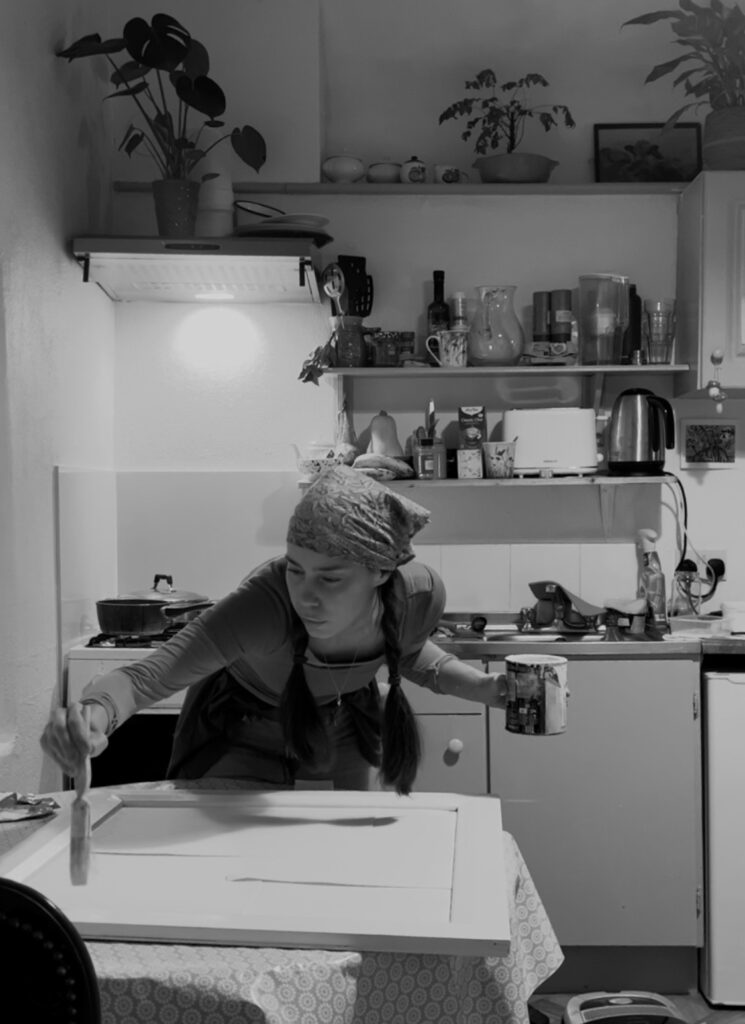
And there is something else we took from this conversation that goes beyond art. Patricia does not force things. Not her creative process and not her life. She waits for experiences to become art on their own timeline.
She lets materials surprise her. She surrenders outcomes and works with whatever actually shows up. In a world that is obsessed with planning and controlling and optimising every part of our lives, there is something deeply freeing about watching someone just trust the process and let things unfold.
Most of us are holding on too tight. To our plans. To our timelines. To the way we think things should go. Patricia lets go. And the work is alive because of it.
For anyone thinking about collecting Patricia’s work, her collages bring something into a space that is genuinely hard to find elsewhere. They carry a spiritual warmth and a connection to something older and deeper than the contemporary art world usually offers. They are made entirely by hand, every layer cut and placed with care, and that handmade quality gives them a presence that you feel the moment you walk into the room. These are pieces that will not shout over everything else on your wall. They will quietly become the thing you keep looking at.
Follow Patricia Gillberg through the links below and step into a world that feels ancient and alive at the same time.