
Jean Huang Uses Oil Painting to Explore the Hidden World of Childhood
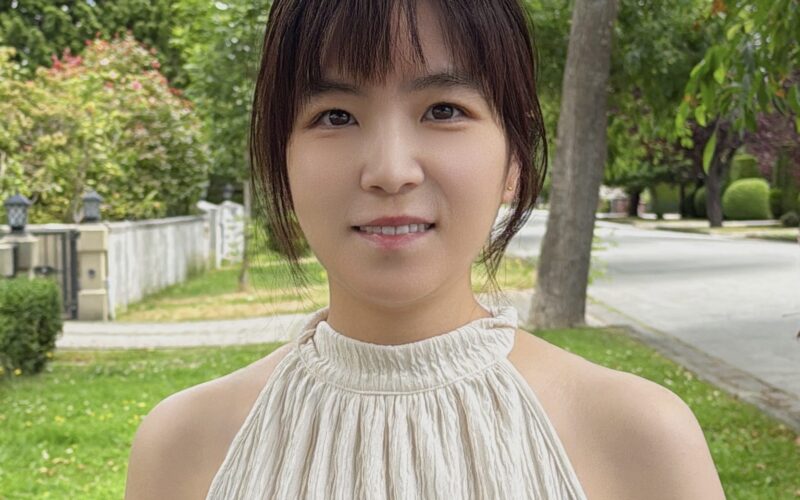
At Arts to Hearts Project, our 100 Emerging Artists of 2026 keeps introducing us to artists whose work makes familiar subjects feel completely new. Jean Huang is one of our selected artists in this edition and her paintings made us rethink everything we thought we knew about painting children.
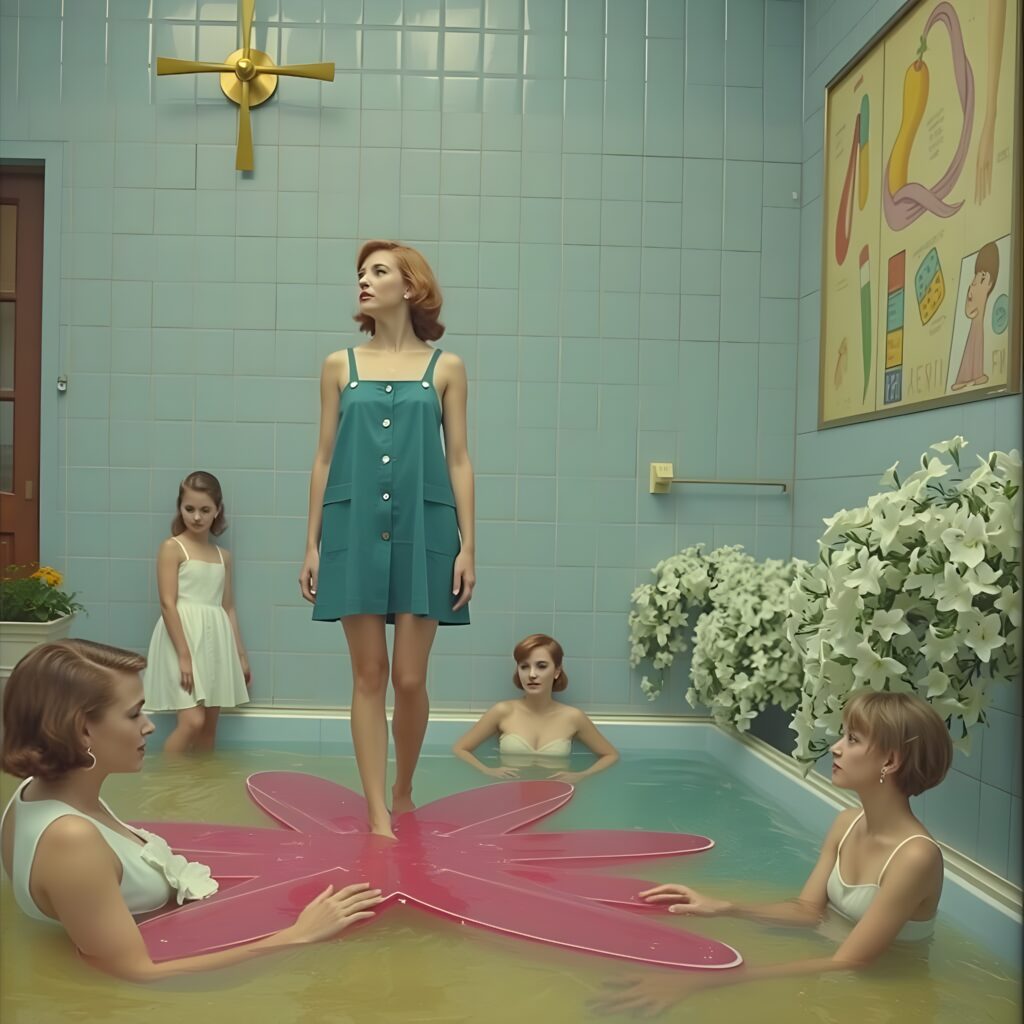
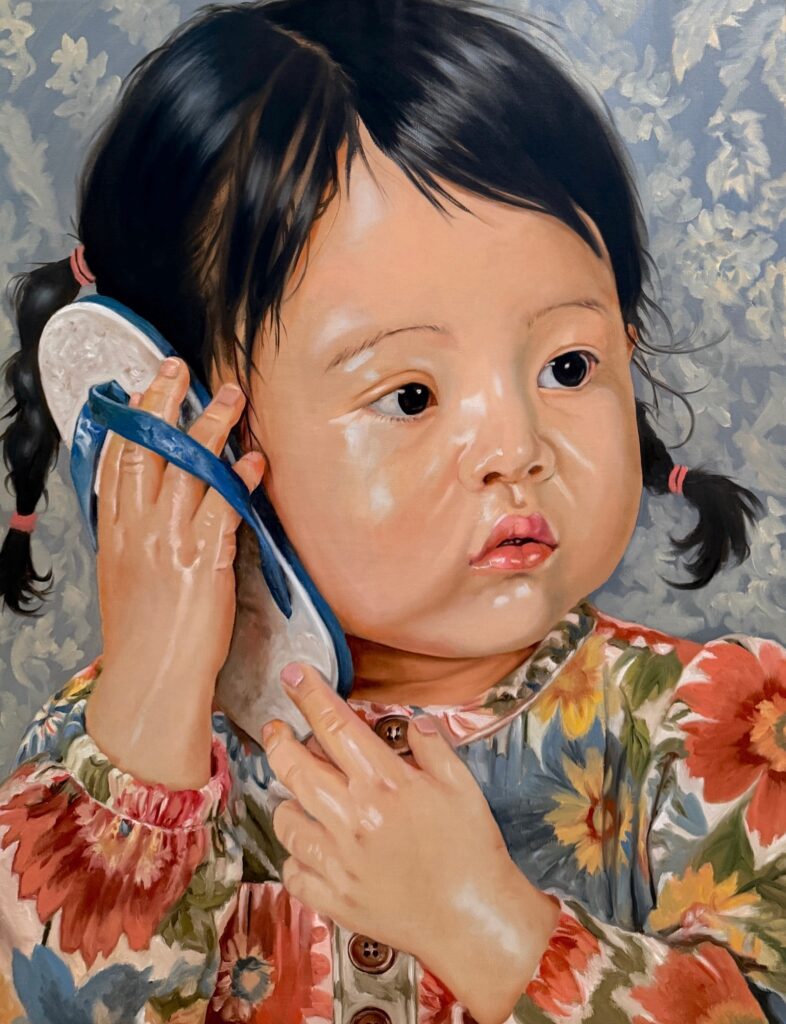
Jean is a Taiwanese-born visual artist based in Vancouver, Canada. She paints in oil and her subject is young children, mostly between one and three years old. The portraits are beautiful and soft and luminous with a porcelain-like quality to the skin that makes the figures glow.
But underneath that beauty something else is happening. Something quiet and complex and a little mysterious. The children look calm on the surface but you can feel that there is an entire world operating behind their eyes that you are not being given full access to.
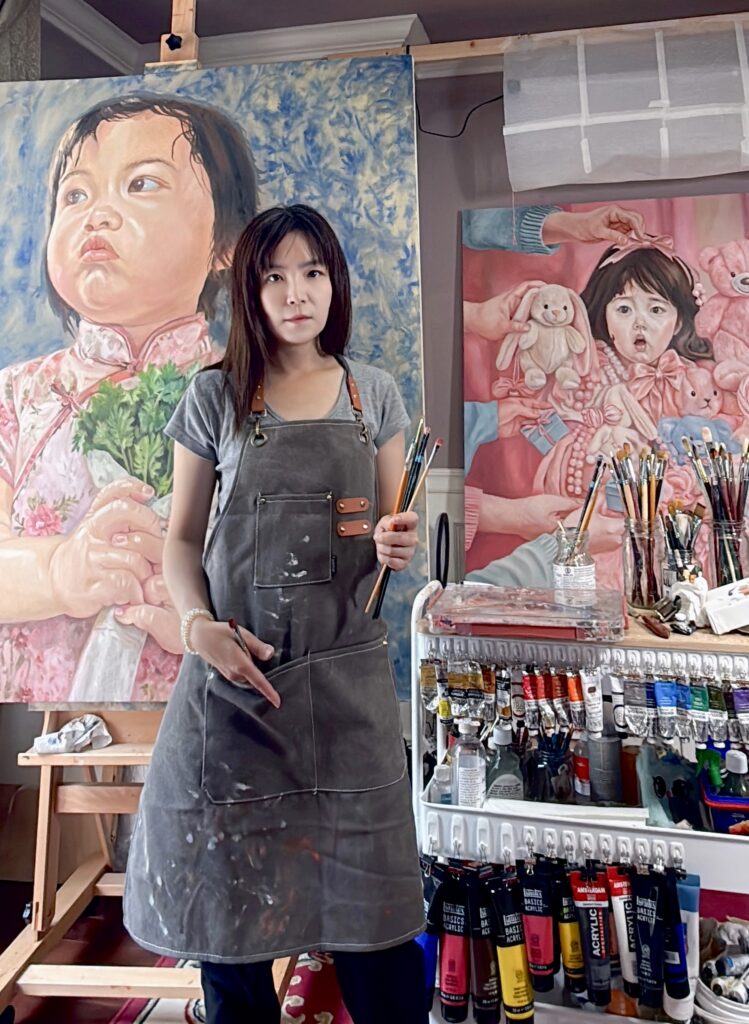
That tension between what is visible and what is hidden is the engine of Jean’s entire practice. Silent tension and hidden logic beneath the surface of childhood innocence. That is what she is after and once you see it in her work you cannot unsee it.
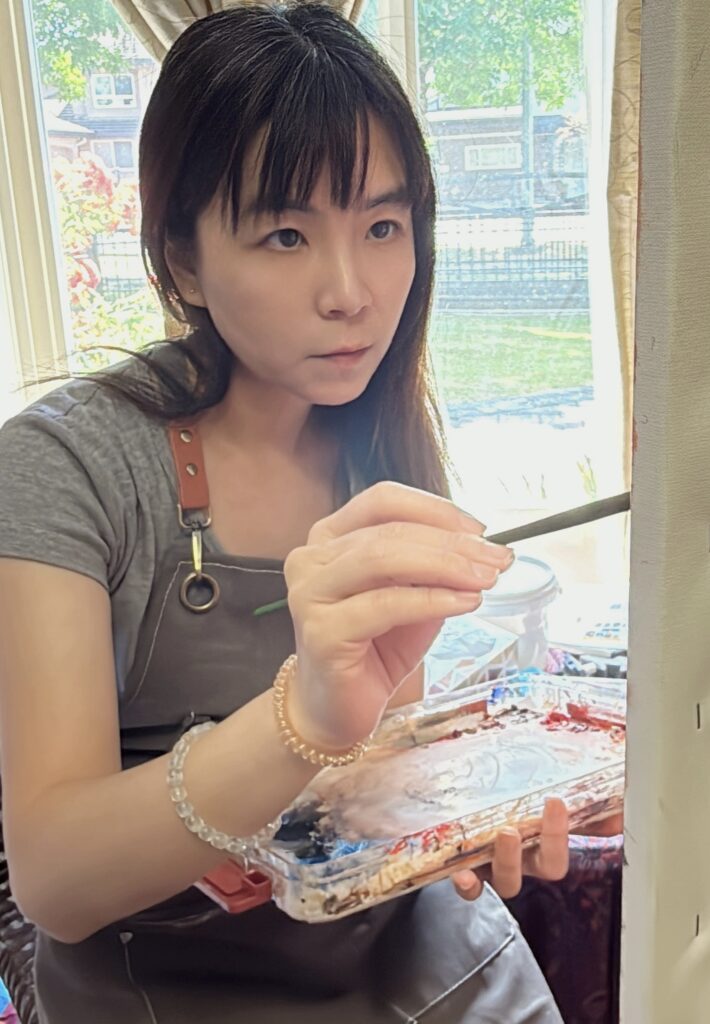
She is also an early childhood educator. She spends every day with young children, watching them, paying attention to the tiny details that most adults walk right past. That daily observation gives her paintings a specificity that you cannot achieve through imagination alone.
But she does not paint from observation alone either. Her process involves combining photography, video stills, and AI-generated imagery to build her compositions before translating everything into oil painting.
How she navigates between real observation and artificial image generation is something she talks about during the interview with a thoughtfulness we found really refreshing in a conversation that usually gets reduced to for or against.
She trained in ceramics before painting and that understanding of form and light and surface is still visible in her work. She studied in Boston, lived in Taiwan, and now works in Vancouver. Each place has left something in how she sees and how she paints.
And the question driving her practice sounds simple but turns out to be enormous. What is actually happening inside a child who looks calm and innocent and easy to understand from the outside?
Jean has spent years proving that the answer is far more complex than most adults ever bother to find out. And her paintings hold that complexity with a tenderness and a seriousness that we find genuinely moving.
Let’s get to know Jean through our conversation with her about why she paints the youngest humans, how observation and technology meet in her process, and why painting children is really painting all of us.
Q1. Jean, can you share how growing up in Taiwan and living abroad shaped your creative perspective?
Living in different cultures has helped me recognize people’s differences more quickly, but it has also reminded me that understanding them takes much longer. Taiwan is still an important part of who I am because Chinese is still the language I think in. Studying in Boston gave me the confidence to experiment freely and embrace technology in my creative process.
Living and working in Vancouver introduced me to a different philosophy of early childhood education. I learned to respect children’s ideas and trust that they have their own way of understanding the world. That experience became the foundation of how I paint children today.
Q2. You studied ceramics before moving toward painting. What drew you back to the painted surface?
I never really left painting when I was studying ceramics. I made oil paintings of unfinished ceramic pieces on shelves, and became fascinated by light, reflections on porcelain, and the way painting could record what I saw. Ceramics also gave me a deeper understanding of form, light, and surface. When I studied in the U.S., I was encouraged to work across different disciplines.
I explored drawing, film, and documentary, and my thesis followed two gay friends as they reflected on how childhood had shaped their lives. That experience made me realize I had always been interested in how early experiences continue to shape us. After graduate school, I kept searching for the right visual language.
Eventually, I returned to oil painting because its slow process allows me to build light, emotion, and psychological depth. It became the best way for me to paint children and explore how childhood continues to shape who we become.
Q3. You use AI as a starting point for your paintings. What first attracted you to this process?
At first, I painted porcelain dolls by looking at photos I found online. One day, my sister showed me how to use AI to create a Studio Ghibli-style portrait of our family. That was my first experience with AI image generation, and I became fascinated by it. I use AI to bring the images in my mind to life, but it also surprises me with possibilities I would never have imagined on my own. I think of AI as a tool and an early creative partner.
It expands my imagination rather than replacing it. Today, I combine photography, video stills, and AI to develop an image before I begin painting. Then I make color studies and continue changing the composition until it becomes my own visual language. The AI image is only the starting point. The painting is where I slow down, make decisions, and transform the image into something that feels completely my own.
Q4. Your work combines close observation of children with imagined scenes. How do these two approaches inform each other?
My paintings always begin with observing real children. I pay close attention to their expressions, gestures, and the way they interact with the world. At first, I tried to photograph children and build surreal scenes from those images, but because they were so young, they couldn’t always express the actions or emotions I imagined. AI changed that. It allows me to create the situations, gestures, and porcelain-like qualities that exist in my imagination.
At the same time, my years of observing real children help me recognize which AI images feel emotionally believable and which do not. The two ways of seeing constantly shape each other. Real children keep the paintings emotionally grounded, while AI gives me the freedom to imagine beyond what I can photograph. Neither one could exist without the other.
Q5. As an educator, you observe children every day. What makes a moment stay with you enough to become a painting?
That is a great question because I ask myself the same thing all the time. At first, I thought I had to wait for a special moment. Now, it feels much more natural.
As an educator, my days are busy, so I rarely stop and think, “This should become a painting.” Instead, I stay curious and collect small moments.
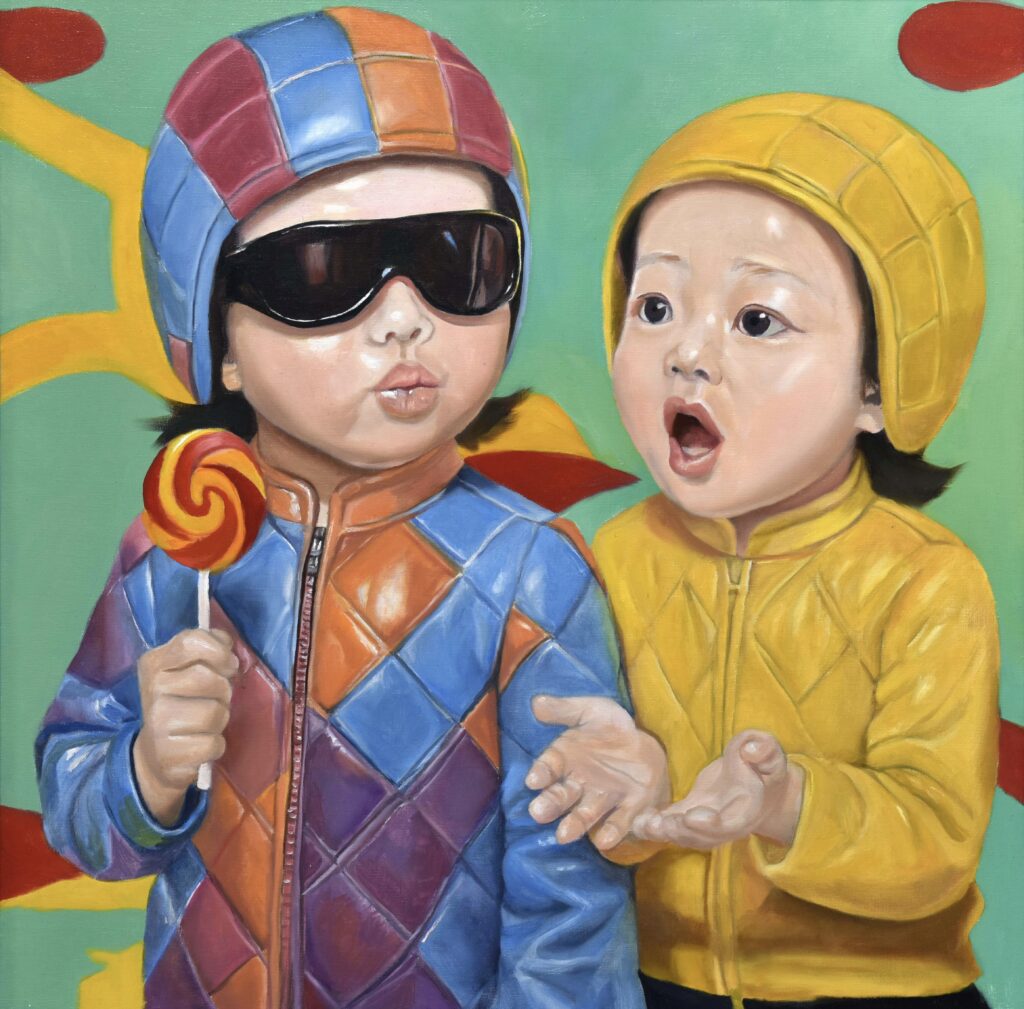
Over time, they become my visual library. Most of the time, I don’t remember an entire scene. I remember an idea. I once noticed that young children love putting almost anything on their heads. That simple observation eventually grew into many different paintings. My work doesn’t come from one memorable moment. It grows from many small observations collected over time.
Q6. Your paintings feel soft and delicate while carrying psychological depth. How do you balance those qualities?
I use gentle light, soft colors, and careful brushwork to invite viewers into the painting. Instead of explaining everything, I leave the children’s expressions, relationships, and stories open. I want viewers to slow down, stay curious, and imagine what each child might be thinking. Whether a painting feels playful or mysterious, I never want to tell viewers exactly what to think. For me, beauty draws people in, but mystery keeps them looking.
Q7. You often question how adults look at children. What assumptions are you most interested in challenging?
There are many assumptions adults make about children, and I think most of them are genuinely trying to understand them. My goal is not to prove those assumptions right or wrong. I am not trying to solve the mystery of childhood. We can never fully know another person’s inner world. I use observation as a starting point, then let imagination take the work somewhere new. I don’t want to replace one assumption with another. I want my paintings to invite viewers to question how they are looking at children in the first place.
Q8. Your children often appear calm while suggesting rich inner worlds. What draws you to that contrast?
Because that is what children are, and ultimately, what people are. Even when they appear quiet, their inner world is rich, complex, and impossible to fully know. That is why I keep painting children. Through them, I explore not only childhood, but human nature.
Q9. How much of a child’s expression in your paintings comes from direct observation versus invention?
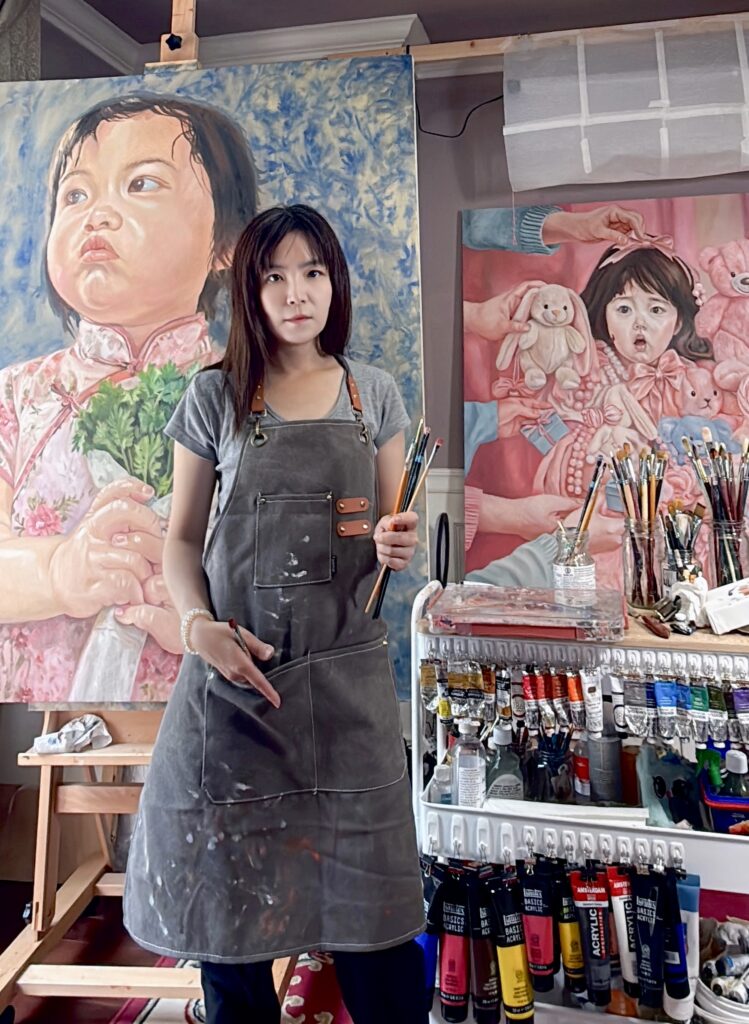
Observation and imagination are equally important in my work. Most of the situations, poses, and gestures are imagined, but they are shaped by years of observing children. Although the situations are fictional, the emotional truth comes from my experience with children. One of the things I enjoy most is imagining how children might respond to surreal situations, like stopping to smell a scallion with complete fascination.
Q10. Many viewers initially describe your paintings as sweet or innocent. Do you see that reaction as part of the work itself?
Yes, absolutely. I enjoy that first reaction because children are naturally sweet and innocent, and I want my paintings to keep that feeling. But I also hope people stay with the painting a little longer. The sweetness is only the beginning. If they keep looking, they may notice something quieter, more mysterious, or emotionally complex. To me, innocence and mystery are not opposites. I hope viewers leave not only with a sense of beauty, but also with curiosity about each child’s inner world.
Q11. “Small is not simple” is central to your practice. What makes early childhood so complex to you?
I first became interested in childhood by observing adults. During my MFA, I researched how childhood experiences continue to shape us throughout life. That made me realize how complex childhood really is. Today, my work focuses on children between about one and a half and three years old.
It is a stage before lasting memories and before language, yet children are already learning and becoming who they are. I paint young children not only because they are cute. I paint them because I believe this quiet stage of life shapes everything that comes after.
Q12. You use parallel play as a visual language. What does it allow you to explore about relationships?
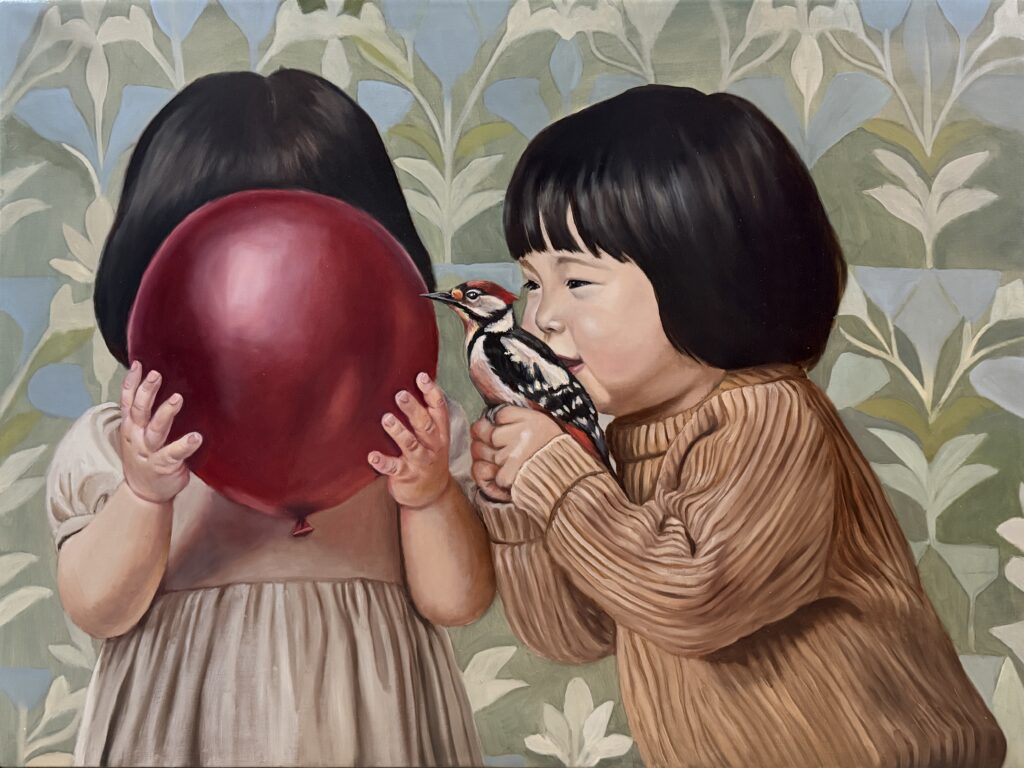
Parallel play is one of the earliest forms of social interaction in child development. I don’t follow the theory exactly, but I use it as a visual language. Two characters may appear to be together while living in completely different inner worlds. Sometimes they connect, and sometimes they don’t.
I enjoy imagining how these characters play, connect, and invent their own worlds. One character might hold a balloon while another holds a woodpecker about to peck it. These imagined interactions allow me to explore relationships, play, and the quiet tension between two people sharing the same space.
Q13. How do you approach child portraiture without reducing children to ideas of innocence?
Traditionally, child portraiture has reflected what adults wanted to see in children. I respect that tradition, but I am interested in something different. My experience as an educator allows me to see children as individuals with their own personalities, emotions, and ways of understanding the world.
Rather than fitting them into adult expectations, I enjoy placing them in surreal situations that still feel emotionally true. Illustration, collectible toys, and artists such as Yoshitomo Nara and Mark Ryden have shown me that childhood can be imagined with great freedom. I am interested in bringing that same freedom into realistic oil painting. I hope viewers leave seeing children as more than symbols of innocence.
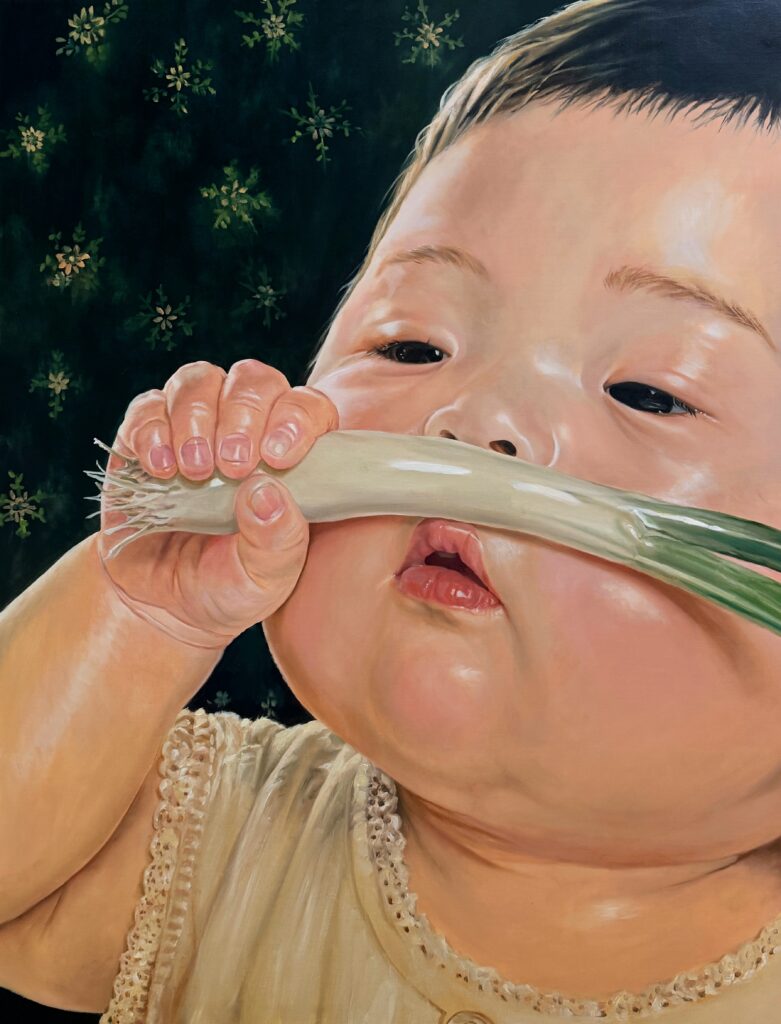
Q14. Although children are your subject, human nature seems to be your deeper interest. What keeps you exploring it?
Yes, absolutely. I often say that when I paint children, I am really painting people. Children are my subject, but human nature is my real interest. If I painted the same scenes with adults, people would read them very differently.
They might ask why the adults are behaving like children instead of simply accepting the world they are in. Through children, I hope viewers think not only about childhood, but also about how we see one another, and how rarely we stop to wonder what someone else might be thinking.
Q15. What continues to pull you back to painting through different stages of your life?
More than love, painting is an urge. I feel a constant need to turn the images in my mind into reality. Painting is how I make sense of the world and of myself. I also love creating paintings that make people smile and appreciate children a little more. If my work does that, then I feel I have made something meaningful.
Q16. What achievement has felt most meaningful because of what it represented personally rather than professionally?
The most meaningful achievement for me has been creating a body of work that truly feels like my own. Before this series, I was still searching for my visual language. These children helped me find it. When I apply for exhibitions or open calls, I feel that these children speak for me. They express ideas that I often cannot put into words. More than any recognition, what matters most is knowing that these children have become my voice.
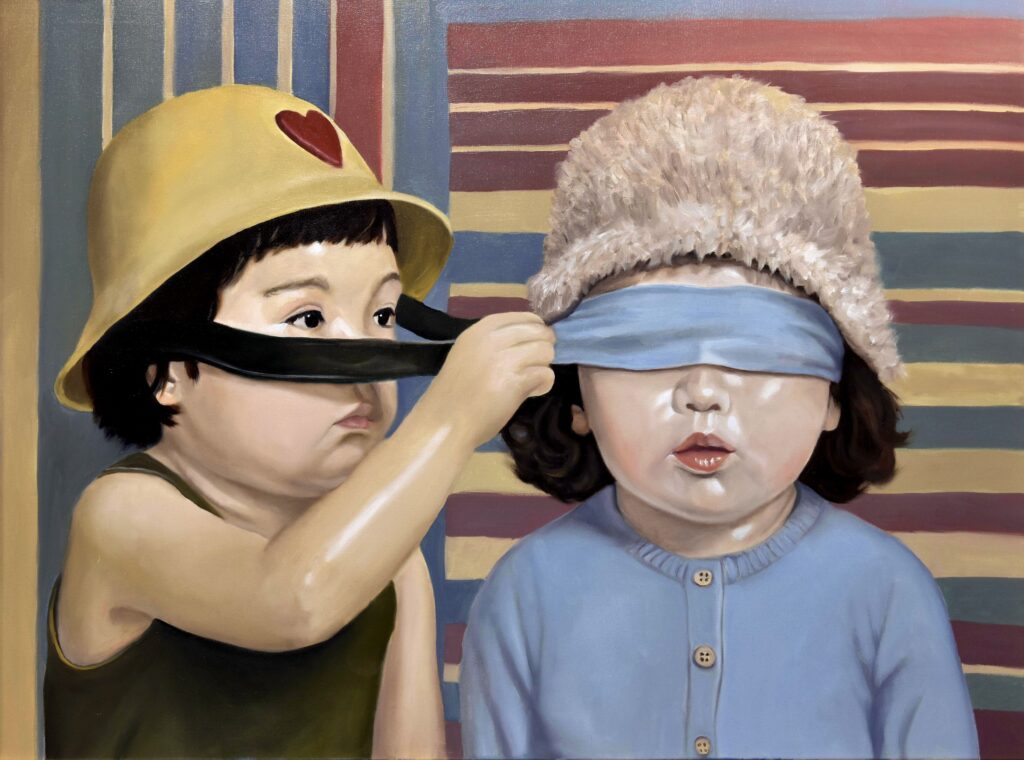
Q17. What have you learned about children that has changed the way you see people?
Working with children has taught me that there is never just one way to understand a child. Some people see children as sweet and innocent, while others find them challenging. Both experiences can be true. What I have learned is to stay curious instead of deciding who a child is supposed to be. In the end, that has changed not only how I see children, but also how I see people.
Q18. If you could leave fellow artists with one insight you’ve gained through your journey, what would it be?
I would say: never lose your curiosity about people. Throughout my journey, I have worked with many different mediums, but my curiosity has always stayed the same. Whether I was making ceramics, painting portraits, or making documentaries, I was always trying to understand people.
I have learned that good art doesn’t always begin with answers. Sometimes it begins with paying close attention, asking better questions, and staying open to being surprised. That is what continues to shape both my work and myself.
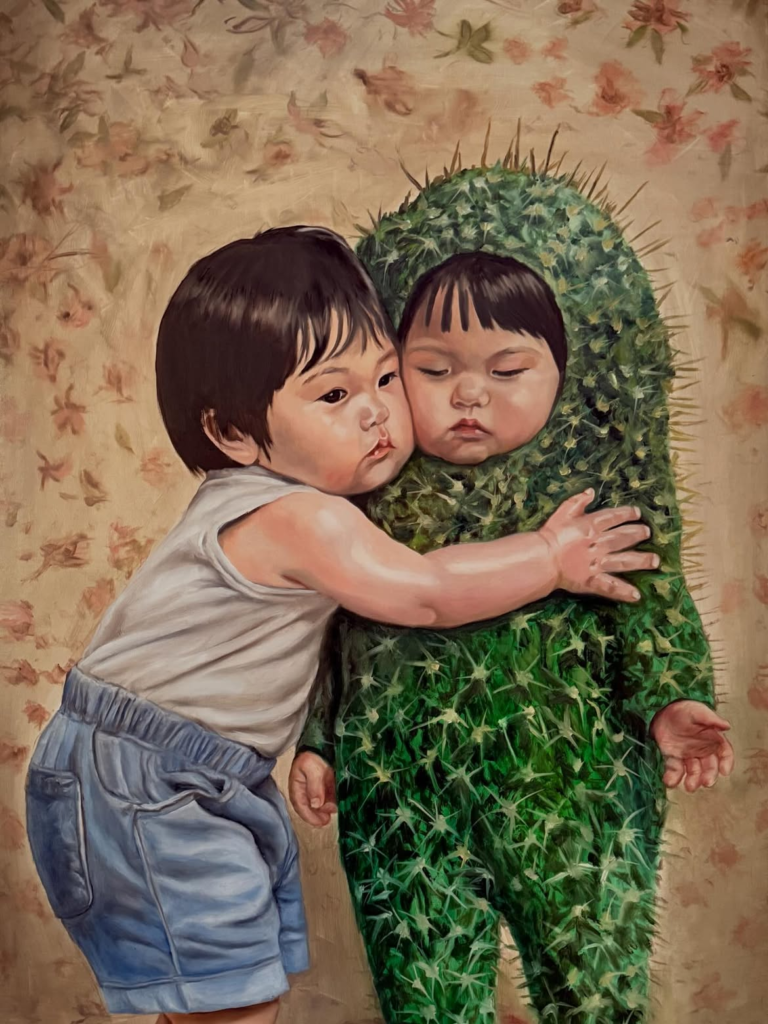
As our conversation with Jean drew to a close, we walked away thinking less about painting and more about how much we miss by looking too quickly at the people around us.
Because here is what Jean figured out that most of us have not. That the people who look the simplest from the outside are usually the ones with the richest inner lives. We see a two-year-old sitting quietly on the floor doing nothing and we think nothing is happening. Jean sees the same child and knows that everything is happening.
She has spent years as an early childhood educator watching those moments up close and what she brings back from that watching and puts onto canvas is a level of emotional complexity that most adults would not believe exists inside a person that small.
And once you see her paintings you start looking at everyone differently. Not just children. The quiet people. The calm ones. The ones who seem easy to understand because they are not making noise. Jean’s work is a reminder that silence is not simplicity. That stillness is not emptiness. That the people who are hardest to read might be the ones with the most to say.
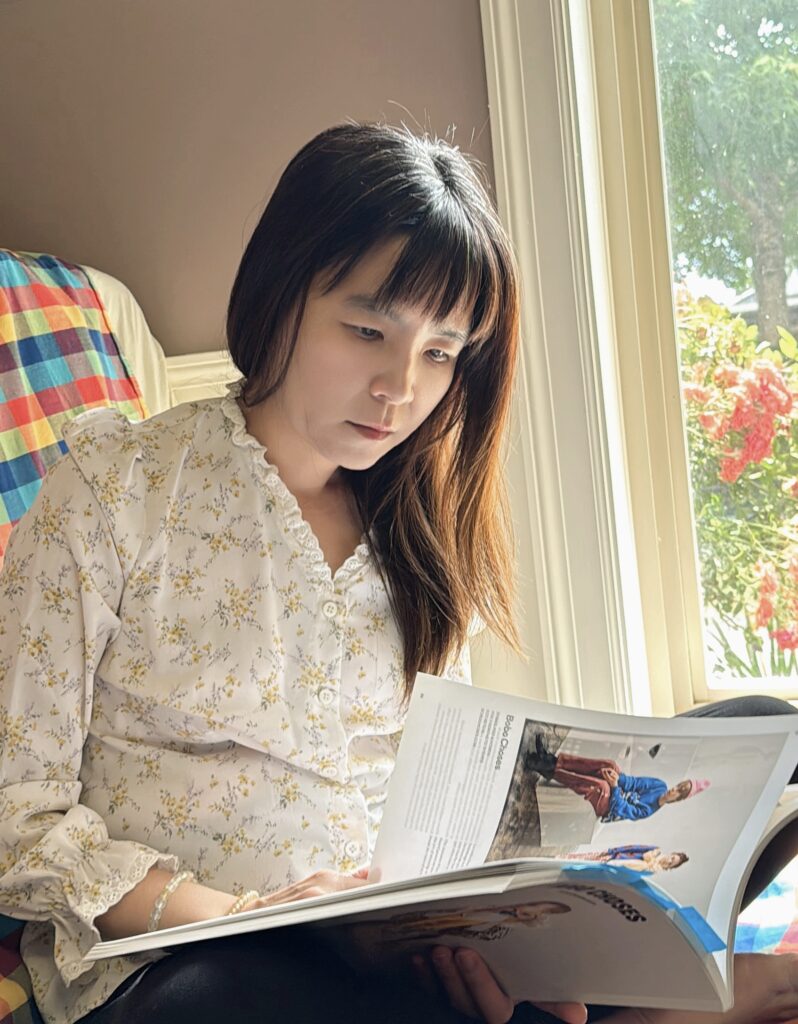
Her relationship with AI in her process is also worth thinking about because she handles it with more nuance than most of the conversations happening around this topic right now. She does not treat it as a replacement for anything. She treats it as one ingredient in a much larger recipe that includes direct observation, photography, video, colour studies, and ultimately oil painting where her hand makes every decision that matters.
The AI opens doors she might not have found on her own. Her real-world experience with actual children makes sure whatever comes through those doors is emotionally true. That is a balance most artists have not found yet.
For art lovers and collectors, Jean’s oil paintings are the kind of work that gets more interesting over time not less. The beauty of the surfaces pulls you in immediately but the psychological weight of what lives underneath keeps you coming back.
These are paintings you will look at on a Tuesday morning and suddenly notice something in the child’s expression that you have never seen before even though the painting has been on your wall for months. That kind of ongoing discovery is rare and it comes from work that was made with genuine depth by someone who has spent years learning to see what most of us do not.
Follow Jean Huang through the links below and see her work for yourself.
Our 101 Artbook: Faces Edition is now open for submissions. And we are looking for artists who understand that a face is never just a face. It is a doorway. Into identity, memory, emotion, culture, everything a person carries underneath what the world sees on the surface. If you paint faces, draw them, photograph them, sculpt them, stitch them, collage them, or build them out of materials nobody else would think to use, and if your work goes deeper than getting the likeness right, we want to see what you are doing. Medium does not matter. Geography does not matter. Career stage does not matter. What matters is that the face in your work is holding something worth looking at twice.
Every artist featured in our publications was once someone who took a breath and submitted. This could be your edition.