


Winged Horses, Golden Threads & Soft Light: The spiritual oil paintings of Debbie Moylan

At Arts to Hearts Project, Women Artist on Rise is a publication we created to spotlight women whose work is growing into something that the art world needs to pay attention to.
We are on our fourth edition now and every time we put one of these together we are reminded that some of the most meaningful work being made right now is coming from women who are not chasing trends or trying to fit into what the contemporary art world expects. They are just making what they need to make and trusting that the right people will find it.
Debbie Moylan is one of our selected artists for Edition 4. And her work is one of those things where the longer you look the quieter you become. Debbie paints animals. And we know how that sounds. A lot of people paint animals. But what Debbie is doing with the subject is so far from what you usually see in wildlife or animal art that comparing them feels wrong.
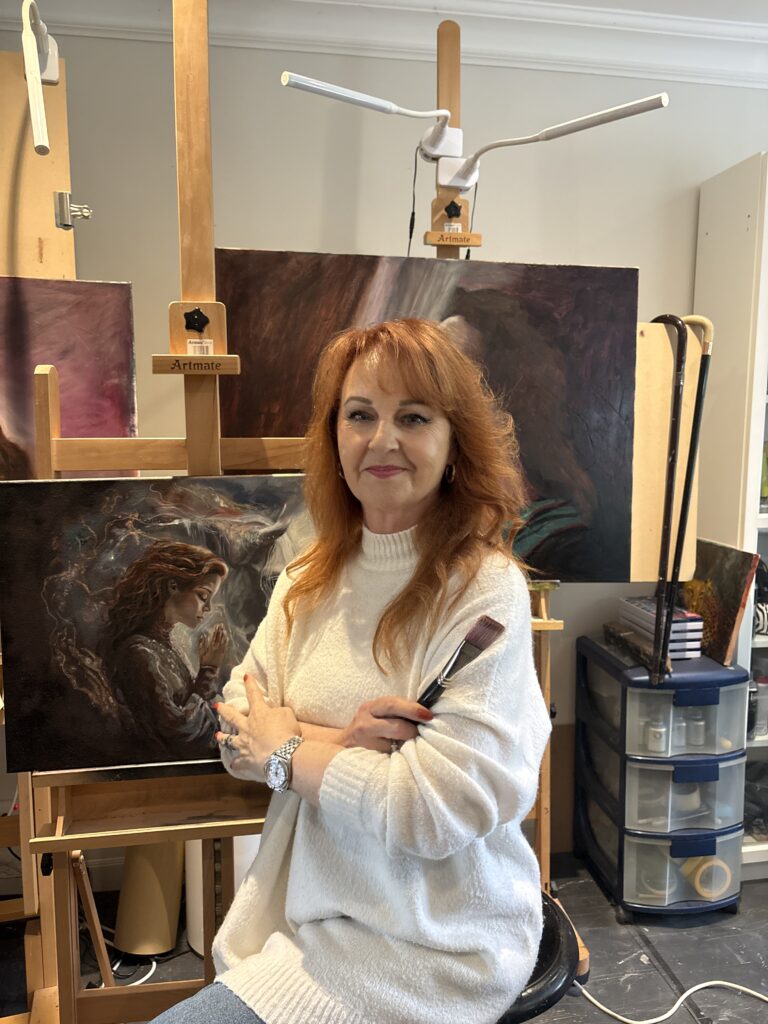
Her paintings are not about what an animal looks like. They are about what happens between a human and an animal in the moments that most people move too quickly to notice. The trust, the recognition, the understanding that passes between two living beings without a single word being spoken.
That invisible thing that anyone who has ever truly connected with an animal knows is real but has probably never been able to explain. Her relationship with animals goes back to childhood and it is deeply personal.
There is a quality to how she talks about it during the interview that goes well beyond I love animals into territory that is spiritual and intuitive and rooted in a lifetime of experiences that she clearly spent years making sense of before she ever put them on canvas. How that relationship became the foundation of her entire artistic practice is something she explains in her own words and it is worth hearing directly from her.
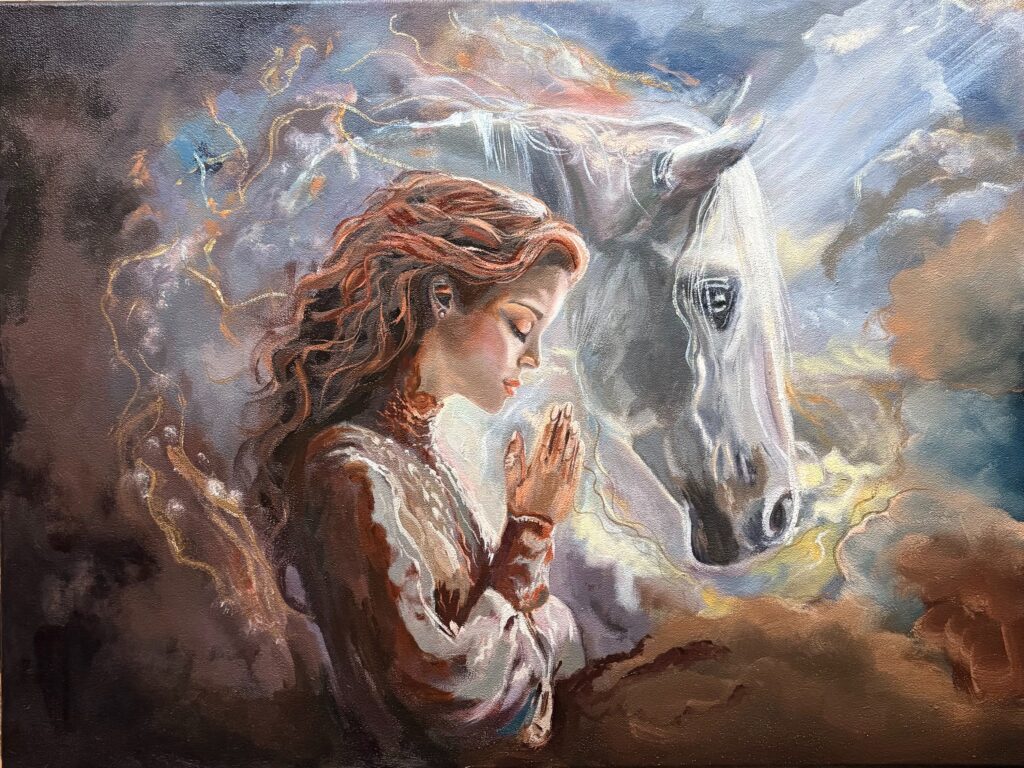
Gold shows up in her work and it means something specific. It is not there to look beautiful. It represents something she believes about the connections between humans and animals that accumulate over a lifetime.
What exactly she means by that and the term she has created for it is something we are going to leave for the interview because it is one of those ideas that reframes how you look at every painting she has ever made.
The light in her paintings is not just atmosphere. It is doing something deliberate inside the composition, something connected to awareness and recognition and moments when something shifts inside you. And her colour palette is deliberately quiet and restrained because the experiences that inspire her work are not loud experiences. They are the kind that happen in silence.
Now let’s hear from Debbie in her own words about what animals have taught her that people could not, why gold carries a meaning in her work that most viewers do not expect, and what happens in those quiet moments of recognition that her paintings are trying to hold.
Q1. Debbie, can you take us back to the beginning, how did your love of animals eventually find its way into your art?
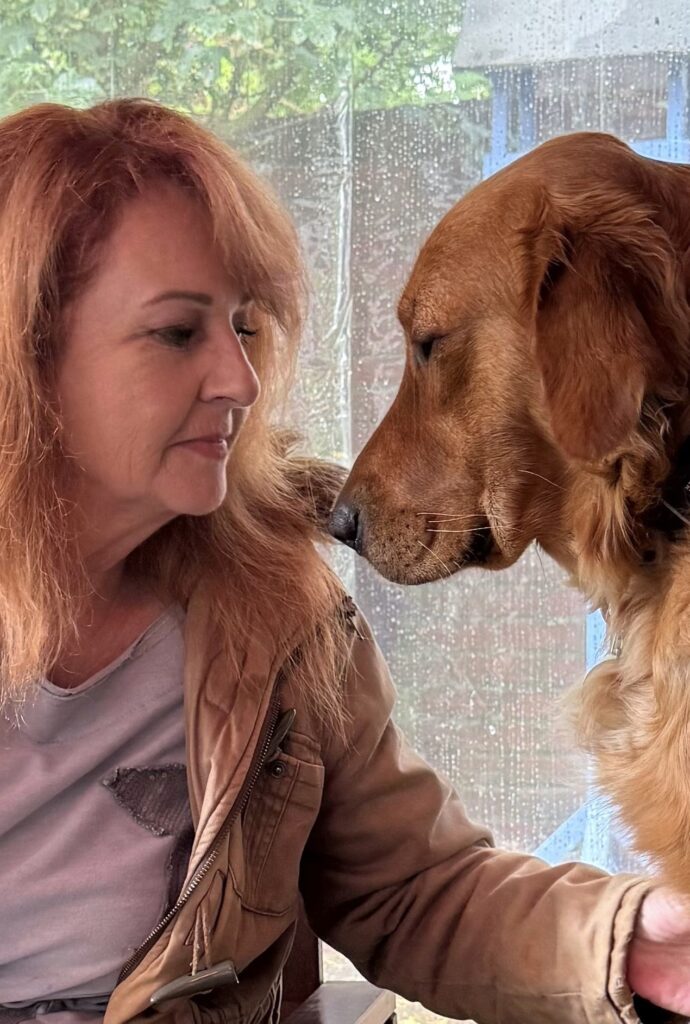
My connection with animals began long before I became an artist. As a child, I often felt more understood by animals than by people. Horses were especially important to me from an early age, and throughout my life I have been surrounded by animals, whether through riding and working with them, rescue work, or simply sharing my home with them.
Over time I began to notice something that felt difficult to explain. Certain animals seemed drawn to me, often approaching with a level of trust that surprised other people. The more I paid attention, the more I realised these encounters carried meaning. Animals seemed to arrive at significant moments, offering comfort, guidance, or reflection.
When I eventually returned to painting, I realised that these experiences were at the heart of what I wanted to explore. My work became a way of expressing something I had felt for most of my life: that animals are not separate from us. They are companions, teachers, and mirrors. The paintings grew from a desire to give visual form to that connection.
Q2. Gold plays a central role in your work how do you use it in a way that feels meaningful rather than purely decorative?
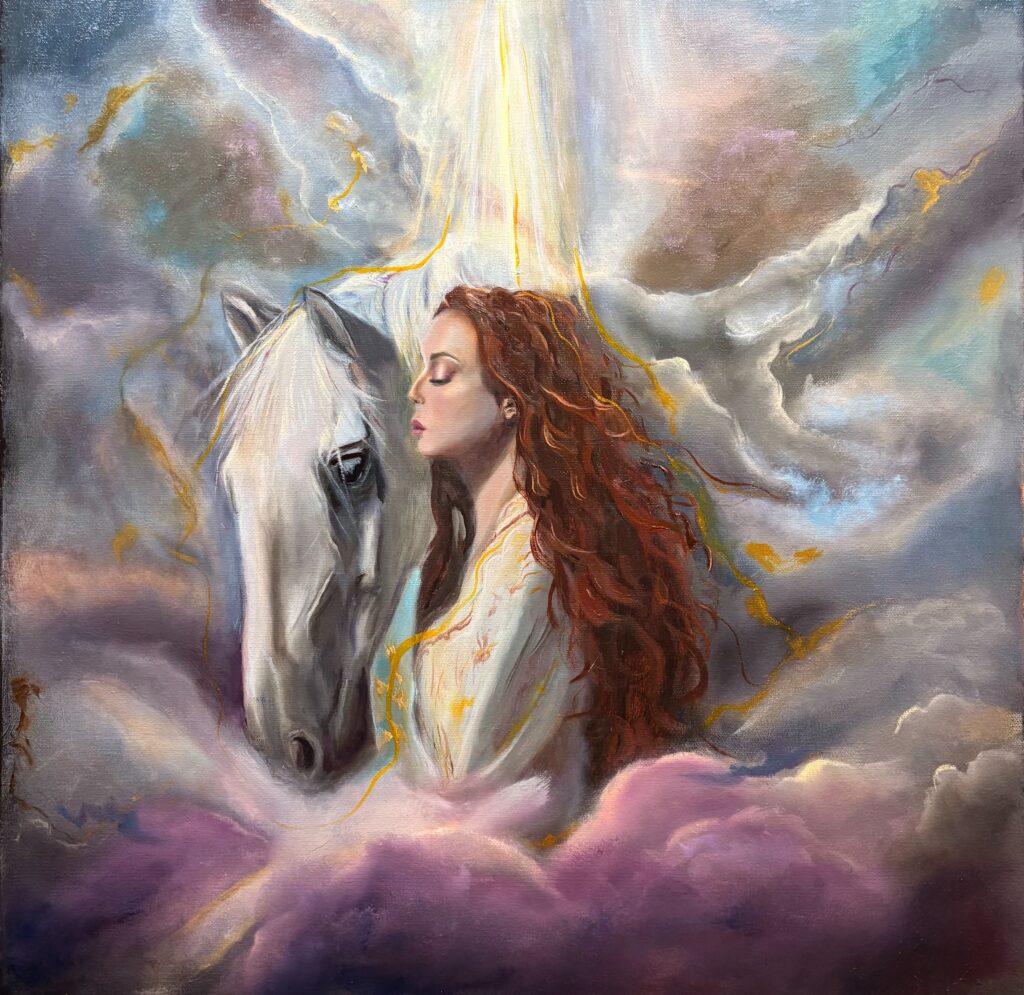
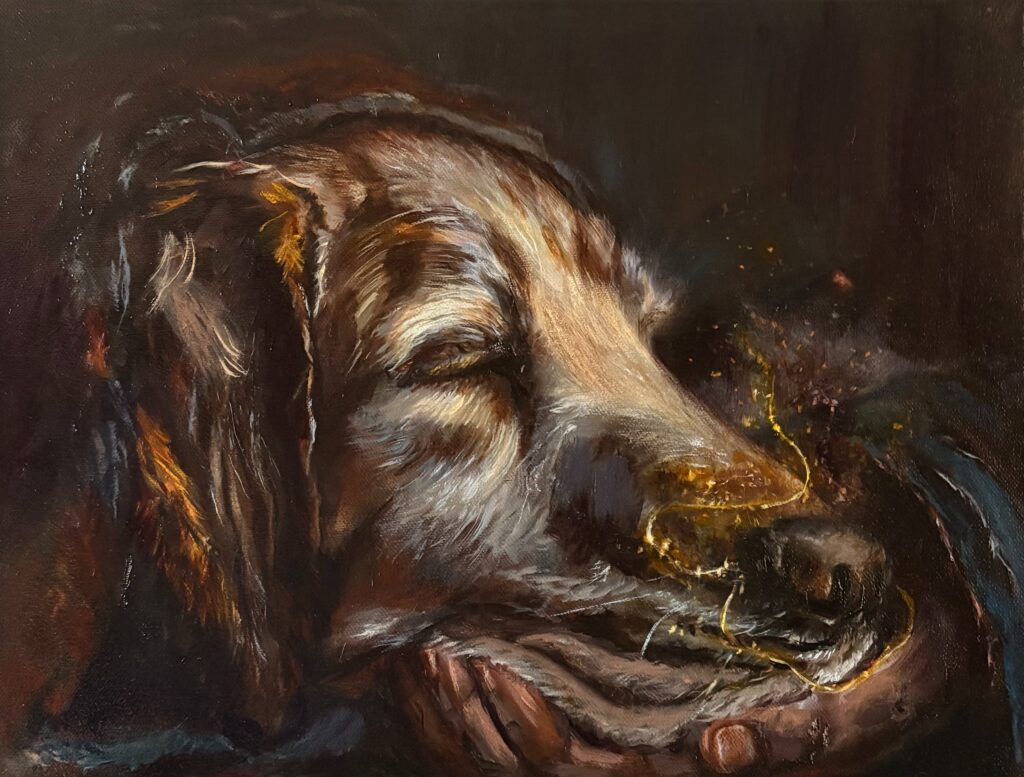
For me, gold is never used as decoration. It represents connection. The recurring gold within my work comes from a personal belief that every meaningful encounter with an animal leaves an invisible thread between us. Throughout our lives those threads accumulate, intertwine, and eventually form what I call God’s Rope.
Because of this, I use gold sparingly and intentionally. It often appears as light, atmosphere, or subtle pathways through the composition rather than as a dominant visual element. I want viewers to feel its presence rather than simply notice its colour. The gold serves as a reminder that there is often something deeper taking place beneath what we can physically see.
Q3. Your paintings are filled with soft light, misty landscapes, and luminous atmospheres. What role does light play within your storytelling?
Light is one of the most important storytelling elements within my work. Rather than representing a specific place or time of day, light often represents awareness, recognition, or understanding. It marks those moments when something shifts internally, when we suddenly recognise a connection that was always there.
The soft atmosphere allows the paintings to exist somewhere between the physical and the spiritual. I am not trying to depict heaven or another world. Instead, I am creating space for reflection and contemplation. The light invites viewers to slow down and consider what might exist beyond the obvious.
Q4. The color palettes in your work feel calm and contemplative how do you use color to create that sense of stillness?
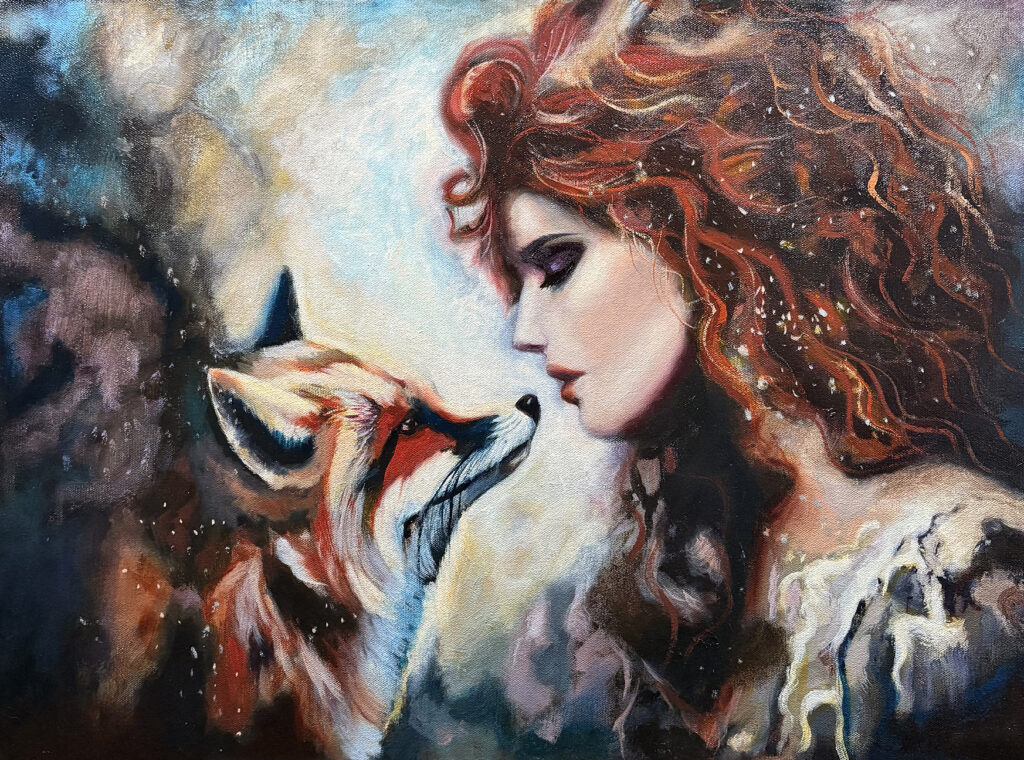
I am naturally drawn to quieter colours. Much of my work is built around harmony rather than contrast. I deliberately avoid excessive visual noise because I want the emotional connection between the human and animal subjects to remain the focus.
Muted colours, softened edges, and controlled transitions help create a feeling of calm that allows the viewer to spend time with the painting. Stillness is important because many of the experiences that inspire my work happen in quiet moments. They are not dramatic events. They are moments of recognition, trust, presence, and understanding.
Q5. Your work often exists between realism and symbolism; how do you decide where reality ends and symbolism begins?
I begin with reality because I want the viewer to recognise the animal and connect with it as a living being. Once that foundation is established, I allow symbolism to enter where it helps communicate the deeper meaning of the piece.
The symbolic elements are there to support the emotional truth rather than replace reality. If a painting becomes too symbolic, it risks losing its emotional accessibility. If it becomes purely realistic, it may not fully communicate what I am trying to express. I am always looking for a balance between the two.
Q6. Much of your work explores connection beyond words, do you think people have become less attuned to those quieter forms of communication?
In many ways, yes. Modern life encourages constant activity, constant information, and constant distraction. Animals communicate very differently. They pay attention to energy, intention, behaviour, and presence.
Many of the most meaningful interactions I have had with animals happened in complete silence. No words were exchanged, yet the understanding was unmistakable. I think those quieter forms of communication are still available to us, but we often move too quickly to notice them. Animals remind us how to pay attention again.
Q7. Works like The First Ascent and Held in Heaven feel like moments of recognition, what kinds of experiences usually inspire them?
Most of my paintings begin with a feeling rather than a story. They are often inspired by moments when an animal unexpectedly appeared, offered comfort, showed trust, or seemed to communicate something without words. Sometimes they come from personal experiences.
Sometimes they emerge from memories that have stayed with me for years. I am less interested in documenting events than in capturing the emotional significance of those encounters. The paintings often represent the moment when someone recognises a connection that was already present.
Q8. Animals in your paintings feel like active participants rather than subjects, why is that important to you?
Because that is how I genuinely experience them. I have never seen animals as passive subjects. They have their own intelligence, personalities, emotions, and ways of understanding the world. In my work, animals are not symbols that exist purely to support a human story. They are equal participants within the relationship. The human and animal are both transformed by the encounter. That sense of mutual recognition is central to everything I create.
Q9. How have you learned to trust your own vision and instincts as an artist?
For a long time I worried about whether people would understand what I was trying to say. Eventually I realised that my responsibility is not to create work that appeals to everyone. My responsibility is to create work that is truthful.
The more deeply I explored my own experiences and beliefs, the more strongly people responded. Even when viewers interpret the paintings differently, they often connect with the underlying sense of compassion, reverence, and connection. That taught me that authenticity is more important than certainty.
Q10. Has your definition of success changed as you’ve become more committed to the deeper message behind your work?
Absolutely. Earlier in my artistic journey, success looked largely external. It was about recognition, exhibitions, publications, or sales. Those things still matter, but they are no longer my primary measure of success.
Today, success means creating work that remains true to my vision and seeing that work genuinely resonate with people. If someone looks at one of my paintings and feels a deeper appreciation for animals or recognises something of their own experience within it, that is meaningful to me. The impact of the work matters more than the visibility of the work.
Q11. What advice would you give artists exploring personal or spiritual themes and wondering if there’s a place for that work in today’s art world?
I would encourage them to trust the thing that will not leave them alone. The contemporary art world is far more diverse than many artists assume. There is room for deeply personal work, spiritual work, and work that explores questions of meaning and connection. What matters is not whether the subject fits a trend.
What matters is whether the artist approaches it with honesty, depth, and commitment. The work that resonates most strongly is often the work that could only have been made by that particular artist. If a subject continues to call you back, there is usually a reason for that. Follow it.
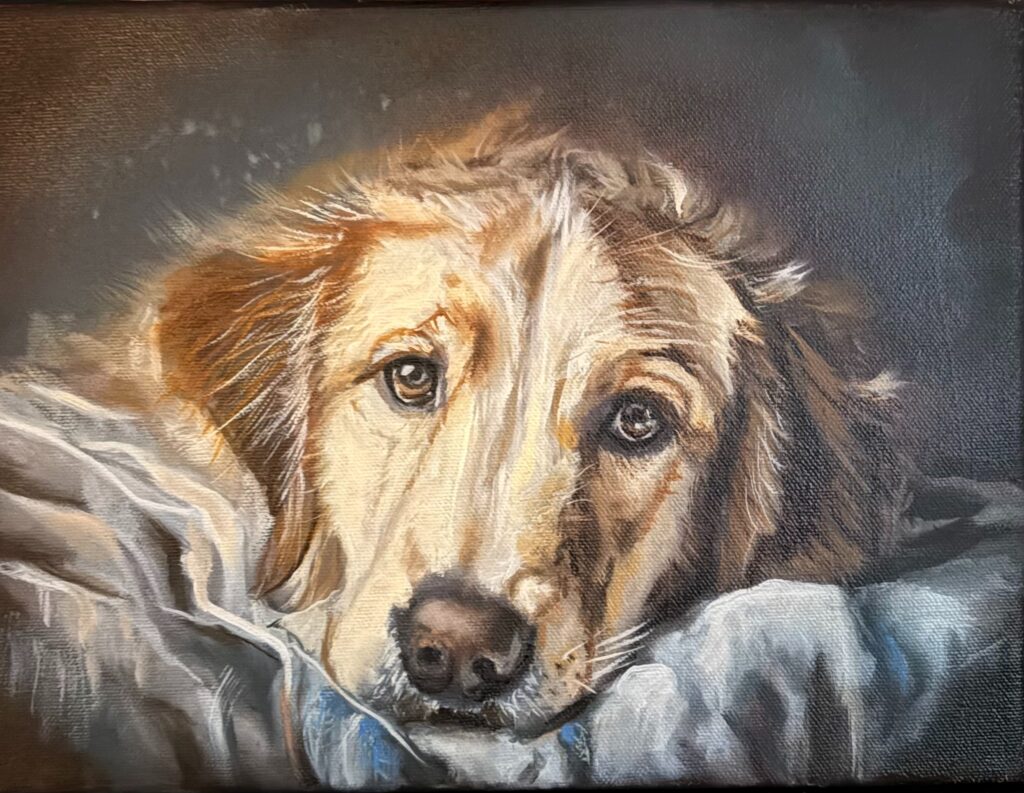
As our conversation with Debbie came to a close, we kept coming back to a really simple question. When was the last time any of us actually paid attention to an animal? Not glanced at one or took a photo of one but genuinely sat with one and noticed what was happening between us.
Because that is what Debbie has been doing her whole life. Paying attention to the moments that happen between humans and animals that most of us are too distracted or too busy or too caught up in our own heads to catch.
And her paintings are the result of decades of that attention. They are not paintings about how animals look. They are paintings about how animals make us feel when we are actually present enough to notice.
We think that matters right now more than it might sound like it does. Because we live in a world that is getting louder and faster and more distracted every year and the kind of quiet attention that Debbie’s work asks for is becoming harder and harder to access. Her paintings do not demand anything from you.
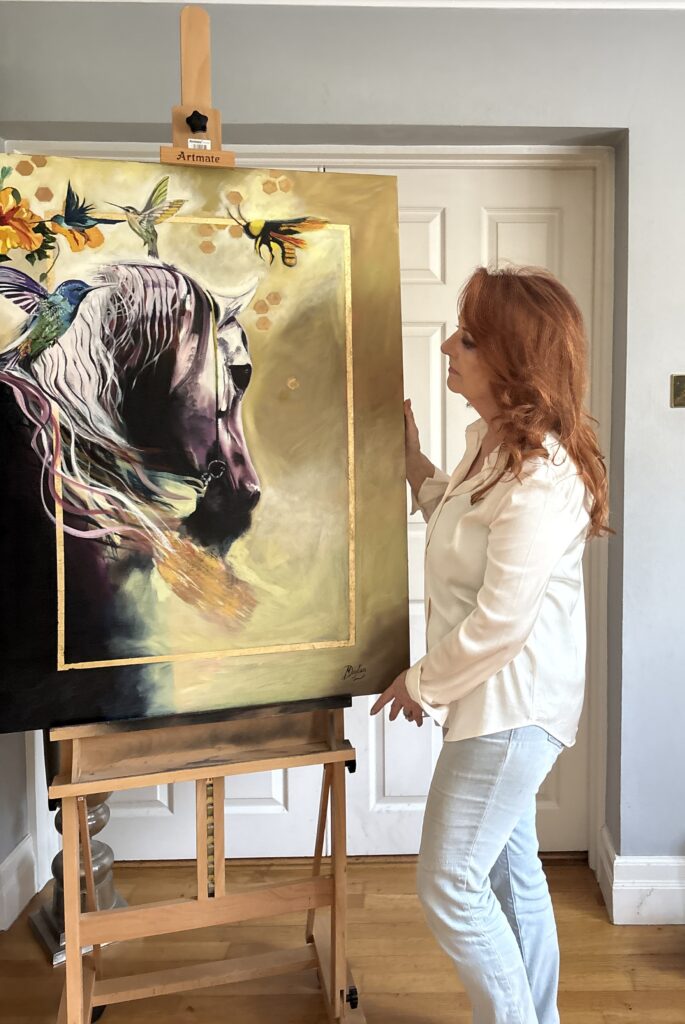
They do not shout or compete for your eye. They just sit there holding something calm and real and they wait for you to slow down enough to receive it. And when you do the experience is genuinely different from most art you will encounter.
The other thing we took from this conversation is about commitment. Debbie spent a long time worrying that her subject matter was too personal or too spiritual for the art world to take seriously. And then she decided to commit to it fully and make the work that was true for her regardless of whether it fit into what was currently popular.
The deeper she went into her own truth the more people connected with the work. That is a pattern we see again and again across every publication we produce. The artists who resonate most are never the ones trying to fit in. They are the ones who went all the way into their own thing and trusted that it would find its audience.
For anyone looking to bring Debbie’s work into their home, her paintings do something practical to a room that is hard to explain until you live with it. They make the space feel calmer. Not in a designed or curated way but in a genuine way that you start to notice over time.
You find yourself looking at them during the quiet parts of your day and feeling something settle inside you. That is not marketing language. That is what her collectors consistently report. The paintings carry the same quality of presence that the animals in them carry and that presence does not wear off. It becomes part of how the room feels and eventually part of how you feel inside it.
Follow Debbie Moylan through the links below and see her beautiful work for yourself.