


The Artist Van Gogh Never Stopped Learning From
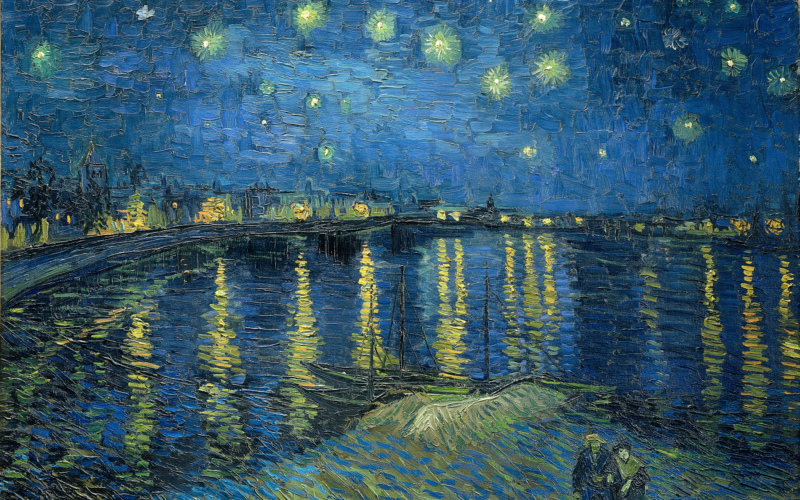
Before Vincent van Gogh became one of the most recognizable artists in history, he was an admirer. Long before the swirling skies of The Starry Night, the blazing fields of wheat, or the radiant sunflowers that would define his legacy, Van Gogh was looking closely at the work of another painter: Jean-François Millet.
Today, Millet is often remembered as one of the leading figures of French Realism, celebrated for his depictions of peasants and rural life. But for Van Gogh, he was much more than that. He was the artist Van Gogh never stopped learning from, a guide, a teacher, and an artistic compass throughout his career. In letters to his brother Theo, Van Gogh wrote about Millet with extraordinary admiration, describing him as an artist who understood something essential about humanity. While many nineteenth-century painters focused on mythology, aristocracy, or grand historical narratives, Millet turned his attention to farmers, shepherds, laborers, and families whose lives revolved around the land. He found dignity in ordinary people and poetry in everyday work.
That vision resonated deeply with Van Gogh. Throughout his career and especially during his time at the asylum in Saint-Rémy, he repeatedly returned to Millet’s compositions. Yet these were never simple copies. Working from prints and reproductions, Van Gogh transformed Millet’s muted earth tones into vivid yellows, luminous blues, and vibrant greens. He took scenes rooted in observation and infused them with emotion, energy, and symbolism. Through this process, he wasn’t merely reproducing another artist’s work; he was discovering his own voice.
The relationship between Millet and Van Gogh offers a fascinating reminder that artistic originality rarely emerges in isolation. Even the most celebrated innovators begin by learning from those who came before them. The paintings in this article reveal that story in vivid detail. From sowers and shepherds to resting workers and young families, these pairings show how one French painter helped shape the vision of an artist who would later change the course of art history.
Millet’s The Sower and Van Gogh’s The Sower
How a Farmer Became a Symbol of Faith, Labor, and Renewal
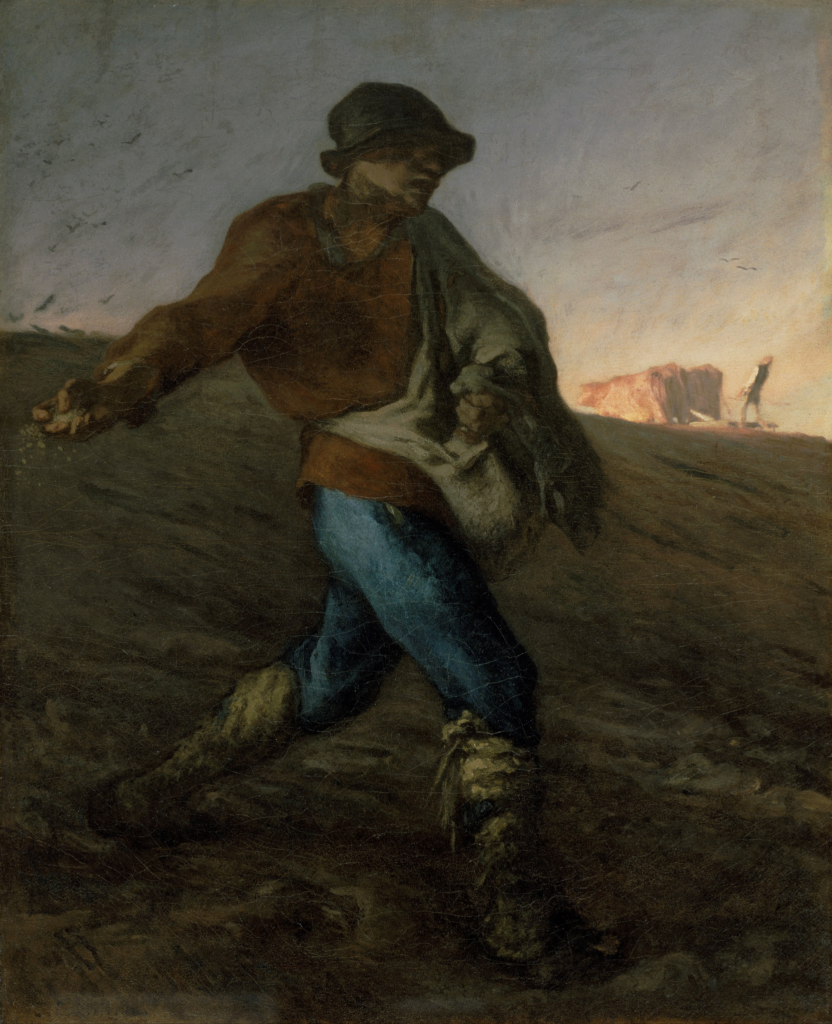
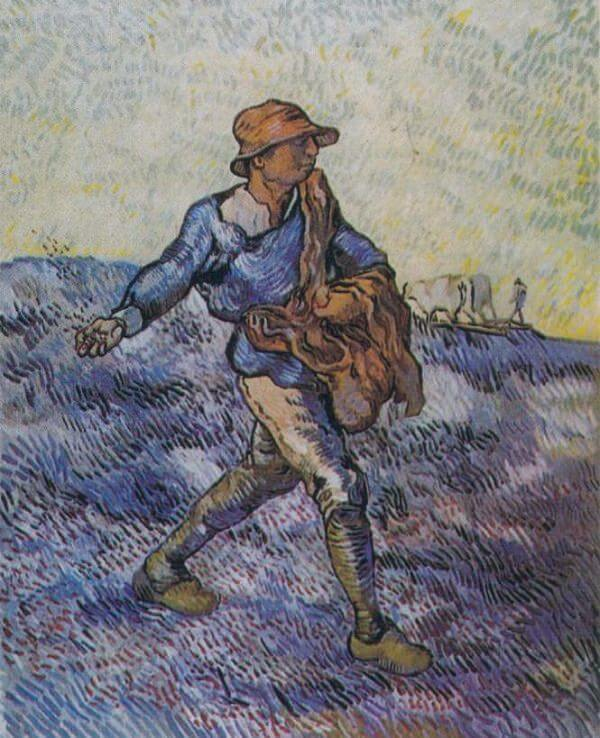
Few images occupied Vincent van Gogh’s imagination as persistently as the sower. Long before he painted his celebrated sunflowers and star-filled skies, he found himself drawn to Jean-François Millet’s depiction of a farmer scattering seeds across a field. It was a subject Van Gogh would revisit repeatedly, returning to it not simply as an exercise in admiration but as a way of exploring ideas that mattered deeply to him: faith, labor, and the possibility of renewal.
When Millet unveiled The Sower in 1850, the painting challenged traditional ideas about what was worthy of artistic attention. Rather than focusing on aristocrats, mythological figures, or grand historical events, Millet elevated an ordinary agricultural worker to the center of the canvas. Striding across freshly tilled land, the farmer appears monumental against the landscape, embodying the rhythms of rural life that shaped nineteenth-century France. For Millet, peasant labor was neither sentimental nor picturesque; it was fundamental, deserving of the same seriousness traditionally reserved for kings and saints.
Van Gogh encountered Millet’s work during his formative years and saw something more than a rural scene. Having once considered a religious calling, he viewed the sower as a profoundly spiritual figure. The act of casting seeds became a metaphor for hope, perseverance, and creation itself. In his letters, Van Gogh frequently referred to Millet with deep reverence, describing him as an artist who understood the dignity of ordinary people.
By the time Van Gogh painted his own version in 1888, the scene had undergone a remarkable transformation. Millet’s subdued earth tones gave way to brilliant yellows, vibrant violets, and glowing blues. The landscape seems to radiate energy, while the setting sun bathes the field in an almost otherworldly light. Yet despite these dramatic changes, the heart of the image remains intact. Both artists saw the sower as more than a farmer. He is a symbol of continuity, planting for a future he may never see, trusting that growth will follow. In that shared vision, we see not only Millet’s influence on Van Gogh, but also the beginnings of Van Gogh’s own unmistakable artistic voice.
Millet’s The Woodcutter and Van Gogh’s The Woodcutter (After Millet)
Turning Physical Labor Into Pure Energy
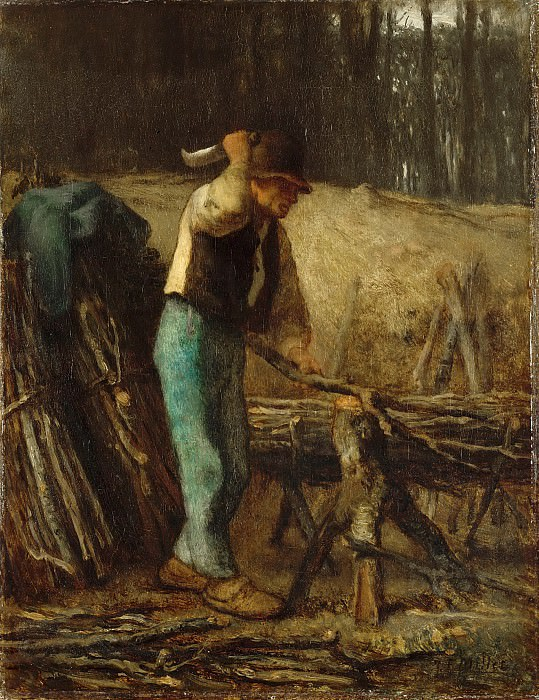

For both Jean-François Millet and Vincent van Gogh, rural workers were never background figures. They were the protagonists of everyday life, people whose labor sustained entire communities yet rarely found themselves represented in fine art. In The Woodcutter, both artists turn their attention to one of the most physically demanding forms of manual work, revealing not only the realities of labor but also the dignity embedded within it.
Millet’s original composition reflects his lifelong commitment to portraying peasant life with honesty and respect. The woodcutter stands firmly rooted in the landscape, absorbed in his task. There is no theatricality or romantic embellishment. Instead, Millet focuses on the weight of the work itself, the repetitive movements, the physical strain, and the intimate relationship between people and the land. At a time when industrialization was transforming Europe, Millet’s paintings served as reminders of a world still shaped by human hands.
When Van Gogh revisited the composition decades later, he approached it through a different lens. Working from black-and-white reproductions of Millet’s paintings while staying at the Saint-Paul-de-Mausole asylum in Saint-Rémy, Van Gogh used color and brushwork to reinterpret rather than replicate the scene. His version is alive with movement. The surrounding landscape seems to ripple and vibrate, transforming a quiet rural moment into something emotionally charged.
The contrast between the two works reveals the distinct priorities of each artist. Millet was concerned with observation, grounding his figures in the realities of everyday life. Van Gogh, meanwhile, sought to communicate feelings. The woodcutter’s labor becomes more than a physical act; it becomes a force that energizes the entire landscape around him.
Yet despite their differences, both paintings share a profound respect for ordinary work. Neither artist treats labor as mundane. Instead, they present it as something worthy of attention, beauty, and contemplation. Through the simple act of chopping wood, Millet and Van Gogh remind us that some of the most meaningful stories in art are found not in extraordinary events, but in the rhythms of everyday life.
Millet’s Starry Night and Van Gogh’s Starry Night Over the Rhône
The Night Sky That Connected Two Artistic Visions
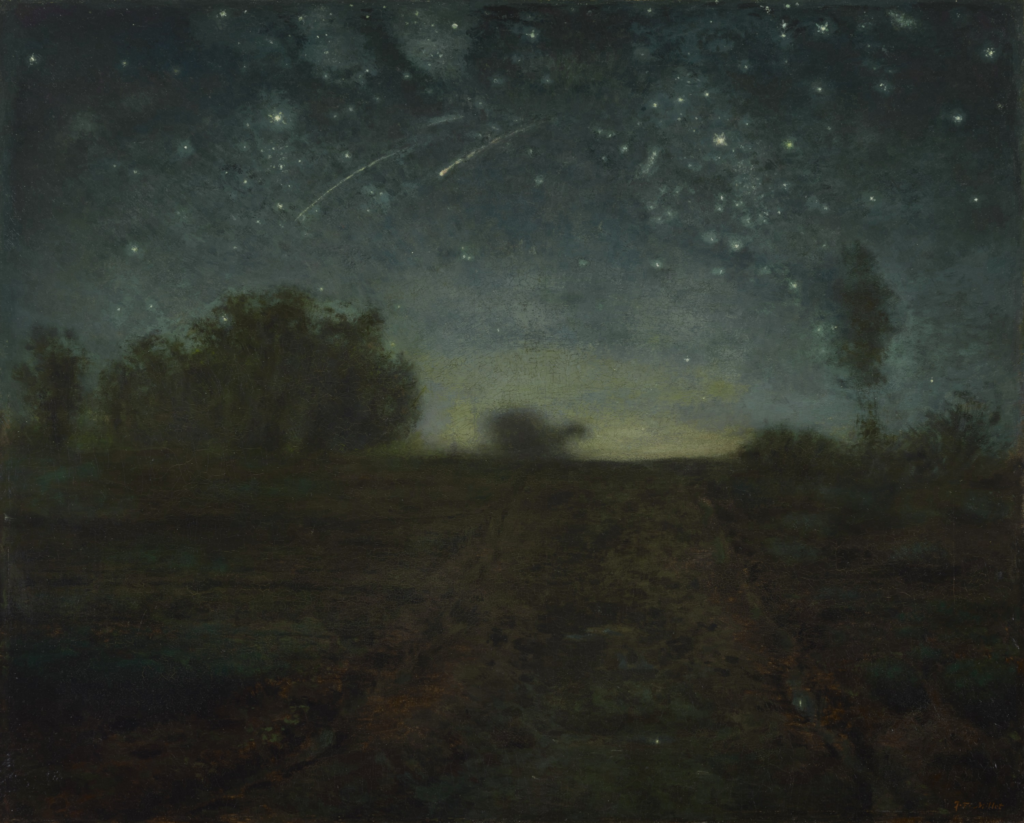

Today, Vincent van Gogh’s name is almost synonymous with star-filled skies. His luminous depictions of the night have become some of the most recognizable images in art history. Yet long before Van Gogh transformed the heavens into swirling fields of color and emotion, Jean-François Millet had already discovered the quiet power of the nocturnal landscape. Though far less famous than Van Gogh’s celestial scenes, Millet’s Starry Night reveals an artistic sensitivity that would later resonate deeply with the Dutch painter.
Millet’s approach to the night sky is remarkably restrained. Rather than presenting nature as dramatic or overwhelming, he captures a moment of stillness. The stars emerge softly against the darkness, illuminating a rural landscape where human activity has largely faded into silence. The painting invites contemplation rather than spectacle, reflecting Millet’s belief that beauty could be found in ordinary moments and overlooked places.
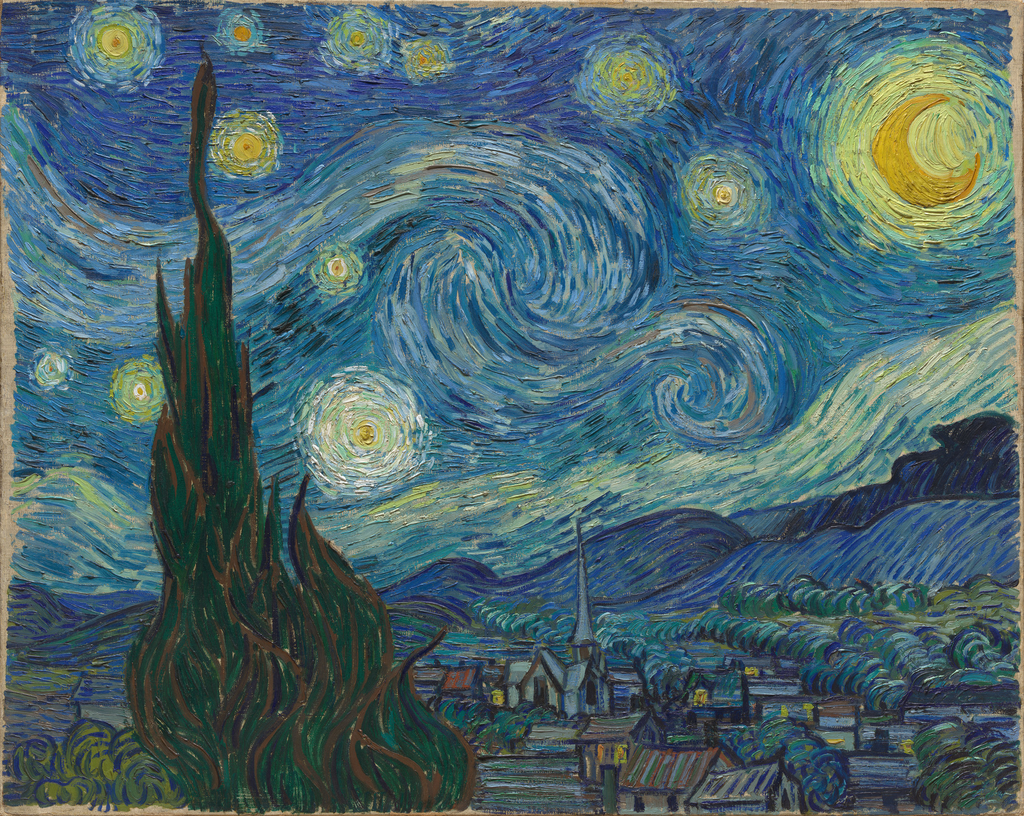
Van Gogh shared that fascination with the night, but he experienced it differently. For him, darkness was never empty. It was alive with emotion, mystery, and possibility. In Starry Night Over the Rhône, painted in Arles in 1888, stars shimmer across the sky and reflect like scattered jewels on the river below. The scene feels less observed than felt, transformed through Van Gogh’s vivid color palette and expressive brushwork into an intensely personal vision of the world.
What connects these two paintings is not their appearance but their perspective. Both artists challenged the artistic conventions of their time by treating the night sky as a worthy subject in its own right. Rather than using darkness as a backdrop, they made it the focus of attention. Millet found poetry in its quietness; Van Gogh found wonder in its brilliance.
Together, these works reveal how a simple night scene could become a space for reflection, spirituality, and imagination. While Millet looked upward with calm observation and Van Gogh with emotional intensity, both artists understood that the sky after sunset held stories just as powerful as those told in daylight.
Millet’s Two Men Turning Over the Soil and Van Gogh’s Two Peasants Digging (After Millet)
Finding Grandeur in Everyday Work
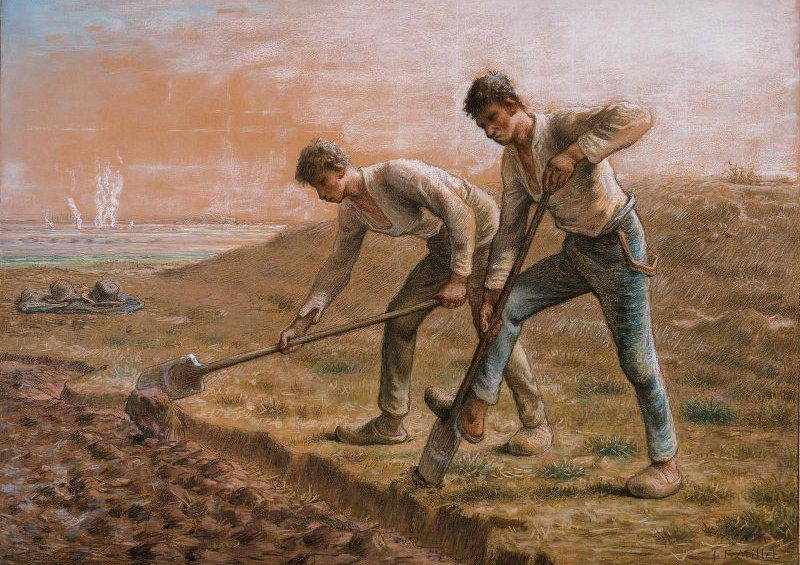

For Jean-François Millet, the field was as worthy a stage as any royal court or historical battlefield. Throughout his career, he turned his attention to the lives of rural laborers, portraying their work with a seriousness that challenged the artistic conventions of his time. In Two Men Turning Over the Soil, he captures a scene that might otherwise go unnoticed: two workers bent over the earth, engaged in the demanding task of preparing the land for cultivation. Yet through Millet’s careful composition, the ordinary becomes monumental.
The painting reflects Millet’s belief that agricultural labor formed the foundation of society. The figures are not individualized portraits but representations of a broader rural experience. Their bodies echo the contours of the landscape, emphasizing the physical bond between people and the land they depend upon. There is a quiet dignity in their movements, a sense that the repetitive act of digging carries both practical and symbolic weight.
More than two decades later, Vincent van Gogh revisited the composition while living in the asylum at Saint-Rémy. Working from reproductions of Millet’s paintings, he created Two Peasants Digging (After Millet) as part of a series of reinterpretations dedicated to the artist he often described as a mentor from afar. While Millet’s palette remains grounded in earthy realism, Van Gogh transforms the scene through color and expressive brushwork. The landscape appears more vibrant, the figures more animated, and the entire composition pulses with an emotional intensity absent from the original.
Despite these differences, both artists share a profound respect for rural labor. Neither presents work as heroic in a conventional sense. Instead, they find meaning in persistence, routine, and physical effort. By focusing on two people engaged in the humble act of turning over soil, Millet and Van Gogh elevate an everyday task into something timeless, a reminder that the quiet work of cultivating the earth has long been one of humanity’s most essential acts.
Millet’s The Siesta (1866) and Van Gogh’s The Siesta (1890)
Why Rest Was Just as Important as Labor
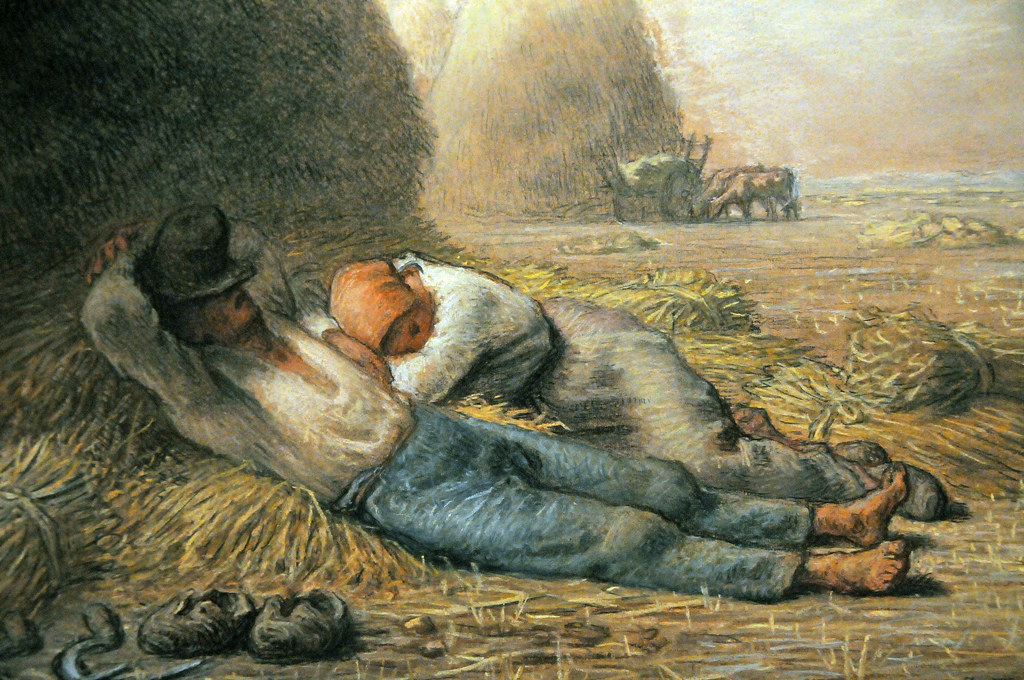
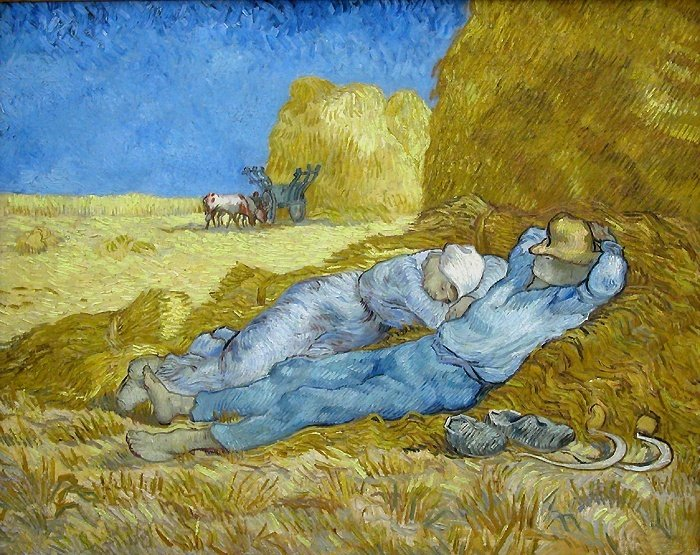
When discussing Jean-François Millet and Vincent van Gogh, conversations often center on work, sowers scattering seeds, peasants digging fields, and laborers moving in rhythm with the land. Yet one of their most touching artistic connections focuses not on work itself, but on what comes after it. The Siesta offers a rare celebration of rest, reminding viewers that recovery is as essential to rural life as labor.
Millet’s original painting depicts two farm workers asleep beside a haystack after a long day in the fields. Their tools lie nearby, evidence of the work temporarily set aside. There is a remarkable tenderness to the scene. Rather than presenting the laborers as heroic figures in motion, Millet captures a moment of complete stillness. The workers are vulnerable, exhausted, and entirely human. At a time when peasants were often overlooked in art, Millet treated their fatigue with empathy and respect, suggesting that rest was not idleness but a necessary part of life.
Van Gogh encountered the image during one of the most difficult periods of his life. While staying at the asylum in Saint-Rémy, he turned repeatedly to Millet’s compositions, finding comfort in the familiar scenes of rural existence. His version of The Siesta remains faithful to the original arrangement, yet the emotional atmosphere shifts through his unmistakable use of color. Golden yellows, rich blues, and vibrant greens transform the landscape into a luminous sanctuary, making the resting figures appear almost suspended in a moment of peace.
What makes this pairing so compelling is its quiet universality. Unlike scenes of dramatic action or historical significance, The Siesta speaks to an experience shared across generations: the need to pause. For both Millet and Van Gogh, rest was not separate from labor but inseparable from it. Through these sleeping figures, they remind us that even the hardest-working lives are sustained not only by effort, but by moments of stillness, recovery, and care.
Millet’s The Sheep Shearers and Van Gogh’s The Sheep Shearers (After Millet)
The Quiet Drama of Rural Life
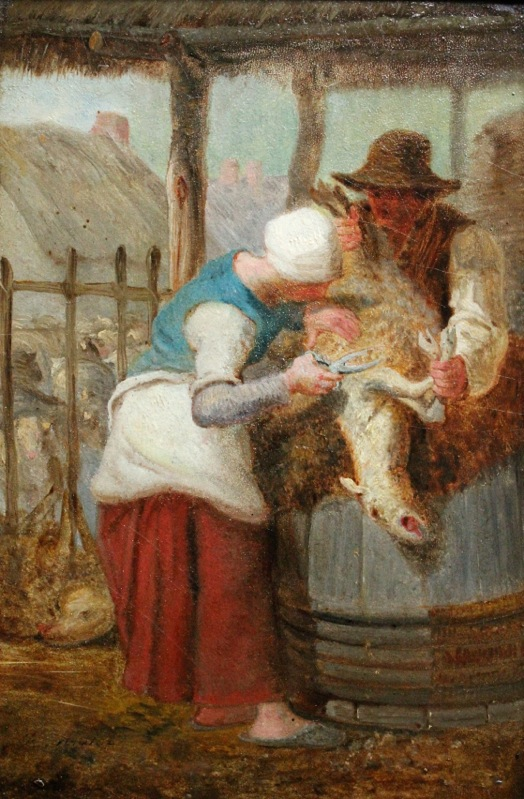

Jean-François Millet built his reputation by painting the lives of ordinary people, but what made his work so revolutionary was not simply his choice of subjects, it was the respect he afforded them. In The Sheep Shearers, Millet turns his attention to a routine agricultural task that most artists of his era would have overlooked. There are no grand gestures, dramatic narratives, or heroic protagonists. Instead, the painting focuses on workers engaged in the seasonal ritual of shearing sheep, a necessary task woven into the rhythms of rural life.
Millet understood that farming communities were sustained not by singular moments of triumph but by collective acts of labor repeated year after year. In The Sheep Shearers, the workers appear absorbed in their task, creating a scene that feels both intimate and timeless. The painting reflects Millet’s broader commitment to portraying rural existence with honesty, revealing beauty in work that was often considered too ordinary for fine art.
When Van Gogh revisited the composition decades later, he approached it with the admiration of a devoted student. While recovering in Saint-Rémy, he copied several of Millet’s paintings from reproductions, treating them as translations rather than replicas. His version of The Sheep Shearers retains the essential structure of Millet’s composition but transforms its mood through color and brushwork. The earth becomes richer, the landscape brighter, and the scene more emotionally charged. What was once quietly observational takes on a new vitality.
Yet despite these stylistic differences, both paintings celebrate the same idea: the importance of communal labor. Unlike the solitary figures that often populate Van Gogh’s most famous works, the shearers operate together, emphasizing cooperation and shared responsibility. In both versions, the act of shearing sheep becomes more than an agricultural necessity, it becomes a reflection of the interconnectedness that sustains rural communities. Through this seemingly modest subject, Millet and Van Gogh reveal the extraordinary significance hidden within everyday life.
Millet’s First Steps and Van Gogh’s First Steps (After Millet)
A Tender Tribute to Family and New Beginnings


Among all the works Vincent van Gogh created after Jean-François Millet, First Steps stands apart for its emotional intimacy. While many of Millet’s paintings that Van Gogh copied focused on labor and rural life, this scene centers on something far more universal: a child’s first tentative steps toward a parent. The result is one of the most heartfelt artistic conversations between the two painters, revealing not only Van Gogh’s admiration for Millet but also his own hopes for the future.
Millet’s original painting captures a simple yet profound moment. A small child takes uncertain steps across a farmyard, reaching toward an outstretched parent while the other watches nearby. The setting is modest, rooted in the everyday realities of peasant life, but the emotion is unmistakable. Rather than depicting a grand historical event, Millet finds significance in a milestone shared by families across generations. The painting reflects his belief that ordinary experiences could carry extraordinary meaning.
Van Gogh’s connection to the image became especially personal in 1890 when his brother Theo and sister-in-law Jo welcomed their first child, Vincent Willem. Deeply moved by the birth of his nephew, Van Gogh chose to reinterpret Millet’s First Steps as a gift for the young family. The decision was fitting. At a time when his own life was marked by uncertainty and fragile health, the painting offered a vision of continuity, growth, and hope.
In Van Gogh’s version, the scene is transformed through radiant color and expressive brushwork. Warm yellows, vivid blues, and vibrant greens infuse the composition with life, making the humble farmyard feel almost luminous. Yet the emotional core remains unchanged. Both artists focus on the fragile, beautiful moment when dependence begins to give way to independence.
Together, these paintings remind us that life’s most significant transitions are often its quietest. Through a child’s first steps, Millet and Van Gogh celebrate family, possibility, and the enduring promise of new beginnings.
Millet’s Peasant with a Rake and Van Gogh’s Peasant Woman with a Rake (After Millet)
How Ordinary Workers Became Artistic Icons
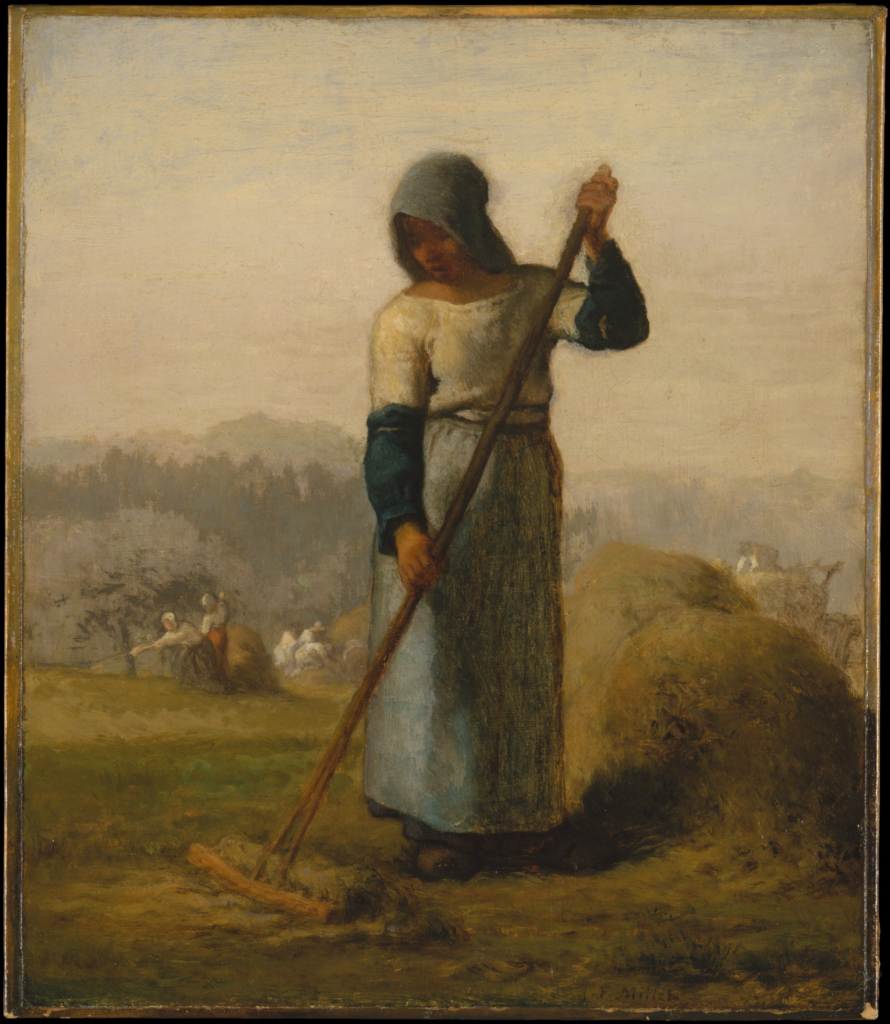
Few subjects occupied Jean-François Millet more consistently than the rural laborer. Throughout his career, he painted farmers, shepherds, gleaners, and field workers with a level of seriousness rarely afforded to working-class people in nineteenth-century art. In Peasant with a Rake, Millet once again turns his attention to the agricultural worker, portraying a figure engaged in the demanding physical labor that sustains rural communities. What might have been dismissed as an ordinary scene becomes, in Millet’s hands, a powerful statement about dignity, resilience, and the value of human work.
The figure stands within the landscape rather than apart from it, emphasizing the deep connection between people and the land they cultivate. Millet avoids sentimentality, presenting labor as both physically taxing and essential. Yet there is also a quiet sense of respect in the composition. The worker is not idealized, but neither is she overlooked. By placing a peasant at the center of the painting, Millet challenged long-standing artistic hierarchies and affirmed the importance of lives often ignored by history.
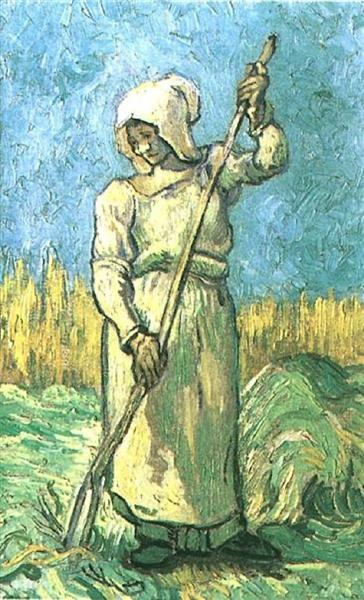
Van Gogh’s Peasant Woman with a Rake, created during his period of copying Millet’s works in Saint-Rémy, carries that same spirit while introducing a distinctly different emotional register. The figure remains central, but Van Gogh’s vibrant palette transforms the scene. Golden fields, rich blues, and energetic brushstrokes infuse the landscape with movement and light, turning a moment of labor into something almost transcendent. Rather than simply depicting a worker, Van Gogh seems to celebrate her presence.
This pairing reveals one of the most important connections between the two artists. Both believed that ordinary people deserved a place at the center of art. Millet expressed that belief through realism and observation; Van Gogh through color and emotion. Together, their paintings elevate a humble agricultural worker into something far greater than a record of rural life. She becomes a symbol of perseverance, strength, and the countless unseen individuals whose labor shapes the world around us.
When people speak about Vincent van Gogh, they often focus on his originality, the vibrant colors, expressive brushwork, and emotional intensity that transformed modern art. Yet the story of Van Gogh’s artistic development is also a story of admiration. Before he became the artist we recognize today, he spent years studying the work of Jean-François Millet, finding in his paintings a vision of humanity that deeply resonated with him.
What makes their relationship so compelling is that it was never about imitation. Van Gogh did not copy Millet because he lacked ideas of his own. He returned to these compositions because they embodied values he believed were worth preserving: dignity in labor, beauty in ordinary life, and a profound respect for people often overlooked by society. Millet showed him that a farmer sowing seeds, a worker resting after a long day, or a child taking their first steps could carry the same emotional weight as any grand historical subject.
Through his reinterpretations, Van Gogh transformed Millet’s realism into something unmistakably his own. Earthy fields became radiant landscapes, quiet moments became emotionally charged scenes, and familiar figures took on new symbolic meaning. In doing so, he demonstrated that influence is not the opposite of originality, it is often where originality begins.
Together, these paintings reveal an artistic conversation that stretched across generations. They remind us that even the most revolutionary artists are shaped by those who came before them, and that creative breakthroughs often emerge from careful observation, deep admiration, and a willingness to see old ideas in new ways.
Perhaps that is Millet’s greatest legacy. He did not simply inspire Van Gogh’s paintings; he helped shape the way Van Gogh looked at the world. And through Van Gogh’s eyes, that vision continues to inspire audiences more than a century later.
Which Millet and Van Gogh pairing was your favorite?
From Frida Kahlo and Tamara de Lempicka to Zanele Muholi and Felix Gonzalez-Torres, these artists used their work to explore identity, intimacy, freedom, and representation. Dive deeper into their stories in our Pride Month feature celebrating eight influential LGBTQ+ artists and their defining works.