


Artist Portfolio vs Resume. What’s the Difference?

An artist’s portfolio and resume are often mentioned together, and for good reason. Whether you’re applying for an exhibition, submitting to an open call, seeking gallery representation, or pitching your work to a client, you’ll likely be asked for one or both. Yet many artists, especially those early in their careers, are unsure of the difference. Is a portfolio just a visual version of a resume? Can one replace the other?
The short answer is no. While both documents represent your artistic practice, they serve very different purposes. A portfolio showcases your work, creative vision, and artistic style, while a resume documents your professional journey, achievements, and experience. Understanding how each works, and when to use them, can help you present yourself more professionally and make a stronger impression on curators, galleries, and opportunities alike.
In this guide, we’ll break down the key differences between an artist portfolio and an artist resume, explain when you need each one, and share practical tips to help you build both with confidence.
What Is an Artist Portfolio?
An artist portfolio is a carefully curated collection of your work that introduces others to your artistic practice. Rather than documenting every piece you have ever created, it presents a selection of your strongest and most representative works. Its purpose is to help viewers understand your style, technical skills, creative approach, and the ideas behind your work.
A portfolio is often the first impression you make on galleries, curators, collectors, clients, and selection panels. It gives them the opportunity to evaluate the quality and consistency of your work before deciding whether to collaborate with you, exhibit your art, or invite you to participate in a project.
For example, here’s what a simple artist portfolio might look like. It features a curated selection of artworks, an artist statement, and essential details that introduce both the artist and their creative practice.
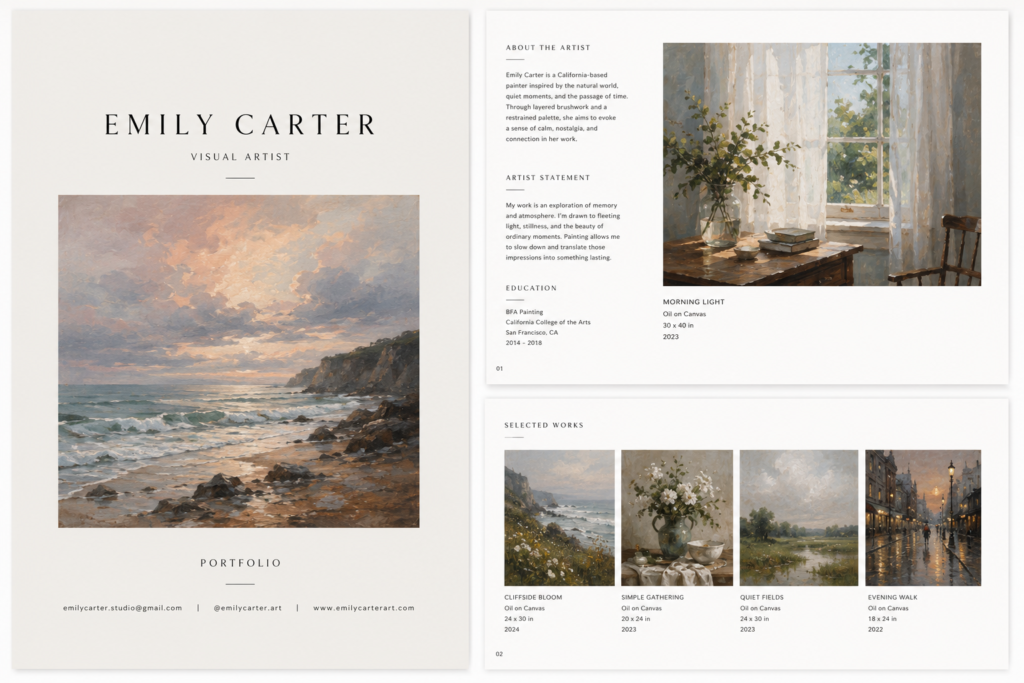
Although every portfolio is unique, most include:
- High quality images of selected artworks
- Artwork titles, dimensions, mediums, and dates
- A brief artist statement or introduction
- Short descriptions of projects or series, when relevant
- Installation or process photographs, if they add context
- Contact information and links to your website or social media
Today, artist portfolios exist in many formats. Some artists create beautifully designed PDF portfolios for applications, while others maintain an online portfolio through a personal website or portfolio platform. Regardless of the format, the goal remains the same: to present your work in a clear, professional, and memorable way.
What Is an Artist Resume?
An artist resume is a professional document that outlines your artistic background, experience, and accomplishments. Unlike a portfolio, it does not showcase images of your work. Instead, it provides a written record of your career, helping galleries, curators, grant committees, and institutions understand your professional journey at a glance.
An artist resume differs from a traditional corporate resume. Rather than focusing on job titles and employment history, it highlights milestones that are relevant to an artistic practice. As your career grows, your resume evolves with it, documenting the exhibitions you’ve participated in, the recognition you’ve received, and the experiences that have shaped your work.
For example, here’s what a professional artist resume might look like. It highlights the artist’s education, exhibitions, awards, and other career achievements in a clear, organized format.

A well-organized artist resume typically includes:
- Contact information
- Education and artistic training
- Solo and group exhibitions
- Awards, grants, and scholarships
- Residencies and fellowships
- Publications and press features
- Public or private collections
- Teaching, workshops, lectures, or artist talks
- Professional affiliations, if applicable
A strong artist resume is clear, accurate, and regularly updated. It allows reviewers to quickly understand your experience and credibility while complementing the visual story told through your portfolio.
Artist Portfolio vs. Resume: Key Differences
1. Purpose
- Portfolio: Created to showcase your artwork, creative vision, and artistic identity. It helps viewers understand what you make and how you approach your practice.
- Resume: Created to summarize your professional background and accomplishments. It gives context to your career and demonstrates your experience as an artist.
2. Content
- Portfolio: Features carefully selected images of your artwork, along with titles, mediums, dimensions, dates, and, when appropriate, brief descriptions or an artist statement.
- Resume: Includes factual information such as exhibitions, education, awards, residencies, publications, collections, grants, and other professional achievements.
3. Format
- Portfolio: Designed to be visual and engaging. It may exist as a website, a PDF, or a printed book, with the focus on presenting artwork in the best possible way.
- Resume: Organized as a clean, text based document with clearly labeled sections that make important information easy to find.
4. Length
- Portfolio: Has no fixed length, but it should always be thoughtfully curated. Including your strongest work is far more effective than including everything you’ve ever created.
- Resume: Usually one or two pages, depending on your experience. Established artists with extensive exhibition histories may have longer resumes.
5. What It Communicates
- Portfolio: Answers the question, “What kind of artist are you?” by allowing your work to speak for itself.
- Resume: Answers the question, “What have you accomplished?” by presenting the milestones and experiences that define your professional career.
6. When It Is Used
- Portfolio: Commonly requested for gallery submissions, commissions, client pitches, competitions, and online artist profiles.
- Resume: Often required for grant applications, residencies, teaching opportunities, exhibition proposals, fellowships, and other professional opportunities where your experience matters.
When Do You Need an Artist Portfolio?
While every artist should have a portfolio ready, there are certain situations where it becomes essential. Any time someone needs to evaluate your work visually, your portfolio should be the first thing you share.
Here are some of the most common situations where you’ll need an artist portfolio:
Applying to Galleries
Most galleries want to see the quality, consistency, and direction of your work before considering representation or an exhibition. A well curated portfolio helps them understand whether your work aligns with their program.
Submitting to Open Calls and Competitions
Whether you’re applying for an exhibition, an art prize, or a publication opportunity, organizers typically request a portfolio to review your artistic practice. A focused selection of your best work often makes a stronger impression than a large collection.
Pitching to Collectors and Clients
Collectors and commissioned clients want to see what you’re capable of creating before making a decision. Your portfolio serves as visual proof of your style, craftsmanship, and creative range.
Building Your Online Presence
Your portfolio is also the foundation of your professional website. It gives visitors, curators, and potential collaborators a place to explore your work at any time, making it one of your most valuable career tools.
Applying for Residencies and Creative Opportunities
Many residencies, workshops, and artist development programs ask applicants to submit a portfolio alongside supporting documents. In these cases, your artwork is often one of the primary factors considered during the selection process.
When Do You Need an Artist Resume?
An artist resume becomes important whenever someone wants to understand your professional background alongside your artwork. It provides context for your experience and helps reviewers evaluate your career, achievements, and involvement in the art world.
Here are some of the most common situations where you’ll need an artist resume:
Applying for Grants
Grant committees often review resumes to understand an artist’s experience, previous accomplishments, and commitment to their practice. A clear resume helps demonstrate your professional growth beyond the artwork itself.
Applying for Residencies
Many residency programs ask for an artist resume as part of the application process. It allows selection panels to see your exhibition history, education, awards, and other experiences that support your application.
Exhibition and Open Call Applications
While your portfolio shows your artwork, your resume provides the professional context behind it. Together, they help curators and jurors gain a more complete understanding of your practice.
Teaching and Academic Opportunities
If you’re applying to teach, lead workshops, or give artist talks, your resume highlights the qualifications, exhibitions, publications, and professional experience that establish your credibility.
Building Professional Relationships
Curators, galleries, museums, and arts organizations may request your resume when considering collaborations, publications, or future opportunities. Having an updated resume readily available shows professionalism and makes it easier to respond when opportunities arise.
Common Mistakes Artists Make
Even experienced artists occasionally overlook the importance of presenting their portfolio and resume professionally. Avoiding these common mistakes can make both documents more effective and leave a stronger impression on reviewers.

Including Too Much Work in Your Portfolio
A portfolio should be curated, not comprehensive. Including every artwork you’ve ever created can overwhelm viewers and weaken the overall presentation. Instead, select pieces that best represent your style, technical ability, and artistic direction.
Using the Same Resume for Every Opportunity
Different opportunities often prioritize different experiences. A residency may value your exhibitions and previous residencies, while a teaching position may place more emphasis on education and workshops. Tailoring your resume for each application can make it more relevant and impactful.
Letting Your Documents Become Outdated
Many artists forget to update their portfolio and resume after exhibitions, awards, publications, or new bodies of work. Reviewing both documents regularly ensures you’re always ready when an opportunity arises.
Prioritizing Design Over Readability
A portfolio should enhance your artwork, not compete with it, and a resume should be clean and easy to scan. Complicated layouts, inconsistent formatting, or decorative fonts can distract from the information that matters most.
Assuming One Can Replace the Other
One of the biggest misconceptions is that a portfolio and resume serve the same purpose. In reality, they complement each other. Your portfolio demonstrates your artistic practice, while your resume provides the professional context behind it. When both are requested, submitting only one can leave your application incomplete.
Should Your Portfolio and Resume Match?
Although your portfolio and resume serve different purposes, they should work together to present a consistent professional identity. Think of them as two parts of the same story. One shows your artwork, while the other explains the journey behind it.
Here are a few ways to keep them aligned:
Maintain a Consistent Personal Brand
Use the same name, professional title, website, and contact information across both documents. If you have a logo or a recognizable visual identity, apply it consistently without overwhelming the design.
Keep Information Up to Date
If your portfolio features a new body of work or recent exhibition, make sure your resume reflects those updates as well. Regularly reviewing both documents helps ensure nothing important is missing.
Let Each Document Do Its Job
Avoid turning your portfolio into a lengthy biography or filling your resume with detailed descriptions of every artwork. Each document has a distinct purpose, and respecting that difference makes both more effective.
Proofread Before You Submit
Spelling mistakes, inconsistent dates, or missing details can undermine an otherwise strong application. Before sending your portfolio or resume, take a few minutes to review everything carefully and make sure the information is accurate and complete.
A polished portfolio paired with a well organized resume shows that you are not only serious about your artistic practice but also prepared to present yourself professionally when opportunities arise.
The Best of Both Worlds
Your portfolio and resume each tell an important part of your story, but together, they create the strongest impression. One allows people to experience your creativity, while the other provides the professional context that supports it. Whether you’re applying for an exhibition, introducing yourself to a gallery, or pursuing your next big opportunity, having both documents ready shows that you’re serious about your practice and prepared for what comes next.
Remember, your portfolio tells people what you create. Your resume tells them what you’ve accomplished. When both are thoughtfully curated, regularly updated, and tailored to the opportunity, they become powerful tools that help your work stand out for all the right reasons.
Which tip from this guide did you find the most helpful? We’d love to hear your thoughts. Share your experience in the comments and let us know whether you’re working on your portfolio, your resume, or both.