
In Her Layered Acrylic Portraits, Anuk Rocha Paints Faces That Belong to No One

At Arts to Hearts Project, we are drawn to artists who paint the things that live between cultures, between feelings, between what can be said and what can only be shown. Because that in-between space is not empty. It is full of the most complicated, most human, most unresolvable things there are.
Our Best of the Art World editorial exists for the artists brave enough to stay inside it. And Anuk Rocha has been living there her entire life.
Born in Germany to Bosnian Muslim parents, she grew up between cultures in the most literal sense the language at home carrying different emotional weight than the one outside, the jokes that didn’t translate, the silences that meant different things depending on which side of herself she was standing on.
That experience, quietly accumulated over years before she had the vocabulary to articulate it, became the invisible architecture of her entire practice.
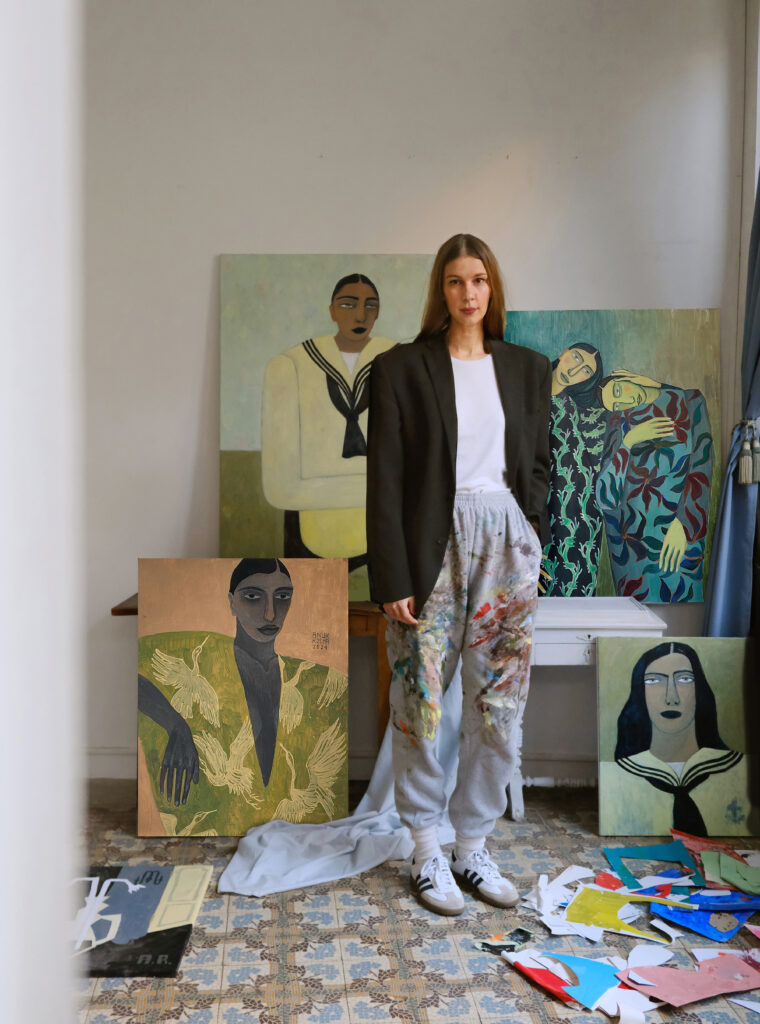
Before she painted she worked in fashion, spending time with houses including Maison Martin Margiela, where she absorbed something that never left her. That form is not fixed. That visual language only comes alive through interaction.
That an image does not just sit there it activates when someone looks at it. She carried that understanding into painting and it changed not just how she makes work but what she believes the work can do.
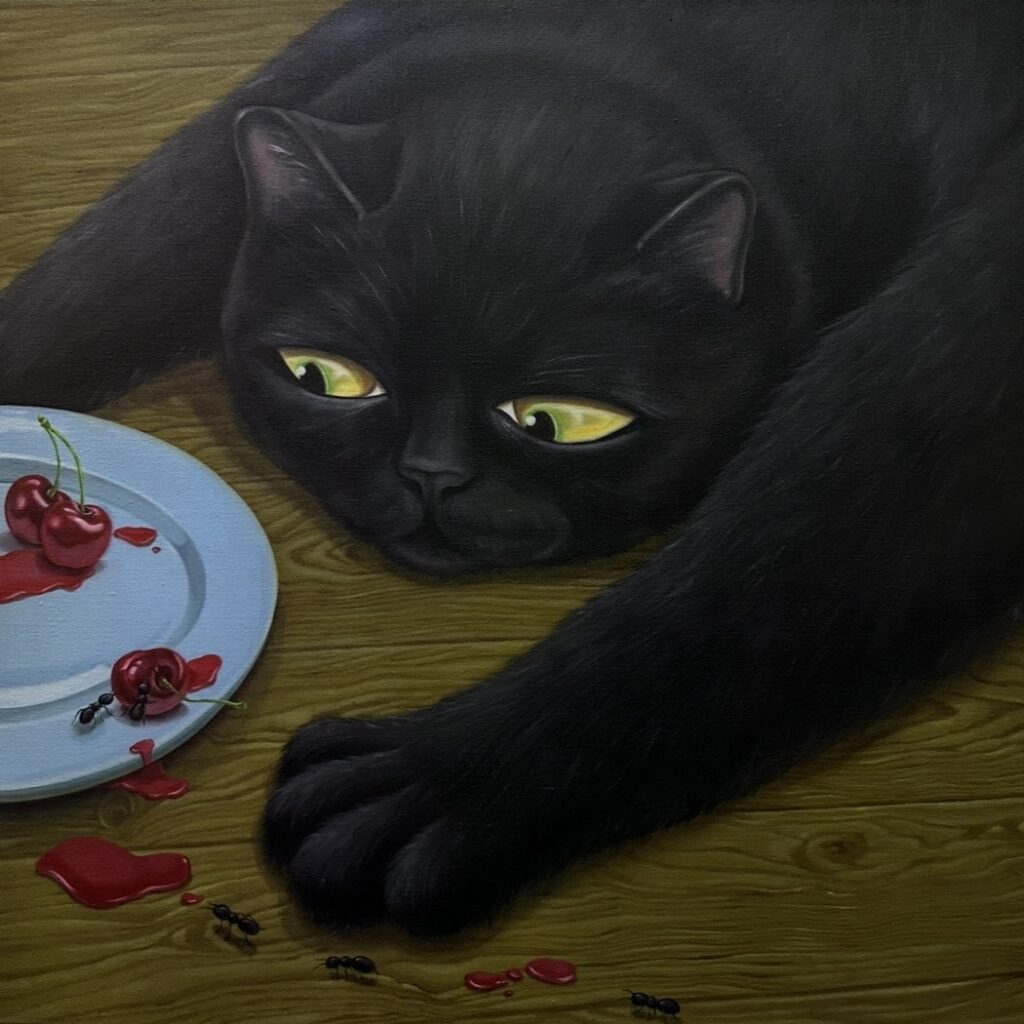
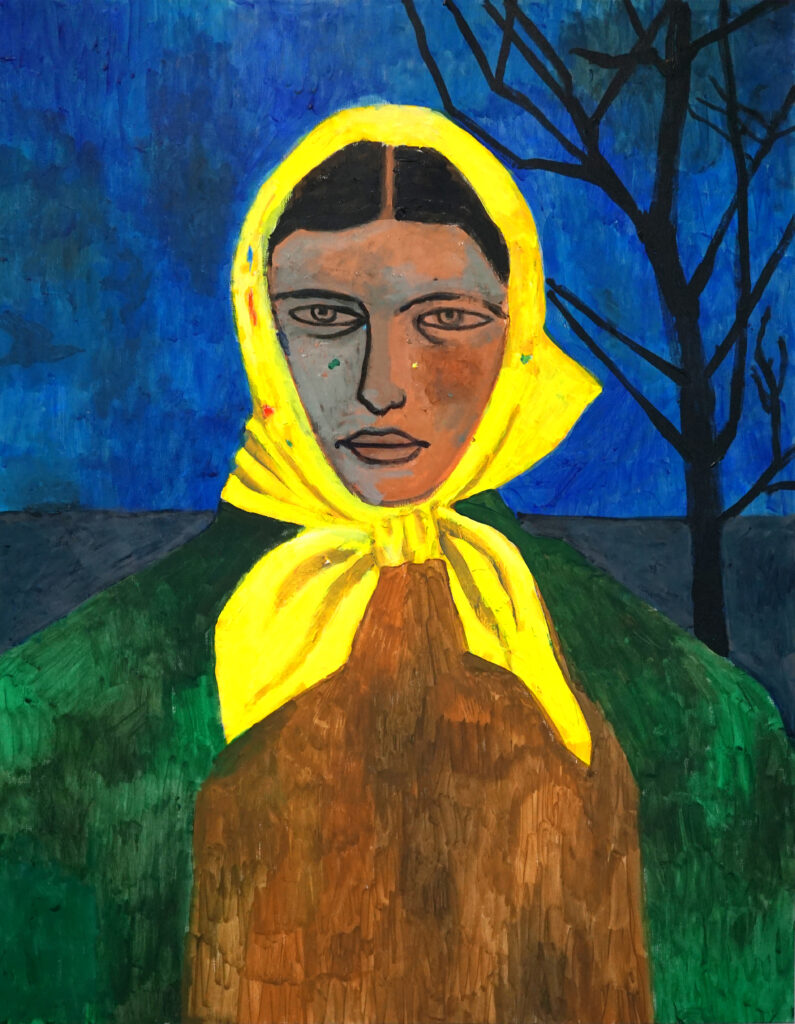
Her paintings are built from acrylic, oil pastels, charcoal, bullet pen, and collage, all in the same piece, in no fixed order. She assembles faces from memory, borrowing a nose from one person, eyes from another, building someone who never existed but feels completely real.
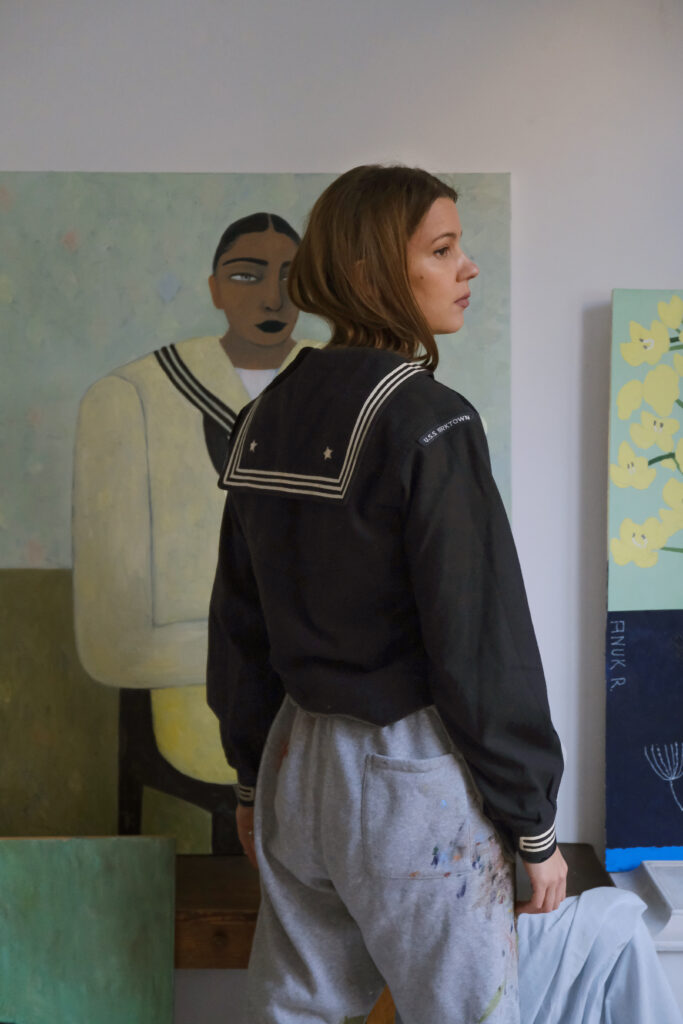
There is a dance, she says, between finding beauty and subtracting just enough of it until it hits the sweet spot. And the result is work that does not reveal itself at first glance. Work that you move past, and then five minutes later find yourself wanting to go back to. Work that sits with you on the car ride home without you entirely knowing why.
For Anuk, that is the only kind of work worth making the kind that calls for your intuition, that means something different to everyone who stands in front of it, that is finished only when words can no longer explain what you feel.
Let’s get to know Anuk through our conversation with her, where she talks about the in-between life that shaped her, the practice she built from it, and what it really means to chase a feeling until it puts out a fire inside you.
Q1. You were born in Germany to Bosnian parents, grew up between cultures, and never quite belonged to either one. How early did you feel that and when did you realise it was going to be the thing you kept painting about?
As a child, it’s often linguistic first. You notice that the language at home carries different emotional weight than the one outside. Certain jokes don’t translate. Certain silences mean different things. You become aware that you’re constantly adjusting—tone, posture, even personality—depending on which side you’re in. That adjustment becomes second nature before you even have the vocabulary to question it. Bosnian people are way more expressive and external than germans, who usually keep cool and composed as a sign of respect. Then there’s the social mirroring. In school, you’re “the other” in subtle ways—name, food, family habits. At home or within the Bosnian circle, you’re also slightly off—accent, references, behavior shaped by Germany. You’re never fully misaligned, but never fully synchronized either. It’s a low-grade, persistent dissonance rather than a dramatic exclusion. More than the culture though, I felt a strong disconnection between me and the people around me in general. I always had different interests, mostly art, music, theater and books. Most people around me were more into sports, cars or partying. It was hard to make friends, but I did find a couple of weirdos like me who became my best friends. I also befriended my philosophy teacher with whom I would spend hours chatting after school. He truly shaped me as a teenager and I often wonder what became of him.
Q2. You began your creative path in fashion, working with houses like Maison Martin Margiela what did that experience teach you about form, identity, and visual language?
There’s this idea of transformation. In fashion, a piece of clothing only really becomes itself once someone wears it. It moves with the body, reacts to posture, context, attitude. That makes you realize visual language isn’t fixed—it comes alive through interaction, not on its own. In painting, you don’t have that literal movement, but the principle carries over. It’s about how a figure sits in space, whether it meets your gaze or avoids it, how much it gives you and how much it holds back. The image isn’t just *there*—it sort of activates when someone looks at it. So what you take from that isn’t just technique. It changes how you think about making images. Form stops being just a way to show identity and becomes a way to question it. And once you see it like that, it’s hard to go back to making work that’s just decorative or purely illustrative.
Q3. You work with acrylic, oil pastels, charcoal, bullet pen and collage all in one painting. How do you actually start what goes down first, and does that order always stay the same?
Not at all, there is no order whatsoever. When I make a painting, I try to express what it feels like to be alive. I always start with a sketch directly on the canvas, trying to find whatever this little voice in me is calling for. Once that’s set I will start filling in colours. From that point on, I am in a constant state of emergency. You had that perfect sketch there and then color starts messing with the mood and you’re constantly just fighting to get it back. Sometimes something else reveals itself to you, a new spark, and your initial feeling shifts. Whatever needs to be happen within that process, will be used – sometimes a surface needs to be covered up with collage, sometimes it needs fine lines from a marker, sometimes a surface needs to be scratched down.
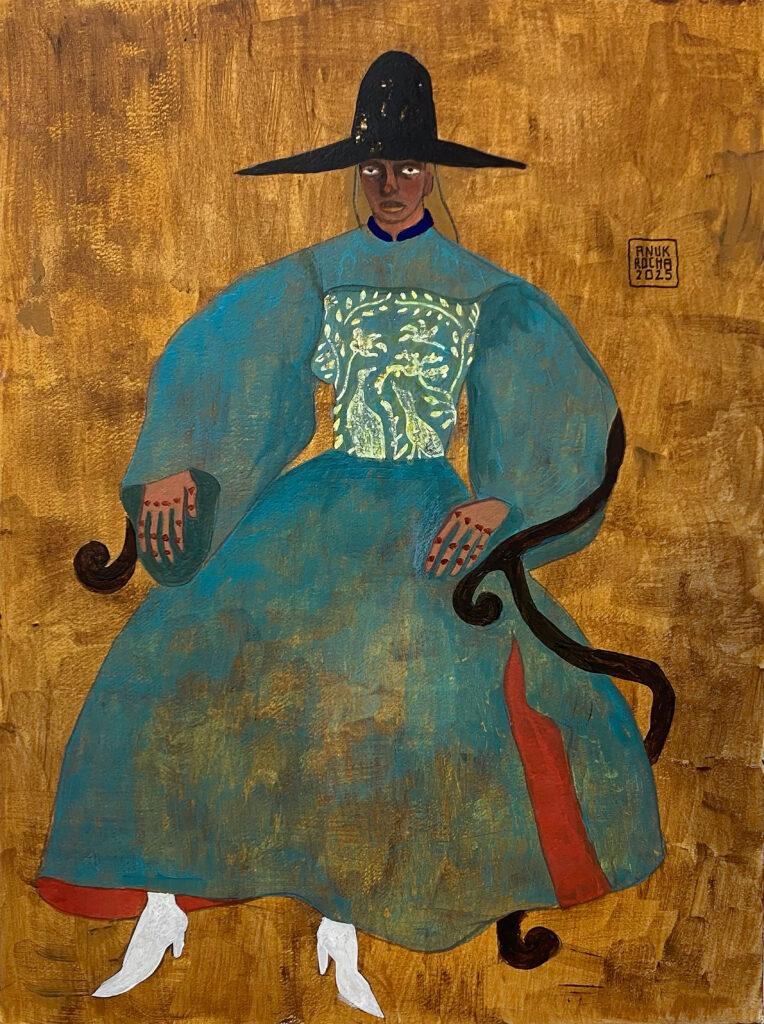
Q4. You build faces from memory borrowing a nose from one person, eyes from another, assembling someone who never existed but feels completely real. What’s that like to sit down and do?
I’m not sure what it’s like, it’s a little like I’m possessed. It’s hypnotic. I have a certain preference for certain shapes of noses, eyes, lips and the mood I want to convey with them. So there is this feeling of being very in tune with every little mark I make. Every line is intentional, the distance between the eyes, the length of the nose, the inclination of the cheekbone. I am very aware of the level of attractiveness of my figures, there is a dance between finding beauty and then subtracting some of it until it hits the szeetspot.
Q5. You layer, erase, let things re-emerge. You’ve said the technique mirrors assembling the self. Does it actually feel that way while you’re painting, or is that only clear once you step back?
Yes, the process of layering, breaking down and reassembling feels like assembling the self, as I always add myself into a painting. What I am looking for when I break down and rebuild a surface is to connect the exterior with something inside of me. It’s hard to explain, but there is some kind of chase within the act of building a painting, you’re chasing a very clear thing within you but it lingers inside of you like a warm cloud. Its neither a specific emotion or a visual idea, it’s a very strange intuitive thing, and once you reached it on the canvas it feels like you put out a fire inside of you.
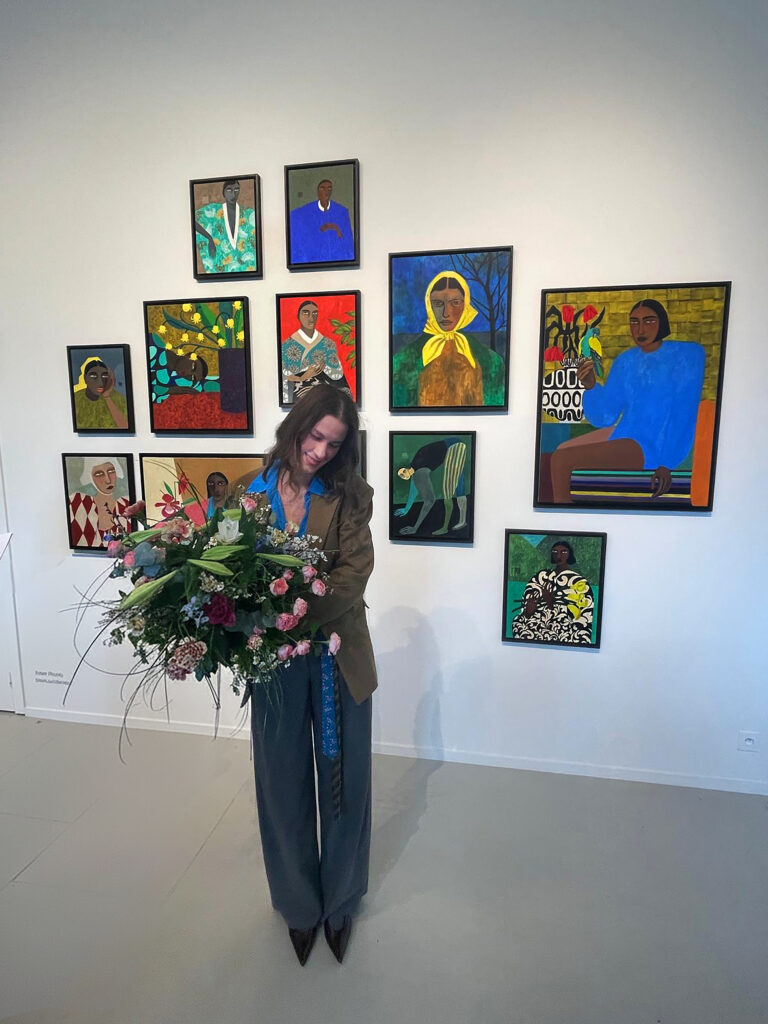
Q6. Margiela was obsessed with deconstruction showing the seams, exposing how things were made. Is that still in your paintings that showing of the layers, the constructed-ness of a face?
Sometimes it is, it depends on what I am chasing after that day. I am not married to one way of painting, I use different painting styles and techniques according to my needs. it’s the presence of myself which is the red thread in all of my works.
Q7. You’ve described your paintings as life-long mental recordings colours, shapes, moments that moved you. So when you’re actually mixing paint, are you trying to match a colour you remember, or does the colour find itself?
What you’re describing, the “mixing of color” is actually a very, very difficult skill which took me years to master. At first, it seems quite fun and accessible, but as your skills evolve over time your start noticing how certain colors disagree with you and how other sort of sing for you once they are put next to each other. At first you stumble into it by accident then you slowly notice which colors feel good and which don’t, I call them “colour families”. The more you practise the more “color families” move into your house, and each family has a bunch of children and grandchildren which come in over time.
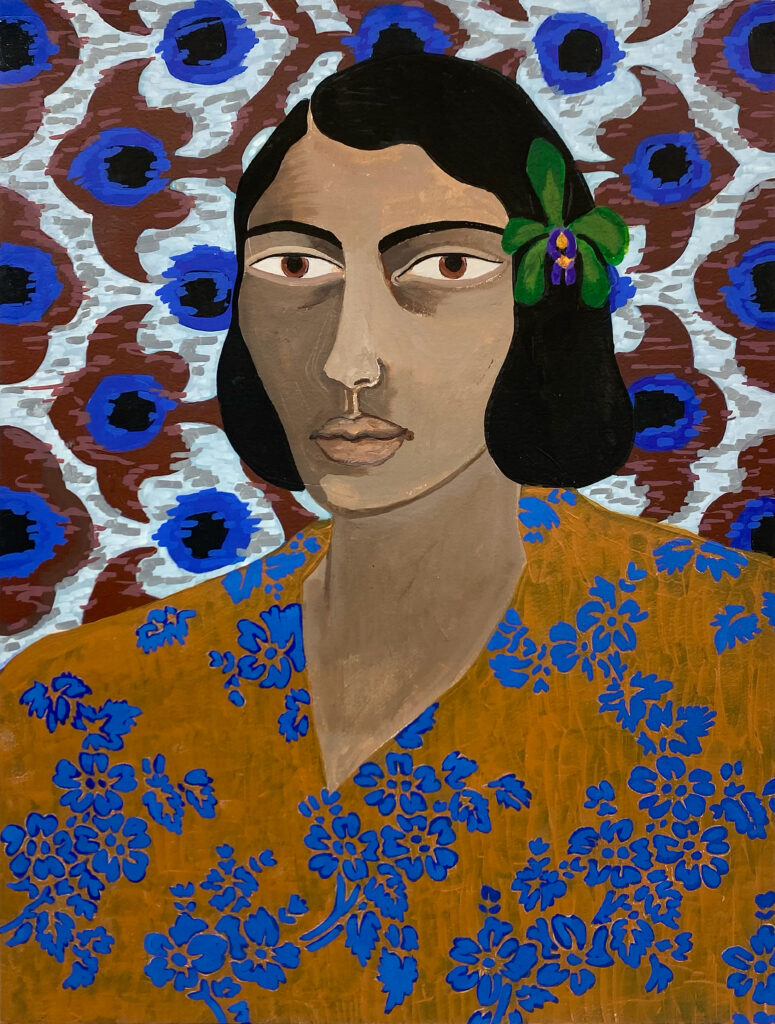
Q8.You draw inspiration from Pina Bausch and Chantal Akerman two artists who worked through restraint and silence rather than spectacle. What did they teach you about what a painting doesn’t need to say?
It’s not so much that they taught me something specific about my paintings but rather about the kind of human/artist I am. There are different species of people & artists, and they each seek different things in their lives/work. I am the most sensitive to other human beings, their emotions and their inner lives. I am also deeply connected with my own emotions and inner life. Seeing Pina or Chantal process and render the human condition into their art helped me position myself as an artist, but my actual work developed into this specific style long before I understood what it meant.
Q9. Balkan Heart is about your Bosnian roots. What does it feel like to paint a culture you were partly separated from, partly inherited, and never fully lived inside?
Well it feels exactly the way you described it, partly seperate, partly inherited, partly made up and never fully lived in.
Sometimes I dabble into this theme but often move on to something more abstract for that reason.
Q10. Fabric and pattern in your work carry memory and time textile as emotional archive. Where does that idea come from for you?
This concept mainly came to me from observing nature, which is probably my earliest and happiest memory from childhood and has been a loyal companion throughout my life. Anytime I feel some sort of way, whether it is sad, happy, anxious or overjoyed – my first reaction is always going out to seek out nature. Everything in nature teaches you about life and carries memory – one of an ongoing thought I have is when I look at a rock on a cliff for example, which is probably a thousand years old, and I imagine how different the world was back then but how they looked at the same rock I do today. I imagine what the world must have looked like surrounding that cliff, how there were no buildings, cars or roads, just the country side, fields of grass and cows. I imagine how certain marks on that cliff might have come about, how a rounded spot maybe comes from hundreds of years people sitting on the same spot to watch the sun go down.
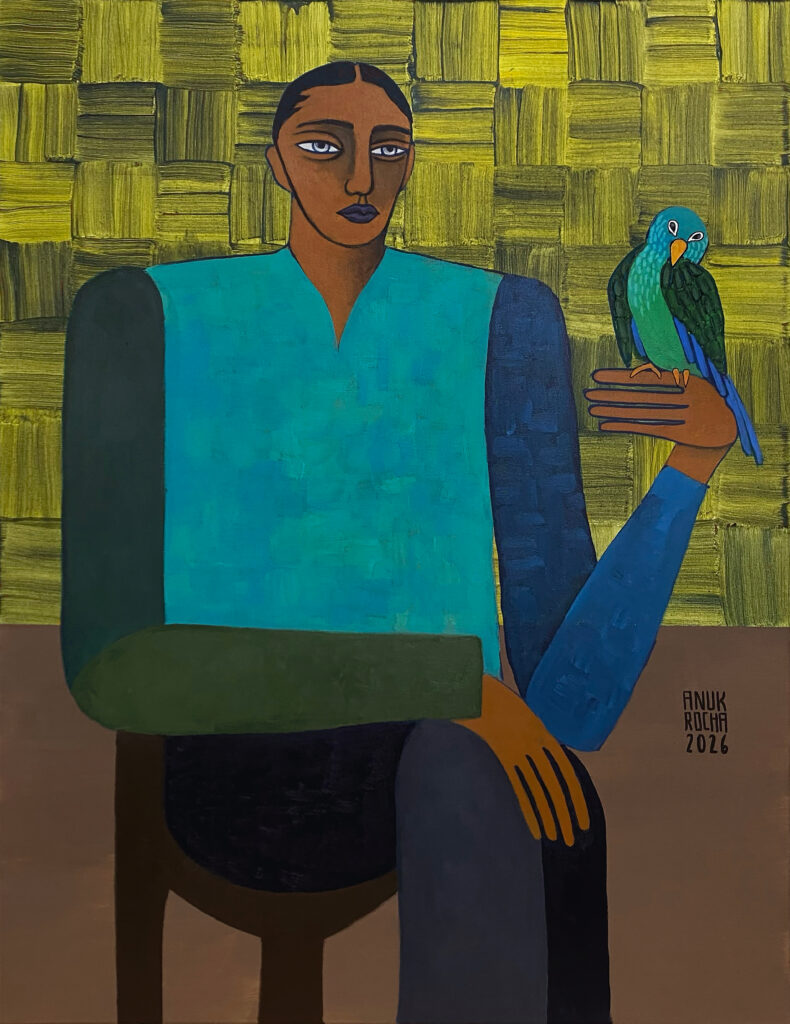
Q11. Your work is described as hiding a deeper meaning. Does it ever bother you when people only see the surface just a beautiful portrait and leave it at that?
Not at all, once I put a finished work out there, it no longer belongs to me. It starts a life of its own. In contrary, I am elated there are such different takes on my work – it means that I succeeded. You see, for me a work is only finished when words can’t explain what you feel. That’s when it reached that sweet spot of human connection. It calls for your intuition, and everyone has one. I myself don’t exactly know what my work means, and if I come too close to a meaning it sends a cold shiver down my spine and quickly gets erased. If everyone knew what my painting meant or everyone saw the same one thing in it, the meaning has been shoved in their face and that is tacky in my eyes. I don’t like works which reveal themselves to you at first glance. I like when I look at a work, I move past it, and then five minutes later I want to go back to it and look at it again. And then you think about it on the car ride home and it sits with you, in your mind, and yet you don’t really know why. That’s when you really have an impact.
Q12. What would you tell someone who is still inside a career that looks successful from the outside but feels like the wrong life?
Oof well, I think there is a right time for everything and if you don’t feel the strength for change yet maybe it is not urgent enough, and maybe it’s not as bad as you think it is. Or maybe you have developed a high tolerance for self destruction and you need to take a good, hard look at your life and make drastic changes. People are so different and deal with life so differently, there is not one right way to do it.
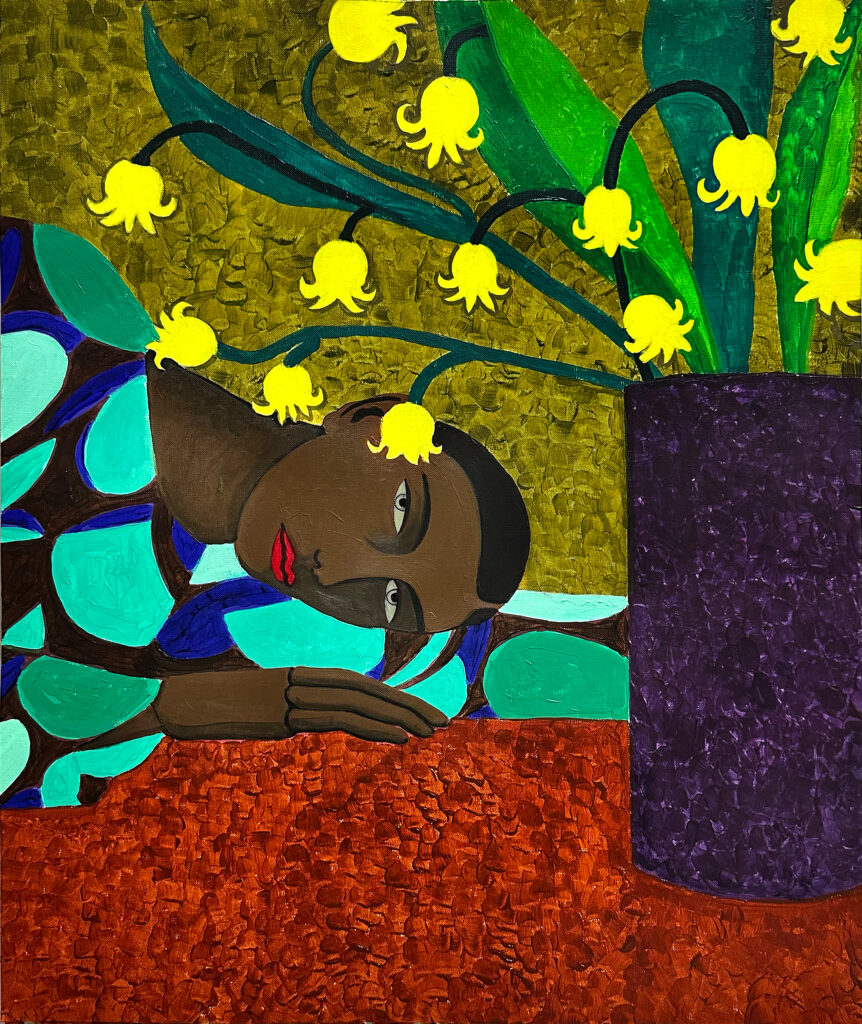
As our conversation with Anuk drew to a close, we kept sitting with something she said that felt quietly unforgettable. That a work is only finished when words can no longer explain what you feel. That if everyone looked at a painting and saw the same thing, the meaning had been shoved in their face, and that, to her, is simply not interesting. She wants you to walk past it, and then five minutes later turn around. She wants it to sit with you on the car ride home without you knowing why.
And honestly? It does exactly that. There is something rare about an artist who has that level of clarity about what they are chasing and who has also developed the technical language to actually chase it.
The layering, the breaking down, the reassembling, the faces built from borrowed features and careful distances and a constant negotiation between beauty and something just slightly beyond it. None of that is accidental. It is the result of someone who has been paying very close attention, for a very long time, to the thing that lives between what you can see and what you can feel.
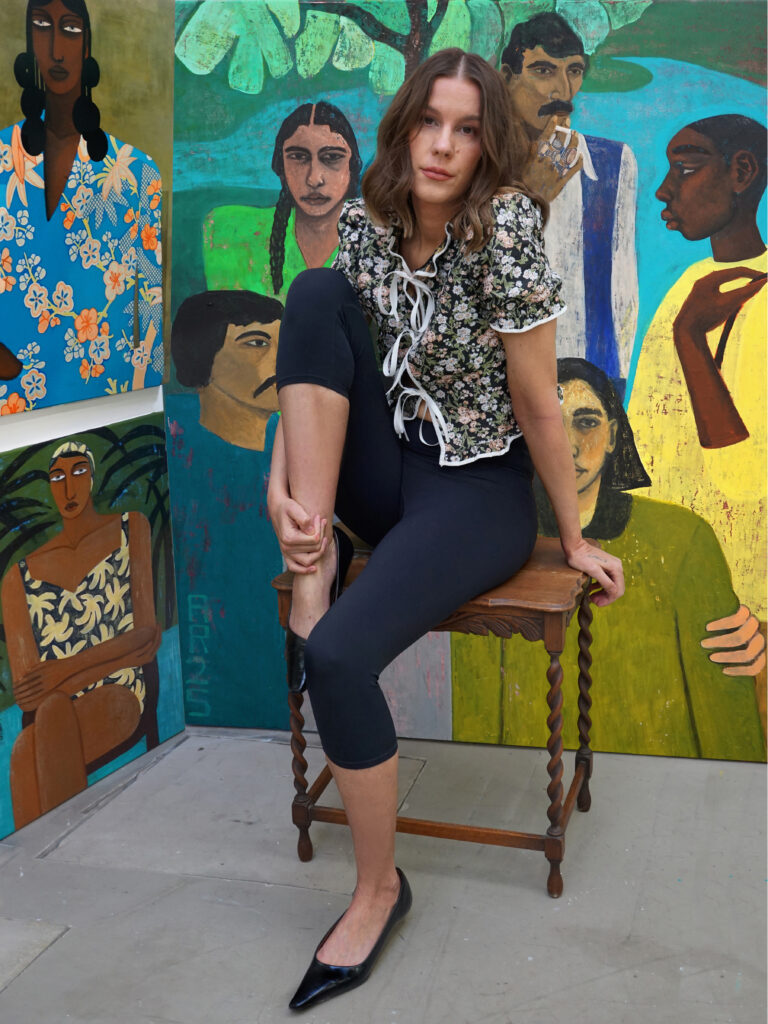
What also stays with us is how personal the work is without ever being obvious about it. She adds herself into every painting, she says. The exterior connected to something inside. And yet you would never point to a canvas and say, there, that is her story. It is more like her presence is dissolved into the surface, present in every mark, invisible in every obvious sense and yet completely undeniable once you know to look for it.
For those who collect with real intention who want work on their walls that keeps asking something of them, that gives something different back every time they stand in front of it, Anuk’s paintings are exactly that. They do not resolve. They do not simplify. They stay open. And the longer they are in your life the more they reveal.
Follow Anuk Rocha through the links below. And if her work makes you want to go back and look again that is exactly what she intended.