



Five Artists on What They Love at the Easel & What Takes More Effort
At Arts to Hearts Project, we have noticed that artists talk about their work in two different ways. Ask about a finished piece and you will hear about the idea behind it. Ask about the process and you will hear about everything else. The favourite moments, the stages where they get stuck, the thing they keep meaning to get better at.
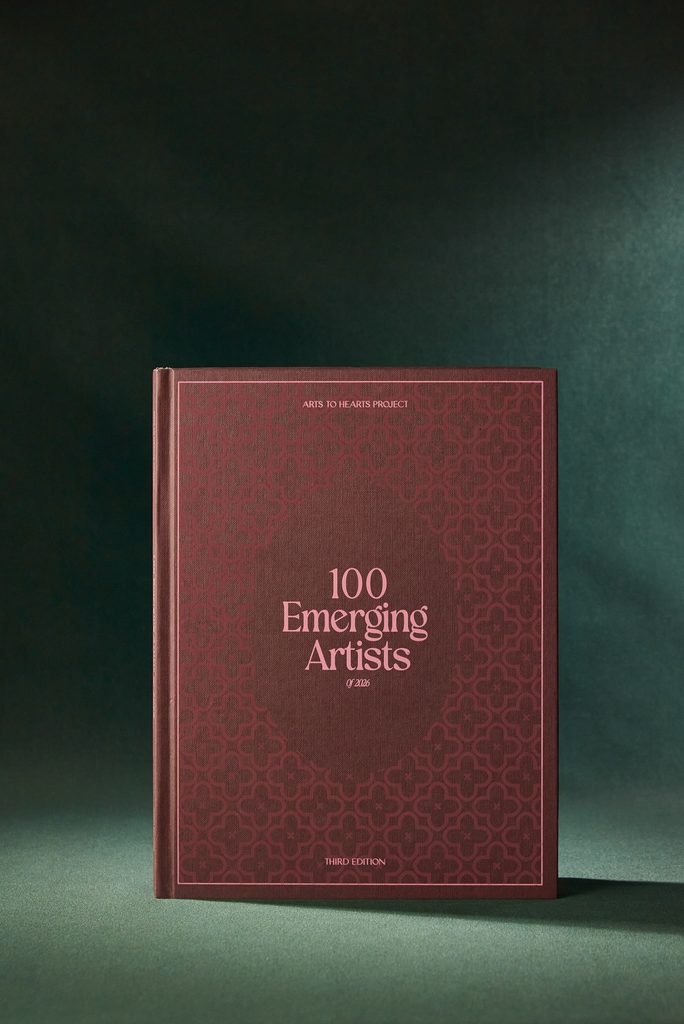
That is what we wanted to hear from the artists in 100 Emerging Artists of 2026, a premium hardcover coffee table book featuring 100 of the most promising emerging artists from around the world, across all genders, disciplines, and creative backgrounds.
We asked them what part of their process they enjoy the most and what part they struggle with the most. We have shared some of what they told us already, and more kept arriving that deserved the same space. So we went back for another round. Here are more voices, from artists who are still in the middle of figuring it out.
Concept and execution are two different skills, and most artists find one easier than the other.
Some artists are never short of ideas. They show up on walks, in the middle of conversations, right before sleep, and for a moment the whole piece feels like it already exists. Then it has to be made, and the questions start. Which material? Which method? Why does it look nothing like it did in your head? Other artists have the opposite problem. They can make almost anything once they know what it is, but the idea is what takes time. Hardly anyone finds both equally easy.
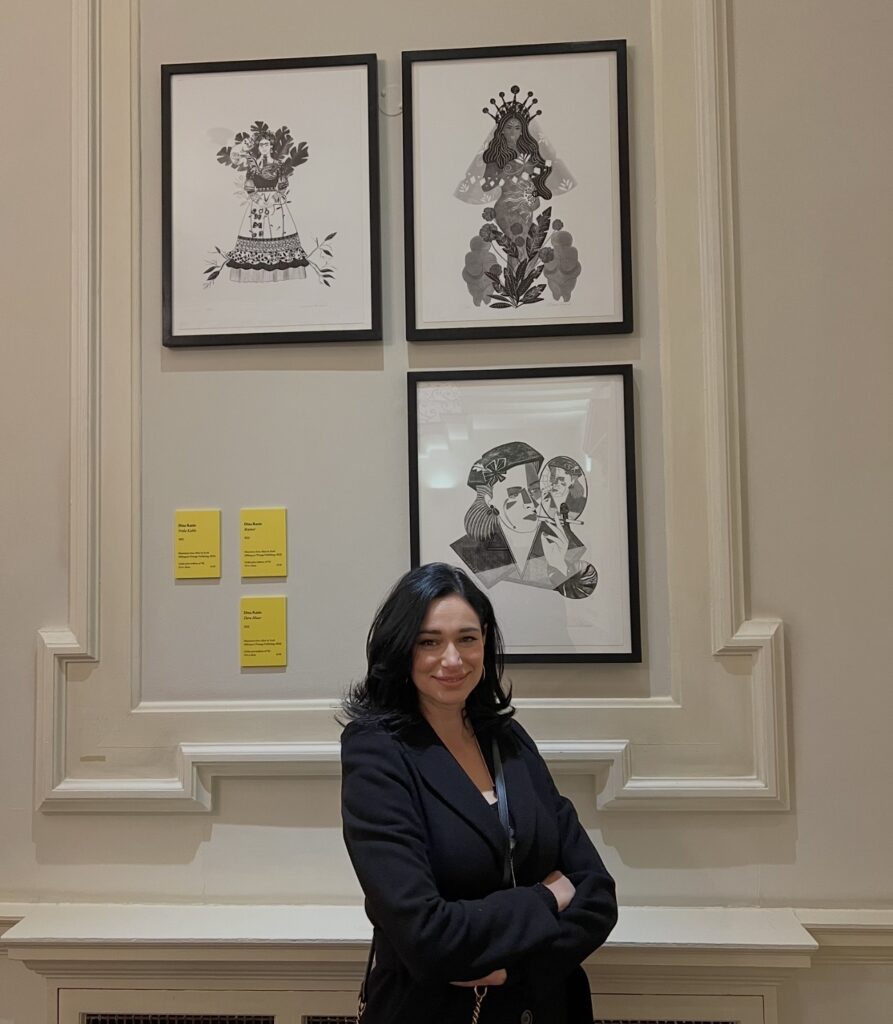
Lee Jenkins @l33j3nkins lives right between the two. Lee says:
“Coming up with concepts is still one of my favorite parts of the process. I enjoy working across different media, applying color, and embracing the bold, graphic qualities of printmaking. The biggest challenge is figuring out the best way to execute an idea—finding the right approach isn’t always a straight line.”
Lee Jenkin
Coming up with concepts is still one of Lee’s favourite parts of the process, and the rest of the answer backs that up. Working across different media, playing with colour, leaning into the bold, graphic look of printmaking. It all sounds like someone who enjoys where an idea can go. The challenge comes after that, when Lee has to work out the best way to actually make it. Finding the right approach is not always a straight line, and it is refreshing to hear an artist say that plainly. Having the idea is one skill. Making it real is another. And Lee is honest about where the work gets tricky.
The most personal pieces are often the ones an artist holds on to longest.
Ideas are the generous part of making art. They turn up when nobody is looking, in the shower, on a walk, halfway through a different project, and they feel like a gift. Letting a piece go is a different story. By the time it is finished, it holds something of the person who made it. The more personal it is, the longer it tends to stay in the studio.
This is how mimii @mimiidoodles describes it:
“The part I love most is how effortlessly ideas arrive uninvited, unforced, as if they were always there waiting to be let out. But the hardest part is leaving them there once they are. Every piece carries something I wasn’t ready to release. I’m not sure I ever am.”
Mimii
For mimii, ideas turn up on their own, and that is the best part of the process. The struggle comes later, when it is time to let a piece go. Every piece carries something mimii was not ready to release, and mimii admits that might never change. It is rare to hear an artist say that so plainly. Finishing a piece can feel a lot like saying goodbye, and mimii does not pretend otherwise.
Not every artist wants a routine. Some need a process that can change shape.
We usually talk about a good creative process as if it means doing the same things in the same order every day. For some artists that works well. For others, sameness is what drains the joy out of it. They do their best work when the materials change, the subject changes, and nothing is quite predictable. It is a different way of staying interested in the work.
Cheyenne Davis @Cheyenneellanah tells it like this:
Cheyenne Davis
“The part of my process I enjoy the most is that it is never exactly the same. I have ADHD, so committing to a process that is exactly the same every time is not enjoyable to me. While the overall flow is consistent, I can experiment with different materials, subjects, and techniques. My process is fluid, and it allows for change.
The part I struggle with is deciding what to paint, as with my ADHD, I have a dozen different ideas floating around in my head. It can be hard sometimes to commit to one idea, as I’ve always wanted to explore every inspiration and influence.”
Cheyenne’s answer shows both sides of the same trait. A mind that wants to try everything is what makes the process fun, and it is also what makes choosing a single idea so difficult. Cheyenne has not tried to force a rigid routine onto that. The overall flow stays steady, and inside it there is room to try new materials, subjects, and techniques. A dozen ideas competing for one canvas can be frustrating, but it also means Cheyenne is never short of something to make.
There is a thin line between finished and overworked, and only the artist can feel it.
There is no bell that rings when a painting is finished. Ask most painters how they know it is time to stop and they will tell you they just feel it, usually a stroke or two after they should have. From the outside, one more layer looks harmless. From the inside, it can be the difference between a painting that feels alive and one that feels tired. Nobody can point to that line for you. You have to find it yourself.
Joanna Szuba @asiaart102 works right on that line. She shares:
“What I love most is the moment when the painting starts to ‘live its own life’—when it moves beyond control and something unexpected and genuine appears. It’s a moment of pure intuition, where the gesture becomes natural and I stop analyzing, simply following the energy of the work. The biggest challenge for me is knowing when to stop—the decision that the piece is finished. It’s easy to cross that line and overwork a painting, taking away its freshness. It requires attentiveness and trust that what has emerged is already complete and needs nothing more.”
Joanna Szuba
Joanna’s two answers turn out to be one story told from both ends. She loves the moment a painting stops listening to her and starts to live its own life, when she quits analysing and simply follows the energy of the work. The hard part is trusting that moment enough to stop. Another stroke could take away the freshness she worked so hard to reach, so she has to believe that what has appeared is already complete. It takes attention and a good deal of trust. And it is a reminder that sometimes the bravest thing an artist can do is leave a painting alone.
Turning an image from the mind into a composition is part joy, part wrestling match.
Every artist knows the picture that looks perfect in the head. It is clear, it has colour, it seems to need nothing more than to be copied onto the canvas. Then the painting begins and the picture starts to argue back. Somewhere between the idea and the finished piece there is a wrestling match, and it is part of why the finished piece feels earned.
Feyzan Alasya @feyzanalasya knows both sides of that match. Feyzan shares:
“Transforming the images in my mind into meaningful compositions is both a joy and a challenge. The most enjoyable part is surrendering to the rhythm and trusting the flow of the mind. However, the struggle arises when thoughts create resistance, which can hinder the creative process. I believe that for a painting to truly breathe, one must move past this resistance. The real magic happens when you let go and allow the rhythm of the work to guide you.”
Feyzan Alasya
Feyzan calls it both a joy and a challenge, and both halves are honest. The joy is in surrendering to the rhythm and trusting the flow of the mind. The challenge begins when thoughts start to push back and get in the way. Feyzan’s answer is not to fight harder but to let go and let the rhythm of the painting lead, because that is where a painting starts to breathe. It is a good reminder that the loudest voice in the studio is sometimes the artist’s own mind.
For most of these artists, ideas were the easy part. They arrived effortlessly, uninvited, sometimes before the artist had even sat down to work. It was everything that came after that asked for more.
For one artist it was working out how to make an idea real, because the way there is rarely a straight line. For another it was letting a finished piece leave the studio, knowing it carries something they were never quite ready to release. For another it was choosing one idea out of a dozen. For another it was knowing when to stop, before the freshness is lost. And for another it was quieting the thoughts that get in the way, so the painting has room to breathe.
The struggles were all different, but every one of them came from caring about the work. Nobody here was bored by it. They were pulled between following every idea and committing to one, between holding on and letting go, and they were honest enough to say so.
That honesty is what we hoped to find in 100 Emerging Artists of 2026, and the book is full of it. One hundred artists, still early enough in their journeys to tell you exactly how it feels. The book is available now at the link below.
And if you are an artist who has been waiting for the right moment to put your work forward, this is a good one. The Artist of the Year Award 2026 is closing soon, and once the deadline passes, it is gone. If you have been meaning to apply, do it now.