
Anna Vishenskaya’s Surreal Paintings Map the Border Between the Seen and the Unseen
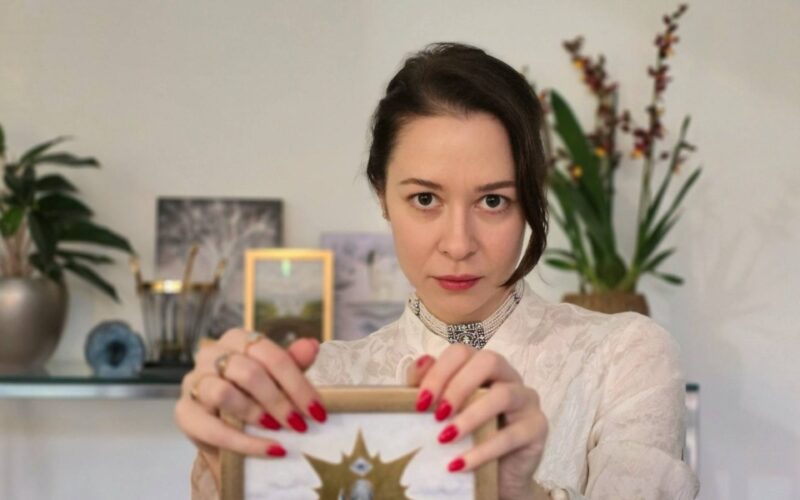
At Arts to Hearts Project, we have always believed artists deserve more than a moment of attention, they deserve recognition, visibility, and a place within the wider art ecosystem. Our official presence on Artsy, one of the world’s leading platforms for discovering and collecting art, is part of that long-term commitment, connecting our artists to collectors, curators, and galleries around the globe.
Our exhibition there, Small Works, brings together artists working at an intimate scale, celebrating how much emotion, detail, and meaning a small piece can hold. Among those featured is Anna Vishenskaya, whose small, luminous paintings prove that the tiniest works can contain the largest worlds.
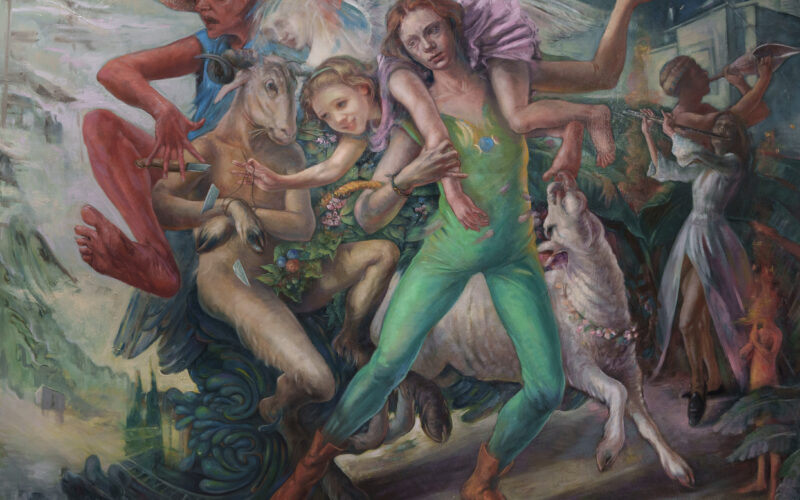
Anna is a contemporary painter based in Geneva, and a relatively recent arrival to the art world as a full-time artist, having devoted herself fully to painting in 2025. With a background in psychology, she brings a deep curiosity about the inner life to everything she makes, and her work moves in the realm of the visionary and the symbolic, drawing on dreams, mythology, and the hidden forces that shape how we feel.
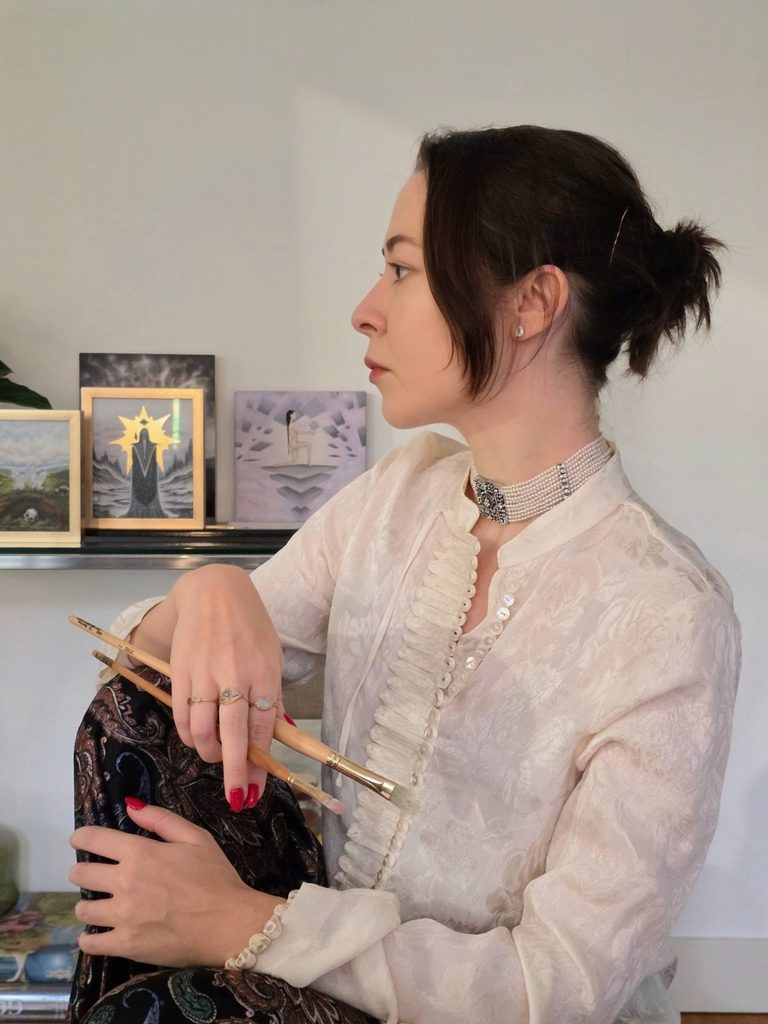
What makes her practice so distinctive is her choice of materials. Anna works in oil on traditional wooden icon panels, a surface rich with history and meaning, and builds each painting through a slow, layered technique inspired by medieval painting methods.
Rather than working quickly, she lets an image surface gradually, through delicate, translucent layers applied over weeks or even months. It is a patient, almost devotional way of painting, where nothing is rushed and every detail is allowed to emerge in its own time.
Her creative process is just as intuitive as her technique is disciplined. She rarely begins with a fixed idea or a planned composition; instead, an image arrives, and she follows it, allowing the painting to reveal itself as she works.
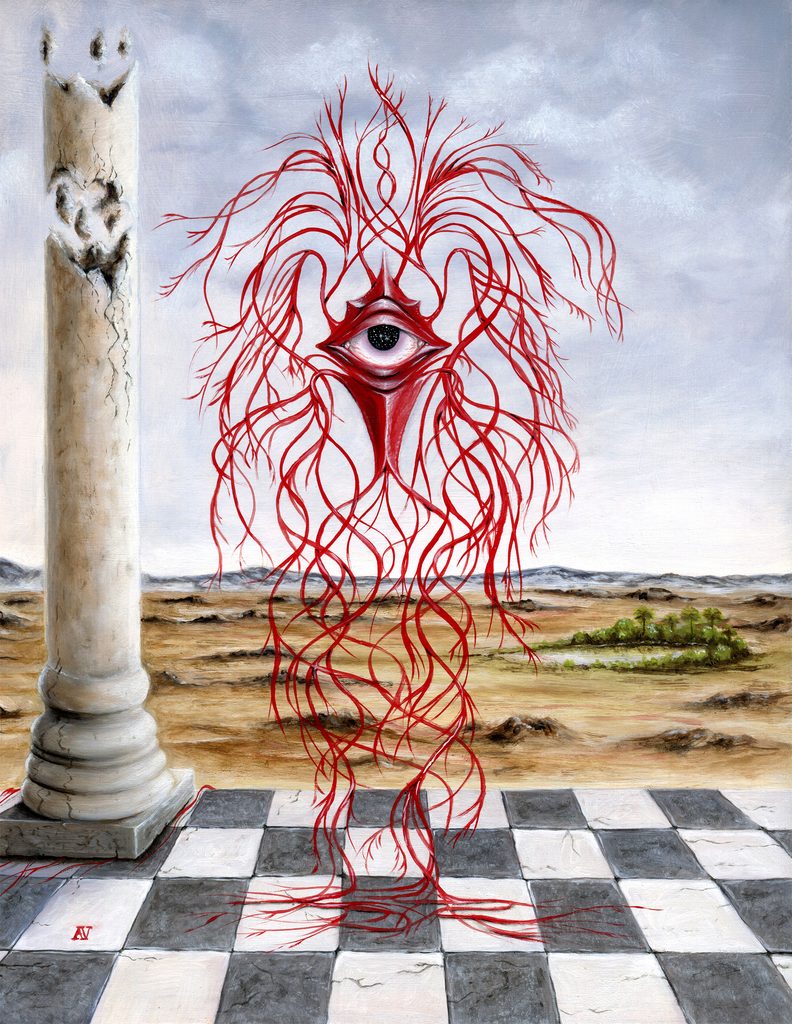
Certain forms and symbols recur across her paintings, tying them together into what feels like a single, continuous world, and she trusts her instinct completely, letting feeling guide each decision before meaning becomes clear.
Perhaps the most defining quality of her work, though, is its scale. Anna paints deliberately small, creating intimate pieces that cannot be taken in from across a room and instead ask the viewer to come close, sometimes very close. It is at that distance that her paintings come fully alive, rewarding slow, careful attention with a quiet sense of presence.
That singular vision has already earned her a place in private collections across Switzerland, the UK, and the US, along with growing recognition, including her selection here, as a finalist in our Small Works exhibition.
Now let’s hear from Anna about the universe she has built, her intuitive creative process, the symbolic language that runs through her work, and what it means for a painting to be seen up close.
Q1. Could you share a little about your background and what first led you to translate that interest into painting?
I have always been interested in what lies beyond the physical world: mythology, science fiction, occult teachings, and the possibility that reality is far more complicated than it appears. I went on to study psychology, which gave me another way of approaching these questions.
Painting has been part of my life for many years, but I struggled with the idea of becoming an artist.
My own beliefs and fears stood in the way, and it took years to finally allow myself to pursue painting seriously and only became full-time in 2025. It is the most natural way for me to give form to things I see and feel.
Q2. As a self-taught artist, what were some of the most important lessons you learned while developing your own visual language?
Being self-taught meant discovering almost everything through trial and error. It was frustrating, but it also gave me freedom. I realised that being self-taught should never become an identity that prevents one from learning. Knowledge matters, but I don’t believe in getting lost in academic rules either.
Another discovery was that an artist’s inner world is reflected not only in their subjects and ideas, but in their technique and how it develops. I am still learning to balance intuition with technical discipline. The more control I gain over the painting process, the more freedom I can give to the image itself. I find that contradiction fascinating.
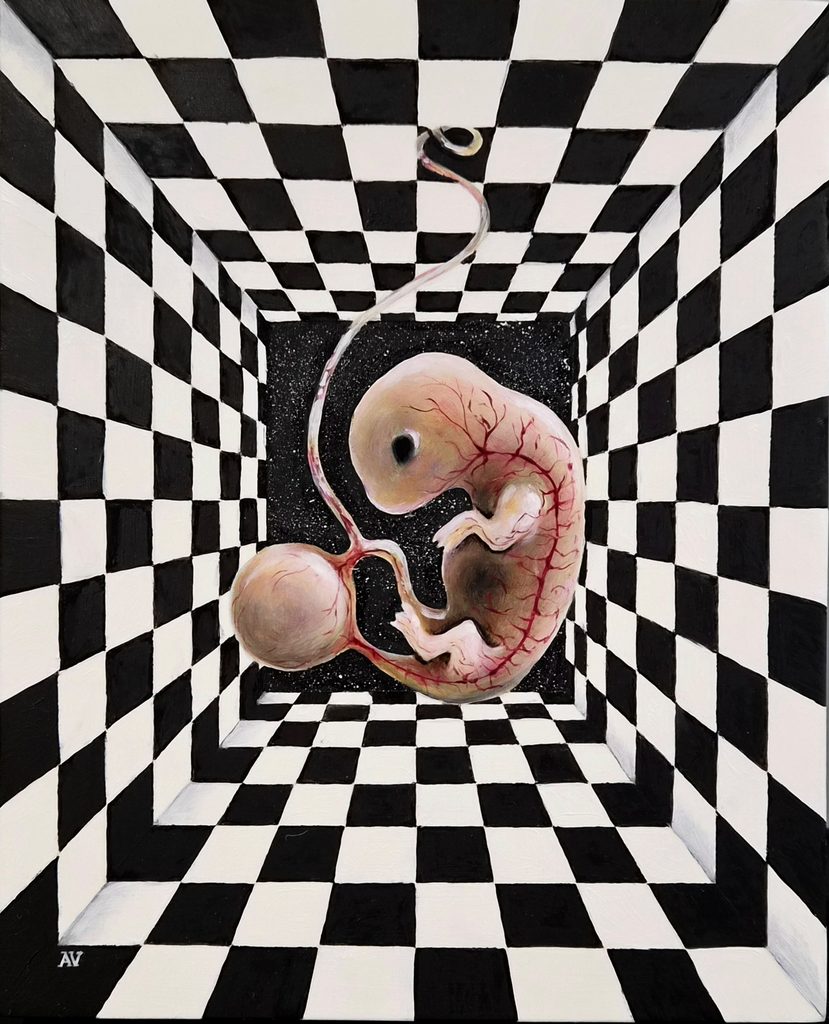
Q3. You describe your paintings as parts of a larger universe. When did you begin to recognise this connection between your works?
All my life, people have told me I am not quite of this world. So I suppose I’ve always known I have a world of my own. Painting is how I connect with it.
I began noticing certain things returning in my work. Sometimes an object would reappear years later, and I would recognise it almost like an old acquaintance. Eventually, I began to see my paintings as different places within the same universe. I don’t know its boundaries, but I certainly understand its rules.
Q4. Jungian thought and symbolism influence your practice. What draws you to symbols as a way of exploring ideas beyond words?
My background in psychology led me towards Jung, but my interest goes beyond psychological interpretation. I speak three languages, yet I believe there is one older than any of them. Symbols connect us beyond words, almost as though we share one vast consciousness.
To me, they are humanity’s first language, carrying ancient knowledge and magic. I don’t select symbols from a dictionary. They appear in my paintings, and I often recognise their connections much later. My ideas come to me as images, and I know I will spend my life exploring this.
Q5. Your paintings often begin with dreams and inner visions. How do you recognise which images are worth developing into a painting?
I have learned not to rationalise or overcomplicate this process. I rely entirely on what I feel in my body. When an image comes to me, I pay attention to my physical response. If I feel excitement, a thrill, a surge of energy, I make a sketch. If the feeling isn’t strong enough, I let it go. I don’t need to understand what my vision means. My body seems to know whether it is worth pursuing long before my mind does.
Q6. You work with oil paints on traditional wooden icon panels. What first drew you to these materials and techniques?
Orthodox iconography is part of my cultural identity. I grew up in an industrial city, and the only art you could find in almost every home were religious icons. I started with drawing and always loved fine details. When I moved to oils, I found the texture of canvas distracting. I wanted to combine the precision of drawing with oil painting, and to my surprise, that search led me back to traditional techniques, which I adapted to my needs.
To me, an icon panel is a sacred object. Working on one turns the painting process into a personal ritual, almost a sacrament. Art is my religion. It is what I worship.
Q7. In Becoming Human, you explore transformation and vulnerability. What ideas were you working through while creating this painting?
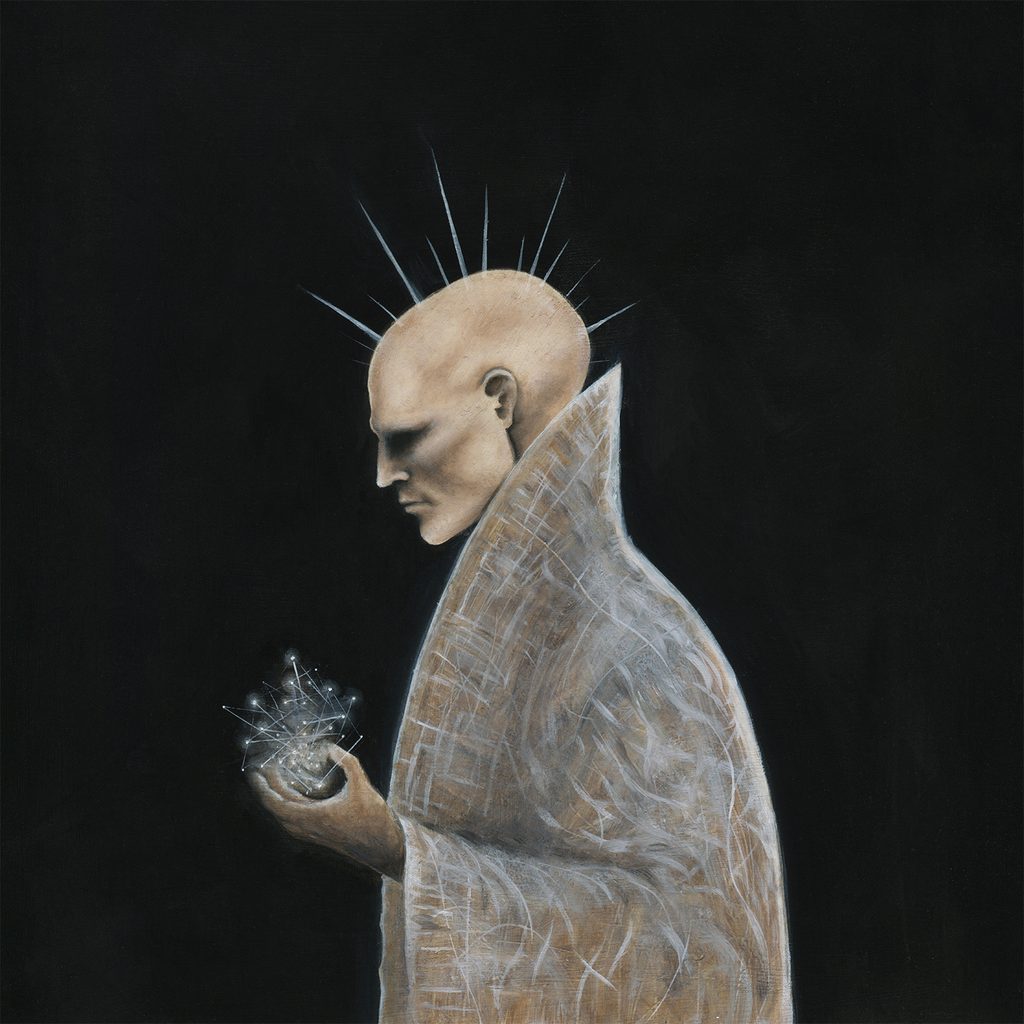
The first image that came to me was a human heart, an exposed muscle suspended in space. As I worked, it transformed into something resembling an angelic being. At the time, I was going through a difficult period in psychotherapy. My understanding of self was falling apart, along with the old structures I had relied on. I can now see how that experience entered the painting.
However, “Becoming Human” is not about trauma or pain. It is about vulnerability, flexibility and hope. What makes us truly Human, with a capital H? I believe it is our capacity to feel and remain open to life, even when everything we thought we knew about ourselves is changing.
Q8. You say that your paintings can “return the gaze.” What kind of exchange do you hope to create between the artwork and its viewer?
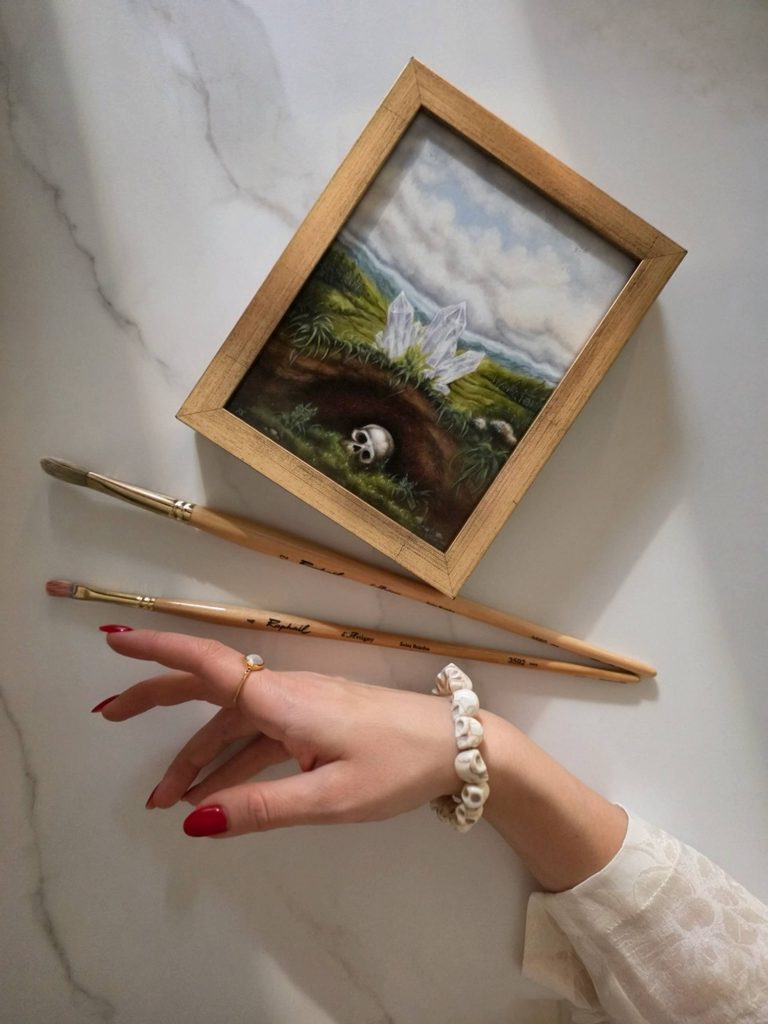
I deliberately work on a small scale. Conventionally, we are taught to look at paintings from a distance. With my work, you simply cannot see anything that way. You have to come closer, sometimes very close. Suddenly, you are almost face to face with the image.
People often tell me my paintings seem to look back at them. That is exactly what I want. I believe they have an energy and presence of their own. The viewer observes the painting, and the painting observes them too. It is an exchange. Painting is an extremely personal activity. I spend a great deal of time alone with each image, and I love the thought that someone will eventually stand just as close to it as I once did.
Q9. In a world that constantly seeks explanations, what place do mystery and ambiguity still have in art?
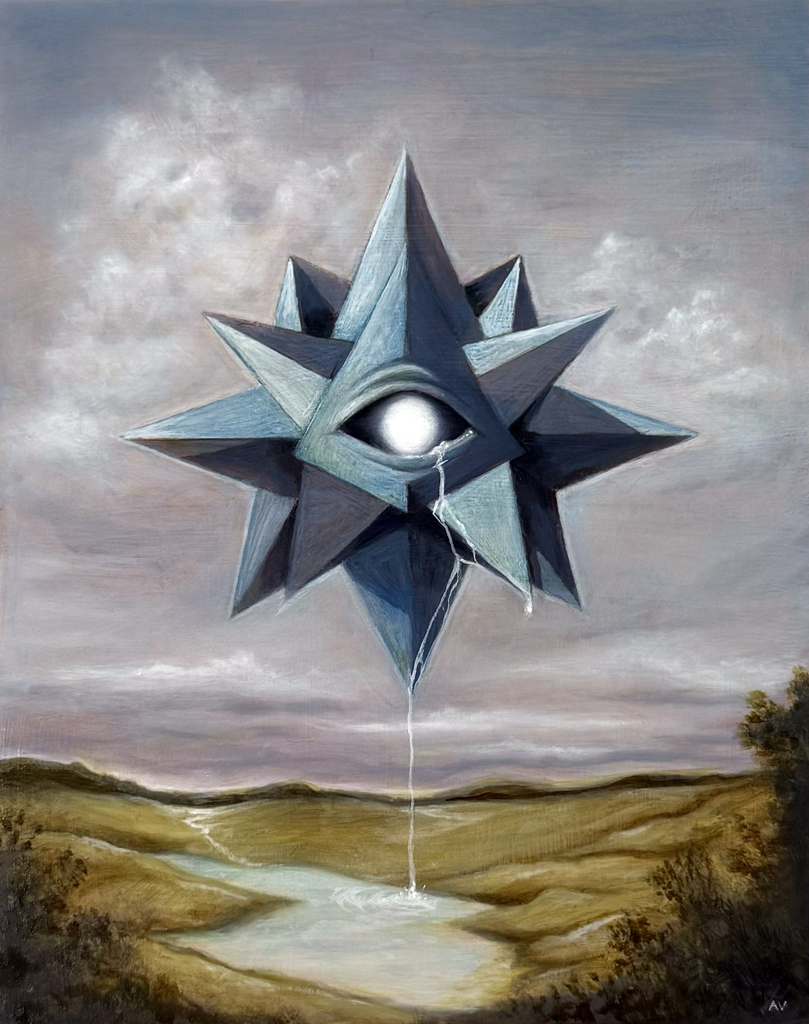
I think mystery is essential. We have become so accustomed to expecting explanations for everything that I wonder whether it limits our experience of the world. There are things we can describe, measure and analyse, and I have enormous respect for science. But some experiences resist language, even when they are very real to the person having them.
Art gives us a place to encounter those experiences without demanding an immediate answer.
I am more interested in a work that stays with someone because it raises a question they cannot quite formulate. Sometimes not understanding something is the beginning of a much more interesting relationship with it.
Q10. Developing such a personal creative universe comes with its own challenges. What has helped you stay committed to your vision?
One difficulty of developing a practice independently is having no clear guidance on whether you are moving in the right direction.There is also the temptation to make your work more accessible.
My paintings can be strange, uncomfortable or difficult to explain, and I know they won’t appeal to everyone. What helped me was, surprisingly, getting older.
Living a disciplined life, developing self-respect and taking my work seriously. By the time I devoted myself entirely to art, I was much more grounded than in my twenties. I can listen to different opinions without losing my own. I have found a balance that works for me: my artistic practice requires discipline, but my inner direction is guided by feeling. I try to remain faithful to both.
Q11. When viewers encounter your paintings for the first time, what do you hope they discover within themselves?
I believe my visions and paintings are messages meant for someone. It brings me enormous joy when a painting finds its collector. I feel it has reached the person it was meant for. Almost as if the ritual is completed. Everyone experiences something different in front of my work, and I cannot control that.
But my greatest happiness would be to help someone look into their own subconscious, to encourage introspection and perhaps an encounter with their shadow. Sometimes that means facing something uncomfortable. But I want that encounter to be gentle, and very feminine in its approach. Not a confrontation, but an invitation to discover and accept more of oneself.
As we wrapped up our conversation with Anna, we found ourselves thinking about how rarely, in a world this fast, anyone asks us to slow down and come closer, and how much we miss when we don’t.
We live in such a hurried age now, and the art world moves right along with it. Images can be made in seconds, scrolled past in less, and so much is built to catch you the instant you glance at it. Anna does the complete opposite, and that’s exactly what makes her so special.
She’ll spend weeks, sometimes months, on a single small panel, layering it patiently until the image slowly rises to the surface in its own time. In a space that so often celebrates the biggest and the boldest, she quietly asks for closeness, patience, and stillness instead, and in doing so she reminds us that slow, handmade, deeply felt work still matters, perhaps now more than ever.
There’s something else about her that we really admire. We’ve grown so used to wanting everything explained, labelled, and understood in an instant, and the art world is no different. Anna simply doesn’t play by those rules.
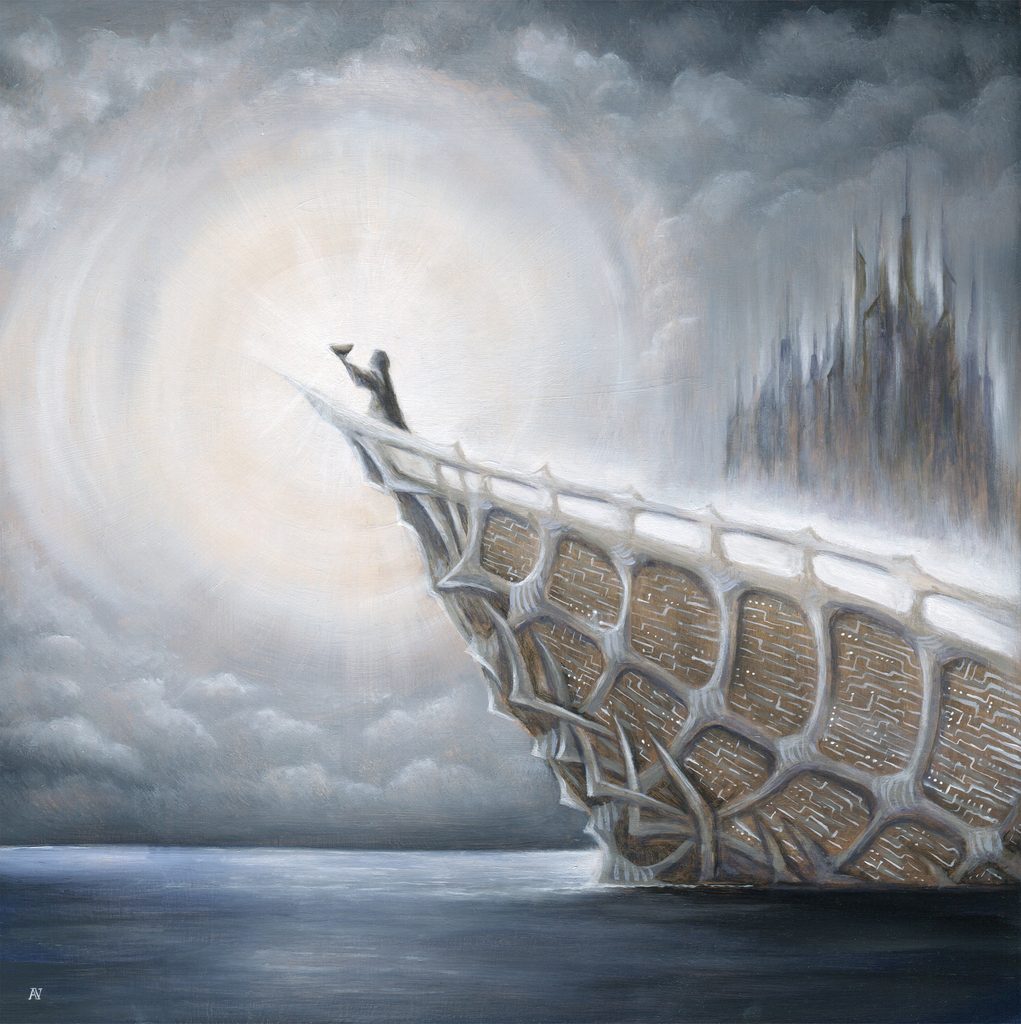
Her paintings come from dreams, from the subconscious, from a symbolic language even she only understands with time, and she has no interest in handing you a neat little meaning to tuck away. Instead, she gives you room to feel, to wonder, to sit with not-knowing, and that openness, in a world obsessed with answers, feels genuinely brave.
For art lovers and collectors, Anna’s work brings depth, mystery, and a real sense of the sacred into a space. Small, glowing, carefully layered paintings that seem to carry a presence of their own, and that reward the closest, slowest kind of looking. Each one feels less like a picture and more like a doorway, a quiet invitation to turn inward and meet something of yourself. To live with one of her pieces is to keep a small, charged window onto the unseen on your wall, one that gently looks back at you, and keeps offering more the longer you stay with it.
Follow Anna Vishenskaya through the links below and see her work for yourself.
Time is running out for the 7th edition of The Woman Artist Award. For years it has celebrated and championed women artists around the world, and the window to be part of it is closing. Any medium, any subject, from anywhere, all that matters is your work and the voice behind it. Don’t let this be the one you meant to enter.