

How Dominika Łuszcz Brings Elongated Figures, Florals & Patterns Together in Her Paintings
At Arts to Hearts Project, colour means something different to every artist, and the Colors Edition of our 101 Art Book series proved it, arriving in countless forms and feelings, from the bold to the subtle, the symbolic to the deeply personal. From all those visions, 101 artists were selected, and one of them is Dominika Łuszcz, whose colours carry the story of her own transformation.
Dominika is a Polish-American artist who blends contemporary figurative painting with the warmth of folk tradition, and her story is really one of finding her way home. Born in Poland but raised in the United States, she spent much of her life moving between two worlds, and questions of identity, belonging, and heritage have always sat close to her heart.
After twenty-six years in America, she finally moved back to Poland, though coming home turned out to be far harder than she’d expected. Bit by bit, life in the countryside, time in the garden, and a slow reconnection with nature began to quietly change both her and her paintings.
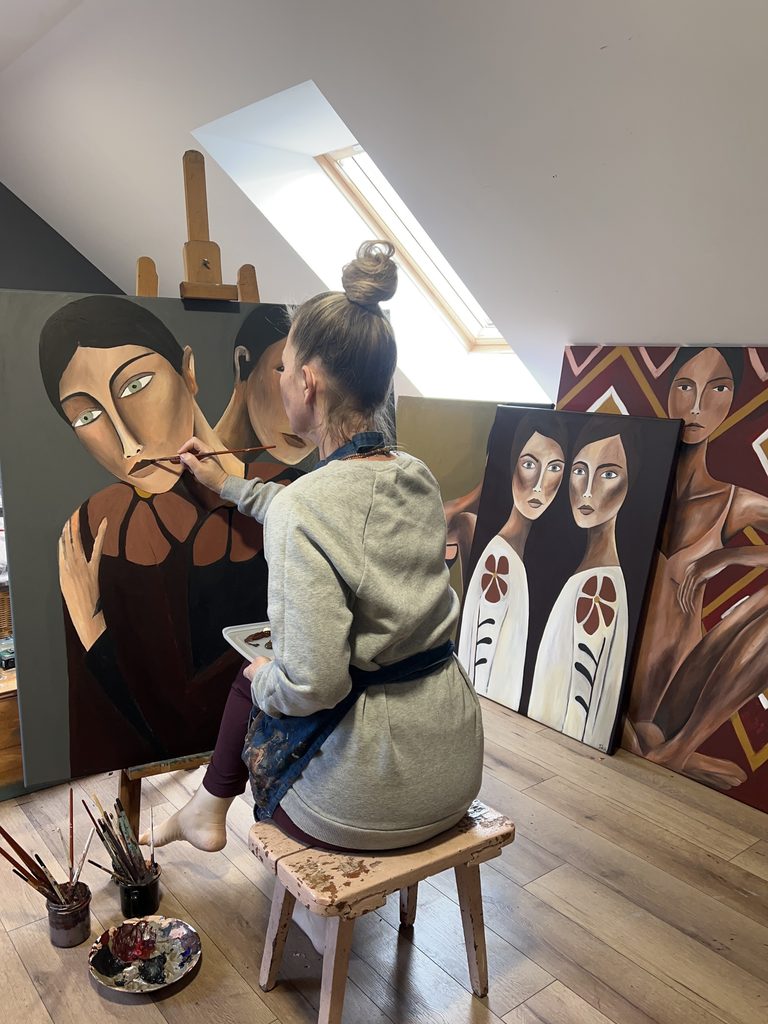
And honestly, you can see that change right there in her colours. When she first came back, she often felt like she didn’t belong, even in her own country, and her paintings from those days were much darker. Then she became a mother, started spending more time outdoors, and slowly began to feel lighter, and her work did too. More colour crept in, and with it a new sense of growth, change, and new beginnings.
As her life kept changing, so did her art, and it’s still changing today. Dominika is honest that her style and her ideas are always evolving, and lately her work has been moving firmly toward contemporary figurative painting. More and more, what sits at the heart of it is emotion, personal experience, and the inner world of women.
Folk tradition has been an important part of her journey, and she still loves traditional textiles, handmade things, and the bold patterns and colours of folk costumes from around the world. But she’s clear that these elements no longer define everything she creates. Rather than copying them, she reimagines them in her own way, letting them become one thread in her work rather than the whole story.
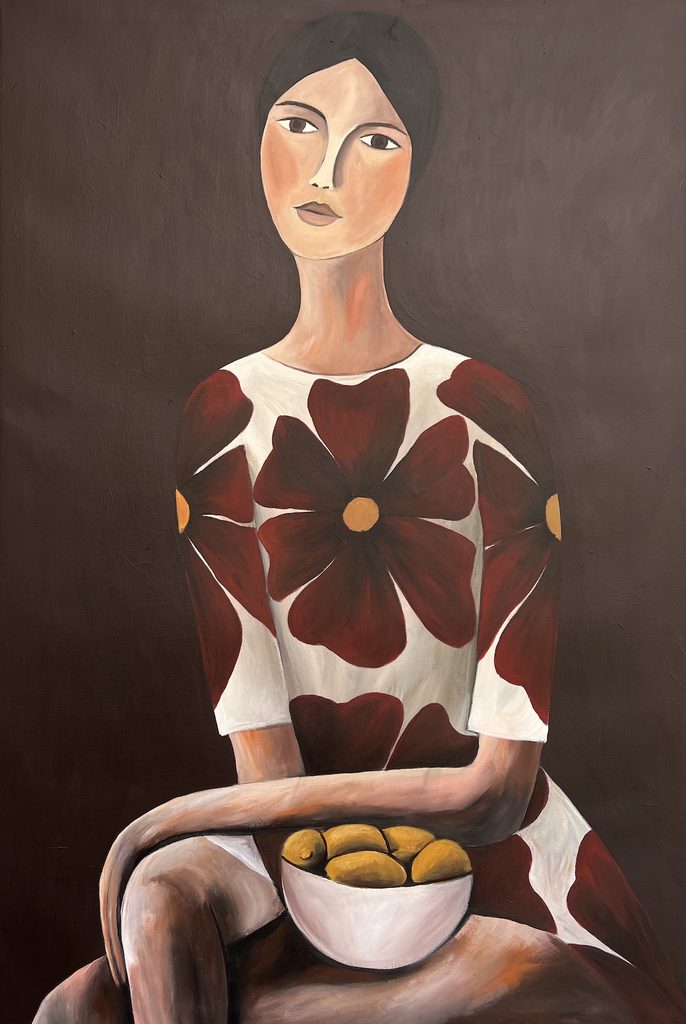
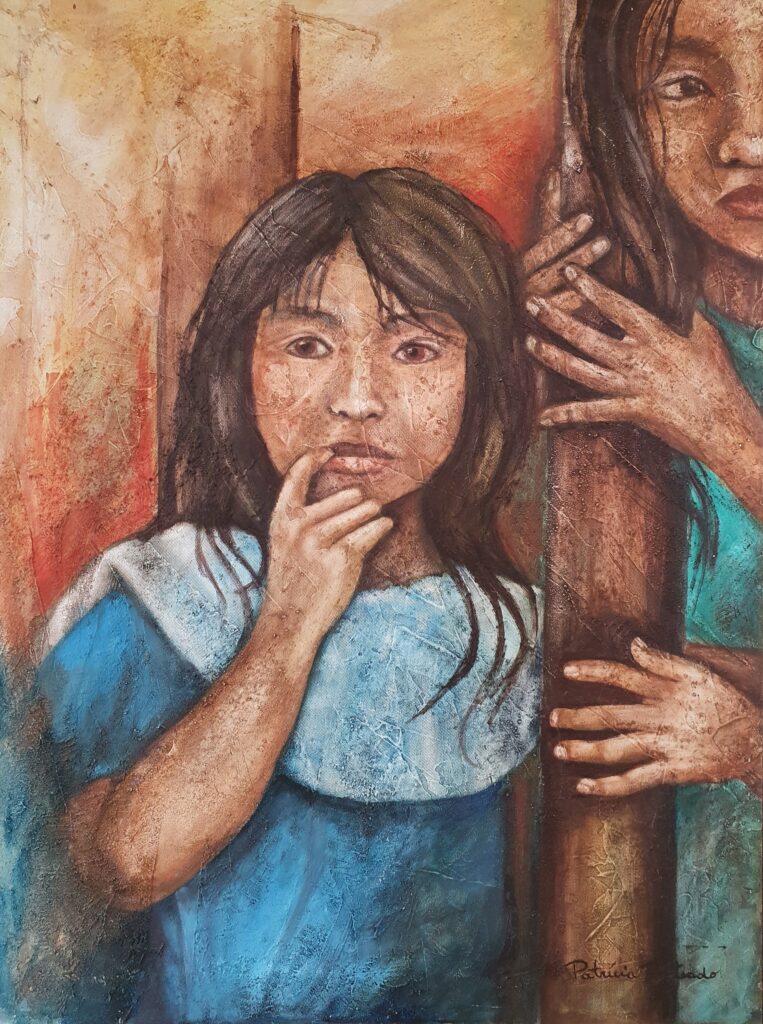
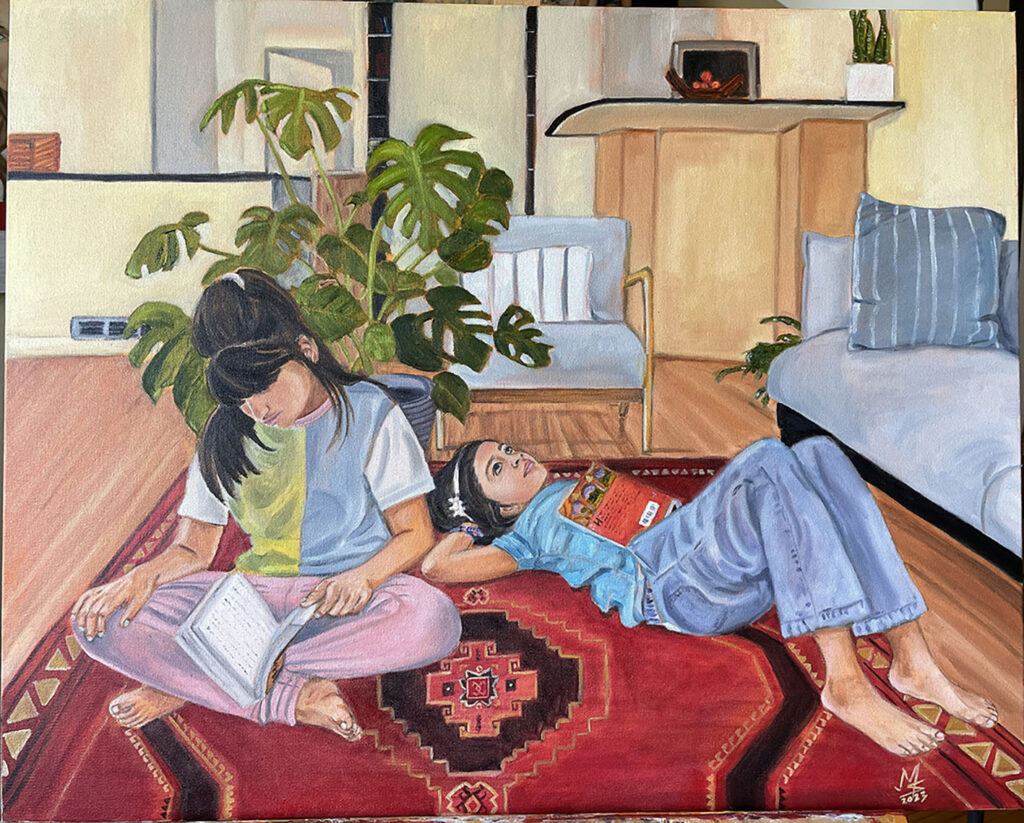
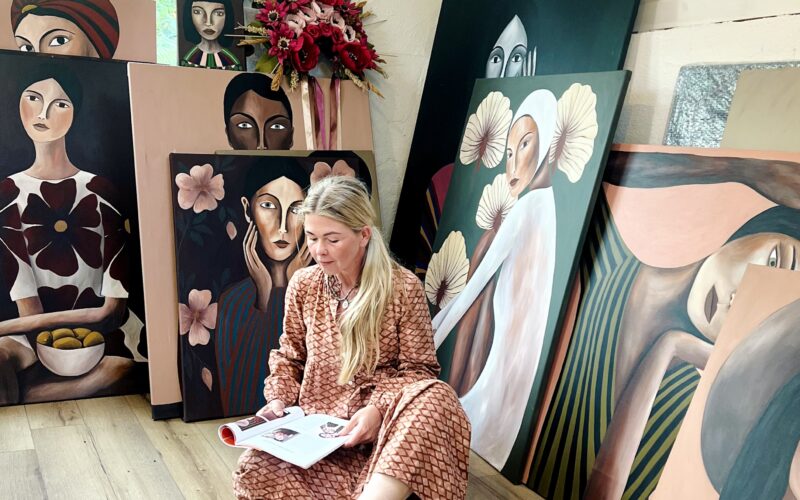
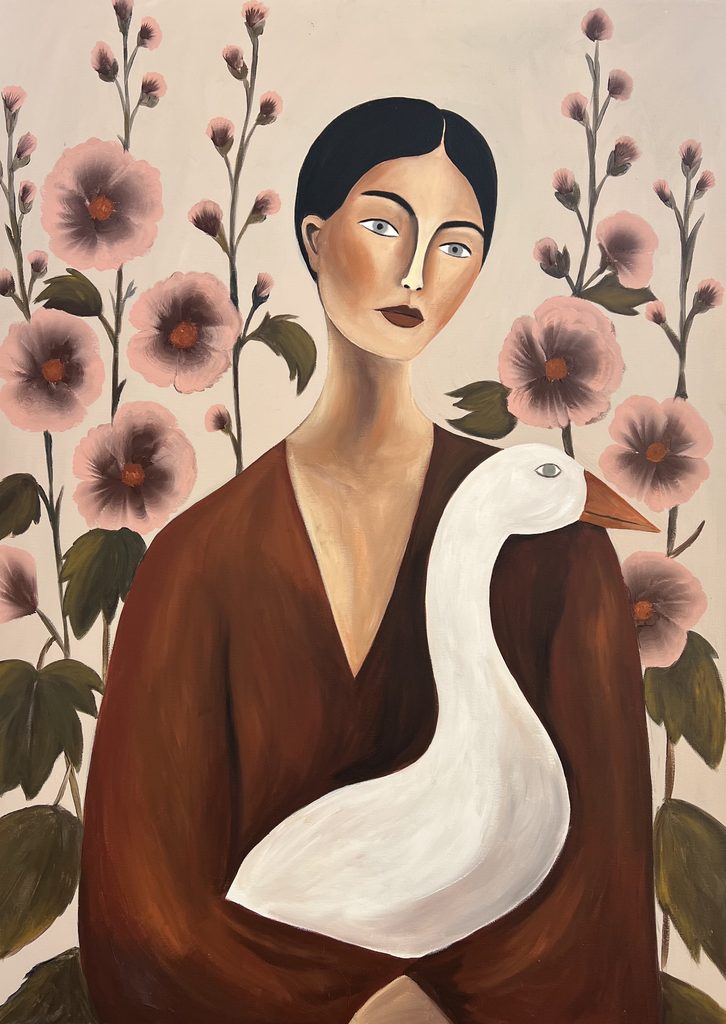
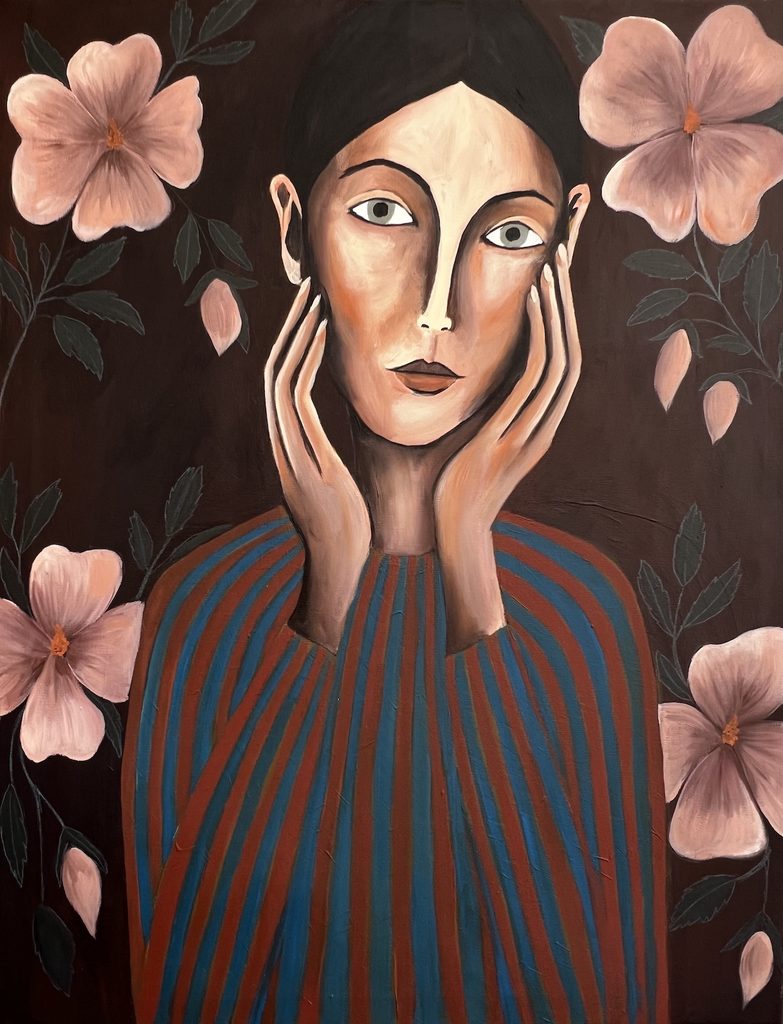
What truly draws you in now are her women. Her portraits aren’t about looking exactly like real life, and that’s exactly how she wants it. Her figures have long, elongated bodies, unusual proportions, and quiet, hard-to-read expressions, lost in thought, at peace, or looking straight at you.
She loves that you can never quite tell what they’re feeling, and she’d rather leave that for you to decide. In many ways, each one carries a piece of her own thoughts, memories, and emotions.
Her way of working is just as instinctive. She rarely plans a painting out, usually starting with a figure, a feeling, or a colour, and letting the rest unfold as she goes. Little details find their way in from the world around her, and she happily lets things shift and change as the painting grows, following her feelings rather than any fixed plan.
Now let’s hear from Dominika about the emotions and experiences behind her figures, how her life has shaped her art, the way her style keeps evolving, and what it means to live and paint between two worlds.
Q1. Could you share a little about your background and how your journey into folk art began?
I was born in Poland but grew up in the United States, where I later studied Fine Art at Columbia College Chicago, graduating in 2007. I also spent a semester studying in Florence, Italy. Having lived between different cultures for much of my life, questions of identity, belonging, and heritage have always been close to my heart. My journey into folk-inspired art wasn’t necessarily a conscious decision. I’ve always been drawn to traditional textiles, handmade objects, patterns, and the stories they carry.
I remember being fascinated by colorful fabrics and the craftsmanship of different cultures. After spending 26 years in the United States, I returned to Poland in 2016. Moving back to my homeland was more emotionally complicated than I expected.
Over time, living in the countryside, gardening, and reconnecting with nature began to transform both my life and my paintings. Today, my work brings together these experiences, combining contemporary figurative painting with elements of folk tradition, memory, and personal identity.
Q2. Traditional clothing and heritage feature in your paintings. What interests you about the stories clothing can tell?
I’ve always believed that clothing tells a story about who we are, where we come from, and sometimes even who we wish to become. Traditional garments and textiles are especially fascinating to me because they carry generations of history, craftsmanship, and cultural identity. I’m particularly drawn to the colors, patterns, and textures of folk textiles from different parts of the world. I love how something as simple as a piece of fabric can hold so much meaning.
In my paintings, clothing isn’t necessarily meant to represent one specific culture. I often reinterpret traditional patterns and combine them with contemporary silhouettes, allowing the past and present to exist together.
Q3. Flowers appear throughout your portraits. What do they represent for you?
Flowers have become a very important part of my paintings, but they weren’t always there. When I first moved back to Poland after living in the United States for so many years, I went through a difficult time. Even though I was back in my home country, I often felt like I didn’t belong. My paintings during that time were much darker. Things slowly began to change when I became a mother and started spending more time outdoors.
I began gardening, planting flowers, and enjoying the simple things about living in the countryside. Working in my garden gave me a sense of peace and happiness. As I started feeling better, my paintings changed too. More colors appeared, and so did the flowers. For me, flowers represent growth, change, and new beginnings. They also remind me of how much I’ve changed over the years. I guess you could say that as my garden started to bloom, so did I, and so did my paintings.
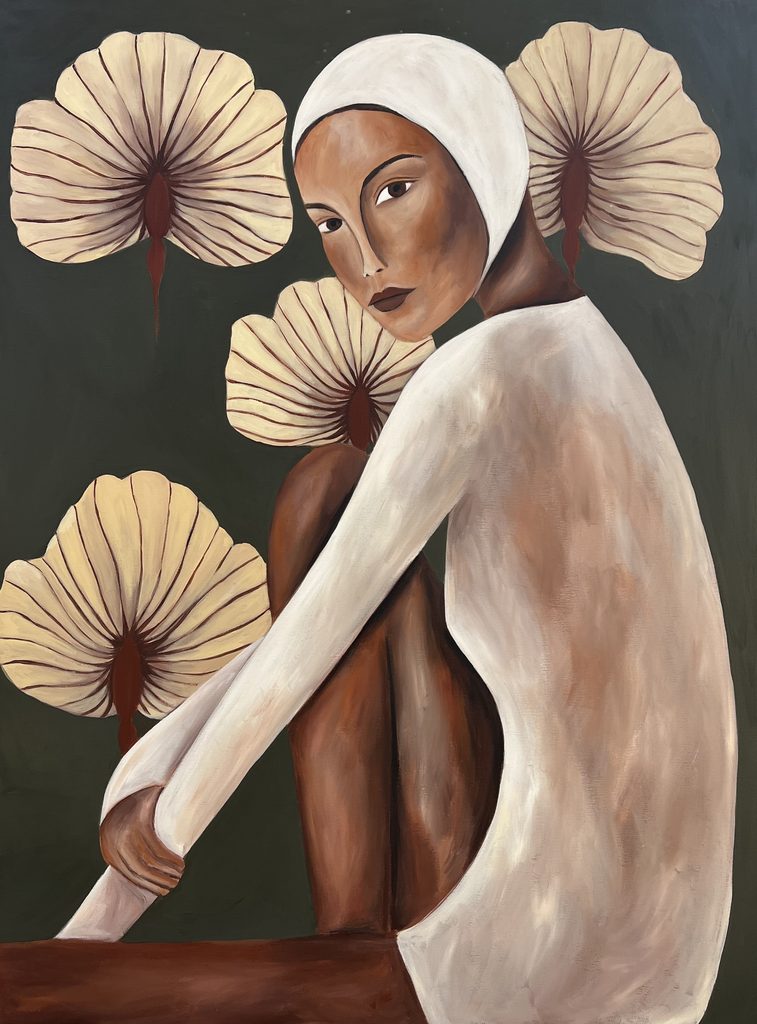
Q4. Your work combines women, birds, and folk-inspired motifs. How do you decide which symbols belong in a painting?
I don’t usually plan every detail of my paintings before I begin. Most of the time, I start with a figure, a feeling, or a color that inspires me. The rest develops naturally as I work. Birds, flowers, and other decorative elements often find their way into my paintings because they are part of the world around me. Living in the countryside, I’m surrounded by nature, and I think that naturally influences what I create. Birds, for example, can represent freedom, peace, or simply a connection to nature.
But I don’t always give every element a specific meaning. Sometimes I add something because I love its shape, color, or how it works with the composition. I also change my paintings constantly. Something I originally planned might disappear under another layer of paint. I like allowing my paintings to develop on their own rather than forcing everything to have a meaning.
Q5. What draws you to vintage textiles, and how do you reinterpret them in your work?
I’ve always loved vintage textiles, especially their colors, patterns, and the handmade details that make each piece unique. There is something beautiful about fabrics that have a history. They remind me of another time, when people put so much care into creating everyday objects. I’m particularly attracted to traditional fabrics from different cultures, especially their bold patterns and interesting color combinations. I also love the imperfections you find in handmade textiles.
To me, those little details give them character.
When I use textile-inspired patterns in my paintings, I don’t try to copy them exactly. I simplify them, change the colors, or combine different elements to make them my own.
Sometimes a pattern becomes part of a woman’s clothing, while other times it appears in the background. I enjoy mixing these traditional details with my contemporary figures. It creates a connection between the past and the present, which is something I’ve always been interested in.
Q6. Your portraits are expressive rather than strictly realistic. What does this allow you to communicate about your subjects?
I’ve never been interested in painting people exactly as they look in real life. For me, painting is more about capturing a feeling than creating a perfect likeness. The women in my paintings have elongated bodies, unusual proportions, and sometimes very simple facial expressions. I use these features because they help me express emotions in my own way.
My figures are often quiet, lost in thought, or looking directly at the viewer. I like that you can’t always tell exactly what they’re thinking or feeling. Are they sad, peaceful, lonely, or simply enjoying a moment to themselves? I want people to decide that for themselves.
In many ways, these women are different versions of me. They reflect my own thoughts, experiences, and emotions.
I think painting this way gives me more freedom. I don’t have to follow the rules of realism. I can focus on what I feel is important rather than what is anatomically correct.
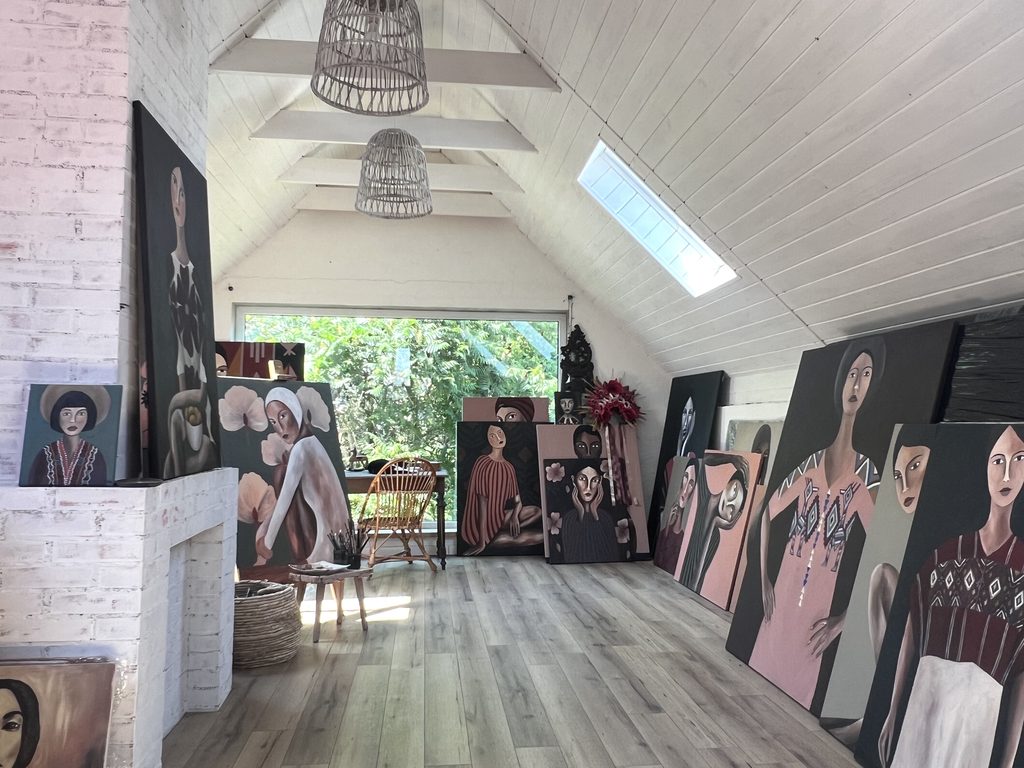
Q7. The Highlander’s Daughter was inspired by Polish highlanders and their traditions. What aspects of Polish culture do you enjoy exploring through your art?
What I love most about Polish culture is its strong connection to tradition, family, and nature. Growing up in the United States, I always felt that part of me belonged to Poland, even though I spent most of my life somewhere else. In The Highlander’s Daughter, I was inspired by the Polish highlanders, their beautiful traditional clothing, colorful patterns, and strong sense of identity.
I admire how they have managed to keep so many of their traditions alive and their great sense of community. I’m especially drawn to Polish folk costumes, floral patterns, and handmade textiles. There is so much beauty in the small details, and I enjoy bringing some of those elements into my paintings.
Since moving back to Poland, I’ve also developed a deeper appreciation for the countryside and the changing seasons. I don’t necessarily want to recreate traditional Polish folk art. I want to take pieces of that heritage and combine them with my own experiences and contemporary style.
Q8. How do you see folk art evolving within contemporary art today?
I think folk art has an important place in contemporary art because it connects us to our roots while giving artists the freedom to create something new.
For a long time, folk art was often seen as something traditional, something belonging to the past. But I think that is changing. More artists are taking inspiration from old patterns, traditional clothing, and cultural symbols and using them in completely new ways. What I find exciting is that we don’t have to follow the old rules.
We can take something familiar and give it a different meaning through our own experiences and artistic styles. In my paintings, I enjoy combining folk-inspired details with contemporary female figures. I don’t see myself as a traditional folk artist, but rather as a contemporary artist who finds inspiration in folk traditions. I believe folk art will continue to grow because people are always looking for ways to connect with their history and identity.
Q9. How has selling your work online influenced how you present your art and connect with collectors?
Selling my work online has taught me that being an artist today involves much more than just painting. I have to think about photography, presentation, social media, and how to share my work with people who may never see it in person. One of the things I enjoy most is being able to connect with collectors from different countries. Living in a small village in Poland, I find it amazing that someone on the other side of the world can discover my paintings and feel connected to them.
I’ve also learned that people are interested in more than just the finished painting. They enjoy seeing the process, the layers of paint, the changes I make, and the stories behind my work. Of course, online selling has its challenges. It takes time and effort, and sometimes I feel like I’m spending more time promoting my art than creating it. But I appreciate the independence it gives me and the opportunities to reach people around the world.
Q10. What opportunities and challenges have you found in building an audience online?
One of the best things about online platforms is that they allow me to share my paintings with people all over the world. I live in a small village in Poland, so without the internet, reaching international collectors and galleries would be much more difficult.
Social media has helped me connect with other artists, discover exhibition opportunities, and introduce my work to people who might never have seen it otherwise.
I’ve had opportunities to exhibit internationally, and I think having an online presence has become an important part of being an independent artist.
Q11. What do you think draws collectors to folk-inspired artwork?
I think collectors are looking for something that feels special and personal. Of course, colors, patterns, and the overall appearance of a painting are important, but I believe people also want to feel a connection to the artwork.
Folk-inspired art often carries a sense of history, tradition, and identity. Even if someone doesn’t know much about a particular culture, they can still connect with the emotions behind a painting.
Q12. As an independent artist, how do you balance creative freedom with the practical side of selling your work?
I think this is one of the hardest parts of being an independent artist. When I paint, I don’t think about what will sell or what people might want to buy. I paint what I feel, and I want to keep that freedom. But being an artist today also means running a business. There are materials to buy, exhibitions to organize, paintings to ship, and a lot of time spent promoting my work.
Sometimes I feel like I spend more time answering emails and managing social media than actually painting. Pricing is especially difficult because how do you put a price on something that carries so much of yourself? I try to keep the creative and business sides separate.
When I’m painting, I want to feel free to experiment, make mistakes, and change my mind. Of course, selling my work is important, but I never want the market to decide what I create next.
Q13. What would you like viewers to take away from your work about heritage, identity, and contemporary life?
I would like people to understand that our identity is shaped by many things: where we come from, where we’ve lived, the people we’ve met, and the experiences we’ve had along the way. Having spent much of my life between Poland and the United States, I’ve often felt caught between two worlds. For a long time, I wasn’t sure where I truly belonged. Those feelings have influenced my paintings more than I initially realized.
My work brings together different parts of my life. Traditional patterns and folk-inspired details connect me to the past, while my female figures reflect my thoughts, emotions, and experiences today. But I don’t want viewers to feel that they need to know my personal story to understand my paintings. I hope they find something of themselves in the women I paint.
For me, art is about connection. We all come from different places and have different stories, but many of the feelings we experience are the same.
After our conversation with Dominika, we found ourselves thinking about how much of who we are is shaped by the lives we’ve lived, and how honestly that can surface in an artist’s work.
It made us think about how the art world treats change. So often, artists are pushed to find one recognisable style and repeat it, to become a brand that collectors and galleries can instantly identify. Dominika quietly resists all of that. Folk tradition shaped her and gave her a foundation, but she has never let it box her in, and her work keeps growing and moving, steadily toward a more contemporary, emotional, figurative language that is entirely her own.
In a culture that rewards consistency and easy labels, choosing to keep evolving, to follow where her feelings and experiences lead rather than staying where it’s comfortable, feels like a quiet act of courage, and it’s exactly what keeps her work alive.
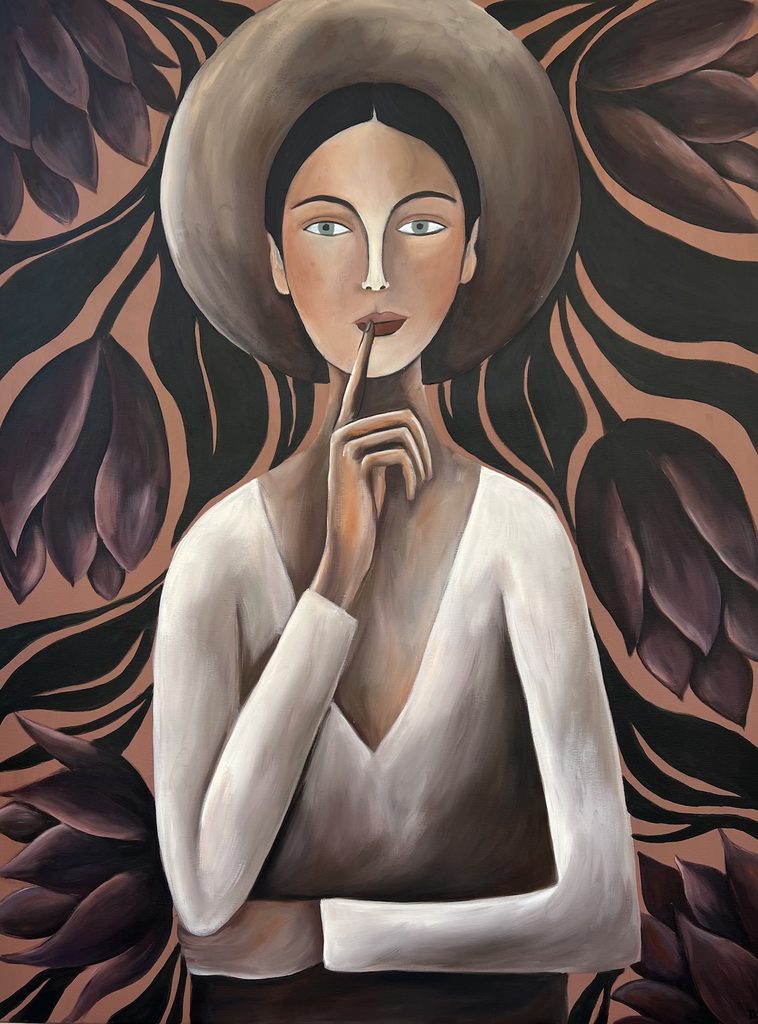
There is something worth noticing, too, in how little her paintings explain themselves. We live in an art world, and a wider culture, that wants everything defined, captioned, and instantly understood, where even a painting is often reduced to a tidy concept. Dominika’s women do the opposite.
They are present but unreadable, expressive yet open, leaving space for each viewer to bring their own story. In a time that races toward certainty and quick answers, work that trusts you to feel your own way into it, and to sit with a little mystery, feels genuinely rare.
For art lovers and collectors, Dominika’s work brings warmth, depth, and real emotion into a space. Expressive, deeply personal paintings of women who feel at once timeless and completely contemporary, and who never give all of themselves away at once. People tend to find a little of their own story in them, whatever their background. To live with one of her pieces is to keep a quiet, evolving reflection of emotion, memory, and identity on your wall, one that you can return to again and again.
Follow Dominika Łuszcz through the links below and see her work for yourself.
Calling all women artists, your moment is here. Women artist award returns for its 7th edition, and submissions are now open.
For six editions, this series has done one thing with real heart: shine a light on women artists around the world and give rising voices the recognition they’ve earned. Now we’re opening the doors again, and we can’t wait to see what you bring.
It doesn’t matter your medium, your subject, or how long you’ve been creating, painter, photographer, sculptor, maker of all kinds, from anywhere in the world. All that matters is your work, and the voice behind it.
If you’ve been waiting for a push to finally share your work, consider this it. This could be your edition.