
This Artist Turns Realistic Figures Into Expressive Mixed-Media Works │ Jean Pederson
At Arts to Hearts Project, our 100 Emerging Artworks book is our yearly celebration of the single, standout piece. Each year, through a global call, we gather a hundred remarkable works by artists from all over the world, giving each one a full two-page spread of its own. Among the artists in this year’s edition is Jean Pederson, and the moment we saw her work, we knew it belonged here.
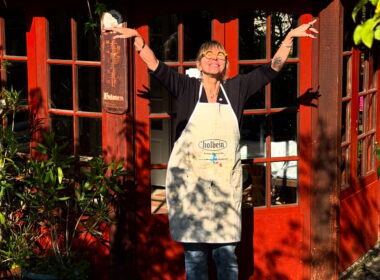
Jean is one of the most accomplished artists in this collection. A Canadian painter, author, and teacher based in Calgary, she has spent more than two decades building a remarkable career. Her work has been exhibited from London to Stockholm to New York, she has written several books on painting, she has juried major international exhibitions, and her paintings even hold a place in the Royal Collection at Windsor Castle.
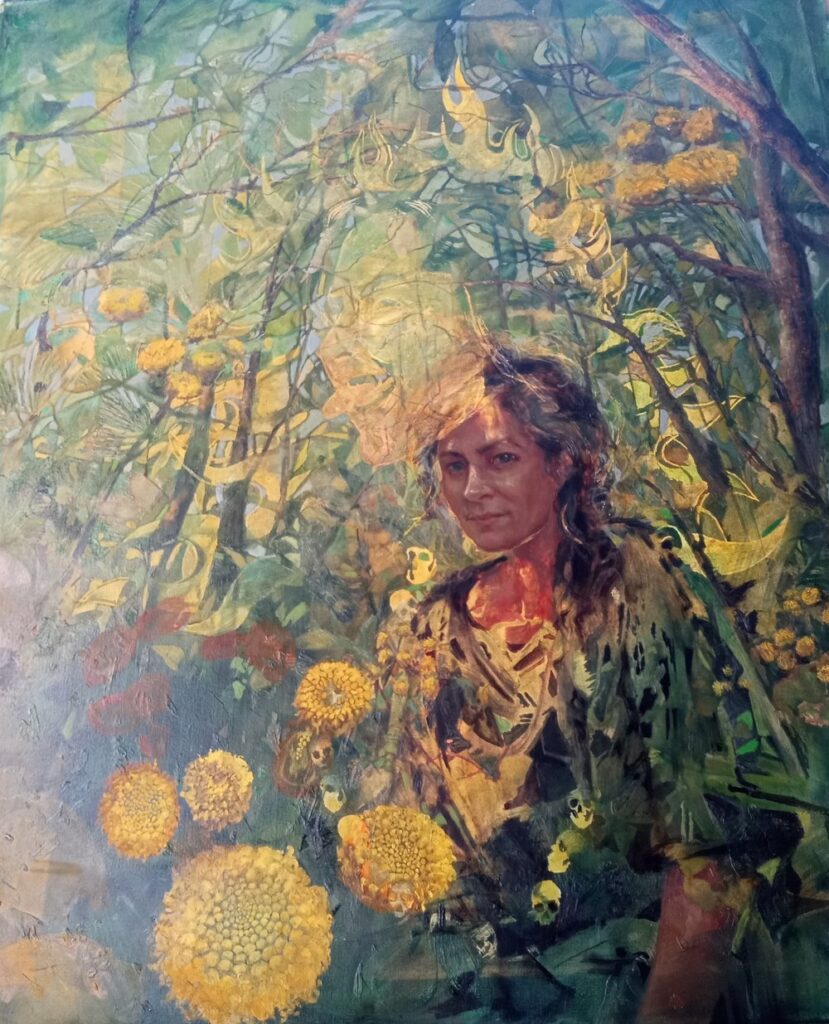
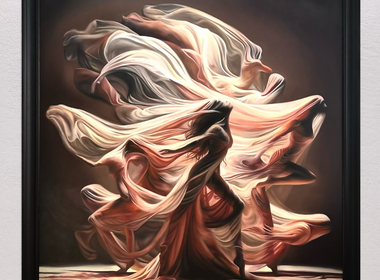
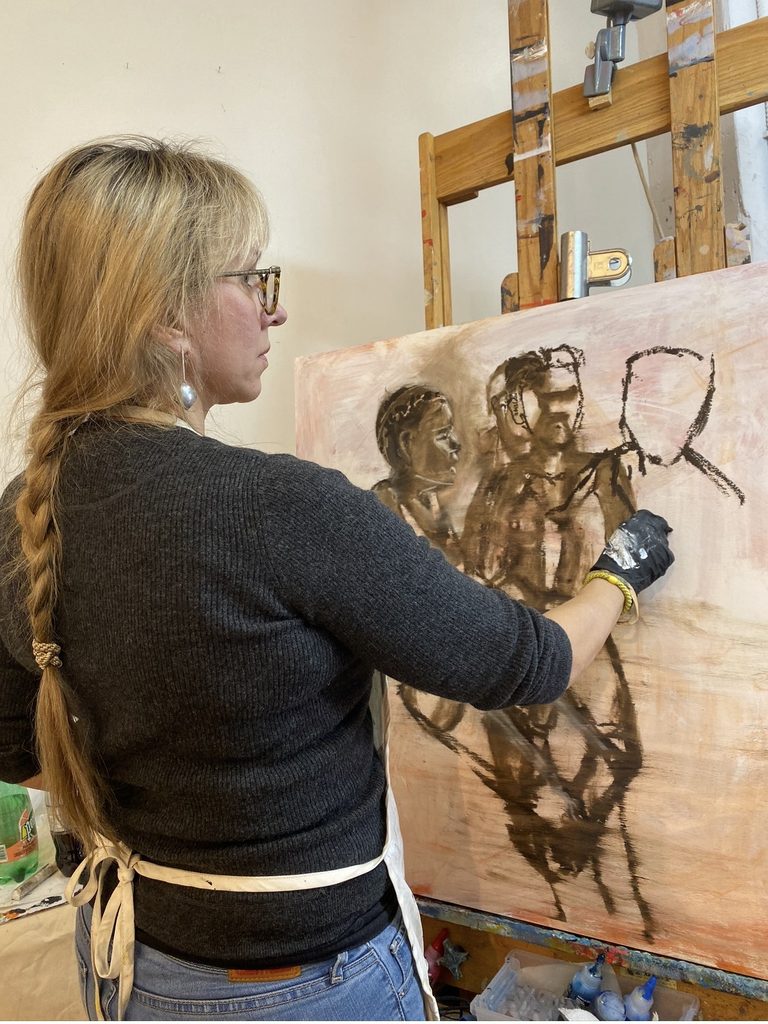
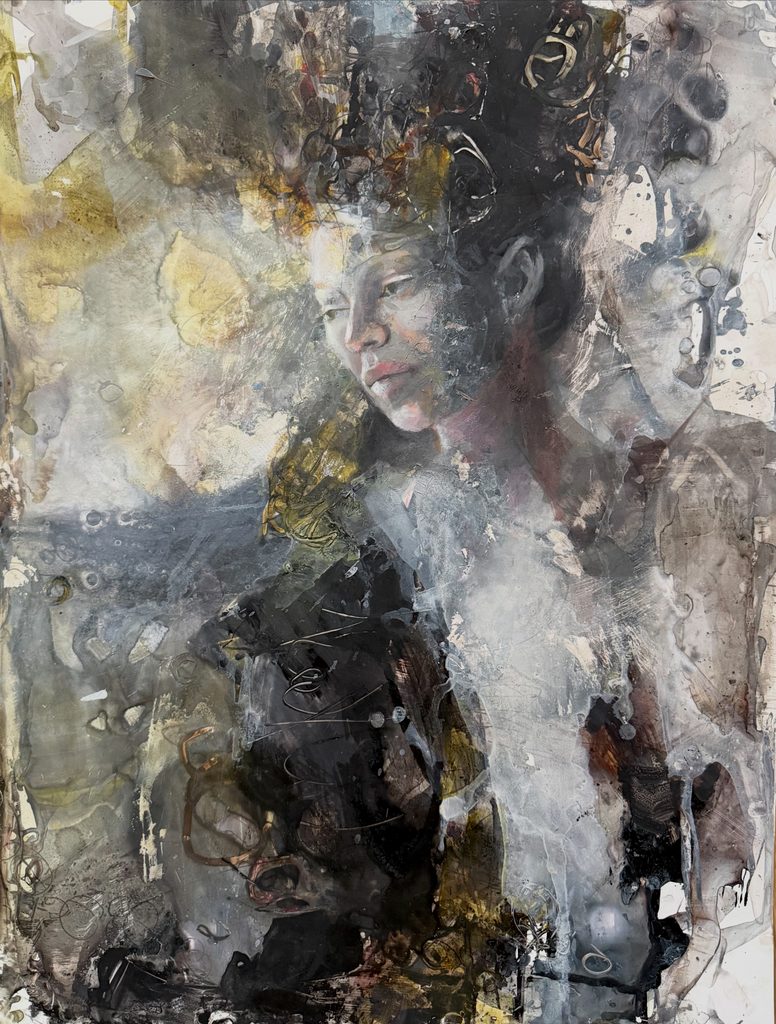
She is best known for combining expressive realism with contemporary mixed media, and her paintings live in the tension between two forces: control and discovery. She begins with a strong foundation of drawing and careful observation, so there is always a real, recognisable figure at the heart of the work.
But then she starts to layer, adding different materials, surfaces, textures, and marks, and letting the image change in ways she could not have planned. She is less interested in controlling every outcome than in leaving room for accidents, for the evidence of the process, and for the unexpected mark that suddenly gives a painting its energy.
The human figure has always held her attention, and not simply for its likeness. What she is really after is the emotional and psychological presence of the person in front of her, the whole story suggested by a small shift in expression, the way someone holds their body, the relationship between a figure and its surroundings. No two people, and no two encounters, are ever the same.
The figure is familiar to all of us, and yet each one carries its own history, vulnerability, and strength. Jean is always reaching for the moment when careful observation becomes something more: connection, between herself, the subject, the materials, and whoever is looking.
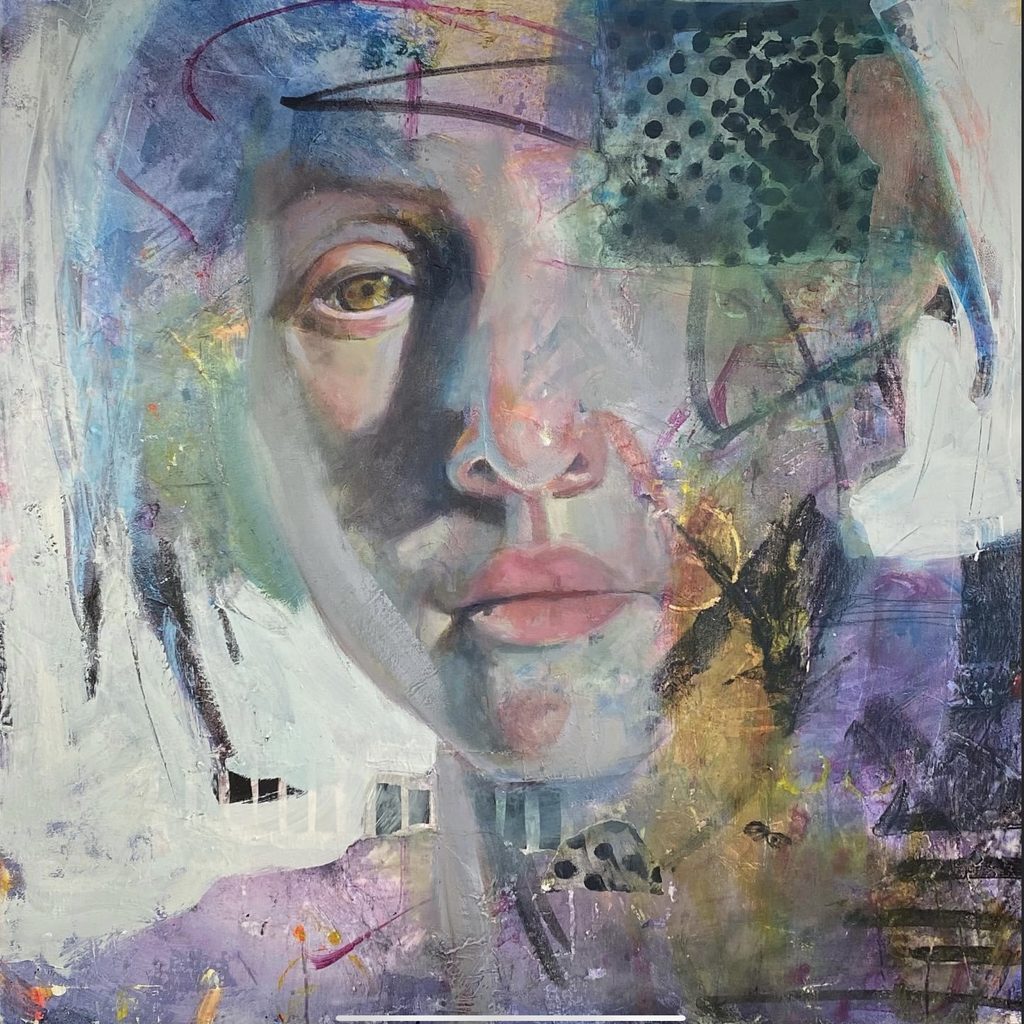
Jean did not arrive here in a straight line, either. Becoming an artist was never encouraged, her parents, shaped by the Depression, understandably wanted her to have a secure career, and she found her way back to art slowly, through education, eventually returning to teach at the very high school she had once attended. From there, her own work gradually grew beyond the classroom and out into the world.
Now let’s hear from Jean about expressive realism and mixed media, the endless pull of the human figure, what keeps her curious after all these years, and the wisdom she has gathered across a remarkable career.
Q1. Can you tell us about your background and how art gradually became a central part of your life?
I was always good at drawing as a child, and I also scored well in areas such as abstract and mechanical reasoning. Looking back, I think those abilities were early indications of how my mind naturally worked—I was curious about how things fit together, how I could interpret what I saw, and how I could express ideas visually.
However, becoming an artist was not something I was encouraged to pursue. My parents had grown up during the Depression, and their priority was understandably that I have a secure career and a “good job.” Art was something I loved, but it wasn’t initially viewed as a practical profession.
I found my way back to it through education. I took fine art electives while completing both of my degrees, and eventually I returned to the very high school I had attended—this time as an art teacher. Teaching gave me the opportunity to explore my own artistic voice while encouraging young people to discover theirs.
Over time, my own work began to grow beyond the classroom. I became involved in local and international exhibitions, and as my career developed, I was invited to write articles and books, teach and share my ideas, and adjudicate prominent exhibitions. What began as something I was naturally drawn to gradually became a significant part of my professional life.
I don’t think there was one particular moment when I decided to become an artist. It was more of an evolution, a realization that creating was something I needed to do. That curiosity still drives me today. I continue to experiment with different materials, scale, and processes, taking risks and searching for that authentic moment of connection between myself, the subject, and ultimately, the viewer.
For me, being an artist has never been about arriving at a final destination; it is about remaining curious, open, and willing to discover what comes next.
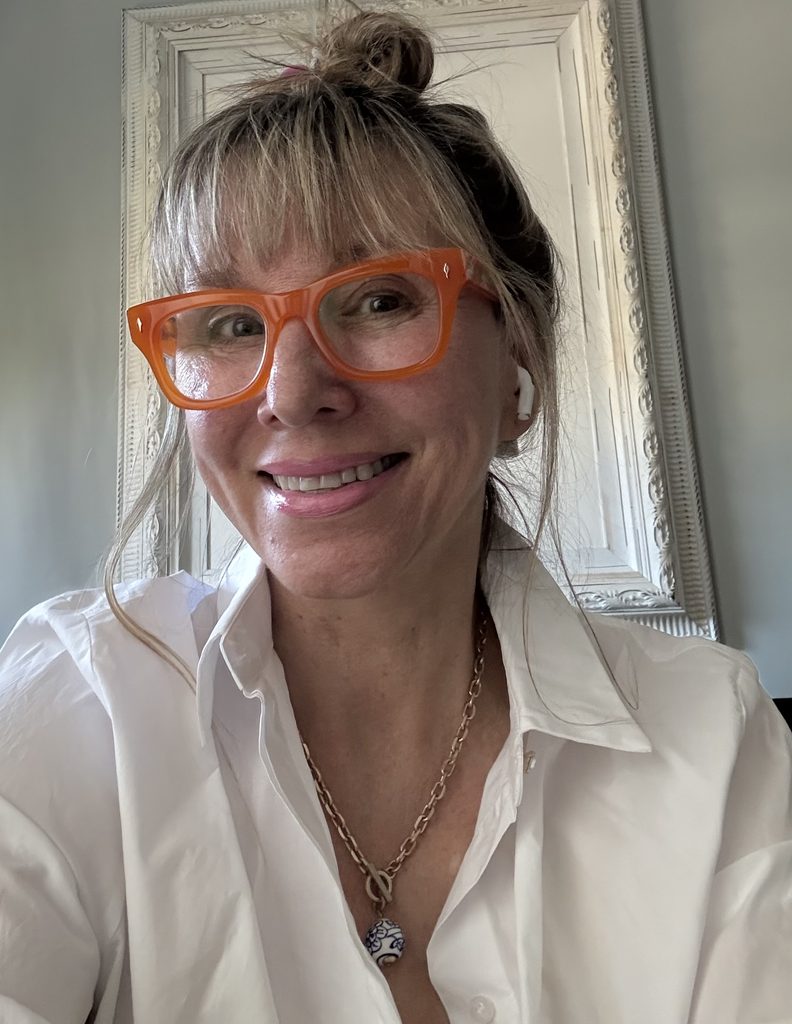
Q2. Your work brings together expressive realism and contemporary mixed media. How has this approach evolved over time?
My approach has developed gradually through a willingness to experiment and a refusal to feel confined by one way of working. I began with a strong foundation in drawing and observation, so realism has always been an important part of my visual language. At the same time, I’ve always been interested in what happens when an image is pushed beyond simply representing what we see.
Over the years, I began incorporating different materials, surfaces, textures, marks, and processes into my paintings. Mixed media became a natural extension of that curiosity. I enjoy the tension between the recognizable and the unexpected—the point where a realistic image can begin to reveal something more emotional, intuitive, or abstract.
I think my work has become increasingly expressive because I’m less interested in controlling every outcome. I want to leave room for accidents, discoveries, and the evidence of the process itself.
Materials can suggest directions that I may not have anticipated, and sometimes the most exciting parts of a painting happen when I allow the work to lead me somewhere unexpected.
That sense of exploration has remained constant throughout my career. I’m always searching for new materials, scale, processes, and ways of seeing. For me, taking those risks is part of being an artist. Ultimately, I’m looking for that elusive moment when everything comes together—the connection between myself, the subject, the materials, and the viewer.
Q3. You are particularly known for your portraits and figurative work. What continues to draw you to the human figure?
The human figure continues to draw me because it offers an endless combination within the familiarity.
I began with a strong foundation in drawing and observation, and the figure remains one of the richest subjects through which to explore.
A face, a gesture, or a posture can communicate something deeply personal, while still leaving room for ambiguity and interpretation.
I’m becoming more interested in the emotional and psychological presence of the person being portrayed. Small shifts in expression, the way someone holds their body, or the relationship between the figure and its surroundings can suggest an entire story. Even when a painting begins with careful observation, I’m interested in pushing it beyond simple representation toward something more intuitive and expressive.
The figure also gives me a way to explore the tension between control and discovery. I may begin with drawing, proportion, and structure, but as I introduce different materials, surfaces, textures, and marks, the image can begin to change. I enjoy the point where the recognizable figure remains present, yet the painting also reveals something unexpected—an emotional, abstract, or material dimension.
What continues to hold my attention is that no two people, and no two encounters with the figure, are ever the same. The human form is familiar to all of us, but it carries individual history, vulnerability, strength, and presence. Through portraiture and figurative work, I’m always searching for that moment when observation becomes connection—between myself, the subject, the materials, and the viewer.
Q4. How does working with different materials and techniques expand what you can express in a figurative painting?
Experimentation allows me to move beyond physical likeness and discover the emotional and psychological presence of the person being portrayed. A face, a gesture, or a posture can communicate something deeply personal, while still leaving room for ambiguity and interpretation. Small shifts in expression, the way someone holds their body, or the relationship between the figure and its surroundings can suggest an entire story.
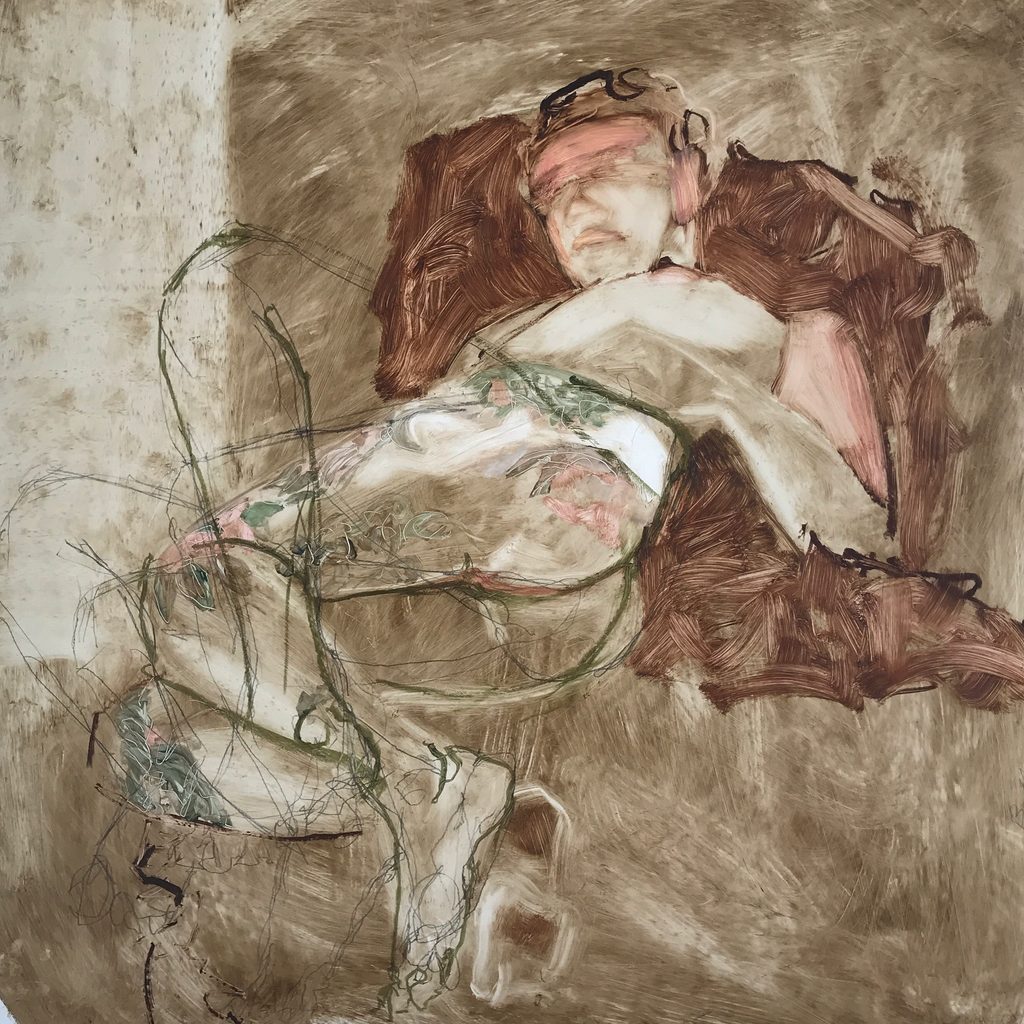
Working with a range of materials and techniques also creates a productive tension between control and discovery. I may begin with drawing, proportion, and structure, but as I introduce different surfaces, textures, marks, and processes, the image can begin to change in ways I could not have anticipated. A single medium might allow me to develop a particular quality, but mixed media gives me the opportunity to layer contrasting experiences—precision and spontaneity, solidity and fragility, clarity and uncertainty.
I’m especially interested in the point where the recognizable figure remains present, yet the work begins to reveal something beyond simple representation. Materials can introduce an emotional, abstract, or physical dimension that deepens the image and opens it to multiple interpretations. Sometimes an unexpected mark or surface becomes the element that gives the work its energy.
The human form is familiar to all of us, but it carries individual history, vulnerability, strength, and presence. Through experimentation, I can respond to those complexities in ways that a single medium might not allow. I’m always searching for that moment when observation becomes connection for the next brushstroke.
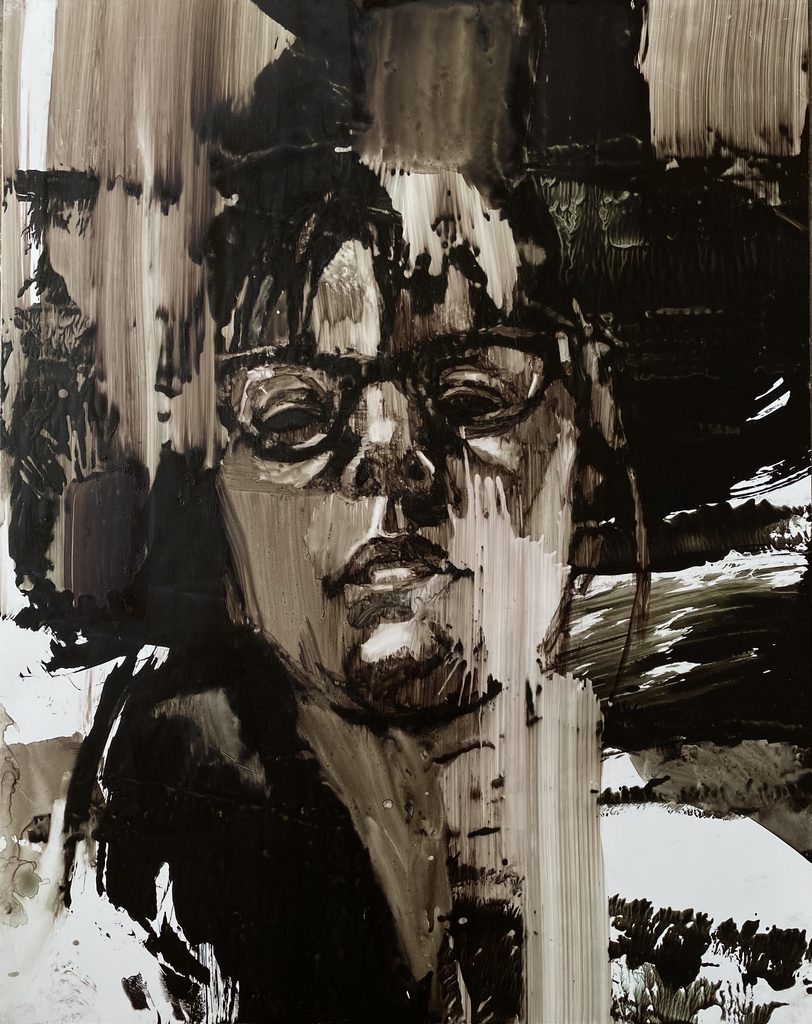
Q5. You encourage artists to experiment through your workshops and books. How has teaching influenced your own studio practice?
Teaching has reinforced the importance of experimentation in my own studio practice. When I encourage artists to take risks, work through uncertainty, and remain open to unexpected results, I’m reminded to apply those same principles to my own work. Teaching has made me more conscious of how easily artists—including myself—can become attached to familiar methods or predictable outcomes.
Experimentation allows me to move beyond physical likeness and discover the emotional and psychological presence of the person being portrayed. The relationship between the figure and its surroundings can suggest an entire story.
Working with a range of materials and techniques creates a productive tension between control and discovery. I may begin with drawing and structure, but as I introduce different surfaces, textures, marks, and processes, the image can change in ways I could not have anticipated. A single medium might allow me to develop a particular quality, but mixed media gives me the opportunity to layer contrasting experiences—precision and spontaneity, solidity and fragility, clarity and uncertainty.
Teaching has also reminded me that uncertainty is not necessarily a problem to solve. It can be an important part of the process. In my studio, I try to leave room for accidents, revisions, and discoveries that challenge my original intentions. Sometimes an unexpected mark or surface becomes the element that gives the work its energy, and I’ve learned to recognize those moments rather than immediately correct them.
I’m especially interested in the point where the recognizable figure remains present, yet the work begins to reveal something beyond simple representation. Materials can introduce an emotional, abstract, or physical dimension that deepens the image and opens it to multiple interpretations.
The human form is familiar to all of us, but it carries individual history, vulnerability, strength, and presence. Teaching has encouraged me to remain curious, take risks, and trust the process—both in the classroom and in the studio. I’m always searching for that moment when observation becomes connection: between myself, the subject, the materials, and the viewer.
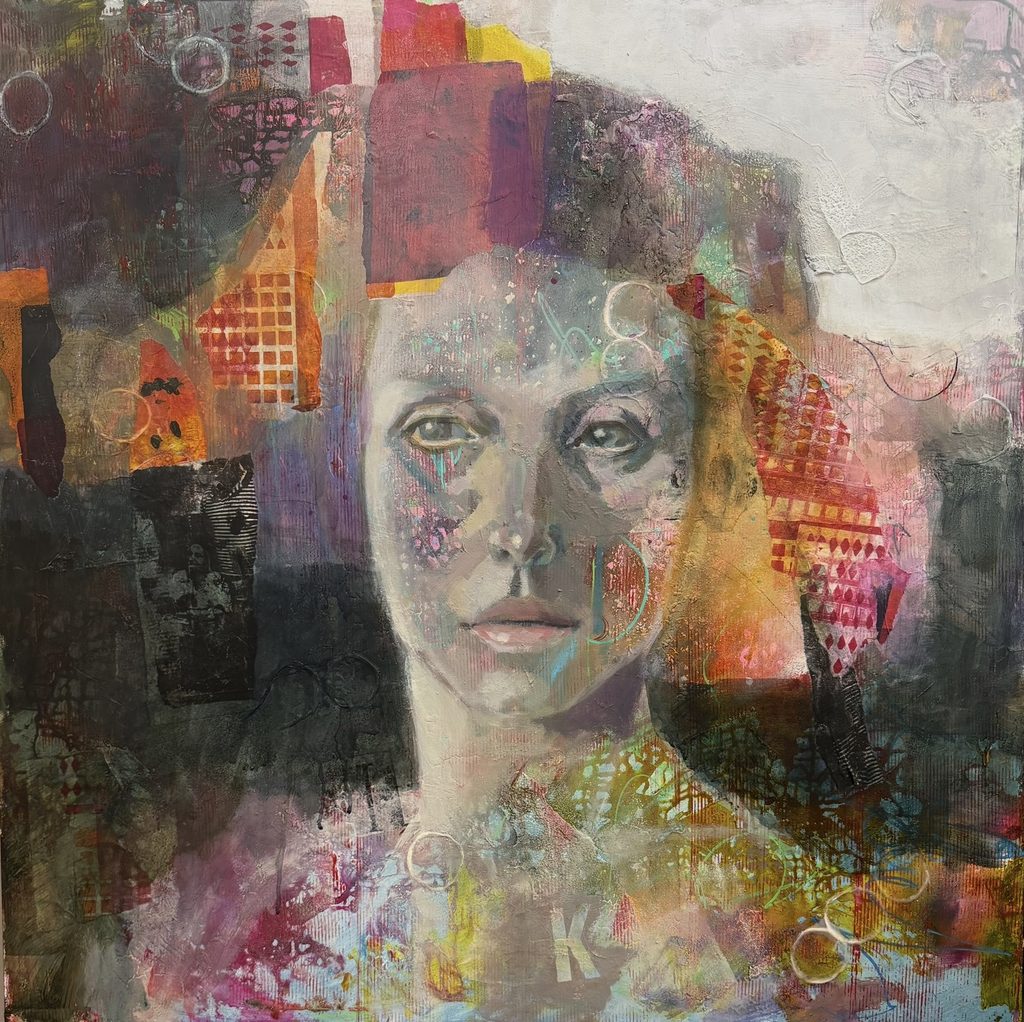
Q6. After years of painting, teaching, exhibiting, and writing, what keeps you creatively challenged?
I continually ask myself, “What if?” What if I approach the subject differently? What if I change the scale, the materials, the process, or even the way I see? That simple question keeps me curious and prevents my work from becoming predictable. After years of painting, teaching, exhibiting, and writing, I’ve learned that growth comes from remaining open—to experimentation, uncertainty, failure, and surprise.
I challenge myself by staying a student of my own practice, allowing each painting to raise new questions rather than simply provide answers. I love to learn.
Q7. Has experience made taking creative risks easier, or does uncertainty remain part of the process?
I think there is always uncertainty, regardless of experience. If anything, experience has taught me to become more comfortable with not knowing where a painting will lead. I try to recognize the opportunities available to me and use them as a way to push my traditional practice beyond the success of the last painting. For me, taking risks means remaining curious, questioning what I already know, and being willing to let the work evolve in unexpected ways.
Q8. What have international exhibitions and juried shows taught you about building a career in the art world?
The art world is multilayered, and I’ve learned that visibility and opportunity can sometimes be influenced by who you know, who supports you, and who is willing to promote your work.
At the same time, I believe that for many artists, success is built through sheer determination, persistence, and a commitment to the work. Exhibiting internationally and participating in juried exhibitions have taught me to focus on what I can control: continuing to develop my practice, putting the work forward, and remaining open to opportunities. Over time, I’ve come to see a career in art as a long journey—one that requires resilience, patience, and the willingness to keep showing up.
Q9. How has the art world changed for artists working across realism, abstraction, and mixed media?
There are certainly more people calling themselves artists today, and the art world has become increasingly diverse and open to different approaches and disciplines. Over the past century, artists have continually offered the public alternative ways of seeing and thinking, challenging visual expectations and expanding the definition of what art can be.
The Abstract Expressionists were particularly influential in opening the door to unpredictability, spontaneity, and process. I think that legacy continues today, allowing artists to move freely between realism, abstraction, and mixed media, and to challenge themselves—and their audiences—to see familiar things in new ways.
Q10. What do artists sometimes overlook when trying to build a sustainable career in the arts?
It is hard work. There is a great deal of talent in the art world, but there is also a lot of kitsch, and simply making good work is not always enough to build a sustainable career. I believe it requires a strong studio practice, discipline, persistence, and honest conceptual development. Artists need to continually question and develop their ideas while remaining committed to the work itself. A sustainable career is built over time through consistency, resilience, and a willingness to keep learning and growing
Q11. Looking back at the beginning of your career, what advice would you give your younger self?
I’d tell her to trust the process and remain open to possibilities she can’t yet imagine. I never imagined that I would write a book, let alone two, or that my work would become part of the Royal Collection in England. I certainly never imagined how far the journey would take me. Most importantly, I’d tell her to keep raising the bar, challenging herself at every stage, and never stop asking, “What’s next?” The path has been full of surprises, and that has been one of the greatest gifts of being an artist.
As our conversation with Jean came to an end, we found ourselves thinking about the quiet pressure the art world puts on artists to find a signature, lock it in, and then repeat it for the rest of their careers.
Jean is proof that you do not have to. So many artists, once they achieve success, settle into the one style that sold, the one approach galleries and collectors came to expect, and slowly stop taking risks. Jean does the opposite. Even with her work in the Royal Collection and decades of accolades behind her, she still walks into her studio as a student, still changing her materials, her scale, her process, still asking “What if?”
She treats uncertainty not as something to avoid but as the place the best work comes from. In an art world that often rewards a safe, recognisable brand, there is something quietly radical about an artist who keeps reinventing herself long after she has earned the right to coast.
There is something timely in how she thinks about materials, too. We are living through a moment of real anxiety about technology and AI in art, about what is “real” and what counts as authentic. Jean takes a refreshingly open view: for her, it was never about which medium or tool you use, but about the ideas behind the work and the connection it creates.
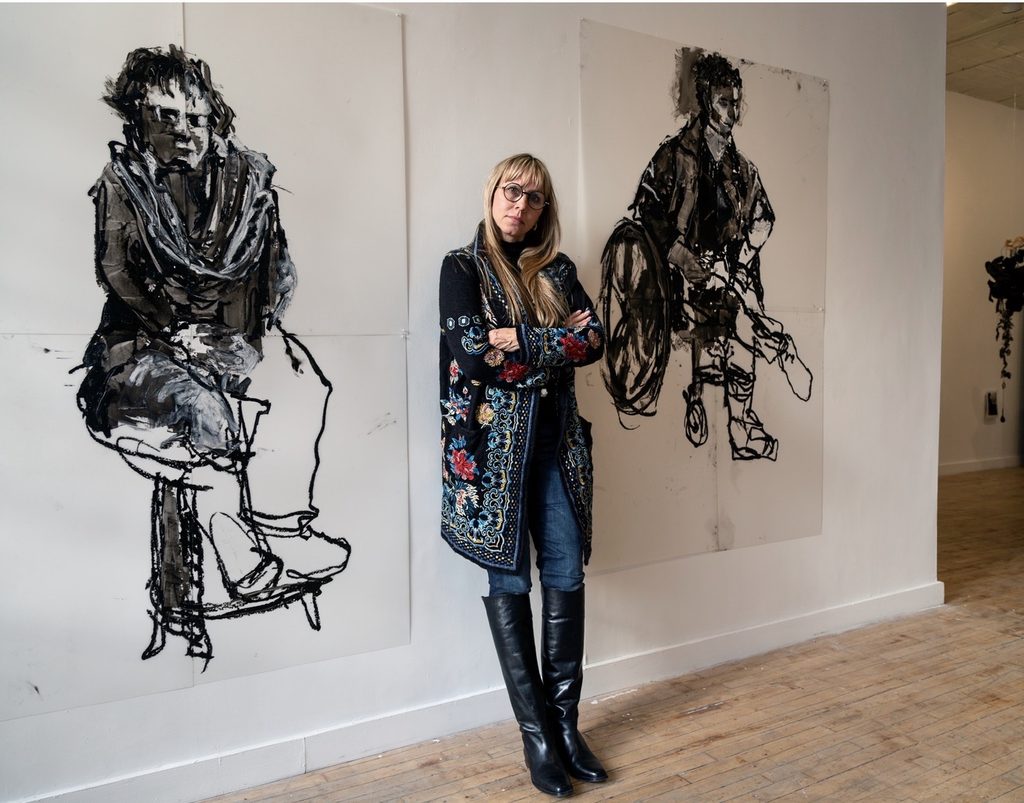
She has always moved freely between realism, abstraction, and mixed media, layering and experimenting without fear, and she carries that same curiosity into every new way of making. It is a reminder that what truly sets an artist apart has never been the tools in their hands, but the vision and honesty guiding them.
For art lovers and collectors, Jean’s work brings a rare depth and sophistication into a space. Richly layered paintings where a recognisable, deeply human figure meets texture, surprise, and the visible evidence of a master at work. They reward long looking, revealing something new each time, the precise and the spontaneous, the solid and the fragile, all held together in one image. To live with one of her pieces is to keep the work of a lifetime’s curiosity on your wall, and a quiet reminder to stay open, keep questioning, and never stop asking what might come next.
Follow Jean Pederson through the links below and see her work for yourself.
Artist of the Year 2026 is now open for submissions.
The art of our time is usually encountered piece by scattered piece, and just as quickly forgotten. Artist of the Year was created to bring it together, a hardcover collectible book that places 100 artists side by side and preserves their work for years to come.
The selection is open to every way of making art, across all mediums, subjects, and career stages. What matters is the work and the thinking behind it. This year, we are honoured to welcome Jennifer Rizzo as Guest Curator.
From the 100 selected, one will be named Artist of the Year 2026, receiving a $500 cash prize, a trophy, and a four-page feature. Every other artist is featured in the same edition.
This is your invitation to be part of it.