
How a Fascination with Quantum Physics & the Multiverse Crept into Dina Razin’s Landscapes
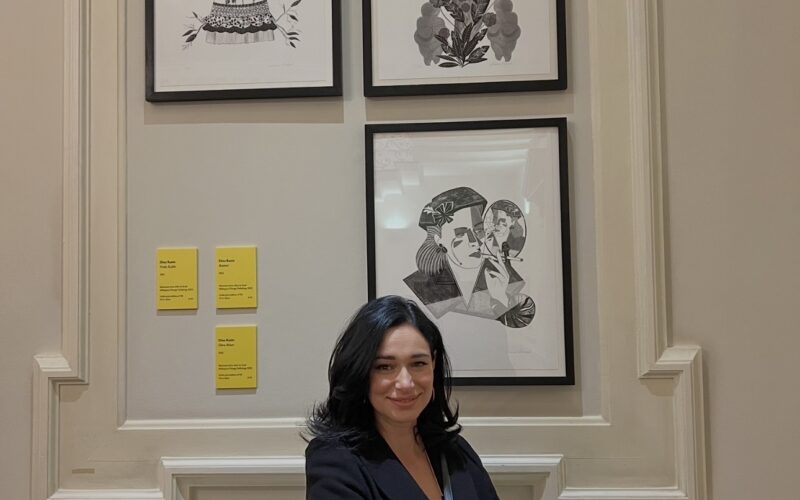
At Arts to Hearts Project, our 100 Emerging Artworks book brings together a hundred striking works by emerging artists from every corner of the world, each given room of its own to speak. This year, one of those works comes from Dina Razin.
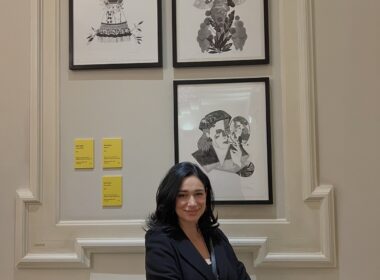
A self-taught, award-winning artist born in Damascus, she carries her half-Syrian, half-Iraqi heritage and a life lived across cultures into everything she creates. She paints places that exist on no map at all.
For Dina, home was never one fixed point on a map, so she simply makes her own. Her imagined worlds come together from places she’s known, landscapes she’s travelled through, memories she’s held, and things she’s invented along the way. She isn’t after a faithful picture of somewhere real, but the feeling of remembering it, and it’s that meeting of memory and invention that gives her work its soft, dreamlike, in-between quality.
Nature runs right through the centre of it, though never as a simple backdrop. A wood, a single tree, even a small stretch of green can feel, in her paintings, like an opening into somewhere else. She’s drawn to all the things we can’t quite see or explain, the hidden, invisible layers of reality, and to the quiet ease of the natural world.
There are moments, she says, when it seems as if nature understands something we don’t, entirely comfortable with the very mysteries we spend our lives chasing. Under her hand, trees, birds, and landscapes become witnesses and messengers, gentle doorways between the known and the unknown.
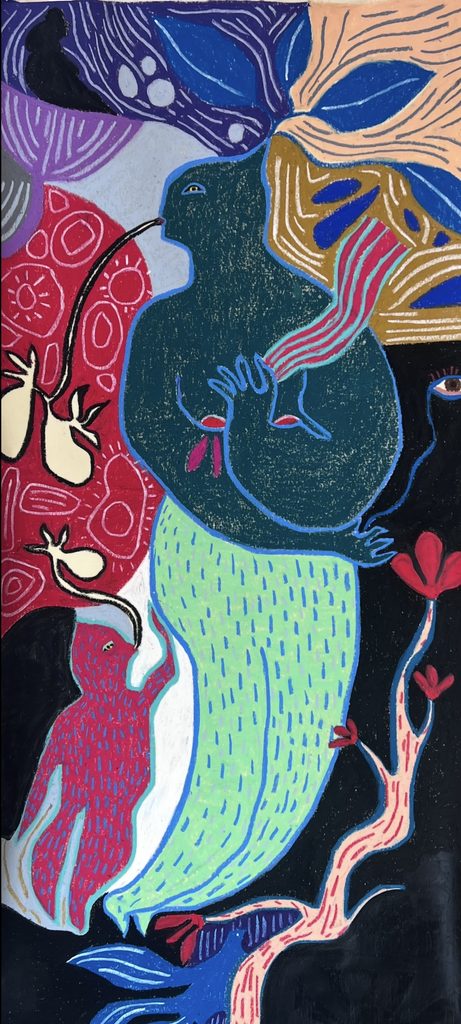
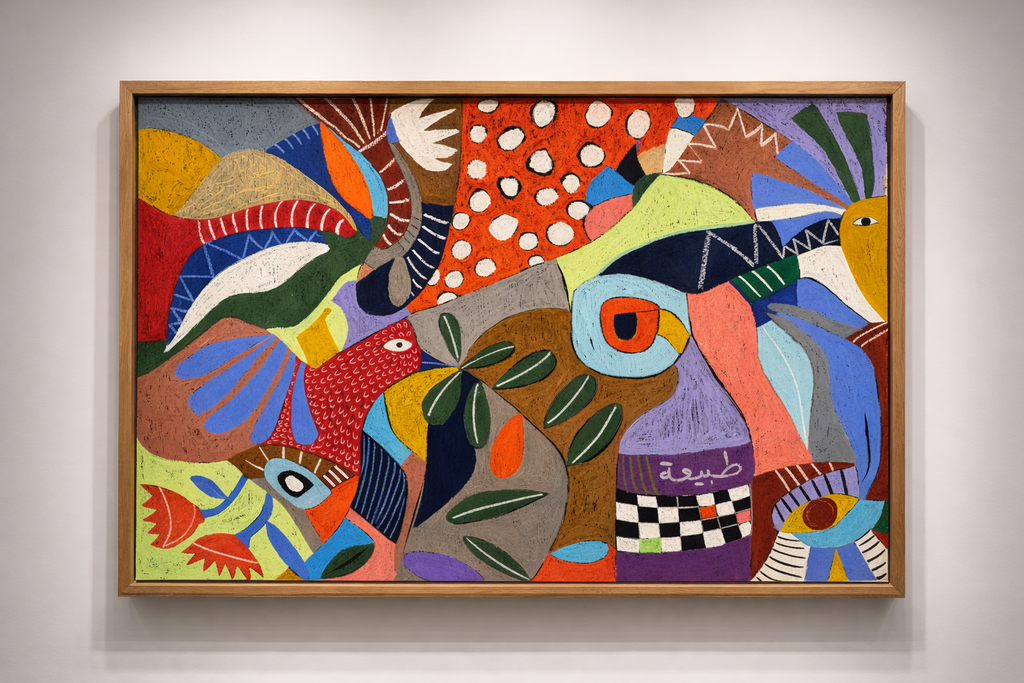
Certain shapes surface again and again. Birds, at home everywhere and nowhere, hold her ideas of freedom, of migration, of the ache for home. Plants, rooted yet resilient and forever leaning toward the light, hold the reverse. And then come her hybrid figures, people midway through becoming a bird, a tree, a flower, or something with no name at all.
As a figure dissolves into nature, it lets go of being any one person and turns into something wider, an emotion, a mood, a way of being. That uncertainty is precisely where she feels the work breathe.
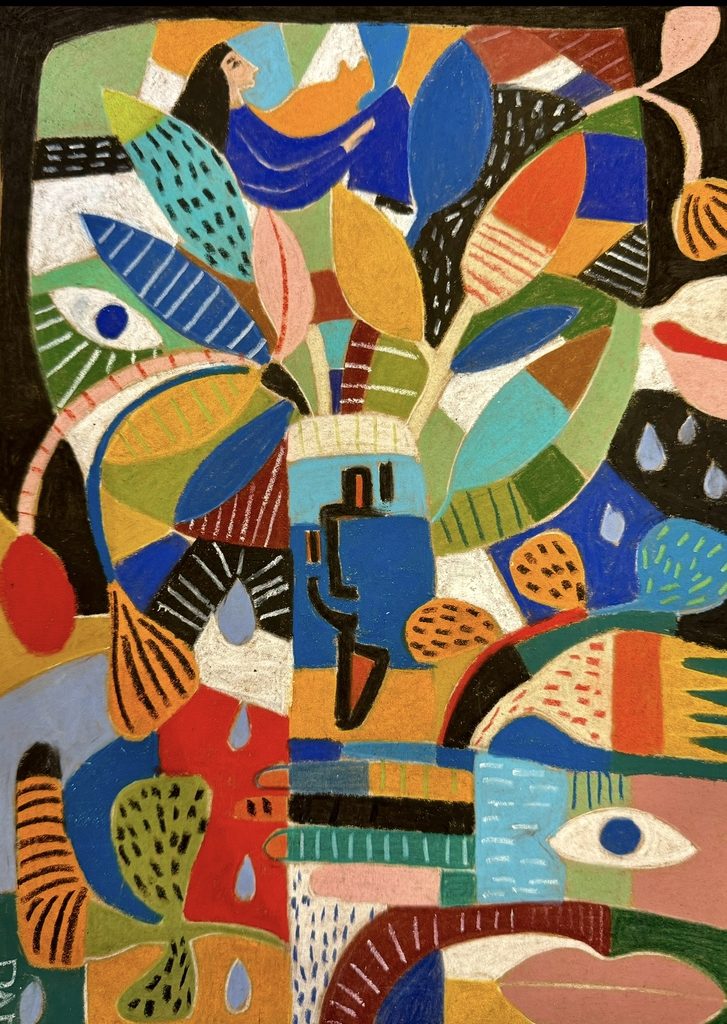
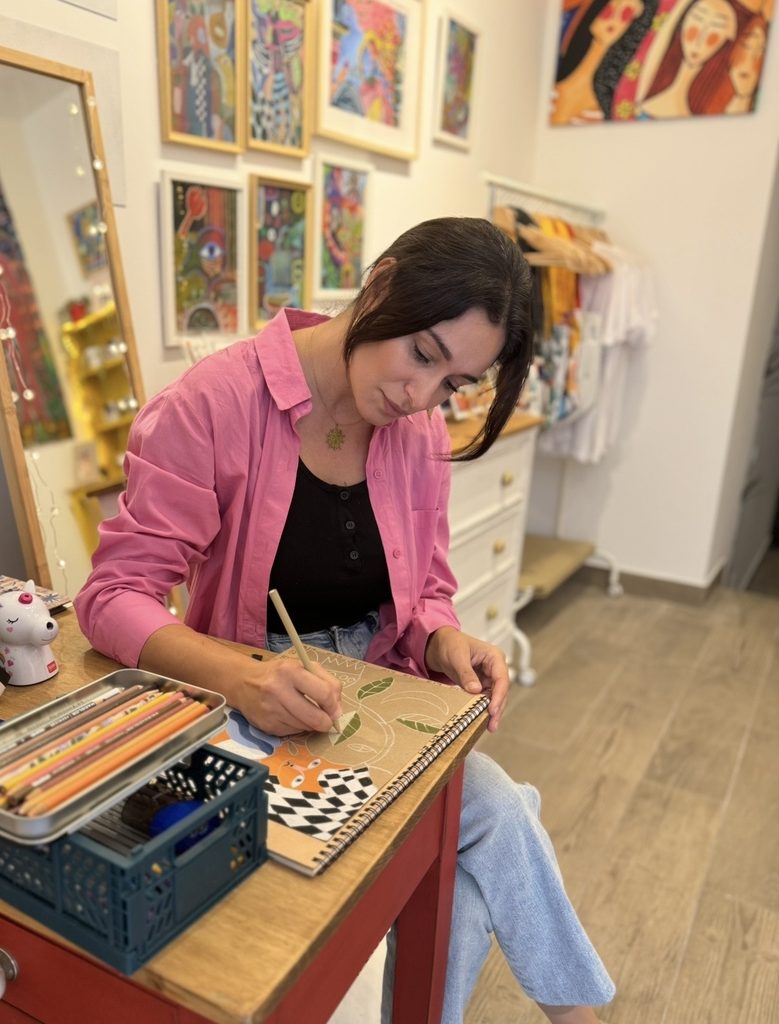
Her way of working is as open and instinctive as the worlds it produces. She drifts between pastels, acrylic, ink, collage, and digital work, reaching for whichever one helps her feel her way forward. She loves the intimacy of pastels, with barely anything between her hand and the page.
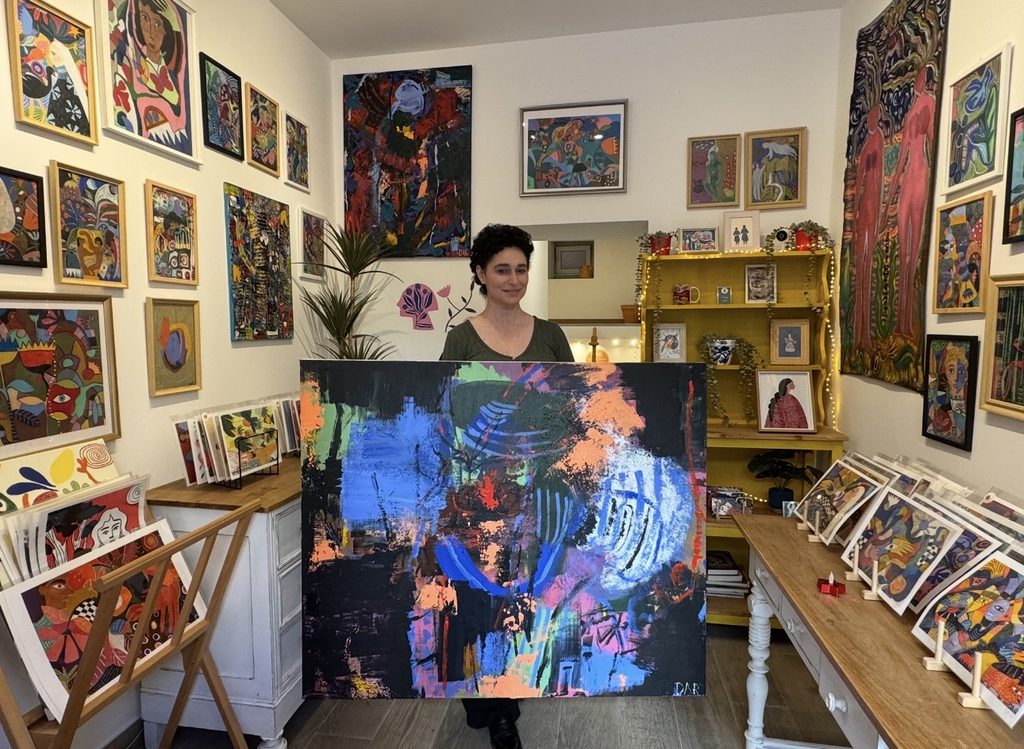
She loves how acrylic lets her layer, bury, and scrape back until a painting quietly reroutes itself. And she loves collage for the way it presses together fragments that were never meant to meet, which is, in the end, exactly how memory and imagination behave. She rarely knows where a piece is headed when she begins, and that is just how she likes it.
Beneath everything, her work keeps drifting between two quiet longings, the warmth of belonging and the calm of solitude, each one, perhaps, its own way of searching for home. Where she once made purely out of need, she now finds herself circling the largest questions there are, about existence, about memory, about whatever might lie beyond the reach of our senses. She doesn’t ask her art to answer them. The work, as she says, is simply where she sets the questions down.
Now let’s hear from Dina about imagined worlds, nature as a doorway to the unknown, and being at peace with the unanswered.
Q1. Could you take us back to the beginning of your creative journey and share what first drew you to creating these imagined worlds?
Creativity was present in my life long before I understood that I might one day become an artist.
Growing up, my father would often take me with him when he met his circle of friends—poets, painters and writers. I spent a lot of time listening to their conversations and visiting their studios and creative spaces. As a child, I didn’t necessarily understand the significance of being around them, but I think those environments quietly shaped my imagination. They made a creative life feel possible and, perhaps more importantly, completely natural.
There were other influences too. I remember going with my mother to tailors and spending hours looking through fashion magazines, choosing fabrics and imagining or designing clothes for her or for myself. I loved watching an idea move from a sketch, a fabric or a colour into something that could actually be worn. Looking back, I think that early fascination with colour, pattern, texture and transformation stayed with me. My path into art itself wasn’t linear.
I studied journalism and film studies and later worked professionally with languages before eventually committing myself to art full-time. But I think I was always drawn to storytelling and to creating something from fragments like an image, a memory, a place, a feeling. Having lived between different cultures and countries has also shaped the way I imagine places. The idea of home has never felt entirely fixed or geographical to me. Perhaps that is part of why I create these imagined worlds.
They bring together fragments of places I have known, landscapes I’ve passed through, things I remember and things I’ve invented. Memory changes places; it keeps certain details, loses others, and fills in the gaps. I’m less interested in depicting somewhere exactly as it is than in capturing how a place is remembered or felt. In a way, painting allows me to create places that I cannot find geographically, places that carry their own sense of belonging and home.
Q2. You describe nature as a portal to hidden dimensions. When did this idea begin to emerge in your work?
I think this makes the answer much more distinctive. The key is to preserve that sense of mystery without making it sound like you’re claiming quantum physics proves something spiritual. Your idea that “nature knows what we don’t” is especially strong. 2. You describe nature as a portal to hidden dimensions. When did this idea of the natural world as something more than what we can see begin to emerge in your work? I don’t think there was one conscious moment when I decided that nature would carry this meaning. I noticed it after it had already begun appearing in my work.
I’ve always been fascinated by the feeling that a landscape can contain more than what is physically visible—that a forest, a tree, or even a small patch of vegetation can somehow feel like an entrance into another space. There is also something about the quietness and contentment of nature that fascinates me. We humans are constantly wondering, questioning and searching for meaning. Nature doesn’t seem to be participating in that race to know.
Sometimes I look at it and have this strange feeling that perhaps nature knows something we don’t—as if it is completely at ease with mysteries we are endlessly trying to solve. I’m very interested in quantum physics and in ideas around dark matter, the multiverse and the vast amount of reality that remains unknown or invisible to us. I don’t approach these ideas scientifically in my work, but they feed my imagination.
They make me wonder about how limited our perception might be and about what could exist beyond what we are capable of seeing or understanding. As my work became more intuitive, trees, plants, birds and landscapes stopped being simply scenery. They began to feel like witnesses, messengers, or passages between what we know and what we don’t. So when I describe nature as a portal, I mean it both emotionally and philosophically.
I sometimes think of nature as a window into the unknown or perhaps even a key to a secret about our existence that we haven’t yet learned how to unlock.
Q3. How have your Middle Eastern roots, travels, and experiences shaped the stories in your work?
My cultural background is deeply present in my work, although I rarely approach it by deliberately choosing recognisable Middle Eastern symbols. I am half Syrian and half Iraqi, and I was born in Damascus, but I have lived much of my life elsewhere. That experience of belonging to a place while also being separated from it has inevitably shaped the way I think about memory, identity and home. I was raised within a very communal culture, where family units are closely intertwined and the boundaries between the individual and the collective can become quite fluid.
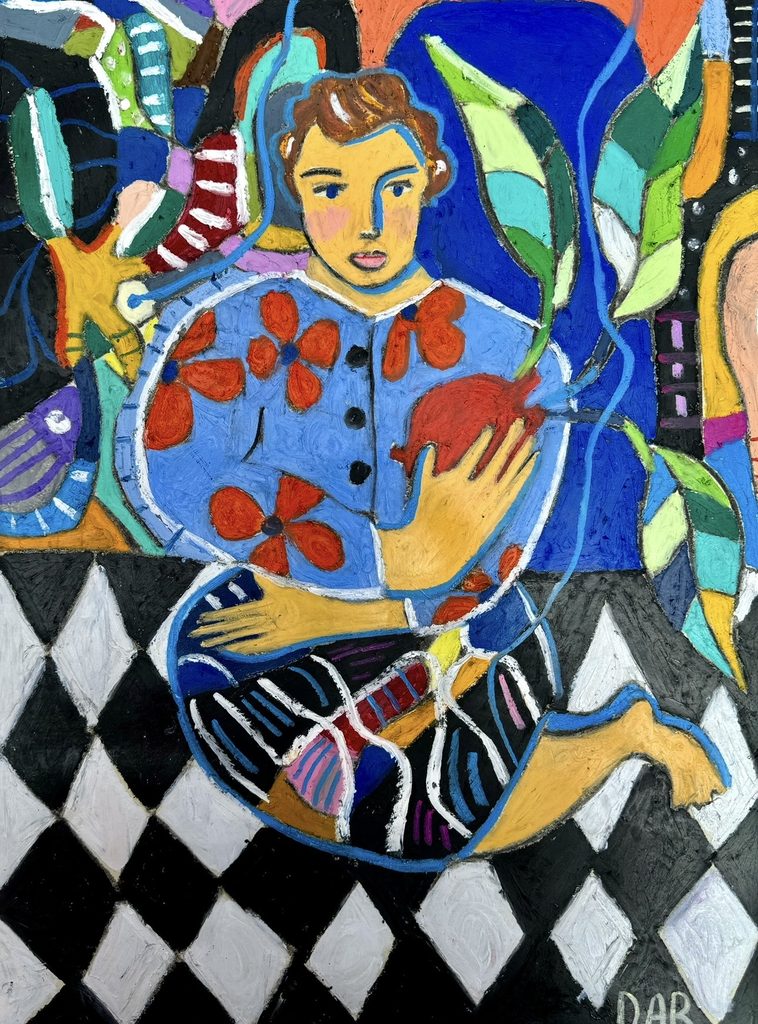
There is enormous safety and warmth in that togetherness, but at the same time, the sense of the “I” can sometimes become blurred. I think that tension has found its way into my work without me consciously putting it there. In some paintings, I am drawn to gathering, with figures or forms leaning into, supporting and almost becoming part of one another. This is especially present in my tree painting that received the Arts to Hearts recognition.
The tree becomes almost a collective body, with individual forms existing within something larger than themselves. But there is another side of my work that seeks the opposite. Sometimes I choose loneliness, or perhaps solitude is a better word. I create quiet figures and imagined places that seem removed from the noise of the outside world. There is something about being alone, away from the news, expectations and constant movement of life, that I find deeply restorative. My travels and experience of living between cultures have added another layer to this. I often work from fragments, something inherited, something remembered, something I’ve seen while travelling, and something imagined.
I’m interested in what happens to memory when we move away from a place. Certain details become vivid while others disappear, and eventually memory and imagination begin filling in each other’s gaps. I think my work moves between those two desires: the need to belong and the need to retreat, the comfort of being part of something larger and the freedom of being alone. Perhaps both are different ways of searching for home.
Q4. Your work often brings together birds, plants, and hybrid figures. What draws you to these forms?
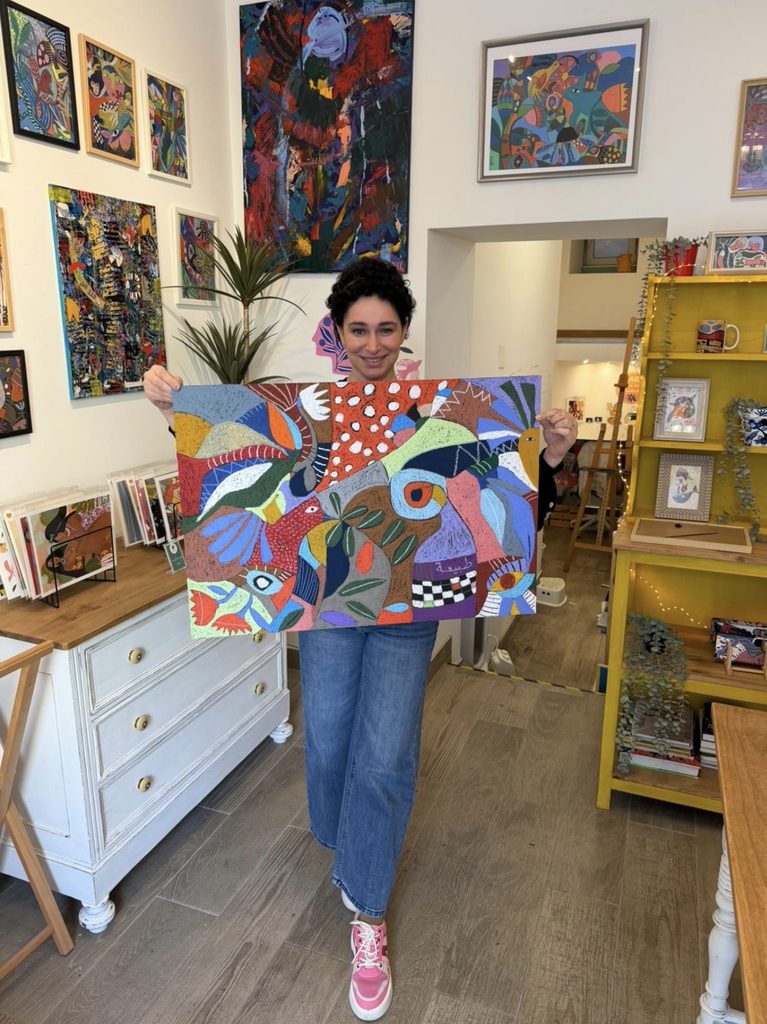
Birds have probably become one of the most persistent symbols in my work. I’m drawn to them because they belong everywhere and nowhere. They migrate, cross borders and build temporary homes, yet somehow carry an extraordinary sense of freedom. For me, they can hold ideas about movement, displacement, belonging and return without needing to explain any of them. Plants operate differently. They are rooted, but they are also incredibly resilient.
They grow towards whatever light is available. I love that contrast between the rootedness of plants and the mobility of birds. The hybrid figures emerged from wanting to loosen the boundaries between the human body and the natural world. When a figure begins turning into a bird, a tree, a flower or something that doesn’t quite have a name, it becomes less specifically about one person.
It can become an emotional state instead. That ambiguity is important to me. A human figure can immediately suggest a particular identity or narrative. Hybrid forms resist that certainty. They allow something stranger and more instinctive to enter the work, and often that is where I feel the painting becomes most alive.
Q5. Do your symbols have specific meanings for you, or do you prefer viewers to create their own interpretations?
They often begin with a specific meaning for me, but I don’t want that meaning to become an instruction for how the work should be understood. A bird might begin as an idea about migration or freedom, a tree might represent family or belonging, and a hybrid figure might come from a very particular emotion or memory.
But once the work exists, I think those symbols should be allowed to change. I actually love hearing interpretations that are completely different from my own. Sometimes someone sees something in a painting that I hadn’t consciously recognised myself. I think that’s one of the beautiful things about art. The artist begins the conversation, but doesn’t necessarily get to decide where it ends.
Q6. You work across gouache, ink, acrylic, and digital art. How does working across different mediums affect the way you think and experiment as an artist?
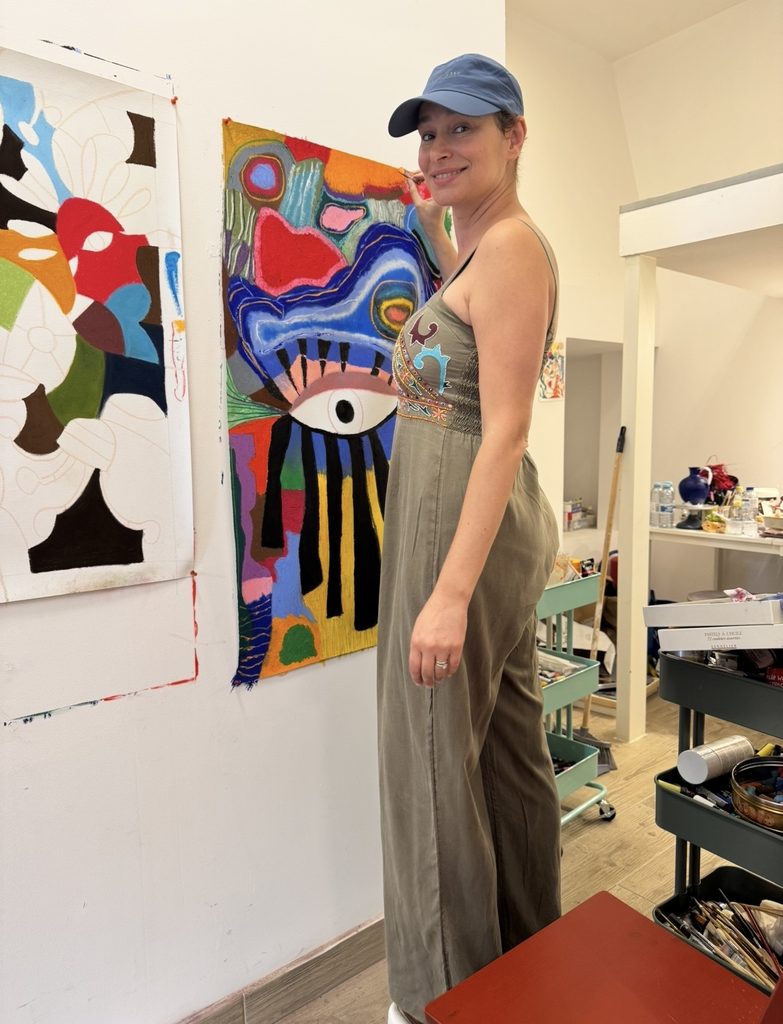
Since I first published my bio online, my practice has actually evolved quite a bit. At the time, gouache, ink and digital work were more central to what I was making, but I’ve since embraced other materials, particularly pastels, acrylic and collage. Pastels have become especially important to me. I love their immediacy and physicality, and the fact that there is so little distance between my hand and the surface.
They allow me to work intuitively, layering and blending colour while still keeping the marks visible. Acrylic gives me a different kind of freedom. I can build layers, cover things, scrape them back and let the painting change direction as I work. Collage appeals to me because it introduces an element I can’t completely control.
Bringing together fragments that weren’t originally meant to coexist feels very connected to the way I think about memory and imagined worlds. Moving between these mediums keeps the process open and experimental. I don’t want to know exactly what a work will become when I begin. I like leaving enough uncertainty for the materials themselves to influence where the work takes me.
Q7. How important is it for you to have your work understood through your own words rather than through an art-world interpretation?
I think it is important to me, because in a way I do want to have some control over the narrative. My work is one of the ways I communicate, not only with the world but also with myself. It is my story, my inner world spilled outward, so I want my own voice to exist alongside it. At the same time, I don’t want my words to dictate what someone else should see. Once a work leaves my studio, the viewer brings their own memories and experiences to it, and I find that exchange fascinating. My interpretation can be an entry point without being the only interpretation.
I also sometimes feel that the art world creates its own boundaries around what an artist should be talking about at a particular moment, what is relevant, what is trending, or even what feels safe to say.
I prefer to exist somewhat outside of that. I want the freedom to follow whatever genuinely preoccupies me, whether or not it fits neatly into the conversation happening around me. So yes, I care about telling my own story in my own words, but I also want the work to have a life beyond me. I want to define where it comes from without defining where someone else is allowed to take it.
Q8. What has been the biggest challenge in developing a practice that is so personal and rooted in your own visual language?
Probably learning to trust my own instincts. Being self-taught has given me a certain freedom because I didn’t come into art with a fixed idea of what my practice was supposed to look like. But that freedom can also come with a lot of questioning. For a long time, I worried about consistency. My work moves between figurative and abstract, painting and illustration, quiet minimal pieces and much denser imagined worlds.
I wondered whether I needed to choose one direction in order to have a recognisable visual language. Over time, I’ve started to understand that the connection doesn’t necessarily have to come from everything looking the same. The same questions, symbols and sensibilities keep resurfacing regardless of the medium or style. I’m learning to trust that those threads are my visual language, and that allowing the work to evolve is more important to me than forcing it into a single recognisable formula.
Q9. When you first started creating art, what were you trying to understand, and what are you trying to understand through your work now?
When I first started creating art, I don’t think I was consciously trying to understand anything. I was simply compelled to make. It was a space where I could be completely absorbed and where things I didn’t necessarily have words for could come out visually. Over time, I realised that I was asking questions through the work without intentionally setting out to do so.
Questions about home, belonging, memory, identity and the strange relationship between solitude and togetherness kept appearing. Now I think my questions have become bigger. I’m increasingly interested in existence itself: what we know, what we cannot know, and what might exist beyond our perception. That is probably why nature has become so important in my work. I find myself wondering why we are here, what consciousness is, and whether there are dimensions to existence that we simply don’t have the ability to perceive.
I don’t expect art to give me answers.
If anything, I’ve become more comfortable with not having them. Maybe the work is simply where I put the questions.
Q10. As an artist, what does success mean to you today, and has that definition changed since you first began creating?
My definition of success has definitely changed. I think of it now as both an internal and an external realisation. The external side is perhaps easier to recognise: exhibitions, recognition, publications, sales, having my work collected, and being able to build a sustainable life from what I create. I still want those things. I want my work to be seen and to find its place in the world.
But the internal side has become just as important to me. It is the sense of peace I feel when I am surrounded by my materials and completely absorbed in making something. It is that little butterfly flutter I still get when a new idea for a painting arrives and I can’t wait to begin. I think there is something incredibly precious about still feeling that excitement.
So perhaps success for me is when those two things can coexist: when the work can travel outward, be seen, recognised and valued, while I can protect that very private feeling that happens between me and the work. I would never want external success to come at the expense of that.
Q11. What would you say to artists who are still searching for their own visual language?
I would tell them not to wait for the moment when they suddenly “find” their visual language, because I’m not sure that moment really exists. I think your visual language finds you while you are busy making things. For a long time, I questioned whether my work was consistent enough. I moved between abstraction and figuration, illustration and painting, different materials and ways of working. Eventually I realised that visual language isn’t necessarily a style.
It can be the questions you repeatedly ask, the forms you instinctively return to, the colours you can’t seem to leave alone, or even the things you are trying to understand about yourself. I would say make a lot of work. Experiment. Follow the things that excite you even when they seem unrelated.
Don’t rush to make yourself recognisable. And perhaps don’t worry too much about knowing when you’ve found your visual language. If it is truly yours, it will probably keep changing as you do.
As our conversation with Dina came to an end, we found ourselves thinking about how uncomfortable most of us are with not knowing, and how much of life we spend trying to explain away every mystery.
We are taught to want answers, to solve, to be certain. Dina’s work gently suggests another way. Her paintings are full of open doors and unanswered questions, places that don’t exist, figures caught mid-transformation, forests that seem to hold a secret just out of reach, and rather than resolving any of it, she invites you to sit inside the mystery with her.
There is something freeing in that. She reminds us that nature has always been at peace with what it does not need to explain, and that maybe we can be too. And running quietly beneath it all is a search we all recognise, the search for home, and the quiet discovery that home might be less a place than something we carry, and even something we can create.
There is real reassurance here for other artists, too. For a long time Dina worried that her work jumped around too much, between abstraction and figuration, between mediums and moods, and that she needed to pick one lane to be taken seriously. What she has come to understand is worth passing on.
You do not have to wait to “find” your voice, because your voice finds you while you are busy making. It is not always a single style. Sometimes it is simply the questions you keep asking, the forms you keep returning to, the colours you cannot leave alone. Make a lot of work, she says, follow what excites you, and don’t rush to make yourself recognisable. If the voice is truly yours, it will keep growing as you do.
For art lovers and collectors, Dina’s work brings a rare sense of wonder into a space. Dreamlike, otherworldly paintings that never give themselves away all at once, and instead keep opening, revealing something new each time you return to them.
Everyone who looks brings their own memories and finds their own meaning, which is exactly how she hopes it will be. To live with one of her pieces is to keep a small window onto the unknown on your wall, a quiet, beautiful reminder that not everything needs to be explained to be felt.
Follow Dina Razin through the links below and see her work for yourself.
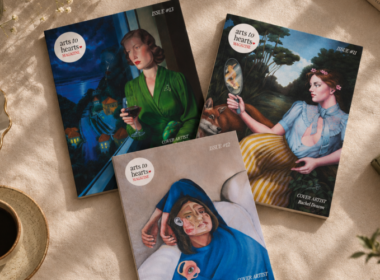
Ask an artist where they are, and the truest answer is rarely just a city. It’s a feeling, a season of life, a place they’re still finding their way through. That’s exactly what Arts to Hearts Magazine Issue 15 is about, now open for submissions under the theme “Where I Am.” Wherever you stand today, right where you hoped to be, far from home, starting over, or moving through an ordinary stretch of life, we’d love to see the work that came from it.
There’s no need to make something new, just return to what you’ve already made and choose the piece that carries your story. Medium, location, and experience don’t matter. Honesty does. Every artist we’ve ever featured once took a breath and hit submit. This could be your issue.