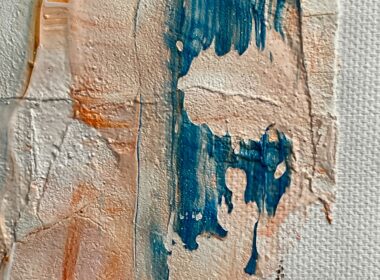

How Monoprint Made Martha Zmpounou’s Art More Instinctive
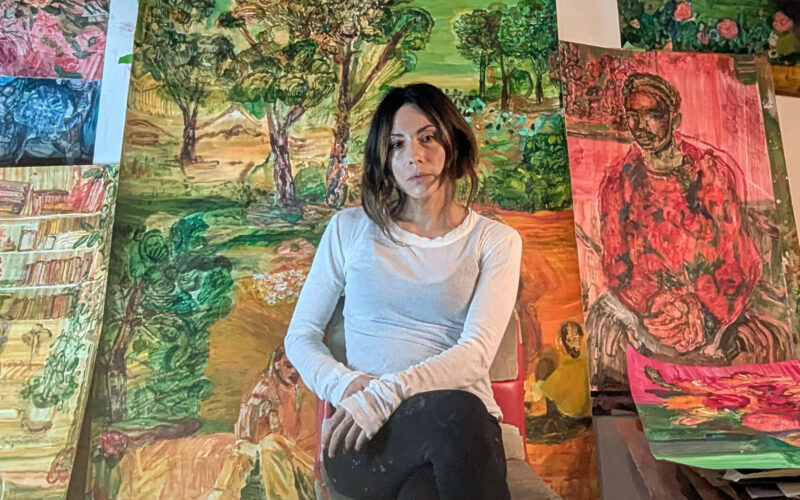
At Arts to Hearts project, we exist for one reason to celebrate artists. To find the people doing something that genuinely matters, something that moves people, something that deserves to be seen by a wider world, and to bring them closer to the audience that needs to discover them.
Our editorial work, our features, and our Best of the Art World series are all built around that single commitment. When we first created Best of the Art World, our vision was simple to shine a light on the artists who are doing something extraordinary and bring them to the audience they deserve. Artists who are rising, evolving, and building something that the wider world needs to encounter.
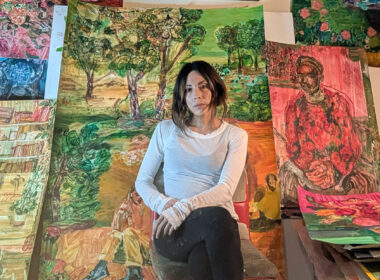
And today we are so genuinely excited to bring you one of those artists someone whose practice has been quietly earning the art world’s attention for years and deserves a great deal more of it. Martha Zmpounou is a Greek born, London based visual artist, printmaker, and lecturer at the University of the Arts London.
She holds a degree in Fine Arts and an MA in Painting from the Aristotle University of Fine Arts in Greece, and a second MA from Central Saint Martins in London a journey that began on a Greek island near the sea and led, unexpectedly and permanently, to one of the world’s most exciting cities for contemporary art.
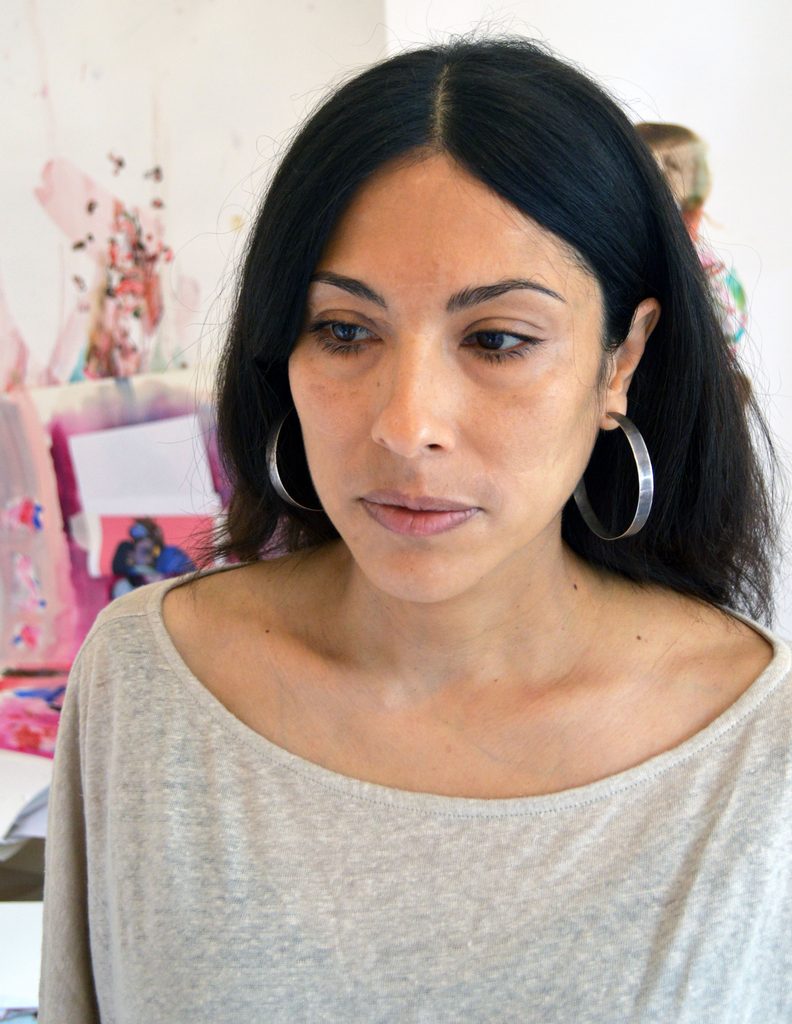
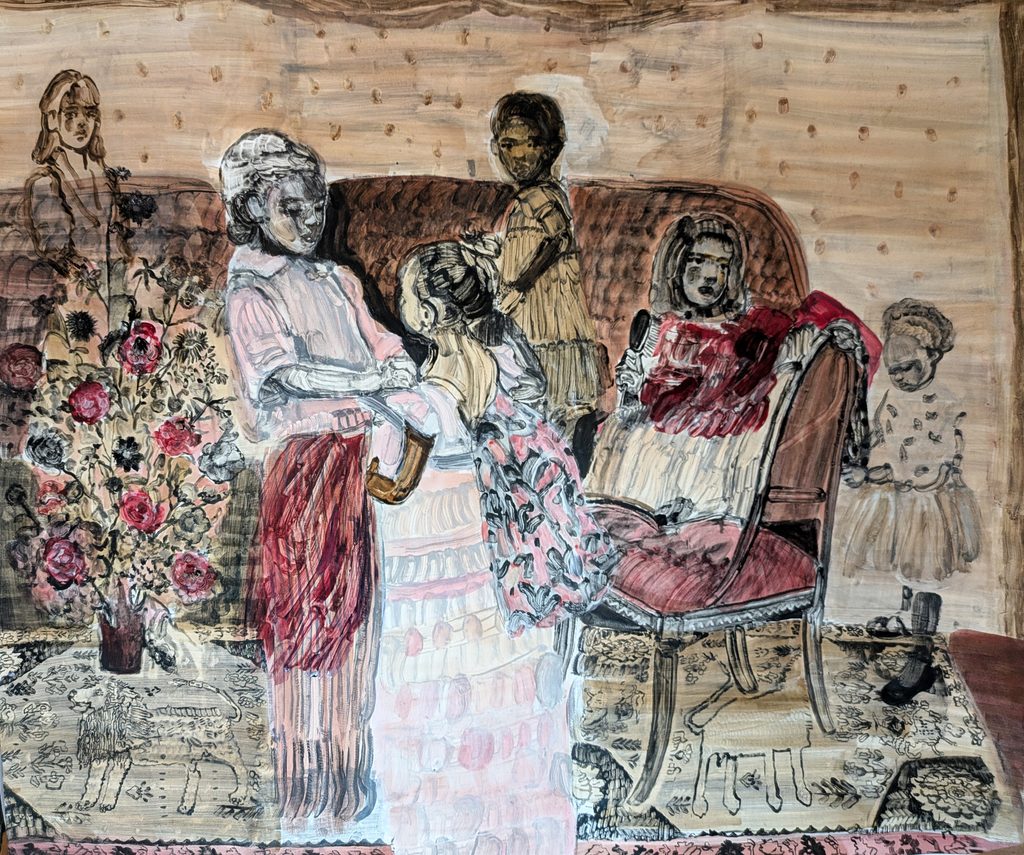
Her process is as distinctive as her imagery. She works primarily in monoprint a technique she developed partly out of necessity, using acetate and plastic and a spoon rather than a press, transferring paint onto paper and fabric late at night after her children are asleep, in a studio that is a room in her flat. What could have been a constraint became a language.
The monoprint process keeps her decisive, instinctive, and slightly removed from the kind of overworking that can kill a painting’s life. The medium has a say in the final result. And she has learned not just to accept that but to love it.
Her figures are invented rather than observed, faces that carry the weight of memory, loss, personal histories, and emotional states that resist easy naming. She moves between passages of recognisable detail and areas of abstraction, leaving enough unresolved that the viewer has to complete something themselves. She is interested in what a face can suggest rather than explain. In the body as something fragmented and layered and full of things that have not yet surfaced.
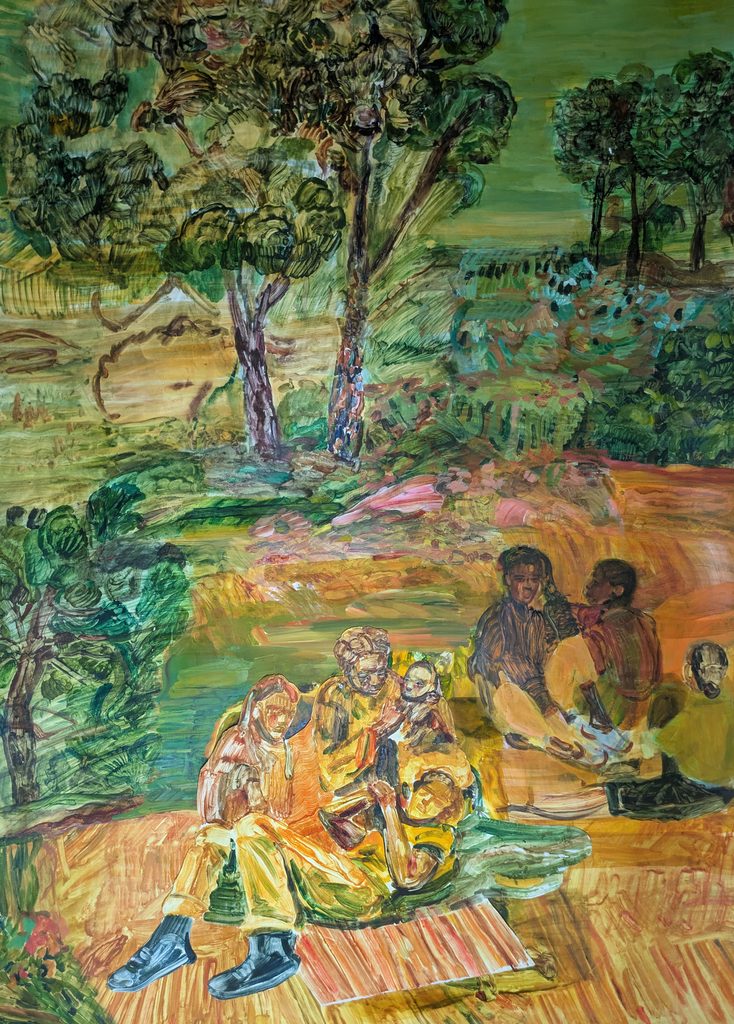
Martha is also a member of the Royal Institute of Painters in Watercolours, the winner of awards from the Royal Society of Portrait Painters and beyond, and is represented by RHODES Contemporary Art in London where she recently featured in What the Surface Holds, a group exhibition placing her within an international conversation about contemporary monotype. Her work has been shown across the UK, Sweden, Germany, and Greece, and published in Aesthetica and ArtMaze Magazine.
And she has built all of that while teaching at the University of the Arts London and raising two children working late at night when the house is quiet, finding the hours where she can, turning limitation into language. The practice that has come from that life is not despite its constraints. It is shaped by them. And it shows.
Standing in front of her work, you feel that. Something that was made in the real conditions of a real life, with complete honesty and complete attention. Work that opens slowly and rewards the viewer who stays.
Let’s get to know Martha through our conversation with her and discover a practice that has been quietly, patiently building toward something extraordinary for years.
Q1. Martha! Can you tell us a little about growing up in Greece and when you first knew that art was something you wanted to pursue?
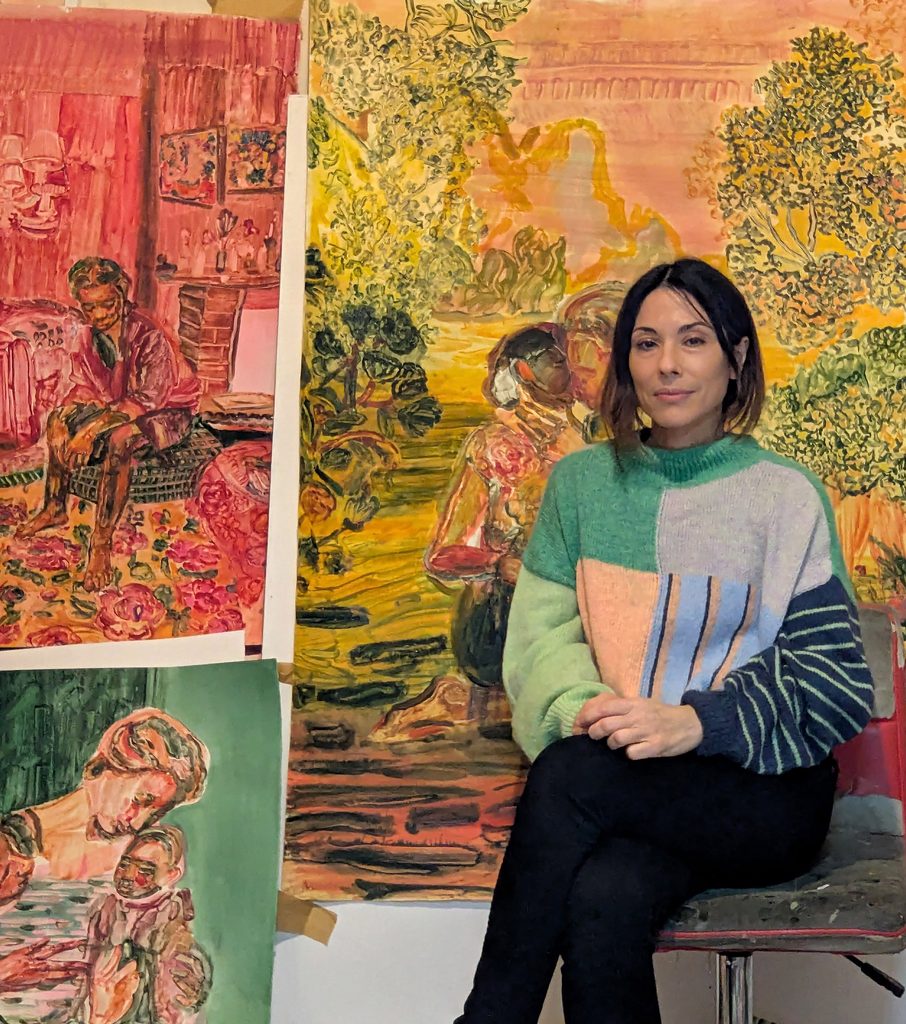
A good part of my childhood years was spent near the sea on an island, where I enjoyed the freedom to play out in the fields and in the water. Yet drawing and painting have always been my main theme since I remember myself. I started painting and drawing as a child and haven’t stopped since then. To enter a Fine art university in Greece you need to sit for on-campus studio exams that test your skills in academic drawing and painting.
So, I joined a foundation school to prepare for the fine art school’s entry exams. Looking back, those months may well have been pivotal to my growth as an artist and all that was coming. It was an intense period of time, very formative in many ways. But I think it was during the later years of my studies at the fine art school when I began seeing myself as a committed full-time artist for life.
Q2. You experimented with etching and woodcut during your studies. How did printmaking first influence the way you think about an image?
During my BA at Aristotle University of Fine Arts in Greece, I mainly worked with etching and woodcut, and I fell in love with printmaking almost immediately. I was fascinated by all the different processes and ways of building an image. I only started working with monoprint about three or four years ago, and I find it has made me more decisive and bold with my mark-making. There’s less time to overthink or become too precious about the outcome.
You have to work quite instinctively, while also thinking ahead about the layers, the mirrored image, and how the colours and marks will change through the printing process. The outcome often feels somehow different from what I thought I was making. That can be challenging, but I also really enjoy the fact that the process and the medium have a say in how the work finally comes together.
Q3. You describe the human figure and portrait as spaces of expression and exposure. What interests you about the figure as a place where something can be revealed?
I tend to develop my work around certain ideas or themes, and over the last decade, the human figure has been the central one.
I’m interested in all the ways the figure can be changed, fragmented and transformed—the body as a canvas, and as a space for expression. For me, the figure and the portrait can reveal something without necessarily telling us exactly what it is. I see the body as something fragmented but also multifaceted, almost like the result of layers building up over time. I think that’s what keeps me coming back to it: there is always something more to discover.
Q4. You are interested in what is hidden or masked within a portrait. What are you looking for beneath someone’s physical appearance?
I’m drawn to portraiture because the face can reveal something but also hide or mask it. I’m interested in those subtle emotional shifts and the different feelings a face can evoke. I don’t usually look for a particular type of person to portray. It’s more about an atmosphere or a feeling that a face suggests.
Most of my portraits are invented characters rather than real people, so the figure becomes a starting point for exploring things like memory, personal histories, loss and trauma. I’m less interested in capturing someone’s likeness than in trying to capture a sense of who they might be, or what they might carry with them.
Q5. You move between recognisable figures and abstract passages. How do you decide what to reveal and what to leave unresolved?
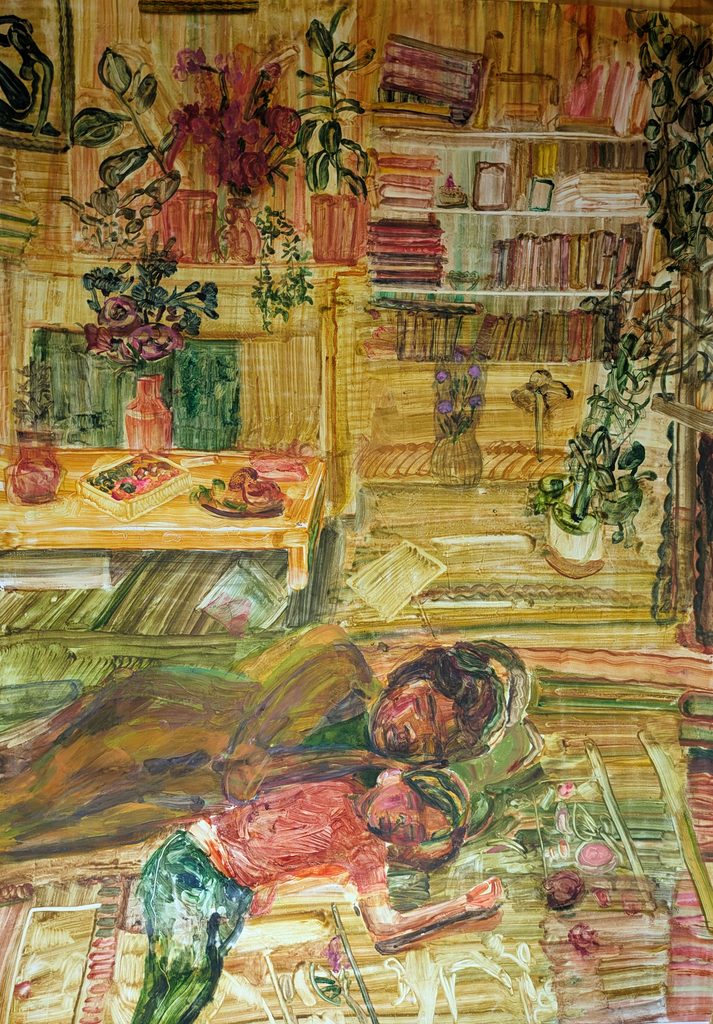
I’m interested in that space between representation and abstraction, and in finding a balance between what is recognisable and what is left more open. I often build the works in multiple layers, which allows it to become more fragmented or abstracted.
I don’t really decide consciously what to reveal or detail and what to leave more open or abstract. Most of those choices happen instinctively as I work. I’m drawn to the incomplete, the fragmentary and the slightly cryptic, and I like leaving enough for the viewer to fill in themselves.
Q6. Your recent works place figures in domestic and imagined spaces. How does the surrounding space shape the story?
The space around the figure is quite important to me.
I see the figures in my work as fragments of memory and time, and the spaces they inhabit often sit somewhere between reality, memory and imagination.
Many works start with small memories that have stayed with me—a bedtime story, children playing in the neighbourhood where I grew up in Greece, a conversation or a quiet moment with someone.
I bring these memories together with found images and references, and they gradually become something new. The spaces are imagined, but they carry a feeling of nostalgia, belonging, calm or connection. They become places where these memories can be revisited and reimagined.
Q7. Your watercolour mono printing process grew from limited access to a printmaking studio. How did this shape your creative language?
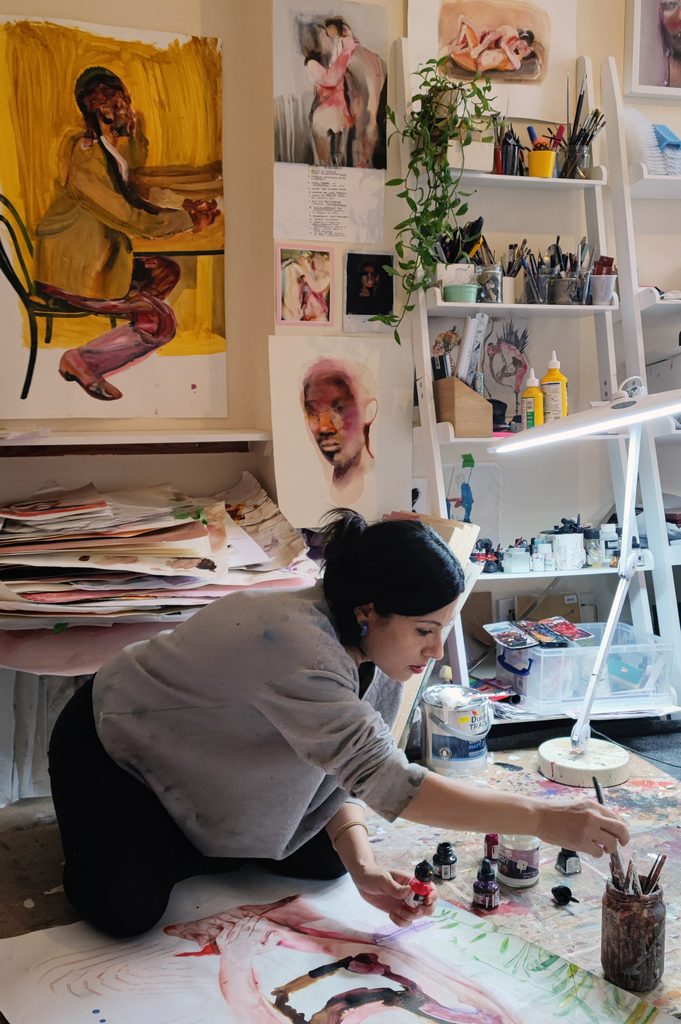
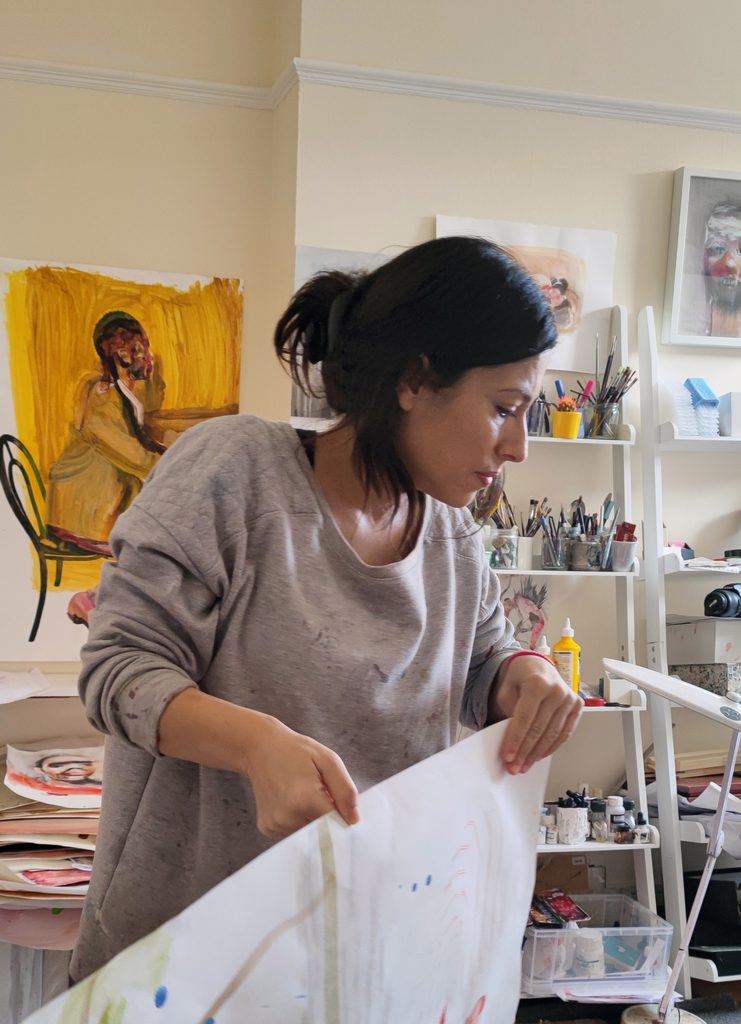
My life is quite layered—I’m a mother of two, an art teacher and an artist—and finding uninterrupted studio time can be difficult. My studio is a room in our flat, and quite often I work late at night after the children are in bed. Because I don’t have the time to access a press, my monoprinting process grew partly out of necessity. I can work on a large scale using simple, easily available materials like acetate and plastic, and transfer the paint onto paper or fabric with a spoon.
I can change things, wipe them away and work quickly or slowly. I can also vary the pressure as I print, which gives me a lot of freedom with the marks. It can be quite physical and tiring, but I like that the process keeps me slightly removed from the traditional painting surface. It takes away some of the pressure to make a ‘good’ painting and allows me to be more spontaneous, take risks and see what happens.
Q8. You explore emotions like nostalgia, belonging, and empowerment. Does an emotion usually begin the work, or emerge as you create?
It happens both ways, really. Sometimes I start with a clear idea and spend days thinking about the composition, making collages and sketches before I begin the monoprinting. Other times I go straight into it without really knowing where it’s going. Sometimes I’m simply chasing a particular mark, feeling or way of working, and the meaning of the piece only becomes clear to me as I make it. I quite like that uncertainty—the work can reveal something I wasn’t expecting.
Q9. You see your works as spaces where viewers can complete the narrative. How important is it to leave room for interpretation?
It’s important to me not to over-explain everything. Some things are felt rather than easily put into words and sometimes explaining them takes away a little of their strength or mystery. I might have a particular feeling or idea in mind, but I also want to leave room for the viewer to bring their own experiences and interpretations. Sometimes a viewer has pointed out something in my work that I hadn’t consciously seen myself—and then I realise it was actually there all along. I really like that.
Q10. Alongside your studio practice, you also teach. How does working with other artists influence your own practice?
I think teaching has a really positive influence on my own practice. Being around other artists and designers, especially young people from all around the world who are still figuring things out, keeps me curious and open. You’re constantly hearing different ways of thinking and seeing things from perspectives that you might not have considered yourself. It also makes me question my own decisions. When you’re talking through someone else’s work, you often end up thinking about your own work in the process.
Teaching reminds me not to get too comfortable with what I already know, and to stay open to experimentation and mistakes.
Q11. You work across figurative painting, abstraction, and printmaking. How does moving between these forms shape your practice?
Initially, I thought it did, and maybe it still does. But I’ve found that the different parts of my practice have their own spaces and audiences within the art world.
My more watery, wet-on-wet face studies have their own audience and galleries, and my monoprints have their own too.
I’m always trying to figure out and redefine where my practice sits, and I’m actually happy that it’s a process. I wouldn’t want to paint in the same way for 20 years. My practice will change as I change, and I think that’s part of what keeps it interesting for me.
Q12. You have exhibited alongside artists with very different approaches. How have these experiences influenced your own practice?
I’m always pleasantly surprised when I see my work alongside other artists in a group exhibition. It makes you aware of how different and distinct each practice can be at a particular moment. I really enjoy that diversity and feel I have a lot to learn from it. Some of my favourite artists have completely different approaches to mine, which I find very inspiring.
Q13. You recently moved into larger-scale work and returned to canvas. Does success mean having the freedom to keep evolving?
Quite the opposite, actually. My large-scale monoprints did quite well during my last two solo exhibitions, so naturally the galleries wanted more of them. But I really enjoy experimenting with different surfaces. Working on fabric—usually lightweight cotton, found fabrics and muslin—rather than traditional canvas has been a new challenge for me, and that’s what keeps it interesting.

Q14. When you first started making art, what did you imagine your career would become, and how different is the reality?
One mistake I made when I was younger was that I never really thought about having a career. I just wanted to paint. I didn’t think much about the other aspects of being an artist—the logistics, galleries, selling work—until much later. I was recently approached by a young artist asking how to find gallery representation and sell her work.
In my early twenties, if I had approached another artist, I would have wanted to talk about the painting itself—how to improve it. I was completely consumed by painting. I also never imagined I would live in the UK. I came here later to do a Master’s, with no intention of staying. But life takes its course, and things happen that change your plans quite often for the best.
Q15. What would you say to artists still finding their voice and wondering whether to take the leap?
I don’t think an artistic voice is something you find or discover. At least for me, it’s something that grows and changes with you, your curiosity and your experience of life. It’s a process, not a destination. I’d say be patient, focus on your own strengths and enjoy the journey rather than seeing it as a means to an end. Every artist’s journey is different. Some find their way in their twenties, others in their sixties. If you feel you need to paint, you’ll keep painting anyway.
Our conversation with Martha ended and left us thinking about patience. Not as a personality trait but as a creative practice. As the decision, made every day, to keep going without needing to know yet what it is all building toward.
Because Martha said something near the end that felt genuinely important — that an artistic voice is not something you find or discover. It is something that grows and changes with you. With your curiosity, your experience, your life. It is a process, not a destination.
And that idea, as simple as it sounds, removes the pressure of arrival entirely. There is no moment where you have finally become the artist you were supposed to be. There is only the next painting, the next experiment, the next layer pressed onto paper with a spoon at midnight while the children are asleep.
That philosophy is visible in everything Martha does. In the way she moved from watercolour to monoprint not because she had exhausted one but because the other offered something new to discover. In the way she moved onto fabric when the large scale monoprints were succeeding, simply because staying comfortable felt like the wrong choice. In the way she teaches and paints and mothers and keeps all of it running not as separate demands on the same finite energy but as a single, layered, continuously evolving creative life.
In a contemporary art world that often rewards the artist who has locked in their identity and delivers it reliably, Martha is doing something quietly different. She is staying genuinely open. And the work that comes from that openness fragmented, atmospheric, emotionally honest, always slightly beyond what can be fully explained is among the most compelling figurative painting being made today.
For those who collect with a long view who want work that will keep revealing something new as they grow alongside it Martha’s paintings and monoprints offer exactly that. The kind of work that does not arrive all at once. The kind that earns its place over time.
Follow Martha Zmpounou through the links below and see for yourself what keeps revealing itself the longer you look.