
Nancy Boisvert’s Paintings Turn the Bond Between Human & Animals into Visual Poetry
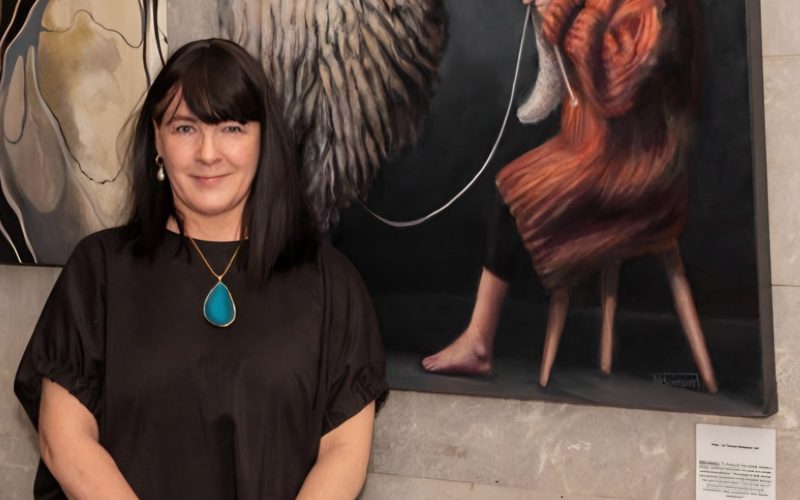
At Arts to Hearts Project, our Women Artists on the Rise Edition 4 is full of women telling their stories in a hundred different ways. But every so often, an artist tells hers through a single, tender relationship, the wordless bond between a person and an animal. That is what drew us to Nancy Boisvert.
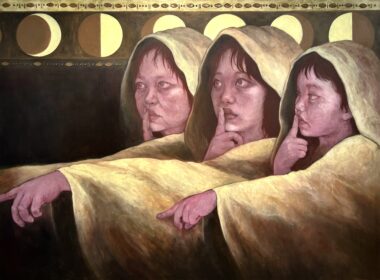
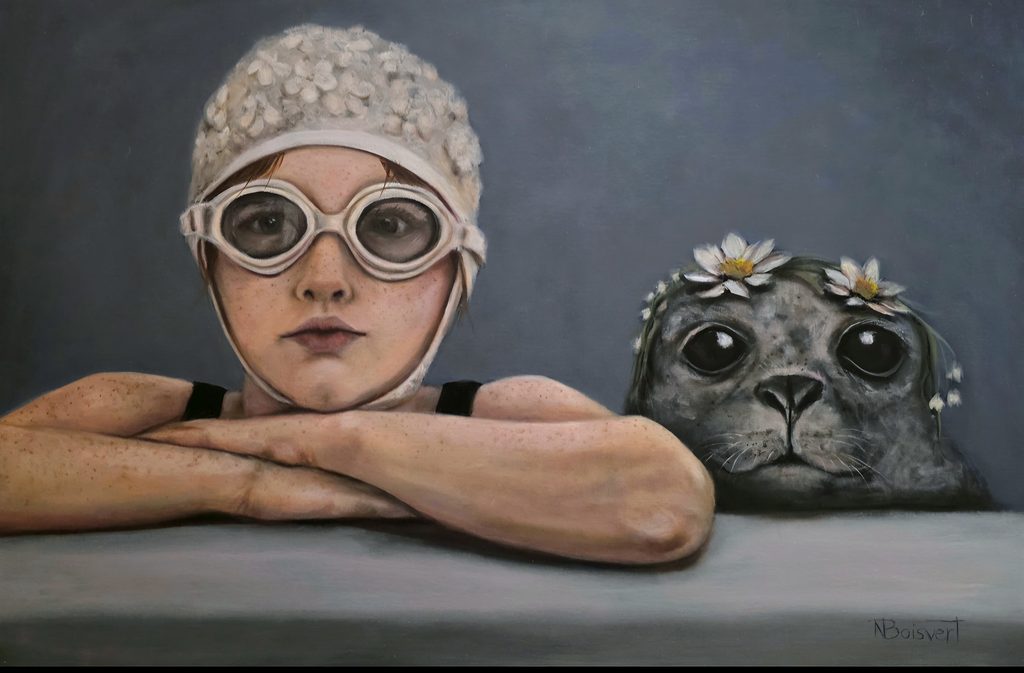
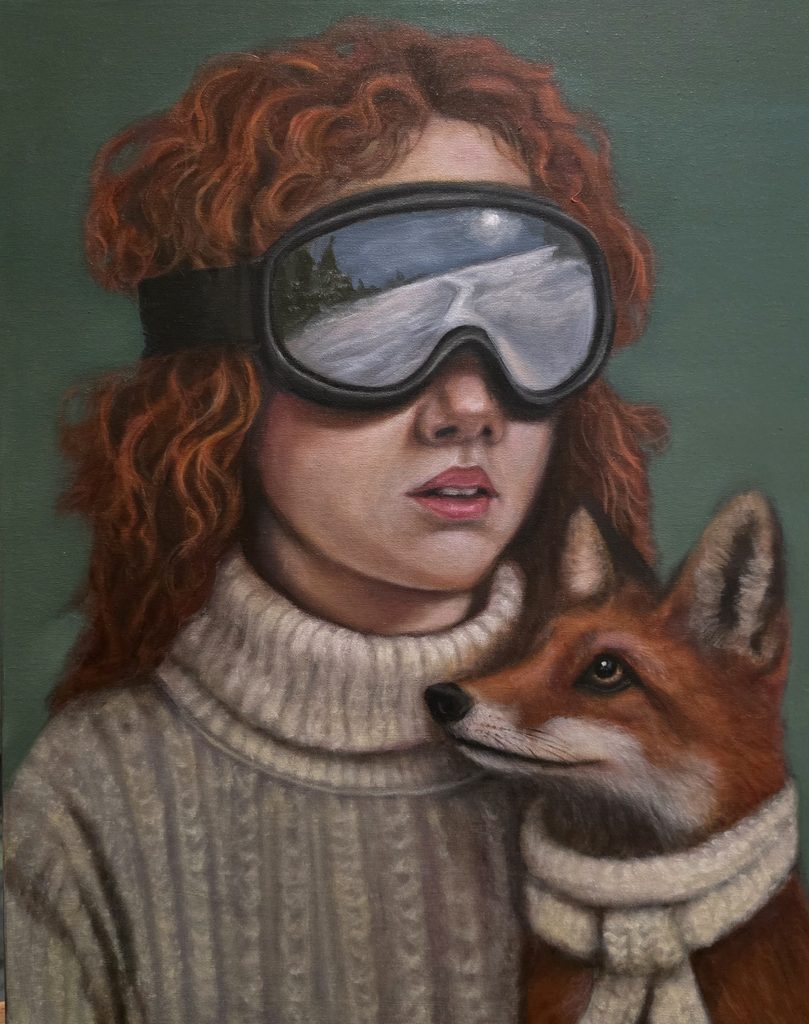
Nancy is a self-taught painter from Montreal, and she has been at this for more than twenty years now. She works mostly in oil, on linen and canvas, and there are almost always two of them in the frame, a person and an animal, caught together in one still, quiet moment.
The animal is never just sitting there to look nice. It carries as much of the story as the person does. Sometimes it feels like a friend, sometimes like a witness, and sometimes like a piece of whatever the person is feeling but not saying.
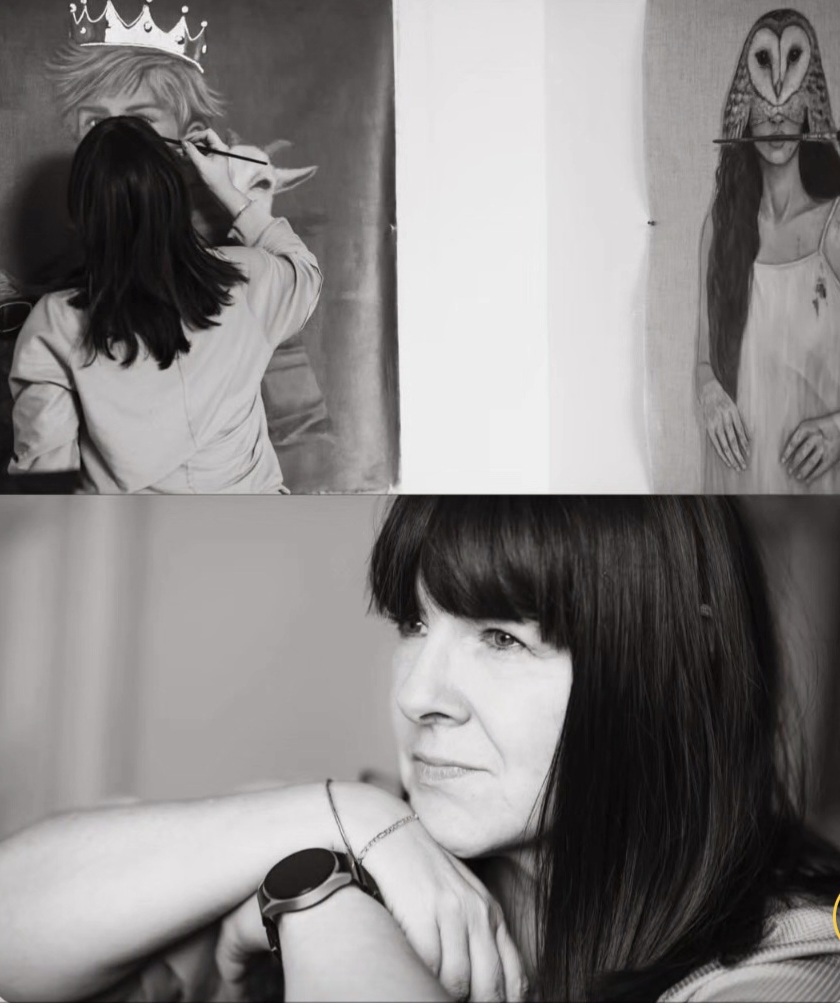
What hits you first is how quiet everything is. Nobody is doing anything big. It’s a tilt of the head, where someone is looking, the way a hand is resting, an animal simply standing close by. She keeps the background down to almost nothing, so your eye has nowhere else to wander, and the whole painting ends up resting on that one small, loaded moment between the two of them. With Nancy, what she leaves out matters as much as what she keeps in.
She usually doesn’t begin with the whole story worked out. It starts with a feeling, or some small idea, and she plays around with poses and expressions until something finally feels true. A few ideas sit with her for months before they ever make it onto the canvas.
She isn’t trying to tell you what to think. She’s trying to hold a single paused moment, like something just happened, or is about to, and then she hands the rest over to you.
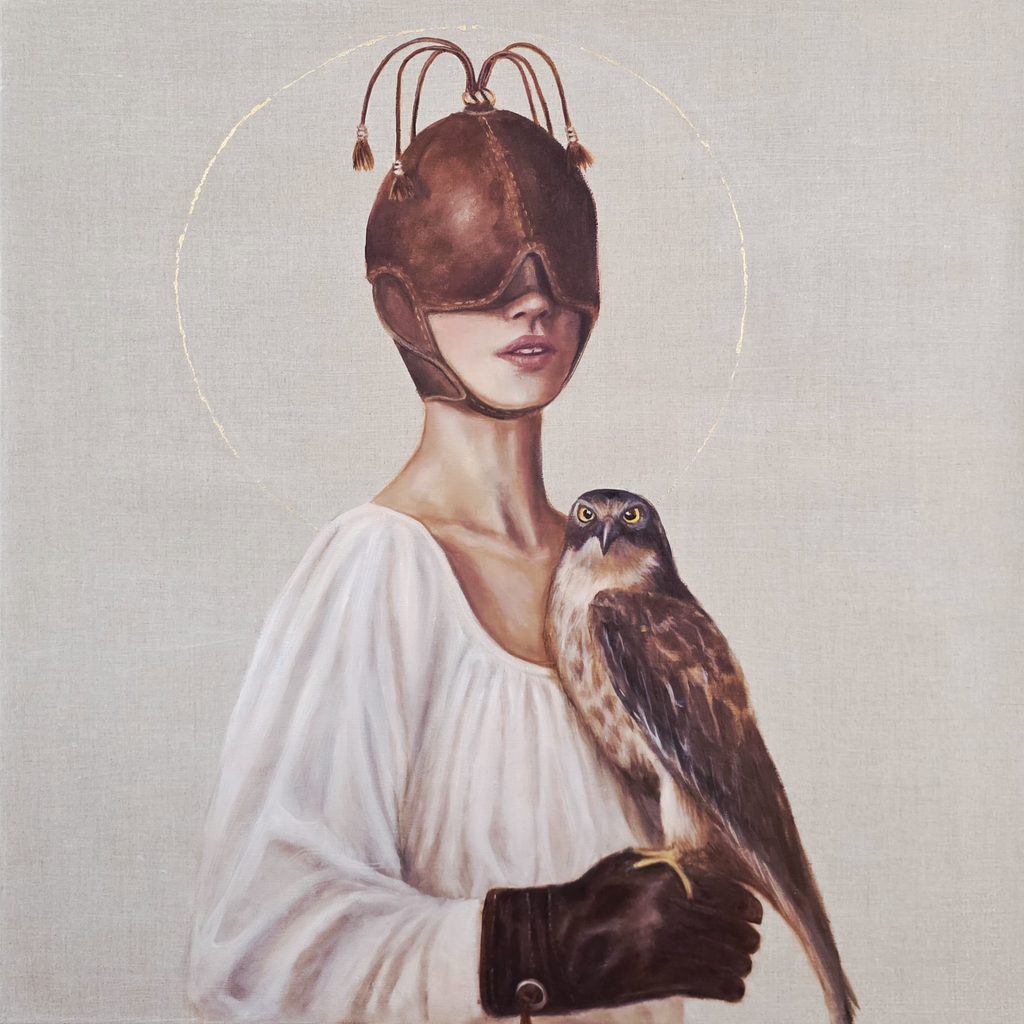
Here and there she’ll add a little gold leaf or a soft pattern, a quiet nod to Gustav Klimt, but never just for decoration. She keeps it sparing, and only reaches for it when it lifts the mood or marks something as precious. Her work lives somewhere between the real and the imagined.
The people and animals are painted with genuine care and skill, but what’s actually going on between them stays open, symbolic, a little unresolved. It looks familiar at first, and then it quietly refuses to leave your head.
She got here entirely on her own terms. No art school, no set path, just years of painting, experimenting, and slowly learning to trust her gut, and that freedom is a big part of why the work feels so completely hers. These days her paintings hang in private collections across Canada, the US, and Europe, there’s a residency in France coming up, and she’s found a warm circle of fellow Canadian women artists along the way.
Now let’s hear from Nancy about her self-taught path, the bond between people and animals, and finding a voice that’s truly her own.
Q1. Before we talk about your paintings, could you tell us a little about your journey and how you found your way to becoming an artist?
I’ve always been drawn to creative things, but becoming an artist wasn’t something I planned. It happened gradually. What started as curiosity became a passion, and over the years I found myself wanting to paint more and more. I’m largely self-taught, and my work has evolved through a lot of experimentation, curiosity, and simply painting consistently.
Every piece has taught me something. I don’t come from a traditional fine arts background, so I wasn’t following a set path. I was finding my own voice through trial and error. Today, creating art feels less like something I do and more like who I am. I love building quiet, thoughtful narratives that invite people to pause, look a little longer, and discover their own meaning in the work. That journey is still unfolding, and I think that’s one of the most rewarding parts of being an artist.
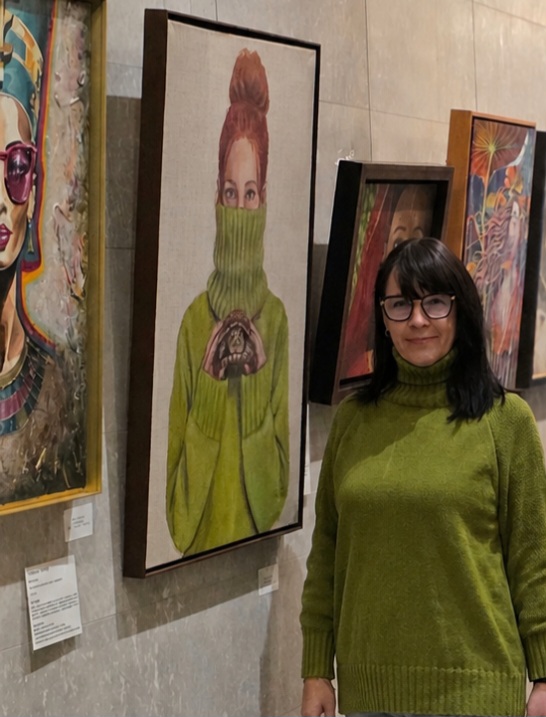
Q2. Your work began with wildlife realism before evolving into figurative painting. What inspired that shift?
I still love painting animals, but over time I realized I wanted to say more than a wildlife portrait could express on its own. Animals have always fascinated me, especially the emotion and personality they can convey, but I became curious about the relationship between people and animals and the stories that could emerge when they share the same space. Adding the human figure opened up a whole new world creatively. It allowed me to explore ideas about vulnerability, resilience, identity, and connection in a more symbolic way.
Rather than creating a literal scene, I wanted each painting to feel like a visual poem, something that raises questions instead of providing answers
Even though my work has evolved, animals are still at the heart of it. They’re no longer just the subject of the painting; they’re often an equal participant in the story.
Q3. What makes the relationship between humans and animals so important to your practice?
I’ve always felt a strong connection to animals. They communicate so much without words, and I think people naturally project emotions and stories onto them. There’s an honesty about animals that I find incredibly compelling. When I pair them with human figures, I’m not trying to illustrate a specific narrative. Instead, I’m creating space for interpretation.
Sometimes the animal acts as a companion, sometimes as a witness, a guide, or even a reflection of something happening within the person. The relationship shifts from one painting to the next. I hope viewers bring their own experiences to the work.
If someone sees a story that’s completely different from what I imagined, I think that’s part of the beauty of art.
Those quiet, open-ended connections are what interest me most.
Q4. What does a minimal background make possible in your paintings?
I’ve found that the less I include, the more intentional every element has to be. By simplifying the background, the viewer’s attention naturally stays on the relationship between the figure and the animal, along with the subtle expressions and gestures that carry the story. I also like the sense of quiet that minimal backgrounds create.
They give the paintings room to breathe and leave space for imagination rather than defining every detail of a place or time. For me, what’s left out is just as important as what’s included. That simplicity helps create an atmosphere where the emotional connection becomes the focus.
Q5. How do you develop the quiet moments and gestures in your paintings?
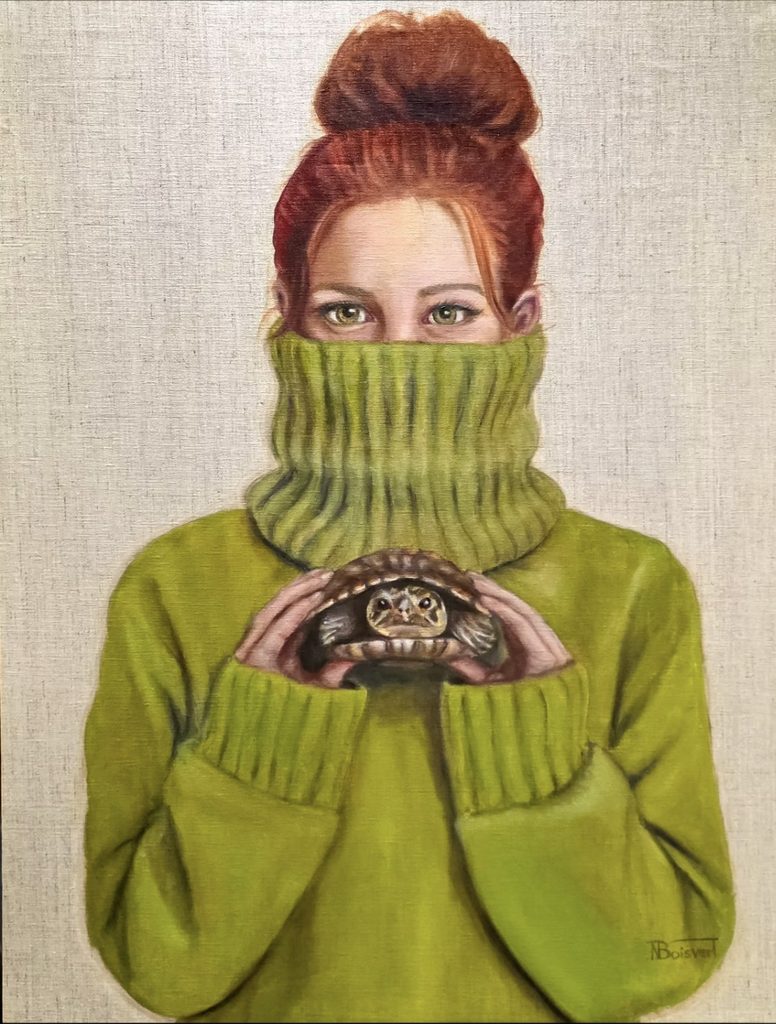
I don’t usually begin with a complete story in mind. It often starts with a feeling or a simple idea, and I spend time exploring poses and expressions until something feels emotionally true. I’m drawn to subtle gestures rather than dramatic action, a tilt of the head, the direction of a gaze, the way a hand rests, or the quiet presence of an animal. Those small details can say a lot without being obvious.
I want my paintings to feel like a paused moment, as though something has just happened or is about to happen. That sense of stillness invites viewers to slow down and create their own narrative, rather than having one handed to them.
Q6. What role do gold leaf and decorative patterns play in your work?
I introduced gold leaf and subtle patterns because I wanted to add another layer of meaning to the paintings. They’re never there just to make a piece look decorative. I use them sparingly, and only when they help support the mood or the story.
Gold has a way of drawing the eye and creating a quiet sense of importance
It can highlight a connection, suggest something precious or symbolic, or simply bring a sense of warmth and balance to the composition.
The same is true of patterns. I keep them understated so they don’t compete with the figures, but they can hint at memory, place, or emotion without saying it outright. For me, every element in a painting should have a purpose. If something doesn’t contribute to the story or the feeling I’m trying to create, it doesn’t belong.
Q7. Contemporary figurative painting is constantly evolving. Where do you see your work fitting within today’s art world?
I think my work sits somewhere between realism and imagination. The figures and animals are painted realistically, but the relationships between them are symbolic rather than literal. I’m interested in creating paintings that feel familiar at first glance, yet encourage viewers to pause and discover something unexpected. In a time when so much imagery is scroll-driven, I’m drawn to making work that asks people to slow down.
I hope my paintings invite quiet reflection and leave room for personal interpretation rather than delivering a single, fixed message. If my work has a place in today’s art world, I hope it’s as a reminder that simplicity, curiosity, and emotional connection still have the power to resonate.
Q8. Your work has changed significantly over the years. How important do you think it is for artists to let their practice evolve?
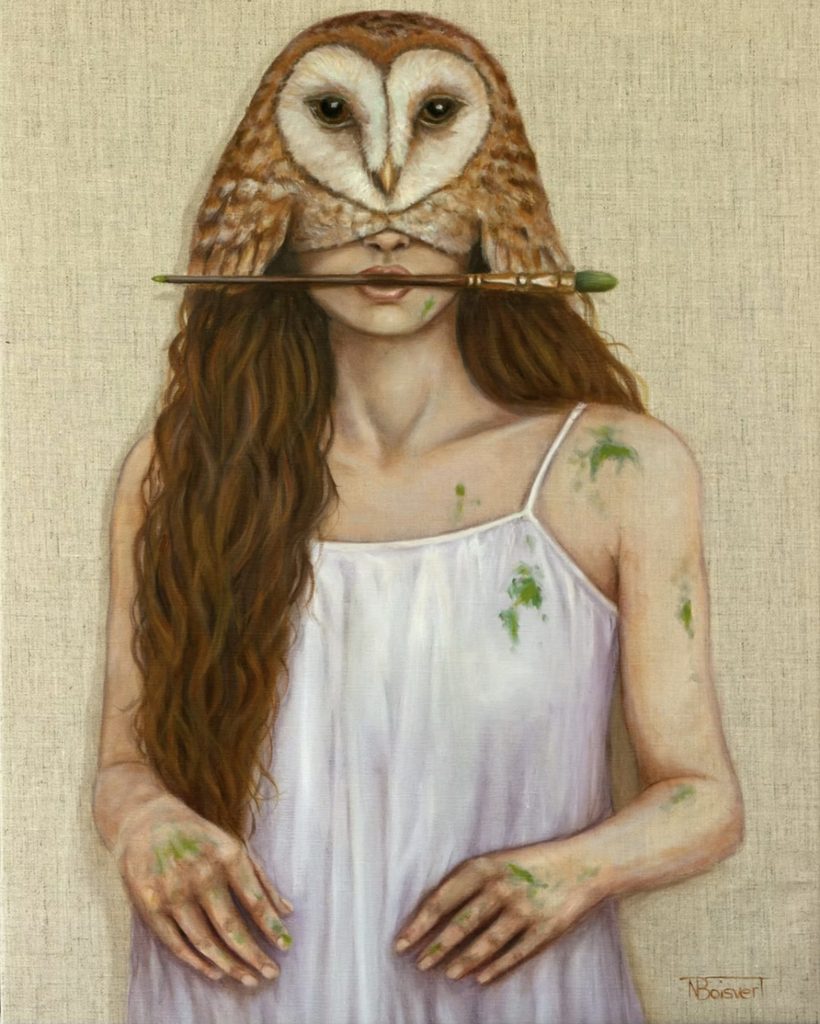
I think evolution is essential. If I were still painting exactly the way I did years ago, I would probably feel like I wasn’t challenging myself.
Every painting teaches me something, and that naturally influences the next one.
I’ve learned not to force that process. Some ideas stay with me for months before they find their way onto the canvas, while others emerge through experimentation. I try to stay open to where the work is leading me instead of worrying about fitting into a particular style.
At the same time, I think it’s important to remain true to what genuinely resonates with you. Even though my subject matter and techniques have evolved, the heart of my work has stayed the same. I’m still interested in creating quiet, thoughtful paintings that invite viewers to pause, reflect, and find their own meaning.
Q9. What do you think collectors connect with most when they encounter your work?
From the conversations I’ve had, I think people connect with the sense of emotion and mystery in the paintings. They’re often curious about the relationship between the human figure and the animal, and they begin creating their own story. I love hearing those interpretations because they’re often completely different from my own.
I also think the quietness of the work resonates with people. The paintings don’t demand attention, they invite it. They ask viewers to slow down, spend time looking, and notice the small details. If someone walks away still thinking about one of my paintings, or sees something new each time they return to it, then I feel I’ve achieved what I hoped for.
Q10. What has being a self-taught artist taught you about developing your own voice?
Being self-taught has allowed me to develop at my own pace and follow my curiosity wherever it led. I wasn’t trying to paint the way I thought I was supposed to. Instead, I experimented, made plenty of mistakes, and gradually discovered what felt authentic to me. I think one of the biggest advantages has been learning to trust my own instincts.
Without a prescribed path, I had the freedom to explore different subjects, techniques, and ideas until they naturally came together into a style that feels like my own. That doesn’t mean the journey was easier. In many ways, it required more persistence and self-discipline because I had to seek out knowledge, keep practicing, and be willing to learn through trial and error.
Looking back, though, that process shaped not only the artist I’ve become but also the way I approach every new painting, with curiosity, openness, and the belief that there’s always something new to discover.
Q11. What advice would you give to artists who are trying to develop a visual language that feels authentic to them?
I would tell them not to rush the process. Finding your own visual language takes time, and it’s something that develops through making the work, not by searching for a style. Be curious. Experiment with different ideas, techniques, and subjects, and don’t be afraid to make paintings that don’t work. Every piece teaches you something, even the ones that never leave your studio.
Most importantly, paint what genuinely fascinates you, not what you think people want to see.
Trends come and go, but authenticity has a way of lasting. When you’re creating work that truly means something to you, your own voice begins to emerge naturally
As our conversation with Nancy came to an end, we kept coming back to how rare quiet has become. How much of it we lose simply because we never slow down enough to notice it is gone.
The world runs on speed now. Images rush past us all day, most of them shouting for a second of attention before we scroll on to the next one. Nancy’s paintings just refuse to play that game. They don’t shout. They wait. They ask you to stop for a minute and sit with something small, a person and an animal, close together, until you start to feel whatever is quietly passing between them.
And there’s something honest about putting the two side by side. Animals don’t pretend or perform, and next to one, a person somehow looks more real too, softer, more open, closer to the parts of themselves we usually keep tucked away. By keeping things quiet, Nancy is really just asking us to feel a little more.
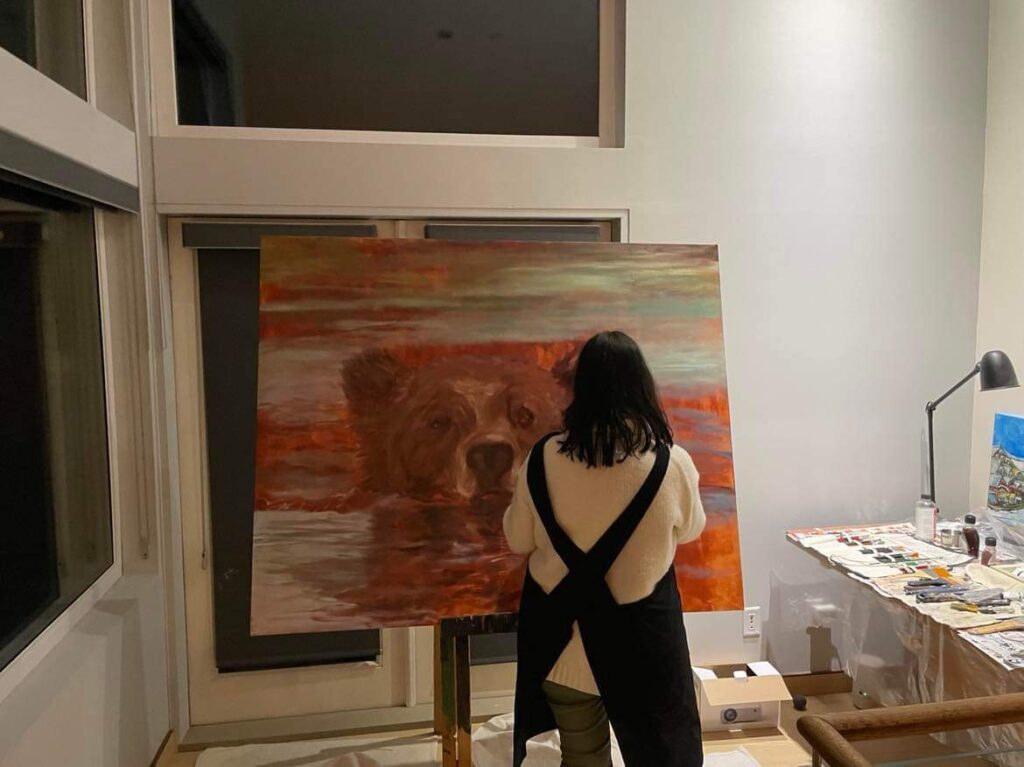
There’s another part of her story we think a lot of artists need to hear. There isn’t one correct way to become an artist. Nancy never set foot in an art school. She found her voice the slow way, one painting at a time, making mistakes and learning to trust herself over more than twenty years.
And what she says about it is simple, but not easy. Don’t rush. A voice that’s really yours doesn’t come from copying a style or chasing whatever is popular. It shows up on its own, gradually, when you keep making the work that actually means something to you. The honest work is the work that lasts.
For collectors, her paintings bring a kind of calm into a room that’s genuinely hard to find. They never grab at you, they just quietly earn their place, and they hold a little mystery you find yourself going back to. People tend to see their own story in them, often something totally different from what Nancy had in mind, and that’s exactly how she wants it. To live with one of her paintings is to keep a small, tender moment on your wall, and a gentle reminder to slow down and actually look.
Follow Nancy Boisvert through the links below and see her work for yourself.
Time is running out. Our 101 Art Book: Faces Edition closes on 10 September 2026, and we are looking for artists who know that a face is never just a face. It is a doorway. Into identity, memory, emotion, and everything a person carries beneath the surface.
Paint it, draw it, photograph it, sculpt it, stitch it, or collage it, however it comes to you, as long as your work goes deeper than the likeness. Medium, geography, and career stage do not matter. A face that holds something worth looking at twice is everything. The clock is ticking, and every featured artist once submitted before it ran out. This could be your edition.