

This photographer builds his own cameras from wood cardboard & brass │ Jacob Eyal Danon

At Arts to Hearts Project, our 101 Artbook Photography Edition is built around a simple question. What can photography be when it stops trying to be efficient? When it stops chasing sharpness and speed and clarity and instead embraces the slow and the imprecise and the uncertain? That question runs through a lot of the work in this edition but nobody answers it quite like Jacob Eyal Danon.
Jacob is one of our selected artists in this edition and his practice challenged almost everything we thought we knew about how photography works in 2026.
Jacob builds his own cameras. By hand. From wood and cardboard and brass. Pinhole cameras that demand long exposures lasting several minutes. He shoots on expired film that is sometimes decades old and behaves in ways he cannot fully predict. He develops and prints everything himself in his own darkroom.
And the images that come out of this process are soft and grainy and textured and moody in a way that feels completely honest even though it breaks almost every rule of what a technically good photograph is supposed to look like.
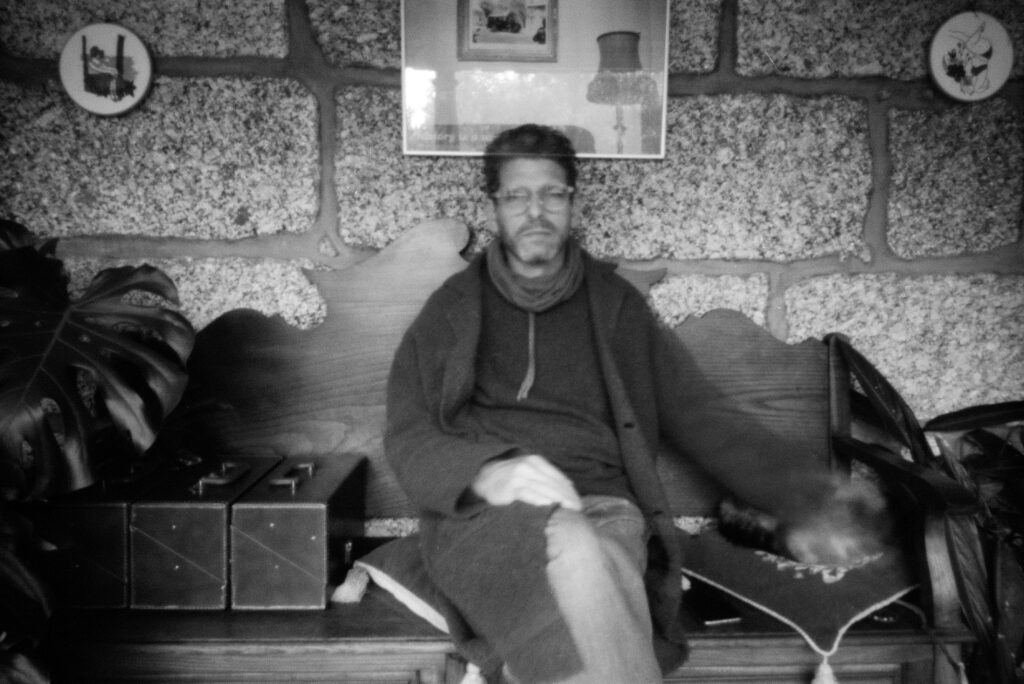
But what makes the work so powerful goes far beyond aesthetics or process alone.
Jacob moved from Israel to rural northern Portugal after more than four decades, carrying with him the experience of displacement, migration, political rupture, and the strange emotional condition of existing between places without fully belonging to either one anymore. That feeling quietly shapes everything in the photographs.
The landscapes, roads, abandoned buildings, ceremonies, animals, and people he photographs never feel fully fixed or completely knowable. Instead, the images reflect the experience of someone slowly trying to understand a place that still feels partially unfamiliar to him. And rather than hiding that uncertainty, he allows it to remain visible through the work itself.
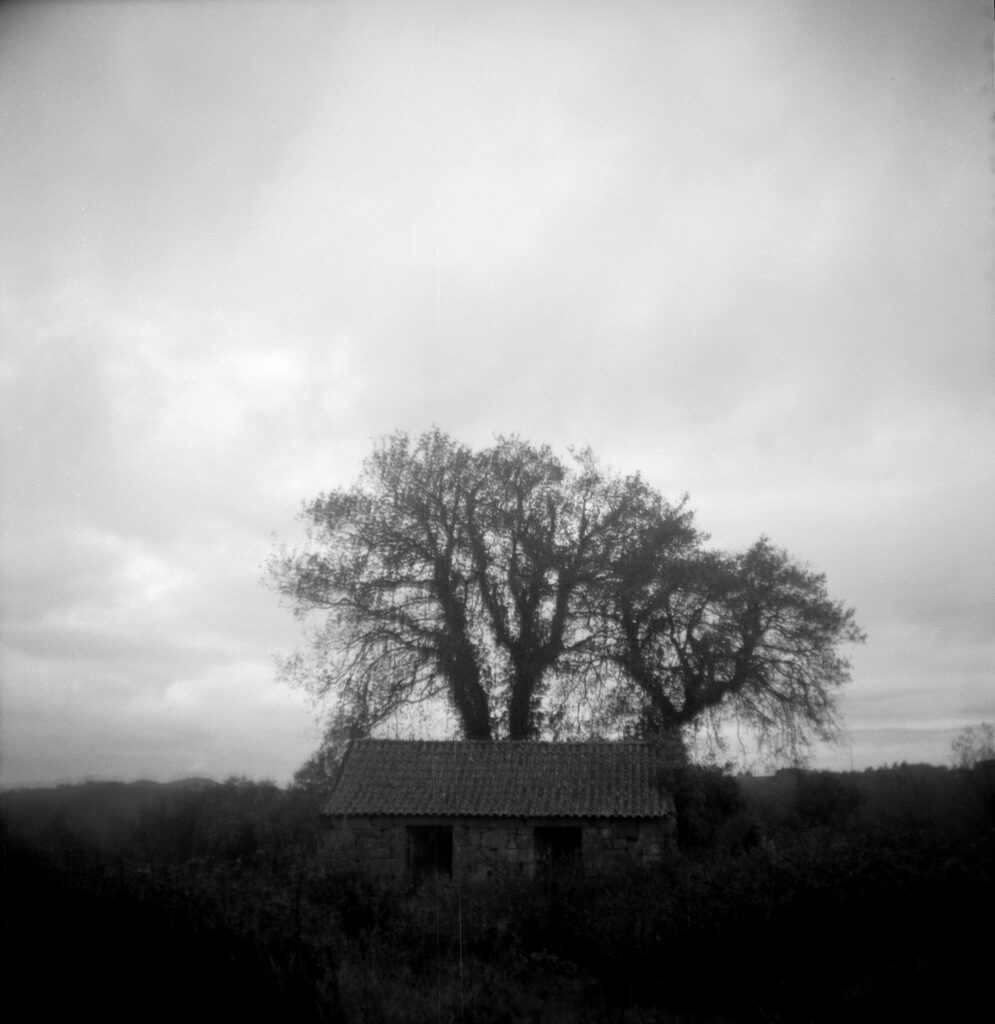
The softness of the images is not a visual effect added afterward. It comes directly from the tools and materials he chooses because they mirror his own position inside this new environment. A perfectly sharp photograph would suggest certainty and clarity. His photographs are much more interested in observation, patience, distance, and the slow process of learning how to see.
That perspective gives the work its emotional depth. There’s also something deeply human about the way his cameras function socially within the communities he photographs. These handmade objects slow people down. They create conversations. Curiosity. Collaboration. The camera stops being invisible technology and becomes part of the interaction itself.
And honestly, that changed the way we thought about photography too.
Now let’s get to know Jacob through our conversation with him about handmade cameras, migration, darkroom photography, and finding beauty inside uncertainty.
Q1. Could you walk us through your journey into photography and how your use of light and mood has evolved over time?
I started photographing as a child. I studied photography, and for a short period I worked as a photojournalist. But then my career moved in a different direction. I became a curator and eventually the director of the Centre for Digital Art, where I spent over two decades. So photography as my main practice was put aside.
Although I never completely stopped. I always had a darkroom, and I always took pictures. But it was not the centre of my professional life. The curatorial work consumed everything. I came back to photography after leaving the Centre for Digital Art.
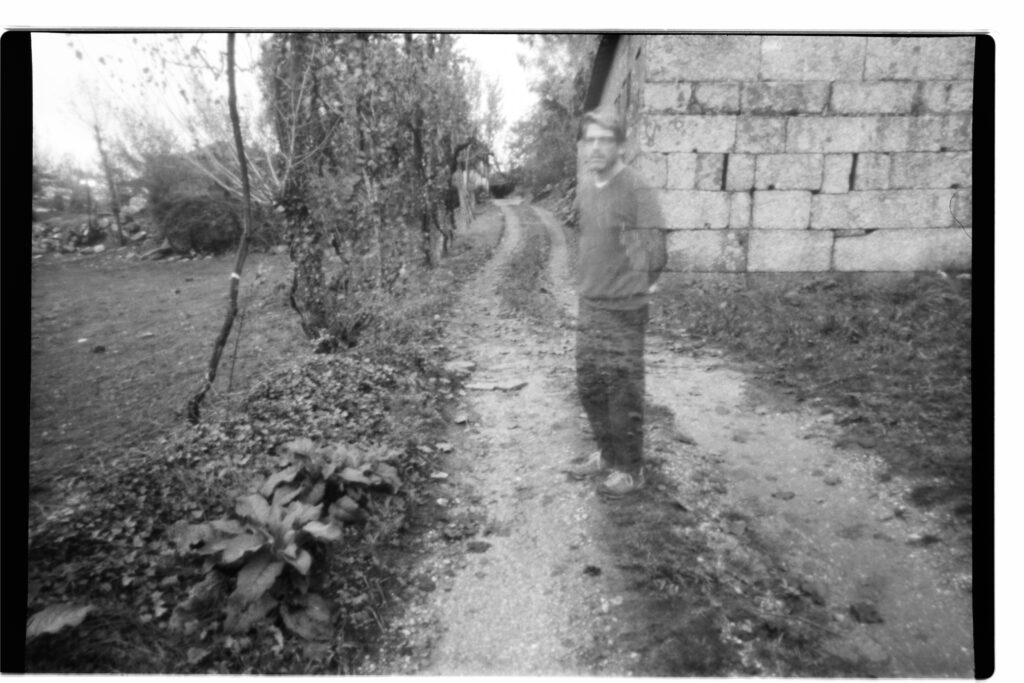
That return coincided with founding the Analog Photography Centre in Tel Aviv, a space dedicated to film photography, darkroom work, and alternative processes. I started building cameras, that is still what I am doing. The cameras have become more varied and more specific to what I need, but the principle has not changed. I am interested in the most elementary form of the photographic act.
When I moved to Portugal three years ago, I started using those experimental tools to try to understand a real place. The visual language did not evolve through a conscious decision. It evolved because my life changed. The mood and the light in my images now come from the place itself. I did not design this look. I brought my tools to a new place and this is what they produced.
Q2. Your images have a quiet, textured mood how much of that is created in-camera versus during development and printing?
The mood you describe comes from a series of deliberate choices that begin long before I press the shutter, or in the case of my pinhole cameras, before I remove the cap from the aperture. I work with expired materials: films and photographic papers that are sometimes decades old. These materials behave unpredictably. The grain increases, the tonal range shifts, contrast changes in ways I cannot fully control. I also build many of my own cameras, mostly pinhole cameras made from wood, cardboard, and brass. Others are very simple, old cameras with basic lenses.
None of them produce sharp, precise images, and that is the point. These are not aesthetic choices made in isolation. I choose these tools and materials because they correspond to my actual situation. I am a recent immigrant in rural northern Portugal. I do not see my new environment clearly. The language is still difficult. Social customs still surprise me. I spend most of my time observing rather than participating, trying to read a place I do not yet fully understand.
The softness, the grain, the unpredictability of expired film: these are not effects I add to the image. They are conditions I work within because they are honest about my position. A precise, sharp photograph would suggest a clarity I do not have. The imprecision of my tools mirrors the imprecision of my understanding.
So to answer directly: almost everything is intentional in the shooting. The developing and printing preserve what the materials and cameras produce, but they do not create the mood.
The mood begins with the decision to use the wrong tools for the job.
Q3. Your subjects range from landscapes to abandoned spaces and portrait what connects them visually in your work?
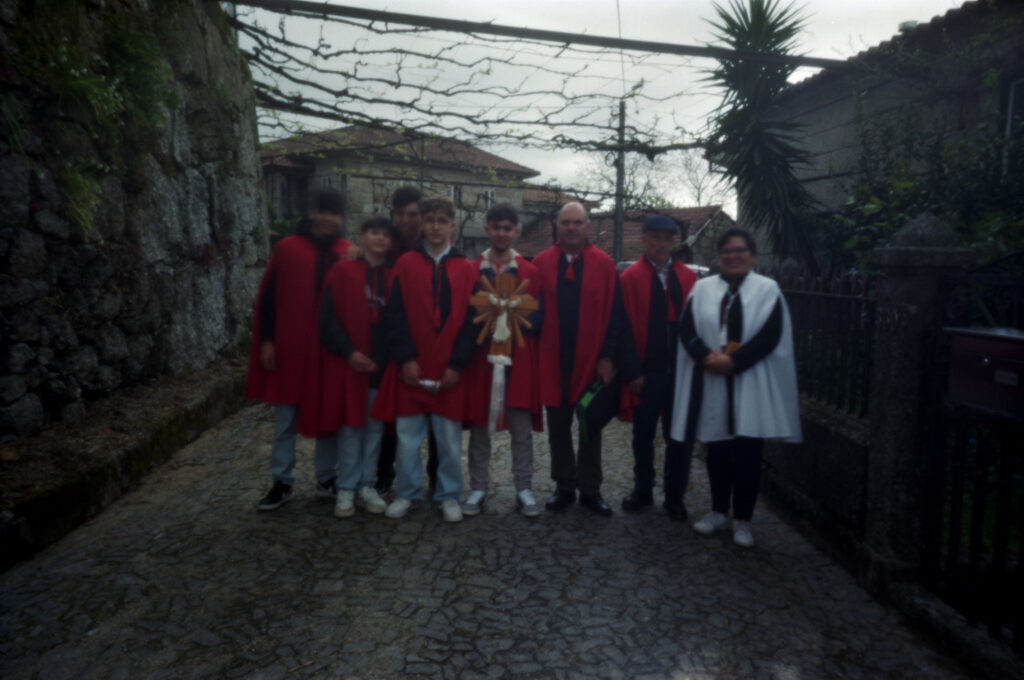
My main project in recent years, “Between Two Cities” is, at its core, a way for me to learn and understand my new place. I arrived in rural northern Portugal and I photograph as a way of reading an environment I do not yet fully comprehend. The variety of subjects you mention is not accidental. I shoot as if I am collecting. Collecting landscapes, cultural elements in the environment (roadside shrines, stone walls, village signs), ceremonies (the Caretos masquerade, the matanca pig slaughter, Easter processions), animals, roads, abandoned buildings, local people working their land.
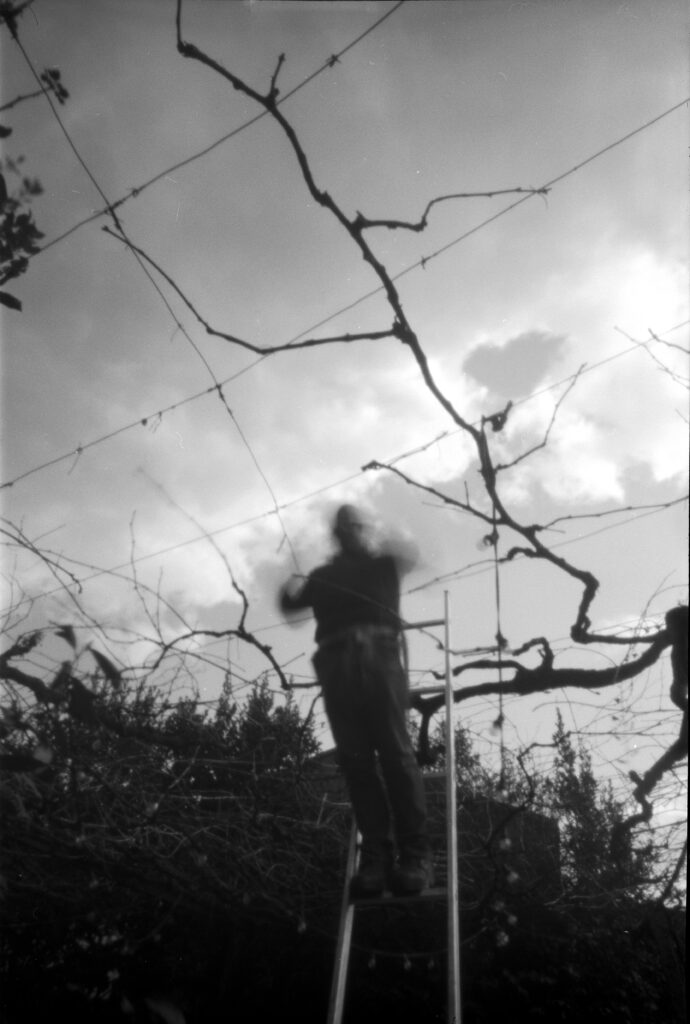
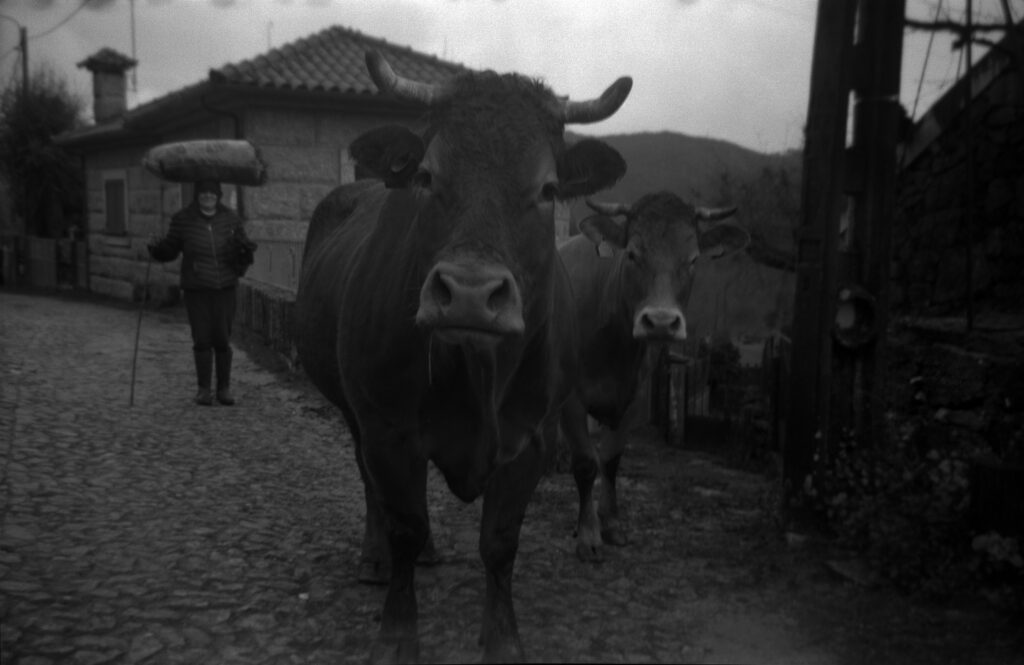
I collect in order to understand. The range of subjects reflects my curiosity as an outsider, not a predetermined plan. Each new series within the project emerges because something in the environment catches my attention and I return to it. What holds it together visually is the consistency of the tools. Whether I am photographing a bull or an abandoned house or a winter vineyard, I am using the same handmade pinhole cameras, the same expired film, the same long exposures.
The grain, the softness, the tonal quality: these remain constant across all subjects because the cameras and materials do not change. The visual coherence comes from the tools, not from the subject matter. What holds it together conceptually is the position I photograph from: always the outsider, always partially understanding, always accumulating. It is a documentary project in essence, but it uses the wrong tools. A conventional documentary photographer would clarify. My instruments do not clarify necessarily. They create accumulation.
Q4. What role does camera gear play in your process does it shape the work, or disappear once you’re shooting?
I build most of my cameras myself. They are simple pinhole cameras, constructed from wood, cardboard, and brass, designed according to the specific needs of each situation. One example is a camera with 23 pinholes that exposes a single roll of 120 film spread open inside the body. It produces 23 tiny images on one roll of film. Another is a stereo pinhole camera that creates 3D images.
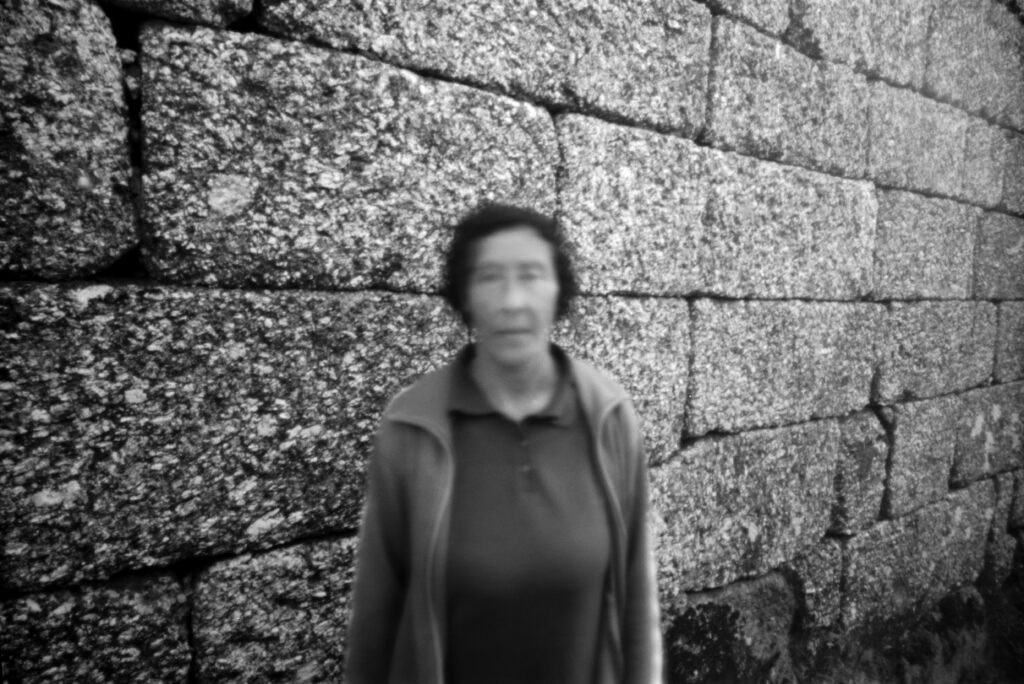
Each camera I build is a response to a question about how I want to see something. The pinhole cameras, in most cases, demand long exposures that can last several minutes. This transforms the photograph from an instant into a process. If I am photographing a person, they must stand still. I have to explain what I am doing, why it takes so long, what kind of camera this is. A conversation begins. The photograph becomes a collaboration rather than something I take from someone. The time the exposure requires changes the relationship between me and the subject.
My choice of expired film also serves this slowing down. Beyond the aesthetic qualities, expired film has lower sensitivity to light. It requires longer exposures even in conventional cameras. So whether I am shooting with a pinhole camera or a box camera, the expired materials extend the time I spend with each frame. Every photograph takes longer to make than it would with fresh film. This is not a problem. It is part of the method. Beyond the cameras I construct, I mostly shoot with very simple box cameras, plastic or Bakelite cameras from decades past.
These old cameras also look very different from anything people here are used to seeing. They draw attention, they start conversations. People ask questions, they want to know what this strange object is. For someone who is still learning the language and trying to find his place in a community, this is valuable. The camera becomes a reason to talk. What all these cameras share is an extreme simplicity of operation. There are no settings to adjust, no meters to read. I press the shutter (or remove the cap from the pinhole) and that is it. When the camera demands nothing from me technically, I can focus entirely on the subject.
The machine disappears. I am not thinking about aperture or shutter speed. I am thinking about what I am looking at and why I am drawn to it. So the gear is central to how I think about the work in the sense that I choose it very deliberately. But once I am photographing, it becomes a social tool as much as a technical one. The simplicity of these cameras allows me to stay present. The strangeness of them opens doors.
Q5. Does developing and printing film feel like part of the creative process for you, or more like a technical step?
I develop and print everything myself, both color and black and white. The darkroom is where the image reaches its physical form, and yes, it is absolutely a continuation of the creative act. The decisions I make there (the paper I choose, the exposure time, the chemistry) shape the final image as much as anything that happened in the field. Unfortunately, I do not have enough printing time.
Life in a rural village with a family does not leave many hours for the darkroom. In many cases the images have not yet reached their final look. There are negatives I know well but have not had the chance to print properly, or prints that are close but need another session to get right. This is a frustration, but it is also the reality of working this way. The project moves slowly because the process demands it.
As with expired film, I also work with expired photographic paper, sometimes paper that is decades old. It behaves unpredictably. It is difficult to work with. You cannot rely on what the manufacturer intended because the chemistry has changed with age.
But this unpredictability opens possibilities that fresh materials do not offer. So the darkroom is not a place where I reproduce what the camera captured. It is a place where the image continues to change, continues to resist my control, and occasionally gives me something better than what I intended.
Q6. The idea of “between” appears strongly in your work what does that word mean to you personally?
It is all of these. The title is literal: I moved between countries, from Israel to Portugal. I moved between a city and a village. I moved between cultures, languages, climates, ways of being in the world. Every aspect of my daily life exists in this space between what I knew and what I am still learning. I left Israel because the country’s policies moved sharply to the extreme right, and I could no longer identify with what was being done in my name. Staying began to feel like participation.
After more than four decades there, I chose to leave. But the “between” is not only a description of the move. It is my current condition. I live between. I am not fully here and no longer fully there. I speak Portuguese poorly. I understand the customs imperfectly. I recognize the landscape but cannot read it the way my neighbours do.
At the same time, Israel has continued to change in my absence, and the country I left is not the one that exists now. I am not sure this condition will or should be resolved. For a long time I thought of it as a transitional state, something that would eventually settle into belonging. I am less certain of that now. The in-between defines who I am at the moment. It shapes how I see, what I notice, what draws me to pick up a camera.
As someone who immigrated at an older age, after more than four decades in one place, I do not think this feeling will go away. A person who moves at twenty absorbs a new culture differently than someone who moves at fifty-something. The in-between is not a phase for me. It may be permanent. And the work comes from that permanence, from accepting that I will always be looking at this place from a slight distance.
Q7. How do you balance spontaneous moments with more carefully composed images in the same body of work?
I do not experience that distinction in the work. From my side, all the images come from the same process. There is no separation between the spontaneous and the composed. I travel without a plan. I walk or drive through the region, through roads I have taken many times before, and I look. I am constantly looking, constantly searching. When something catches my attention, I stop and take a picture. That is it. There is no difference in method between an image that appears composed and one that feels spontaneous.
Both came from the same wandering, the same searching, the same moment of recognition. This process can take hours. I can spend an entire day moving through the same places I have visited dozens of times and come back with several rolls of exposed film. Other days I cover the same ground and come back with nothing. There is no formula for when the looking turns into a photograph.
Some days the landscape speaks to me and some days it does not. If certain images appear more deliberate, it may be because the camera itself slows the process down. A pinhole exposure that lasts several minutes requires me to stay in one place, to wait, to commit to a specific view.
That enforced stillness can make the result look composed. But the decision to stop there, to point the camera in that direction, was no different from any other: I saw something, I responded. The project does not distinguish between these modes because I do not. The collecting is all one gesture. I am always doing the same thing: trying to see where I am.
Q8. Do you want your black-and-white photographs to feel nostalgic, timeless, or something else entirely?
I do not think of black and white as nostalgic or timeless. I see it as the basic form of photography. It is where photography began, and for me it remains the most direct way to work with light, form, and tone. I also shoot in color, but my ability to control the process with color is more limited. In black and white I can manage every stage: from the exposure through the development to the final print.
I know what the chemistry will do, how the paper will respond, what I can push or pull in the darkroom. With color the variables multiply and my control decreases. But beyond the practical, I see black and white as a way to focus the viewer on the subject. Color carries a lot of information.
That information can be beautiful, but it can also distract. It tells the viewer things about the scene that may not be relevant to what I want them to see. Black and white strips that away. It simplifies the image down to light and shadow, to texture and form. It asks the viewer to look at the structure of what is in front of them rather than its surface appearance. For the work I am doing in rural Portugal, this reduction feels right. I am not trying to show what the region looks like in full detail. I am trying to show how it feels to look at it from where I stand.
Q9. Has a shoot that felt like a failure ever become unexpectedly important later on?
Honestly, no, because the question assumes I can predict results in the field. I cannot. After all these years of experience, I have never managed to forecast how an image will look. The gap between what I see when I press the shutter and what I find on the developed film is still there, and I have stopped trying to close it.
The moment I open the developing tank and see the film for the first time is still a moment of magic. It has not diminished with experience. I pull the film out and discover what actually happened during those seconds or minutes of exposure. Sometimes what I thought was a strong scene produced nothing interesting on the negative.
Other times a frame I barely remember shooting turns out to hold something I did not see at the time. I almost never think about or imagine how the images will look when I am shooting. I do not compose with a final print in mind. I respond to something in front of me, I make the exposure, and then I let it go. The image belongs to the camera and the chemistry until I open that tank. This is part of why I work this way. Digital photography closes the gap: you see the result immediately and you can adjust. My process keeps the gap wide open. I do not know what I have until days or weeks later, in the darkroom, in the dark.
Q10. Analog photography today feels both fragile and newly alive where do you see yourself within that moment?
I think what is happening now to analog photography is similar to what happened to painting after the invention of photography. When photography arrived in the 19th century, painting was relieved from the burden of documenting reality. Photography was simply a better tool for that task. So painting began exploring new territories: abstraction, the presence of the medium itself through visible brushstrokes and paint marks, the surface of the canvas as a subject. That liberation is what gave us modern painting. Something similar is happening to analog photography today.
Documentary and commercial work are better served by digital. And so analog photography is now free. Free to explore the world through a different perspective, and free to explore photography itself: its materials, its chemistry, its physical processes. It is no wonder that we are seeing a revival of alternative and historical processes.
Cyanotypes, wet plate collodion, platinum printing, pinhole cameras, hand-coated emulsions. Formats and techniques that were abandoned decades ago are being rediscovered and experimented with. Photography in its first fifty years was an enormous field of experimentation: different chemistries and different formats. That experimentation gradually narrowed under the pressure of the market.
The logic of commercial photography and photojournalism demanded smaller cameras, faster emulsions, sharper lenses, more efficient workflows. The medium was optimized for speed and clarity. Now that this is no longer the only logic, photographers are rediscovering the medium’s past and experimenting with it again. Young photographers shooting film today are not being nostalgic. They are entering a space that has opened up precisely because digital took over the practical functions. They are free to ask what else photography can do, what it can be when it does not need to be efficient.
As our conversation with Jacob came to a close, we kept thinking about how differently his work approaches photography compared to so much contemporary image-making today.
A lot of photography now is built around speed, visibility, sharpness, and immediate consumption. Images are expected to explain themselves instantly. Jacob’s work moves against that entire rhythm. His photographs remain unresolved on purpose.
The blur, grain, long exposures, softness, and unpredictability are not technical flaws to correct. They become part of the emotional language of the work itself. Instead of offering certainty, the images hold onto ambiguity, distance, silence, and observation in ways that feel much closer to real human experience.
And honestly, that restraint gives the work far more emotional weight.
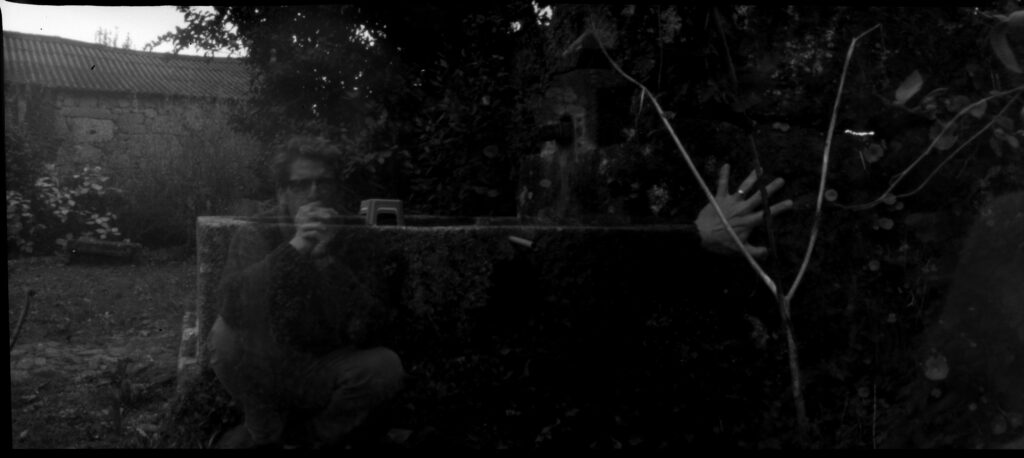
Many documentary photographers try to clarify the world around them. Jacob’s photographs accept that some places cannot be fully understood immediately, especially when you arrive as an outsider carrying displacement, unfamiliar language, and the feeling of existing between cultures.
That tension quietly lives inside every image. There’s also something meaningful about the slowness of his process. Handmade pinhole cameras, expired materials, darkroom printing, and long exposures force both the artist and the photograph itself to resist immediacy. In a culture obsessed with efficiency and endless production, his practice feels committed to attention, patience, and presence instead.
That commitment changes the atmosphere of the work completely. The photographs don’t offer clear answers. They offer presence, atmosphere, and the feeling of standing inside someone else’s way of seeing the world. And perhaps that’s what makes the work feel so honest. It never pretends certainty where certainty doesn’t exist.
To follow Jacob’s journey and see more of his work, find him through the links below.