
This artist uses geometry & fine detail in her contemporary mixed media paintings │ Alina Moraru

At Arts to Hearts Project, every issue of our magazine teaches us something we did not know before about what artists are doing right now and why it matters. For Magazine Issue 12 the theme was This Is Me and that theme opened a door that previous themes had not.
It gave artists permission to be personal in a way that goes beyond subject matter and into something closer to identity itself. And the responses we received reflected that. They were braver and more vulnerable and more honest than what we usually see.
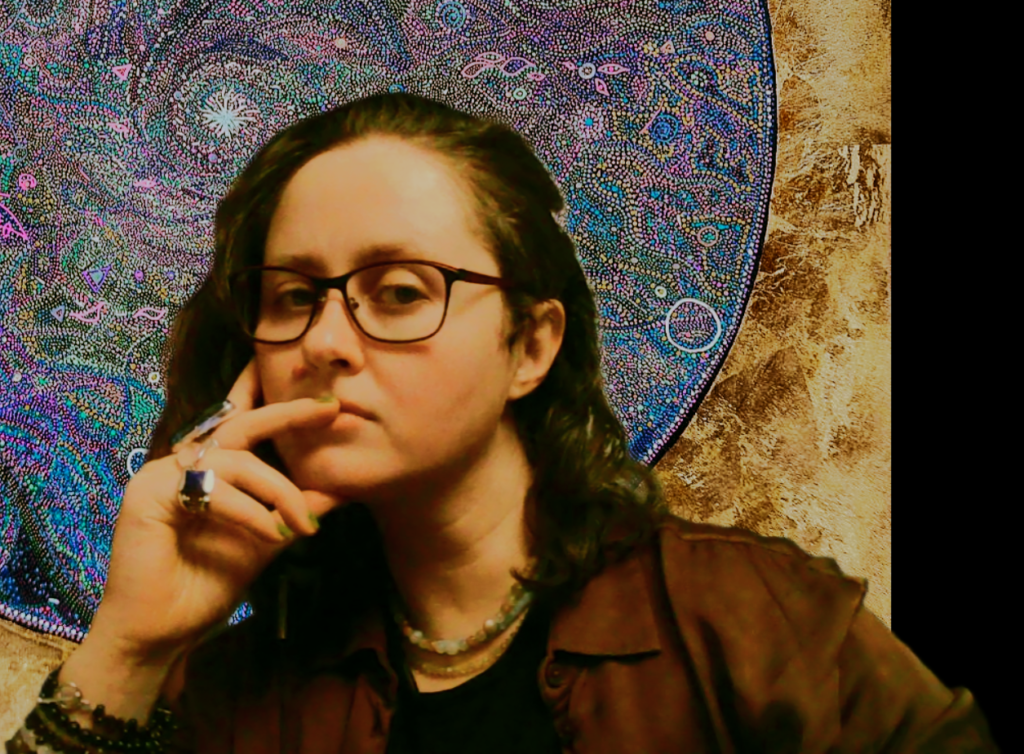
Alina Moraru is one of our selected artists for this issue and her submission was one of the first that made us stop and look again and then look a third time and realise we were going to need the full interview to even begin understanding what she is doing.
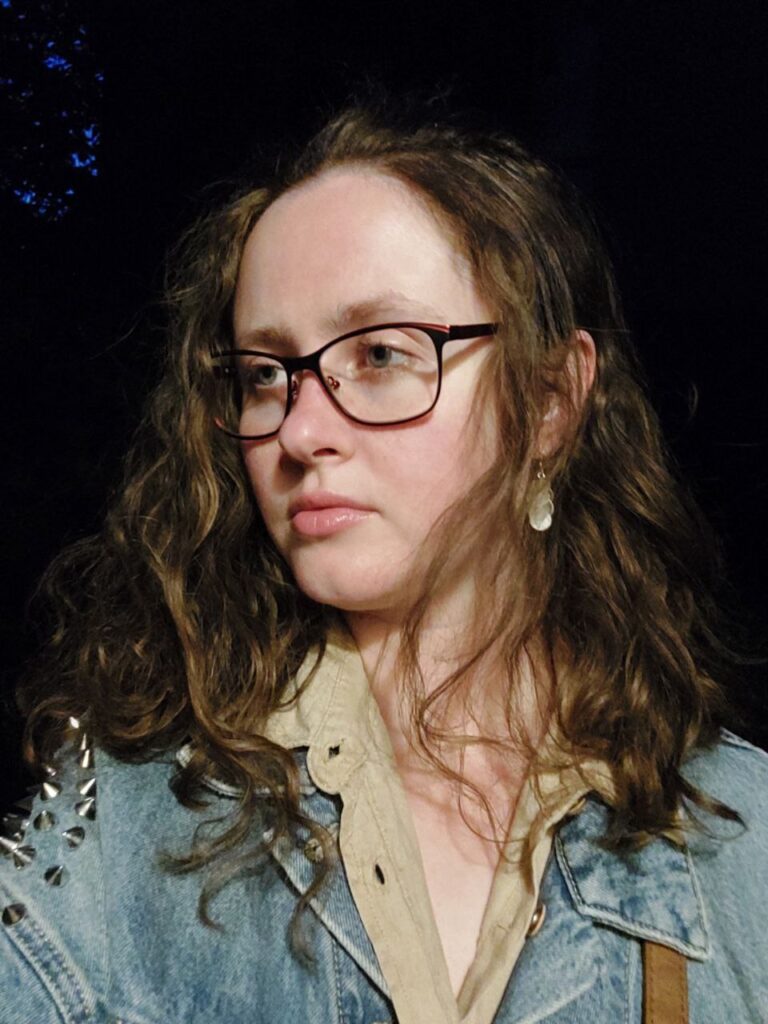
Alina is based in Hamburg and she works across watercolour, acrylic markers, gel pen, mixed media, and gold leaf. She makes paintings but the word paintings on its own does not really capture the scope of what she is building. She has created her own framework and her own vocabulary for her practice because the existing language of art could not hold it. That is not something we say lightly.
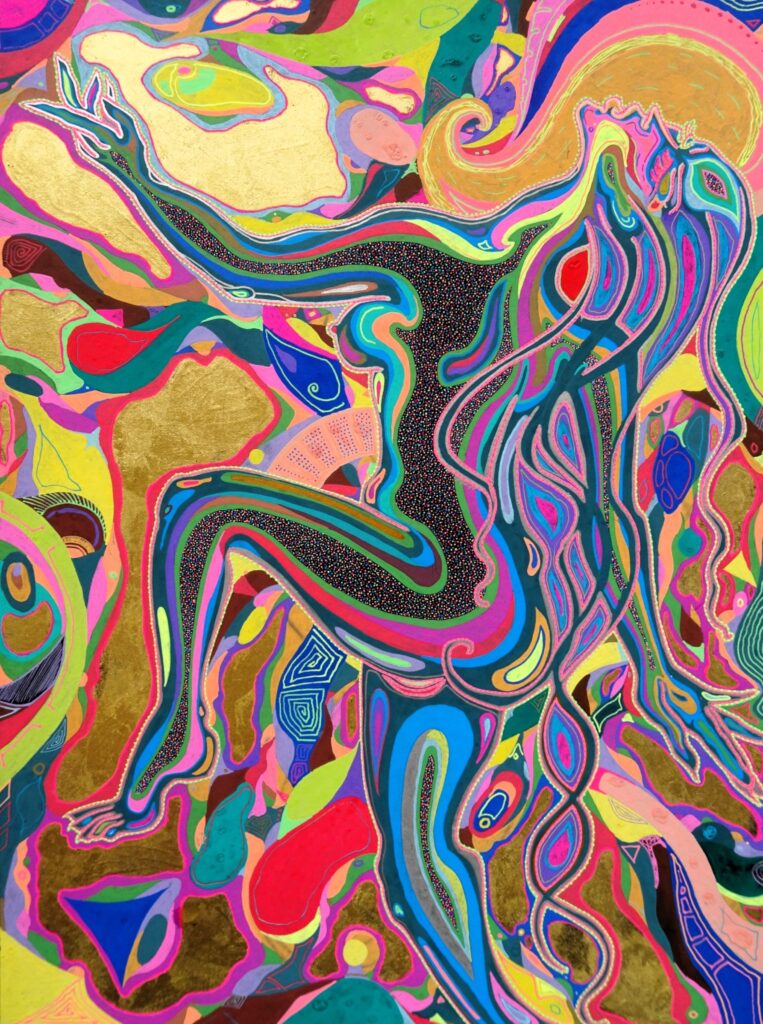
Her colour palette is one of the most distinctive we have come across in any of our editions. She works with dark neons and rich sacred tones and unexpected contrasts that somehow feel completely natural together even though on paper they should not work at all. And the interesting thing is that those colour choices do not feel decorative or calculated.
They feel like they come from somewhere real and deep and personal inside her. How she arrives at those choices and what role instinct and intention each play in that process is something she talks about during the conversation and it is one of those answers that stays with you for a while after you read it.
This Is Me as a theme does not ask Alina to do anything differently than she already does. Everything in her practice has always come from a deeply internal place. She does not start with external references or trend-driven concepts. She starts by listening and paying attention to what is arriving inside her and then she gives it form through materials and layers and time.
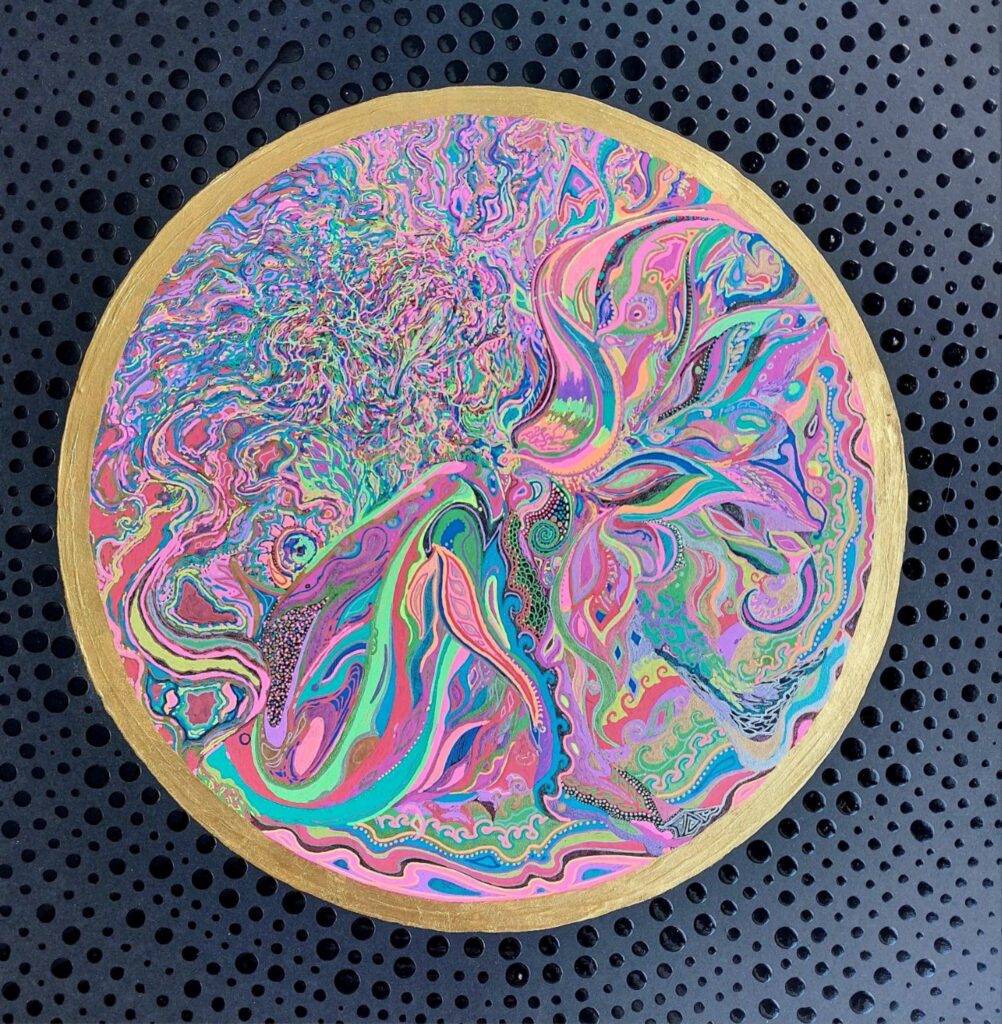
Sometimes a lot of time. She is not someone who rushes her process and she is not someone who apologises for how long things take. That patience and that trust in her own internal rhythm is something you can feel in the finished work even if you know nothing about how it was made.
And beyond the paintings themselves she has a way of thinking about the creative life that we found really refreshing. About the tension between sharing your work publicly and protecting the depth of it. About what happens to art when it leaves your hands and enters someone else’s world.
About how to build something sustainable without making the work shallow. She talks about all of this during the interview with a clarity that comes from someone who has actually wrestled with these questions and found real answers rather than just quoting someone else’s philosophy.
Let’s get to know Alina through our conversation with her about the framework she built for her own art, why her materials are chosen by feeling rather than logic, how patience became central to her entire practice, and what she has learned about building a creative life that is both honest and sustainable.
Q1. Alina, let’s start with you, can you share your background and how you came to create such mythic, dreamlike work from your studio in Hamburg?
I’m Alina. I live and work in Hamburg, though most of what I do begins somewhere much less visible. I make paintings that feel like remembering something you didn’t know you carried. I call it Glyphic Mythography – mainifestation of glyphs. They are not read – they are felt, absorbed, and unfolded. They are pre-language. They exist before words, before thought, as pure structure.
I don’t think I chose this path in a linear way. It felt more like following a thread -through dreams, through questions, through moments where something inside insisted on being seen. Painting became a way to listen. A way to give form to what doesn’t arrive in words. When the paintings leave, they don’t really feel finished to me. They become part of someone else’s space, their inner world. I often hear that people feel something before they understand it. A kind of recognition. That’s what I trust. Not that the work explains anything – but that it keeps a conversation open.
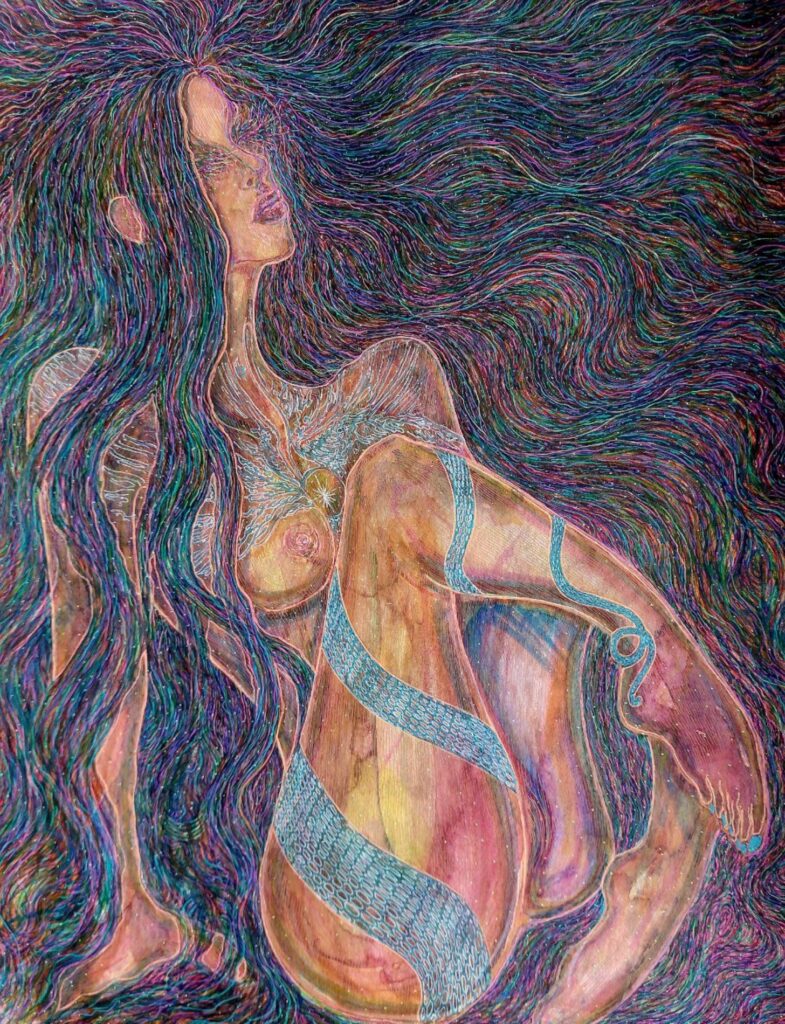
Q2. You work across watercolour, acrylic markers, gel pen, mixed media how do you decide what medium a piece gets?
It’s less a decision and more a listening. A piece usually arrives with the impression of what color and material will transmit the actual line, layer, form in best ways. The medium isn’t chosen intellectually. It’s more like recognizing what the work needs in order to become itself.
And allowing the process, holding the space in attention and certain quality of presence. Over time, I’ve come to trust that the medium is part of the meaning, the dialogue, the culture. Not just how the work looks – but how it keeps unfolding and maturing.
Q3.In Dancing the Pulse, how do the fine liner details and gold leaf work together to shape the meaning of the piece?
I’m drawn to materials that carry their own symbolism, and in “Dancing the Pulse” those two elements speak to each other beautifully. The fine liner detail is intimate, patient, almost devotional. It asks for honesty.
Every line is a small act of attention, and together they create rhythm, movement, and the sense that life is made of countless subtle moments woven into one larger current. It mirrors the pulse itself – repetition, intricacy, continuity. The 24k gold leaf brings a very different energy.
Gold has always carried associations of the sacred, the incorruptible, something timeless that doesn’t diminish with age. It catches light differently throughout the day, so the work is never static. It changes as you move with it.
What interests me is the meeting of those two forces: the delicate and the eternal, the hand-made and the luminous, the fragile human gesture and something beyond it. To me, that contrast reflects how we live. We are made of fleeting moments, yet sometimes something radiant moves through them. “Dancing the Pulse” is about that meeting point.
Q4. You describe your work through symbols and archetypes; how do you keep those symbols emotionally alive within a piece?
A symbol becomes decoration the moment it only points outward – when it’s used because it looks mystical, recognizable, or aesthetically pleasing, but carries no lived charge behind it. I’m not interested in symbols as accessories. I’m interested in them as living structures. For me, a symbol has to be earned. It has to arise from the emotional truth of the piece, not be placed on top of it.
If a serpent appears, it has to come because something in the work is actually about transformation, instinct, renewal, danger, life force. If gold enters, it has to belong to the atmosphere of the image. I keep a symbol alive by staying in relationship with it rather than defining it too quickly. A living symbol should remain slightly open, the way a dream does. It should keep unfolding with time and meet each viewer differently. So as I’m as being am not static and flat.
My own depth and authenticity measures is the capacity of living on in times. That’s why I call it Glyphic Mythography. The symbols are not there to explain the painting. They are there to continue the dialogue long after I’ve finished it.
Q5. Your colour palettes feel both instinctive and symbolic, how do you approach colour in your work?
It begins instinctively, but it doesn’t stay there. Colour, for me, is a kind of language the body understands before the mind does. Sometimes a piece arrives already carrying a palette – almost like a mood or a frequency. Completing the message through line and form and shape.
As the work develops, something more precise takes over. I start to feel what the image can hold, what it needs to balance, where it risks becoming too much or not enough. So there is a logic – but it’s not theoretical. It’s relational.
The darker neons, the saturated contrasts… they often come from that tension I’m interested in – beauty that isn’t soft, light that has passed through something. I think of colour less as decoration and more as atmosphere. It shapes how the work is felt in the body. When it’s right, you don’t just see it. You recognize it.
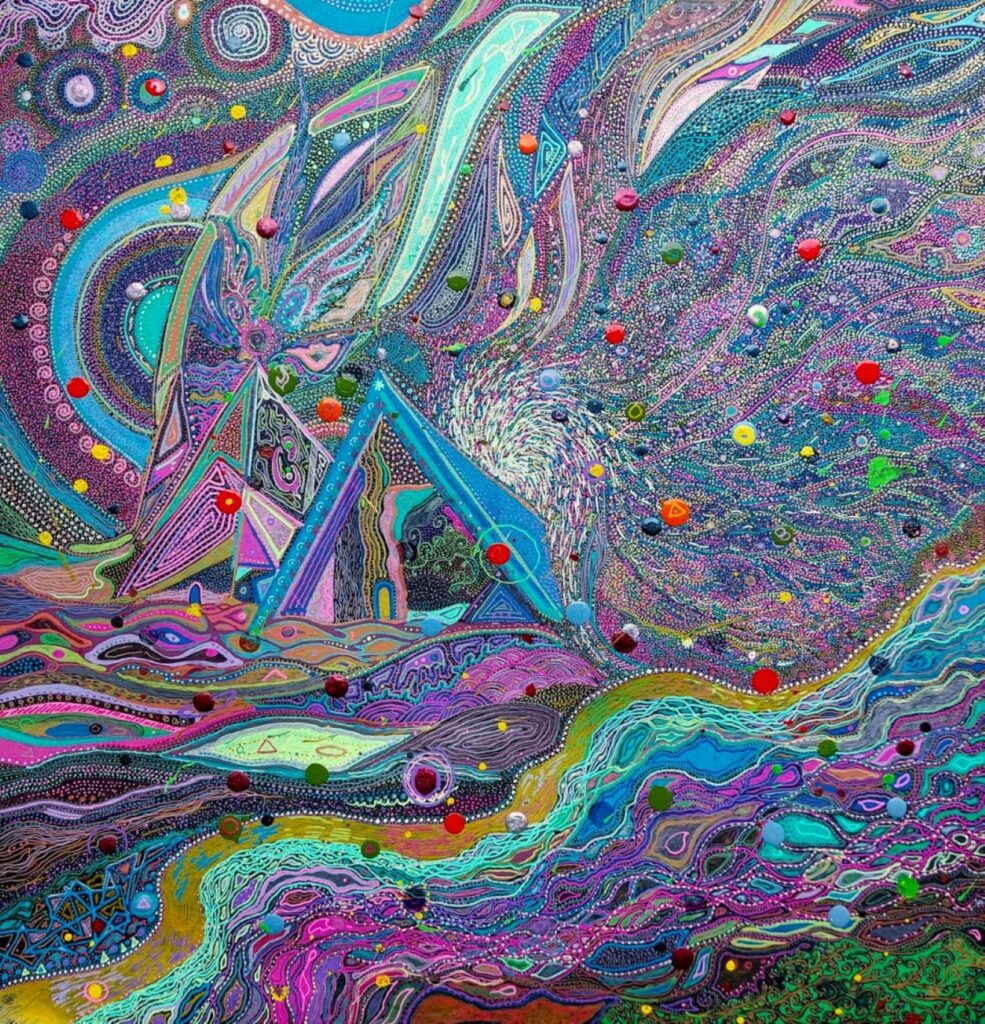
Q6. Some of your pieces have extraordinary layering and fine detail, how patient is your process while building those surfaces?
Very little in my work is rushed. The layering is part of the meaning. Some passages begin fluidly – wet, intuitive, immediate – especially when I need movement or atmosphere to enter first. But most pieces are built through pauses. I let layers dry, settle, reveal what they are doing before I decide what belongs next. I’m interested in the conversation between impulse and restraint.
The first gesture can carry life, but patience gives it depth. The fine detail often comes later, when the work is ready to be listened to more closely. That stage can be meditative, almost like entering a different tempo where time behaves differently. Repetition becomes rhythm. Attention becomes structure.
So yes, I’m patient – but not in a rigid way. I’m patient in service of aliveness. If a painting needs nine months, it gets nine months. If it resolves quickly, I let it. I don’t measure time by speed. I measure it by when the satisfaction when the work continues the breath on its own.
Q7. Collectors often say your work reveals new meanings over time, is that depth intentional, or something that emerges naturally through the process?
A bit of both. I never sit down thinking, I’m going to manufacture mystery today. That would feel lifeless and like emty, hollow vending machine performance. But I do work in a way that invites depth to happen. I build slowly, through layers, revisions, concealments, returns. Some marks remain visible, others disappear beneath what comes later, but they still influence the surface.
That’s true psychologically as well as visually. Nothing is ever entirely gone. Because of that, the paintings hold multiple timelines at once – the first impulse, the correction, the hesitation, the breakthrough. Viewers may not name those things consciously, but they can feel them. I also leave space for the unknown. I don’t close every meaning or explain every symbol.
I want the work to remain slightly open, so it can keep meeting someone as they change. That’s why collectors often say the painting evolves with them. In a way, it does. The object stays the same, but the relationship deepens, so as the personality grows and evolves. I think the richest works are not exhausted in one glance. They keep a little of their silence, and continue speaking from there.
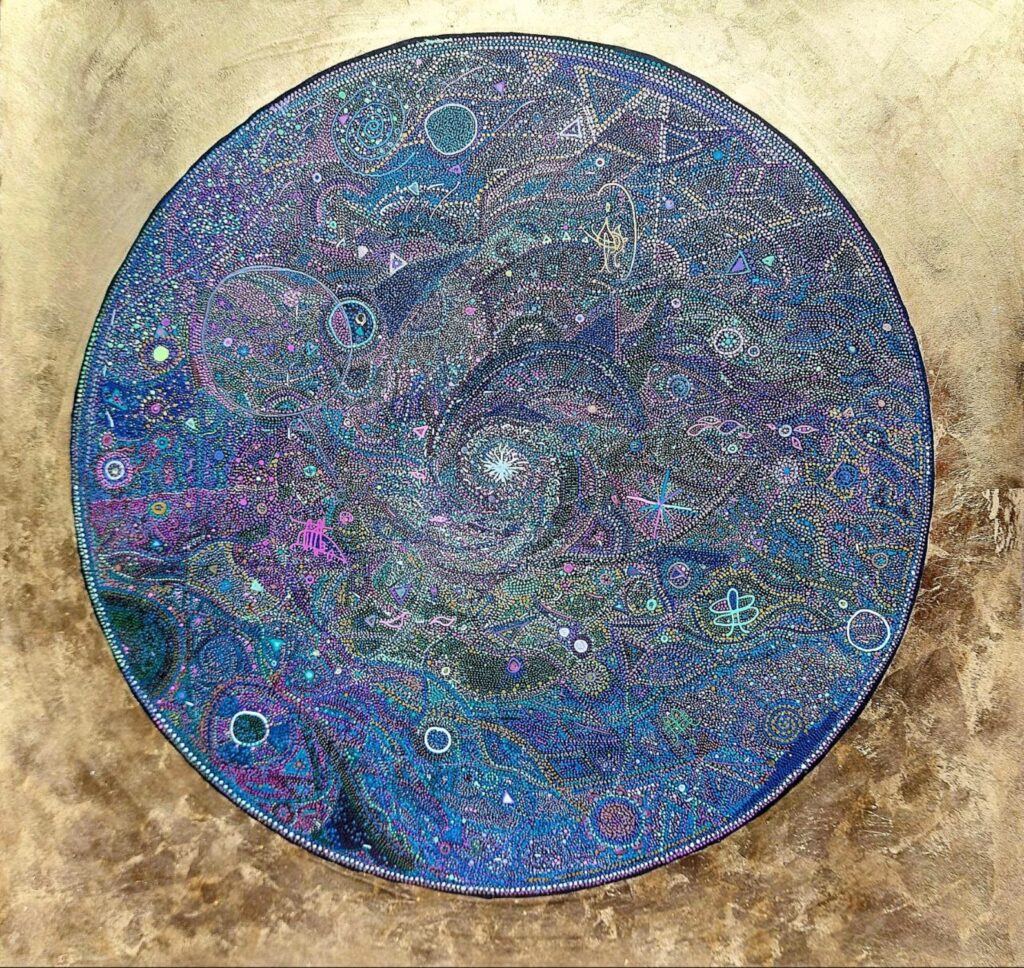
Q8. If you could go back and tell yourself something right at the beginning before the first sale, before the first piece left your hands what would it be?
In the beginning, it’s easy to think validation is the signal – that until someone buys, notices, or approves, the work is still waiting to become real. But some of the most important foundations are built in private: learning your language, trusting your eye, staying with the work when no one is watching. I would also tell her that letting a piece leave your hands is not a loss. It’s part of the life of the work.
Art is not completed when it is finished in the studio – it’s completed when it enters relationship with another person. And I would tell her to relax a little. Nothing true is ever wasted. Every uncertain piece, every quiet season, every painting that seemed to go nowhere was building the one that could finally speak. You do not need to rush your becoming. The right people will recognize you when your signal is clear enough to reach them.
Q9. What has social media given you as an independent artist, and what has it taken away?
It gives access. Quietly, and without asking permission. You can build a world from your studio and let it reach someone across the globe who would have never found you otherwise. There’s something beautiful in that – this direct line between inner work and the person it resonates with. It allows for a kind of recognition that feels immediate and strangely intimate.
But it also takes something, more subtly. It pulls at attention. It encourages speed, visibility, reaction. And the kind of work I make doesn’t come from that place. It comes from slowness, from not knowing, from staying with something before it’s ready to be seen. So there’s always a quiet negotiation. How to remain available, without becoming performative. How to share, without diluting.
How to stay in conversation, without losing the depth of the work. I think of it less as a platform and more as an environment you have to learn to breathe in. If you’re not careful, it can pull you outward. But if you stay rooted, it can carry your signal much further than you could alone.
Q10. What advice would you give artists trying to build both a personal voice and a sustainable creative practice?
Don’t treat those as two separate paths. Your personal voice and your sustainable practice should grow from the same root. Your voice develops through honesty – through making what feels alive, necessary, unresolved, true. Your practice becomes sustainable when you learn how to support that honesty with structure: rhythm, consistency, boundaries, patience, and the willingness to be seen.
Many artists think they must choose between purity and practicality. I don’t believe that. The challenge is not to compromise the work, but to build systems that protect it. Learn the practical skills with the same respect you give your craft. Learn how to price, communicate, document, share, and invite people in. Visibility is not the enemy of depth when it is done with integrity.
And don’t wait until you feel “finished” to begin building. Your voice is shaped in public as well as in private. It clarifies through relationship. Most importantly, make work that you would still need to make if no one applauded. Then build a life around helping that work reach the people it was meant for. Art can be sacred. Structure can be sacred too.
As we wrapped our conversation with Alina, we kept thinking about how much trust her work asks from the viewer. Not instant understanding. Not immediate explanation. Trust in feeling something before fully knowing what it means. And honestly, that’s what makes the work so compelling.
A lot of contemporary work reveals itself very quickly. You understand the concept, the reference, the visual language almost immediately. Alina’s paintings move differently. They unfold slowly through layers, symbols, colour, rhythm, and atmosphere in a way that keeps the viewer emotionally engaged long after the first encounter.
The work keeps opening over time. We really appreciated hearing how deeply personal her relationship with symbols and materials is. Nothing feels added for aesthetic effect alone. Every detail seems to emerge from an internal logic connected to memory, emotion, archetype, intuition, and lived experience.
That sincerity gives the work its weight. There’s also something refreshing about the way she approaches time within her practice. Instead of forcing speed or productivity, she allows paintings to evolve in their own rhythm. In a world constantly demanding immediacy, her work feels committed to depth instead. And maybe that’s why the paintings stay with people emotionally.
For collectors drawn toward layered contemporary work with symbolic and psychological presence, Alina’s paintings offer something increasingly rare artworks that continue developing through relationship rather than offering everything all at once. The longer people live with them, the more the paintings seem to reveal emotionally and atmospherically.
That kind of connection cannot be manufactured quickly. And artists willing to protect the integrity and slowness of their inner world this carefully are always worth following.
Follow Alina’s journey and explore more of her work through the links below.