

10 Iconic Cinematic Shots Inspired by Famous Paintings

Long before cinema learned how to move, paintings had already mastered how to make us feel.
For centuries, artists used canvas as a way of framing emotion: a single gesture frozen in time, a carefully controlled beam of light, a face turned half away in grief, devotion, terror, longing. Painters understood the atmosphere long before directors did. They knew how shadow could create fear, how silence could exist inside an image, how composition alone could suggest intimacy, violence, melancholy, or transcendence. In many ways, the language of cinema did not emerge from the invention of the camera alone, but from the visual grammar artists had been refining for hundreds of years.
That influence continues to echo through film today. Some of the most iconic cinematic shots in film history were not created in isolation, but shaped by centuries of artistic influence, visual symbolism, and painterly composition. Directors borrow from Romanticism, Surrealism, Symbolism, Renaissance portraiture, and Baroque lighting not merely as aesthetic references, but as emotional shortcuts, visual memories audiences instinctively recognize, even when they cannot place them. A single frame inspired by a famous painting can immediately carry centuries of meaning within it.
What makes these cinematic homages so compelling is that they rarely feel like imitation. Instead, they transform still images into living emotion. A painted figure once trapped inside a museum frame suddenly breathes, moves, suffers, desires, and collapses on screen. Cinema extends the life of paintings by allowing them to unfold through time.
From the haunting psychological darkness of Francisco Goya to the dreamlike stillness of Edward Hopper, filmmakers have repeatedly turned to the art world for inspiration, reshaping iconic masterpieces into scenes that feel both timeless and entirely new. These visual parallels remind us that film and painting have never truly been separate art forms. They have always been speaking to one another, across centuries, across mediums, and across the shifting ways we learn to see.
1. The Exorcist and René Magritte’s L’Empire des Lumières: When Surrealism Learned Horror
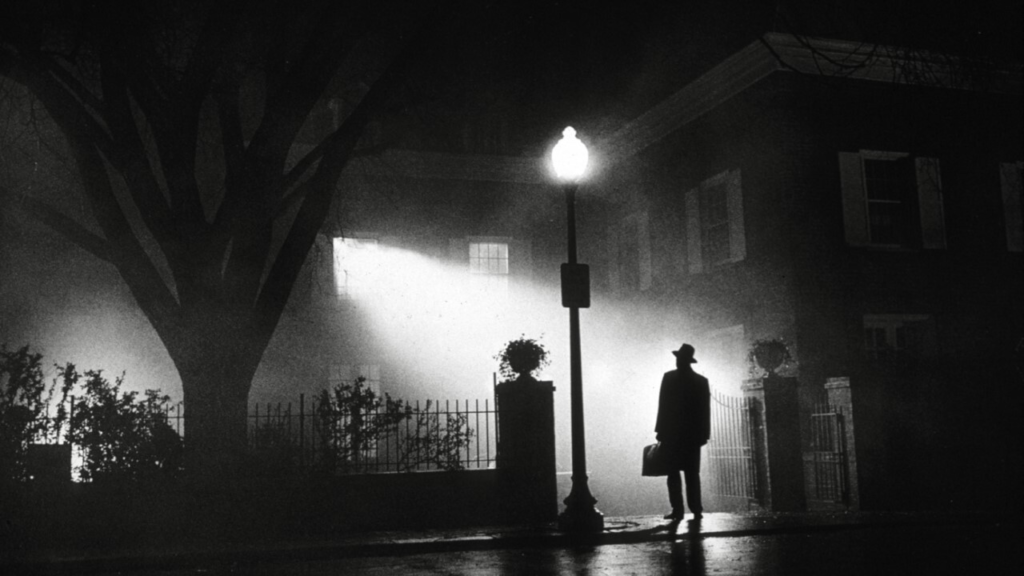
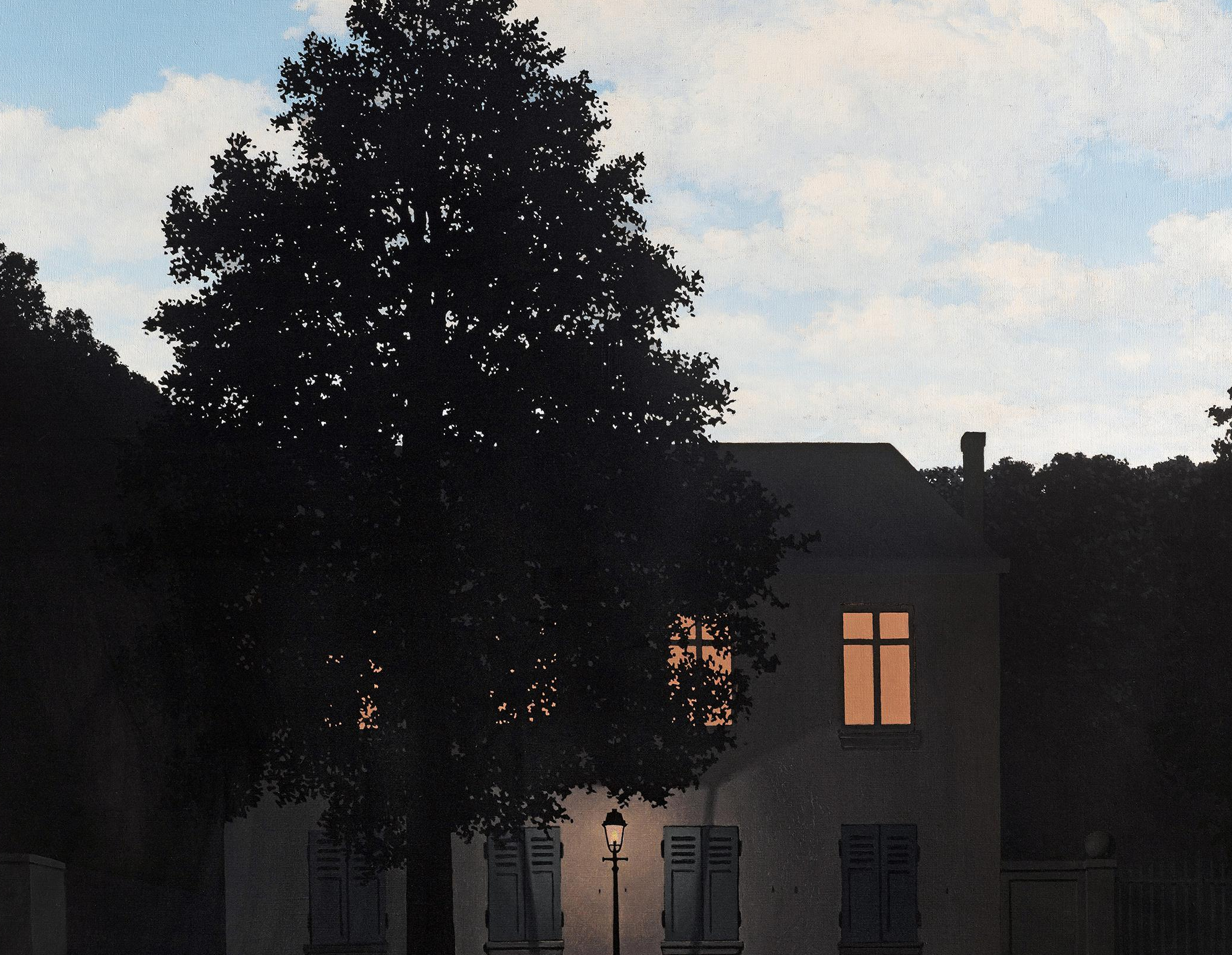
Some cinematic images become immortal not because of movement, dialogue, or action, but because of stillness. The arrival scene in The Exorcist remains one of the most haunting examples of this phenomenon: a solitary priest standing beneath a streetlamp, swallowed by darkness, staring toward a possessed house glowing faintly through the night. Even decades later, the frame retains an almost unnatural power, as though it exists outside ordinary cinema altogether. That feeling is no accident. The image draws unmistakably from the unsettling dream logic of L’Empire des Lumières by René Magritte.
Magritte’s painting is built on contradiction. A quiet suburban house sits beneath the darkness of night, yet above it stretches a bright daytime sky filled with soft clouds. It is visually impossible, and that impossibility is precisely what makes the work disturbing. Surrealism often operated through this collapse of logic, forcing familiar spaces to feel psychologically unstable. Rather than depicting monsters directly, Magritte created fear through atmosphere, the subtle realization that reality itself no longer behaves as it should.
William Friedkin channels this same emotional unease in The Exorcist. The famous shot is terrifying not because it reveals horror openly, but because it suspends the viewer in anticipation. The glowing window, the deep shadows, the artificial light cutting through darkness, all of it feels suspended between worlds, rational and supernatural at once. Much like Magritte’s painting, the scene transforms an ordinary home into something psychologically uncanny.
What makes the connection between the painting and the film so powerful is that both rely on restraint. Neither image is chaotic. Neither overwhelms the eye. Instead, they create tension through silence, isolation, and visual contradiction. The result is a kind of horror that lingers long after the image disappears: the unsettling suspicion that beneath familiar reality, something unknowable is waiting.
2. Shutter Island and Gustav Klimt’s The Kiss: Love at the Edge of Ruin
If horror often borrows from darkness, then melancholy borrows from beauty.
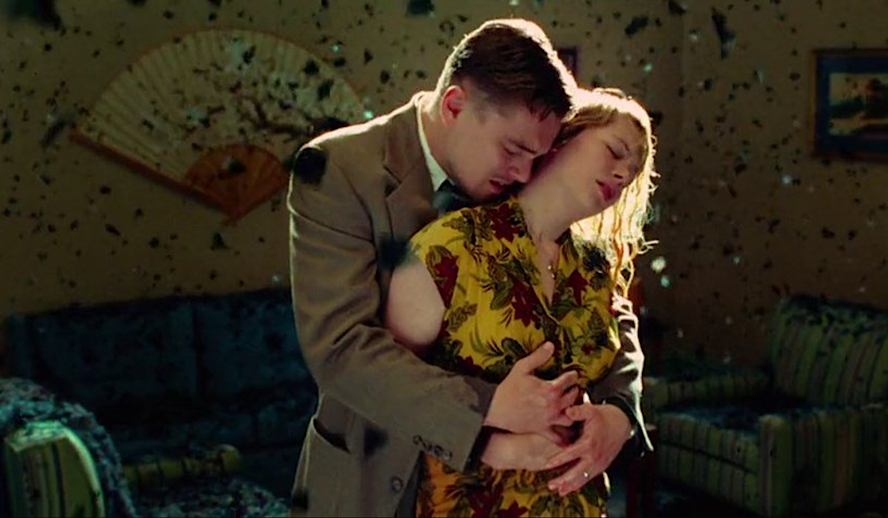
In Shutter Island, Martin Scorsese creates one of the film’s most emotionally devastating images through a quiet embrace between Teddy Daniels and his wife Dolores. Surrounded by warm golden light, the two figures cling to one another with desperate tenderness as ash quietly falls around them like snow. The moment feels suspended outside reality – too intimate, too luminous, too dreamlike to fully belong to the world of the film. That visual language echoes the emotional atmosphere of The Kiss by Gustav Klimt, one of the most iconic paintings ever created.
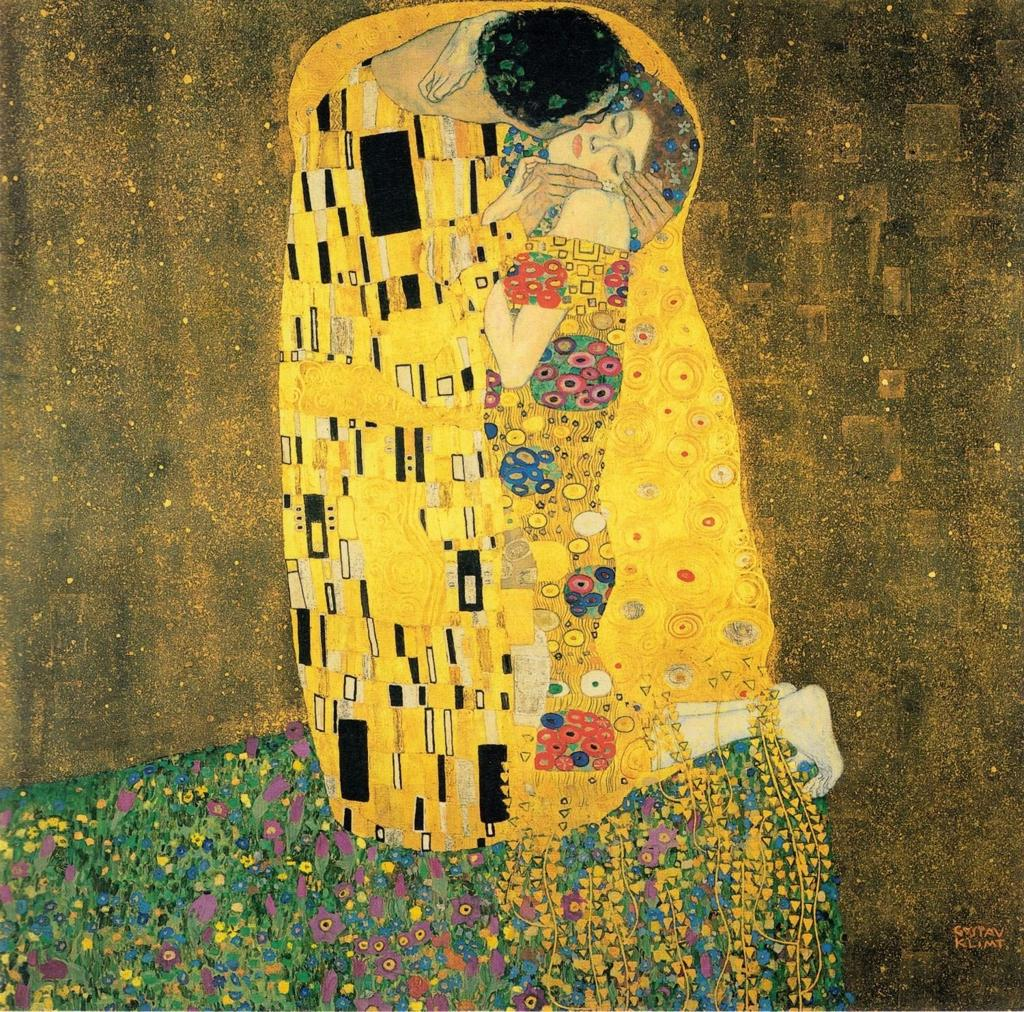
Klimt’s masterpiece is often interpreted as a painting about romance, but beneath its gold-leaf beauty lies something more fragile and haunting. The lovers appear almost consumed by ornamentation, dissolving into texture and radiance until they become inseparable from the world around them. There is intimacy in the image, but also surrender, a feeling that love itself can become overwhelming, consuming, even tragic.
Scorsese channels this same emotional contradiction inside Shutter Island. The embrace between Teddy and Dolores is not simply romantic memory; it is grief disguised as longing. The warm ochre tones, the closeness of the bodies, and the dreamlike stillness all mirror Klimt’s visual sensuality, yet beneath the tenderness sits devastation. Dolores is both present and unreachable, a figure suspended between memory, guilt, and hallucination.
What makes the parallel so powerful is how both images transform affection into something almost fatalistic. Love is no longer portrayed as safety or stability, but as a force capable of swallowing identity itself. In both the painting and the film, beauty exists alongside collapse. The lovers cling to one another not because the world is whole, but because it is already breaking apart.
That tension is what gives the cinematic shot its haunting afterlife. Like Klimt’s painting, the image lingers not merely because it is beautiful, but because it understands how closely beauty and sorrow often live beside one another.
3. Pan’s Labyrinth and Francisco Goya’s Saturn Devouring His Son: The Monster as a Reflection of Human Violence
Some paintings do not simply depict horror – they embody it.
Few works in art history are as viscerally disturbing as Saturn Devouring His Son by Francisco Goya. Painted during the final years of Goya’s life directly onto the walls of his home, the image captures the mythological Titan Saturn consuming his own child in a frenzy of madness and fear. The figure’s wild eyes, grotesque posture, and violent hunger transform mythology into psychological terror. It is not a painting concerned with fantasy alone, but with the brutality hidden within human nature itself.
That same primal fear reappears in Pan’s Labyrinth through one of modern cinema’s most unforgettable monsters: the Pale Man. Guillermo del Toro openly draws from Goya’s visual language, reshaping the artist’s horrifying imagery into a creature that feels ancient, symbolic, and deeply political.
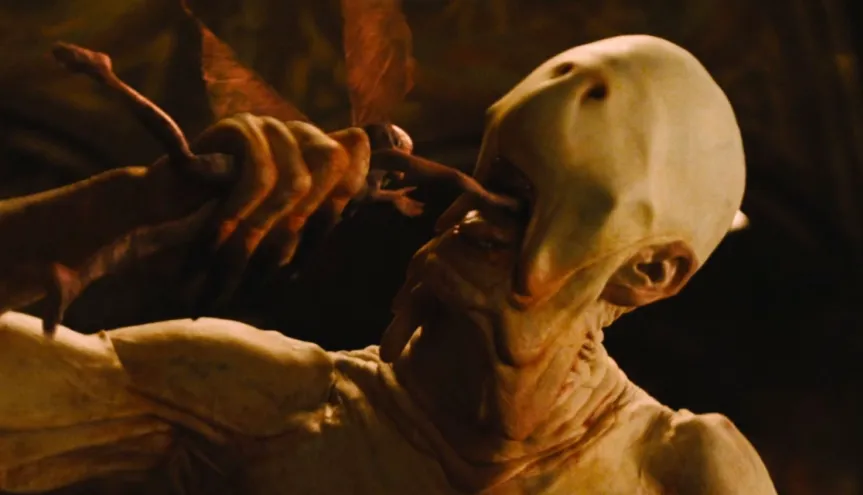
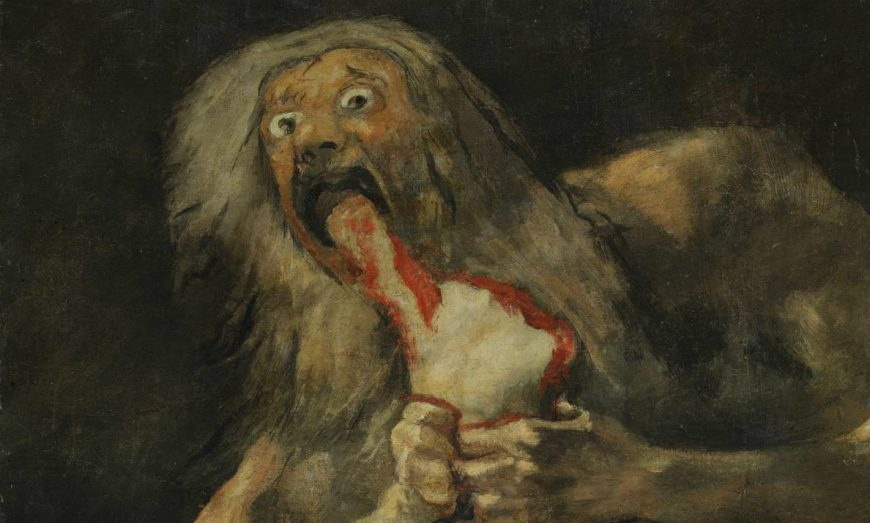
The Pale Man scene unfolds almost like a nightmare painted into motion. The creature sits motionless before a lavish feast, surrounded by excess, before awakening into monstrous violence the moment innocence enters the room. Much like Goya’s Saturn, the terror lies not only in appearance but in appetite. Both figures represent authority corrupted into consumption-power feeding on the vulnerable in order to preserve itself.
What makes del Toro’s homage particularly powerful is that it extends beyond aesthetics. Goya’s work emerged from a Spain devastated by war, political instability, and human cruelty. Pan’s Labyrinth, similarly set against the violence of Francoist Spain, transforms fantasy into a meditation on authoritarian brutality. The monster is not separate from history; it is born from it.
Visually, the parallels are unmistakable: the exaggerated limbs, the grotesque physicality, the overwhelming darkness surrounding the figure. Yet emotionally, both works share something even deeper, a recognition that the most terrifying monsters are often reflections of human systems of violence. The horror feels timeless because it is rooted not in fantasy alone, but in recurring patterns of greed, fear, and domination.
In both Goya’s painting and del Toro’s film, monstrosity becomes a mirror. What we fear most is not the creature itself, but the humanity we recognize inside it.
4. Melancholia and John Everett Millais’ Ophelia: The Beauty of Emotional Collapse
There are some images in art that feel suspended between life and disappearance.
Ophelia by John Everett Millais is one of them. Painted during the height of the Pre-Raphaelite movement, the work depicts Shakespeare’s tragic heroine floating silently in water moments before death. Surrounded by flowers and soft natural beauty, Ophelia appears strangely peaceful, as though sorrow itself has dissolved into stillness. The painting has endured for generations not simply because it is visually beautiful, but because it transforms despair into something hauntingly delicate.
That same visual melancholy reappears in Melancholia by Lars von Trier, particularly in the film’s dreamlike opening sequence where Justine drifts through water in a white gown, suspended in slow motion as the world moves toward apocalypse. The connection to Millais’ painting is unmistakable.
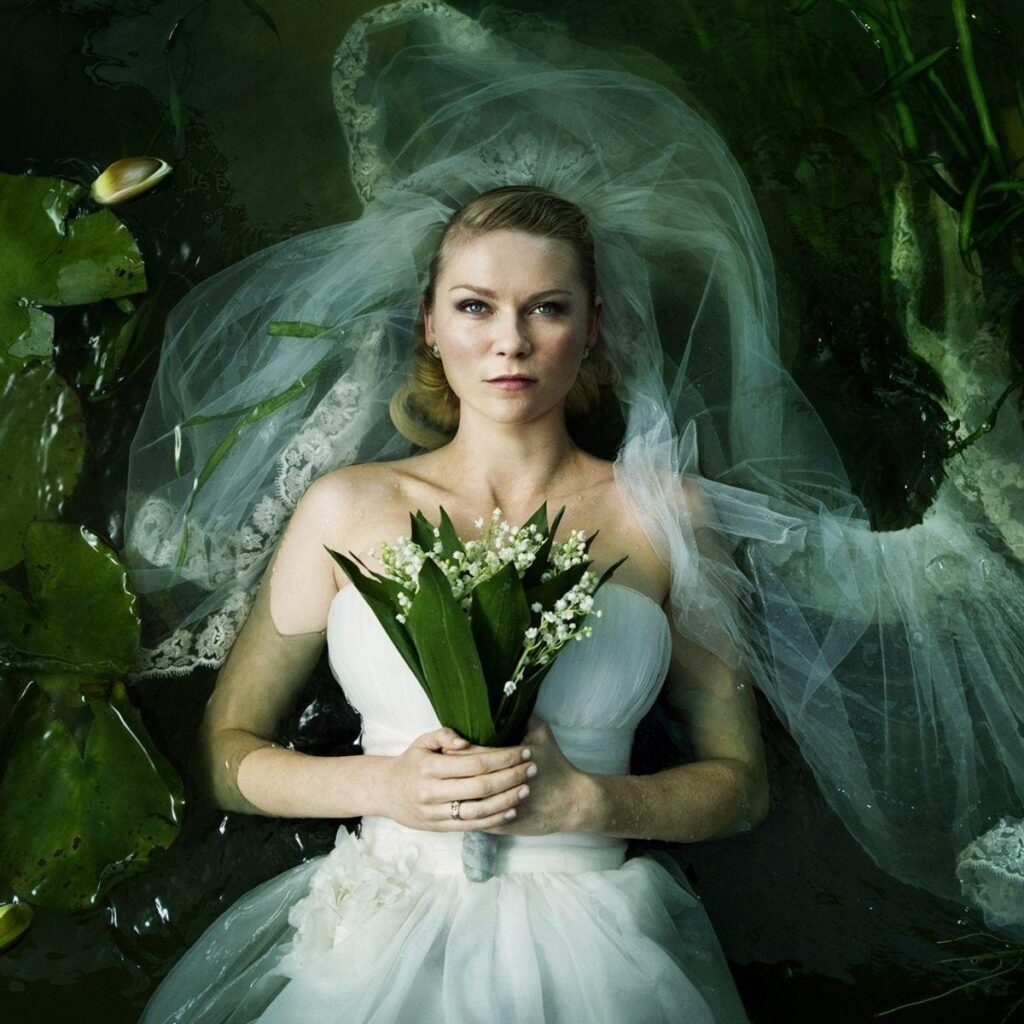
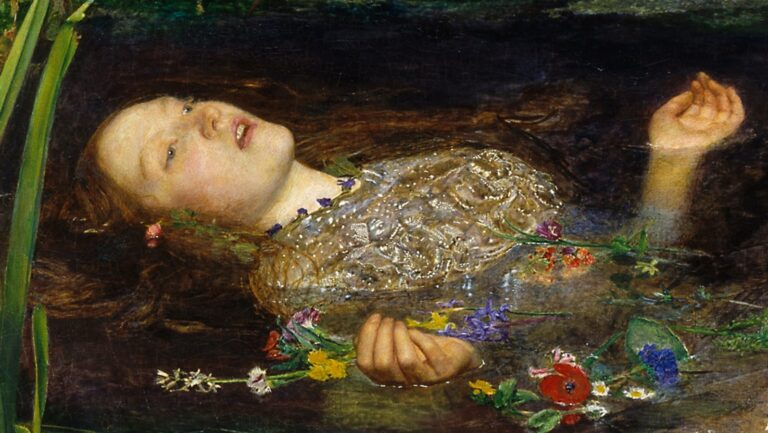
Yet what makes the cinematic homage so compelling is that von Trier expands the emotional meaning of Ophelia beyond tragedy alone. In Millais’ painting, nature seems indifferent to human suffering. The flowers continue to bloom, the water continues to flow, and beauty persists even as life disappears. Melancholia channels this same unsettling contradiction. The film surrounds emotional devastation with extraordinary visual elegance: glowing landscapes, painterly compositions, and celestial imagery so beautiful it almost disguises the despair beneath it.
Justine herself becomes a contemporary Ophelia figure, not destroyed by romance alone, but by depression, emotional exhaustion, and the unbearable weight of existence. Her stillness mirrors the emotional paralysis found in Millais’ work. Both women appear detached from the world around them, as though they already belong more to memory than reality.
The visual similarity between the film and the painting also reveals something deeper about cinema’s relationship with art history. Directors often return to images like Ophelia because they carry emotional archetypes audiences instinctively understand. We recognize the language of sorrow even before we consciously interpret it.
In both works, beauty becomes inseparable from collapse. The viewer is drawn toward the image precisely because it feels so fragile, an attempt to hold onto something already slipping away.
5. Girl with a Pearl Earring and Vermeer’s Girl with a Pearl Earring: When Cinema Learns to Paint With Light
Some films do not merely reference paintings, they attempt to inhabit them.
Among the most remarkable examples is Girl with a Pearl Earring, a film that transforms the world of Johannes Vermeer into living cinema. Rather than treating the famous portrait as a simple visual homage, director Peter Webber and cinematographer Eduardo Serra construct the entire film around Vermeer’s painterly sensibility: soft illumination, intimate silence, muted textures, and the extraordinary emotional power of stillness.
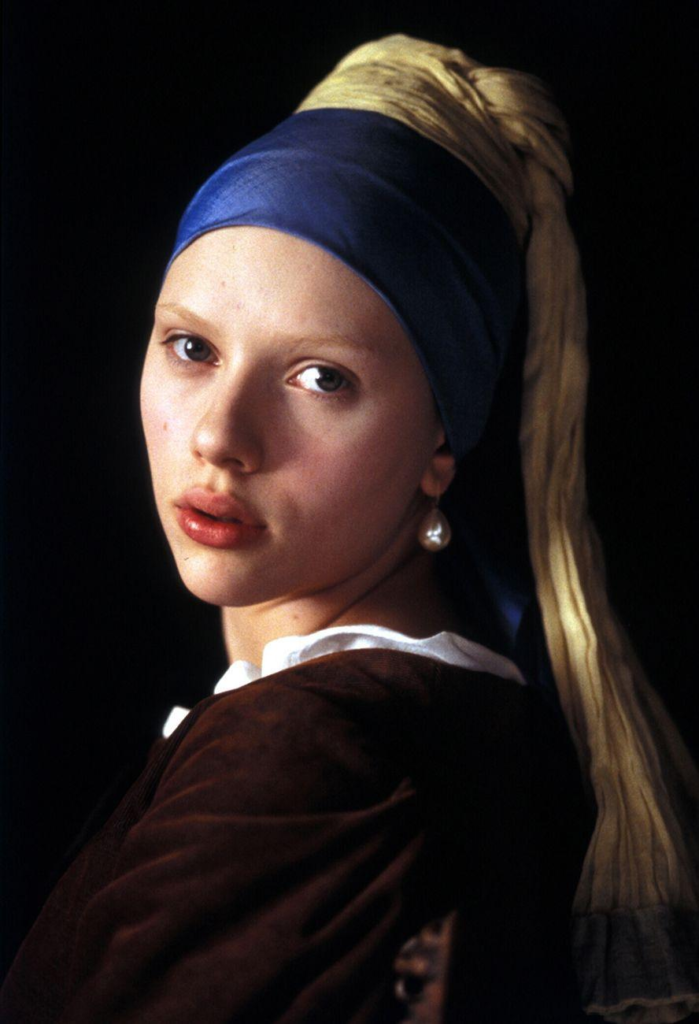
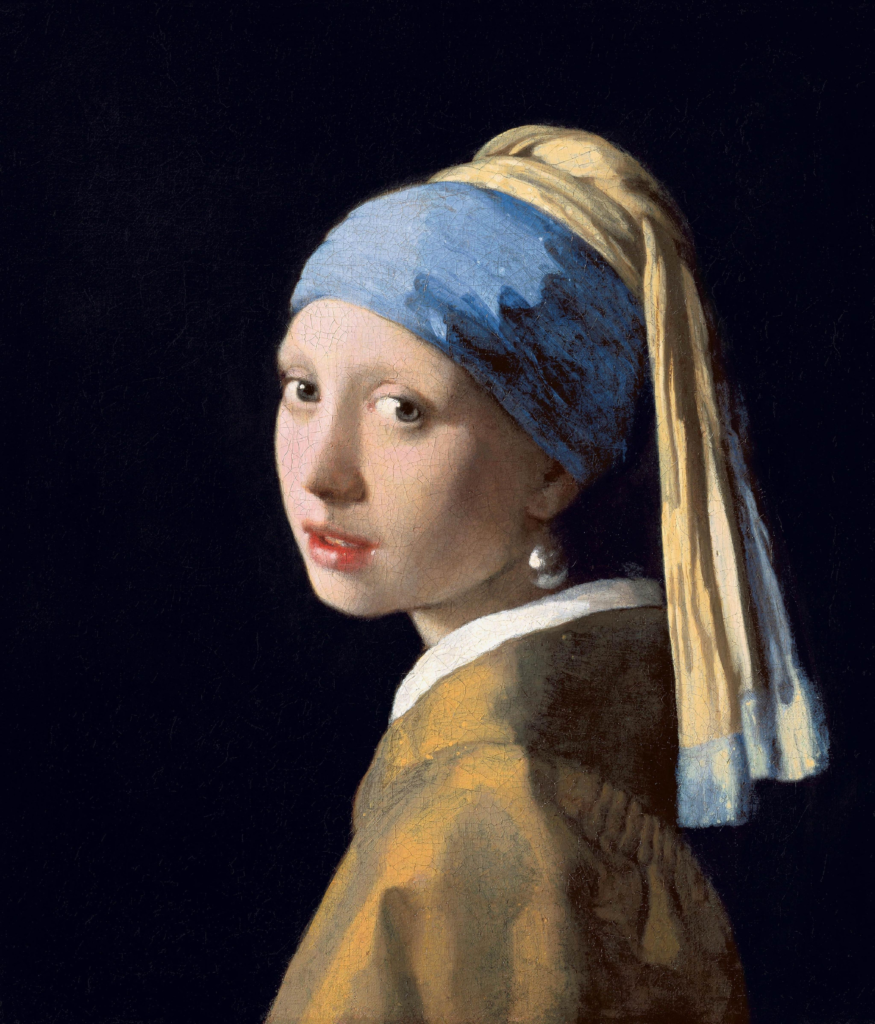
Vermeer’s original painting has fascinated audiences for centuries precisely because of its restraint. There is no dramatic narrative, no grand gesture, no elaborate symbolism. Instead, the portrait captures a fleeting human moment: a young woman turning toward the viewer, her lips slightly parted, light delicately touching her skin and pearl earring. The mystery lies in what remains unspoken.
The film understands that this quietness is the painting’s greatest strength. Nearly every frame feels composed as though it belongs inside a seventeenth-century canvas. Windows become controlled sources of natural light. Fabrics absorb shadow softly. Faces emerge gradually from darkness. The camera lingers with extraordinary patience, allowing ordinary gestures, a glance, the pouring of milk, the mixing of paint, to feel almost sacred.
What makes the connection between the painting and the film so profound is that both are obsessed with observation itself. Vermeer painted moments that appear intimate yet distant, as though the viewer has quietly entered someone else’s private world. The film recreates this same emotional tension through silence and visual restraint rather than overt drama.
In many ways, Girl with a Pearl Earring reveals how deeply cinema still depends on the principles painters established centuries ago. Long before filmmakers learned how to manipulate light emotionally, artists like Vermeer already understood that illumination could shape atmosphere, desire, and psychological intimacy.
The result is a film that feels less like historical adaptation and more like a painting breathing slowly into motion.
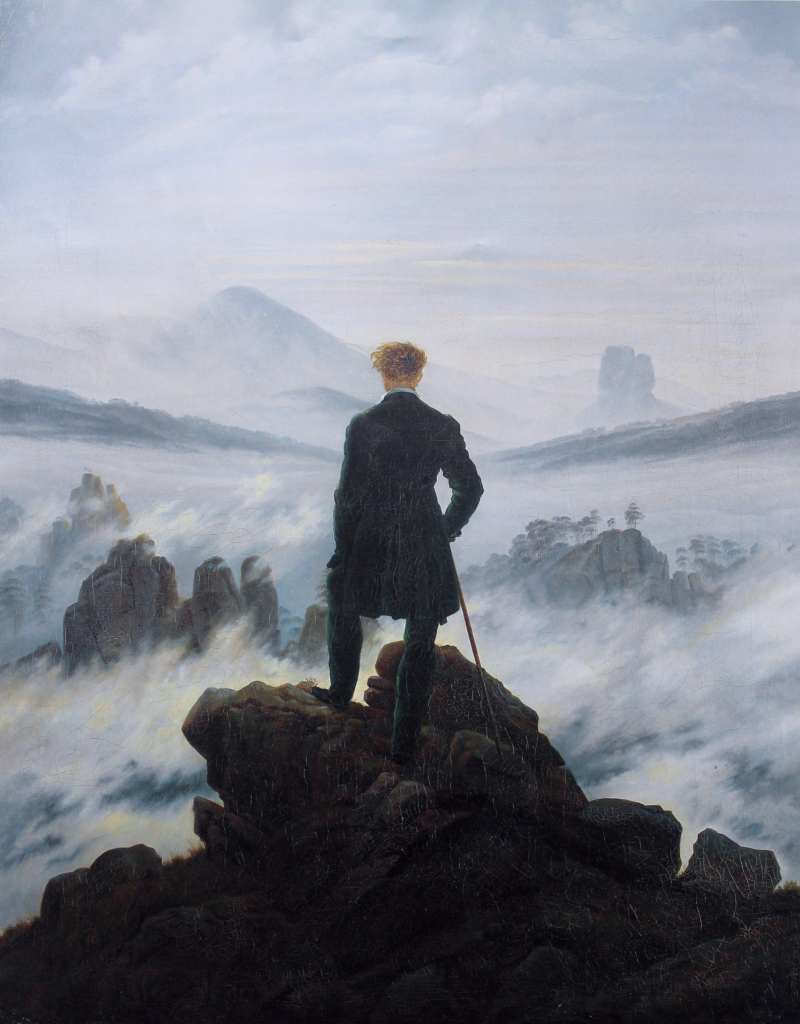
6. Nosferatu and Caspar David Friedrich’s Wanderer Above the Sea of Fog: Romanticism and the Terror of the Sublime
Long before horror cinema discovered monsters, Romantic painters were already exploring fear through landscape.
In the works of Caspar David Friedrich, nature rarely feels comforting. Mountains disappear into endless mist, oceans stretch toward infinity, and solitary figures stand dwarfed by forces far greater than themselves. His iconic painting Wanderer Above the Sea of Fog captures this emotional philosophy perfectly: a lone man stands above a fog-covered landscape, suspended between awe and uncertainty, confronting the terrifying immensity of the unknown.
That same Romantic atmosphere echoes through Nosferatu by Robert Eggers, particularly in the film’s stark compositions of isolation, shadow, and desolate landscapes. Eggers visually channels Friedrich’s sense of the sublime, the idea that beauty and terror can exist simultaneously within the same image.
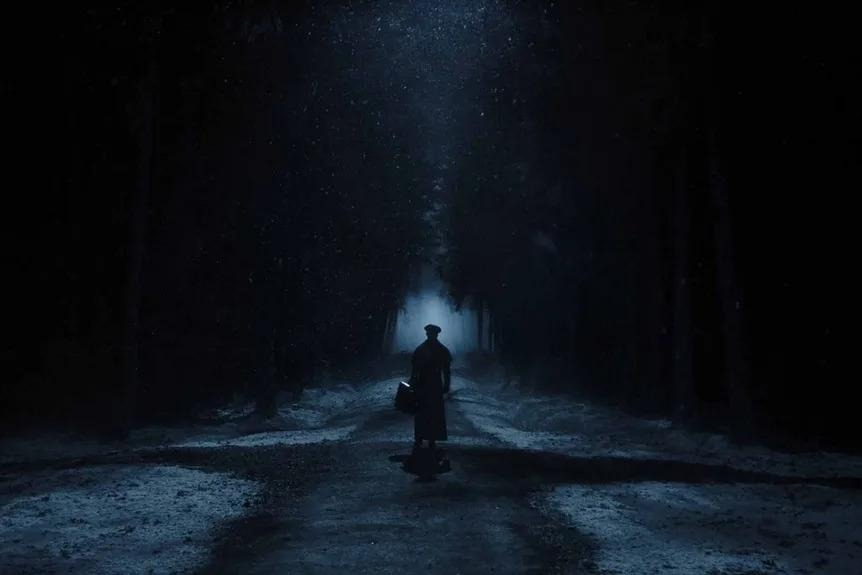
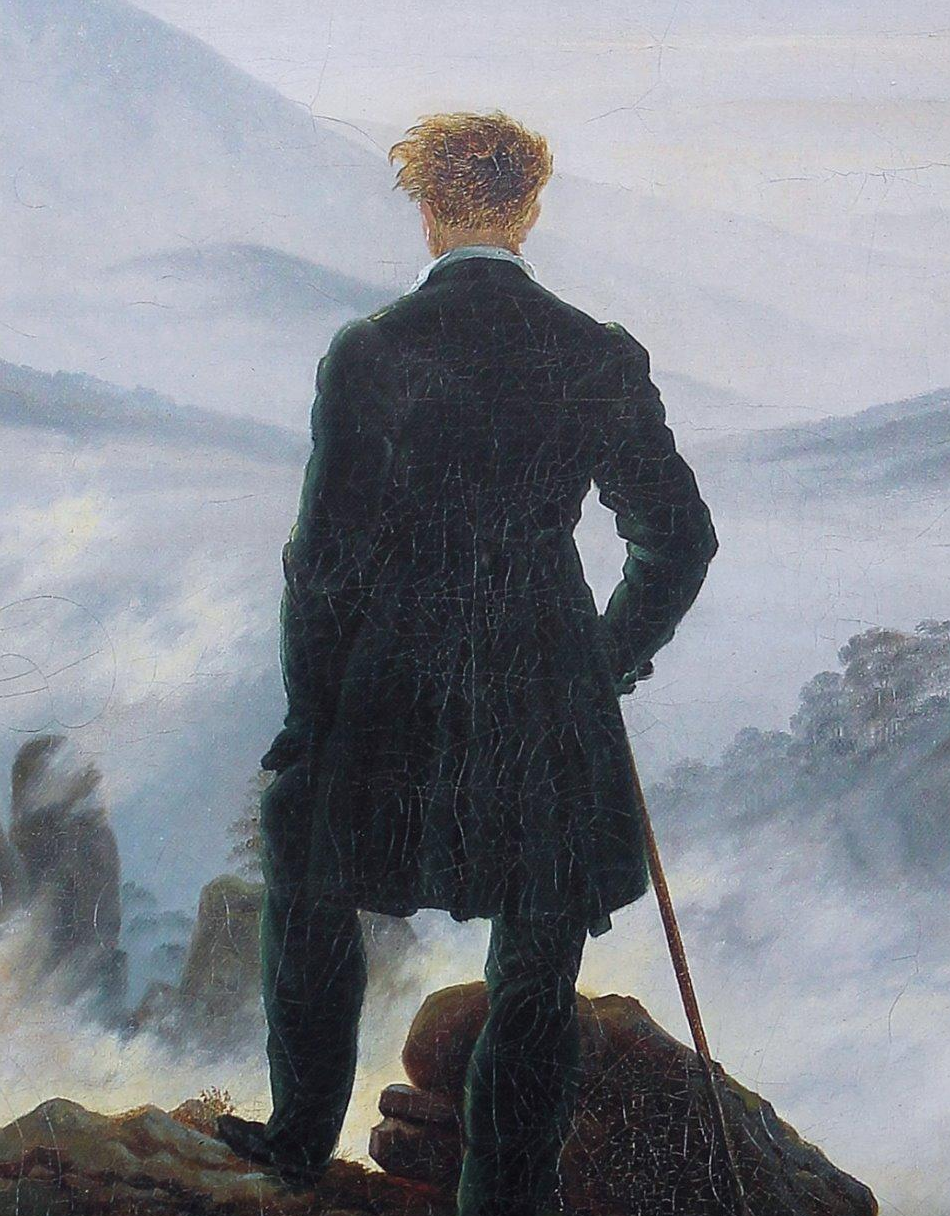
Unlike modern horror, which often relies on speed and shock, Friedrich’s paintings create unease through stillness and scale. Human figures appear small against overwhelming environments, suggesting not control over nature, but surrender to it. Nosferatu adopts this same visual language. Its characters move through cold landscapes and towering shadows that seem ancient and indifferent, as though evil is embedded within the world itself rather than confined to a single creature.
The vampire in Eggers’ film becomes more than a monster hiding in darkness. Much like Friedrich’s landscapes, he feels elemental, an ancient force tied to fog, decay, silence, and inevitability. The visual compositions often place figures against vast empty spaces, emphasizing vulnerability and existential dread rather than immediate violence.
What makes the connection between Friedrich and Nosferatu especially compelling is that both works understand fear as something spiritual as much as physical. The terror does not emerge solely from what is seen, but from what remains unknowable. The mist obscures meaning. The darkness feels infinite. Human beings stand at the edge of something they cannot fully comprehend.
In both Romantic painting and gothic cinema, the sublime transforms beauty into unease. The image captivates us precisely because it reminds us how small we are beside the vastness surrounding us.
7. Inherent Vice and Leonardo da Vinci’s The Last Supper: Chaos Framed Like Divinity
Some cinematic homages are subtle. Others are impossible to miss.
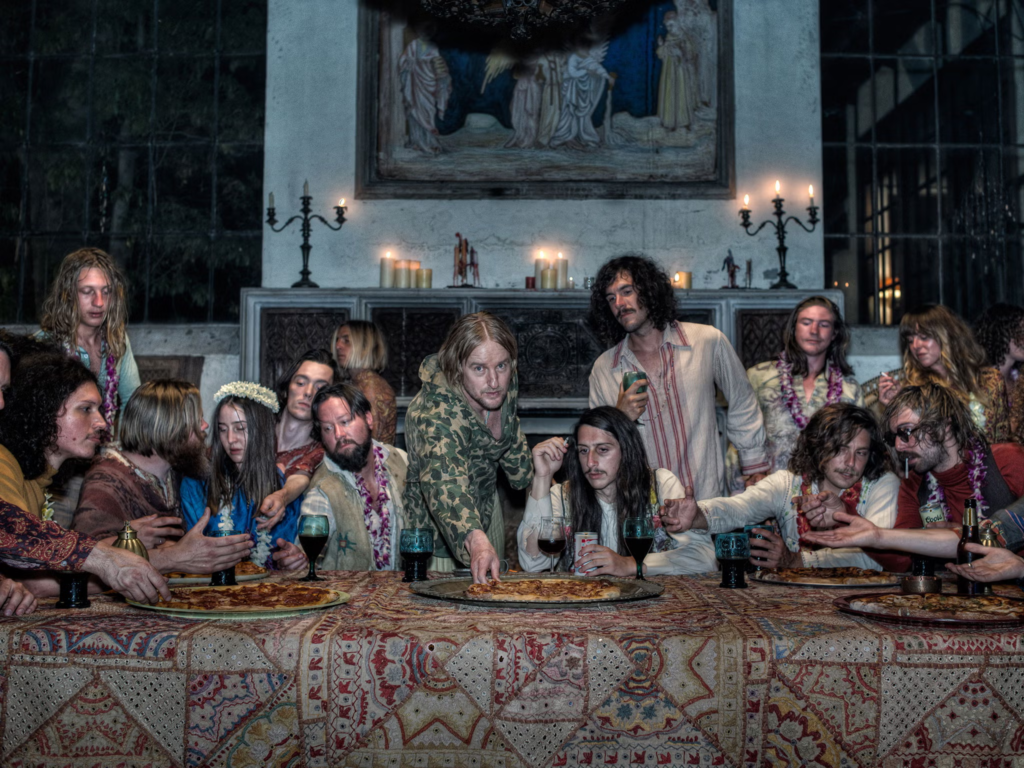
In Inherent Vice, Paul Thomas Anderson stages one of the film’s most memorable compositions as a direct visual echo of The Last Supper by Leonardo da Vinci. The arrangement is instantly recognizable: a long table, a central figure, bodies positioned in clusters across the frame, each character reacting differently within a carefully balanced composition. Yet instead of sacred calm, Anderson fills the image with confusion, paranoia, and absurdity.
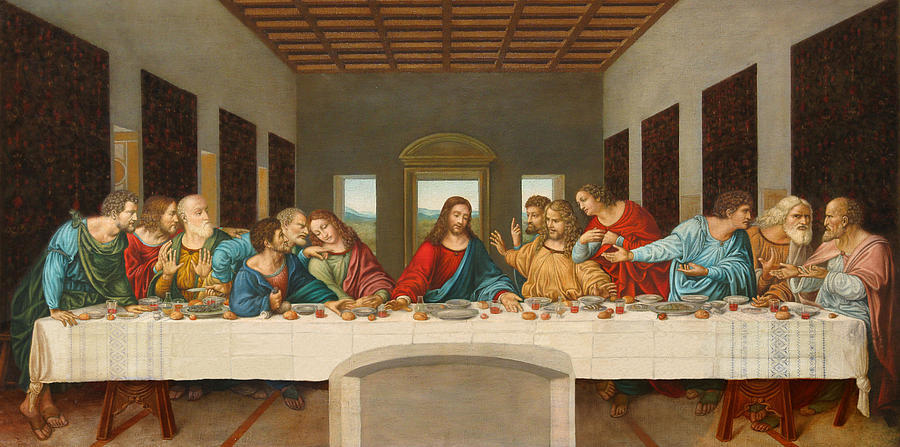
Da Vinci’s original masterpiece remains one of the most analyzed paintings in Western art history because of its extraordinary compositional precision. Every gesture, gaze, and spatial line directs attention toward Christ at the center, transforming a crowded gathering into an image of emotional and symbolic harmony. Even amid tension and betrayal, the painting feels mathematically controlled.
Anderson deliberately destabilizes that order. Inherent Vice unfolds inside a haze of conspiracy theories, fractured narratives, and emotional disorientation, and the recreated composition reflects exactly that atmosphere. The characters may occupy the visual structure of a sacred Renaissance painting, but spiritually they feel lost. Conversations overlap, intentions remain unclear, and certainty dissolves into confusion.
What makes the homage so compelling is the contrast between the grandeur of the reference and the chaos of the world surrounding it. By borrowing the visual language of The Last Supper, Anderson quietly transforms an eccentric gathering into something strangely mythological, elevating ordinary dysfunction into cinematic ritual.
At the same time, the scene reveals how powerfully audiences continue to respond to classical composition. Even when viewers do not consciously identify the reference, the arrangement carries centuries of symbolic memory. The image feels important before we fully understand why.
This is one of cinema’s greatest strengths: its ability to inherit the visual authority of painting while reshaping its meaning entirely. In Inherent Vice, the sacred symmetry of Renaissance art becomes a portrait of modern uncertainty, a world no longer held together by faith, but by fragmentation, performance, and paranoia.
8. Pennies from Heaven and Edward Hopper’s Nighthawks: The Loneliness of Artificial Light
Few painters captured urban loneliness as precisely as Edward Hopper.
His iconic painting Nighthawks has become one of the defining visual images of modern isolation: a brightly lit diner glowing against an empty night street, its figures physically close yet emotionally distant from one another. Hopper’s work often explored the quiet alienation hidden inside ordinary American spaces, hotel rooms, offices, restaurants, train cars, places filled with silence despite human presence. His paintings feel cinematic not because they imitate movies, but because they already understood visual storytelling long before modern cinema fully embraced it.
That atmosphere is recreated almost frame for frame in Pennies from Heaven by Herbert Ross, where Hopper’s diner composition is transformed into a living scene populated by equally detached figures.
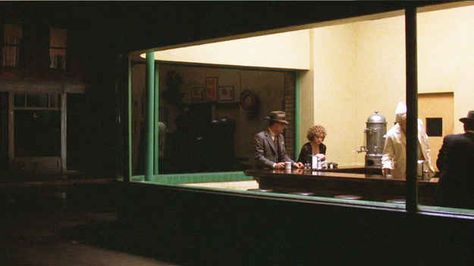
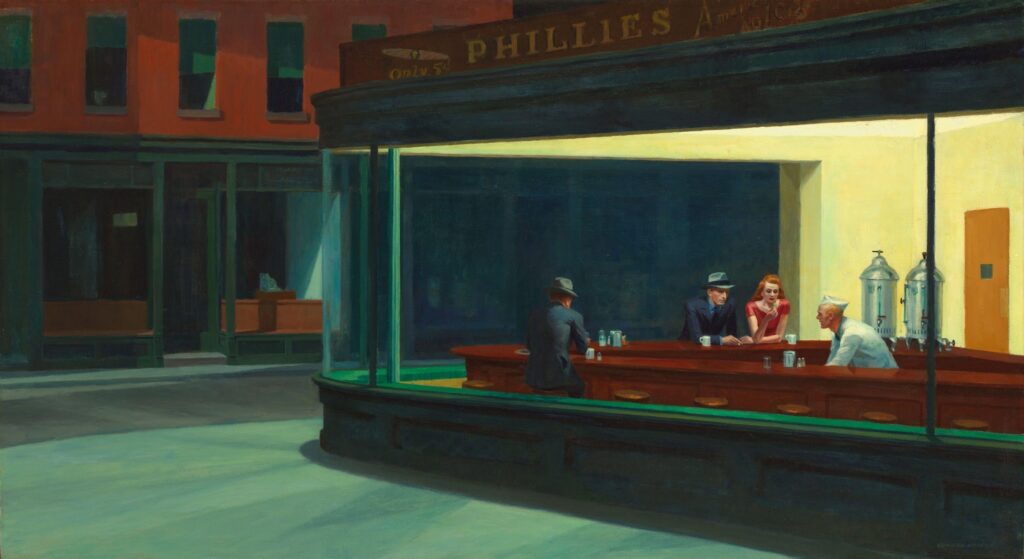
The visual similarities are striking: the glowing interior light, the counter arrangement, the positioning of the characters, the overwhelming emptiness surrounding the building itself. Yet what makes Hopper’s influence so enduring is not merely composition, but emotional atmosphere. Both the painting and the film scene feel suspended in a strange stillness, as though time itself has slowed down.
Artificial light plays a crucial role in creating this mood. Hopper often used illuminated interiors against dark city streets to emphasize emotional separation rather than connection. The diner becomes less a social space and more an aquarium of solitude, placing its occupants on display while simultaneously trapping them inside their own isolation. Pennies from Heaven preserves this feeling beautifully, turning the cinematic frame into a study of emotional distance.
The connection also reveals how deeply Hopper influenced the visual identity of modern filmmaking as a whole. His paintings anticipated noir cinema, psychological dramas, and countless urban narratives built around silence and alienation. Directors continue to return to Hopper because his images already contain narrative tension: they feel like scenes paused in the middle of an unwritten story.
In both Nighthawks and Pennies from Heaven, loneliness becomes architectural. It exists in the spacing between bodies, in the glow of fluorescent light, in the emptiness outside the window. The result is an image that feels haunting precisely because it is so ordinary.
9. A Clockwork Orange and Vincent van Gogh’s Prisoners’ Round: The Geometry of Psychological Entrapment
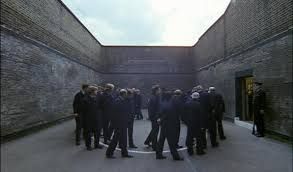
Few filmmakers understood visual composition as obsessively as Stanley Kubrick. Every frame in A Clockwork Orange feels unnervingly controlled, symmetrical, and deliberate, turning violence and psychological manipulation into something almost disturbingly beautiful. Beneath the film’s stylized surfaces, however, lies a deeper visual influence drawn from Prisoners’ Round by Vincent van Gogh.
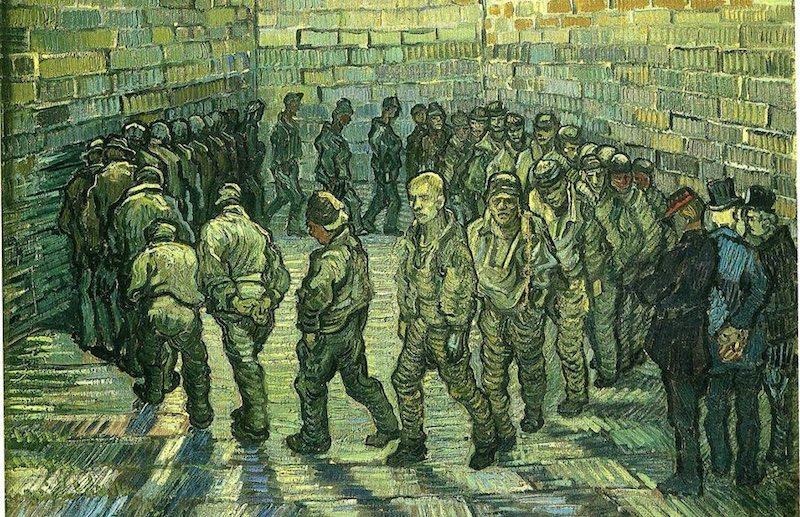
Van Gogh’s painting depicts prisoners endlessly circling a bleak courtyard beneath towering walls, their bodies trapped within a repetitive loop that feels both physical and psychological. Painted while the artist himself struggled with isolation and mental suffering, the work radiates exhaustion, despair, and the crushing loss of individuality. The figures no longer appear fully human; they move like machinery inside a system designed to erase them.
Kubrick channels this same emotional suffocation throughout A Clockwork Orange, particularly during Alex’s infamous Ludovico “treatment” scenes. The film’s rigid compositions, repetitive imagery, and institutional environments mirror the claustrophobic rhythm of Van Gogh’s prison yard. Human beings are transformed into subjects of control, stripped of agency under systems claiming moral authority.
What makes the visual connection so powerful is the shared emphasis on repetition. In both the painting and the film, movement no longer suggests freedom. Instead, it becomes cyclical, mechanical, and inescapable. The circular motion of Van Gogh’s prisoners finds its cinematic equivalent in Kubrick’s exploration of conditioning, where identity itself becomes trapped inside imposed behavioral patterns.
Yet both works also contain an undercurrent of resistance. Van Gogh subtly distinguishes one prisoner whose face catches light differently from the others, while Kubrick’s Alex remains disturbingly charismatic despite the state’s attempts to reconstruct him psychologically. Individuality refuses to disappear entirely, even within oppressive systems.
Together, the painting and the film reveal how visual art can express psychological imprisonment long before cinema gives it motion. Both images confront the terrifying possibility that the modern world does not merely punish people, it reshapes them.
10. The Dark Knight and Francis Bacon’s Head VI: Painting Psychological Chaos
Some artists paint faces not as portraits, but as emotional breakdowns.
The distorted screaming figure in Head VI by Francis Bacon remains one of the most unsettling images in modern art. Inspired loosely by Velázquez’s famous portrait of Pope Innocent X, Bacon transforms authority into something grotesque and psychologically fractured. The face appears trapped between dissolution and violence, its features smeared into panic and instability. Rather than depicting a person realistically, Bacon paints the feeling of terror itself.
That same psychological disintegration became a major visual influence for The Dark Knight, particularly in the creation of Heath Ledger’s Joker. Christopher Nolan reportedly drew from Bacon’s disturbing portraits to shape the Joker’s appearance and emotional energy, creating a villain who feels less like a conventional comic-book antagonist and more like a living manifestation of chaos.
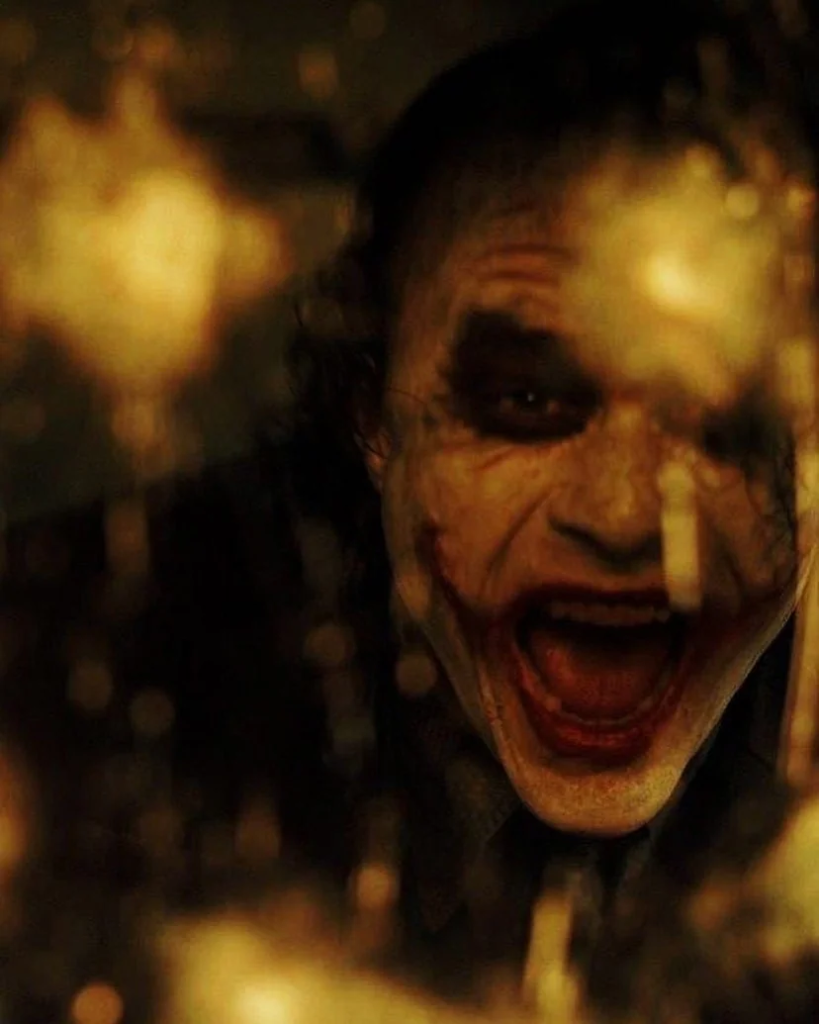
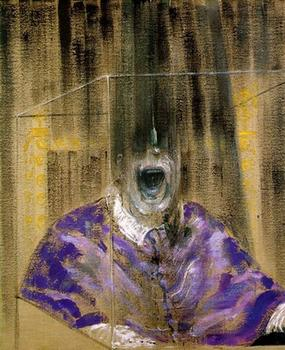
What connects Bacon’s work to the Joker is not merely the smeared makeup or distorted grin, but the sense that identity itself is unstable. Bacon’s figures often appear trapped within invisible cages, isolated inside spaces that feel psychologically suffocating. Similarly, Ledger’s Joker constantly oscillates between comedy and menace, calmness and eruption, making him impossible to fully understand or predict. His face becomes a shifting mask of performance, hiding nothing and everything simultaneously.
The interrogation scene in The Dark Knight especially captures this painterly influence. Harsh lighting isolates the Joker against emptiness, turning his expression into the emotional center of the frame. The makeup appears cracked and deteriorating, as though the character himself is physically unraveling in front of the audience. Much like Bacon’s portraits, the image resists clarity. It is not meant to be neat or symbolic in a traditional sense. It exists to disturb.
What makes Bacon’s influence so effective within the film is that it elevates the Joker beyond realism. He no longer feels entirely human, yet he is not supernatural either. Instead, he becomes psychological abstraction made visible, a portrait of modern anxiety, instability, and violence rendered through cinema.
Both Bacon and Nolan understand that true horror often lies not in monsters, but in fractured humanity. The most disturbing faces are the ones that still resemble our own.
The relationship between painting and cinema has never been accidental.
Long before directors learned how to manipulate light, construct atmosphere, or guide emotion through composition, painters had already spent centuries perfecting the visual language of storytelling. Every shadow stretched across a face, every carefully arranged figure, every moment of stillness inside a cinematic frame carries traces of that artistic inheritance. Cinema may move, but many of its most powerful images were first imagined on canvas.
What makes these visual homages so enduring is that they do far more than recreate famous artworks. When filmmakers borrow from painters like Francisco Goya, Edward Hopper, Gustav Klimt, or Johannes Vermeer, they also inherit the emotional and symbolic worlds attached to those images. A single cinematic shot can instantly evoke centuries of cultural memory: melancholy, terror, longing, divinity, isolation, obsession. Paintings give films emotional depth before a word is even spoken.
At the same time, cinema transforms these static masterpieces into something newly alive. A painted gesture begins to move. A frozen expression becomes part of a larger emotional arc. The silence inside a museum frame expands into sound, motion, and time. In this way, films do not merely imitate paintings, they continue them.
Perhaps that is why these cinematic references remain so compelling. These iconic cinematic shots continue to resonate because they carry the emotional memory of paintings audiences may not even consciously recognize. They remind us that art forms are never truly separate from one another. The language of visual storytelling evolves across generations, constantly reappearing in new mediums, new technologies, and new cultural moments. A Renaissance composition can suddenly re-emerge inside a psychological thriller. A Romantic landscape can shape modern horror. A Symbolist nightmare can become the emotional center of contemporary cinema.
And so, the next time a film frame lingers in your mind long after the credits roll, it may be worth asking: have you seen it before, not in another movie, but hanging silently inside a gallery, waiting across centuries to move again?
What other movie scenes do you think were inspired by famous artworks?
If you enjoy exploring the connections between visual art and popular culture, you may also like reading about the art behind iconic album covers.