
This Romanian cellist started painting after 40 to give sound a physical form │ Laura Buruiana

At Arts to Hearts Project, our magazine has always been one of our favourite things we do. There is something about putting together an issue that feels different from everything else. It is personal. It is intimate.
Every edition we get to sit with artists and their stories and their work and really understand what drives them. After eleven editions, each one exploring a different theme and a different side of what it means to be an artist today, we launched our twelfth.
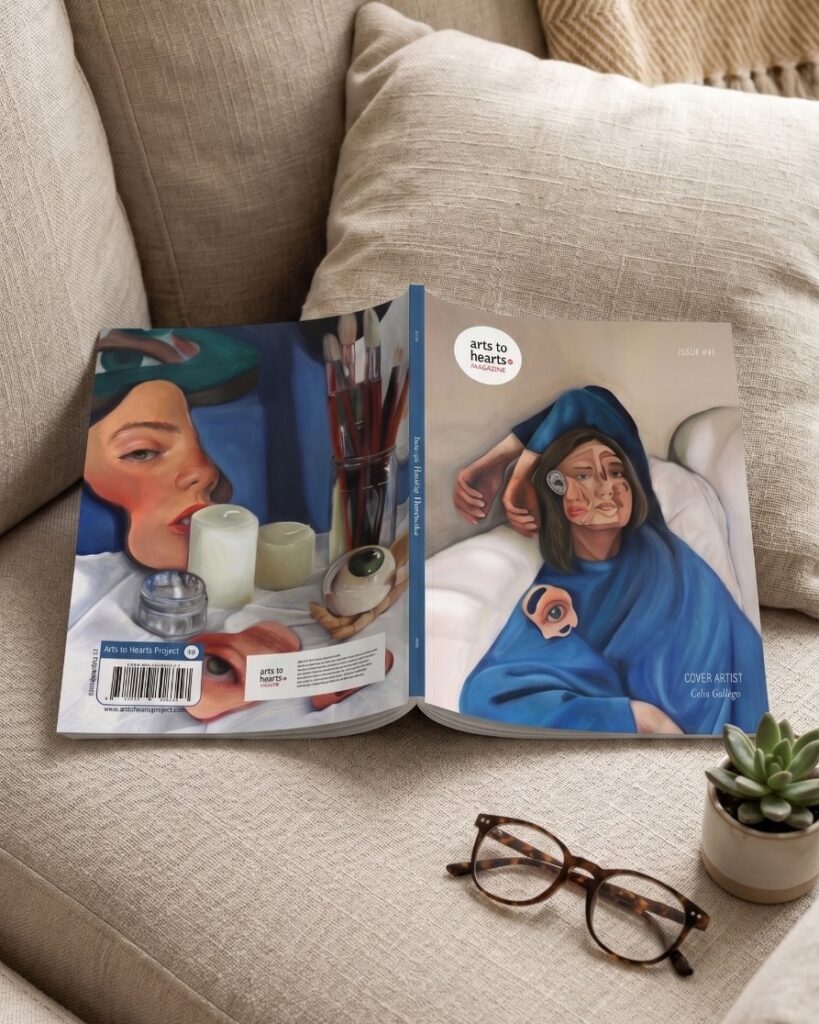
Arts to Hearts Magazine Issue 12. The theme is This Is Me. And honestly that theme brought out something in our artists that we were not expecting. When you ask someone to respond to the idea of This Is Me, you are not asking them to show you their best work or their most impressive piece.
You are asking them to show you themselves. The real version. The vulnerable one. The one that exists behind the portfolio and the artist statement and the exhibition history. And the submissions that came in for this issue reflected that. Artists from all over the world responding with work that felt deeply personal in a way that even surprised them.
Among our selected artists for this issue, Laura Buruiana is someone who caught us completely off guard. Not because her paintings are loud or dramatic. Because they are something else entirely. Something you do not just see. Something you almost hear.
Laura is a cellist. An international soloist who performs on stages around the world. And she is also a painter. And those two things are not separate chapters of her life. They are the same chapter written in two different languages. How those languages connect, how one feeds the other, how sound becomes something you can see and touch, that is something you are going to want to hear her explain because the way she talks about it is unlike anything we have heard from another artist.
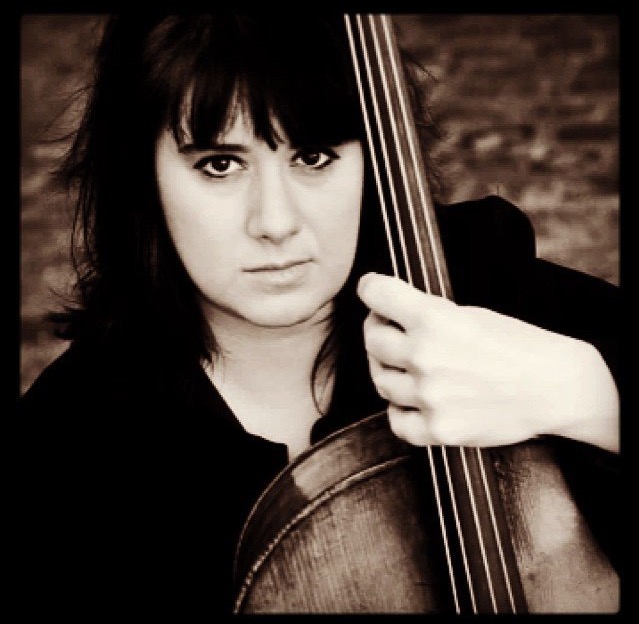
She started painting after forty. She did not come to the canvas early. She came to it when she was ready. And what brought her there, why she needed painting on top of a full international music career, there is a reason for that which makes complete sense once she tells you.
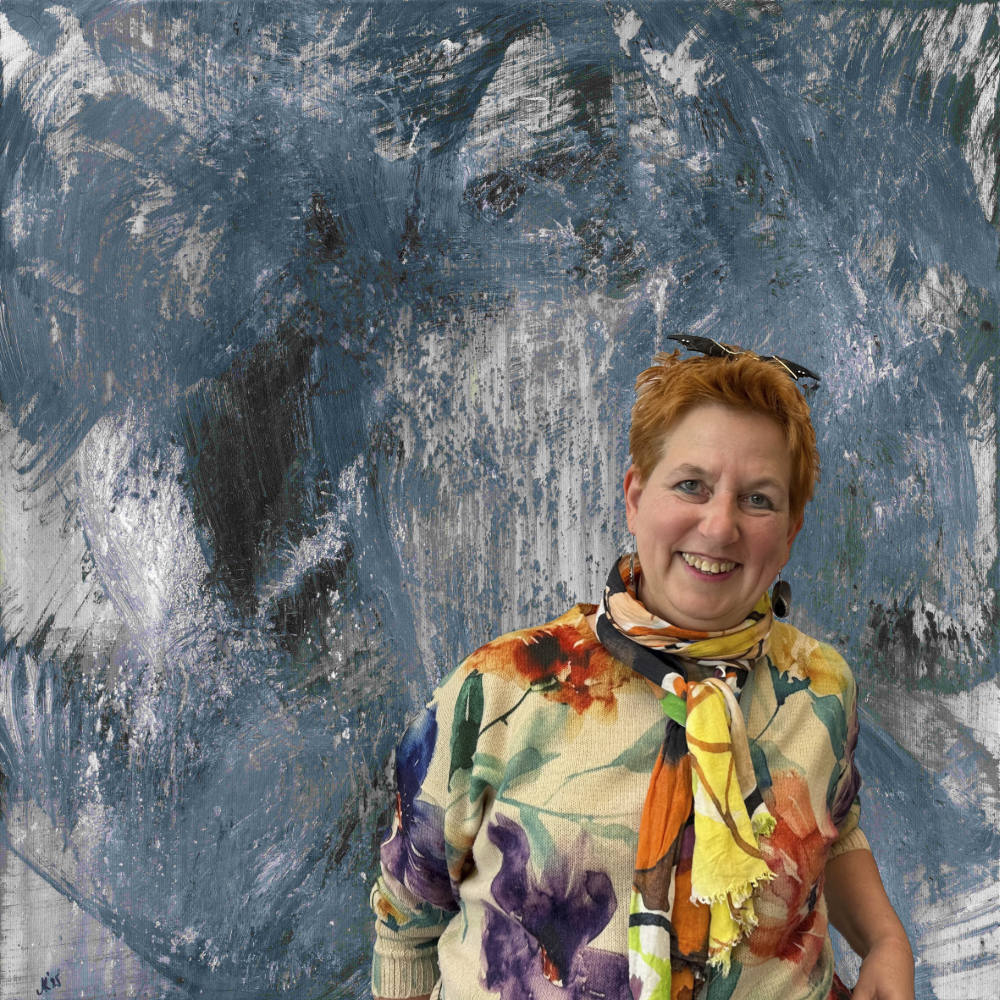
Her process is intensely physical. She works with palette knives and unconventional tools and builds surfaces that have real weight and texture. It is not delicate. It is not quiet. And yet the paintings themselves hold something that feels like silence and sound at the same time. How she does that is part of what makes her practice so interesting to us.
She has shown in Venice, Paris, Milan, Budapest, New York. And she noticed something about her paintings in different cities that we found really fascinating. But that is her observation to share.
And there was a moment she described to us involving a collector that honestly gave us chills. Someone standing in front of her painting and describing not what they saw but what they felt in their body. We are not going to tell you what they said because the way Laura tells it is too good to paraphrase.
Let’s hear from Laura in her own words as she reflects on painting after forty, turning sound into image, and the connection between music and mark-making.
Q1. Could you share a bit about your background and how your journey across music and painting has shaped your artistic voice today?
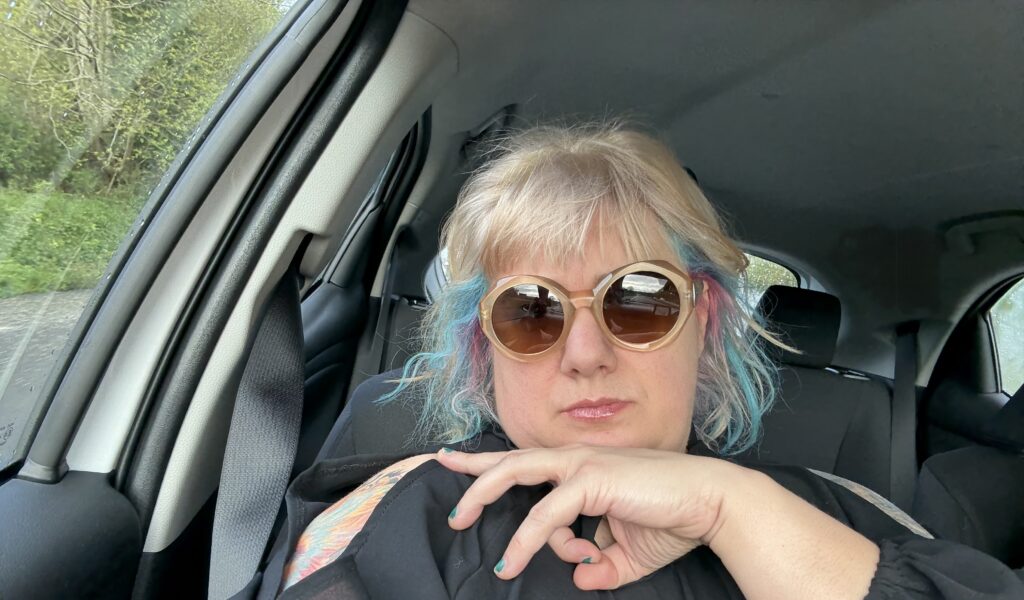
I am an international cellist and abstract painter based in France, originally from Romania. My artistic journey began through music, performing as a soloist on international stages, where I developed a deep sensitivity to sound, structure, and emotional nuance. Painting came later, almost as a necessity a way to give a physical form to what music leaves invisible.
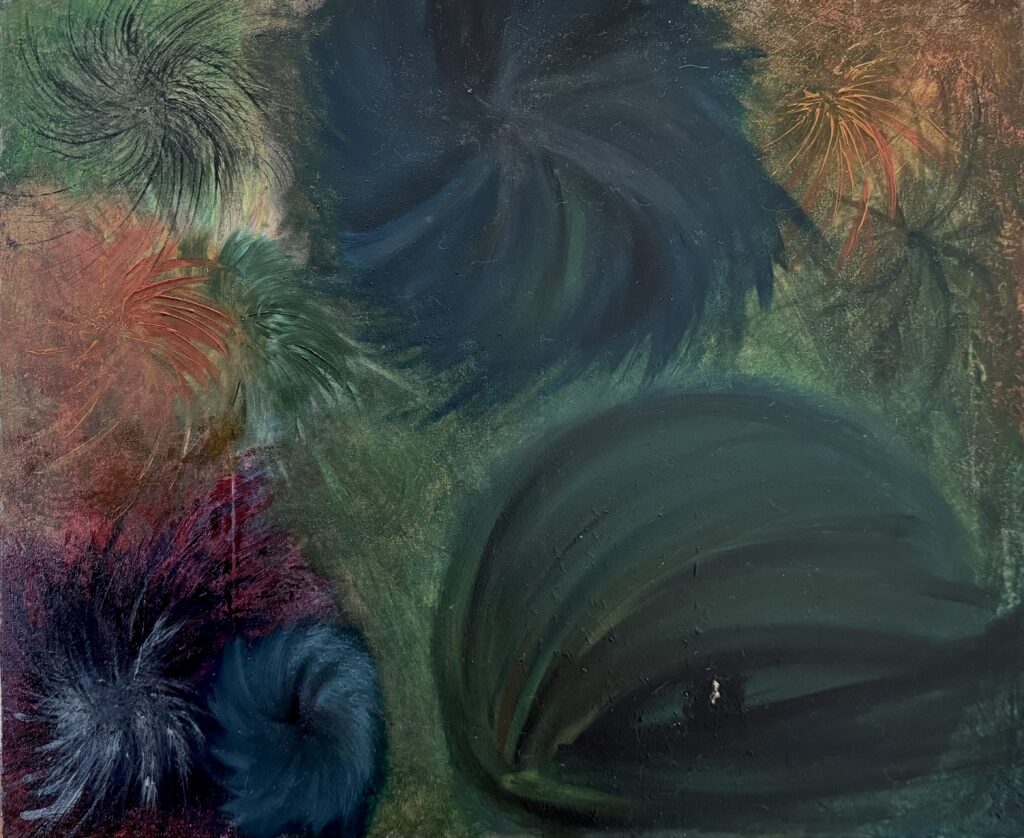
Over time, it became a natural extension of my musical practice. Today, my work exists at the intersection of these two worlds. I translate musical gesture into visual language — rhythm becomes texture, vibration becomes matter, and silence becomes space. This dual practice has shaped my artistic voice into something deeply intuitive yet structured, where each painting carries the memory of a movement, like a trace of sound transformed into form.
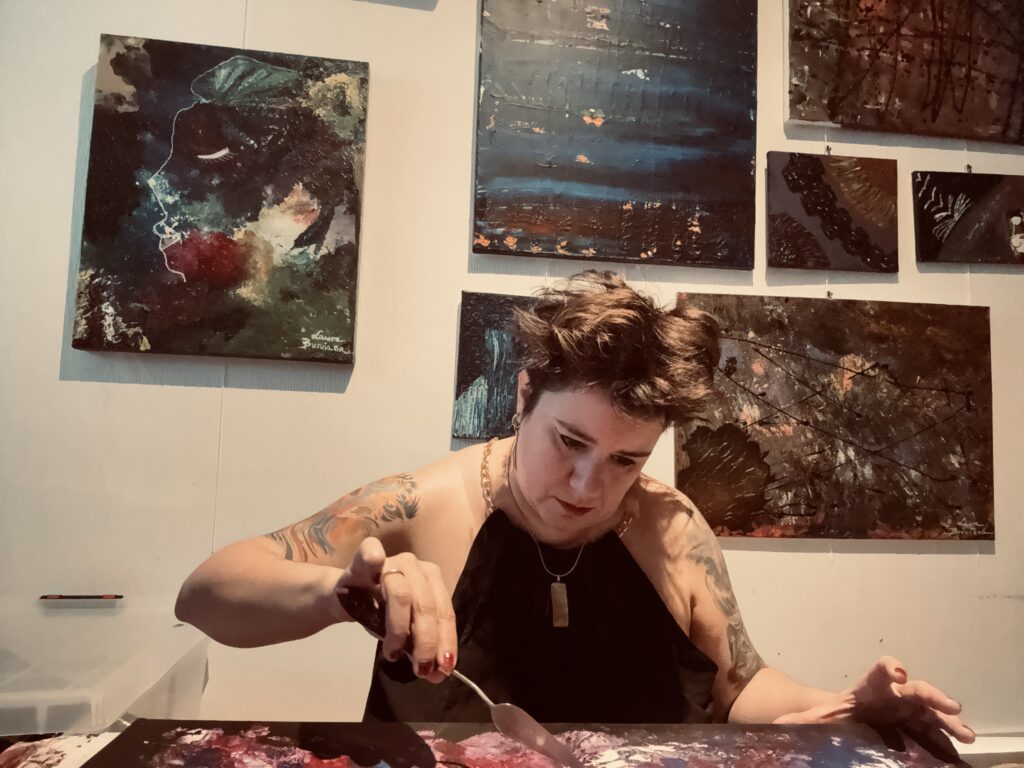
Q2. Your process with impasto, scraping, and unconventional tools feels very physical, how does working with your hands compare to holding a bow?
It is intensely physical, but in a very different way from holding a bow. With the cello, the gesture is controlled, precise, and guided by years of discipline — the bow becomes an extension of breath and intention. Every movement is measured, even when it feels free. In painting, especially with impasto and palette knives, the body takes over in a more direct and instinctive way.
The resistance of the material, the weight of the paint, the friction of the surface — everything is immediate. There is no intermediary. What fascinates me is that both practices are rooted in the same impulse: a movement that carries emotion. But while the bow refines and channels that energy, painting releases it. In a way, the canvas allows me to do what the instrument cannot — to leave a visible trace of the gesture, as if the sound had solidified into matter.
Q3. You work across acrylic, oil, and relief printing, what does each material allow you to express differently?
Each material allows me to access a different dimension of the same language. Acrylic gives me immediacy. It captures the first impulse — the urgency of a gesture, almost like a musical attack. It dries quickly, which allows me to build rhythms, layers, and structural tension. Oil, on the other hand, brings depth and time. It slows the process down. I can rework, blend, and let forms emerge gradually, like a resonance that continues to vibrate after the initial sound.
Relief and texture introduce a physical presence. They anchor the gesture in space, giving the painting a tactile memory — something you can almost feel with your eyes. When I combine them, it’s not about mixing techniques, but about composing with different temporalities: immediacy, duration, and material density. Together, they allow the painting to exist not only as an image, but as an experience of time and energy.
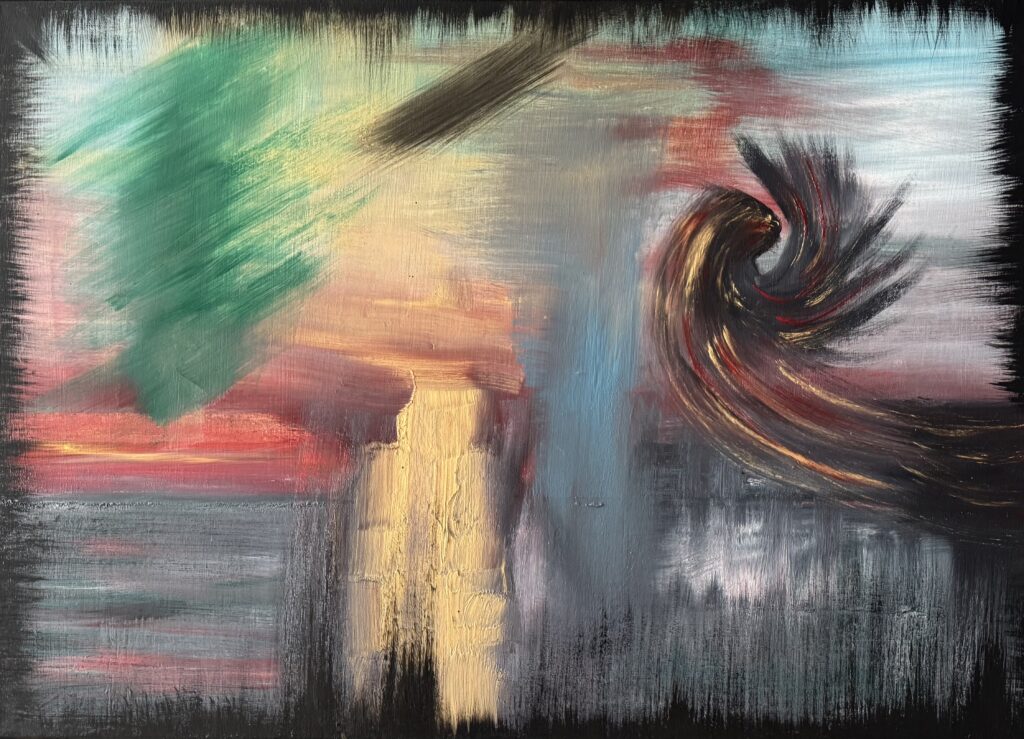
Q4. You describe your paintings as turning fleeting sound into something permanent, does that sense of permanence feel more like relief or pressure to you?
It feels like both relief and pressure, constantly in tension. Relief, because painting allows me to hold onto something that would otherwise disappear. Music exists only in the moment; once the sound fades, it survives only in memory. The canvas gives that fleeting intensity a form, a body, something that can remain. But there is also a quiet pressure in that permanence.
A painting cannot dissolve or be corrected in time the way sound can. It stays, with all its decisions, its risks, its truth. What interests me is precisely this threshold between the ephemeral and the lasting. I don’t try to fix the moment, but to preserve its vibration — as if the painting were still carrying the echo of something that has already vanished.
Q5. Your Resonanzfeld series refers to a “resonance field” is that field something happening within the painting itself, or between the painting and the viewer?
The resonance field exists both within the painting and in the space between the work and the viewer. Inside the painting, it is a field of forces — layers of gesture, tension, rhythm, and material that interact and vibrate together. It holds the memory of the movement that created it, almost like a frozen trace of energy. But it only becomes complete in relation to the viewer.
The painting is not a closed object; it is activated through perception. What you see, feel, or project onto it becomes part of the field itself. For me, the Resonanzfeld is precisely this invisible zone where matter, gesture, and perception meet — a space where something begins to resonate, beyond the image itself.
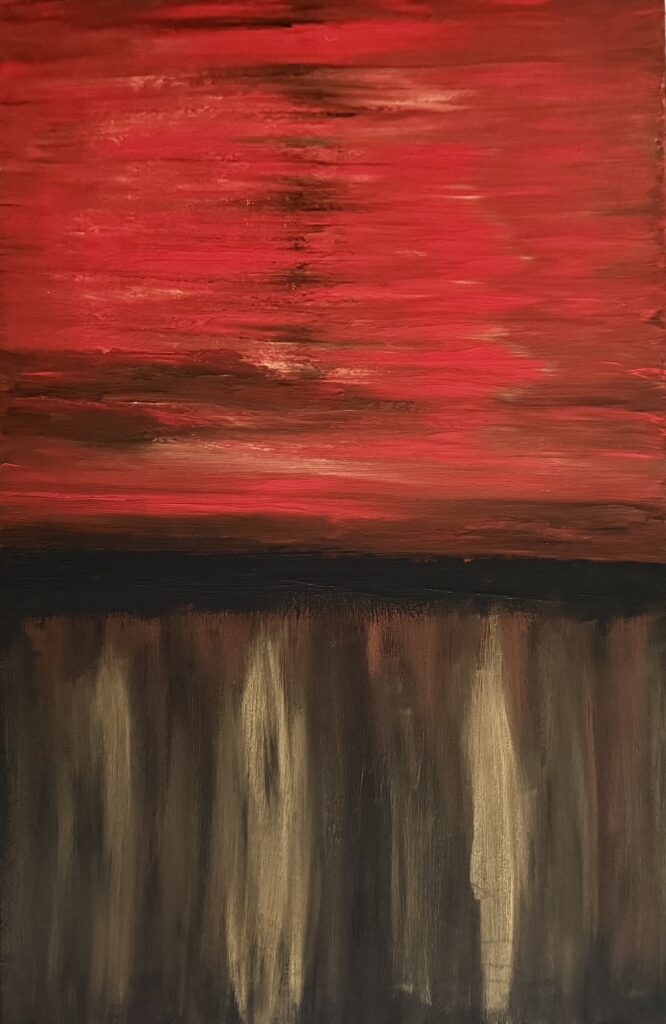
Q6. You’ve exhibited in cities like Venice, Paris, Milan, Budapest, and New York, does a painting change depending on the space or city it’s shown in?
Yes, absolutely — a painting never exists in isolation. Each space carries its own atmosphere, its own light, its own rhythm. In Venice, there is a sense of history, of quiet density, almost like a slow breath that surrounds the work. In Paris, the context can feel more immediate, more analytical, more exposed.
These differences subtly shift the way a painting is perceived. The colors, the textures, even the silence around it can change. But the work itself does not change — what changes is the field in which it resonates. In that sense, every exhibition becomes a new interpretation, as if the painting were speaking a slightly different language depending on where it is placed.
Q7. Is there a painting you’ve made that you feel is closest to what a piece of music actually sounds like one where you got the translation right?
There are a few moments where I felt very close to that translation, but one that stands out is a painting inspired by Bach’s First Cello Suite (Resonanzfeld – Inner Vortex). In that work, I wasn’t trying to illustrate the music, but to follow its internal movement — the flow, the breath, the underlying pulse.
The gestures came almost like phrasing, rising and falling, with a sense of inevitability. For the first time, it felt less like translating and more like continuing the music in another form. I don’t know if it is ever fully “right,” because sound and image belong to different realities. But in that moment, the distance between them became very small — almost transparent.
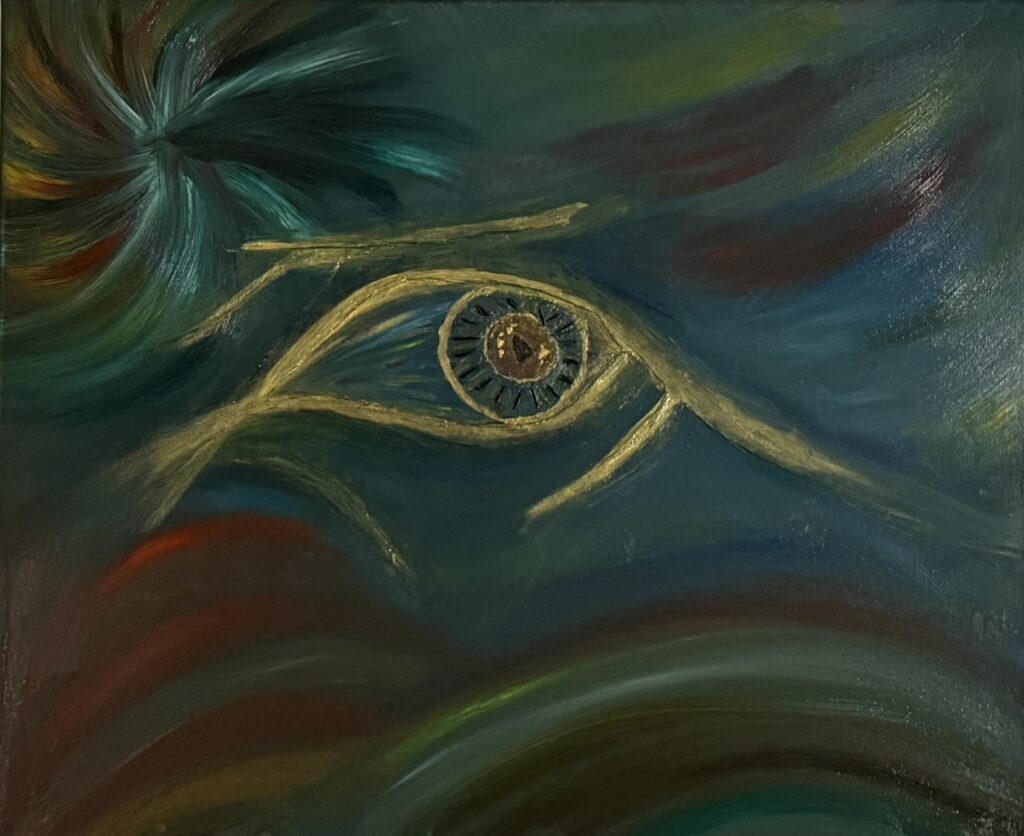
Q8. Has a collector ever described what they heard in one of your paintings, not what they saw, but what they heard?
Yes, and those moments are always very moving for me. I remember a collector who stood in front of one of my paintings for a long time and then said it felt like a low, continuous vibration — almost like a deep, sustained note.
Not something they could hear literally, but something they could sense physically, as if it resonated inside the body. What touched me was that they didn’t try to describe the image, but the sensation it created. I think that’s when the work truly becomes complete — when it shifts from being something to look at, to something to experience, almost like listening.
Q9. Looking back at your journey from classical performance to visual art, how has your understanding of expression evolved?
My understanding of expression has shifted from something that exists in time to something that can also exist in matter. In music, expression is immaterial — it unfolds, resonates, and disappears. Even at its most intense, it remains intangible. Through painting, I discovered another possibility: to give that immaterial music a body.
The canvas becomes a place where sound can take form — where gesture, vibration, and emotional intensity are fixed into matter. In that sense, my paintings are not separate from my musical practice; they are its extension. They are the material presence of something that was originally invisible. Today, I don’t see a boundary between the two anymore. I see a continuous movement — from sound into matter, from the ephemeral into the tangible.
Q10. What advice would you give to an artist who has a whole other life another career, another identity and is trying to figure out if there’s room for both, or if they have to choose?
I would say: don’t choose too quickly. Life is incredibly short — almost like a brief glimpse — and we often underestimate how much can exist within it. You don’t have to fit into a single definition. I started painting after the age of 40, while already living a full life as a musician. It wasn’t a replacement, but an expansion.
What matters is not when you begin, but whether you allow yourself to follow what feels deeply true. There is room for more than one identity, more than one path. In the end, it’s not about choosing one life over another — it’s about not ignoring the part of you that is asking to exist.
As our conversation with Laura came to a close, we sat there for a minute just thinking about what it means to let something new into your life when your life is already full.
Because Laura’s life was full. Completely. She had a whole career. An international one. Stages around the world. Audiences. Decades of discipline and training and performing at the highest level.
And then something inside her said there is more. Not more as in what you have is not enough. More as in there is a part of you that has not spoken yet. And she listened to it. After forty. When most people would have said it is too late or I do not have room or this is not practical. She listened anyway.
We think about how many people are carrying something like that right now. A second creative life that is knocking on the door while the first one is still running at full speed. And how most people keep that door closed because they think they have to choose. Laura did not choose. She opened the door and let both lives exist together. And her work is proof that they do not compete. They complete each other.
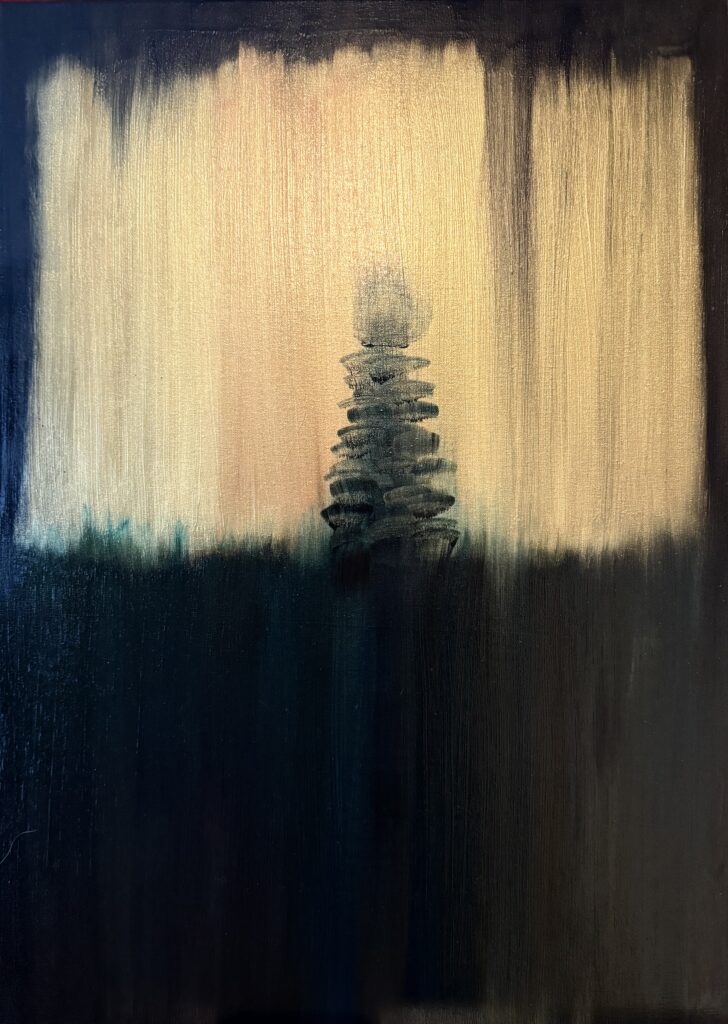
We also walked away thinking about permanence and disappearance. How Laura lives between two art forms that have completely opposite relationships to time. One vanishes the moment it is made. The other stays forever. And how that tension, between the thing that fades and the thing that remains, is not a problem she is trying to solve. It is the energy that drives her entire practice. She does not want to fix music in place.
She wants to catch its echo. Its vibration. The trace it leaves in the body after the sound is gone. And that is a very different thing from illustration or translation. It is continuation. The music does not stop when she puts down the bow. It changes form. And the painting holds what the air could not.
For anyone looking to collect work that holds genuine depth and originality, Laura is an artist we would strongly recommend paying attention to. Her paintings exist at an intersection that almost nobody else occupies, between classical music performance and contemporary visual art, between the ephemeral and the permanent, between gesture and matter.
The surfaces she builds have real physical presence. They reward close looking and they reward distance. They change in different light and in different rooms. And they carry something in them that is hard to name but impossible to ignore, a quality of vibration, of resonance, that stays with you after you walk away.
That is not common. That is an artist who has spent a lifetime training her sensitivity through one discipline and then channelling it into another. The result is work that is both deeply personal and universally felt. And that combination is what makes art last.
Follow Laura Buruiana through the links below and spend time with an artist who found a way to make sound stay.