

This Artist Mapped the Entire Zodiac Into a Single Charcoal Drawing │ Jaceson Mann

At Arts to Hearts Project, we have always wanted to celebrate artists in ways that go beyond a single post or a feature or a moment that comes and goes.
From the very beginning, everything we have built, our magazines, our artbooks, our awards, our exhibitions, has been about one thing. Saying to artists we see you. We see what you are making. We see the hours and the doubt and the discipline and the love you are putting into this. And we want the world to see it too.
That is why we created our Artist of the Yearbook. This is our very first edition. We had never done anything like this before. No previous issue to look back on. No template to follow. Just the belief that there are artists out there doing work that is so thoughtful and so committed and so quietly powerful that it deserves to be held in something permanent.
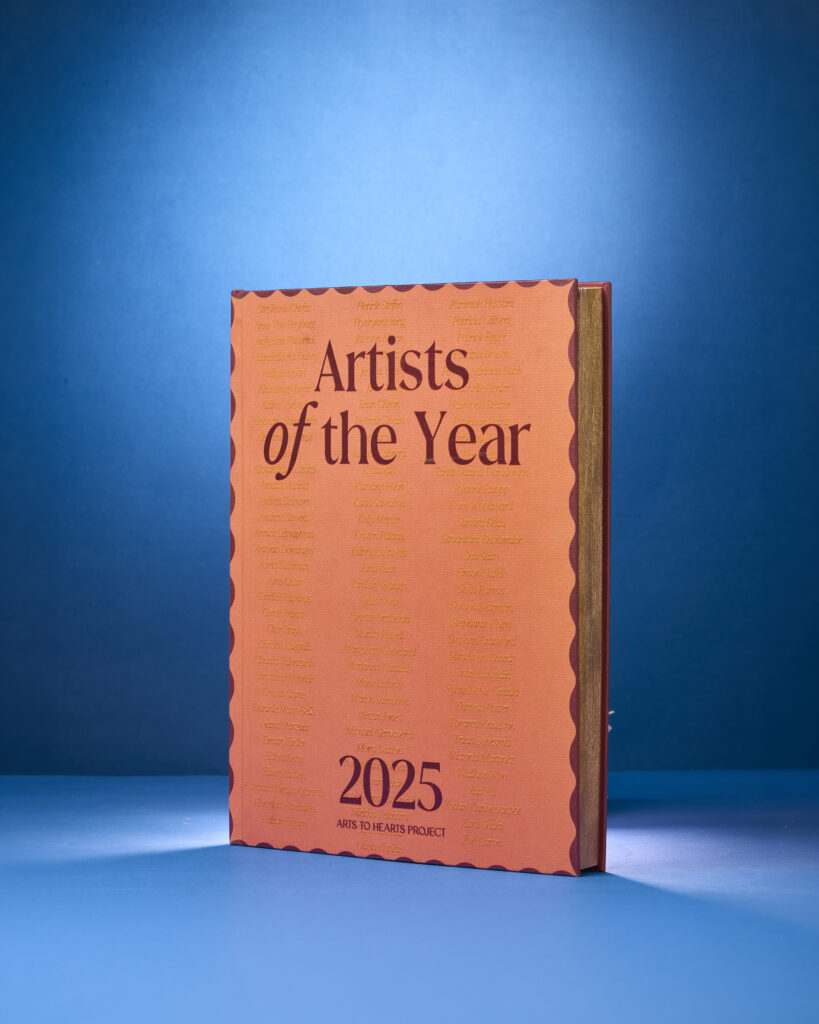

Not a screen you scroll past. Something you can pick up and hold in your hands and come back to whenever you need to remember what it looks like when someone pours their whole self into their art.
We spent a long time thinking about which artists belonged in this first edition. Because the first one matters. It sets the tone for everything that comes after. We were not looking for the loudest work or the most popular names. We were looking for artists whose practice has real depth behind it. Artists who are building something that will still matter in ten years because it was built on substance, not trends.
Among our selected artists in this first edition, Jaceson Mann is someone whose work stopped us completely.
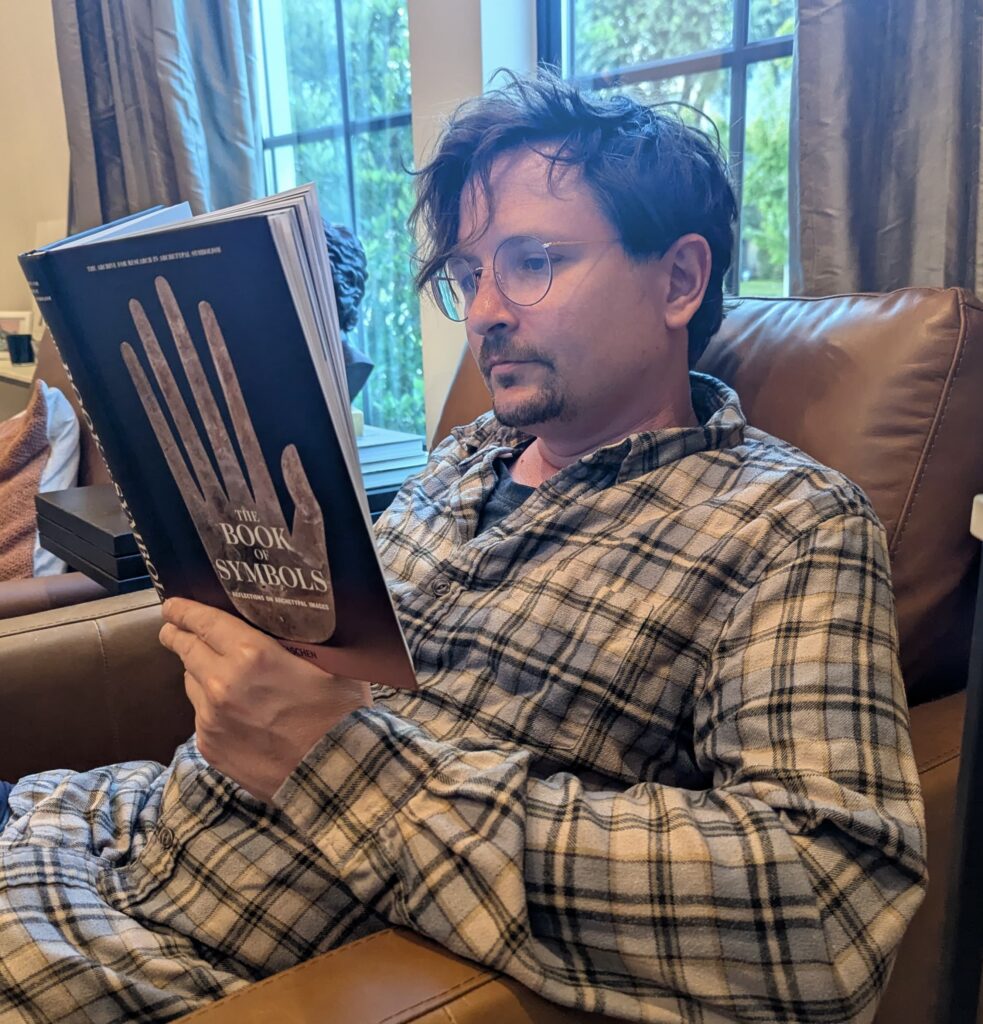
So before you get to the interview, let us tell you about Jaceson. He is from Texas. And his path to art is not one you would guess. He started in theology. Studied the Bible academically. Took philosophy courses that changed how he thinks about everything. Then he moved to Hollywood and spent nearly a decade working in film and broadcast.
Narrative, structure, symbolism, how to build a story that holds together and rewards attention. All of that got into his bones during those years. And then he found charcoal.
Not charcoal the way most people think of it. Jaceson works in reductive charcoal drawing. He covers the entire surface in charcoal first. Everything starts dark. And then he erases light into it. Pulls the image out of the darkness.
That process is not just technical for him. It connects to everything he has spent his life studying. Creation. Mythology. The idea that something meaningful was always there inside the dark, waiting for someone to uncover it.
He refined this technique at the Gage Academy of Art and it became the centre of his practice. And the work that comes out of it is dense. Symbols, mythology, ancient philosophy, astrology, cosmology.
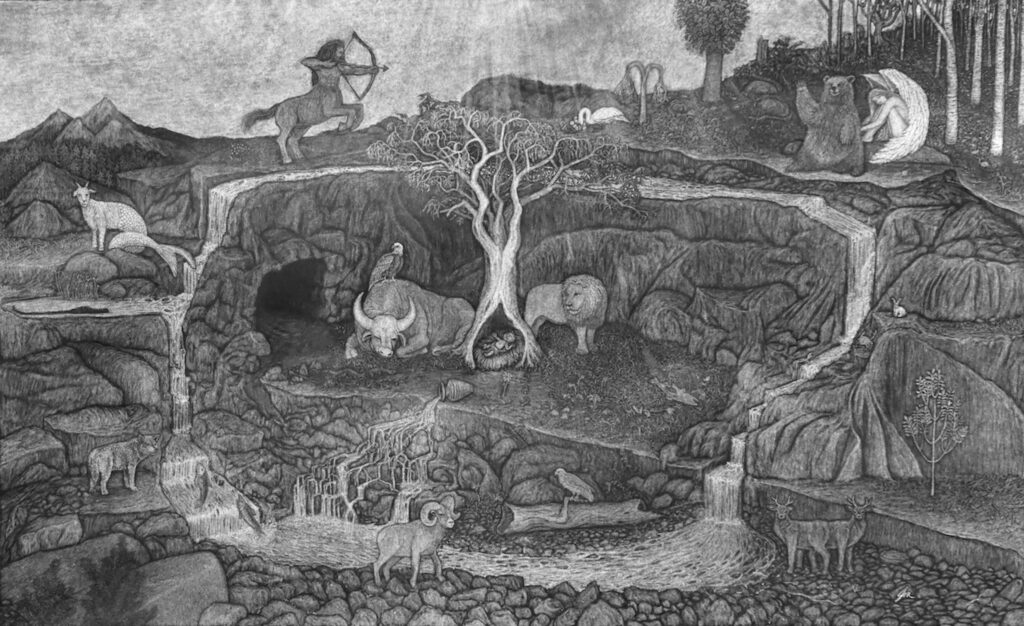
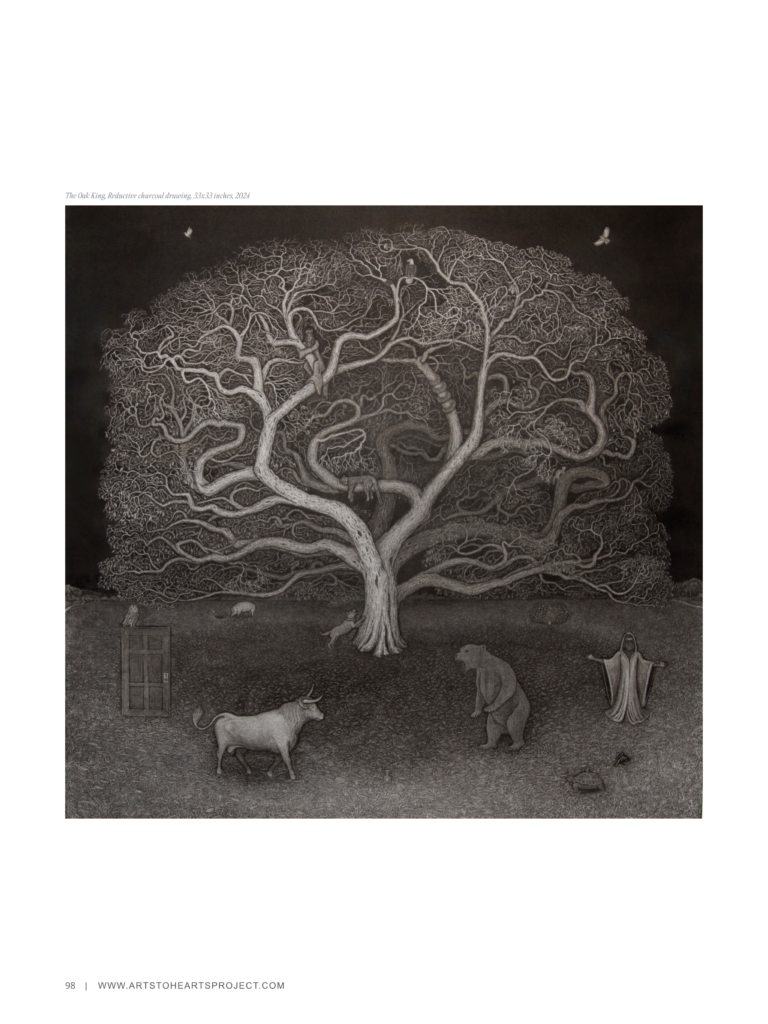
These are not simple drawings. They are visual puzzles built on years of reading and study and thinking. He listens to audiobooks while he draws so the ideas he is absorbing are literally filtering into the imagery as he works.
He does not spell everything out for the viewer either. Every piece has a specific meaning to him but he leaves parts open on purpose. He wants you to sit with it. To bring your own reading. He thinks of the viewer as a participant, not a spectator.
Before charcoal he painted trees and landscapes in acrylic. That was foundational. But when reductive charcoal showed up everything shifted inward. The work became about ideas and symbols and structures that you cannot see at first glance but you feel. And that shift was permanent.
Let’s get to know Jaceson through our conversation with him where he talks about going from theology to Hollywood to charcoal, why every drawing starts in total darkness, what ancient philosophy looks like when it is erased into a surface, and why he believes the mystery in a piece of art matters just as much as the meaning.
Q1. For readers who may be discovering your work for the first time, can you share a bit about your background and how your creative practice has taken shape?
I was born and raised in Texas and began my academic path studying theology before transitioning into film and broadcast communications. I spent nearly a decade working in Hollywood, which shaped my understanding of narrative, structure, and symbolism. Today, I work primarily in reductive charcoal drawing. My process begins by covering the surface in charcoal and erasing light into form, a method that mirrors my interest in creation, mythology, and philosophical inquiry. I refined this technique at the Gage Academy of Art, where it became central to my practice.
Q2. Your work has a strong conceptual foundation. Were you always interested in symbolism and philosophy, or did that develop over time?
I grew up studying the Bible, and from an early age I had big questions that naturally led me toward philosophy. In college I majored in biblical studies, and my favorite courses were always philosophy. Over time, my curiosity expanded to include a wide range of religious and philosophical traditions. As my charcoal practice developed, my reading deepened as well. I often listen to audiobooks while I work, so the ideas I study tend to filter directly into the imagery.
Q3. Your works are built around symbols, mythology, and layered references. How do you decide which symbols to include?
Ideas often begin while I’m studying a particular myth, philosophy, or historical period. Once a central concept takes shape, I research symbols that naturally align with the theme and help communicate it visually.
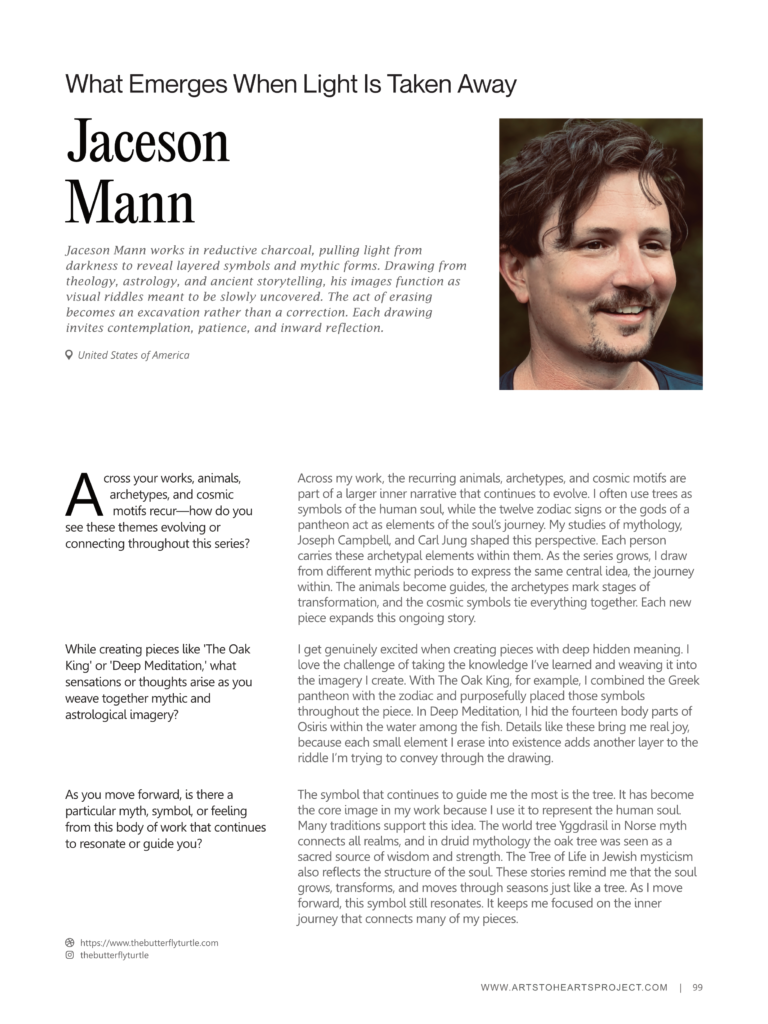
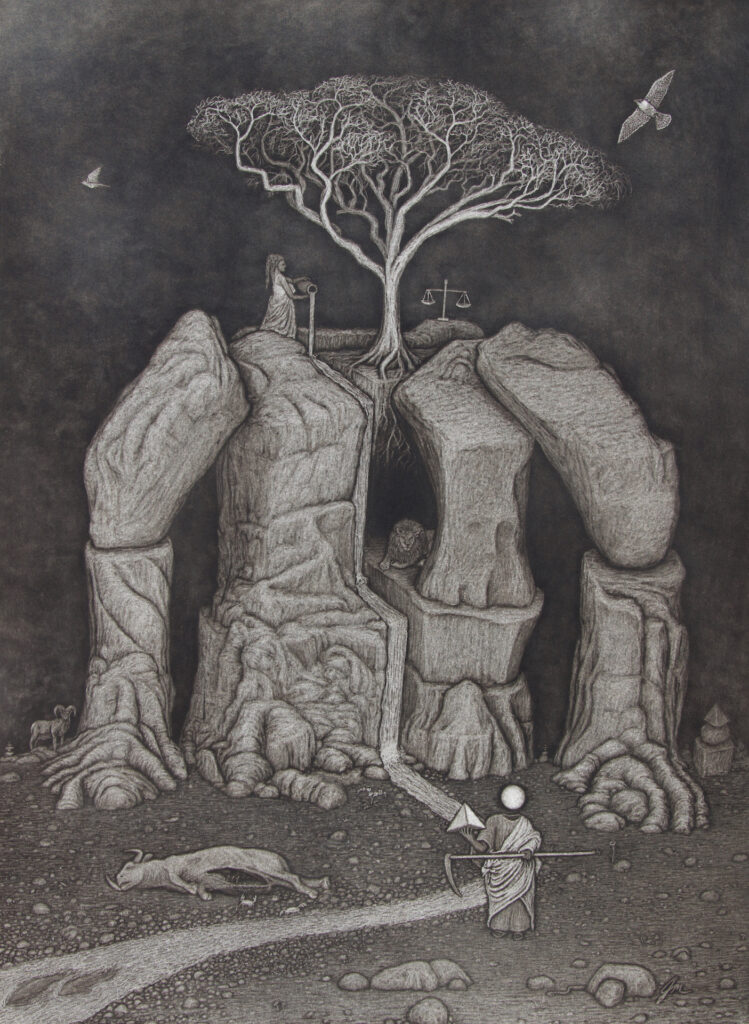
Q4. In works like The Cosmic Man or The Cosmic Garden, there are clear references to cycles, time, and cosmology. What ideas were you exploring in these pieces?
At the time I created these works, I was deeply studying the zodiac and the idea of astrological ages shaped by the movement of the sun. In both pieces, I use zodiac symbolism as a structural framework rather than simple decoration. In The Cosmic Man, I was exploring philosophical traditions ranging from Hermes Trismegistus to Pythagoras and the concept that the structure of the cosmos mirrors the structure of human consciousness. In The Cosmic Garden, I centered the myth of Adonis as a symbolic “new sun,” with the zodiac signs gathering as witnesses to cyclical renewal.
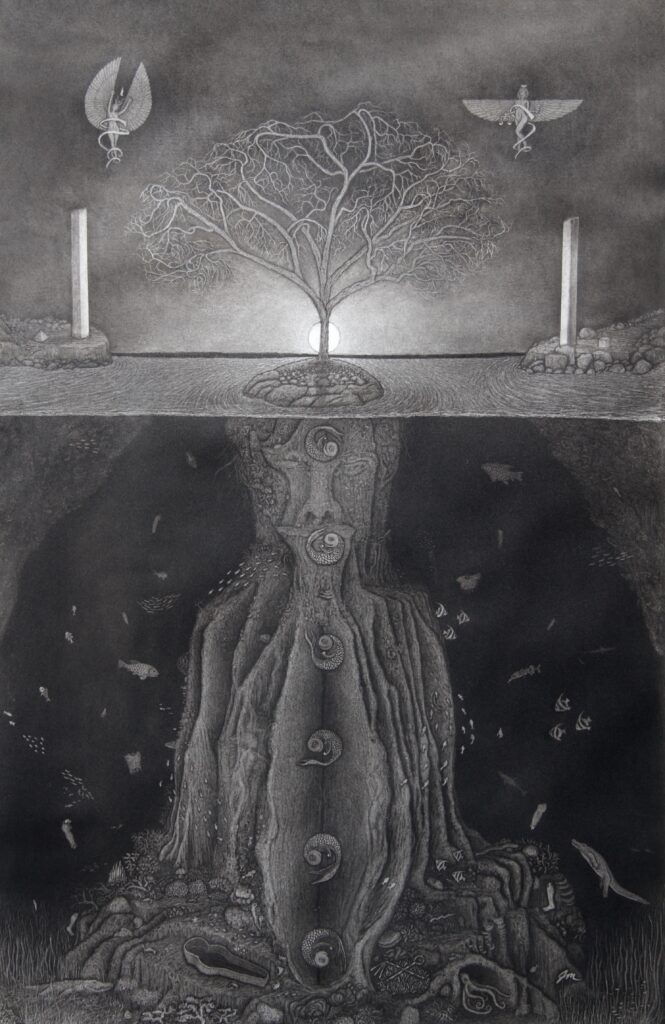
Q5. Across your work, there is a recurring focus on transformation, knowledge, and inner development. Are these themes drawn from personal experience?
I think transformation is part of the universal human experience. We all move through seasons of change, and knowledge or inner development can help us navigate those transitions more consciously. On a personal level, my work reflects my own evolution as an artist. When I began working in charcoal, it felt like discovering a new voice. That process of refinement and growth naturally found its way into the themes of the work.
Q6. Your work often functions like a visual puzzle rather than a direct statement. How do you think about the viewer’s role in interpreting the work?
Each piece has a specific meaning to me and is built around a clear internal structure. At the same time, I don’t feel the need to fully decode it for the viewer. It is intentional that certain aspects remain open. I think of the viewer as an active participant rather than a passive observer. I want people to engage with the work and arrive at their own interpretations as well. There is beauty in the mystery.
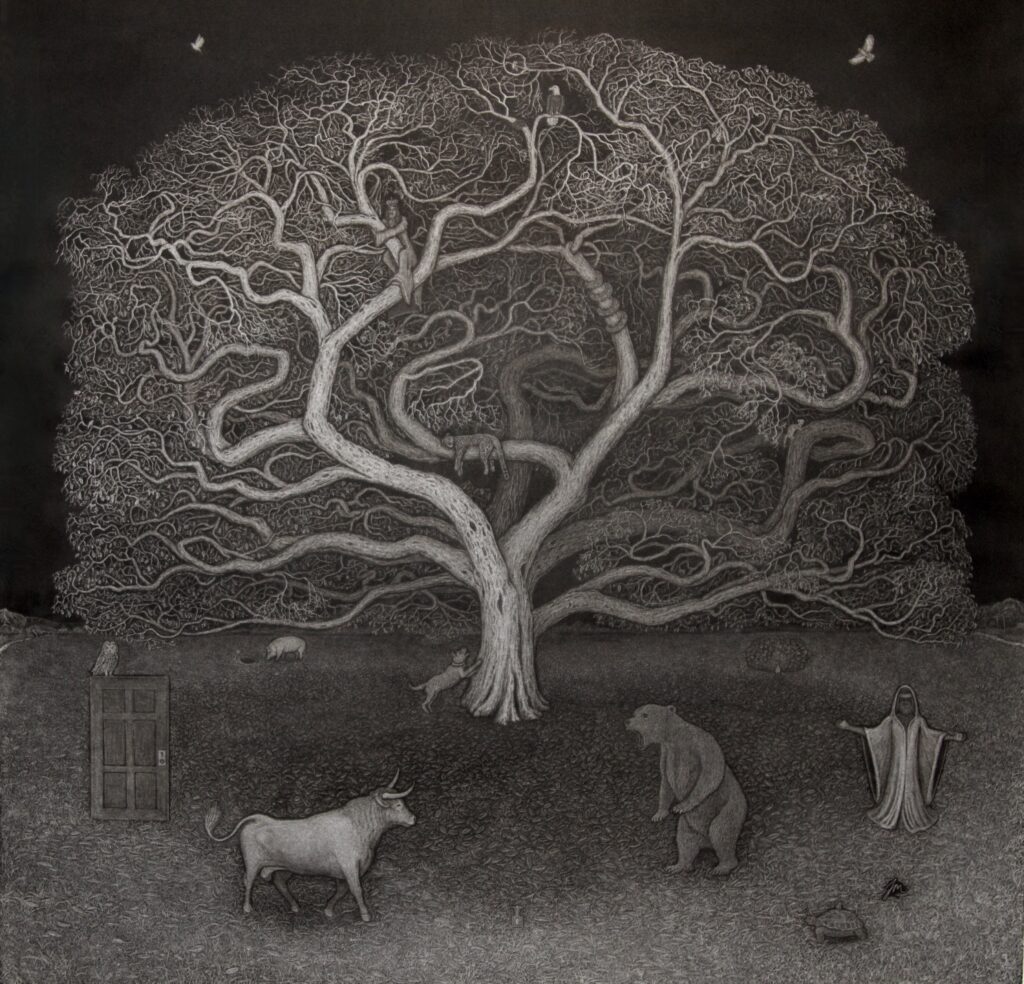
Q7.Looking back at your journey so far, what do you feel has changed most in your work or your approach to making?
Earlier in my journey, I worked primarily in acrylic, painting trees and landscapes. That period was foundational. It was where I began exploring composition and learning how to think visually. The major shift came when I transitioned into reductive charcoal. Around that time, I began integrating philosophical ideas more intentionally into the work. The pieces became more about expressing internal ideas and symbolic structures. That shift fundamentally changed my approach.
Q8. What advice would you give to artists who are trying to build a practice that is both technically disciplined and conceptually strong?
Take the time to find your voice. Explore different techniques seriously, and when you discover something that resonates, commit to it and develop it with discipline. For me, reading has been essential. The more knowledge you absorb, the more depth you bring into your work. Technical skill and conceptual strength grow together when you are both practicing consistently and feeding your mind.
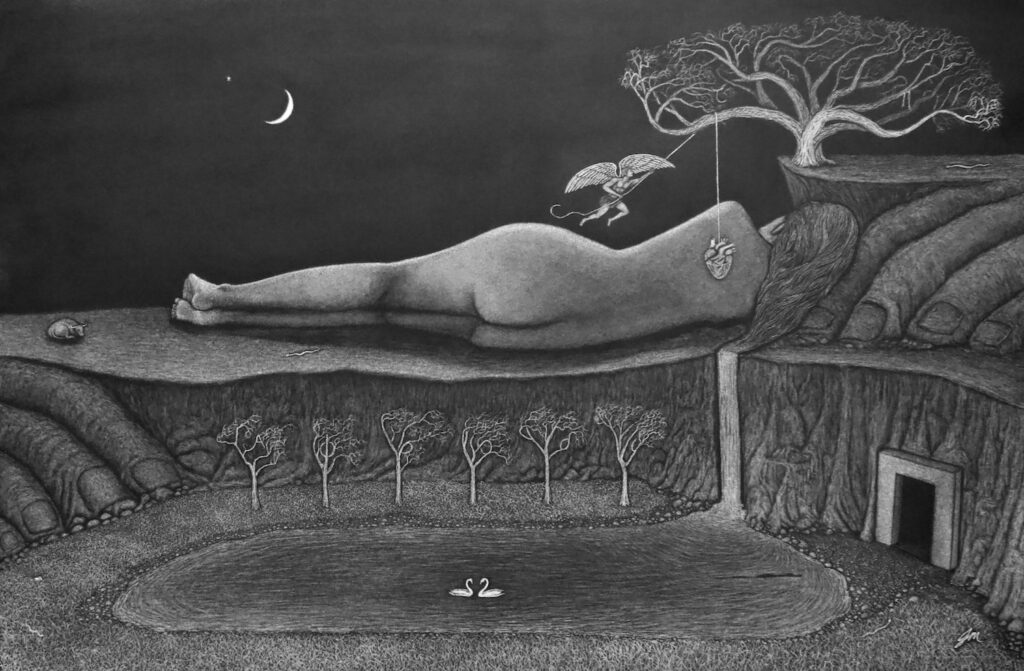
As our conversation with Jaceson came to a close, we walked away thinking about patience.
Not the kind people talk about on motivational posters. The real kind. The kind where you spend years studying things that have nothing to do with art and then one day you pick up a piece of charcoal and all of it pours out. The kind where you cover a surface in black and then sit there erasing tiny bits of light knowing it could take days before the image shows itself. The kind where you build layers of meaning into your work and then let people miss half of it because you trust that the mystery matters more than being understood.
That is the kind of patience Jaceson has. And honestly it made us think about how impatient the rest of us are. With our work. With our careers. With the process of becoming whoever we are becoming. We want it fast. We want it clear. We want results today. And here is someone who is perfectly happy working in the dark, literally and metaphorically, trusting that the light will come when it is ready.
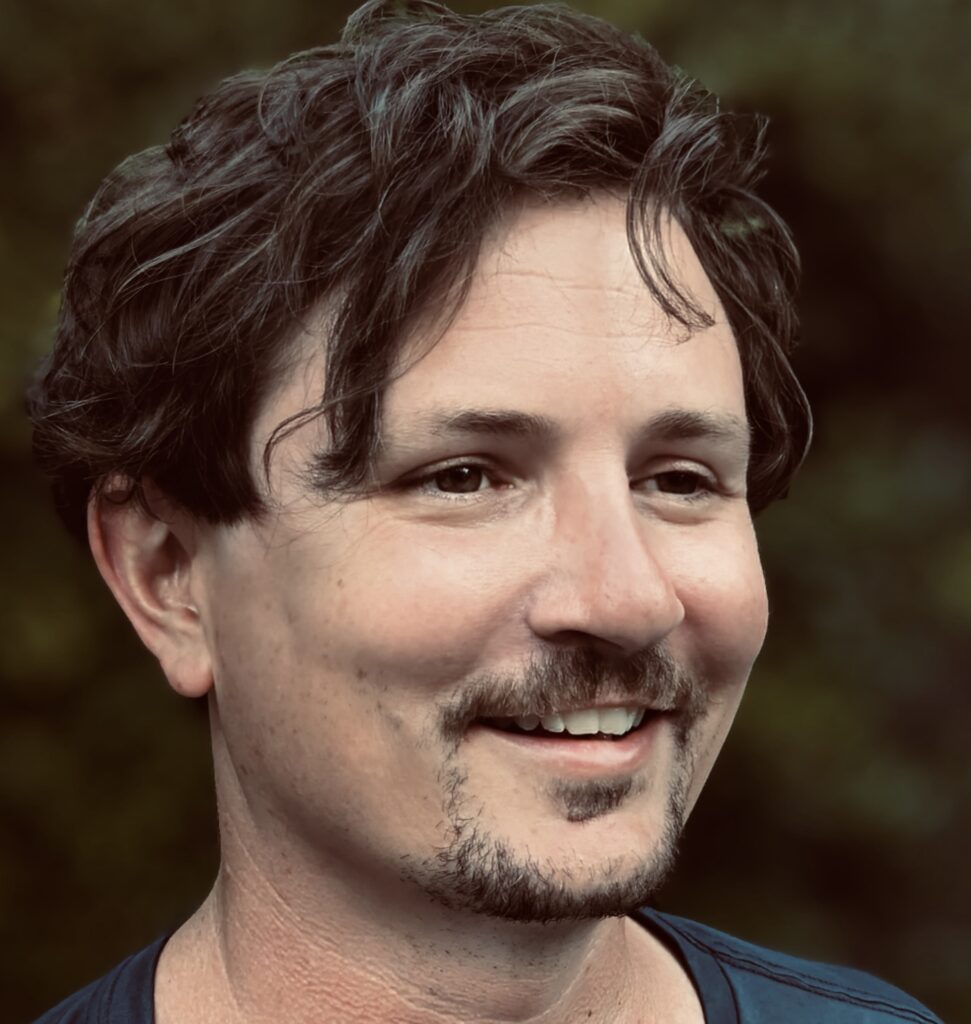
We also walked away thinking about what it means to let people not understand your work. Because most of us are desperate to be understood. We explain ourselves before anyone even asks. We caption everything. We write artist statements that tell the viewer exactly what to feel. Jaceson does the opposite. He leaves doors open and lets you walk through whichever one you find. And if you find a door he did not even know was there, that is fine too. That is better actually. That means the work is doing something beyond what he planned.
This is the first edition of our Artist of the Year Book. We had never done this before. And after talking to Jaceson we feel good about what this book can be. A place for artists who are not in a hurry. Who are building something slowly and seriously. Who trust that depth will always outlast speed.
If you are someone who collects or invests in art, Jaceson’s work is the kind that does not give you everything on the first look. It asks you to come back. And every time you do it shows you something you missed before. That is rare. And that is exactly the kind of work worth having on your wall for a long time.
Follow Jaceson Mann through the links below and spend some time with work where nothing is handed to you and everything is waiting to be found.