
What Happens on a Typical Day in an Artist’s Life
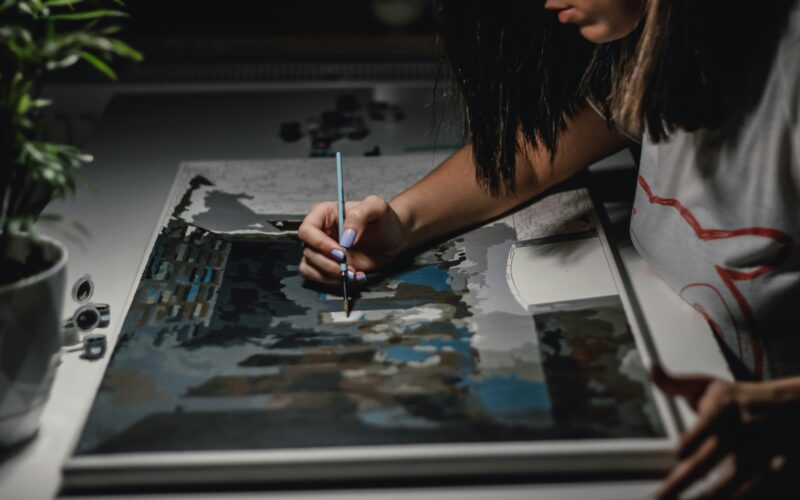
At Arts to Hearts Project, we have always been more interested in the behind the scenes than the finished frame. The part that does not make it into the caption. The hours before the work exists. The decisions nobody sees. The rituals that make no sense to anyone else but are somehow essential. The moments of clarity that arrive out of nowhere and the moments of doubt that do the same.
A few weeks ago we brought you inside the creative process of some of the artists featured in Women Artists on the Rise Edition 4. We asked them one simple thing. What does your creative process look like on a typical day? Not the polished version. The real one. The one that starts before the studio is ready and the coffee is finished and the world has any idea what is about to be made.
And what came back was more honest than we expected. More varied. More human. Early mornings and stolen moments. Practices built around pain and children and day jobs and everything else life asks for alongside the art. No two answers looked the same. And every single one of them felt true in a way that polished artist statements rarely do.
We shared some of those answers. But there were more sitting with us that we could not let go of. So we went back. We read through everything again. And we thought you should see the rest.
Because the process behind the work is just as worth knowing as the work itself.
The day does not interrupt the painting. The painting is the day
Most people fit creativity into their lives wherever they can. Between meetings and responsibilities and everything else that fills the hours. But there is another way to live as an artist. Where the work is not something you squeeze in. It is the thing everything else is arranged around. Where eight or nine hours at the easel is not a luxury or an indulgence. It is simply Tuesday.
Shruti Maheshwari @shrumah describes her day like this:
“On a typical day, I spend eight to nine hours at my easel painting, contemplating, observing, experimenting, playing with color. I like experimenting with different techniques to create a variety of visual effects in my work.”
Shruti Maheshwari
Eight to nine hours and she still calls it playing. We love that. Because it means the work has never stopped feeling like something she actually wants to do. The easel is not where she clocks in. It is where she goes to find out what happens when she tries something she has not tried before. And apparently that is enough to keep her there all day.
Start organized. End immersed. That is one way to make something worth looking at.
There is a kind of creative practice that looks chaotic from the outside and produces work that feels completely alive. And then there is the kind that begins with complete clarity and discipline and somehow arrives at the same place. The structure is not the opposite of flow. For some artists it is the very thing that makes flow possible. When you know where you are going you can afford to stop directing and just feel your way through.
In Claire Hines’ @hinesight_studio own words:
“My creative process is very organized and intentional. I like to start with a clear concept and plan, but once I begin creating, the process becomes very fluid and intuitive. I often get completely immersed in the piece, and everything naturally starts coming together.”
Claire Hines
Everything naturally starts coming together. That phrase only makes sense if the groundwork was laid first. The concept, the plan, the intentional starting point. Without that Claire might spend the whole session finding her way in. With it she can skip straight to the part where the work takes over. Organized at the start so that by the end she does not have to think at all. Just make.
Nothing is wasted when everything goes in the sketchbook first
We have all had that moment. A idea arrives out of nowhere and feels so clear that you think there is no way you could forget it. And then you do. The artists who never seem to run out of things to make are usually the ones who stopped trusting their memory and started writing everything down instead.
Natalie Jenkins @natalias_art_de2 starts there every time:
“My creative process starts with my sketchbook where I spend a lot of time writing and drawing. Any inspiration I experience gets collected there. On a typical day, I spend time drafting a pattern for my next soft-sculpture or starting a new painting while referencing my sketchbook for reference.”
Natalie Jenkins
Any inspiration gets collected there. That one line is the whole practice. The sketchbook is not just a place to plan. It is a place to keep. Every observation, every idea, every moment of inspiration that would otherwise be forgotten by morning. And when Natalie sits down to draft a pattern or start a new painting, she is never starting from nothing. She is starting from everything she has already gathered. That is not a small advantage. That is the whole foundation.
The business of art and the art of finding time for art. Not the same thing
Nobody talks about this part. The version of being a full time artist that involves spreadsheets and invoices and studio management and emails that have nothing to do with painting. The teaching schedules and the travel logistics and the accounting that does not care how inspired you are feeling today. This is the reality that most artist statements leave out entirely. And most people who say they want to be a full time artist have not quite pictured this part yet.
Yanina Viland @yaninaviland_art tells it like it is:
“Being a full time artist isn’t as glamorous as many would imagine. My days are full of management, accounting, running the studio. I’m teaching as well as traveling often with my main art job. But despite all of that I always trying to find two hours a day to paint.”
Yanina Viland
Two hours. Out of a day that is already full of everything else it takes to sustain a creative career. Not two hours because that is all she wants. Two hours because that is what is left after the business of being an artist is done. And she finds them anyway. Every day. Because the painting is the reason all the rest of it is worth doing. And two hours of that is always better than none.
Not every creative process is about making something beautiful. Some are about making something true
There is a version of art making that is about arrival. About getting to something finished and resolved and pleasing to look at. And then there is the version that is about excavation. About going into a piece and pulling something out that was not supposed to be comfortable. That resists easy resolution. That makes you feel something specific even if you cannot name what it is. These are not the same practice. And they do not produce the same work.
Bianca Daniel @biancadanielcreates works in the second way. In her own words:
“Most days begin with collecting fragments images, gestures, tensions, conversations. The process itself is highly constructed, almost confrontational. I layer, remove, distort, and rework until the piece develops its own resistance. I’m less interested in perfection than in emotional precision. Usually, the painting tells me when to stop not me.”
Bianca Daniel
Usually the painting tells me when to stop. Not me. That last line is the whole thing. Because Bianca is not working toward a predetermined destination. She is working until the piece becomes something with its own logic, its own weight, its own way of pushing back. And when it does that is when she knows it is done. Not when it looks finished. When it finally feels honest.
What we noticed reading through all of these was not how different the practices were. It was how committed every single artist was to their own particular way of working.
Some begin with a sketchbook full of collected fragments. Some carve two hours out of a day that has no room for them. Some start with structure and end somewhere completely unexpected. Some build tension into the work on purpose and wait for it to push back. And some simply show up to the easel for eight hours and call it playing.
No two creative days looked the same. And that is exactly the point. Because there is no single right way to make art. There is only the way that is honest to you. The practice you return to. The hours you protect. The rituals that make no sense to anyone else but are somehow essential to everything.
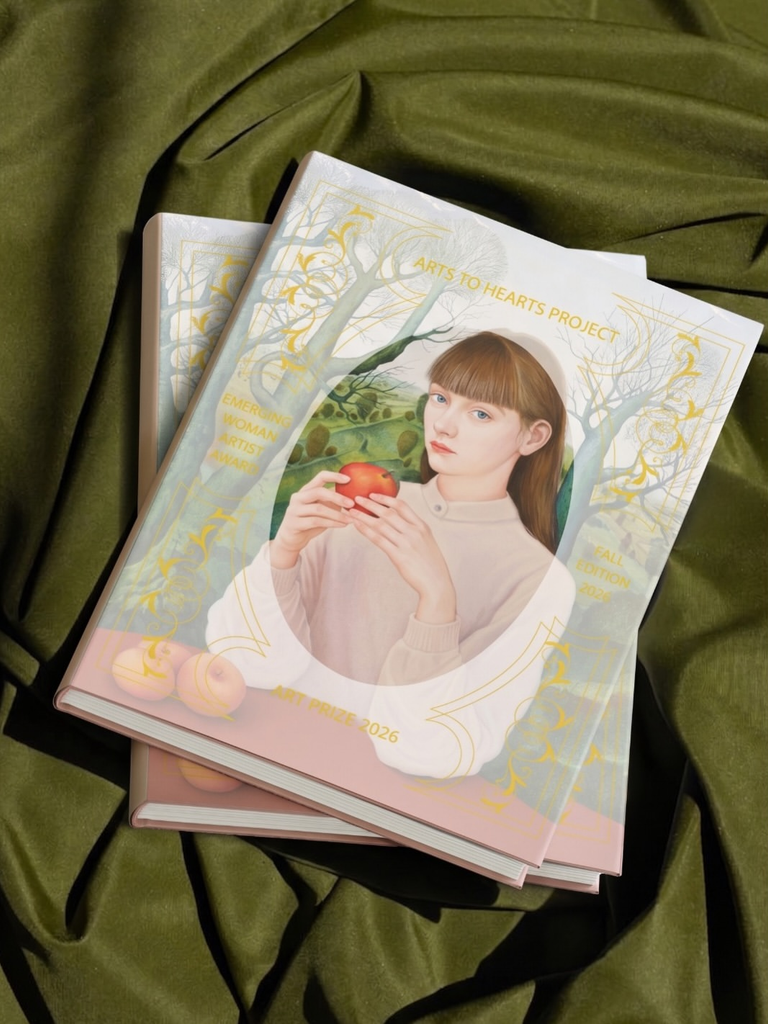
Women Artists on the Rise Edition 4 is full of artists exactly like this. One hundred women. One hundred practices. One hundred ways of showing up for the work every single day. The book is available now at the link below.
One more thing. The Big Book of Mixed Media Artists 2026 is officially open for submissions. If your practice lives across mediums and materials, if you layer and experiment and work in ways that do not fit neatly into one box, this is the book that was made for you.