


Lee Ghilain Begins a New Way of Seeing, and Painting, After a Change in Her Vision
At Arts to Hearts Project, The Great Book of Art Makers brings together 100 artists from around the world, celebrating the lives and stories behind the art as much as the art itself. More than a collection of paintings, it is a tribute to the makers, their roots, their journeys, and the experiences that shape everything they create, gathered into one beautifully produced collectible book.
Among the 100 artists selected for this second edition is Lee Ghilain, whose colourful, layered abstractions carry a lifetime of memory, heritage, and quiet hope within them.
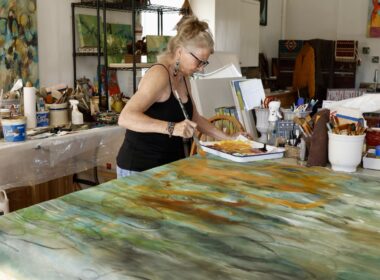
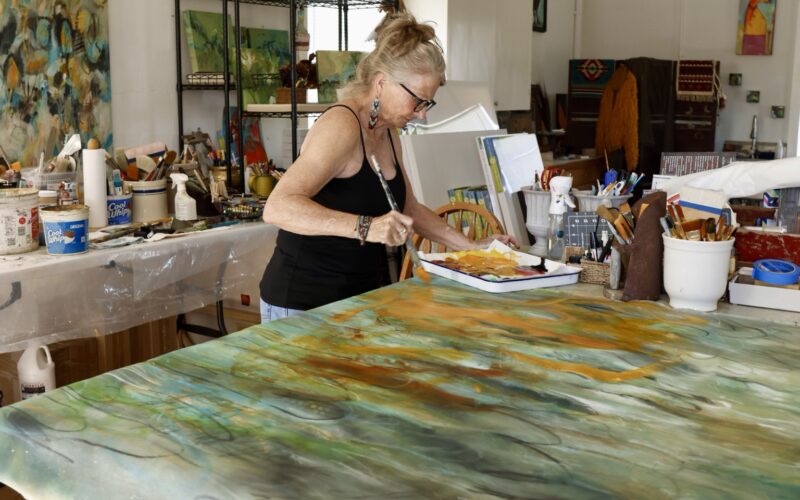
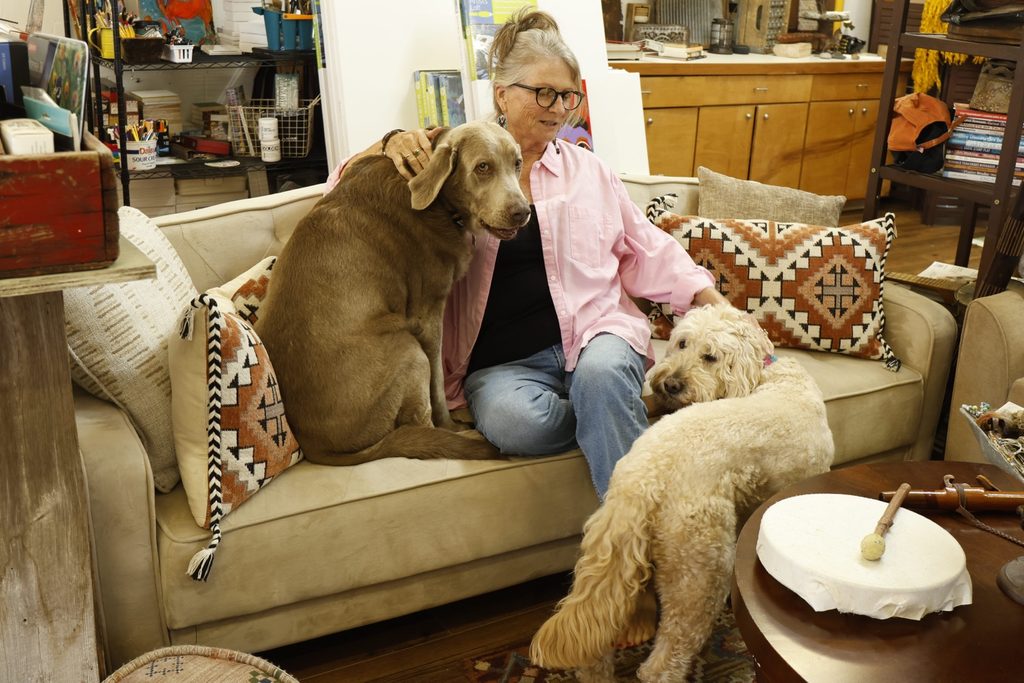
Lee is an intuitive abstract painter of Cherokee Nation heritage, and a member of the Long Hair Clan. She grew up on the Texas coast, between Brownsville and South Padre Island, spent nearly two decades living in Mexico, sailed from Texas to the Bahamas with her family, and today paints from a studio in Bayview, Texas, and on the road in her RV.
All of those places live in her work, and above all, they gave her an education in colour; even now, standing at a canvas in Texas, she might find herself reaching for a blue she remembers from Mexico.
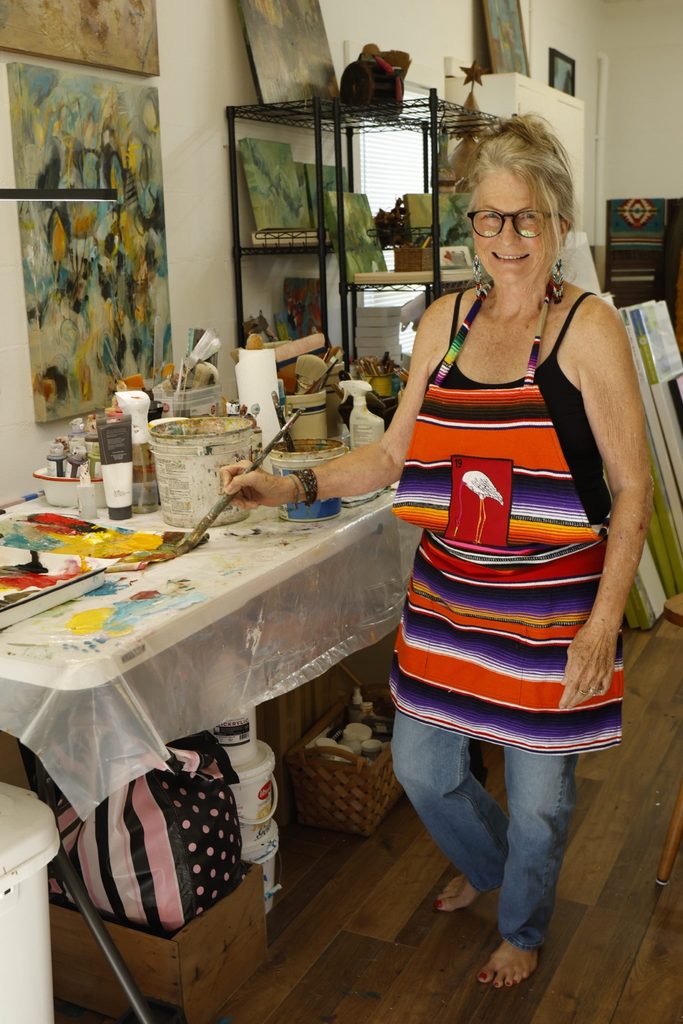
Her Cherokee heritage runs quietly but deeply through everything she makes. It has taught her to see the natural world as something to be respected rather than simply observed, and small deer appear throughout her paintings, almost hidden in the marks, as symbols of gentleness, awareness, resilience, and grace.
She rarely plans where a deer will go; she simply notices the suggestion of one in the colour and paints around it, leaving just enough for someone else to find. It means a great deal to her that eight of her paintings now live in the permanent collection of the Cherokee Nation, a home for her work close to the grandmother and great-grandfather through whom her roots come.
The way she paints has been profoundly shaped by a deeply personal journey. Living with macular degeneration, Lee has lost sight in one eye, and rather than ending her painting life, it has begun a deeper one. Her work has grown freer, more layered, and more rooted in feeling than in perfect vision. She paints less from detail now and more from instinct, trusting colour, movement, and texture to lead the way, and she often begins each piece with a written prayer and no idea at all where it will go.
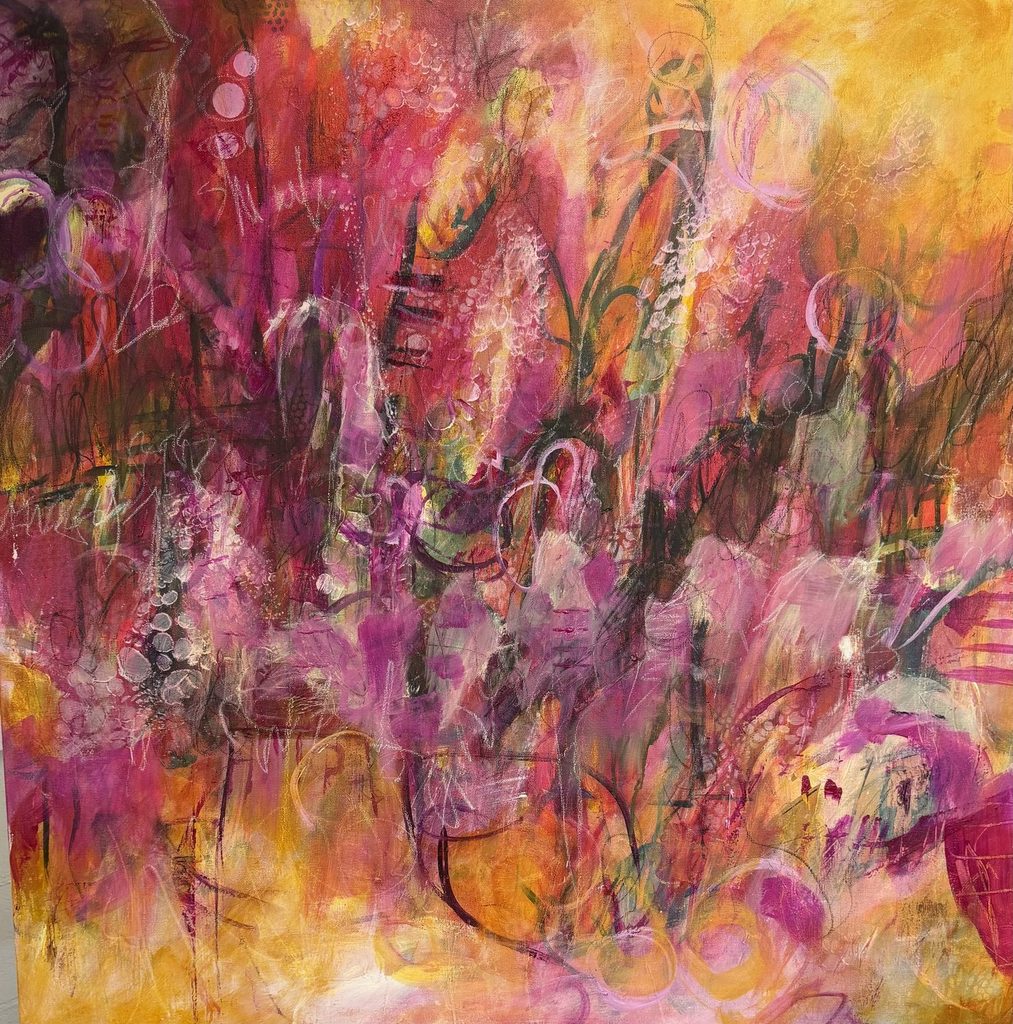
There’s a real depth to the joy in Lee’s work. Her colours are bold, vibrant, and full of life, yet that brightness lives right alongside real loss, uncertainty, and courage. The vibrancy doesn’t come from looking away from the hard things, it comes from choosing hope right in the middle of them.
Shelters, arches, doorways, and small tucked-away houses also appear again and again in her paintings, because home, for someone who has lived in so many different places, has become something she carries within her, and keeps quietly putting on the canvas.
Above all, Lee doesn’t want to hand you her memories; she wants to awaken yours. She deliberately stops before a deer or a house becomes too clearly defined, leaving room for you to recognise a place you have been, or remember someone you love. The moment someone points to a shape and tells her what they see, especially something she hadn’t noticed herself, is one she treasures most of all.
Now let’s hear from Lee about painting with changing vision, why home is less a place than a way of seeing, what the hidden deer carry, and how she meets fear with bright, hopeful colour and keeps going.
Q1. Lee, could you share a little about your background and how your journey as an artist began?
I grew up between Brownsville and South Padre Island, and the water has followed me into just about everything I paint. I spent twenty years in Puerto Vallarta and two years living aboard a sailboat with my husband, the Captain.
These days I paint in my studio in Bayview, Texas, and on the road in our RV, Pearl. Looking back, those places gave me an education in color. I can be standing in front of a canvas in Texas and find myself reaching for a blue I remember from Mexico.
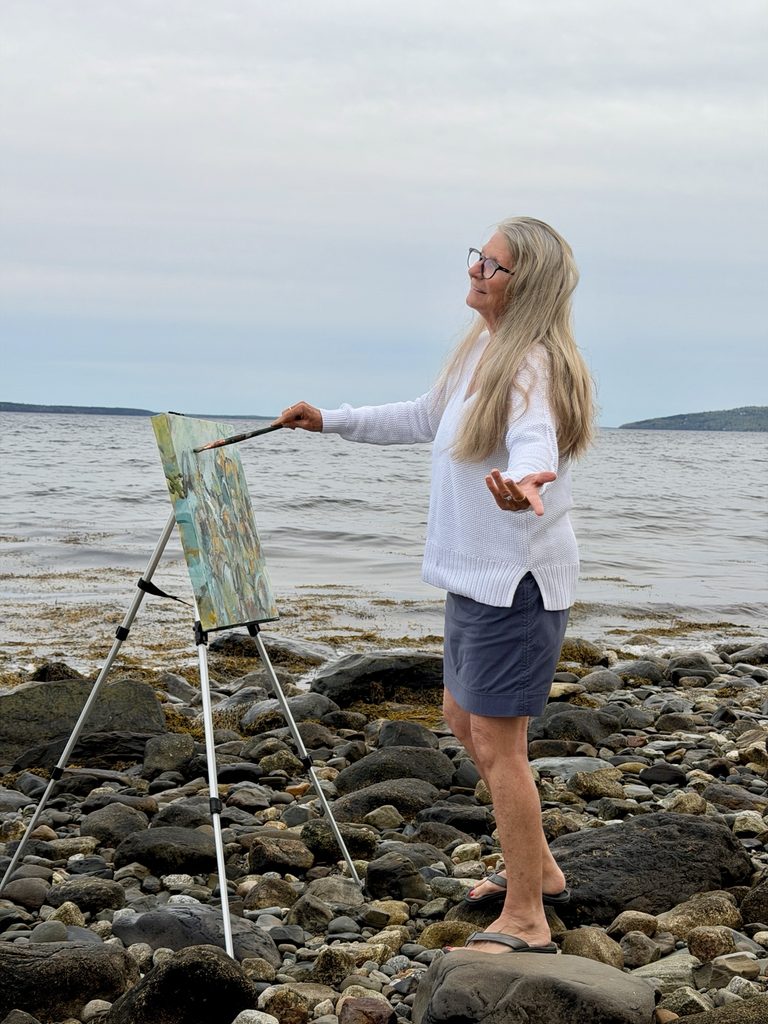
Q2. How has your Cherokee Nation heritage shaped your relationship with identity, memory, and the natural world?
I’m a citizen of the Cherokee Nation and a member of the Long Hair Clan. My Cherokee roots come through my maternal grandmother and her father. When I think about that part of who I am, I think of them first.
In my paintings, a deer will sometimes appear so quietly in the marks that even I don’t see it right away. I like leaving that moment for someone else to find.
Eight of my paintings are now in the Cherokee Nation permanent collection through its artist acquisition program. When I think about my grandmother and her father, it means a great deal to me that some of my work has a home there.
Q3. You describe painting as a way to remember how to see. What does this phrase mean to you?
Since losing sight in my left eye, I’m afraid of losing sight in my other eye, too.
Sometimes I feel almost desperate to get into my studio. I want to see the colors I’m mixing. I want to see where this painting takes me, and I want to be there for the next one.
I want to keep doing this for as long as I can. I used to take for granted that I could come back tomorrow and look at a painting again. Now, when I see something beginning to emerge in the color, I want to stay with it a little longer. That’s what “I paint to remember how to see” means to me. It’s a thank-you for what I can see today, even on the days when I’m scared about tomorrow.
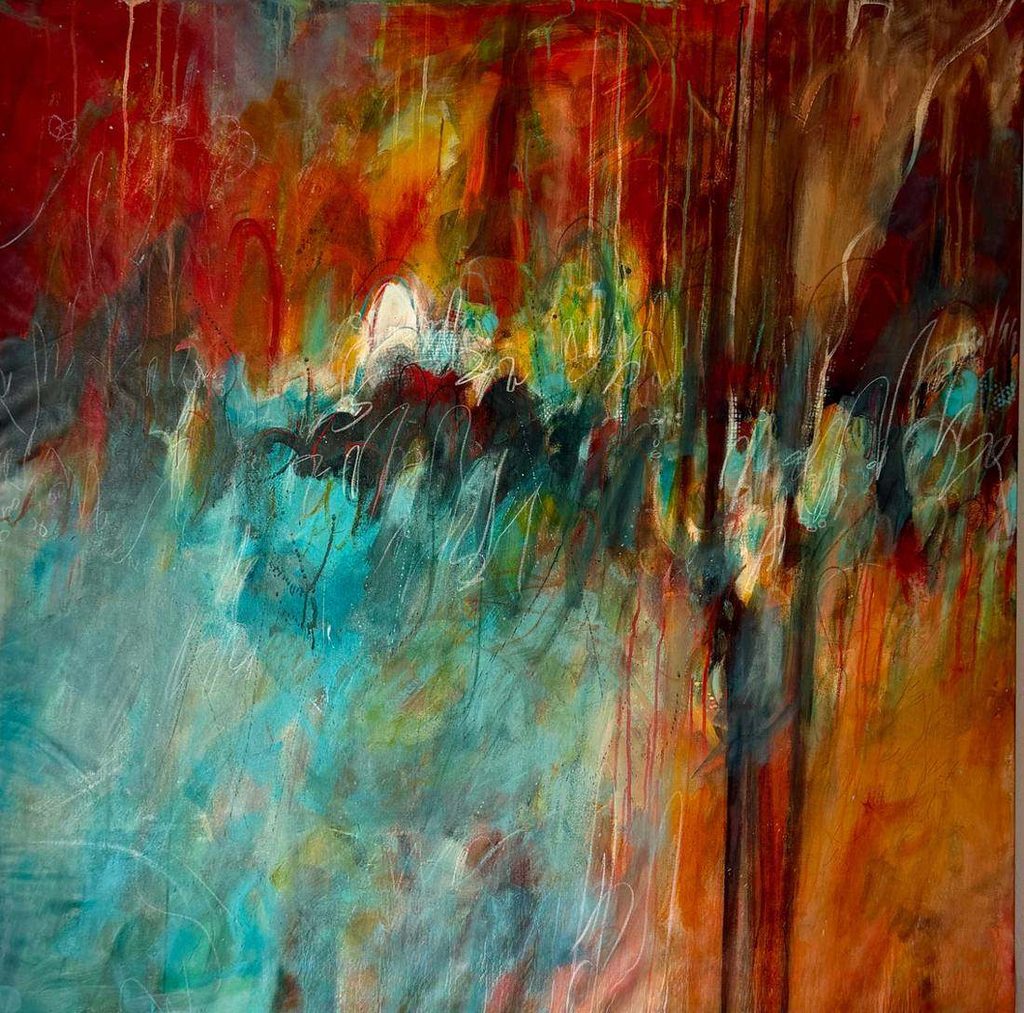
Q4. Your paintings often feature arches, enclosures, and shelter-like forms. What do these shapes represent for you?
I’ve called a lot of places home, including a sailboat. Living on the water gives you a funny idea of a fixed address. Sometimes I’m well into a painting before I notice I’ve made a doorway or tucked a little house into the color. I recognize that feeling of coming in from somewhere. Home is something I’ve learned to carry with me, and apparently I keep painting it.
Q5. Small deer often appear within your abstract compositions, sometimes almost hidden. What does the deer represent to you?
I rarely decide ahead of time where a deer belongs. I’ll see the suggestion of one in the marks and paint around it, leaving just enough for it to be found. What interests me is that moment of recognition. You can walk past the painting several times, and then one day there’s a deer looking back at you. I like letting it be that quiet.
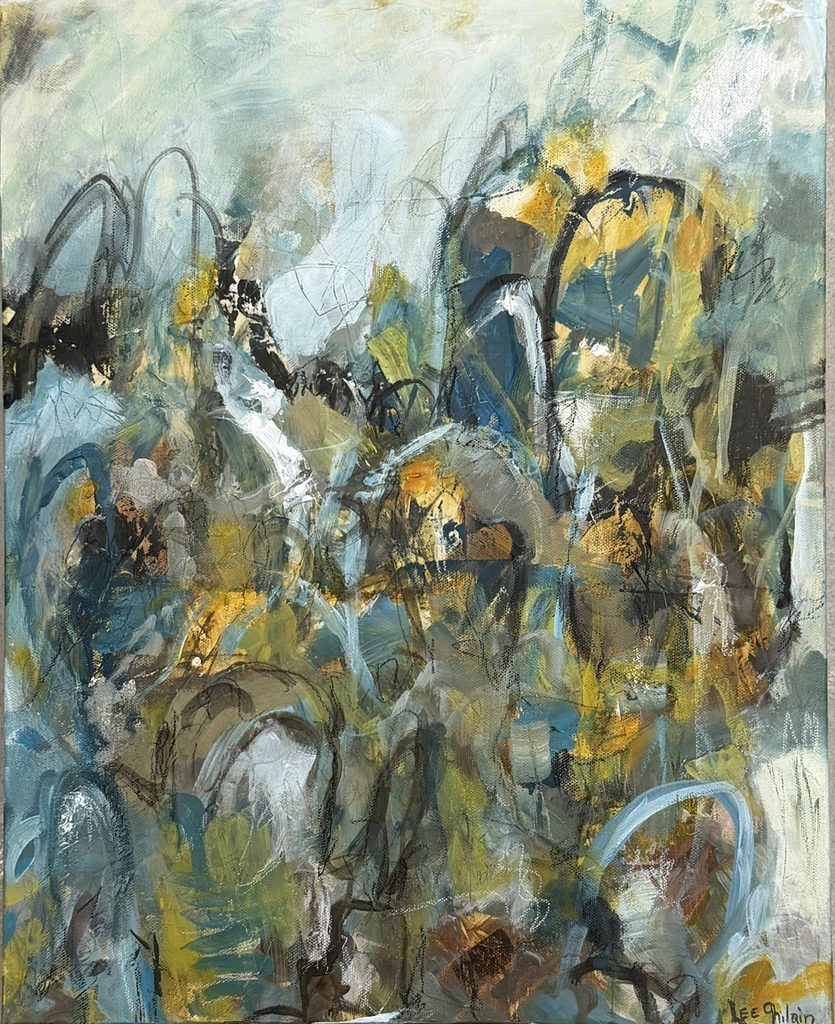
Q6. How have changes in your vision transformed your creative process and led you toward a more intuitive way of painting?
I’ve lost vision in my left eye to macular degeneration, and it’s changed the way I paint.
Color is the first thing people mention when they see my work, and it’s the first thing I reach for, too.
I still begin with a written prayer and no real idea where the painting is going. I might look at the same canvas for days before I see a little shelter in it, or a road that could lead home. These days I trust myself to paint just enough for you to find it, too.
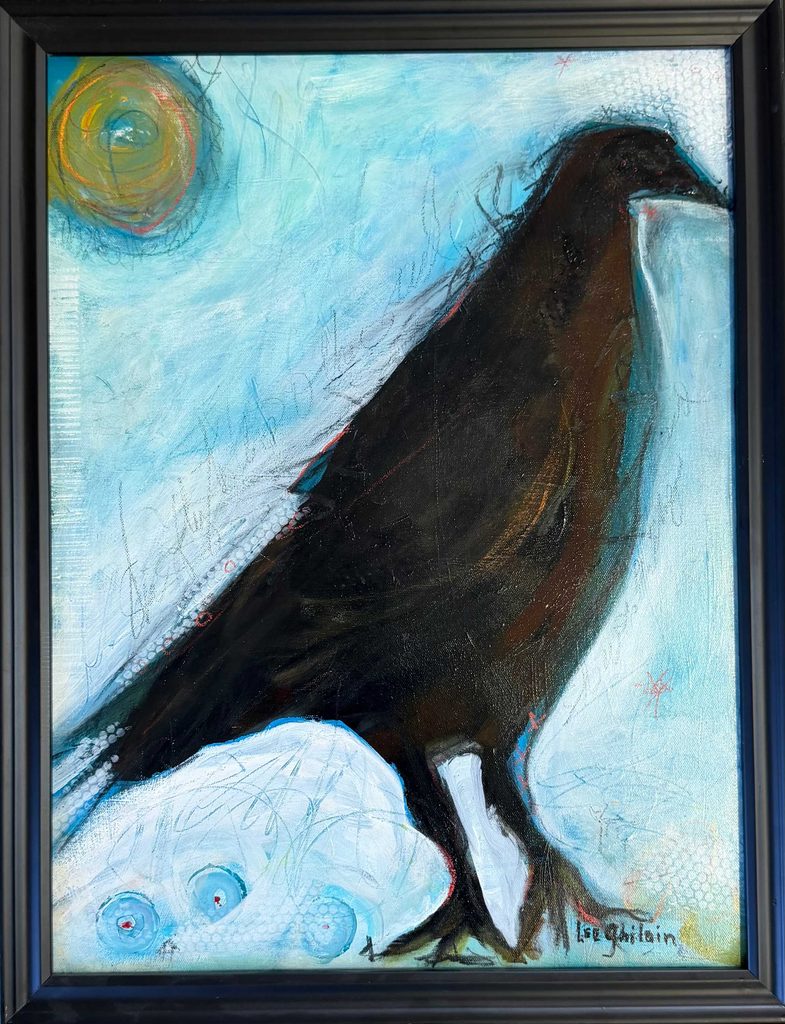
Q7. In Watcher, the raven becomes a quiet presence of awareness and protection. What inspired this work?
Ravens and crows fascinate me. I love the thought that they remember who’s been kind to them. Sometimes I’ll look up and see one sitting there, and my first thought is, “Well, how long have you been watching me?” That’s where Watcher began for me. There’s so much movement in the sky around him, and he’s so still. I wonder what he’s noticed that I haven’t. Maybe he’s watching over me. Maybe he’s telling me to pay attention. I like that he keeps a little of that to himself.
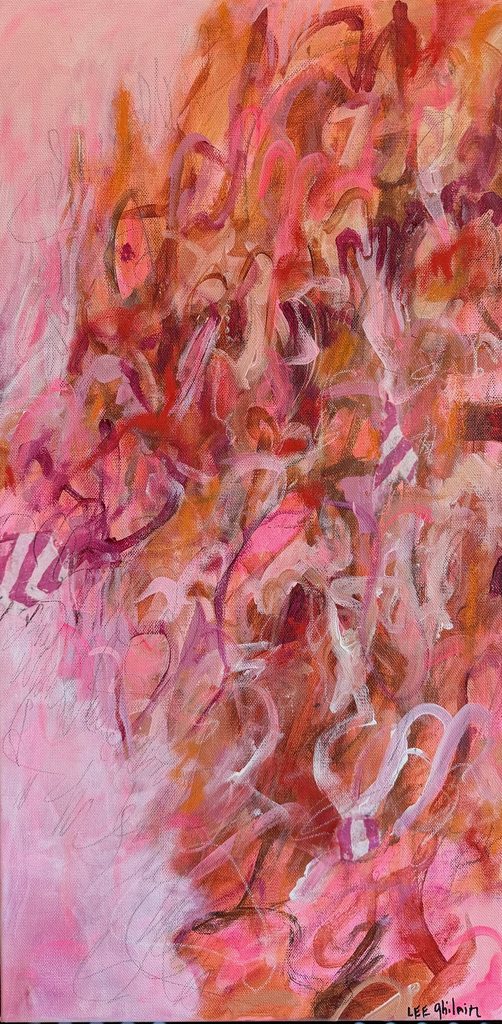
Q8. In Fire Within, how did you translate hope, courage, faith, and imagination into colour and movement?
In Fire Within, I wanted the color to carry the feeling I get when something in me says, “Keep going.” I think of the movement in that painting as the part of us that keeps stirring, even on a day when courage feels hard to come by. Later, when I began imagining how someone might step inside the painting, a question came to me: “What is the word that burns inside you?” I’d love to know what different people bring to it.
Q9. How important is it for viewers to discover hidden forms themselves rather than having everything immediately revealed?
I love the moment someone points to a shape and tells me what they see, especially when it’s something I hadn’t seen myself. It’s one reason I stop before an animal or a little house becomes too clearly defined.
I want to leave enough room for somebody else to recognize a place they’ve been, or remember somebody they love. I don’t want to show you my memories—I want to awaken yours.
Q10. If someone encounters your paintings while searching for home or belonging, what would you hope your work helps them remember?
I hope a color in one of my paintings takes someone back to a place where they felt at home. For me, it might be the water off South Padre Island.
As we wrapped up our conversation with Lee, we found ourselves thinking about resilience, and how the most honest art so often comes not from ease, but from meeting life’s hardest moments head-on.
Her story speaks to something the art world doesn’t always make room for. There’s an unspoken idea that an artist’s path should be a steady, upward climb, with the difficult parts kept quietly out of view. Lee’s journey tells a truer story.
When she began losing her sight, the expected ending would have been to stop. Instead, she went deeper, letting the very thing that could have ended her practice reshape it into something freer and more intuitive. There’s real courage in that, and a powerful reminder that our hardest chapters are not the end of our creativity, but often the beginning of its most honest form.
Her use of colour says something quietly powerful, as well. The art world often treats seriousness and darkness as the markers of depth, as though bright, hopeful colour must be less meaningful. Lee’s paintings prove otherwise.
Her vibrancy is hard-won, chosen deliberately in the middle of real loss and uncertainty, and carries all the more weight for it. In a space that can mistake gloom for gravity, her radiant, determined hope feels not only refreshing, but genuinely brave.
For art lovers and collectors, Lee’s work brings warmth, colour, and real emotional depth into a space. Bold, layered abstractions that hold quiet secrets, a shelter, a doorway, a small deer waiting to be noticed, and that reveal a little more each time you look. People tend to find their own memories and their own sense of home within them. To live with one of her pieces is to keep something genuinely alive on your wall, rich with heritage, hope, and small discoveries, that gently invites you to remember a place, or a person, you hold dear.
Follow Lee Ghilain through the links below and see her work for yourself.
The countdown is almost over, 3 days until the Woman Artist Award, 7th Edition closes. For seven editions, it has championed women artists across the world, and now it’s your turn to step forward. Any medium, any subject, from anywhere. All that counts is your work and your voice. Don’t wait until it’s too late, submit now.