
This Artist Uses Recycled Materials to Create Art About Irish History | Olwen Kelly
At Arts to Hearts Project, 100 Emerging Artworks is our yearly celebration of the single, standout piece. Each year, through a global call for art, we gather a hundred remarkable works by emerging artists from all over the world and give each one a full two-page spread to tell its story.
Across painting, sculpture, photography, mixed media, and digital art, it is a book made to help fresh, bold, and thoughtful work be seen, appreciated, and remembered. Among the hundred works chosen this year is a piece by Olwen Kelly, and few in the collection carry quite the same weight.
Olwen is a mixed media artist based at a studio in Dublin, with a background in Textile Art and Artefact, a training that taught her to think deeply about materials, where they come from, what they carry, and how they eventually break down.
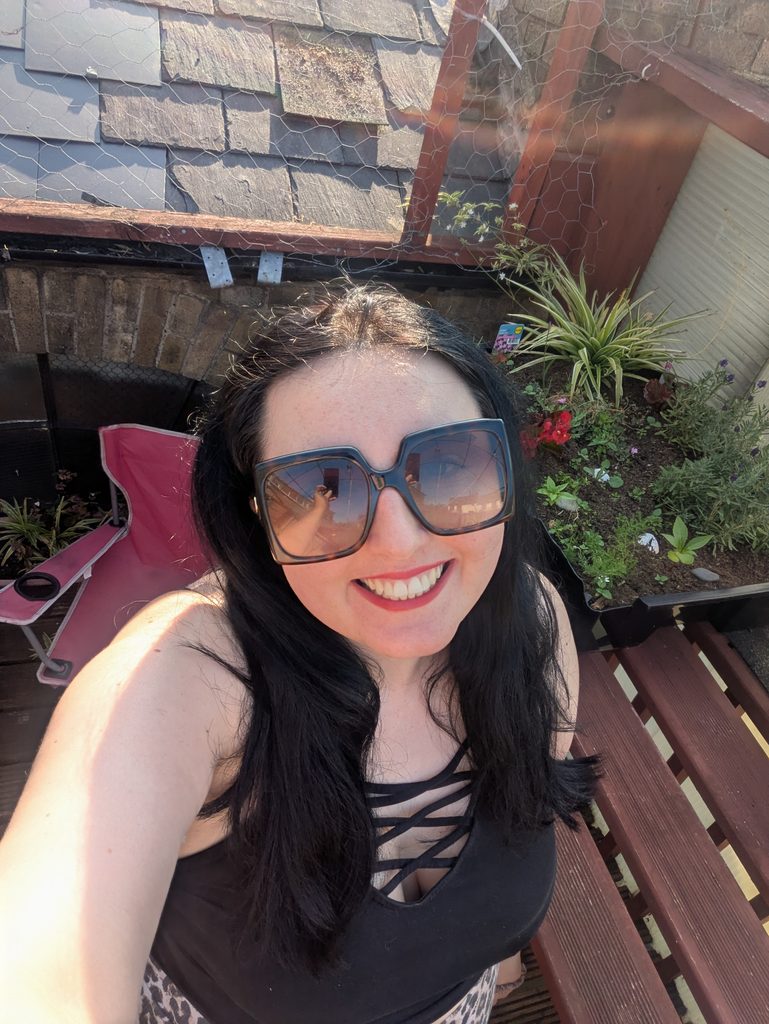
That thinking shapes everything she makes. Her recent work draws directly from Irish history, and in particular from the country’s institutions, the Industrial Schools and the Mother and Baby Homes, places run by religious orders and overseen by the state, whose stories many would prefer to leave buried. Olwen brings them, gently and unflinchingly, back into the light.
Found objects, salvaged fabrics, and experimental, biodegradable materials are the heart of her practice, because for Olwen the material is never neutral. It already carries a history, and the phrase that guides her work is simple: the medium is the message.
Her pieces are textured and layered, built through sampling, remaking, and repetition, and she often lets an ordinary, discarded thing become a quiet, powerful witness to what happened. For one body of work, she used children’s clothing salvaged from a former industrial school laundry, where children had once worked long, hard hours.
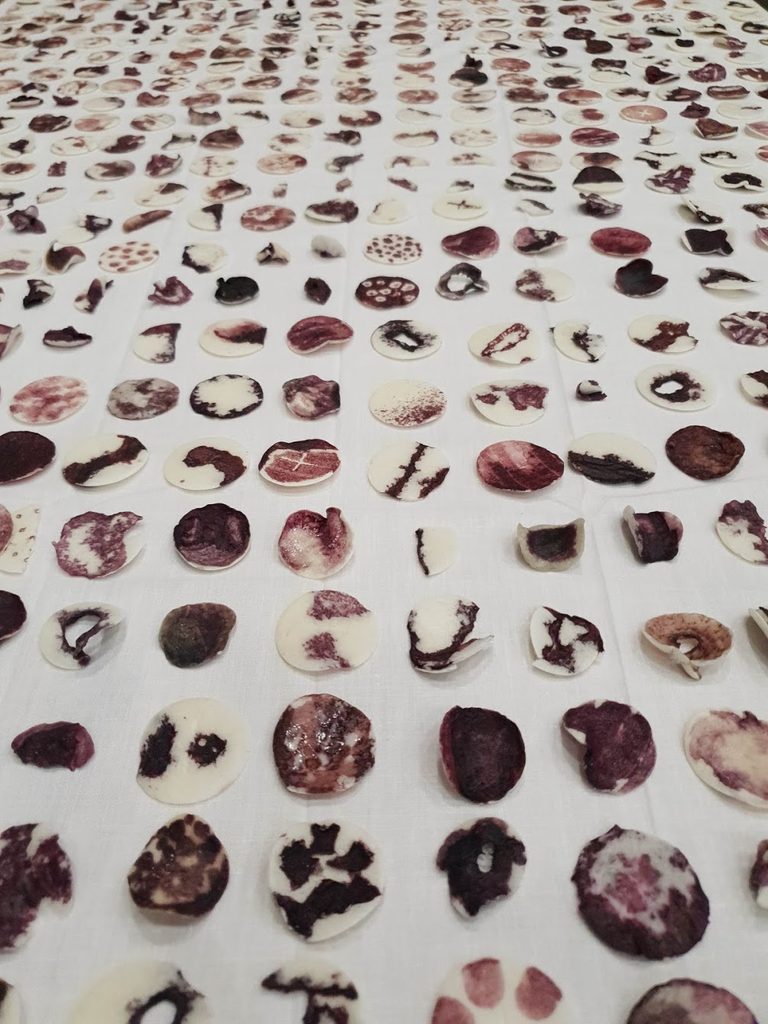
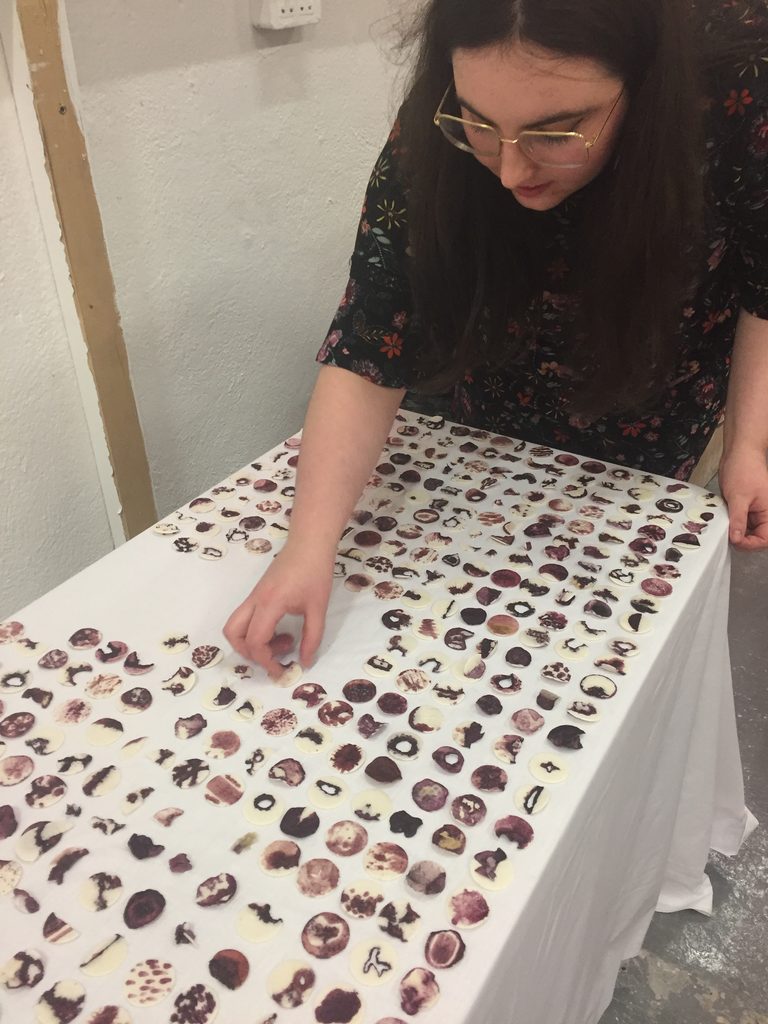
Much of her recent work responds to the story of the Tuam babies, one of the most painful chapters of all. For this, she works with unconsecrated communion wafers and red wine, and the fact that they are unconsecrated is the point.
By buying the wafers to make art, she interrupts the life they were meant to have, and that interruption mirrors the way these institutions interrupted and reshaped the lives of the people sent to them. It is a quiet, devastating idea, carried entirely through the material itself.
The research behind the work is heavy and often troubling, but the making itself is slow and meditative. Her pieces are assembled patiently, layer by layer, and some shift in form and colour as they slowly dry. There is something quietly healing in that process, in taking such difficult histories and, with care and time, turning them into something that can be seen, felt, and remembered.
Though she is early in her career, her work has already been widely recognised, with national awards, funding, exhibitions, and prize longlists to her name. A deep commitment to sustainability runs through it all, too. She favours recycled, organic, and biodegradable materials, and has even experimented with plant fibres as a natural alternative to synthetic ones. For Olwen, how a material lives, and how it is disposed of, matters as much as how it looks.
Now let’s hear from Olwen about giving voice to hidden histories, why she works with materials that carry a past, how she carries the emotional weight of the work, and why, in her words, nobody can make your work quite like you can.
Q1. Can you tell us a little about your background and when art first became an important part of your life?
I was born in Dublin, where my dad is from, and moved to Galway, where my mom is from, when I was nine. I have been back living in Dublin since I was eighteen when I moved here to go to art college. Art has always been an important part of my life. From a very early age, my parents encouraged my creativity by buying me paints and coloured card and pencils.
Art was always my favourite subject in school. I also went to music and dance classes and attended art and drama camps during the school holidays. We always had art hanging around the house and I can remember being taken to lots of different art exhibitions throughout my childhood. As I got older, I continued to be interested in art. I went to secondary school in Clifden, home of the Clifden Arts Festival which is the longest running community arts festival in Ireland. As teenagers we loved ‘arts week’, as we called it, because while the festival was on we would have talks, concerts, poetry readings, performances and workshops interspersed with our regular classes.
It was the highlight of the school year and it exposed me to lots of artists and art forms. I also went to lots of the festival’s events outside of school hours and loved walking the visual arts trail with my family or friends on the weekend to see all of the pop up exhibitions in the town. I still think about some of the artworks I saw in those exhibitions to this day. All of these experiences led me to want to study art in college, first at Ballyfermot College of Further Education and later at the National College of Art and Design in Dublin.
Q2. Your practice has developed through mixed media, textiles, found objects, and spatial work. How do you decide which materials best suit an idea?
Every project is different. I am continuously on the lookout for unusual materials that could be interesting to work with.
Sometimes I start with a particular theme or concept and then search for a material that relates to or represents the idea in some way. Other times, I will find a material that I am really interested in and excited by and as my relationship with the material develops, my ideas about it and what it represents begin to unfold.
I came across the phrase ‘the medium is the message’, coined by philosopher Marshall Mc Luhan, during a lecture when I was in NCAD and it stuck with me. I am always thinking about how the associations I already have with a material will impact the artwork I make with it and how the finished artwork can alter or recontextualize those original associations.
Q3. You often work with materials that already have a history. What draws you to giving these materials new meaning?
The course I studied in the National College of Art and Design was called Textile, Art and Artefact. The course was deeply concerned with materials, where they come from, how they are made and how they can be used in unexpected ways. We were always encouraged to think about the cultural associations we have with different objects and how we interact with them as well as how they will biodegrade or be disposed of in the long term.
We were encouraged to use recycled, organic or unusual materials to make our projects and to avoid using new, expensive materials if possible. I really liked the focus that the course had on sustainability and on using items which already exist to make our projects. We would frequently make trips to the local charity shops to find interesting fabrics and surfaces to up-cycle.
I can remember making all kinds of things out of old plastic bags, denim jeans and coffee cup lids as part of my course work. I still engage with my materials in much the same way as I did in college and still utilise the methodologies that I was taught as part of the course when creating my works today.
Q4. Your installation Stigmata grew from learning about Ireland’s institutional history. What first led you to explore this subject?
I went to see Alison Lowry’s exhibition ‘Addressing our Hidden Truths’ with some of my classmates in 2019 when I was in the first term of my second year in NCAD. I remember being deeply moved by this exhibition. The core ideas for the installation that would become Stigmata began to develop on that day. I can remember sitting in the café of the museum at Collins’ Barracks after seeing the exhibition and discussing my ideas for the installation with my classmates. They were very encouraging of the idea and told me that I should make it. I began the project in January of 2020, during the second term of my second year.
I wanted to make my piece about the Irish industrial schools system. Like the Magdalene Laundries and Mother and Baby homes, these were institutions which were run by religious orders and overseen by the state. The industrial schools were ostensibly set up to teach children who were from impoverished backgrounds a trade, but the reality was that children sent to to these schools were subjected to emotional, physical and sexual abuse and were also exploited as cheap labour.
I realised from talking to my peers, that among my own age group there was a lot of awareness about what Mother and Baby Homes and Magdalene Laundries were but very few people in my age group had even heard about the Industrial Schools system. I felt that the story of the industrial schools was just as important to tell as that of the mother and baby homes. My own great grandfather had been sent to Saint Joseph’s Industrial School in Letterfrack so I felt a personal connection to this history which also motivated me in wanting to create the work.
This was the first artwork I made about Irish institutional history and it would lead me to making two further projects on the topic after I graduated from college. I would go on to make works about Clifden Industrial School and St. Mary’s Mother and Baby Home in Tuam. Prior to making Stigmata, I had been more focused on projects themed around consumerism and ecology, this is still something I am interested in but has not been as much of a feature in my work in recent years.
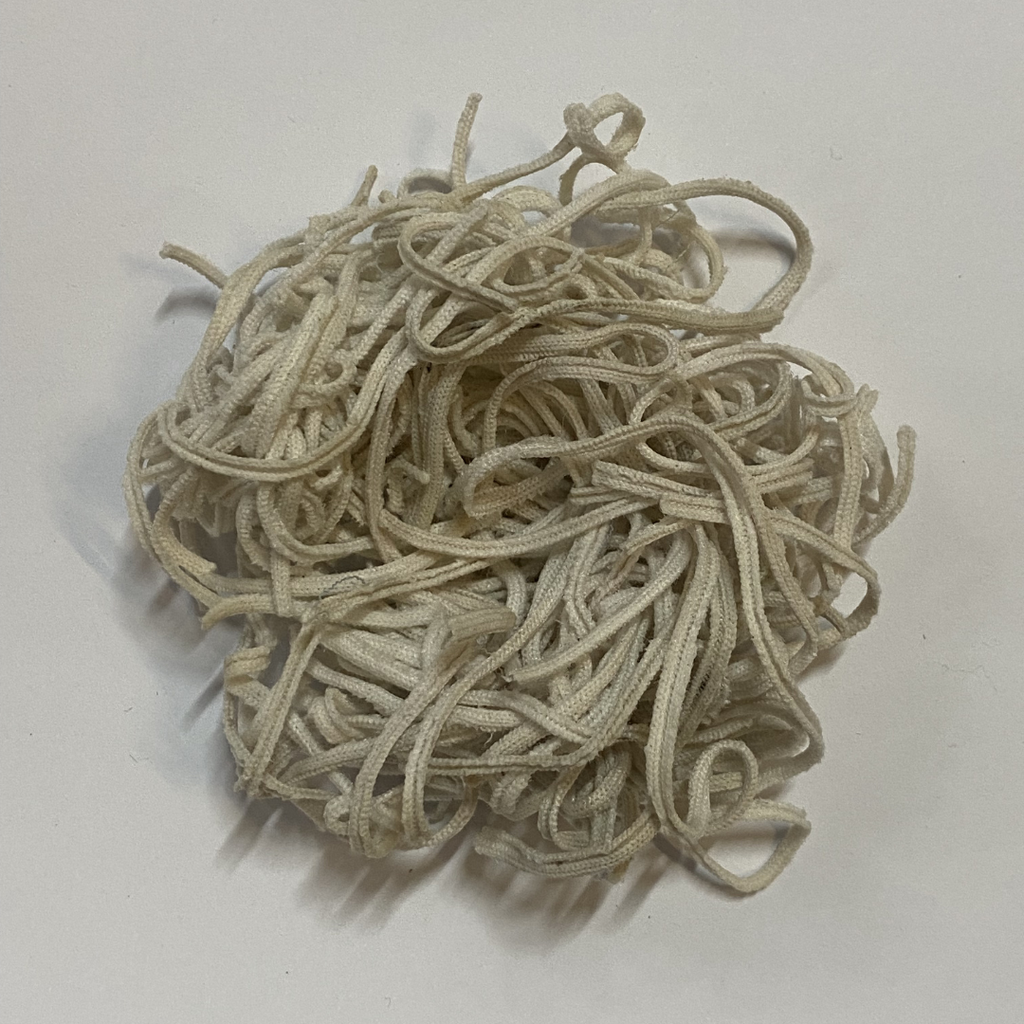
Q5. Your work Nests uses clothing salvaged from the former Clifden Industrial School. What about those fabrics stayed with you?
I visited the derelict site of the former Clifden Industrial School around Christmas of 2020. It was right before the building was due to be redeveloped. My mom was the one who suggested that we should visit the site to see it before everything was gutted. I had a camera that was fairly new at the time and I thought it would be a good opportunity to take some photos of the old building before it was remodelled. I honestly didn’t expect that much would remain in the building as it had been vandalised for years and the construction company had already gone in to do some preliminary work. I was amazed to find clothes lying on the floor of the laundry building, caked in layers of dirt.
I think they had fallen from a collapsed upper floor as I could see some clothes hanging from pieces of broken wood high up in the ceiling where the floor above once was This laundry was staffed by the children and not only serviced the industrial school and the convent it was attached to but had also operated as a commercial enterprise for a time. I thought about all of the hours that the children spent working in that building and how hard they must have worked there. The ambiguity of the clothing interested me. I wondered if they had belonged to the industrial school children, the nuns who ran the institution or if they had somehow been left there by someone else entirely.
The small sizes indicated to me that they might be children’s clothes but some of the nuns who who lived in the adjoining convent and worked in the industrial school were very petite women so it’s hard to say who they belonged to. Something that struck me about the clothes was the stripy pattern that most of them had. They reminded me of stereotypical prisoners uniforms.
They were made of really cheap, thin polyester. I can remember thinking that the wearers must have been cold wearing them in cold weather and sticky and uncomfortable wearing them in warm weather. Judging by the style and the materials they were made from, I think they were probably made around the 1970’s. The labels on the clothes indicated that they were made for Dunnes Stores, which at the time was known for selling quite cheap clothing.
Q6. How do you balance the emotional weight of these histories with the physical process of making?
While the research element of my work can be quite heavy and troubling, I find that the physical process of making the work is very meditative and relaxing as it involves a lot of repetition and slow assembly. It is very satisfying for me to watch the raw materials transform into a new object.
Some of my works go through several stages of drying and it is endlessly fascinating to me to watch how the forms and colours shift as the pieces dry out.
Q7. As your work has become more connected to history and memory, how has your approach to making changed?
I’ve always had an open mind about what can be considered an artwork and I’ve been exposed to lots of different art forms through the years so I don’t think I ever had a fixed idea of what it means to make an artwork. I do think that social media has changed how audiences interact with art and as a result, this has impacted my approach art making.
People don’t just want to see the framed, finished, curated work hanging on a gallery wall, they want to engage with and interpret the work as it is being created. I think that my artworks get to lead many lives before they are ever exhibited in a way, as they have already been seen by millions of people in many stages of completion before the work is ever officially shown.
In some ways the making of the work is now more important to audiences than the finished piece.
I notice that people are far more interested in watching my videos on how my works were created than looking at the actual completed work. Far more people have seen the photos and videos of the works as they are being made than have seen the actual artworks.
Q8. Your use of unconsecrated materials carries a sense of interruption. How does this idea shape your work?
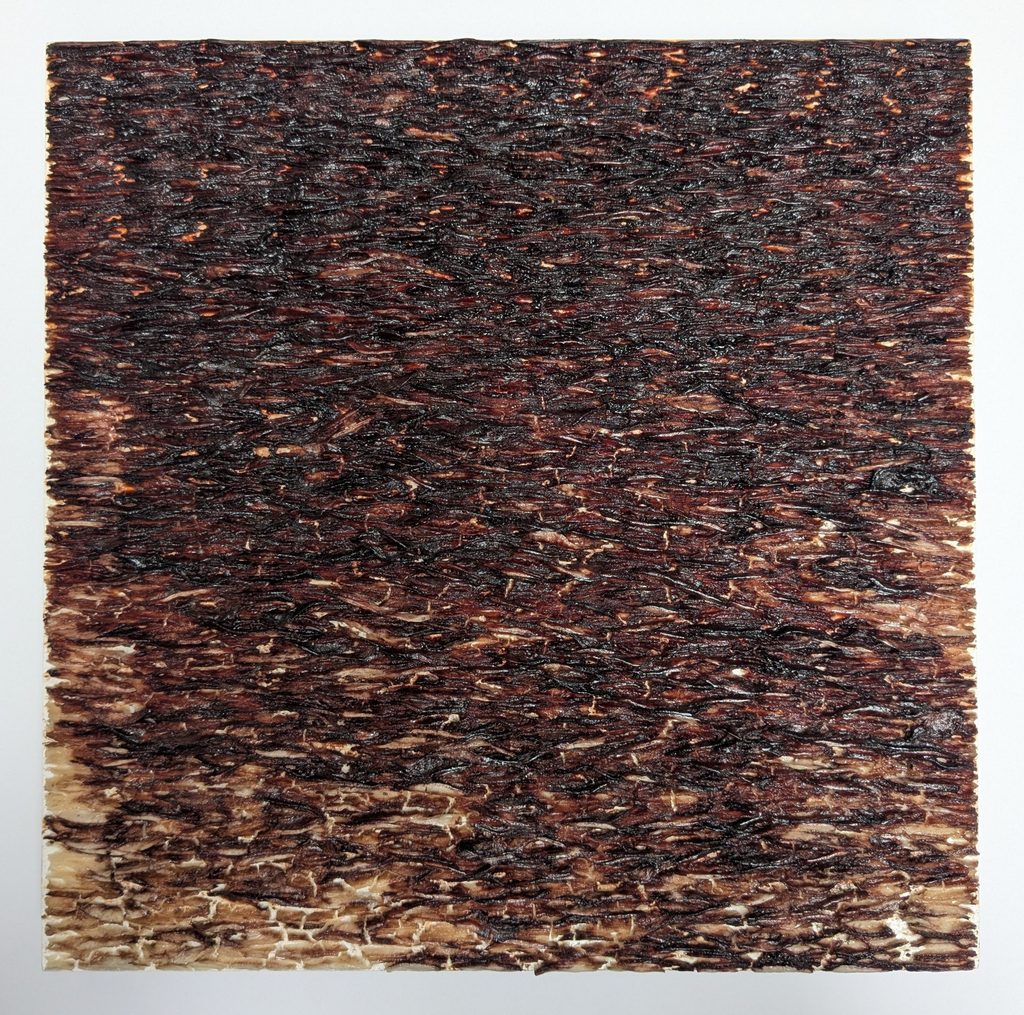
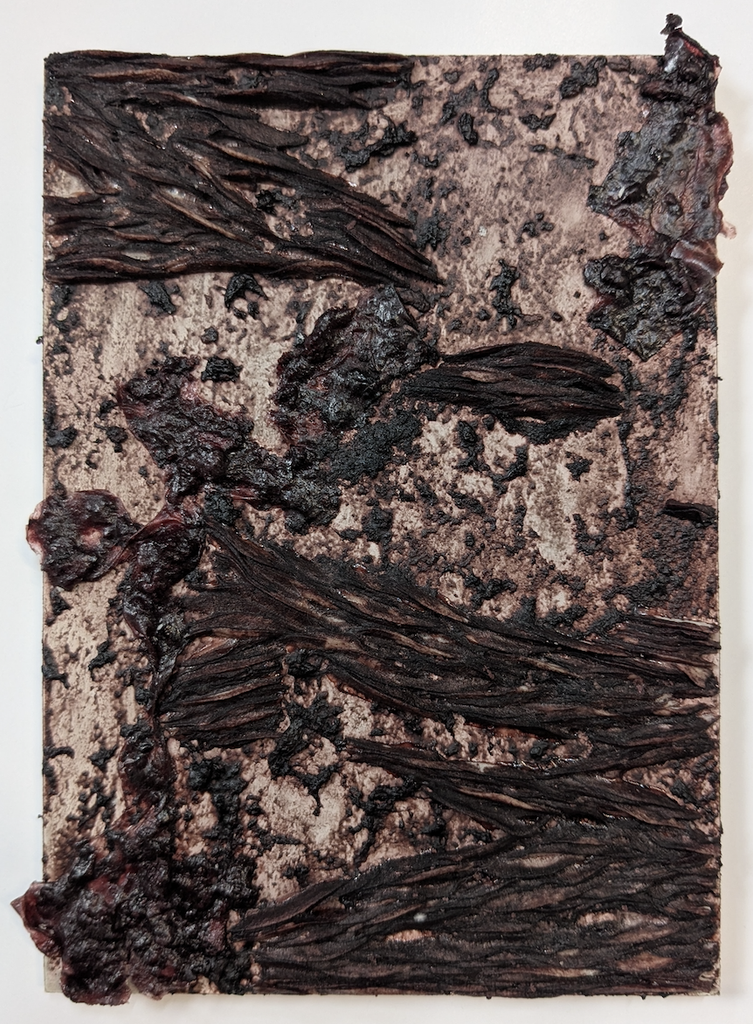
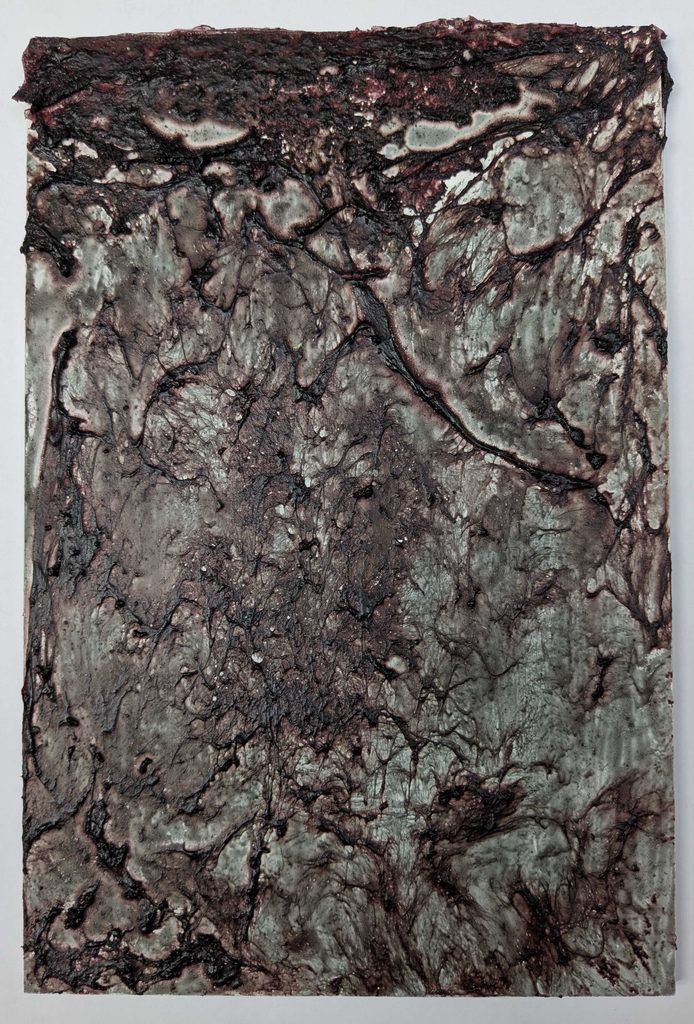
Stigmata and my newer series Tuam Excavations are both made using unconsecrated red wine and communion wafers. People often ask me if they are consecrated or if I would like to use consecrated materials to add an extra layer of symbolism to the works. I don’t find it necessary to use consecrated materials and I don’t think it would even be possible for me to use consecrated materials if I wanted to.
For me, the fact that the wine and wafers are unconsecrated is itself kind of symbolic. By purchasing the communion wafers to make an artwork, I have interrupted their usual life cycle because otherwise they would likely have been bought by a church and then consecrated and consumed.
This interruption to the usual life cycle of the communion wafers reminded me of how the institutions I make my work about interrupted the lives of the people who were sent to them and interfered with the course of their lives. I wonder what would have happened to all of the people were locked away in these institutions if they had not been sent to them and how their lives would have been different.
Q9. You have received awards and funding early in your career. Which experiences have most shaped you as an artist?
I won a Global Undergraduate Award for the Island of Ireland in 2020. I was supposed to exhibit ‘Stigmata’, for which I won the award in the summer of 2020 as part of my second year end-of-year exhibition. Due to covid, I was not able to exhibit it which was very disheartening at the time. I can remember feeling very demoralised knowing that people wouldn’t get to see the work I had put so much effort into. I won the award just a few moths after the exhibition would have been, right before I was due to go back to college to complete the final year of my degree.
Winning the award gave me recognition for the work at a time when I badly needed it and encouraged me to push through with confidence into the final year of my degree during the pandemic. Since finishing my degree, I think the Agility Award I received from the Arts Council in 2021 has been very impactful. The award was set up to assist artists in response to the uncertainty and financial strain caused by the covid 19 pandemic. I received the award a few months after my final year exhibition had also been cancelled due to covid.
This funded the creation of my ‘Nests’ series and also led to the creation of my series of accompanying wall mounted works ‘Convent Compositions’. I was very grateful for this funding as there were few funded opportunities available to me immediately after I graduated. I remember there being a lot of uncertainty as to whether exhibitions or residencies for the following year were going to go ahead as so many things had been cancelled and rescheduled during the pandemic. I was grateful to be able to make work which was important to me during such an uncertain period.
Q10. Do you feel there is enough space within the contemporary art world for work that deals with difficult or uncomfortable histories?
I think there is. I think there is always a demand from audiences for work which allows them to engage with difficult topics in a safe environment.
Art has always dealt with difficult and uncomfortable histories and our current era is no different.
Q11. What changes would you most like to see in the contemporary art world?
I do wish that there was less importance placed on your social media presence in terms of applying for opportunities and being taken seriously as an artist. I think the lightning speed of social media means that many artists working on long term or large scale projects which are slow to conceptualise and assemble often miss out on opportunities as the nature of their work means that they don’t have impressive videos or images of the work in progress to post regularly.
Further to this, I think taking extended breaks from social media can be very healthy for artists but they feel like they can’t take them because the algorithms reward regular posting.
I think it’s quite difficult for a lot of artists to change up their style or subject matter as well as the social media platforms reward accounts that have a consistent, recognisable aesthetic. This also hugely disadvantages artists who are not in a position to work full time on their art as they usually can’t be consistently making and posting their work online.
I also think the pressure to show your artistic process online means that a little mystery is removed from eventual exhibitions as visitors to the exhibition may seen all of your pieces online already.
Q12. After everything you’ve experienced in your career so far, what does being a successful artist mean to you now?
Success to me is making works which resonate with people, that they can emotionally respond to, its making work consistently and to a standard that I am satisfied with and showing my work to the public on a regular basis whether that is online, in print or in person.
Q13. What advice would you give to emerging artists who are trying to build a practice without losing their own voice in the process?
Nobody can make your work like you can. Trends will come and go but your unique perspective will always be there.
As our conversation with Olwen came to a close, we kept returning to the idea of memory, and how quietly a country can let its hardest chapters slip out of sight.
Every country has chapters it would rather not look at, and for a long time these Irish histories were among them, hidden away, spoken about in whispers, or not spoken about at all. Olwen’s work refuses to let them disappear. She does not sensationalise the pain, and she does not look away from it either. She holds it, carefully and honestly, and gives it a form that other people can stand in front of and truly feel.
There is real courage in that, and real love too, a love for the people whose lives were interrupted, and a determination that they will be remembered. Art has always been one of the ways we face what is hardest to face, and Olwen’s work is a powerful reminder of why that still matters.
There is a lot to admire in the way Olwen works, too. In an art world that increasingly rewards whatever is fast, loud, and endlessly postable, she has chosen the harder road, making slow, patient, deeply researched work that can take months to come together. It would be easy to trade that depth for visibility, to chase trends or churn out content, but she refuses to.
That kind of quiet conviction, the willingness to protect your own pace and your own voice when everything around you is pushing the other way, is something we wish more artists felt free to hold onto. It is a reminder that the work built to last rarely comes from keeping up.
For art lovers and collectors, Olwen’s work brings something rare and necessary into a space. It asks you to slow down, to remember, and to sit with truths that are uncomfortable but important. These are layered, handmade pieces that carry real weight, both in their materials and in their meaning, and they hold your attention long after you first encounter them. To live with her work is to keep an act of remembrance in your home, a quiet reminder that remembering is its own kind of justice, and that no story deserves to be forgotten.
Some work you look at. Some work you want to touch. Our 101 Art Book: Texture Edition is now open for submissions, and we are searching for the second kind, art where the surface itself carries the feeling, in every layer, ridge, and fold. Any material, any country, any stage. What matters is that your work has texture worth getting close to. Every featured artist once took that first step and submitted. Now it is your turn.