
Five Artists on Finding Themselves Through Their Art
At Arts to Hearts Project, we have always believed that you learn a lot about an artist from what they keep coming back to. The memory that shows up in the work again and again. The subject they cannot leave alone. The feeling they are still working through, even when the piece looks like it is about something else. A creative practice has a way of telling an artist things they did not know they were holding.
That idea is at the heart of Arts to Hearts Magazine Issue 13. Our flagship publication is built around one theme each issue, and this time it is Hold. When we started shaping this edition, we kept thinking about how much of who we are comes from what we choose, or sometimes need, to hold on to. A memory that returns without warning.
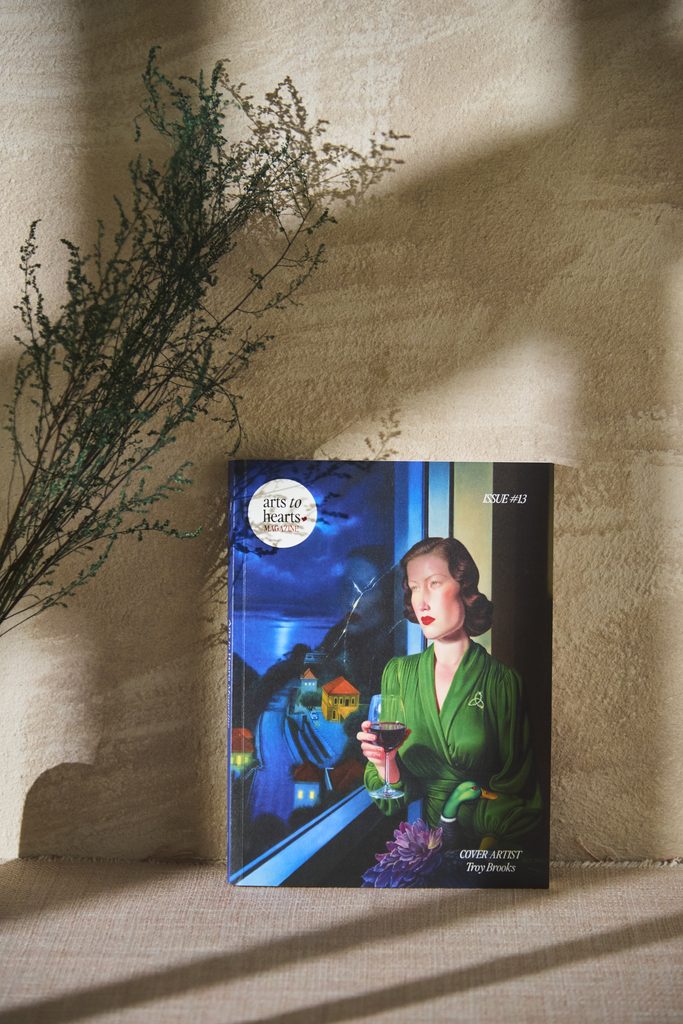
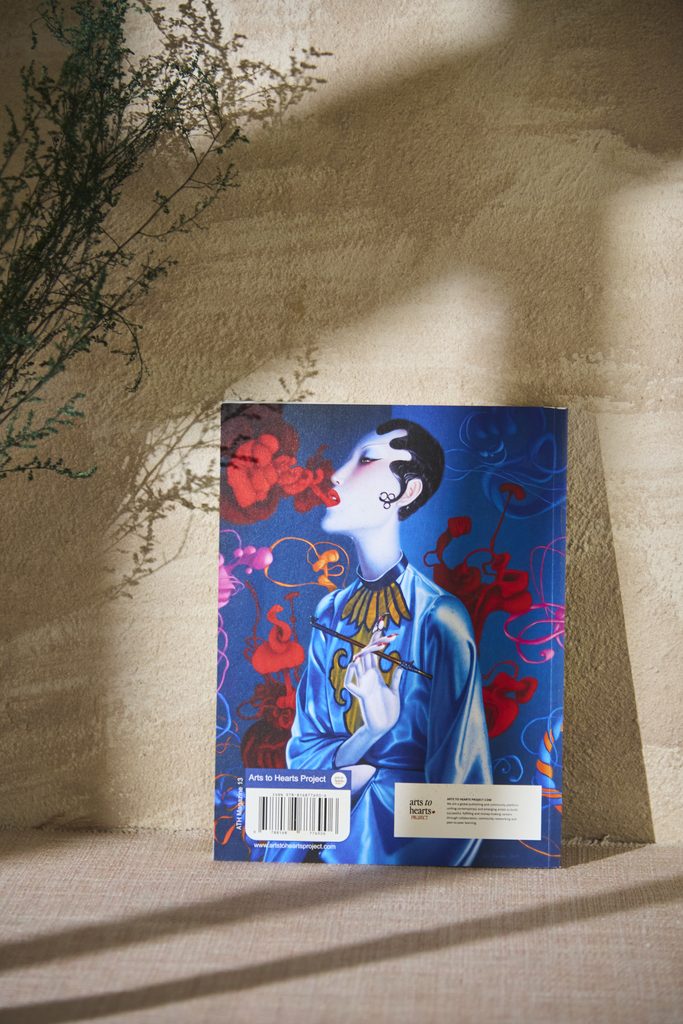
A lesson from years ago that still guides our decisions. A person whose influence stays long after they are gone. A dream we keep protecting. The artists in this issue give those things a form. They explore memory, family, identity, belonging, resilience, loss, hope, and transformation, and no two of them come at it the same way. Some works hold joy. Others hold uncertainty. Together they remind us that holding on is never simple. It can be love, remembrance, curiosity, strength, or a way of getting to know yourself.
So we asked the featured artists about that last part. What is something you are learning about yourself through your creative practice right now? Not a lesson from years ago, and not a line from an artist statement. Something that is true for them today. The answers were honest and deeply personal, and they deserved more room than a magazine page could give them.
Here is what some of them told us
One of the quickest ways to learn how you work is to try a medium that works differently.
Most of us think we know how we work. We have our habits, our usual pace, the way we like to start and the way we like to finish. Then we try something that works differently, and we see those habits clearly for the first time. A new medium does not only change how the work looks. It shows you what you were doing all along.
Natalie Steigmann-Gall @natmaxedart tells it like this:
“I’ve been exploring encaustic painting more in the last several years, and it’s really interesting. It dries in seconds, so you’re forced to make decisions immediately. It’s very different from how I work in oil, so it’s been cool to learn I can balance different ways of thinking at once.”
Natalie Steigmann-Gall
Encaustic dries in seconds, so Natalie has to make her decisions on the spot. That is very different from how she works in oil, and she has spent the last several years getting to know it. What she likes most is what it showed her about herself. She can hold two different ways of thinking at the same time, and she only found that out by trying something that worked differently. She calls it cool, and it sounds like she means it.
Sometimes the thing you wanted to fix about your practice is the thing powering it.
Most artists have something about their practice they wish they could change. It is too slow, too lonely, too scattered, too much inside their own head. We treat it like a problem and spend years trying to solve it. Then sometimes, without noticing exactly when, it stops looking like a problem at all.
Carrie Scanga @carrie.scanga has changed her mind about something. She explains:
“Making by hand is the most solitary thing I do, and yet everything I make is aimed at connecting across time and geography with a stranger. I used to think that tension was something to work through. Now I recognize it as the actual engine of the work.”
Carrie Scanga
This is what Carrie is learning about herself right now. She works alone, with her hands, and everything she makes is meant to reach a stranger she may never meet. For years she thought those two things were pulling against each other, and that her job was to settle it. Now she knows the pull is what keeps her making. It took her a long time to see that, and it has changed how she looks at everything she makes.
The most honest art often comes from an artist who is still curious about their own life.
Curiosity is easy to lose. As we get older we start to feel like we have our lives figured out, and we stop asking questions about our own experiences. The artists whose work feels most honest are usually the ones who never fully stopped. They keep looking at their lives as if there is still something left to find.
For Marina Saba @Fashionart_saba, every experience starts with a question:
“I see life as an endless act of discovery. Each experience becomes both a question and a revelation, enriching my inner world. Art is the language through which I transform these moments into images that honor our interconnectedness and the fragile beauty of coexistence.”
Marina Saba
Marina is still discovering, and that is what her practice is teaching her right now. Every experience raises a question for her and answers one, and her inner world keeps growing because she keeps paying attention. Art is how she turns those moments into images, and the ones she makes are about how connected we all are and how fragile it is to live alongside each other. She is still curious about her own life, and you can feel it in the work.
A creative practice helps you notice your feelings and then helps you grow from them.
Most of us are not very good at sitting with a hard feeling. We push it down, or we go over it again and again at three in the morning, hoping that worrying will somehow fix it. It rarely does. But when you put that same feeling into something you are making, it starts to look different. It has edges and colours, and you can finally see it. That is often the first time you can decide what to do with it.
Brooklynn Weaver @paintingsbybw has found a way through the hard parts. She explains:
“Through my creative process, I’ve learned a lot about how to navigate the hard parts of life by letting go. Lingering and worrying is not the answer, but expressing through art has been a helpful way to acknowledge my feelings and use them as a way to grow!”
Brooklynn Weaver
Brooklynn’s answer is a simple one, and that is why it works. She has learned that lingering and worrying do not get her anywhere. Making something does. When she expresses a feeling through art, she acknowledges it instead of pushing it away, and then she can use it to grow. She is still learning this right now. For Brooklynn, a creative practice is not only about making art. It is how she gets through the hard parts of life.
One of the biggest things a creative practice teaches you is how to be easier on yourself.
Most artists are harder on themselves than they would ever be on anyone else. We worry about whether the work is good enough, whether we are doing it the right way, whether we should be making something else entirely. A lot of the time, nobody asked us to. A creative practice has a quiet way of showing us that. The longer we make things, the more we notice how much of that worry we were carrying for no reason, and how much lighter the work gets once we put it down.
Oskar Evers @oskarevers shares what changed once he gave himself permission:
“That I’ve been worrying too much ever since I first started painting seriously. I’ve learned that there’s a whole world waiting to open up if you just give yourself permission to explore whatever interests you.”
Oskar Evers
Oskar noticed the worry early. It showed up when he started taking painting seriously, and it took him a while to see how much of it there was. Then something shifted. He gave himself permission to explore whatever interested him, and a whole world opened up. That is what his practice is teaching him right now. The worry never stopped him from painting. It just stood between him and everything the painting could be. Once he let it move aside, there was a lot more room.
Reading through these answers, you will notice that no two of them sound alike. Some artists are learning to make decisions faster, and others are learning to slow down. Some are learning to trust the thing they used to see as a problem. Some are learning to ease up on themselves, and some are learning that their curiosity is worth protecting.
But you will also notice what they share. Nobody pretended to have it all worked out. They are all still in the middle of learning, and they were happy to tell us about it.
Some of them are holding on to something. Some are learning to put something down. Maybe that is what a creative practice does. It shows you, a little at a time, which is which.
Arts to Hearts Magazine Issue 13 is built around exactly that. Its theme is Hold, and the artists inside explore memory, family, identity, loss, hope, and everything in between. If these answers made you curious, you can find the issue at the link below.
And if you are an artist who has been thinking about putting your work forward, do not wait any longer. The Artist of the Year Award 2026 closes very soon, and once the deadline passes, it is gone. If you have been meaning to apply, now is the time.