

Anika Geldner Creates Colourful Abstract Compositions Filled with Hidden Surprises
At Arts to Hearts Project, the 101 Art Book Project began in 2023 with a clear intention: to celebrate the depth, diversity, and brilliance of artists around the world through thoughtfully curated, theme-based hardcover books.
What started as an ambitious idea has grown into an ever-expanding global archive of contemporary voices, featuring over a thousand artists across its editions, each volume gathering 101 artists around a single shared theme. Having explored subjects from Photography and Collage to Landscape, Abstract, Portrait, and Nature, the series now arrives at its twelfth edition, Colors.
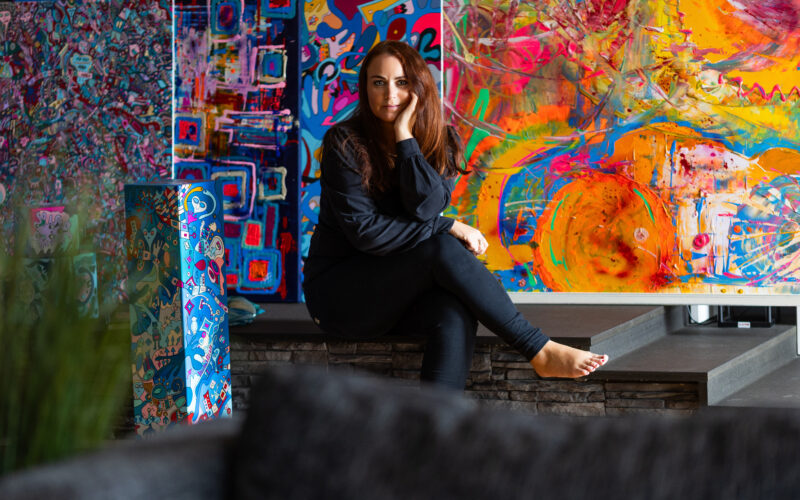
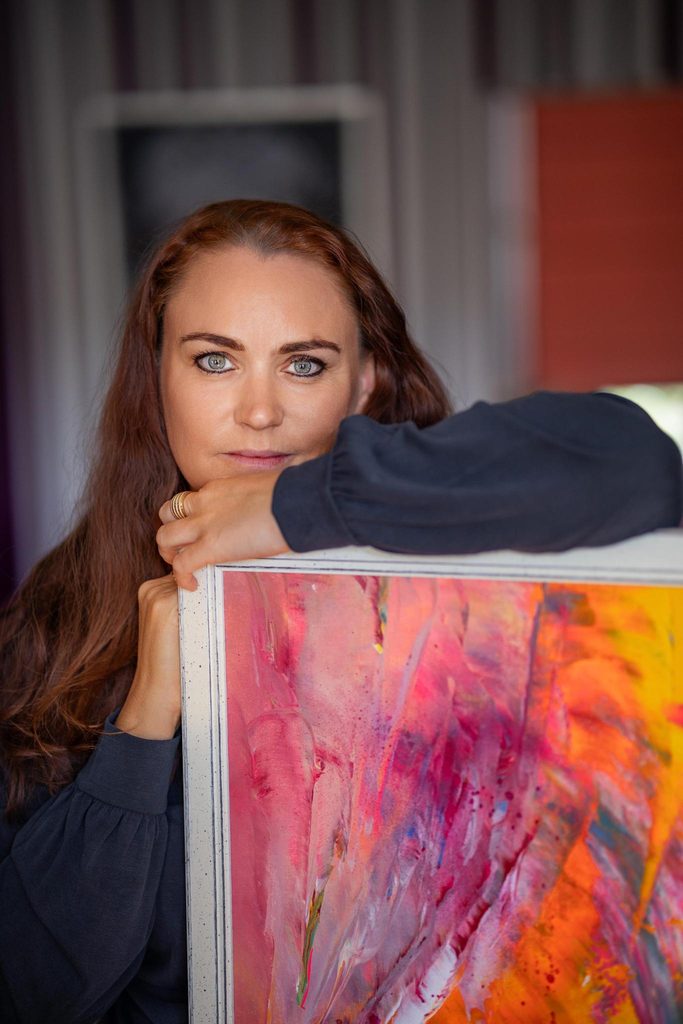
The Colors Edition turns its focus to one of the most fundamental and limitless elements of art. Colour is everywhere and in everything we perceive, yet it is deeply personal in how it is felt and expressed, loud or quiet, bold or muted, carrying memory, mood, and meaning, or simply existing as a visual language all its own. This edition invites 101 artists to explore the emotional, symbolic, and expressive power of colour, each through their own unique lens. Among them is Anika Geldner, and few artists live and breathe colour quite the way she does.
Anika is a German abstract artist, and her path to painting began somewhere few would expect. She discovered abstract art while studying political science, and the moment she encountered it, colours and shapes breaking free of the concrete world, something clicked. She never looked back, and over the years has grown into one of the most distinctive voices working in abstraction today.
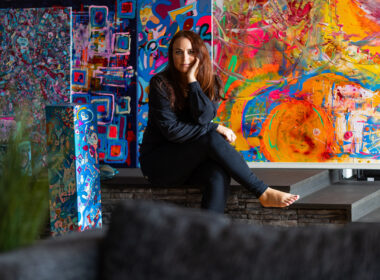
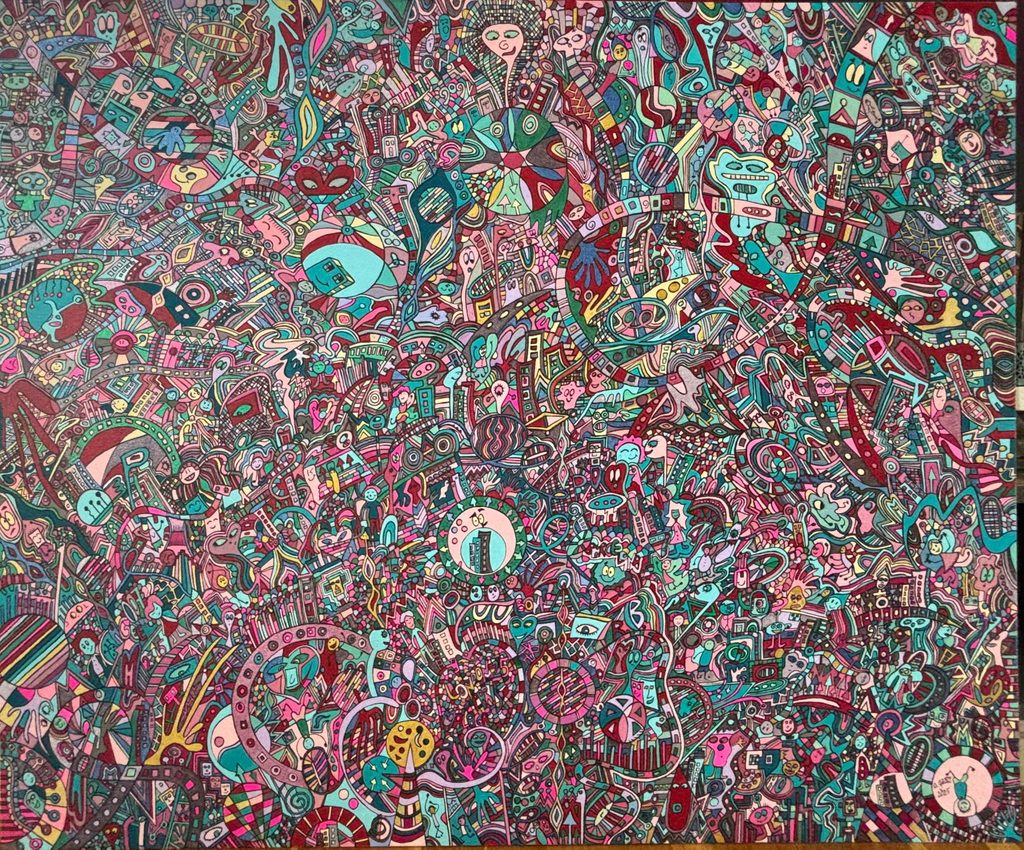
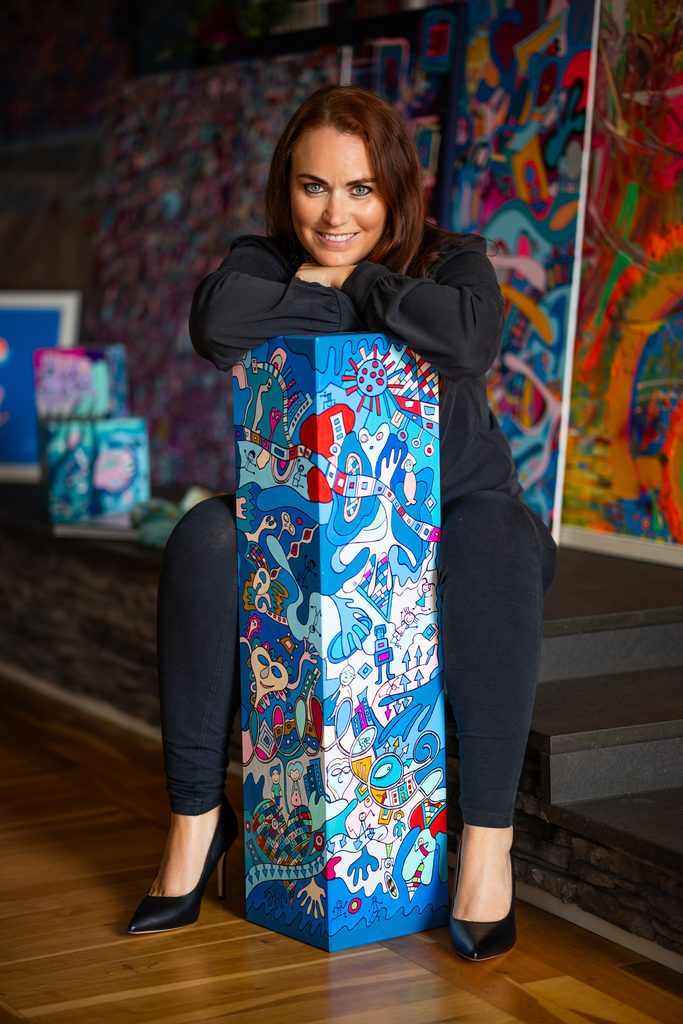
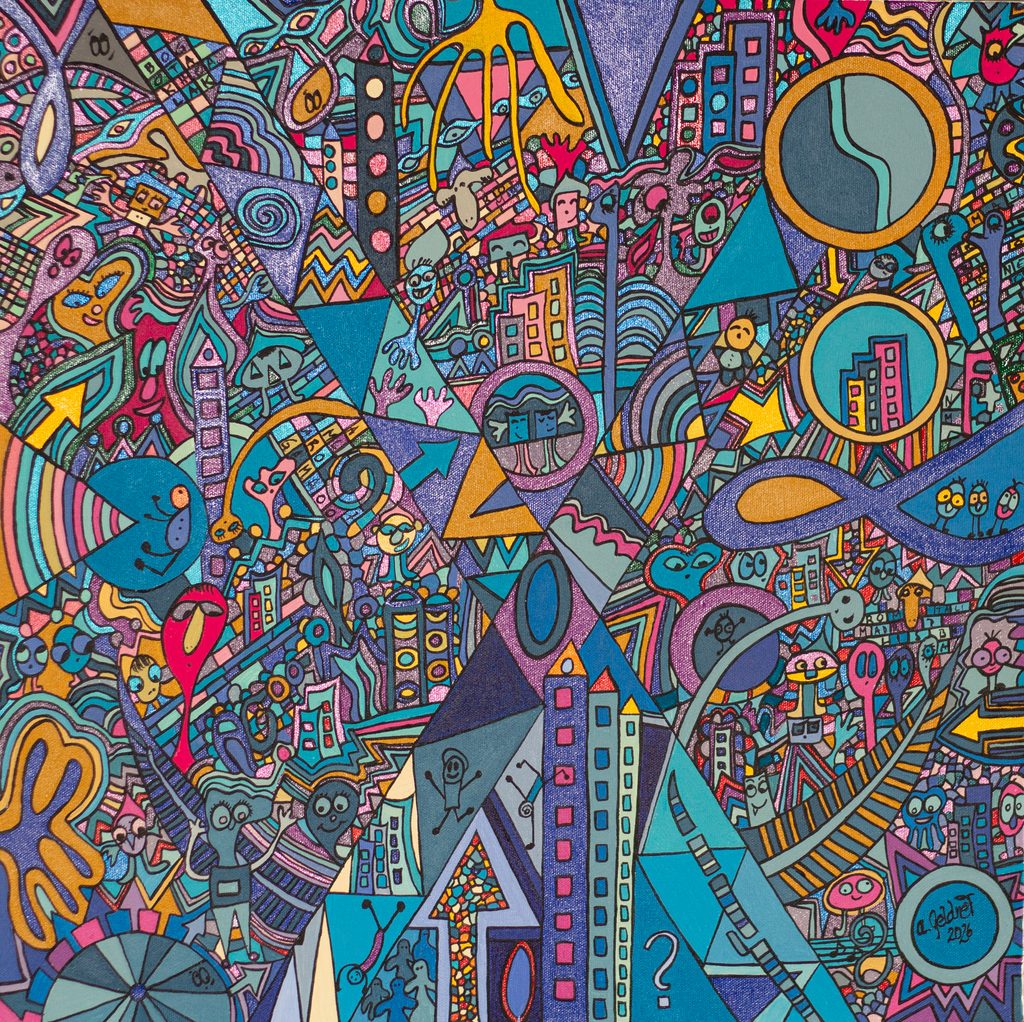
Her paintings are unlike anything else. Each one is a whole miniature universe, bursting with colour and alive with tiny figures, little houses, and countless intricate details, every single one placed by hand.
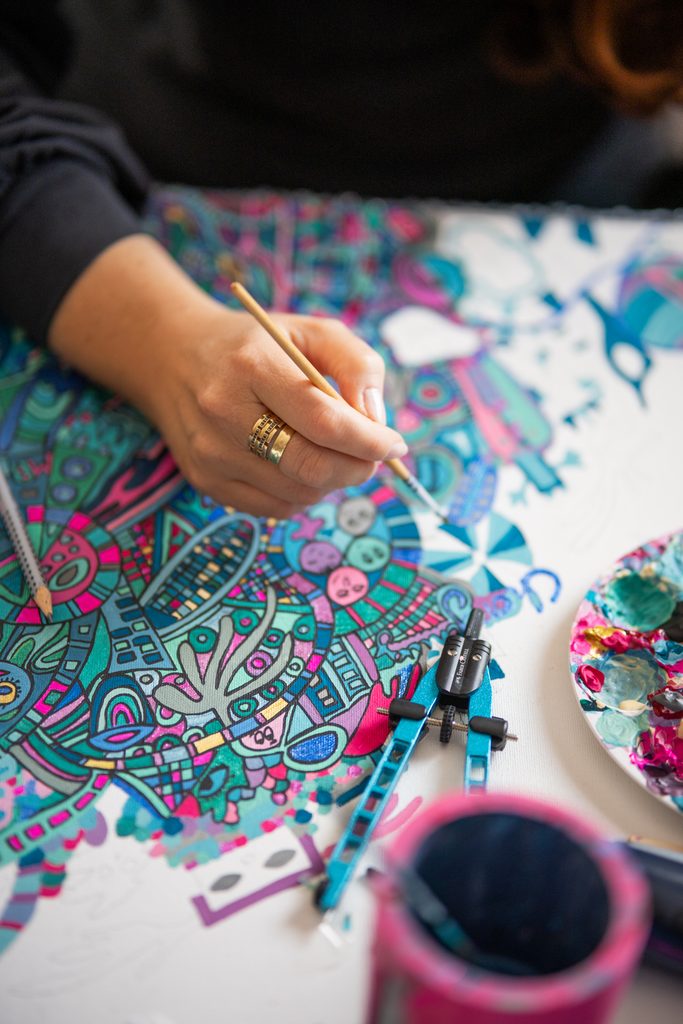
What makes them all the more remarkable is the sheer devotion behind them; a single large painting can take her up to six months, built detail by detail with just two brushes and an extraordinary amount of patience, care, and love. When she works, she disappears completely into her own little world, losing all sense of time and space.
For Anika, colour is everything. It carries emotion, mood, and energy, and she is endlessly fascinated by the way a single shift in palette can change the entire feeling of a painting. At the heart of her work is a belief she holds dear, that there is a whole universe hidden within each of us, rich in colour, shape, and emotion, and every canvas feels like an invitation into one of those worlds.
Inspired by masters like Paul Klee, Wassily Kandinsky, and Joan Miró, yet always true to her own vision, she has carried her work far beyond her studio, exhibiting in cities such as Amsterdam, Zurich, Paris, and Dubai, and even sending one painting as far as a museum in Chongqing, China.
Perhaps what is most lovely about her work, though, is its generosity. Her paintings never give everything away at once; they hide cheeky little eyes, playful figures, and small surprises waiting to be discovered, even years later. And above all, they are made for one simple, beautiful reason, to bring people a moment of joy.
Now let’s hear from Anika about her love of colour, her intricate creative process, the inspirations behind her work, and the joy she hopes her paintings bring to the world.
Q1. For someone discovering your work for the first time, how would you introduce yourself and your creative practice?
I am an abstract artist, and I love creating my own visual worlds through colors, shapes, and countless intricate details.
Before I begin a new painting, I usually already have certain colors in my mind. However, I rarely have a concrete idea of what the finished work will look like. I slowly start by sketching my little figures, houses, and other elements in pencil. Every single element has a meaning.
To me, my paintings are like diary entries. They capture thoughts, feelings, and experiences that occupy my mind on a particular day, throughout a week, or over the course of a month. Sometimes, I even incorporate individual words into my paintings. Viewers may discover some of these stories, but most of them remain my personal secret.
I find great joy in creating all these tiny details. What I particularly love is that every painting looks completely different, allowing a new and unique world to emerge each time. When I paint, I become completely immersed in my work. I lose all sense of time and space and retreat into my own little world. It is a very intense creative process.
Depending on the size of a painting, it can take me up to six months to complete. I devote an enormous amount of time, care, and attention to every single work. Many viewers are surprised to discover that my incredibly detailed paintings are created entirely by hand, using just two brushes.
Q2. You describe painting as a way of communicating beyond words. What can colour and form express that language sometimes cannot?
For me, colors are much more than just a means of artistic expression. They represent emotions, moods, and energy.
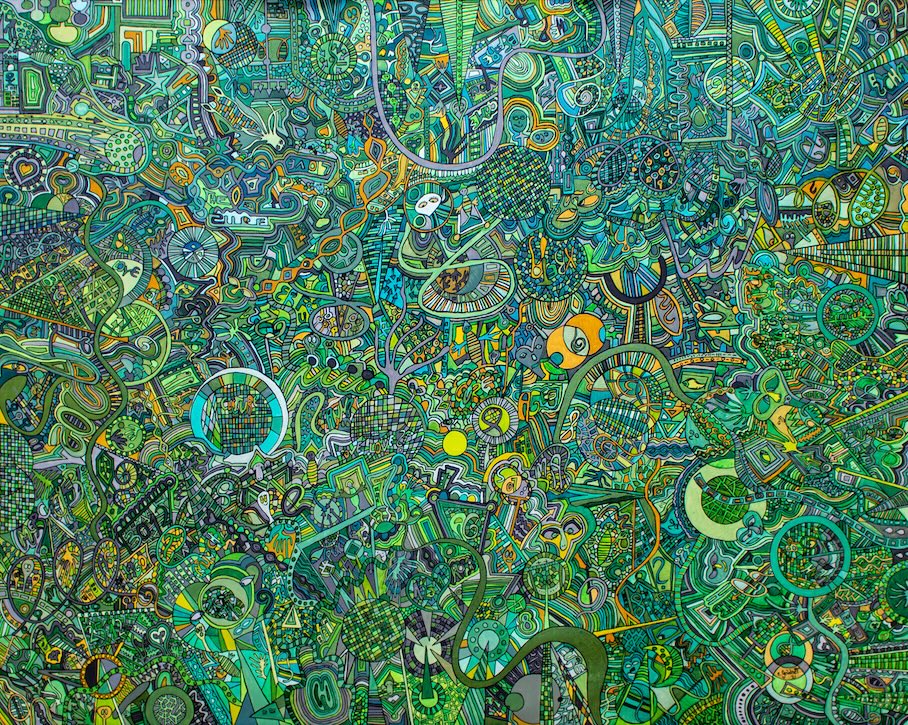
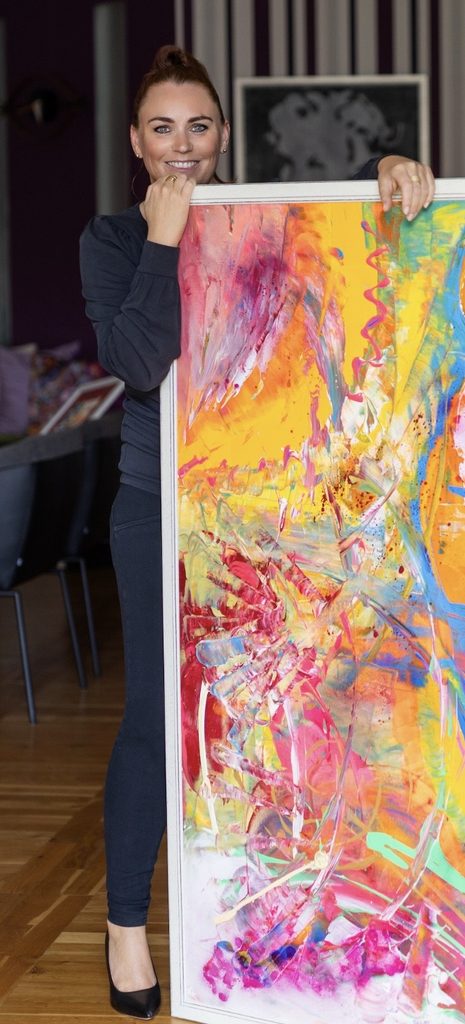
Throughout my artistic journey, I have gone through different color phases. For example, I once had a green phase. At the moment, I am drawn particularly to red, pink, violet, and green.
However, it is not only the colors that matter. The content of each painting is equally important to me. Colors, shapes, and the elements within a painting influence one another and together tell a story of their own. I love incorporating little humorous figures into my paintings, sometimes looking in unexpected directions, or mischievous eyes that cheekily peek out from within the picture.
I want to surprise viewers and, hopefully, make them smile. What I find especially wonderful is that people can still discover new details in my paintings, even years later. There is always something new to find, something they may have overlooked before. That is exactly what I love about my work: my paintings do not reveal everything at once; instead, they invite viewers to keep discovering them again and again.
Q3. With your vivid colours, intricate details, and dynamic compositions, how do you decide where to begin a new painting?
The beginning of a new painting is a very intuitive and spontaneous process for me. I usually have certain colors in mind first. Then I begin sketching my little figures, houses, and other elements in pencil. However, how these individual elements eventually find their place on the canvas and connect with one another happens quite spontaneously.
When I paint, I allow my intuition to guide me completely. One thing leads to another. One detail inspires the next, one shape influences another, and little by little, a unique composition begins to emerge. I do not plan every single detail in advance. Instead, I allow the painting to follow its own creative process, and I am often just as curious as anyone else to discover where this journey will take me.
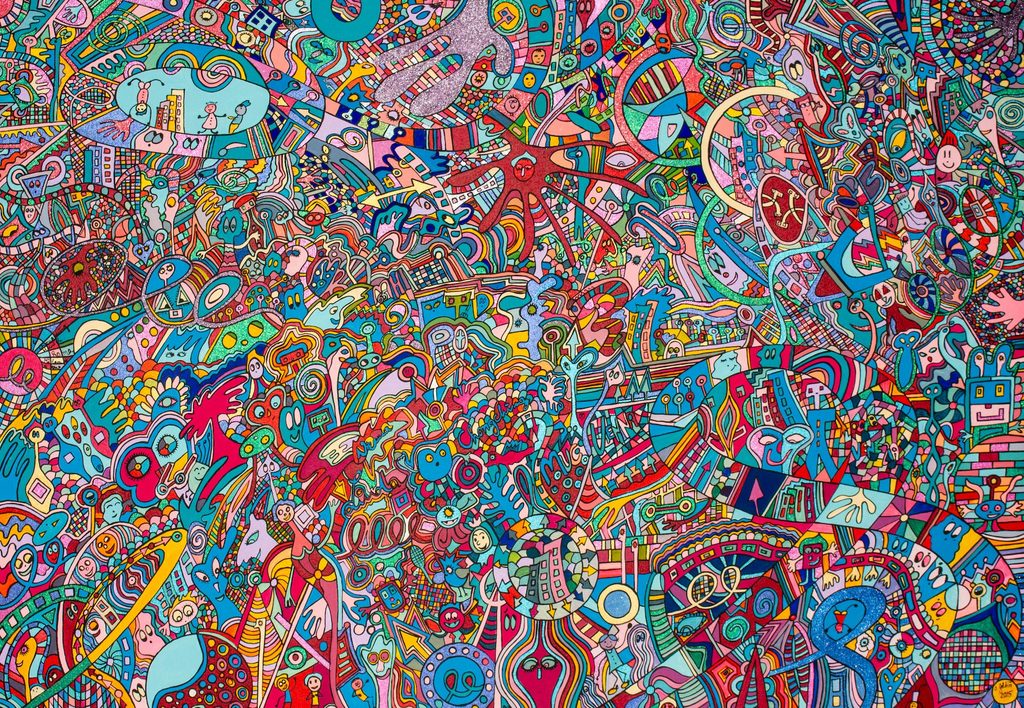
Q4. In Schöpfung der Farben, you explore the possibilities of colour itself. What does colour allow you to express that shape or structure alone cannot?
Yes, I believe the painting would have a completely different effect if I used different colors for the same shapes. Although the organic forms create the foundation of the composition and flow harmoniously into one another, it is the colors that give the painting its special sense of life and vitality.
Colors give the shapes their individual mood, energy, and expression. They influence how we perceive a painting and the emotions it evokes within us.
For me, shapes and colors are inseparable, and it is only through their interaction that they reveal their full expressive power.
Q5. In Die unendliche Reise, the idea of an endless journey suggests movement without a fixed destination. How does this connect with your own artistic exploration?
The title “The Endless Journey” reflects my great fascination with travelling. For me, travelling means being on the move, discovering new things, and constantly gathering new impressions. At the same time, I also see a connection to life itself, which is an endless journey in its own right. My artistic practice is also shaped by this spirit of discovery.
When I paint, I allow my intuition to guide me, and I often do not know exactly where the creative process will lead me. One detail develops from another, and new possibilities emerge along the way. It is particularly wonderful to me that this painting has already travelled internationally. “The Endless Journey” was exhibited at a museum in Chongqing, China. This fills me with great joy and represents a very special milestone in the journey of this painting.
Q6. You have spoken about creating an atmosphere through music, light, or silence before painting. How does your environment influence the way you work?
Music is very important to me when I paint. However, I am not attached to any particular musical genre. It varies greatly. Sometimes, I even put on an old crime drama and simply listen to it in the background. What I absolutely need, though, is plenty of light.
Good lighting is essential for my work, especially because I paint so many tiny details. I really don’t enjoy complete silence while painting. I like having some background sounds and a lively atmosphere in which I feel comfortable and can fully immerse myself in my own artistic world.
Q7. Your compositions can feel both chaotic and carefully organised. How important is the balance between freedom and structure in your work?
At the beginning of a painting, I first sketch out the larger elements, making sure that they create a harmonious overall composition. This initial structure gives the painting its framework and a certain sense of order. I then develop the many smaller details intuitively.
I allow myself to be guided by what has already emerged on the canvas. One element leads to another, and the painting gradually grows, step by step. For me, it is precisely this combination of a harmonious underlying structure and the free, intuitive creation of the smaller details that makes the process so fascinating. It is a natural interplay between order and spontaneity.
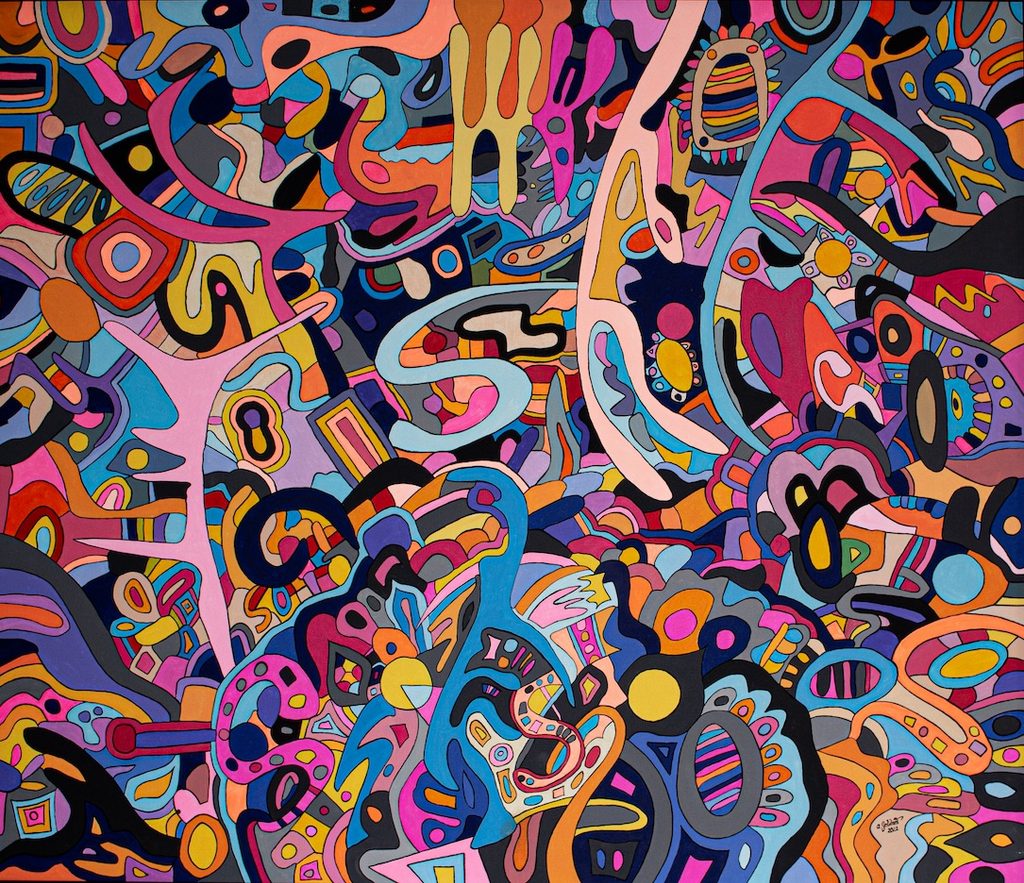
Q8. Having exhibited your work in Amsterdam, Zurich, Paris, and China, how has engaging with audiences in different cultural settings shaped your understanding of abstract art?
Being able to exhibit my work in different countries and cultural settings is always something very special to me. My paintings have been shown in cities such as Amsterdam, Zurich, and Paris. I am particularly proud that my painting “The Endless Journey” was also exhibited at a museum in Chongqing, China. What fascinates me most when meeting viewers is their reaction to the incredible amount of detail in my paintings.
No matter where my work is exhibited, people are always amazed by the many tiny elements and details they discover, and by the patience and time I devote to creating every single one of them by hand.
I believe that abstract art has a very special language of its own. Every viewer can discover something different in my work and connect with it through their own personal feelings and thoughts.
Not everything has to be understood or explained. Sometimes, it is enough to simply engage with a painting and allow it to speak for itself.
Q9. You draw inspiration from artists such as Paul Klee, Wassily Kandinsky, and Joan Miró. How do you learn from artists you admire while keeping your own work distinctive?
Artists such as Paul Klee, Wassily Kandinsky, and Joan Miró inspire me through their unique visual languages and their individual approaches to color and form. Their work continually reminds me of how diverse and limitless abstract art can be. I find it inspiring to look at the work of other artists and explore their ideas.
However, it is very important to me to follow my own path and not simply adopt someone else’s visual language. My paintings emerge from my personal thoughts, experiences, and emotions. My way of painting, the many tiny details, and my individual combination of colors and shapes develop intuitively. I believe that an artistic identity grows above all when you remain true to yourself and have the courage to follow your own ideas.
Q10. As your practice develops, are you more interested in deepening the visual language you have established or exploring entirely new forms of expression?
I feel that, over time, I have gradually found my own artistic style. Visiting numerous exhibitions and art fairs has given me the opportunity to discover a wide variety of artworks and artistic expressions. Through these experiences, I have become increasingly aware of how important it is for me to follow my own path.
I believe that I have now developed a visual language of my own, one that makes my work distinctive and recognisable. I would like to continue deepening and developing this visual language while remaining true to my artistic identity. I am curious to see where my artistic journey will take me, because even when you have found your own style, there is always something new to discover.
Q11. If viewers could take one thing away from spending time with your paintings, what would you hope they discover about themselves?
When people look at my paintings, above all, I hope they enjoy them. I want to make them smile and bring a little moment of joy into their day. Perhaps they will discover a funny little figure, a cheeky pair of eyes, or a detail they hadn’t noticed before.
Especially in these difficult times, when we are confronted daily with crises, conflicts, and wars, I believe it is particularly important to bring people small moments of joy. The world can often feel serious and overwhelming enough. I believe that a smile, a little lightness, and a beautiful moment can sometimes be incredibly valuable.
My paintings cannot change the world, but perhaps they can allow people to forget their everyday worries for a moment and bring a little happiness into their lives.
If I can achieve that, then I have already accomplished something very meaningful. I honestly couldn’t wish for more.
As our conversation with Anika came to an end, we found ourselves thinking about how heavy the world can feel, and how quietly powerful it is when art chooses, simply, to bring joy.
It can be easy to dismiss joyful, playful art as somehow less serious. Anika gently proves otherwise. In a time so full of crises, conflict, and noise, she makes work whose whole purpose is to make people smile, to offer a moment of lightness, a cheeky pair of eyes peeking out, a hidden figure, a small detail that delights.
She is the first to say her paintings cannot change the world, but she believes they can let someone forget their worries for a little while, and bring a little happiness into their day. We think that is not a small thing at all. Choosing to create joy, and to do it with such care, is its own quiet act of generosity.
There is something quietly radical, too, in how she makes her work. In an age of instant images, filters, and art generated in seconds, Anika spends up to six months on a single painting, placing thousands of tiny details by hand with just two brushes.
Her work cannot be rushed, and it cannot be faked; it rewards patience, both hers and the viewer’s. Her paintings refuse to give everything away at once, inviting you to come back again and again and find something new each time. In a world that races past almost everything, that invitation to slow down and keep looking feels like a gift all its own.
For art lovers and collectors, Anika’s work brings colour, warmth, and endless discovery into a space. Richly detailed, vibrant paintings that genuinely never grow old, because there is always another tiny world hidden inside them, waiting to be found. People smile in front of them, and keep smiling years later. To live with one of her pieces is to keep a small universe of colour and joy on your wall, a daily reminder to look closer, and to let a little lightness in.
Follow Anika Geldner through the links below and see her work for yourself.
The deadline is closing in. You have until November 15, 2026 to enter Artist of the Year 2026, and now is the time to make your move.
One artist will be crowned Artist of the Year, winning a $500 cash prize, a trophy, and a dedicated four-page feature. And it goes further than a single winner: 100 artists will appear together in a beautifully crafted hardcover collectible book, selected alongside our Guest Curator, Jennifer Rizzo, a lasting home for their work and a snapshot of the art being created today.
It doesn’t matter what you create, what it’s about, or how long you’ve been doing it, and it doesn’t matter where in the world you are. All that counts is the work itself, and the ideas behind it.
Don’t let this slip into the pile of things you meant to do. Get your work in before November 15, 2026, and claim your place in this year’s edition.